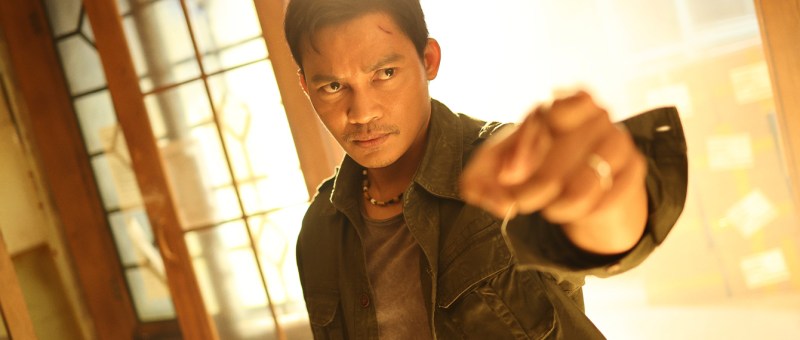
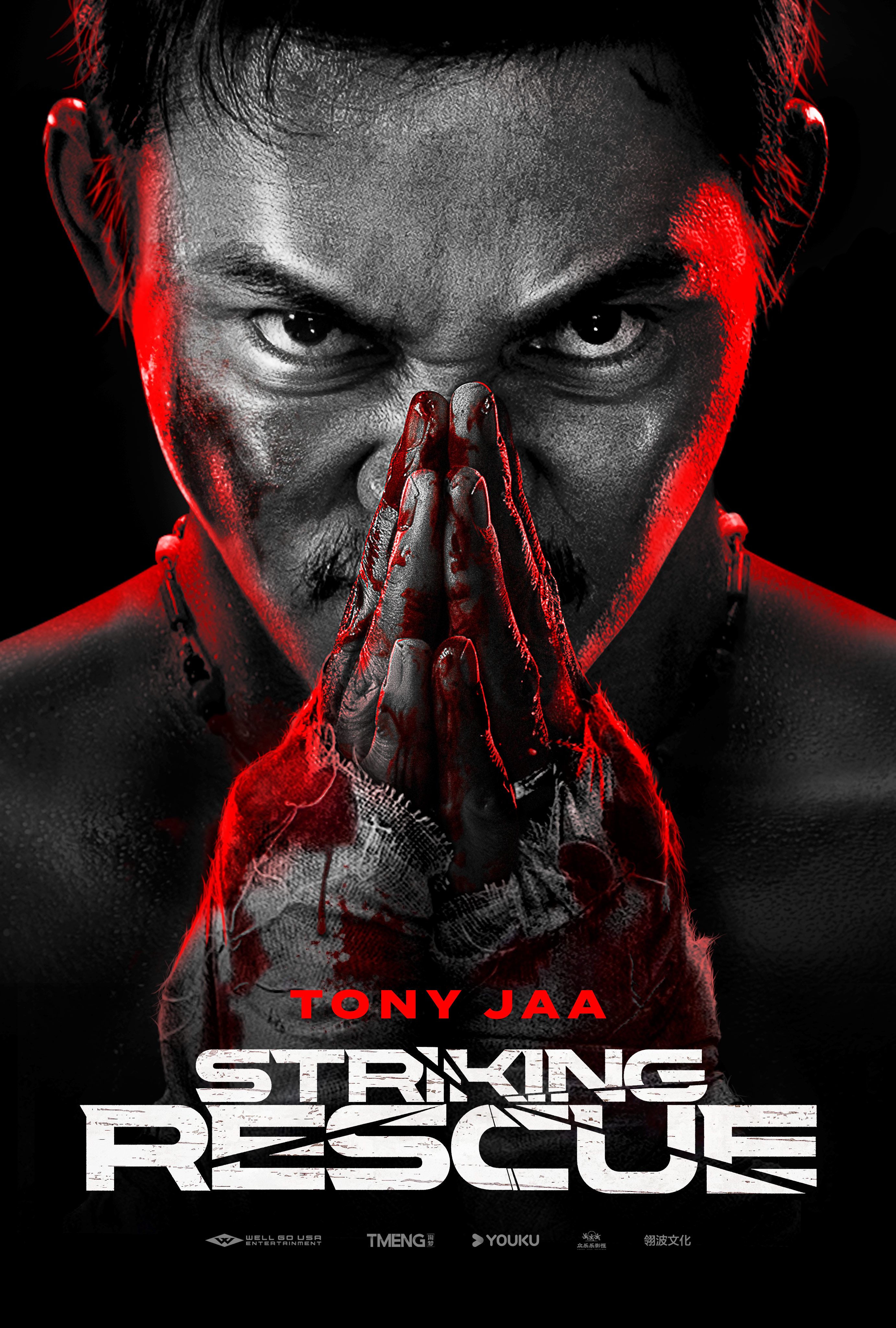
Once again set in a fictional South Eastern Asian nation largely inhabited by Mandarin speakers, Cheng Siyi’s action drama Striking Rescue (惊天大营救, jīng tiāndà yíngjiù) is a comeback vehicle for action star Tony Jaa who has mostly been relegated to cameos and supporting roles for the last decade or so. It’s also one of a string of recent films with a bee in its bonnet about the drugs trade, and a less obvious one about the powers of large corporations though in this case the fat cat turns out to be a good guy.
To begin with, we can’t be so sure about Bai An. A flashback reveals that his wife and daughter were just murdered in an apparent gangland killing, and now he wants revenge. After targeting a petty drug dealer, Bai An is told the man he’s looking for is He Yinghao (Philip Keung), the CEO of a phenomenally successful logistics business which has nevertheless been implicated for the smuggling of drugs. Something like this happened once before, but Yinghao is well connected and was able to make it go away just as he apparently has this time. Later he also reveals that his company is the only one that is exempt from customs checks, presumably because he’s bribed someone to make that happen.
We can’t really be sure about Yinghao, either. He doesn’t seem to know about the drugs but could be bluffing or attempting to shift the blame. His spiky teenage daughter Ting seemingly resents him for his authoritarian parenting and blames him for her mother’s death. She fires back at him that he behaves as if all problems can be solved with money, and she may have a point. After their convoy is attacked by drug gangs, Ting has no idea who to trust but continues to believe in her father’s innocence while unexpectedly teaming up with Bai, who wants to kill him, and trying to figure out what’s going on. The one thing she’s sure of is that she and her father really hate drugs because they caused her mother’s death, so if it really is him behind the local drugs trade then it’s even worse that she thought it would be.
As the truth is gradually revealed, it allows both men to reclaim their paternity as Jaa becomes a kind of surrogate father to Ting. He attempts to protect her from this very dangerous world of drug dealers and criminals, though it may not have been all that far from the otherwise life of luxury she was used to leading. Her driver, Wu, had already taught her some martial arts skills for protection while she’s bullied by the thuggish boys at school who pick on her for being Yinghao’s daughter and a foreigner. But it’s Bai An who seemingly shows her what real fatherhood is like, which ironically causes her to reevaluate her relationship with Yinghao. He in turn is somewhat redeemed by his righteousness in the face of the gangsters as opposed to a snivelling new reporter picked up by Clay and forced to choose which son to kill before being killed himself.
Making Yinghao the hero may be a slightly awkward fit given that his business interests do not appear to be all above board which is one reason why he relocated here rather than stay in China where, the implication is, he wouldn’t have gotten away with it for so long. Indeed, the film ends with a series of title cards explaining that all of the wrongdoers, including Bai, were caught and punished. Nevertheless, as Bai later reminds us, it’s every man’s dream to be a hero to his daughter and both men have now a claim on “heroism”, at least in the eyes of the idealistic Ting. Though he could not save his own daughter, Bai steps in to protect Ting on several occasions. Fighting off hordes of thugs and one very weird female assassin, Jaa gets the opportunity to show off his martial arts skills once again while relentlessly pursuing his revenge and quest for answers about the death of his wife and child. But it’s also this defence of her that allows him to reconnect with his humanity and reclaim his image of himself as a father even while mired in his grief and anger towards a world full of corruption and betrayal.
Striking Rescue is available digitally in the US from April and on blu-ray from May 15 courtesy of Well Go USA.
US release trailer (English subtitles)


 Windows on Worlds