Panda Plan: The Magical Tribe (熊猫计划之部落奇遇记, Derek Hui Wang-Yu, 2026)

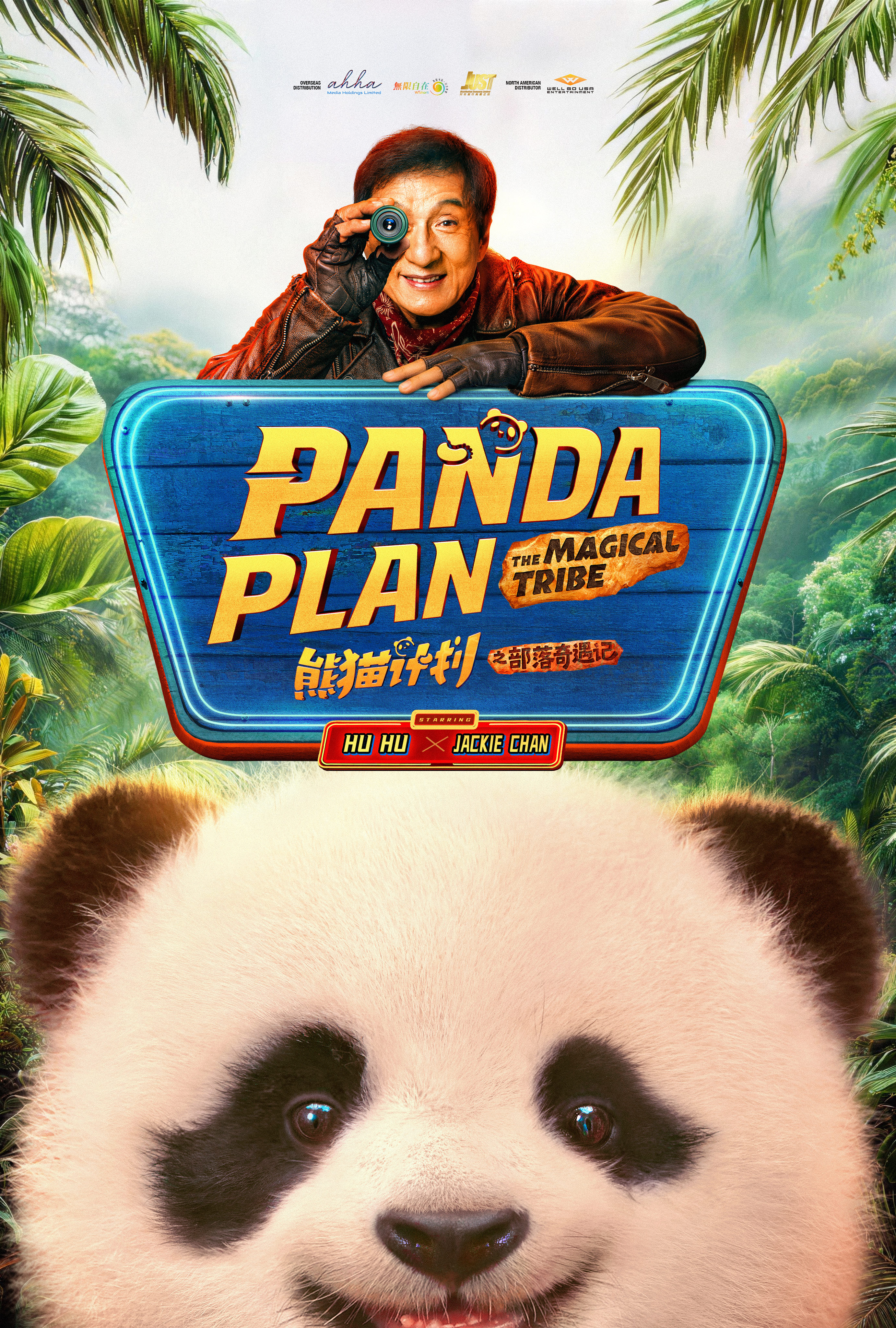
Adorable CGI panda Huhu may have been a symbol of Chinese sovereignty in the original Panda Plan, eventually rescued by Jackie Chan and returned to a panda sanctuary on the Mainland. In Panda Plan: The Magical Tribe (熊猫计划之部落奇遇记, xióngmāo jìhuà zhī bùluò qíyù jì), however, which doesn’t actually have much in common with the first film, she’s more like a surrogate child who must be protected, but not to the extent that it stunts her growth or robs of her of the confidence to make her own decisions, after mysteriously entering the territory of a “magical tribe” where children are expected to independent at six and hugs are taboo.

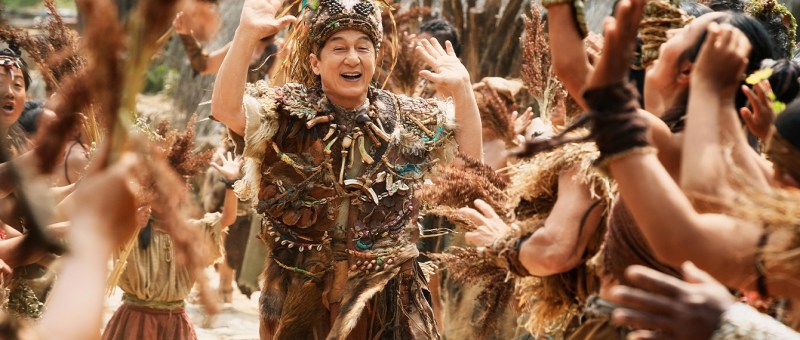
The humour is distinctly old-fashioned and the way the film treats the hidden indigenous community at its centre, which conveniently speaks Mandarin even if its writing system is apparently different, seems insensitive and out-of-touch. Nevertheless, the problem here seems to be emotional austerity and, by extension, an authoritarian parenting style that ironically leaves children in an arrested state of development. Fairly useless princeling Telu (Yu Yang), who goes around wearing a crown, is ridiculed for addressing the chieftain (Ma Li) as “mom”, which might, in any case, be a little childish though reflects his sense of inadequacy and desire for maternal affection. When Huhu and Jackie arrive in this strange world, the panda-worshipping tribe thinks it’s part of a prophecy that says that disaster will prevail after the Great Creature arrives which could turn to prosperity if only they could ward it off. 

This, however, requires Chan and Huhu to scale an impossible mountain so that Huhu can call the gods from an unreachable summit. Some of the tribesmen claim not to like it that an outsider is guiding Huhu to the mountain and use it to cultivate intrigue by convincing Telu to try and win his mother’s favour by killing Chan and leading Huhu to the mountain himself. Chan, meanwhile, is intent on finding a way back to the regular world as soon as possible, only to end up in a strange relationship with his would-be-assassin. Qiangshan (Qiao Shan) seems to have some kind of Tiresias syndrome and changes sex every time he gets hit on the head. The film treats this as a mildly homophobic joke as Qiangsheng begins to act in stereotypically feminine ways while creating a domestic environment for Chan by taking him into his home, cooking and cleaning for him. 

Nevertheless, the later part of the film is concerned with the necessity of moving on from “outdated” rules such as the prohibition on shows of affection. The chieftain makes a show of smashing the stone tablets to make it clear that they’re setting themselves free from past oppressions to lead lives that are more emotionally healthy. Chan gives them some ironic advice about the importance of good parenting that focuses on encouragement and praise that give the chid the confidence to thrive, rather than punishment and discipline that leave them feeling afraid and insecure leading to poor decision making.

This being a Lunar New Year release, it’s not surprising that the focus is family, though the family in question here increasingly seems to point towards the Chinese people as a whole. Only by standing together can we overcome hardship, Chan tells the tribe while eventually coming up with the idea of a human pyramid as an expression of solidarity that helps the nation reach the summit. We must hug each other tightly, he adds, as the tribe arranges itself into a rugby scrum and the lower levels bear the strain, creating the tension that allows others to climb higher. Little Huhu can’t complete the village’s test of climbing a pole with all the strangers prodding her behind and shouting, but eventually does something similar on her own while chasing a butterfly whose name is later said to be “encouragement.”

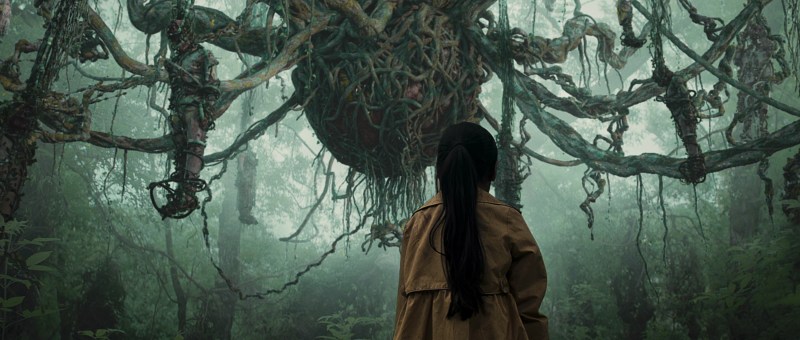
The giant Wicker Panda in the tribe’s central square might never come into use, but lends an ominous air to this weird place that is originally not very hospitable to Chan but eventually comes to believe he’s some sort of prophet serving their Great Creature and can help them avert the oncoming catastrophe mostly by teaching them that it’s alright to hug it out and there’s nothing embarrassing about telling your family that you love them. Relatively light on action, the film focuses on bizarre comedy while rooting itself in its wholesome-seeming but perhaps self-serving message of the importance of family, solidarity, and encouraging others rather than putting them down as Chan and Huhu do their best to avert disaster and return to their previous lives.


Panda Plan: The Magical Tribe in released in US cinemas on April 17 courtesy of Well Go USA.

Trailer (English subtitles)
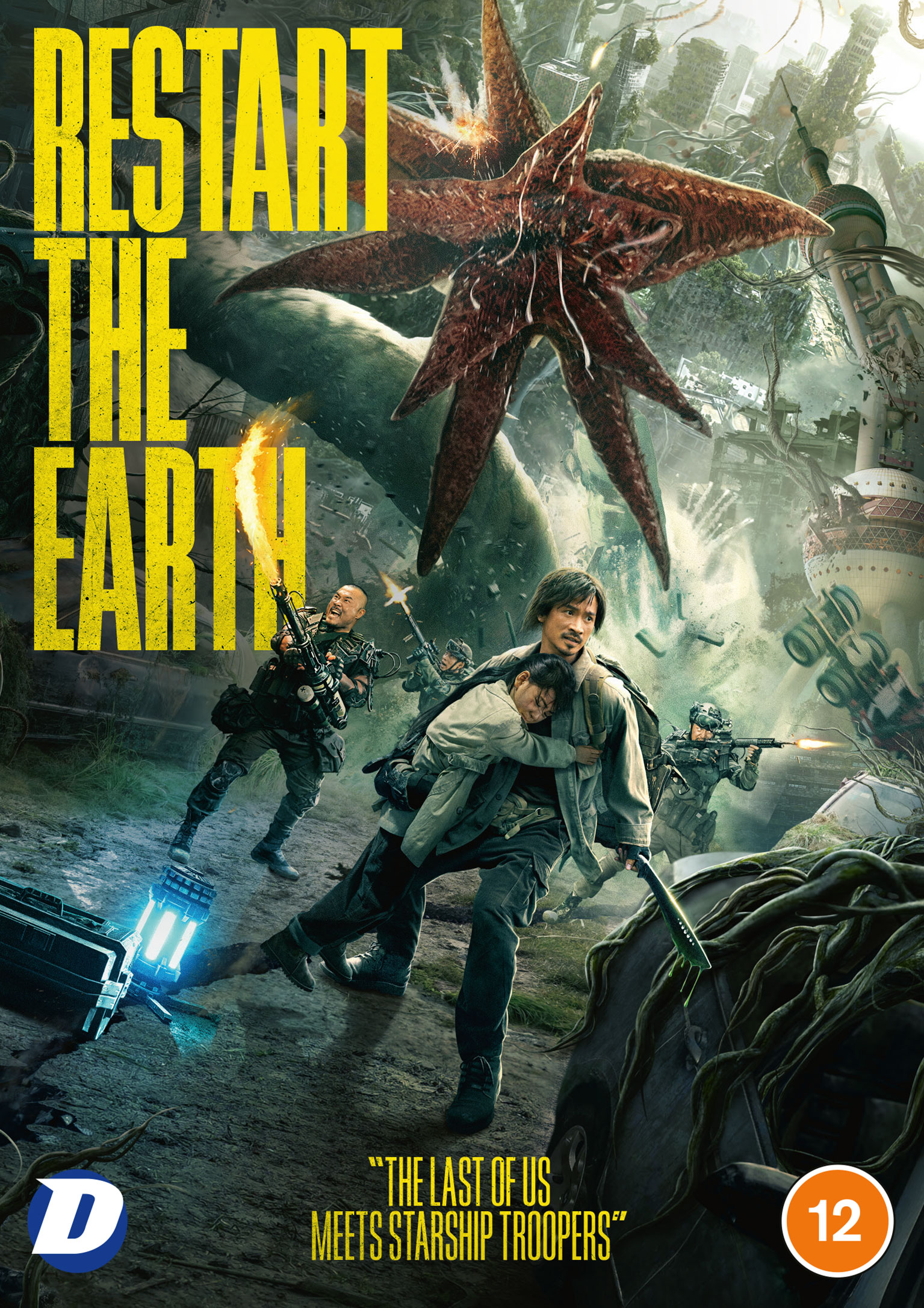
Restart the Earth (重启地球, Lin Zhenzhao, 2021)

Maybe it’s only fair enough if the plants finally turn against us and reclaim the world from the effects of our industry. We haven’t taken very good care of this planet, after all. In Lin Zhenzhao’s well produced low budget streamer Restart the Earth (重启地球. chóngqǐ dìqiú), humanity ironically tries to use science to repair its scientific mistakes but predictably ends up making everything even worse when an experimental program designed to halt desertification suddenly causes plant life to become sentient and develop a craving for human flesh. 

Yang Hao (He Shengming) lost his wife, a botanist, during the original attack and has spent the last two years safeguarding his little girl Yuanyuan (Zhang Mingcan) from the same fate. He wants to find a shelter, but ends up running into a troop of soldiers after a plant attack who tell him that the plants are about to launch a new offensive and all human life will end in a matter of hours if they are not able to achieve their mission of injecting a neutralising element into the plants’ root base in the core of the Earth. Like any good post-apocalyptic dad, Hao has a choice to make. As he tells Yuanyuan he has no interest in saving the world and only wants to save her, but is shamed into joining the cause by Yuanyuan’s disapproval and decides to accompany the soldiers who are in dire need of his engineering skills. 

Personal sacrifice for the greater good is very much the theme of the film. Several of the soldiers actively sacrifice their own lives either to save Yuanyuan or to make sure the planet-saving serum makes its way to the next checkpoint while reminding us that they too have families who might be waiting for them at home. As Hao later affirms, he’s just an “ordinary Chinese citizen”, somehow convincing several world powers not to give up on saving the planet no matter how hopeless it seems simply by reminding them of the power of hope. But it’s precisely this “ordinary” heroism that later saves the world, sending a message that is both egalitarian and collectivist in insisting that everyone has a role to play in a well functioning society. 

Then again, the “catastrophe” as it’s called is very much manmade. It began with climate change which then led to the scientific experimentation which quite spectacularly backfired. In essence it’s all down to “bad” science (and some bad plants that were brought in from abroad by a foreign scientist). Man likes to think it can master its environment, as someone later puts it, but the environment decided to fight back. Even so the solution lies in more of the same as Hao has the bright idea of harnessing the power of nature to break through the plants’ firewall. 

The plants themselves take on the appearance of dragon-like monsters snaking through ruined buildings or else snapping up humans with claw-like tentacles. As the plant-based ring of terror encircles the Earth, giant hand-like branches seem to sprout from the ground ready to smash and grab. Post-apocalyptic production design conjures a land of ruin half-reclaimed by nature, while Lin pays frequent homage to other similarly themed franchises. The soldiers’ uniforms have more than a touch of Attack on Titan, while he also seems to directly reference Aliens as well as a series of other post-apolypytic dramas in which a tightly bound team of survivors must band together to face off against an insidious enemy. 

The idea is essentially to reboot the Earth, but in another sense perhaps that’s what the plants were also trying to do. Maybe we shouldn’t really be rooting for a human victory though it’s also possible that the supercharged plants would soon consume the planet anyway. In any case, the messages about the dangers of climate change and importance of responsible science are secondary to those of the heroism of personal sacrifice for the greater good along with the determination to keep hope alive when it seems all is lost. Noticeably well put together for a low budget streamer Lin’s post-apocalyptic action drama suggests the end of the world might not be that far away but can at least be held at bay if only by the power of human selflessness.


Restart the Earth is released in the UK on blu-ray, DVD, and Download to Own on 22nd May courtesy of Dazzler Media.

Trailer (English subtitles)

Ride On (龙马精神, Larry Yang, 2023)

“Jumping down is easy, stepping down is hard” an ageing stuntman reflects in Larry Yang’s meta Jackie Chan vehicle Ride On (龙马精神, lóngmǎjīngshén). The Chinese title, like the English, may hint at late career resurgence but the film at times feels more like a swan song for Chan himself as it lovingly looks back at some of his greatest action hits while gently suggesting that his era may have passed in this new age of CGI and greater awareness of health and safety regulations. 

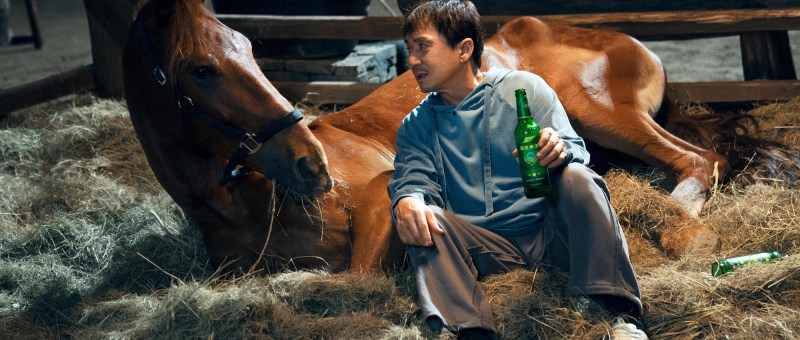
That does certainly seem to be the case for his stand-in, Luo, who has fallen on hard times following serious injury and financial ruin. These days he mainly works as an extra and supplements his income posing for photographs with his beloved horse Red Hare whom he saved from being euthanised at birth and has raised since he was a foal. When the twin forces of vicious loansharks and a weird, wealthy businessman who collects horses come calling for Red Hare it’s like they want to take the last dregs of Luo’s legacy away from him all of which forces Luo to reconnect with his estranged daughter Bao (Liu Haocun), a law student engaged to a rookie lawyer. 

The familial themes play into those of celebrating the brotherhood of stuntmen (and one woman) as one large family who must necessarily take care of each other given that their line of work is incredibly high risk. Yet it’s also true that Luo’s reconciliation with Bao seems to come too easily given her original animosity towards him for being unable to play the role of father to her seeing as her parents separated when she was an infant and she’s met him only a handful of times in her life. Nevertheless, she’s quickly won over by Red Hare even if perhaps identifying a little with him as Luo refers to the horse as his “son” only to belatedly realise that he may have been mistreating him by forcing him to perform dangerous stunts pretty much against his will despite his obvious affection for him. 

Likewise, Bao comes to a new appreciation of her father after watching videos of his old stunts many of which show him incurring serious injuries. The clips are all famous scenes from Chan’s movies such as the shopping mall jump from Police Story or the bus and umbrella stunt which are posited as the glory days of action cinema, yet from a modern perspective we might ask ourselves if all this risk is worth it for simple entertainment even if as Luo later suggests it’s the risk that makes the action entertaining. After getting back on the horse, literally, Luo is offered a series of new stunt jobs one of which requires him to perform a dangerous jump on a badly designed set, while on another he’s told he doesn’t need to perform the dangerous part because they’ll fill in the rest with CGI. Luo is outraged and insists on performing the stunt in camera only to think better of it when considering that he’s making a decision on Red Hare’s behalf that he might not have the right to make. 

The film laments the passing of the age of daredevil stuntmen, but there is a minor irony in the fact that Ride On makes fair use of CGI itself as it fully admits in the closing outtakes which feature several stagehands dressed in green to be erased later. It’s also less a celebration of stunt people than it is of Chan himself and his legendary career as an action star which may be nearing its end which would be fair enough seeing as Chan is now 69 years and clearly making (occasional) use of stunt doubles. Nevertheless, there’s an undeniable sweetness in the relationship between Bao and her fiancé Mickey (Guo Qilin) as they commit themselves to saving Red Hare and forge new familial bonds with the rough and ready Luo that echo the themes of familial reconciliation even if letting Luo off the hook a little too easily for his absence from his daughter’s life. “Stepping down” might be hard, but it doesn’t necessarily mean walking away completely only entering a new phase of compassion and solidarity and not least for a wily horse in search of a loving home.


Ride On is in UK cinemas now courtesy of CineAsia.

UK trailer (English subtitles)