Loser’s Adventure (튼튼이의 모험, Ko Bong-soo, 2018)

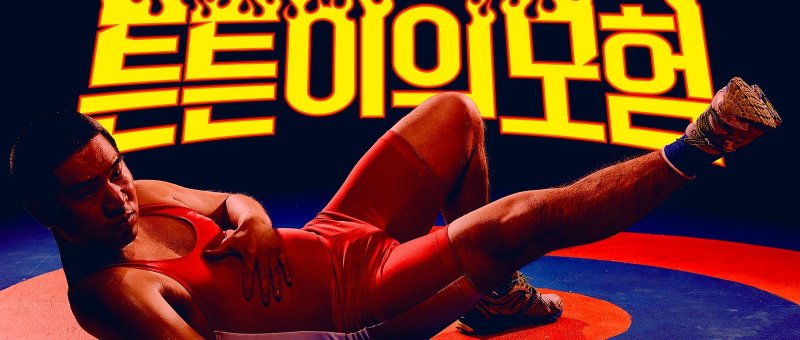
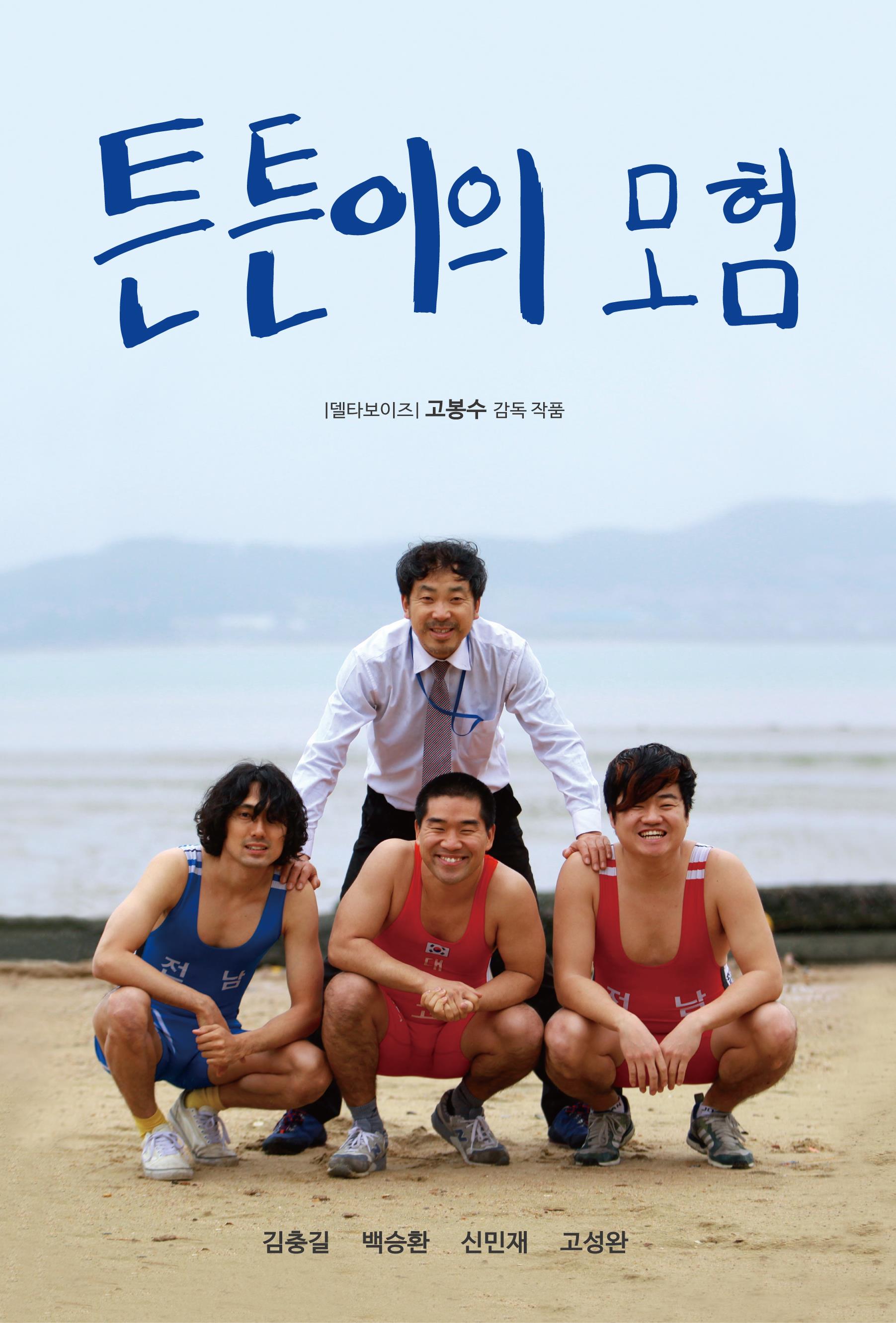
Three aimless young men attempt to shake off small-town despair through the medium of high school wrestling in Ko Bong-soo’s underdog indie sports comedy Loser’s Adventure (튼튼이의 모험, Teunteuniui Moheom). Unkind as it may be to say, the young men are or at least feel themselves to be “losers”, each battling a sense of hopelessness dealing with difficult family circumstances and desperate to escape “this pathetic life” as one terms it for the comparatively brighter lights of Seoul. 

In his last year of high school, Choon-gil (Kim Choong-gil) is now the only member of the wrestling club seeing as everyone else has long since drifted away and, in fact, the coach (Ko Sung-hwan) quit ages ago to drive a bus because he enjoys being able to earn a living. Choon-gil, however, refuses to give up and has been writing daily letters to the head of the wrestling federation in the hope that he’ll somehow be able to resurrect his sporting dreams while trying to convince his conflicted friend Jin-kwon (Baek Seung-hwan) to rejoin the team. While Choon-gil lives alone with his authoritarian, alcoholic father, Jin-kwan has a mild complex about his widowed Filipina mother and her relationship with the dance-loving boss at her job in a junk shop. Hyuk-jun (Shin Min-jae), meanwhile, is a tough guy dandy living with an older brother and and sister in the absence of parents. A petty delinquent and a member of the faintly ridiculous “Black Tiger” gang, Hyuk-jun thinks wrestling’s a bit naff and is offended when his brother tries to give him an ultimatum to start studying hairdressing at his sister’s salon or pick a sport to get good at with the hope of getting a scholarship to uni. 

None of our guys is particularly bright, they know they’re unlikely to make it out through their academic prowess and probably they don’t really think wrestling is going to take them anywhere either but it’s at least something. The most sceptical of the boys, Jin-kwan reminds Choon-gil that he isn’t even very good at the sport and the only reason they took it up in the first place was because the coach semi-adopted them as the surrogate father they each needed at the time. Nevertheless, he’s determined to do whatever it takes to make his wrestling dreams come true. He is however, in for a shock as it turns out that the building holding the wrestling gym is due to be demolished in the imminent future. For some reason moved by Choon-gil’s pleas, the coach calls in a few favours and manages to get the guys listed on an upcoming tournament with the hope that if they don’t lose too badly it will show that the moribund club has promise and is worth saving. 

The irony is that as hard as he trains Choon-gil just doesn’t have much of an aptitude for the sport. He adopts the position of a mentor to new recruit Hyuk-jun, but annoyingly enough he turns out to be something of a natural, while Jin-kwon, the skinniest of the boys though also the tallest, resents the coach’s constant pressure to lose more weight. They are each, as it turns out, at the mercy of their essential character flaws, Choon-gil the hardworking dreamer who just doesn’t have it, Jin-kwan timid and struggling against himself, and Hyuk-jun talented but hotheaded and self-sabotaging in allowing his emotions to get the better of him. 

Still, they do not give up. No one really rates their chances, Choon-gil’s violent, drunken father even attempts to disown him for his love of wrestling, insisting that he become a bus driver instead for the steady paycheque, while Jin-kwan is openly mocked by his sister and Hyun-juk’s dream of starting a business in Seoul is derided both by his brother and by the Black Tigers who continue to plague him even after he tells them that wrestling’s cool after all and they’re all just a bunch of small town losers. The jury’s out on whether the guys can wrestle themselves free of their sense of impossibility and despair, not to mention their sometimes unsupportive family members, but they have perhaps at least found an outlet for their frustration not to mention a surrogate fraternity as they continue on their “loser’s journey” together looking for an exit from the disappointing small town future. 


Loser’s Adventure streams in Poland until 6th December as part of the 14th Five Flavours Film Festival.

International trailer (English subtitles)

Crazy Romance (가장 보통의 연애, Kim Han-gyeol, 2019)

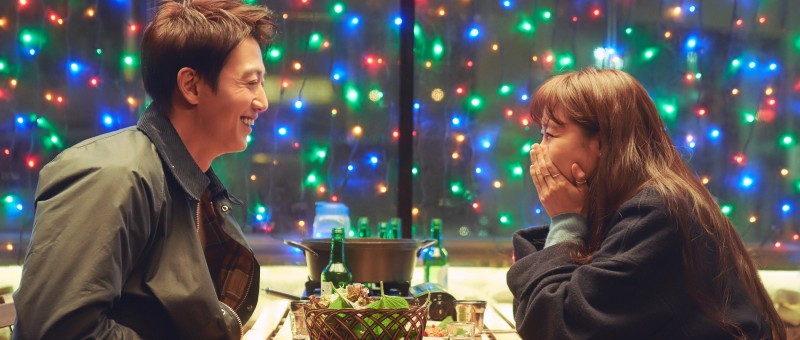
Can you find love in a crazy world? According to Crazy Romance (가장 보통의 연애, Gajang Botong-ui Yeonae), yes and then again no. The Korean title translates as something like the most ordinary of romances, which, considering what we’re about to see, is in someways quite depressing. Achingly contemporary in its Ephron-esque air of sophistication, Crazy Romance nevertheless lays bare the costs to both men and women of living in a rabidly patriarchal, misogynistic society.

Our heroine, Sun-young (Gong Hyo-jin), has just joined a small advertising company in what many seem to feel is an unexpected step down in her career. At the awkward welcome drinks she’s asked a series of inappropriate, sexist questions, but her claims of not currently having a boyfriend are quickly disproved when a young man barges into the restaurant with flowers and abruptly proposes to her. It seems, Sun-young had attempted to break up with him that very morning, but he refused to listen and has now caused embarrassment at her job (which he expects her to quit anyway because they’ll be getting married). Meanwhile, Jae-hoon (Kim Rae-won) wasn’t really paying attention because he’s had too much to drink and is obsessively texting his ex who hasn’t replied in months. 

Jae-hoon’s alcoholism doesn’t seem to have affected his work, but has become a talking point around the office. The day after the party we see him wake up on the floor of his apartment surrounded by the detritus of drinking including, for some reason, several bags of corn on the cob, not to mention a cat which is apparently not his but might as well be now. Ever since his engagement ended, he’s been unable to move on, getting blackout drunk nearly every night and texting his ex who resolutely ignores him (not that you can blame her).

We can immediately see that there is not much difference in practical terms between Sun-young’s abusive ex Dong-hwa (Ji Il-joo) and Jae-hoon who is being positioned as the unfairly maligned nice guy, derided for his maudlin romanticism in being unable to forget his past love even though, as we alter discover, he broke off the engagement because she cheated on him while he was busy working hard for their future, neglecting their relationship as he fulfilled what he saw as his male responsibility to provide financial stability. Jae-hoon does, however, leave it at drunk texting and while privately resenting the fact she never replies, does not become dangerously obsessive, belligerent, or threatening as Dong-hwa later does in refusing to accept that Sun-young has ended their relationship. Nevertheless, witnessing their intense encounter in the car park and perhaps projecting, Jae-hoon tells Sun-young that he feels she’s been unfair to Dong-hwa who is after all “trying very hard” while implying that it’s romantic disappointment that has led to the apparent downgrade in her career prospects in the wake of derailed marriage plans. 

Jae-hoon’s embittered tone might suggest he’s mildly intimidated by Sun-young’s previously successful track record, but it is in a manner of speaking romantic disappointment which has done for her career in that Sun-young is now incredibly sick of having to deal with misogynistic workplace practices and persistent sexual harassment. Finding out the truth, Jae-hoon is outraged on her behalf but contributes to an ironic kind of victim blaming in berating her for not defending herself, as if she had the same right of recourse as he would have in her situation which of course she does not. As they bond in a shared sense of romantic disillusionment, the other team members start to turn against Sun-young, branding her a workplace hussy, while she in turn points out the hypocrisy of their interoffice gossip where everyone has a secret nickname from an employee everyone assumes is gay but is afraid to come out (he might have good reason, judging by his colleagues’ snide comments), to a female office worker’s decades-long unrequited love for their now married boss who is frequently derided for being thoroughly henpecked which is why he forces them into unnecessary company bonding sessions so he won’t have to go home and spend time with his family. 

The problem is that romance, or at least being vulnerable, is still embarrassing even in your 30s which is why everyone has to at least pretend to be drunk to pursue it. Both Jae-hoon and Sun-young are offered extremely problematic dating advice which effectively normalises abusive behaviour, childishly incapable of any kind of emotional honestly as they awkwardly spar with each other while their exes hover in the background. Sun-young tries to take Jae-hoon to task for his hypocrisy, pointing out that he thinks of himself as “better” than all the other useless men, but ultimately the film more or less agrees with him even if clear that he’s still a product of a misogynistic society and extremely self-centred while also genuinely nice as proved when we realise how he ended up with all that random corn. While he is maudlin and romantic, Sun-young is (understandably) cynical, but her spiky aggressiveness finds far less favour even if she is perhaps the one finally in charge of the direction of their relationship. Nevertheless, Crazy Romance cannot help but reinforce contemporary conservative social codes even as it critiques them, insisting that ordinary love is in itself crazy because the world is mad.


Crazy Romance is available to stream worldwide until July 4 as part of this year’s Udine Far East Film Festival.

Original trailer (English subtitles)