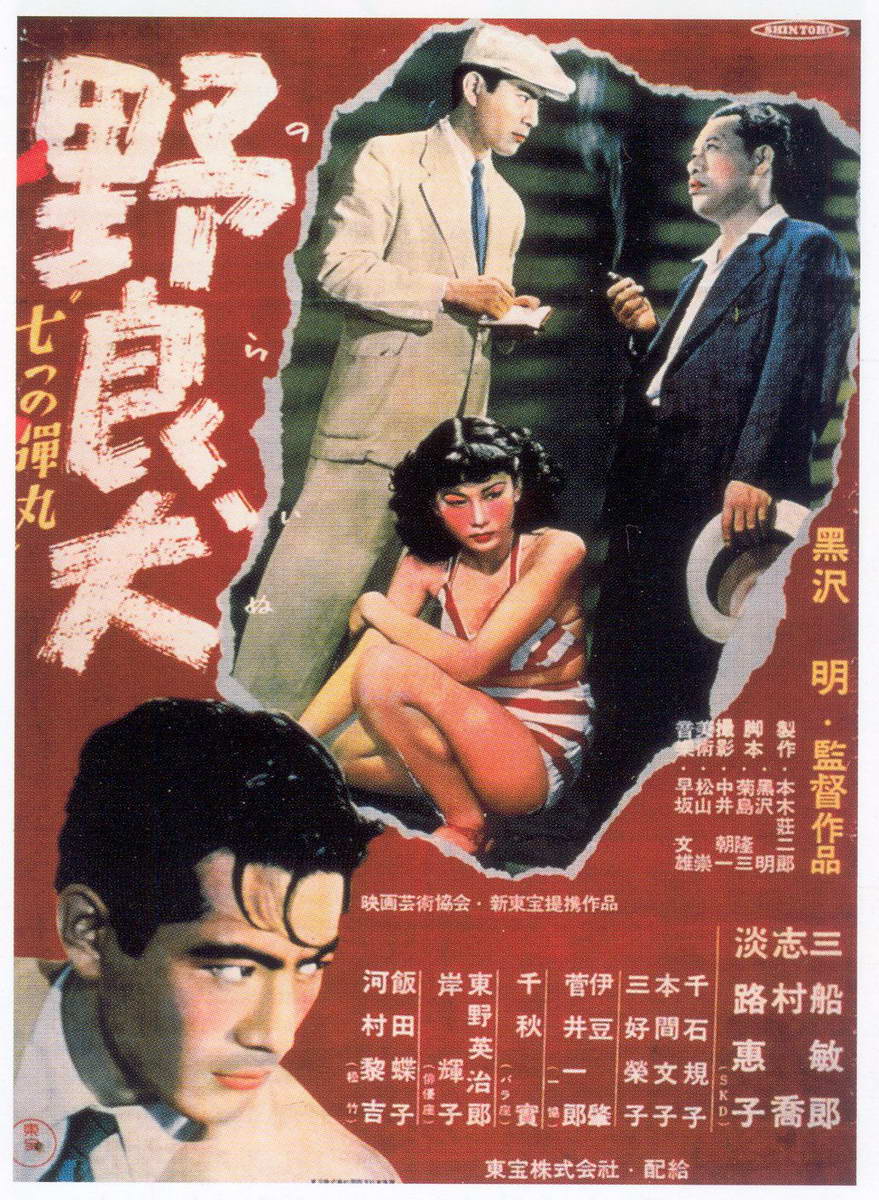
Stray Dog (野良犬, Akira Kurosawa, 1949)

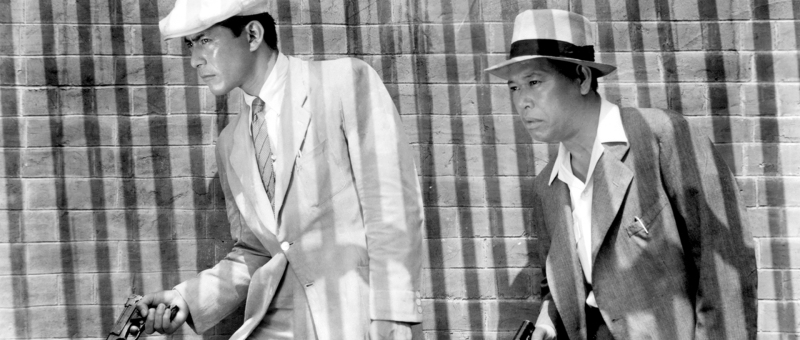
“And, yes, I think the world’s not right. But it’s worse to take it out on the world” the conflicted policeman at the centre of Akira Kurosawa’s Stray Dog (野良犬, Nora Inu) explains as he struggles to reacquire his sense of authority while weighing up its limits and his own right to pass judgement on what is right or wrong or merely illegal. He must ask himself how he can enforce the law while faced with the reality that the man he chases is an echo of himself, the him that took another path amid the chaos, confusion, and despair that followed in the wake of defeat and occupation even as his well-meaning mentor insists that some people are good and others bad and he won’t be able to do his job if he gives it much more thought than that.

The policeman, Murakami (Toshiro Mifune), is perhaps the stray dog of the title who can only follow the straight path towards his missing gun taken from him on a sweltering bus in the middle of summer while he was distracted not only by the heat but by exhaustion having been up all night on a stakeout. As we later discover, Murakami is a rookie cop and recently demobbed soldier trying to make a life for himself in the post-war society. In this he is quite lucky. Many men returned home and struggled to find employment leaving them unable to marry or support families, a whole pack of stray dogs lost in an ever changing landscape. This must have weighed quite heavily on his mind as he made the decision to resign from the police force to take responsibility for the laxity that led to the gun possibly ending up in the wrong hands only to discover his superiors don’t regard it as seriously as he does. His boss tears up the letter and tells him to turn his defeat into something more positive by trying to do something about it, which might in its own way be a metaphor for the new post-war society. 

So closely does Murakami identify himself with his gun that on hearing it has been used in a violent robbery it’s almost as if he has committed the crime and is responsible for anything it might do. There is an essential irony in the fact that this weapon that was supposed to prevent crime is being subverted and used in its service as if mirroring the paths of the two men who both returned to a changed Japan and had their knapsacks stolen on their way back home. Murakami has chosen the law, while the thief Yusa (Isao Kimura) is thrown into nihilistic despair unable to make a life for himself. Murakami’s sense of guilt is further compounded on realising that he may have frustrated Yusa’s attempt to turn back, returning the gun to the underground pistol brokers who make their living through selling illegal weapons stolen from police or bought from occupation forces.

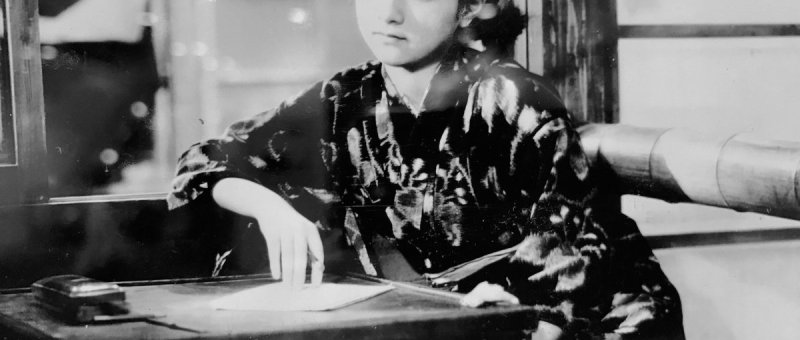
As he admits, Murakami could have ended up committing a robbery but realised he was at a dangerous crossroads and made a deliberate choice to join the police instead. He literally finds himself walking the other man’s path when he’s told by a pickpocket, Ogin (Noriko Sengoku), that the underworld pistol dealers will find him if he walks around downtown looking like he’s at the end of his rope. Ogin, the woman reeking of cheap perfume who stood next to him on the bus, was once known for her fancy kimonos but is now in western dress, signalling perhaps a further decline. In this age of privation, only kimonos and rice have held their value and it’s not unreasonable to assume that she’s sold all of hers and joined the modern generation. Ogin doesn’t have anything to do with the theft, but seems to take pity on Murakami seeing him as naive and essentially unable to understand the way things work on the ground. His mentor, Sato (Takashi Shimura), seems to understand too well, on one level looking down on those like Ogin as simply bad but otherwise happy in her company knowing exactly how to get what he wants through their oddly flirtatious conversation as they suck ice lollies and smoke illicit cigarettes in the interview room. 

Dressed in a ragged military uniform, Murakami wanders around the backstreets of contemporary Tokyo past street kids and sex workers and groups of men just hanging around. Kurosawa employs montage and superimposition to reflect the endless drudgery and maddening circularity his of passage under the stifling heat of summer in the city that allows him a better understanding of what it is to live in this world. Even so, the boy who eventually makes contact seems to see through him pointing out that he looks too physically robust to pass for a desperate drifter. Yusa meanwhile is wiry and hollow, a frightened man who uses Murakami’s gun to affect an authority he does not own which might explain why both of his victims are women. Sato emphasises the worthiness of their victimhood, explaining that the first was robbed of the money she’d saved over three years for her wedding meaning she might have to wait even longer at which point there would be no point getting married at all, while the second woman was killed at home alone and defenceless. We’re also told that her body was nude when discovered which raises the question of whether she might have been assaulted before she died which would cast quite a different light on Yusa’s crimes no longer an accidental killer but a crazed rapist well beyond salvation. 

Yet the accidental nature of Yusa’s fall does seem to be key. The trigger seems to have been a childhood friend he’d fallen in love with gazing at a dress he could never afford to buy for her, pushed into a corner by his wounded masculinity and taking drastic action to reclaim it in much the same way Murakami later does in searching for his missing gun. In their final confrontation they grapple violently in existential struggle in a small grove behind some posh houses where a woman plays a charming parlour tune on the piano pausing only for a few moments to peer out of the window on hearing gunshots. Murakami retrieves his gun and the pair fall to the ground side by side to be met by the sound of children singing, provoking a wail of absolute despair from a defeated Yusa suddenly hit by the full weight of his transgressions. He too was a stray dog heading straight in one direction driven out of mainstream society by the unfairness of the post-war world. Sato tells Murakami that he’ll eventually forget all about Yusa, that he’ll become “less sentimental” and accept the world is full of bad guys and those who fall victim to them, but Murakami doesn’t seem too convinced, for the moment at least unable to forget that Yusa was man much like himself only less lucky or perhaps simply less naive.


Stray Dog screens at the BFI Southbank, London on 1st & 13th February 2023 as part of the Kurosawa season.
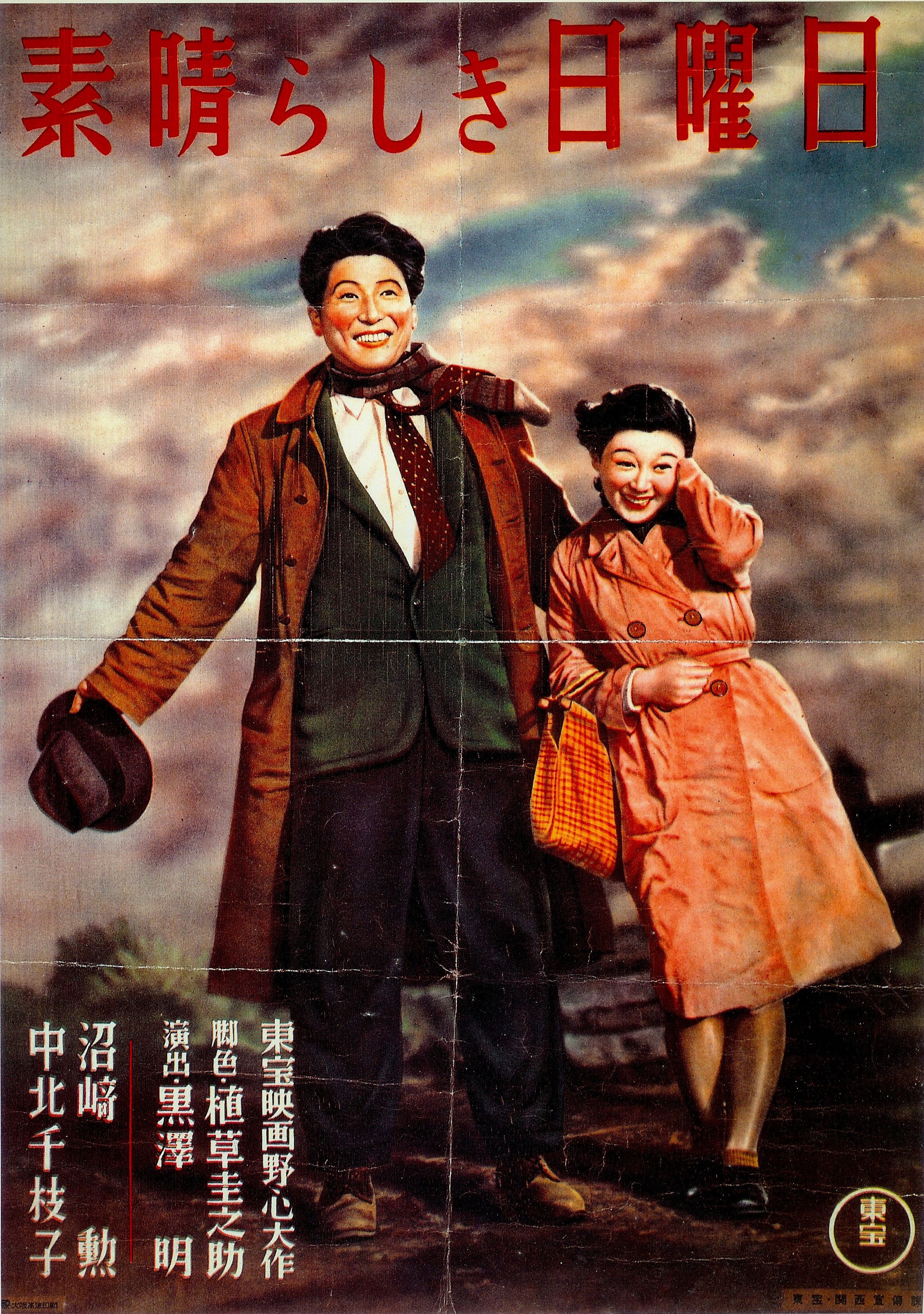
One Wonderful Sunday (素晴らしき日曜日, Akira Kurosawa, 1947)

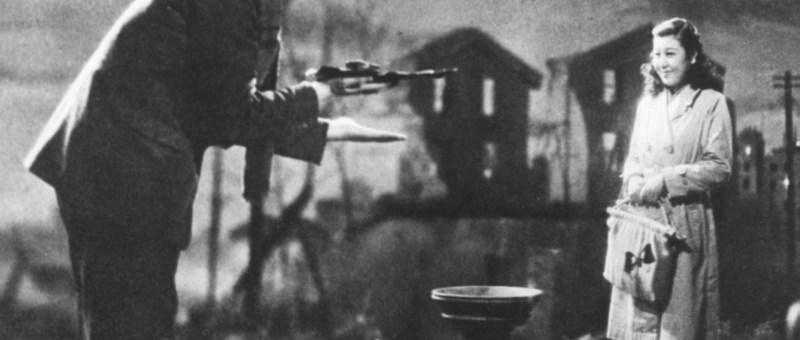
A young couple attempt to have a nice day out in Tokyo for only 35 yen but eventually discover something much more valuable in Akira Kurosawa’s surprisingly upbeat voyage through the backstreets of the post-war city, One Wonderful Sunday (素晴らしき日曜日, Subarashiki Nichiyobi). Though it may begin with frustration and progress to abject despair, the film allows its dejected heroes to find renewed hope for the future in the ashes of their defeat if only through the power of make-believe. 

Yuzo (Isao Numasaki) and Masako (Chieko Nakakita) are a young(ish) couple who’ve been together since before the war but are unable to marry because their precarious financial situation prevents them from finding a home in which they can live together. Though they are each in full employment, Masako currently lives with her sister and Yuzo with a friend. They can only spend Sundays together, but this particular Sunday Yuzo is fulled with frustration and resentment. He has only 15 yen, not much of a date as he tells Masako with irritation explaining that she’s had a wasted journey. She reveals that she has 20, but Yuzo has his male pride and is reluctant to take “a woman’s money” while internally humiliated not to be able to take her out on the town. Just before she had arrived, Yuzo had stared at an abandoned cigarette butt on the pavement. His desire soon overcame his shame. He picked it up and smoked it, only for Masako to bat it out of his hand as if insisting that he’s better than that. 

For her part, Masako is defiantly upbeat. Perhaps she’s putting on a brave face for Yuzo, but does her best to buoy his spirits so they can have a nice day together. It may be her only nice day all week. While she looks forward, he cannot move beyond the dissatisfying present. Masako begins by suggesting they check out a show home advertised on a billboard as a new kind of residence which is cheaper to build and available for only 100,000 yen for the first 100 buyers. She imagines how their life might be together in this space, while Yuzo merely sulks in the corner and points out the shoddiness of the build amid declining modern standards. It’s advertised as affordable, but they can’t afford it. Meanwhile, another man wanders in with a woman who is clearly his mistress. She exclaims that the place is a dump, “I hate matchbox houses”, while he agrees that it’s cheap for a reason and you get what you pay for. Presumably he already owns a home where his wife and family live and is about to drop a small fortune on a discreet love nest while his mistress, not unreasonably, attempts to haggle her way up to something a bit more fancy. Yuzo knows he won’t ever be able to afford even this “inexpensive” home that a wealthy man disdains as not worthy of his bit on the side. They’ve just come from seeing a crummy flat a few streets away which Masako asks directions to only to be put off by the doorman who warns them that the flat isn’t even really habitable and the landlord is heartless but they couldn’t afford that either even on the assumption they would both keep working (which depending on Masako’s job might not possible once she marries).

The landscape around them is in ruins. Yuzo and Masako wander through a bombed out city not yet ready for reconstruction looking for somewhere to stay out of the cold without eating into their 35 yen. He wants to give up and go home, but she convinces him to attend a concert of the music they heard on their first date before the war only when they get there all the cheaper tickets have been bought up by touts who sell them on at 50% markup. Beaten up for challenging the touts’ uncompromising cynicism, Yuzo hits rock bottom returning to his flat in a rundown tenement where a woman mopping the corridor gives Masako serious side eye. Frustrated, he tries to pressure her into premarital sex, her rock bottom coming a few minutes later when she firstly leaves in outrage and then returns as if admitting that their situation will never improve. 

“The war destroyed that dream” Yuzo had said of Masako’s attempt to rekindle his hopes for the future in the plan they made to open a cafe together after they married, but the reality of their mutual defeat finally seems to inspire defiance in the face of the world’s hostility. On their journey through the city, they’d encountered a ragged street kid who thought them fools after they refused his offer of ten yen for one of their rice balls and simply gave it to him out of human kindness. Yuzo felt himself a fool after trying to visit an old friend who’s done well for himself with a swanky cabaret bar only to be rebuffed and see his own image reflected in a mirror with his threadbare overcoat and battered hat juxtaposed with the image of a fine young couple eyeing him with disdain and suspicion. In the end Masako can only appeal to us, breaking the fourth wall in a moment reminiscent of Peter Pan asking us to clap if we believe in fairies as she tries to revive Yuzo’s sense of naive possibility to conduct an unfinished symphony of their imagined life together in a happier future of post-war Japan. Refusing to give in to their baser instincts, to become cynical and selfish or else simply to give up, this wonderful Sunday does seem to have given them a childish sense of hope that better days are on their way and until then there’s always next week. 


One Wonderful Sunday screens at the BFI Southbank, London on 3rd & 15th January 2023 as part of the Kurosawa season.
Composition Class (綴方教室, Kajiro Yamamoto, 1938)

composition class posterChildren’s essay classes can yield unexpected revelations but sometimes it’s the tragedy behind the humour which catches the attention rather than a unique way of describing a situation not fully understood. Composition Class (綴方教室, Tsuzurikata Kyoshitsu) has something in common with the later Korean classic Sorrow Even Up in Heaven or even the more temporally proximate Tuition in drawing inspiration from the diaries of school age children but predictably it’s far less bleak in outlook. Though young Masako (nicknamed Maako) has her share of problems, her troubles are met with characteristic cheerfulness and a determination to carry on no matter what.

In a small town in North East Tokyo, 1938, Masako Toyoda (Hideko Takamine) lives with her parents and her two brothers in a humble home her family can barely afford. Disaster strikes when dad gets a letter from the court which he can’t read – Masako usually reads for him but letters from the court are still too difficult for a preteen schoolgirl. The family are behind on their rent and have heard that someone is trying to buy up the area with other families also facing possible eviction. Bright though she is, Masako might have to give up school and find a job as a maid while the family moves to stay with relatives who own a shoe shop. Luckily, none of that happens because the note was only about a rent increase (on the rent that haven’t paid for months).

The second crisis occurs when Masako’s teacher is taken with the essays she’s writing in class which are so real and honest that they espouse all the values he wants to teach the children. Around this time, the lady from next door, Reiko’s mother Kimiko, is leaving town (and her husband) and so gives away some her breeding rabbits as pets believing that a nice girl like Masako will be sure to take care of them and that they could use the extra money from selling the babies. Kimiko, thinking Masako is out of earshot, remarks that she was going to give some of the rabbits to the local bigwigs, the Umemotos, but even if they’re wealthy, they aren’t very nice and she wouldn’t like to think of her rabbits not being looked after. Masako naively records this minor detail in one of her essays which the teacher then sells to a local magazine. The Umemotos find out and aren’t happy which is a problem because dad gets most of his work through Mr. Umemoto who has a stranglehold on the local economy.

Through Masako’s diary and child’s eye view of the world, Kaijiro Yamamoto paints an oddly relaxed picture of depression era privation as the Toyodas endure their penury with stoicism and a belief the bad times will sometime end. Masako and her family have it a little better than some, but when bad weather puts an end to dad’s tinsmithing business and he’s forced into the precarious life of a day labourer things go from bad to worse. Now out of work more than in, the family are reliant on rice coupons to get by and spend one miserable New Year’s with no money for the first week of January when the biting cold makes it impossible to go out and forage for food. Masako writes of her embarrassment the first time her mother sent her to the shop with coupons and that she eventually got used to it, save for one occasion she ran into friends and had to quickly cover by saying she’d bought rice bran rather than collecting the rice dole. Like Masako, dad is a good natured soul though he’s also fond of drinking and is often let down or tricked out of his money, even being cheated out of his bicycle which he needs to keep working.

Sadness is all around from the man next door who’s so poor he doesn’t even have money for sake to the dejected Kimiko who eventually returns pale, drawn, and barely recognisable only to find her husband remarried to a much younger woman. Though Masako is a bright girl with a talent for writing her future is already limited. At one low point, her mother seems excited about the idea of selling Masako off to a geisha house where she will at least be fed, have pretty clothes, and maybe make a good match with the sort of man who marries former geishas. Needless to say, Masako is not very enthusiastic, and neither is her teacher who pledges to save her from such an unpleasant fate but luckily it never comes to that. Other girls will be going on to high school and university, but Masako counts herself lucky to have got a job in the local factory which will provide a steady income for her family. Though it’s a shame Masako is denied the same opportunities as the other girls because of her family’s poverty, she does at least pledge to keep writing even as she marches happily towards work and a (possibly) brighter future.