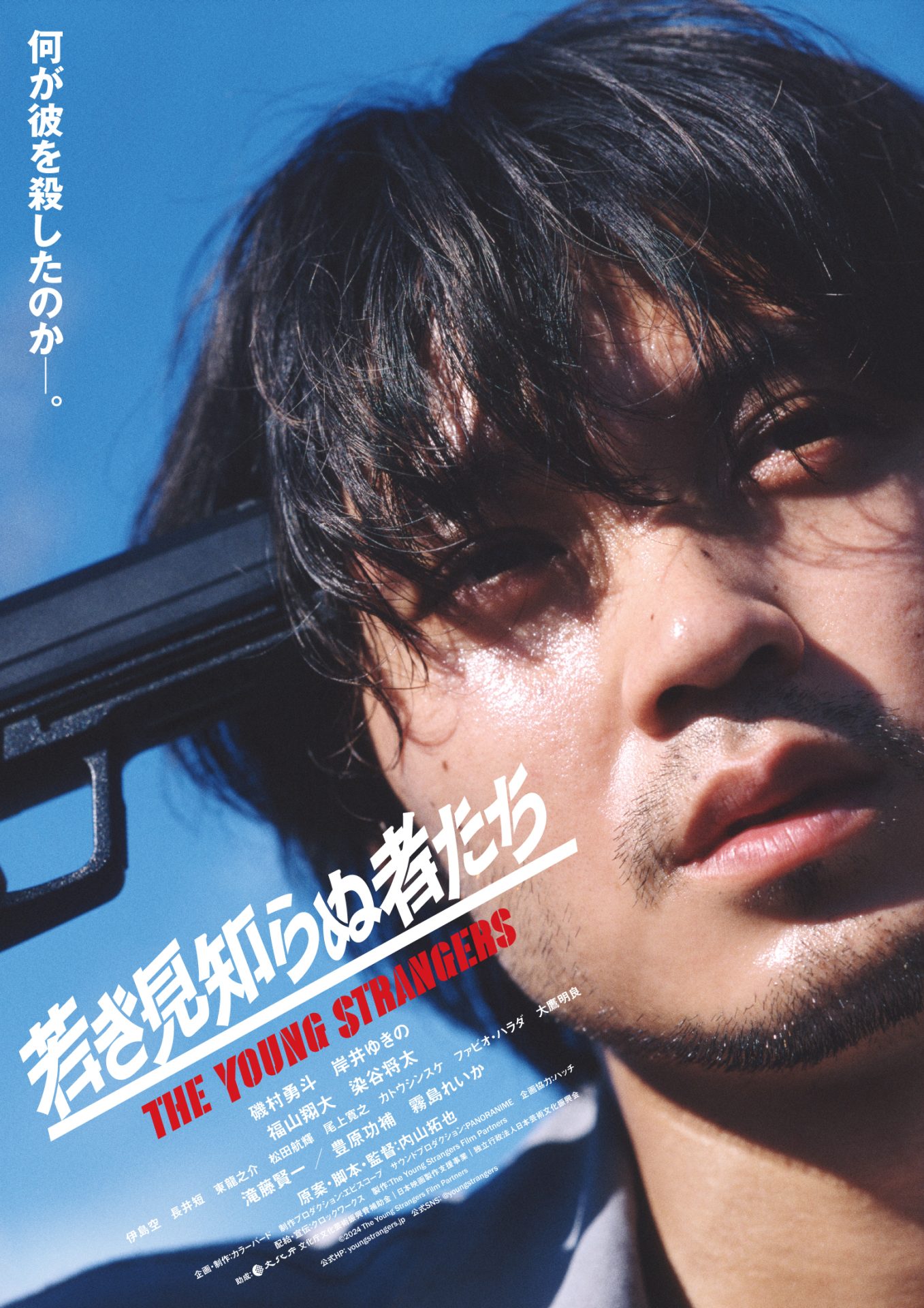
The Young Strangers (若き見知らぬ者たち, Takuya Uchiyama, 2024)

You have to protect your space from the violence of this world, a compromised father advises his sons, yet it’s something that neither he nor they are fully capable of doing. Billed as the “commercial debut” from the director of the equally emotionally devastating Sasaki in my Mind, Takuya Uchiyama, The Young Strangers (若き見知らぬ者たち, Wakaki Mishiranu Monotachi) paints a somewhat bleak portrait of contemporary Japan as place of desolation and abandonment, but at the same time is melancholy more than miserable in the earnestness with which they all dream of a better life somewhere beyond all of unfairness and injustice.

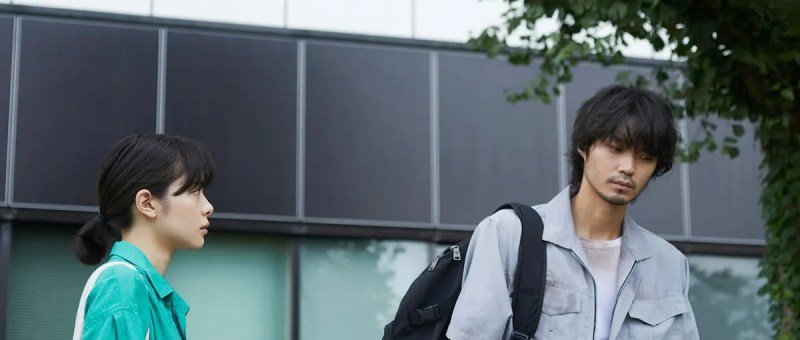
But Ayato (Hayato Isomura) seems to know that he’s burdened with some kind of karmic fate. His life oddly echoes that of his former policeman father and takes on an ironic symmetry even as he was unfairly left to pick up the pieces as a teenager adrift in the wake of parental betrayal. Now his late 20s, Ayato is a worn out and dejected figure who barely speaks after years of doing multiple jobs, in addition to running the snack bar his parents opened as a new start, to pay off the debts his father left behind. Now his mother has early onset dementia and her care is also something else he must manage as best he can with support from his girlfriend Hinata (Yukino Kishii), a nurse, and less so from his conflicted brother, Sohei (Shodai Fukuyama), who has a path out of here as an MMA champion if only he can stick to the plan and keep up with his training. 

As his best friend Yamato (Shota Sometani) points out, he’s hung onto everything his father left him but is equally in danger of losing his future. He seems wary of his relationship with Hinata, afraid to drag her into his life of poverty and hardship, while he watches friends get married and start families. He once had a promising future too, as the star of the school football team, but like everything else that came to an abrupt end in the wake of family tragedy. There are hints of trouble with law in his younger years that may have made it even more difficult for him to earn a living wage, along with giving him an unfavourable view of authority figures. Seeing another young man hassled by the police, he steps in to inverse but ends up in trouble himself. The policemen, take against him and when he’s beaten up by thugs who drag him out of the bar, they arrest him instead and let the others go. Time and again, bad actors seem to prosper and get away with their crimes, while good people like Ayato continue to suffer. When Yamato tries to come to his defence and questions the police, they lie and tell him Ayato’s just a waster as if the world were better off without him.

The boys have this game they play where put two fingers up against the back of a friend’s head and shout “bang”. It’s like there’s a bullet that always coming for them, and Ayato too fantasises about shooting himself in the head to escape this misery. Sohei, meanwhile, makes violence his weapon in taking the martial arts his father left him to forge a new path for himself while vowing not to be intimidated by violence. But violence is all around them from the literal kinds to that of an uncaring and oppressive society, and as much as Ayato fights in his own way to protect his family he can’t keep them all together nor the darkness at bay. He badly needs Sohei’s help, but also knows he can’t ask him to give up his way out or take away his future while Sohei is already pulling away. He thinks it’s time to look into a more permanent solution for their mother, and that they should let the past go, but Ayato wants to hold on to all of it as a means of giving his life meaning. “It’s not your fault, but it will be if it carries on,” a sympathetic neighbour tells Ayato after finding his mother in his cabbage patch again and leaving him to one again clear up the mess. Haunted by images of the past that in Uchiyama’s masterful staging segue into and out of the present, Ayato desperately searches for a way out of his suffocating existence, but encounters only betrayal and injustice amid the constant violence of an indifferent society.


The Young Strangers screened as part of this year’s Camera Japan.

Trailer (no subtitles)
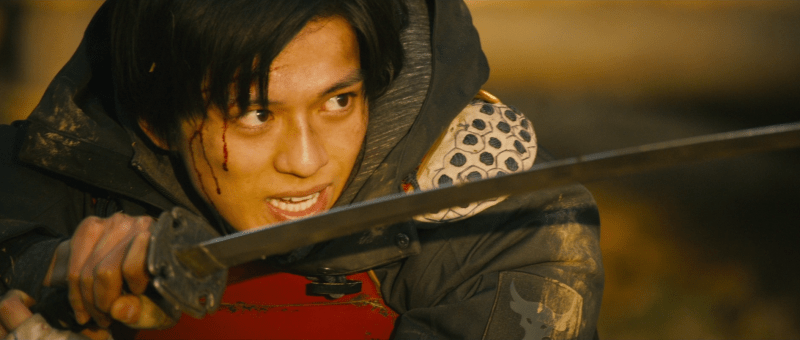
Brave: Gunjo Senki (ブレイブ -群青戦記-, Katsuyuki Motohiro, 2021)

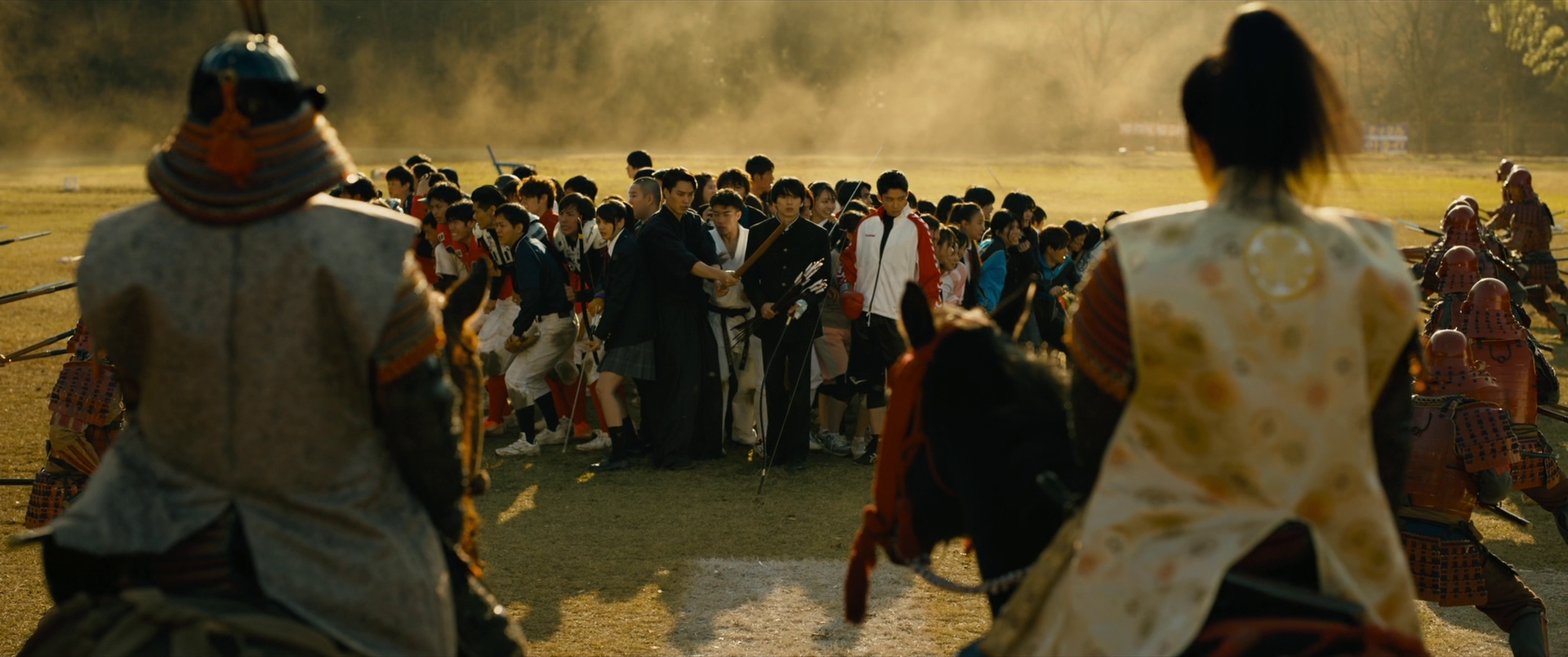
A young man with a total lack of confidence in himself begins discover his inner strength after being sent back to the Sengoku era in Katsuyuki Motohiro’s timeslip drama adapted from the manga by Masaki Kasahara, Brave: Gunjo Senki (ブレイブ -群青戦記-). Fighting a battle for the future, the kids finds themselves at a moment of historical change and caught between the titanic forces of clashing armies but paradoxically discover that they want the same thing, something the kids have always taken for granted, an age of peace in which all are free to live together happily. 

For all those reasons it’s a just as well that Aoi (Mackenyu), a diffident member of the archery club, is a keen history buff even if he declares himself uninterested in winning competitions or becoming a champion. When warriors in 16th century armour begin assaulting the school, he’s well placed to guess what might be going on inferring from some of the names involved that they must have been thrown back to the year 1560 which was something of a turning point in Japanese history marked by the battle of Okehazama in which the outnumbered forces of Oda Nobunaga (Kenichi Matsuyama) scored a significant victory against those of Imagawa Yoshimoto setting Nobunaga on a path towards the unification of Japan. 

Though armed with foreknowledge, the kids are obviously ill-equipped to cope with the demands of life in the Sengoku era having no combat experience yet this institution happens to be one of the most prominent sporting schools in the nation boasting a host of national champions all of whom discover that their athletic skills can easily be repurposed for warfare from the archers and kendo enthusiasts to the baseball and American football players while those in the various science clubs set about investigating how they got here and how they might get back. 

Despite being thrust into a leadership role after impressing warlord Motoyasu (Haruma Miura) who will one day become Tokugawa Ieyasu and oust Nobunaga as ruler of a unified Japan, Aoi remains diffident and fearful unable to fire his bow often walking away from the fight despite his friends’ encouragement. His problem, as is repeatedly pointed out, is that he has no self-confidence and cannot believe in himself sufficiently to act when the occasion calls. Yet through his gentle mentoring at the hands of Motoyasu, he begins to come into his own as a Sengoku era strategist realising that he has something to spur him on in the desire to protect those close to him.

This is not, however, a wholly positive thing. Despite introducing Aoi’s childhood friend Haruka (Hirona Yamazaki) as a talented archer who is much more willing to step up to the fight, the film quickly relegates her to the role of damsel in distress as it does the majority of female students many of whom are also top athletes with useful skills while the assault squad venturing to rescue students taken hostage by evil retainer Yanada Matsuna is, aside from Haruka, exclusively male. Conversely, the guys are given an opportunity to express their fear and sadness each thinking of their mothers as they prepare to risk their lives to save their friends. 

For Aoi, his friends become the light that show him the way while he remains preoccupied with history realising that nefarious forces are trying to manipulate it so that their age of peace will never arrive and Japan will exist in a state of darkness for all eternity. Though often depicted as cruel dictator this Nobunaga seems to want end the darkness by bringing about an age of peace through the unification of Japan taking solace in the idea that these strange people in their weird castle wearing bizarre clothes are from an age in which war is a distant memory meaning at least that his dream came to pass. At heart, it’s a battle between an emo teen who wants to paint the world with the darkness inside him, and a diffident young man turning away from hate and violence while finding strength in the presence and support of his friends. Boasting some impressive effects and high octane battle sequences imbued with a quirky humour as the kids use their sport skills, kicking footballs armed with bombs or throwing fiery baseballs at the confused retainers, Brave: Gunjo Senki sees its diffident hero not only taking charge of his personal destiny but the national in believing that the best way to support his friends is to make sure the world of peace they’ve always enjoyed will again come to pass. 


Original trailer (no subtitles)

Alivehoon (アライブフーン, Ten Shimoyama, 2022)

How far can skills learned in simulation be transferred to the “real” world? Ten Shimoyama’s Alivehoon (アライブフーン) sees a top gamer take to the track for real to compete for drift racing glory while battling both his own lack of confidence and that of those around him. What he discovers is that there may not be so much difference as might be assumed, but offline racing is not a solo sport and succeeding means learning to trust in others as well as oneself. 

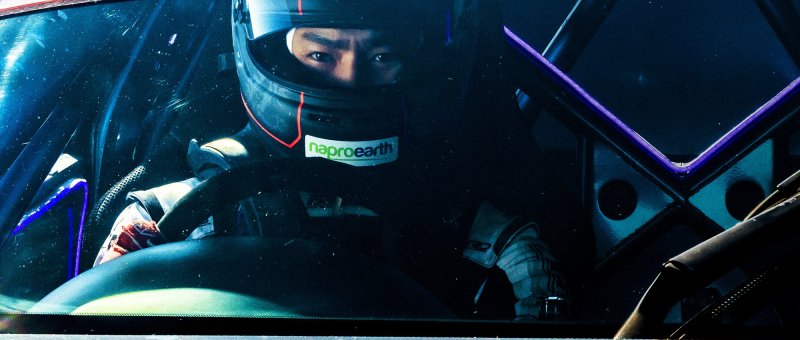
Koichi’s (Shuhei Nomura) immediate problem is that he doesn’t fit in at his job as a mechanic and is resented by the other employees for failing to pull his weight. All he wants to do is play games and after a lifetime of practice he’s become a champion in the world of e-sports drift racing but secretly harbours the desire to become a “real” race driver. He finally gets the chance to prove himself when his exasperated boss gets him an opportunity to try out for a real team in need of a rookie driver to ensure its survival. Diffident as he is, Koichi agrees and after brief moment of confusion on the track, proves he has what it takes to take his virtual skills to the real world as an aspiring drift racer. 

The main opposition Koichi faces is from those who dismiss him on the grounds that in-game experience is useless in the real world, which in some cases it may be but luckily Koichi does at least know how to drive and after a moment to play things through knows how to translate his skills from the online world to a real life track which of course has much more proximity to mortal danger than he has ever experienced before. That might be one reason that veteran driver Muto (Takanori Jinnai) who retired after a catastrophic crash in the opening sequence does not take him very seriously on witnessing him being physically sick after being driven round the course by a champion racer while his daughter Natsumi (Ai Yoshikawa) is very invested in the idea that it might be possible to turn an e-sports champ into a top rank driver and save the team in the process. 

Team Alive is positioned as the nice guy underdog, trying to win through hard work and fairness in contrast to arrogant hotshot Shibasaki (Shodai Fukuyama) who turns down the chance to join Alive to go with a more lucrative offer from a haughty middle-aged woman (Anna Tsuchiya) who plays only to win. Shibasaki drives dirty with the racing equivalent of kicking dust in Koichi’s eyes but eventually pays a heavy price for his lack of sportsmanship only to be humbled and come to see the merit in the honest and down to earth approach of team Alive. Koichi meanwhile fights an internal battle trying to rediscover a sense of confidence while beginning to find it in the mutual support of his teammates acknowledging that he may be in the driving seat but he’s not alone and the victory does not belong entirely to him. 

The film’s race scenes are supervised by “drift king” Keiichi Tsuchiya and feature real life drivers such as Naoki Nakamura, Daigo Saito and Masato Kawabata driving real courses for added authenticity all shot in camera without the use of CGI or special effects. The neon blue/red lighting and synth score contribute to the retro aesthetic but it has to be said that Koichi seems to take to real life drift racing a little too easily and experiences surprisingly few setbacks before making a fairly perplexing decision in the film’s final moments despite having discovered the value of teamwork along with a new family in team Alive who each value him for who he is as he brings the best in virtual racing to the real world game. Natsumi too earns the respect of her father as he comes to trust and believe in Koichi but is never quite given the chance to prove herself in her own right. In any case there is something heartwarming in the film’s conviction that there are no pointless skills and that working hard to become good at something is its own reward whether you become a champion or not.


Alivehoon screens in Chicago on Sept. 17 as part of the 15th season of Asian Pop-Up Cinema.

Original trailer (English subtitles)

JK Rock (JK☆ROCK, Shunji Muguruma, 2019)

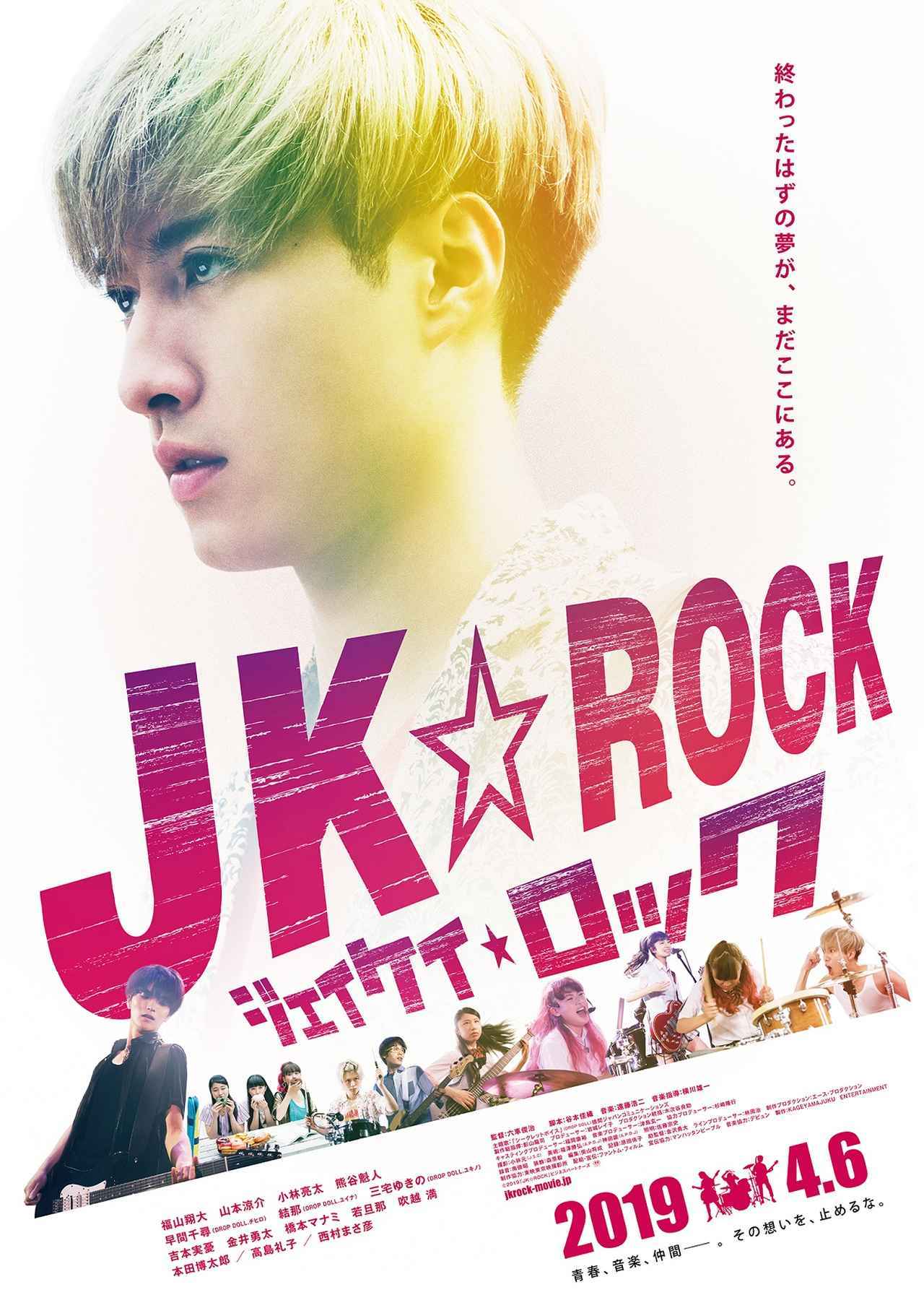
JK Rock poster 1The heyday of the idol movie may have passed with the Showa era, but the genre proves itself alive and kicking with the infinitely charming JK Rock (JK☆ROCK). Starring the members of Drop Doll – a band formed by the three actresses from director Shunji Muguruma’s previous short Little Performer: The Pulse of Winds, JK Rock is a spunky coming of age tale in which three lost high school girls end up starting band at the behest of a strange old man (Masahiko Nishimura) who owns a rock and roll bar in bohemian Kichijoji and secretly wants to coax reluctant rocker Joe (Shodai Fukuyama) back to the stage.

Joe was once in a promising band, JoKers – a combination of his own name and that of his best friend and bandmate whose initials are also JK. A year earlier, however, he appears to have got cold feet and left music behind him for good in order to concentrate on a law degree. He still has his adoring fans though, these days he’s known as the “purple prince” because he drives round campus in an ostentatious purple Lamborghini. A fateful meet cute brings him into contact with feisty high school girl Sakura (Chihiro Hayama) when she decides to take a middle-aged man to task for queue jumping in a convenience store only for Joe to calmly point out that she’s now the one holding everyone up. Somewhat grateful for Joe’s life lesson, Sakura is non-plussed when he calls her a weirdo as he leaves. It’s no surprise to discover that Sakura is a regular at Teru’s Rock ’n Roll Cafe where Joe used to play and so fate is set in motion.

The film’s name, “JK Rock” is a witty multilayered pun in that it refers both to the multiple “JKs” and to the more obvious “Joshi Kosei” which means “high school girls”. Sakura is joined by two more frequenters of Teru’s – waitress and track star Mao (Yuina) who takes up the guitar, and fabulously wealthy Rina (Yukino Miyake) who practices bass in secret so her ultra ambitious mother won’t stop her doing what she loves. In true idol movie fashion, everyone seems to be fairly well off in an aspirational sense but each has their own problems which run from an inappropriate crush on a supportive teacher to overbearing parents keen to stamp their own view of success on their kids in order to stop them making their own mistakes.

Meanwhile, Joe is battling the usual early life crises as he weighs up following his dreams against the safety of conventionality. “You can’t fire up my rock spirit and then run away!” Sakura angrily tells him in a line that seems oddly filled with subtext, but running away does seem to be Joe’s problem. He didn’t go with his friend to America, and the other Joe is now big international star. Snapped at by the band’s manager that he had no guts and no love for rock, Joe decided he was unworthy for the stage and had no right to play, forcing himself into a dull but conventionally successful life as a lawyer. Consequently, he is a grumpy, empty shell of a man driving round in a stupidly big and colourful car with a superficial girlfriend who assumes she’ll soon be getting married to an independently wealthy professional grade husband. Through jamming with Sakura he begins to rediscover some of his rock spirit and get his mojo back to realise he’s free to play with whoever he wants on his own terms.

A musical coming of age tale, JK Rock does its best to showcase the musical talents of Drop Doll which appear to be vast. JoKers plays only a minor role in brief flashbacks of what might have been (and perhaps could be again) for the dejected Joe while the girlband studies intently under his, originally reluctant, tutorship to become fine musicians in their own right. Of course, when it comes down it, it’s not just music but youthful solidarity and the true power of friendship which eventually show the way as old wounds are repaired and new bonds formed between the variously troubled youngsters who eventually realise that they’re figuring things out and will probably be OK. A charming, sprightly youth movie filled with true punk spirit and genuine warmth, JK Rock is an improbable delight and sure to make stars of its three leading ladies.


JK Rock was screened as part of the 2019 Udine Far East Film Festival.

Original trailer (no subtitles)

Short version of the music video for the movie’s theme song – Secret Voice

https://youtu.be/ivuhjpQ9_-0