Love Doesn’t Matter to Me (愛されなくても別に, Aya Igashi, 2025)

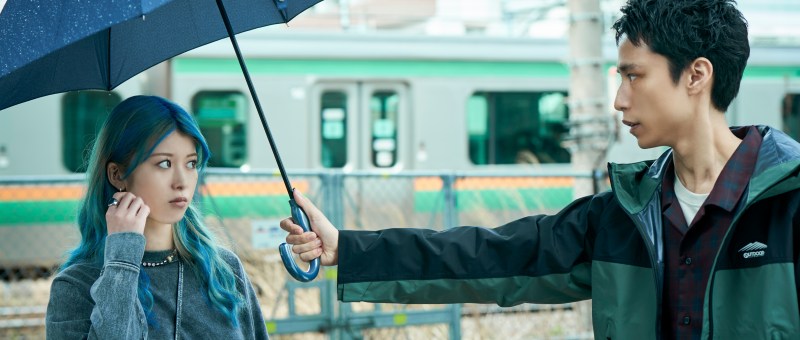
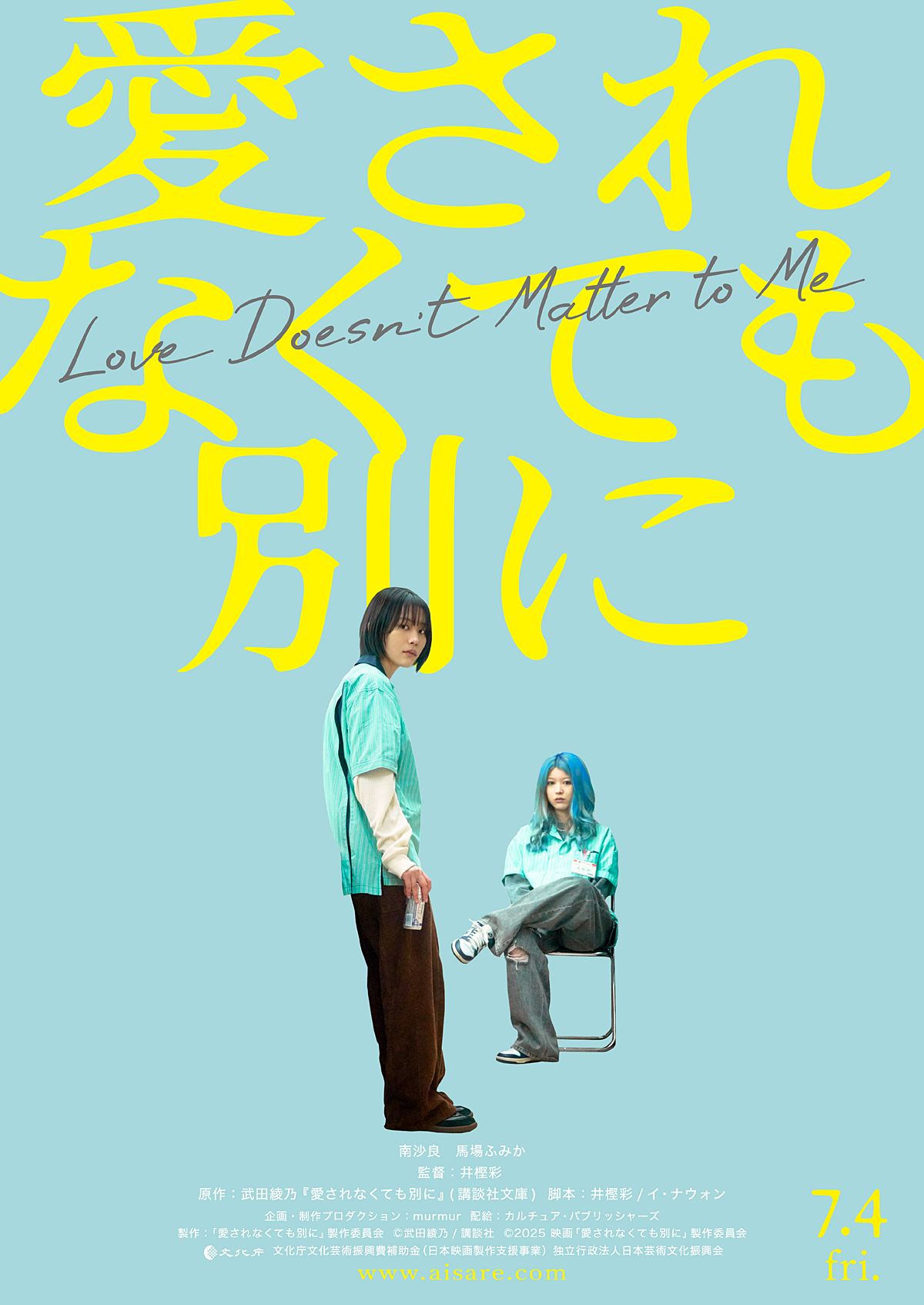
Two young women find solace and solidarity in each other after escaping toxic familial environments in Aya Igashi’s adaptation of the novel by Ayano Takeda, Love Doesn’t Matter to Me (愛されなくても別に, Aisarenakutemo Betsuni). Though some might say that parents always love their children even if that love was not conveyed in the optimal way, the two women struggle with their contradictory impulses in craving the love of a parent who in other ways they know is past forgiveness.

The problem for Hiiro (Sara Minami) is that the roles have become reversed. She is effectively the parent of her irresponsible mother (Aoba Kawai) who treats her like a housekeeper and is intent on exploiting her labour. Hiiro’s mother didn’t want her to go to university and is still charging her rent and board to live at home while Hiiro works several part-time jobs to jobs to support them. She believes that her mother lives beyond her means, but is unaware of the extent to which she’s been financially abusing her by keeping both the child support her absent father had been sending and the student loan she’d taken out as a safety net. Having to work so hard also means that Hiiro is tired all the time and is prevented from taking part in normal university life or social activities which leaves her unable to make friends. At times she resents her mother so much she’s worried she might end up snapping and killing her to be free, but at the same time loves her and therefore puts up with her ill-treatment.

Enaga (Fumika Baba), meanwhile, is ostracised because her father is on the run after killing someone, though the reason she is resentful of her family is a history of sexual abuse and exploitation that have left her feeling worthless. As she later says there’s no point comparing your unhappiness to that of other people, otherwise you just end up making yourself more miserable as if you were trying to win an unhappiness competition. Nevertheless, learning of Enaga’s situation wakes Hiiro up to the possibility that other people are unhappy too and her life may not have been as comparatively bad as she felt it to be in the depths of her isolation. 

Yet what both women seem to crave is the positive maternal relationship they’ve each been denied. Hiiro gets to know another student, Kimura (Miyu Honda), who also has no friends partly owing to a judgemental attitude and poor social skills whom she later discovers to be from a wealthy background despite her being desperate to find a job and working alongside Hiiro at the convenience store. Kimura resents her mother (Shoko Ikezu) for being overly controlling and possessive. She’s come all this way to university to escape her, yet her mother calls every few hours and is angry if she doesn’t answer and makes frequent visits leaving Kimura with no freedom or social output. To Hiiro, Mrs Kimura’s actions seem to come from an obviously loving place and she might have a point that Kimura is naive, having been kept sheltered all life by her own helicopter parenting, which is why she’s been sucked into a cult. Hiiro sees in Mrs Kimura the love and affection she’d have liked from her own mother and is jealous rather than seeing how seeing Kimura feels suffocated and is driven to despair in being unable to escape her mother’s control.

Lady Cosmos (Yoko Kondo), the cult leader in whom Kimura has found salvation, tells each of the girls that they were loved by their imperfect parents and ought to love them back, but they seem to know better. Though she makes some perspicacious comments, Lady Cosmos also tells them exactly what they want to hear and attempts to occupy a more positive material space to be the loving mother they never had. But, of course, not so different from Hiiro’s mother, she’s bleeding Kimura dry by forcing her to pay extortionate amounts for readings and holy water. Ironically she’s still controlling her much like her own mother had, but Kimura thinks she’s found freedom in cult and resents any attempt to undercut Lady Cosmos’ belief system even if she’s at least on one level forcing herself to believe it rather than being a true believer. 

What might be surprising is that the two women effectively break free of the “cult” of family in accepting that their parents aren’t good for them and the decision to cut them out of their lives is valid rather than the breaking of a taboo or an unnatural rejection of the sacred bond between a mother and a child. Instead they effectively remake the image of family for themselves as one of mutual solidarity and unconditional love between two people who aren’t related by blood but have discovered a much deeper bond rooted in shared suffering.


Love Doesn’t Matter to Me screens as part of this year’s Japan Foundation Touring Film Programme.

Trailer (English subtitles)

The Suicide Song (伝染歌, Masato Harada, 2007)

Suicide Song US Tokyo Shock DVD Cover
US Tokyo Shock DVD cover

There comes a time in every director’s life when fate leads them down the strangely tempting path of the idol movie. In recent years, sweet and innocent is no longer quite enough to cut it and when your film stars a bunch of kids from AKB48, you’re going to need 48x the kawaii factor so even though the DVD cover is suitably macabre and The Suicide Song (伝染歌, Densen Uta) is marketed as a J-Horror movie, there’s quite a lot more singing and dancing than might be reasonably expected.

In true idol star horror movie fashion, the film begins with some cutesy high school scenes before one student, Kana (Atsuko Maeda), starts in on her teacher who basically wants to skip a whole bit of the text book because it’s not on the exam. The potentially irrelevant teaching matter concerns famous Japanese playwright Chikamatsu whose big thing was, you guessed it, double suicides. Shortly after this, Kana is heard singing a weird song and then cuts her own throat with a kitchen knife right in front of her friend and classmate, Anzu (Yuko Oshima). It seems there has been a spate of these spontaneous suicides of teenage girls which occur after singing this particular song so skeevy newspaper guys Macasa, led by occult obsessed Riku (Ryuhei Matsuda ) and his ex-military buddy Taichi (Yusuke Iseya), decide to do some “investigative journalism”. Anzu and some of the other kids wind up helping out too, eventually coming under threat of that very same curse….

The idea of a “suicide song” isn’t a new one. Gloomy Sunday – a 1930s Hungarian folk song which achieved widespread acclaim thanks to an English language cover version recorded by Billie Holiday in 1941 became an urban legend after numerous suicides were linked to the doleful track and its extremely bleak lyrics. This time around, it’s AKB48’s inoffensive Boku no Hana which apparently drives anyone who tries to sing it to their deaths. Like Gloomy Sunday, the song features extremely nihilistic lyrics which echo the existential confusion and romantic disillusionment that many of its young listeners are undoubtedly experiencing. A perfectly rational explanation for why so many young women might be taking their lives with this particular song on their lips, yet Suicide Song is not particularly interested in exploring the various real world pressures which might push high school students towards death when their lives ought to be just beginning.

It’s not long before the curse makes the leap to supposedly solid adult males. Later, one character tries to weaken the importance of the song by suggesting that it just opened a door for the suppressed feelings that were already there. That each of the victims already wanted to die and and simply allowed themselves to make use of this real world meme to give themselves permission to end it all. This is an interesting idea in some ways, though comes close to victim blaming and conveniently lets the central characters off the hook for failing to save their friends who have already fallen for what is either a curse or mass hysteria. In any case, like most Japanese horror movies and mysteries, the real villain is a circle of buried secrets. The traumatic past must be faced, brought out into the light and then given a proper burial to end the ongoing chaos.

Harada is playing a very strange game. He adds in generic J-horrorisms such as odd jump cuts, stuttering, power outages and possessed video footage as well as a good deal of shadiness in the form of the low rent newspaper guys and the investigation turning up something as dark as a teenage gang competing to see how many kids they can get to kill themselves using the song as a marker. Yet, he generally keeps things cute and light just like your average teen idol romance movie. We’re even treated to a very special AKB48 performance at their club in Akihabara (“Japan’s Most Sophisticated Show” !) where they sing Aitakatta for a room full of devoted middle aged guys who are their biggest fans. There are also frequent cinematic quotations from such Hollywood classics as Vertigo and The Lady From Shanghai (not to mention a completely shoehorned in paintball sequence using Ride of the Valkyries a la Apocalypse Now) which seem to hint at some kind of greater plan, but whatever it is never quite materialises.

Whatever Harada’s intentions may have been, Suicide Song is a strange beast which veers widely in tone from wacky comedy to supposed horror film. In actuality there are very few real scares despite the J-horror aesthetic and the comedy never amps itself up to the level of parody. If the intention was to create some kind of weird, subversive genre hybrid, the punches have been well and truly pulled. Watched as a horror movie Suicide Song is prone to disappoint, though its moments of absurd comedy and cute schoolgirl drama prove enjoyable enough for those able to adjust their expectations on the turn of a dime.


The Suicide Song is available with English subtitles on R1 US DVD from Tokyo Shock.

English subtitled trailer (aspect ratio is slightly stretched):