Chigasaki Story (3泊4日、5時の鐘, Takuya Misawa, 2014)

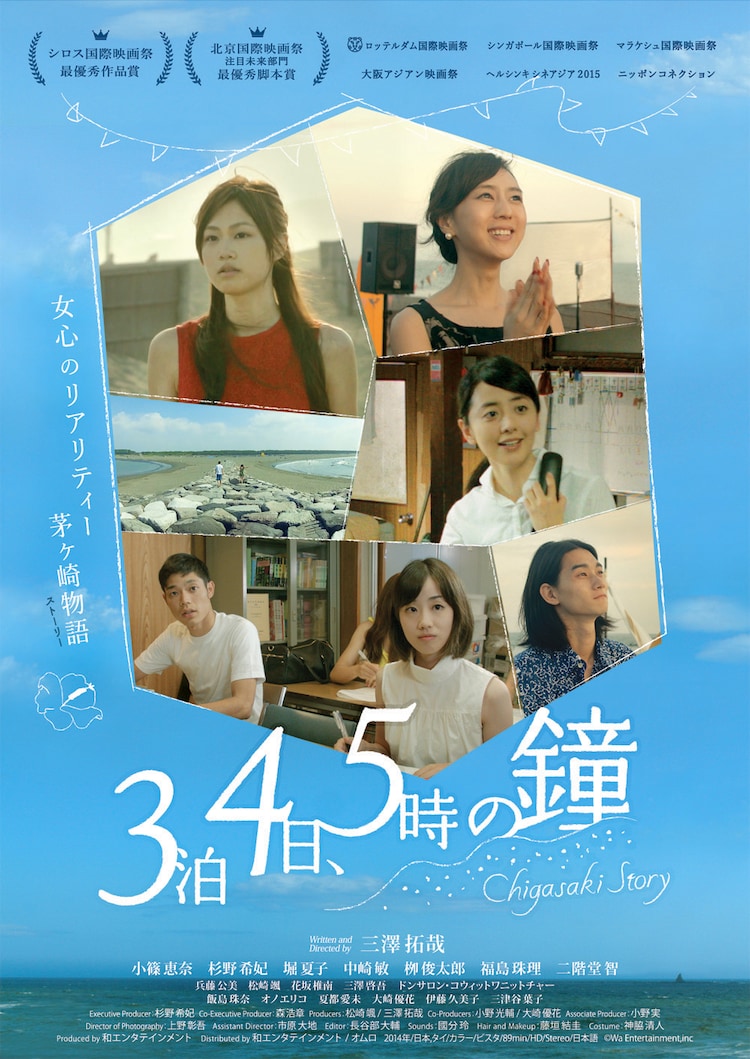
Desire and desperation bubble to the surface at a small hotel making preparations for a wedding in Takuya Misawa’s Chigasaki Story (3泊4日、5時の鐘, 3-paku 4-ka, 5-ji no kane). Though the English-language title may recall Ozu who wrote several of his most highly regarded films while staying at the inn, Misawa pays him only cheerful homage with a series of pillow shots apparently added only as an afterthought while his true inspiration seems to lie in the breezy Rohmerism that has come to dominate a certain strain of Japanese indie cinema over the last decade or so. 

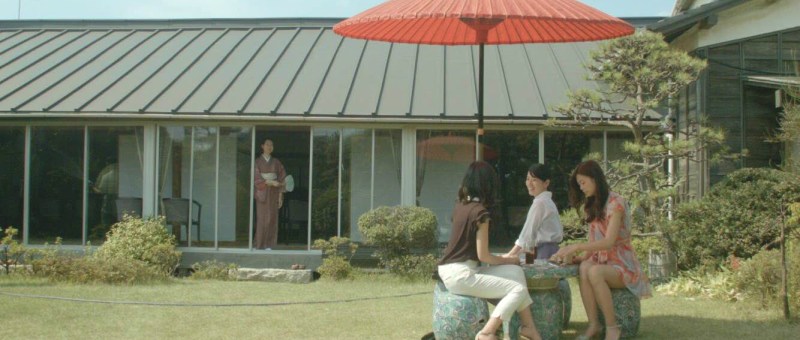
Accordingly the tale is set in the small seaside town of Chigasaki and most particularly at the 115-year-old Chigasaki Inn to which former airline ground crew Risa has recently returned following her marriage to a filmmaker named George whom she met in the course of her work. The couple have already held the ceremony and enjoyed a honeymoon in Hawaii but are now holding a celebratory party for their friends and family in Japan. Meanwhile the inn is also host to a contingent of university students from the same department in which local boy and part-time worker Tomoharu is studying archeology. 

Somewhat meek and mild-mannered, Tomoharu takes his job incredibly seriously and is generally found running around on errands for guests or else cleaning up but his presence becomes a disruptive factor caught between the two groups of visitors instantly captivated as he is on the arrival of Karin, a young and pretty former co-worker of Risa’s who has arrived with the comparatively uptight Miki who has missed nothing in this exchange and is already frustrated by her friend’s wanton behaviour. Miki undeniably has a point when she criticises Karin for putting Tomoharu in an awkward position by inappropriately flirting with him at his job especially as he seems shy and easily embarrassed, but in turn is perhaps also jealous on a personal level intensely irritated when she blows off a plan to visit an aquarium to hang out on the beach with Tomoharu at stupid o’clock in the morning. 

The row only highlights the differences between the mismatched friends though the tables are turned when Miki realises that the students are from her old university and in fact led by her former professor with whom she begins to grow close much to Karin’s consternation. Reverting to her student persona, “workaholic” Miki becomes carefree and uninhibited at once doling out pieces of sisterly advice to the younger women and imposing her company on the students by joining in on their field trip. Her behaviour may in a sense reflect her dissatisfaction with her life as she contends with overbearing bosses having taken over Risa’s role while complaining about Karin’s fecklessness at work and otherwise seemingly jealous of their ill-defined friendship. Risa meanwhile may also be harbouring a degree of doubt in her decision to quit her job, get married, and return to run the family inn especially as her new husband is off working until the day of the party and like everyone else there isn’t really anyone with whom she can share those feelings honestly leading to an unwise if possibility long-term act of rebellion against a potentially stultifying existence that places her at further odds with the already on edge Miki. 

Caught between the women Tomoharu also has a more age-appropriate suitor in an earnest young woman from his class, Ayako, who likes him because of his tendency to care for others while getting on quietly with his work. Attempts to communicate culminate in a lengthy game of ping pong as the angry little balls of truth are batted back and fore across the table until a third player enters the scene and disrupts the flow. Tomoharu had said that his work of piecing ancient bowls back together was different from a jigsaw puzzle because you don’t know what shape it’s supposed to be until it’s finished, which might in a way explain these intersecting relationships as they run through and across each other but ultimately ending up in the place that they’re supposed to be culminating in a wedding party which is either the calm after the storm, an intense act of hypocrisy, or something between the two. 


Trailer (no subtitles)
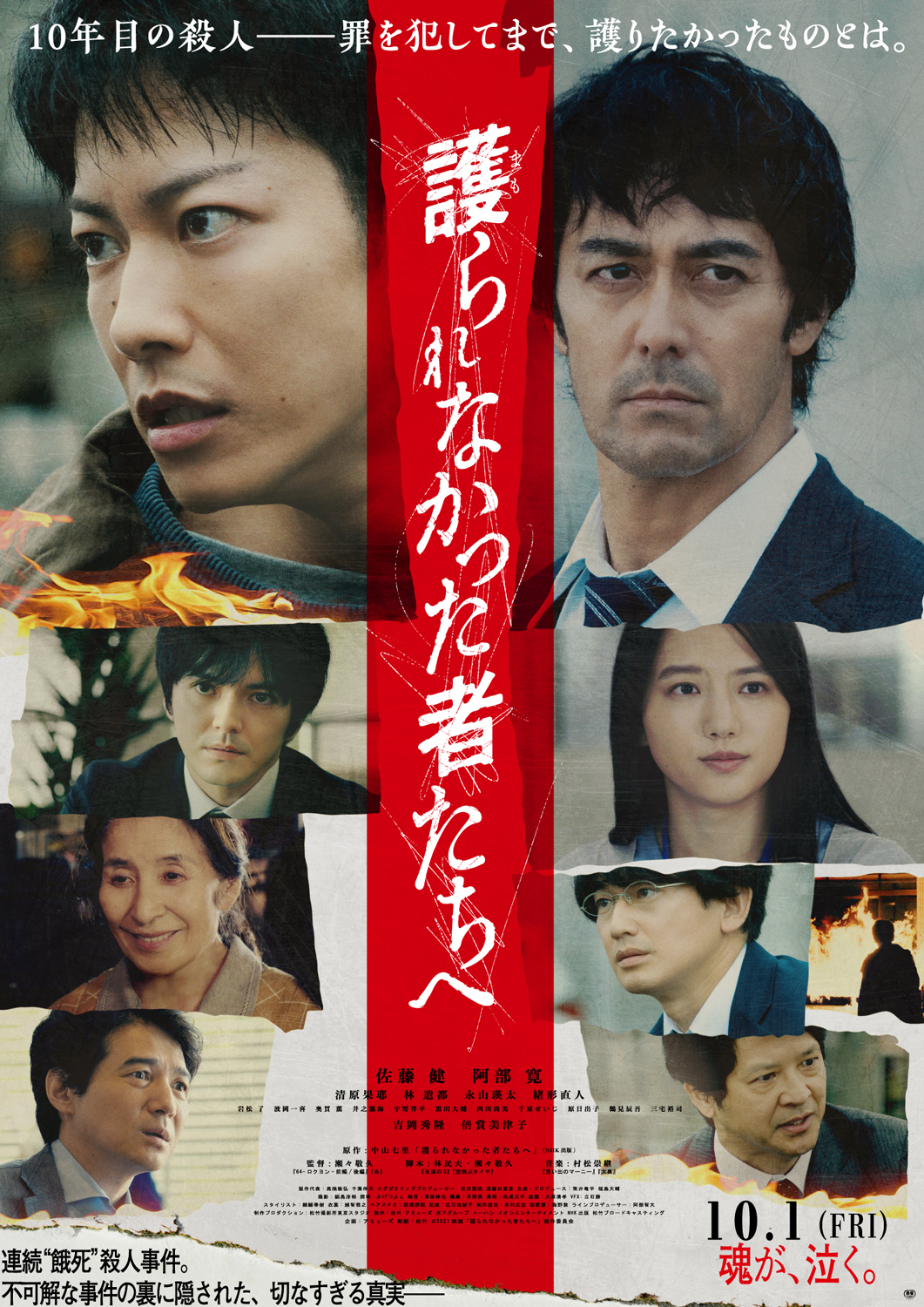
In the Wake (護られなかった者たちへ, Takahisa Zeze, 2021)

According to a young woman at the centre of Takahisa Zeze’s In the Wake (護られなかった者たちへ, Mamorarenakatta Monotachi he), natural disasters are monsters that devour humans with no rhyme or reason, but people close to her have died by human hands while left at the mercy of a hypocritical social welfare system. Though the social workers insist that benefits are something everyone is entitled to when they need support, others go to great lengths to stop anyone getting them. “That’s the country we live in,” one explains with a tone that implies he thinks this is exactly as it should be.

That social worker is the second to be found dead in suspicious circumstances nine years after the devastating 2011 earthquake and tsunami. The police obviously suspect a grudge, that someone who was turned down for benefits got fed up and killed him in revenge. But as assistant Mikiko (Kaya Kiyohara) says, it’s unlikely to be any of them because they are all “too busy trying to survive,” so they don’t have time to waste on things like vengeance. Zeze then switches to the welfare office where a social worker is trying to explain to an elderly applicant all of the different forms and documentation he’ll need to prepare for his claim. These people already have to jump through hoops to prove their “neediness,” while most of them feel defeated and humiliated in even having to ask and would prefer not to have to depend on the government. 

But a lot of Mikiko’s work involves challenging those suspected of committing benefits fraud. The first of two people she talks to is a single mother with mental health issues (Chika Uchida) who’s had to start working full-time and consequently gone over her allowance meaning her benefits should stop and she should pay back what was “wrongfully” claimed. The woman insists she needs the extra money because her daughter was being bullied for being on benefits so she wants to send her to cram school and be able to buy educational supplies, but Mikiko remains unsympathetic. The second is a man who it’s admittedly harder to sympathise with as he appears to have bought quite a fancy car which again takes him over the limit as a car is classed as a luxury item rather than a necessity. Mikiko doesn’t think they should pay out when he could easily sell the car. Of course, it’s not that simple. The man may need the car in order to work and without it would have no choice but to rely on benefits to a greater extent. In any case, he gets on Mikiko’s nerves because to her it’s people like him that prevent them helping more “genuinely” needy cases. 

But on the other hand, when they could and should have helped they refused and effectively blackmailed an old lady into revoking her application even though she had only 6000 yen (£30) left in the bank and was on the brink of starvation with no one else to turn to. Another of the social workers insists that good neighbours are the most effective way of tackling poverty which is equal parts unreasonable and unrealistic. Then again, there was a kind of solidarity that arose in the wake of the earthquake in which an old woman’s kindness saved a young man and little girl from being dragged away by the weight of their despair, giving them a new home and surrogate family along with proof of the fact that there is always someone there to help and that kind of compassion can be a kind of salvation. 

Even so, Mikiko’s insistence that you have to ask to receive, along with the welfare officer’s almost vampiric obsession with getting the applicant themselves to clearly state they need help, seems contrary to her philosophy in which it should just be provided with no questions asked. They know how difficult asking for help can be and deliberately leverage the social stigma of being on benefits to discourage people from applying for them. Citing increased demand and government cut backs in the wake of the earthquake, the social worker confusingly suggests that by declining more cases they can help more people in the long run which doesn’t make a tremendous amount of sense while his eerie grinning hints that he has begun to enjoying sadistically humiliating these vulnerable people who’ve been brave enough to come forward and ask for that to which they are otherwise entitled. 

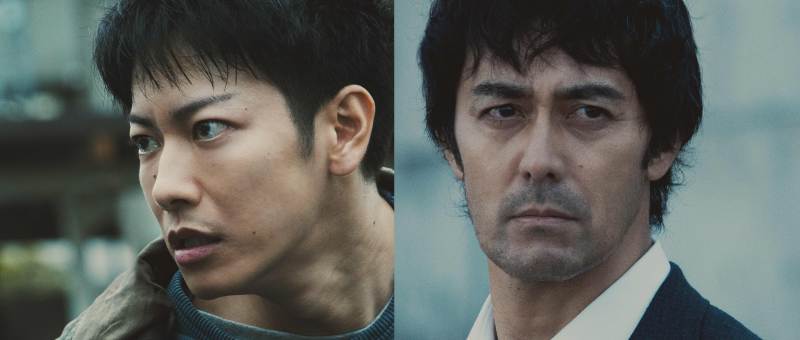
They are all living in the wake of this disaster, something of which aloof yet empathetic detective Tomashino (Hiroshi Abe) is all too aware having lost his wife and son in the disaster. As his son’s body was never found, he too lives in a state of limbo but through investigating the killings begins to find a kind of closure along with an unexpected sense of understanding with a gloomy young man, Yasuhisa (Takeru Satoh), himself a suspect and struggling to make sense of the past, his survival, and the ongoing injustice of the world around him. The film takes its Japanese title, “those who were not protected”, from a note Mikiko writes about the importance of empathy in social work encouraging her colleagues to rebel even if their bosses tell them not to, but also hints at the grief and guilt felt by those left behind that in the end there were those they were not able to save but they can perhaps make their peace with that by continuing to help those around them even if their society largely refuses to do so.


In the Wake screens as part of this year’s Japan Foundation Touring Film Programme.

Trailer (English subtitles)

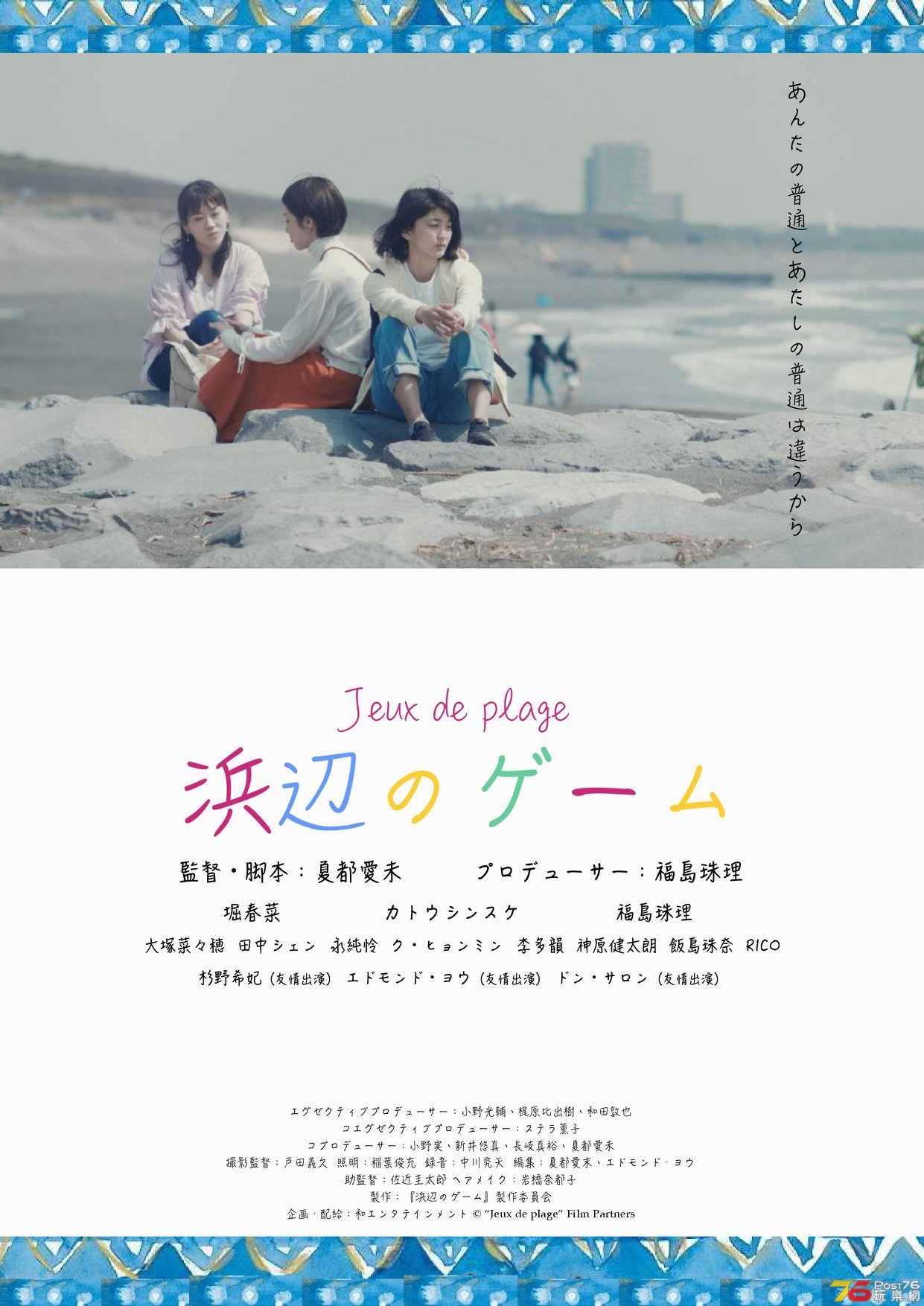
Jeux de plage (浜辺のゲーム, Aimi Natsuto, 2019)

105104a28dul1sw021sqjl“Listen, men are nice to all women, because sex is the only thing they think of” a young woman warns her friend as she recounts a casual encounter on the beach with a man they seem to have collectively decided to declare a bad idea. It’s not all fun and games by the sea for the romantically confused heroes of Jeux a plage (浜辺のゲーム, Hamabe no Game) which owes a fair bit to the French New Wave in its easy, breezy exploration of young love and an intensely sexist society. Produced by Kiki Sugino’s Wa Entertainment, Aimi Natsuto’s Rohmer-esque debut continues the internationalist vibe the studio is fast becoming known for in bringing together a disparate group of travellers each “invited” to a small seaside guest house by the mysterious Miwako.

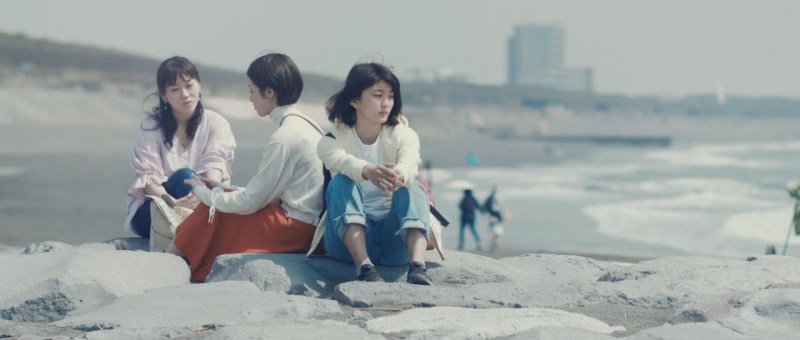
The central psychodrama plays out between three young women, not quite friends, who are apparently engaged in some sort of revolving love triangle. Yui (Juri Fukushima) has brought her uni friend Sayaka (Haruna Hori) on a trip to her hometown where they’ve hooked up with her high school friend Momoko (Nanaho Otsuka), but the atmosphere is beginning to sour. Sayaka increasingly feels like a third wheel while secretly pining for Yui who seems to have regressed into a more vacuous version of her teenage self while obsessing over Momoko who only talks about guys despite later claiming to be pansexual.

Meanwhile, the three women find themselves constantly bombarded by (largely) unwanted male attention – firstly from another guest at the hotel, Akihiro (Shinsuke Kato), who seems to have completely messed up his personal and professional lives with an ill-advised love affair. Akihiro’s eyes are out on stalks when he spots the three pretty women though they, while admitting that he’s “cool”, declare him a little sleazy, maybe even creepy seeing as he’s probably “as old as 35” and giving the eye to a bunch of college girls. Even so, Akihiro is not the only lothario on the prowl. Korean student Min-jun (Koo Hyunmin) has brought a Korean girl, Yona (Li Taun), who’s come to visit him, to stay in the hotel after getting a recommendation from Miwako. It seems Yona is just a friend who came to find out about studying film, but Min-jun keeps making awkward passes and intermittently reminding her about an introduction to his professor which occasionally seems like a creepy sort of pleading.

All that’s aside from the randy professor (Kentaro Kanbara) who might as well be a escapee from a Hong Sang-soo film, having started the picture without his trousers in the empty hotel swimming pool after apparently being seduced by the ever absent Miwako the night before. Despite being profoundly sorry, he turns up the next day to return the clothes he had to borrow and makes a worryingly aggressive play for the previously sympathetic manageress all while his suspicious wife (Kiki Sugino) watches from behind a nearby hedge, presumably following him after doubting whatever story he told her to explain not having arrived home the previous evening. Meanwhile, Sayaka, sick of feeling like a spare part, takes off for the beach where she’s quickly hit on by two different creepy guys, one of whom turns out to be a film director (A cameo from Edmund Yeo) who wanted to hire her for a movie though she wasn’t particularly interested.

Matters come to a head right there on the beach where the women collectively take out their frustrations with the male sex on the cocksure Akihiro, who is not really at fault in this instance save insensitively mocking other people’s romantic distress. Unfortunately, however, the incident does not seem to have relieved the pressure on the central trio who continue to dance around their romantic confusion without talking about anything “real”. While Sayaka looks for advice in asking random strangers if they’ve ever had a same sex crush, Yui becomes increasingly stressed and as irritated by Momoko’s gravitating towards the guys as Sayaka is by her intimacy with Momoko. Meanwhile, the only “nice guy” – a sympathetic Thai filmmaker (Donsaron Kovitvanitcha) observing from the sidelines, fails to add to the drama when attempting to make his own romantic confession (a sweet and innocent one with flowers and poetry) at an extremely inopportune moment. Bookended by time cards with chapter headings taken from classics of the French New Wave, Natsuto’s approach is one of detached playfulness tinged with farce as she observes this collection of flawed but very human protagonists fail to plainly express their desires, becoming ever more frustrated and confused as they struggle to orientate themselves around each other in a repressive and infinitely sexist environment. 


Jeux de plage was screened as part of Japan Cuts 2019.

Original trailer (English subtitles)

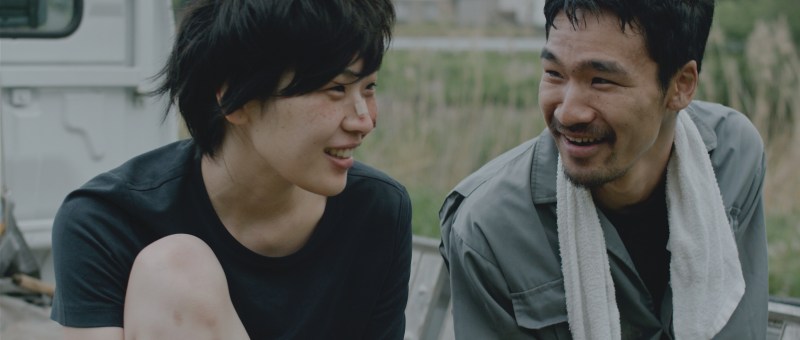
Bad Poetry Tokyo (東京不穏詩, Anshul Chauhan, 2018)

Bad Poetry Tokyo posterRunning towards a dream can help you forget whatever it was you were running away from, but there may come a time when you have to accept that your dream has betrayed you and the sun is already setting. For the heroine of Anshul Chauhan’s debut feature Bad Poetry Tokyo (東京不穏詩, Tokyo Fuon Uta) that moment has arrived all too soon and though she perhaps expected it to come and had actively resisted it, it can no longer be outrun.

30 years old, Jun’s (Shuna Iijima) dream has been a long time coming. At a make or break audition for a Canadian film, she tells the panel that she studied English at a top university in Tokyo and plans to move to LA to work in movies. Meanwhile, she blew out of her country home five years ago and has become estranged from her family. She supports herself working as a hostess in a seedy bar which is more a front for sex work than it is a drinking establishment, but sex work is work and at least pays well allowing her to save money to move to LA.

Unfortunately she plans to move there with her current boyfriend, Taka (Orson Mochizuki), who is a bouncer at the club and was responsible for getting her the job in the first place even if he now can’t quite reconcile himself with the feelings of jealousy and resentment her work causes him. Taka also has issues of his own and when twin crises present themselves in the form of a possessive and intimidating client, and a home invasion that seems like an inside job and leaves her with visible facial scarring, Jun is finally robbed of all hope and left with no other option than to retreat to her hometown and the quiet horrors which have been patiently waiting for her return.

Jun’s life, it would seem, has been one long scream. Returning to a seemingly empty home, she is less than happy to find her slumbering father (Kohei Mashiba) slumped over in the living room. Noticing the wounds on her face he begins to ask her what happened but more out of irritation than concern – he warns her not to bring any trouble to his door. Jun mutters that it might have been a mistake to come back, to which her father cooly retorts that the biggest mistake was her birth, resenting his daughter for her very existence and the taboo desires she arouses in him while insisting that this is all her fault because she is essentially “bad”. Jun’s dad didn’t even bother to tell her that her mother had died, perhaps out of embarrassment or shame for this was not a natural death and though not at his hand he is very much to blame. The first of many men to have wronged her, only now in her somewhat weakened and desperate state is Jun finally ready for a reckoning. After all, there is nothing more to lose.

Men have indeed ruined her life, as has the oppressive patriarchy which continues to define it. The first time we see her, Jun is forced to perform an intense audition scene of a woman being brutally beaten and abused for a dispassionate director. Which is to say, she is forced to humiliate herself and relive very real traumas in the quest to fulfil her dream. This early scene of playacting will be recalled several times, most obviously in the flashforward which opens the film and eventually leads to a moment of both liberation and transgression which ultimately seals her fate.

Unable to gain a foothold in acting, Jun is forced into a life of sex work which she finds degrading and unpleasant, allowing herself to be “violated” in return for money as she later describes it. Again reliving past traumas, her anger only grows and intensifies as she passively permits herself to be misused. A final act of rebellion in refusing the intimidating and entitled attentions of a controlling client leads to a dangerous situation in which he reminds her that women like her belong to men like him and if it pleases him he will destroy her. Jun gives up on her dream and therefore has no more need of the club, but employment in a hostess bar is not always as casual as it seems and one cannot just simply leave. Once again Jun has become someone’s property, not merely as an idea but as flesh.

Jun’s physical wounds are a manifestation of her emotional trauma and the legacy of violence which traps her in an oppressive cycle of abuse and despair. Back in her hometown, filled as it is with unpleasant memories and the shadow of her father’s cruelty, Jun is haunted by the spectre of an innocent childhood. Reuniting with an old friend who, it seems, has always carried a torch for the girl she once was, Jun is forced to confront the gulf between the “innocent” self which escaped with hope, and the defeated self which has returned with none. Even this seemingly positive, innocent romance is eventually tainted by violence offered as an act of love which has its own sense of disquieting poetry. Yet violence is the force which perpetuates despair, creating only fear and rage and pain each time it breeds. Jun is running once again but neither forward nor back, only full pelt towards the setting sun.


Bad Poetry Tokyo was screened as part of the 2018 Raindance Film Festival.

Festival promo (English subtitles)