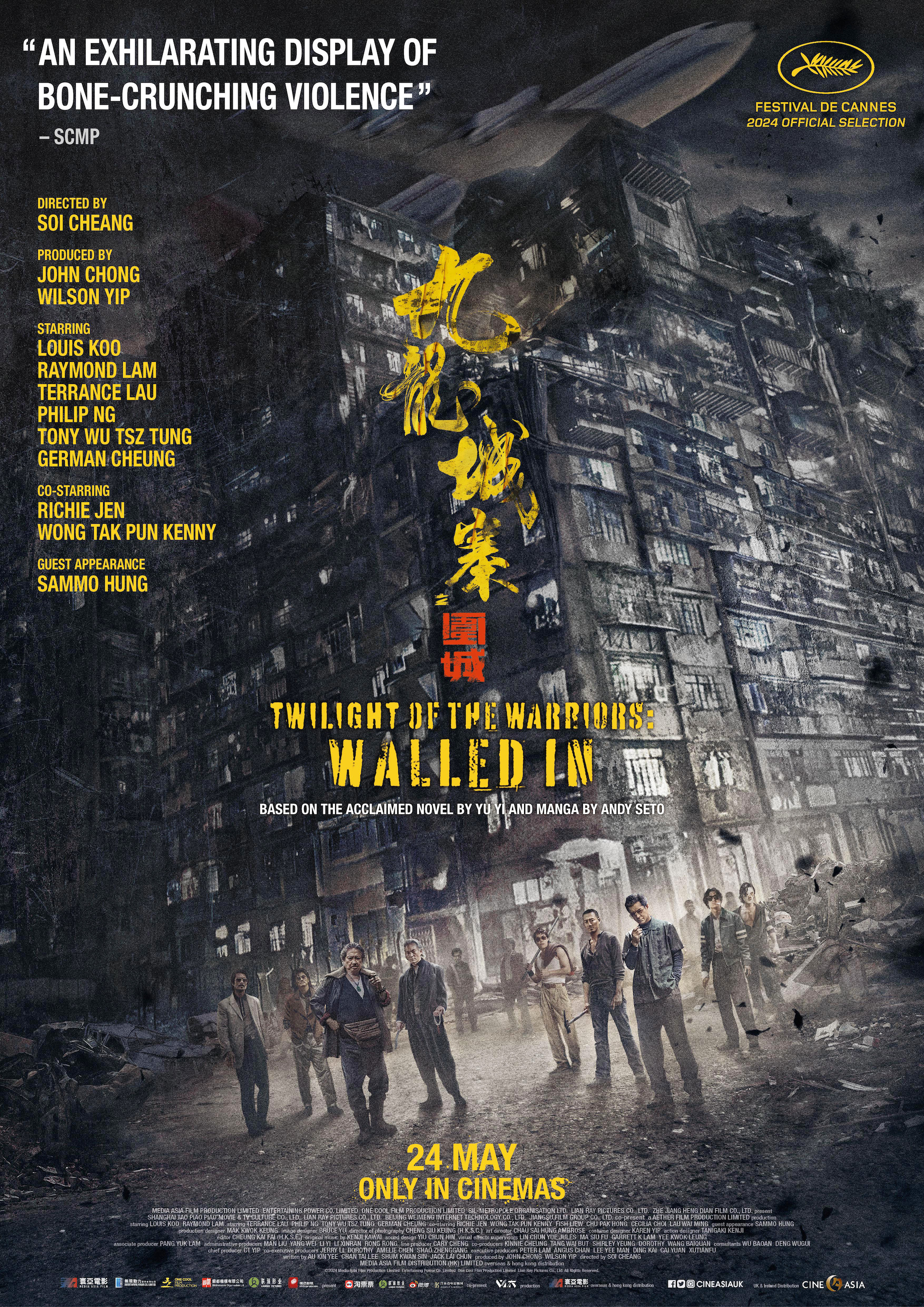
Twilight of the Warriors: Walled In (九龍城寨.圍城, Soi Cheang, 2024)

In Kowloon Walled City, you give help, you get help. Sometimes described as a colony within a colony, by the late 1980s the settlement was largely ungovernable and literal law unto itself save for the triads who maintained what little order there was. Yet in Soi Cheang’s Twilight of the Warriors: Walled In (九龍城寨.圍城) it’s a place of comfort and security, a well functioning community that as its leader Cyclone (Louis Koo Tin-lok) points out may be unpalatable for “normal” people but provides a point of refuge for the exiled and hopeless.

It’s difficult not to read it and Cyclone himself as embodiments of Hong Kong that is slowly disappearing. Dying of lung cancer, Cyclone is aligned with the fate of the walled city as someone whose time is running out, tired and world weary but still hanging on. In the opening sequence set 20 or so years before, we see Cyclone stand up to an apparent dictatorship and institute what seems to be a more egalitarian form of government though one obviously defined by violence. Nevertheless, when refugee Lok (Raymond Lam Wui Man) lands up there originally suspicious of Cyclone having been duped by local gangster Mr Big (Sammo Hung Kam-bo), he discovers him to be a stand up guy looking after those in his community and generally keeping the peace. Nevertheless, Lok’s arrival is the fatalistic catalyst for the opening of old wounds amid the free for all of the mid-80s society in which the Walled City, sure to be bulldozed, has just become a lucrative property investment.

Mr Big and his crazed henchman King represent this new order, amoral capitalistic consumerists who care little for the conventional rules of gangsterdom. Their bid to seize the Walled City has its obvious overtones as they seek to replace the (generally) peaceful egalitarian rule of Cyclone with something that appears much more authoritarian and ruthless. Believing himself to be a stateless orphan, Lok tries to keep his head down saving everything he can to buy a fake Hong Kong ID card which is also in its way a quest for identity not to mention a homeland and a sense of belonging. He finds all of these things, along with a surrogate father figure, in the Walled City only to have the new home he’s discovered for himself ripped out from under him because of a twist of fate. When he teams up with a trio of other young men who all owe their lives to Cyclone and the Walled City to attempt to take it back, it’s also an attempt to reclaim an older, more autonomous Hong Kong that exists outside of any kind of colonial control as evidenced by his final statement that no matter what happens some things don’t change.

This sensibility extends to the casting of the film which includes a series of Hong Kong legends including a notable appearance from the legendary Sammo Hung not to mention Louis Koo alongside a generation of younger stars such as Tony Wu and Terrance Lau Chun-him. Adapted from the manhua City of Darkness by Andy Seto, the film opens with a flashback to the original war for control of the Walled City that hints at deeper, extended backstories otherwise unexplored though equally mythologised by those who impart them to them Lok, a prodigal son and eventual inheritor of the City’s legacy. Even so, the comic book elements sometime distract from Soi Cheang’s otherwise evocative if hyperreal recreation of the Walled City slum or the political subtext that can be inferred in the presence of supernatural abilities such as those which seem to grant King near invincibility.

In any case, Soi Cheang looks back equally towards the history of heroic bloodshed in particular in his tale of brotherhood and loyalty in which the secondary antagonist is literally imprisoned by his own futile desire for a pointless vengeance on the descendent of a man who had wronged him but was already long dead himself. As he’d said, the future of the Walled City is in the hands of the younger generation who choose to end the cycle by setting him free rather than imprison themselves along with him while defending their home as well as they can. With some incredibly well designed action sequences including one that make its way onto a double-decker bus, Soi Cheang’s beautifully staged action thriller as its name suggests has a rather elegiac quality but also the spirit of resistance in its gentle advocation for the importance of supportive communities.


Twilight of the Warriors: Walled In is in UK cinemas from 24th May courtesy of CineAsia.

UK trailer (Traditional Chinese & English subtitles)
Mad Fate (命案, Soi Cheang, 2023)

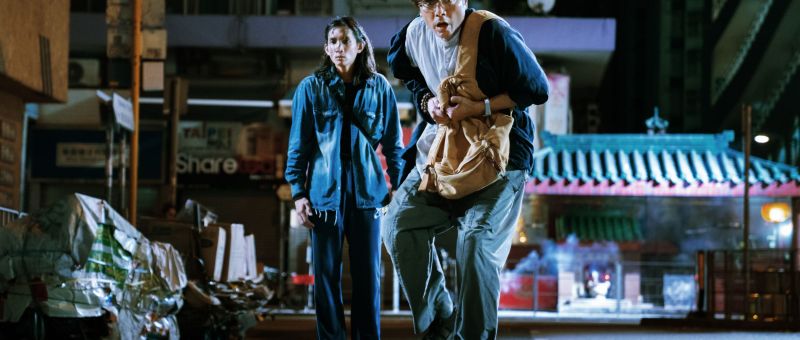
“No one can stray from the path paved by fate.” a policewoman gasps while interrogating The Master (Gordon Lam Ka-Tung), a man whose mind was already strained even before he walked in on the murder of a woman he’d been trying to save only to end up losing to destiny. A noticeably lighter affair than his previous film Limbo, Mad Fate (命案) sees Soi Cheang (AKA Cheang Pou-soi) step into the Milky Way orbit directing a screenplay by Yau Nai-hoi produced by Johnnie To and very much bound up with the kinds of cosmic coincidences the studio is known for.

It’s Fate or maybe God that The Master is resisting, though what the difference between the two might be is never quite clear save for the implication that it’s God who is master of Fate which is otherwise without will. The Master insists that “Fate can be changed,” but he resolutely fails to do so. In the opening sequence, he’s in the middle of burying a woman, May, alive as part of a ritual to stave off a forthcoming “calamity” only he’s unable to complete it in part because of the woman’s understandable anxiety that it’s The Master who’s going to end up killing her, and in part because it starts raining which puts out the paper clothing that should have been burnt to change her fate. May runs off and climbs in a taxi home where she is accosted by a serial killer who has been targeting sex workers. The Master follows her but arrives just too late while the police later chase the killer but are unable to catch him. 

The Master sees his attempts frustrated but also does not consider that the rain itself was a manifestation of Fate or sign that in the end nothing can be changed. In an effort to atone for his inability to save May, The Master ends up taking under his wing a strange young man who also stumbled on the murder by coincidence while working as a delivery driver but is fascinated rather than repulsed by the bloody scene. Obsessed with knives and killing, Siu-tung (Lokman Yeung) is already known to the policeman investigating (Berg Ng Ting-Yip) because he arrested him for killing a cat in his teens. According to The Master’s reading of his fate, Siu-tung will eventually kill someone and end up in prison for 20 years. He doesn’t much like the sound of that so he ends up going along with The Master’s zany plans to make him a nicer person and save two lives in the process. 

Ironically most of The Master’s suggestions still involve Siu-tung being imprisoned in some way. To get him out of his “unlucky” flat, he rents him another place that very much feels like a prison cell and later does actually lock him up inside a shed fearing that he’s about to kill. As he explains, it can help to preemptively accept your fate so moving in somewhere that is “like” a prison can stop you going there for real, but it doesn’t do much to alleviate Siu-tung’s desire to kill and most particularly to kill the policeman who has been following him most of his life because he’s “sure” that he’s going to commit a serious crime. Repeatedly describing him as “vermin”, the policeman has no confidence that Siu-tung could “change” and thinks he’s already past redemption while The Master quite reasonably asks if it’s fair to persecute him in this way just because he happened to be born different.

The Master’s question provokes another about free will and responsibility and if anything is really anyone’s fault if it’s all down to Fate in which case the role of the policeman becomes almost moot. He is also resisting his own fate in his intense fear of mental illness which he worries he will inherit from his parents each of whom suffered from some kind of mental distress. This fear has caused him retreat from life and it seems may have contributed another’s suicide while his divination has an otherwise manic quality as he finds himself constantly trying to outwit Fate. The two men soon find themselves in a battle with the skies, remarking that God is striking back every time they make a move to try and change their destiny. 

Eventually The Master rationalises that a plant must wither before it fruits, allowing himself to slip into “madness” as means of rejecting his fate. His strategies become wilder and finally seem as if they might lead him to kill which would certainly be one way of altering Siu-tung’s destiny if ironically, while conversely something does indeed seem to change for Siu-tung who is understandably concerned by The Master’s increasingly erratic behaviour but has escaped his desire to kill. Then again, could this all not be Fate too, how would you know if you’d overcome it? As The Master comes to accept, the path maybe set but the way you walk it is up to you. Only by accepting his Fate can he free himself from it. There may be a more subversive reading to found in Cheang’s depiction of Hong Kong as a rain-soaked prison in which lives are largely defined by forces outside of their control, but he does at least suggest that his heroes have more power than they think even if it relies on a contradiction in the active choice to embrace one’s fate. 


Mad Fate screens July 22 as part of this year’s New York Asian Film Festival.

Original trailer (Traditional Chinese / English subtitles)

Images: © MakerVille Company Limited and Noble Castle Asia Limited

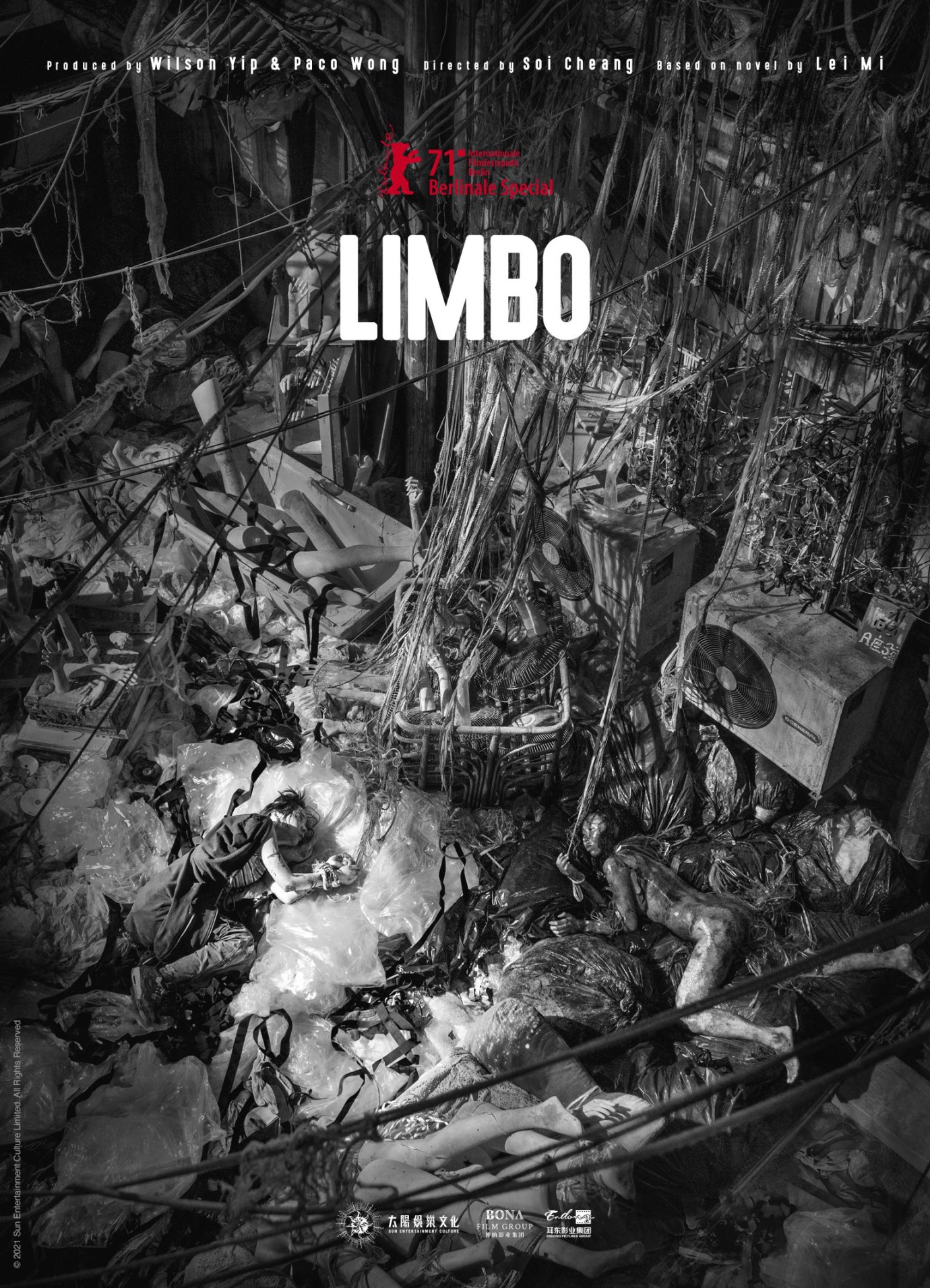
Limbo (智齒, Soi Cheang, 2021)

“I forgive you. Please live well”, a final message from the dying to one attempting to survive the junkyard hellscape of contemporary Hong Kong. Soi Cheang’s stylish thriller Limbo (智齒), shot in a high contrast monochrome lending the city state the rain-soaked aesthetic of cyberpunk noir, is in many senses a purgatorial odyssey as its pregnant title implies sending its duo of morally compromised cops into a world of the dispossessed inhabited by those “thrown away” by their society and thereafter left to rot among the detritus of an uncaring city. 

Hong Kong’s homeless may occupy a liminal space, trapped in an inescapable limbo, but it’s grizzled cop Cham (Gordon Lam Ka-tung) who is the most arrested, unable to move on from the accident which left his pregnant wife suspended in a coma. To escape his own sense of purgatorial inertia, he seeks closure in chasing down petty criminal Wong To (Cya Liu) whom he holds responsible for his fate on discovering she has been granted early parole for good behaviour. As fate would have it, Wong To’s release back into the underworld (after all, where else was she to go?) has unexpected connection to the case Cham is currently investigating in the mysterious appearance of random severed hands each belonging to “social outcasts”, as Cham’s slick rookie partner puts it, they fear may hint at the existence of a serial killer growing in confidence. 

Adapted from a novel by Lei Mi, the film’s Chinese title is simply “Wisdom Tooth”, a tongue in cheek reference to the ongoing toothache which places cop two Will Ren (Mason Lee) in his own kind of purgatorial pain, the offending molar eventually knocked out during his climactic fight with the killer during which he will in a sense transgress, passing from innocence to experience in gaining the wisdom that police work’s not as black and white as he may have believed it to be. “Cops are human too” his boss reminds him as he takes the controversial step of reporting his new partner for inappropriate use of force while pursuing a personal vendetta not exactly connected with his current case. He doesn’t disagree, but points out that police officers have guns and are supposed to uphold the law, not abuse their authority and take it into their own hands. 

But then, who is really responsible for the junkyards of the modern city and their ever increasing denizens abandoned by a society which chooses to discard them along with all their other “rubbish”, little different from the dismembered mannequins which people the killer’s eerie lair. Soi frequently cuts back to scenes of the dispossessed often looking stunned or vacant as they sit on mattresses or abandoned sofas surrounded by the pregnant disrepair of a city in the midst of remaking itself as if they were sitting on skin in the process of being shed by a slow moving snake. It would be tempting to assume the killer has a vendetta against “social outcasts”, his victims sex workers, drug users, and criminals though in truth these people are simply the most vulnerable even if there is no clear motive provided for the crimes save a minor maternal fixation and possible religious mania. A drug dealer ensnared by Cham’s net remains loyal to the killer, “We’re not as crazy as you. We are rubbish, so what? In this world, he’s the only one who cares.” she tells him, unwilling to give up her one source of connection even while aware of her constant proximity to death and violence. 

Cast into this world, Wong To too is trapped in an individual purgatory longing for forgiveness for her role in the death of Cham’s wife, a forgiveness he cruelly denies her even while making use of her desperation to force her to risk her life for him in betraying her underworld contacts to edge towards the killer. “Why are you treating me like this?” she asks, “I don’t want to die”, well aware that denied his direct vengeance by Will Cham is attempting to kill her by proxy. Wong To keeps running, keeps fighting, refuses to give up while seeking atonement and an escape from this broken world of violence and decay. It is she who eventually holds the key to an escape from purgatory, the cycle is ended only in forgiveness. Soi’s stylish drama may paint the modern society as a venal hellscape neglected by corrupt authority, but nevertheless permits a final ray of light in the possibility of liberation through personal redemption. 


Limbo streams in Europe until 2nd July as part of this year’s hybrid edition Udine Far East Film Festival.

Original trailer (English subtitles)