Virus (바이러스, Kang Yi-kwan, 2025)

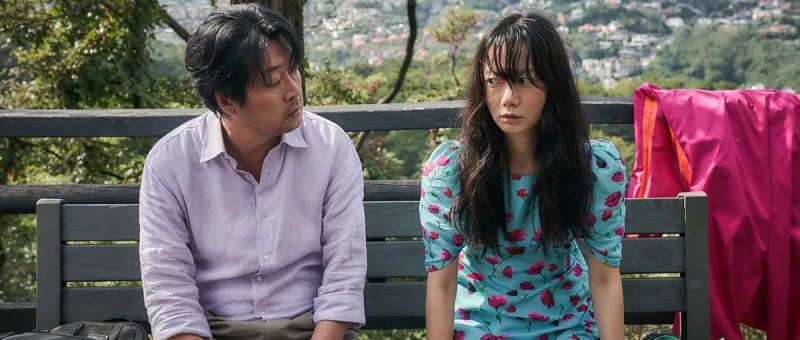
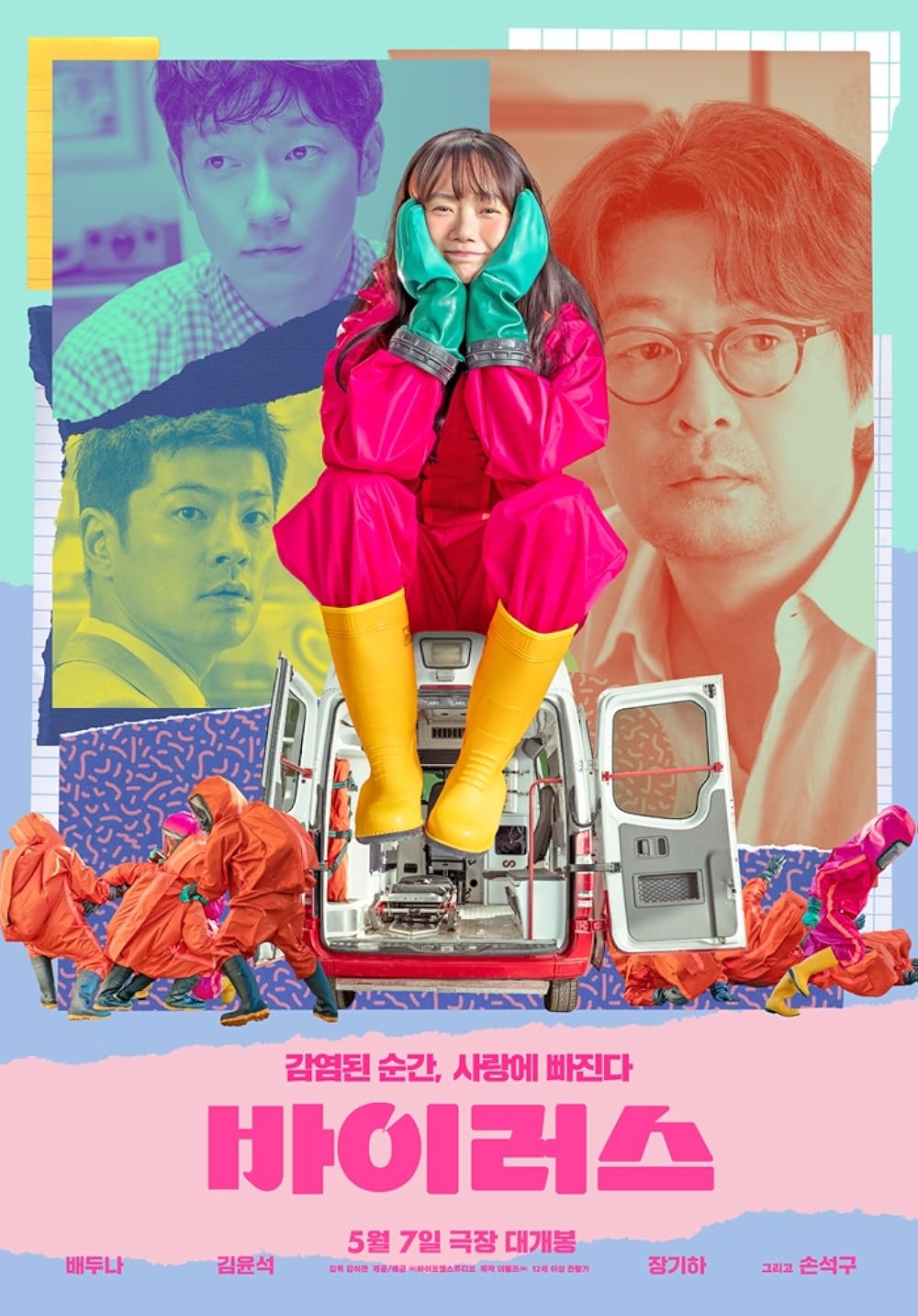
Falling in love is like catching a virus, according to lonely scientist Gyun (Kim Yoon-seok), but how can you know if your feelings are “real” or just part of a crazy fever dream you won’t even remember as soon as the infection leaves your system? “There are no fake feelings,” lovelorn translator Taek-seon (Bae Doona) counters, which is true, but sometimes people do things they don’t recognise or later understand because they weren’t in their right mind, whether because of the sickness called love or a more literal kind of contagion. 

Anyway, this particular virus makes people incredibly happy for the short period time before they die and was developed as part of a project to create an anti-depressant with no side effects. Taek-Seon gets infected after a disastrous date her sister forces her to go on with socially awkward scientist Su-pil (Son Suk-ku). Su-pil is overly attached to the mice in his lab and is still mourning the death of Masako who appeared to him in a dream and told him to make sure her death wasn’t in vain. In retrospect, perhaps these are symptoms of the infection bubbling away in his body as much as they are of his loneliness, but it’s understandable that Taek-seon wasn’t really considering seeing him again only she’s forced into it when her mother and sister invite Taek-seon over to her apartment as a kind of enforced date. The mother and sister’s insistence on Taek-seon meeting someone and getting married is itself a reflection of a patriarchal society in which being unattached is taboo, while Taek-seon’s sister snaps back that translators won’t be needed soon because of AI implying she should find a husband to support her financially.

But then again, though she might claim to be, it does seem that Taek-Seon isn’t all that happy with her life and later confesses to being “always depressed”. She rarely leaves her apartment and lives a dull and unstimulating existence. Infected with the virus, she suddenly becomes sunnier, more confident, and independent, while chasing romance by approaching a childhood crush she seemingly never had the courage to pursue before. Yeon-u (Chang Kiha) is now a car salesman, and Taek-seon now suddenly has the urge to buy a Mini though she’s never actually driven outside the test centre despite having a license. In one sense, yes, it’s Yeon-u she’s after but the car also represents her latent desires for freedom and a more active life. 

Nevertheless, the corrupting aspects of the virus are all too present as Taek-seon begins to act in ways she may be embarrassed by if she could remember them once she’s better. Her memories seem to have remade themselves more to her liking. She’s forgotten that Yeon-u wasn’t quite the hero she thought he was in her overly idealised vision of the innocent childhood sweetheart that she never had the courage to pursue. On the run from “evil” scientists from the lab where Su-pil worked, she starts to fall for Gyun, the expert that’s helping her, but who’s to say whether her feelings are just a product of the virus, an attachment born of their relationship as doctor and patient, or something deeper. 

For his part, Gyun starts to fall in love with her seemingly before he himself is infected while knowing that she likely won’t remember any of this once she’s been cured. He too is still dealing with the romantic fallout of an improperly ended relationship in which he apparently stepped back because one of his friends liked his girlfriend more. The now-divorced girlfriend seems resentful that he didn’t put up more of a fight for her, and perhaps it’s true that he’s just a romantic coward and it’s a combination of the virus, a sense of responsibility, and the fact that Taek-seon’s natural immunity could hold the key to unlocking his own research that pushes him to try so hard to find a cure for her.

But his research goals are at least altruistic in his desire to find a depression cure without side effects to help people like his brother who took his own life. Dr Seong’s (Moon Sung-keun) lab, however, is entirely focussed on profit and protecting its own reputation. They’re mostly interested in Taek-seon because of her usefulness to them and are prepared to endanger her life if necessary. Even Gyun admits he acted unethically in agreeing to bypass animal testing but otherwise draws the line at anything that puts lives additionally at risk. Taek-seon, meanwhile, later signs over her antibodies so they can be used for free worldwide for the good of all. Even after the fever has cooled, the virus does seem to have made her a happier, more outgoing person who has the courage to pursue her dreams rather than living in lonely defeat. Whether her feelings were ”real” or merely part of her “sickness” and if the distinction really matters either way is up for debate, but that’s not to say she might not catch the love bug again from a less compromised position and actively in the driving seat of her own life.


Trailer (Korean subtitles only)
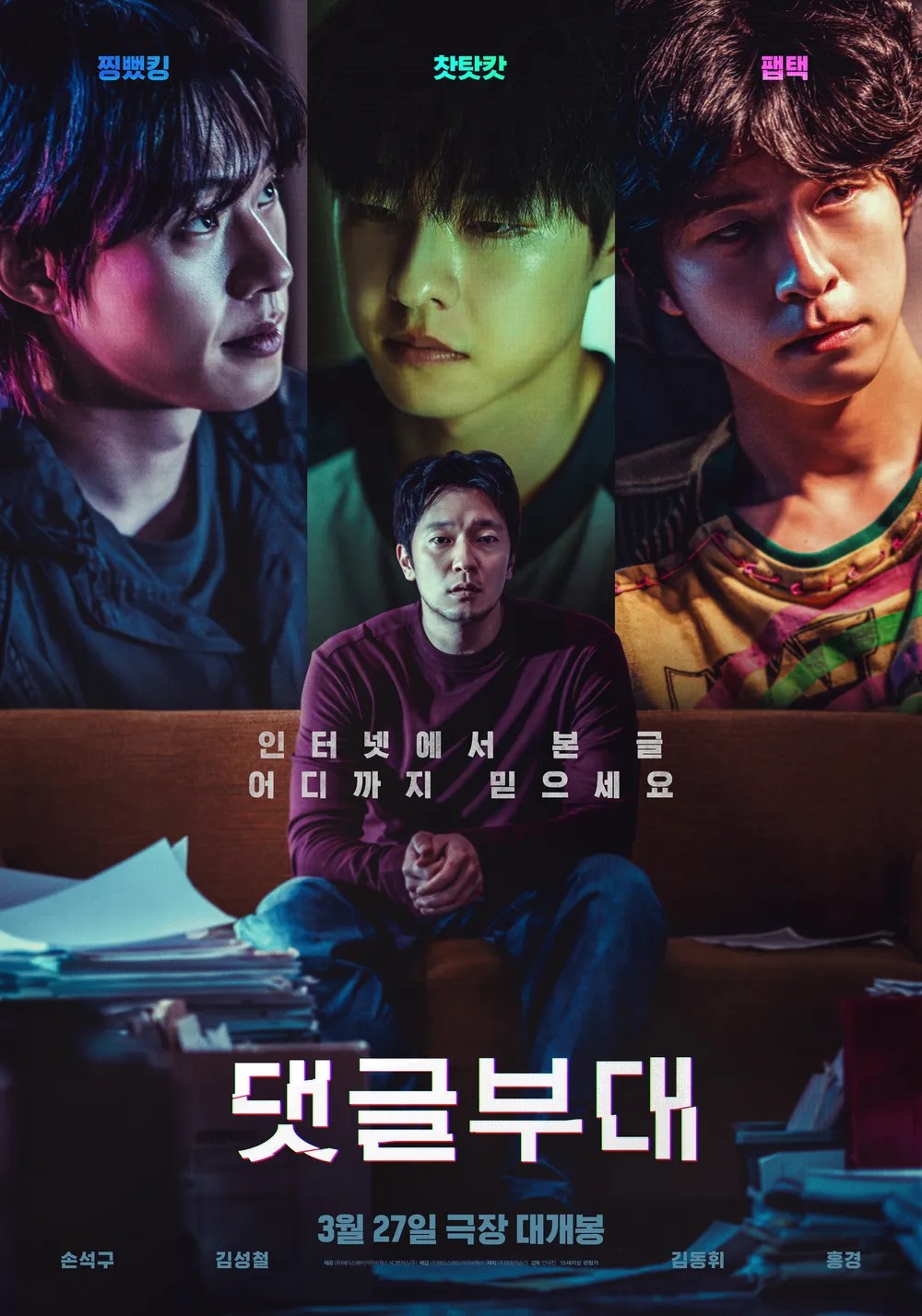
Troll Factory (댓글부대, Ahn Gooc-jin, 2024)

The modern world is so confusing that it’s become almost impossible to discern what is objectively “real” from what is merely currently held public opinion. Sometimes what is actually true sounds like a conspiracy theory, or maybe that’s just what they want you to think. In any case, most of us are already aware of the danger lurking behind cynically employed terms such as “fake news,” and that our perspectives are increasingly manipulated by dubious sources with their own agendas we are continually unaware of. 

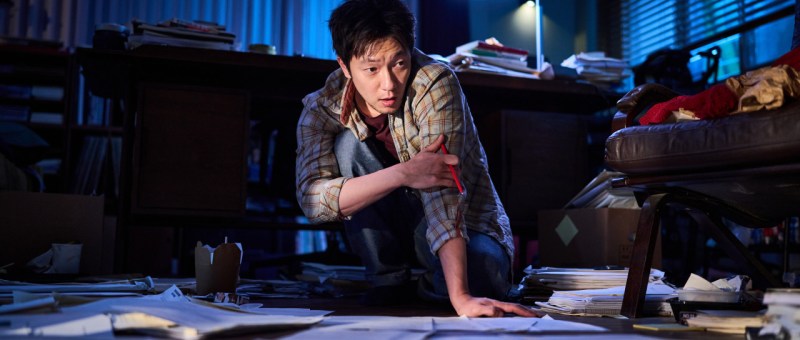
Yet is Sang-jin (Son Suk-ku) the journalistic hero of Ahn Gooc-jin’s Troll Factory (댓글부대, Daetguelbudae) already too far down the rabbit hole to be able to see the light? He’s fond of saying that “the path of a journalist is dark and lonely, but his courage changes the world,” while simultaneously admitting the “thrill” of leaking a secret that no one else knows. It’s possible he’s over romanticised his role in events and is reading more into things than is really there because at the end of the day he wants to believe which obviously leaves him dangerously open to manipulation.

In some ways, he starts his story with a more positive framing explaining that the first candlelight protests took place in the early days of the internet so they weren’t able to get the information out there fast enough to attract large enough crowds to make a difference while approximately a third of the entire population turned out in 2017 and got President Park Geun-hye impeached. Of course, that’s only good news if you’re on the same side as the protestors, and Sang-jin increasingly hints that the internet has been bought up by big business which obviously wouldn’t be. Sang-jin has a particular bugbear with a company named Manjun that was forced to offer a public apology for its corrupt business practices which were exposed thanks to the protests against the government scandal. He’s suckered into writing an article exposing them to help a small IT company that says Manjun scuppered its attempts to win a government contract then poached its employees and stole its technology.

Though Sang-jin is able to publish the piece, Manjun refute it and cast doubt on the CEO’s evidence. Sang-jin is relentlessly trolled online and the CEO takes his own life with many blaming Sang-jin for allowing him to face this kind of harassment because of his own petty vendetta against Manjun and desire for journalistic glory. Yet the young man who comes to him with another story that he was employed by Manjun to run extreme PR and harassing campaigns online may not be so different in that one of their targets also took her own life after being humiliated on the internet. They were hired to get her father to stop his one man protest against the defamation laws by pushing her into suing the people trolling her. Sadly she made a much more final decision, but her father did stop protesting so technically they still achieved their goal. 

As he later says, truth mixed with lies feels more real than the actual truth. It doesn’t seem implausible that a large corporation would be doing this sort of thing. It’s not unheard of that people are paid to write product reviews for products they’ve never used or to write negative reviews of a rival business to cause them reputational damage. It stands to reason that they’d be briefing against their enemies online and trying to mitigate any negative energy by manipulating public opinion. We’ve seen this done demonstrably with bots during elections. But Sang-jin still can’t seem to critically inspect his sources and never really stops to wonder if the young man opposite him in an otherwise empty coffee shop is making all this up just to troll him personally, or in fact from the conspiracy theorist’s perspective, to permanently discredit him so that his criticisms of Manjun will never be given any credence. 

In the end, it’s him that seems like a crank resorting to posting lengthy rants on the internet because the respectable papers won’t trust him anymore now that all his scoops have been discredited. Is he right that Manjun and possibly others are running large scale “Public Opinion Task Forces” or Troll Factories online, or did he just get trolled himself and can’t let it go? In the opinion of some, he is now the troll peddling his conspiracy theories online and craving the attention of going viral with another sensationalist story. But even if not all of it’s true, that doesn’t mean it’s all lies and Sang-jin maybe onto something even if it’s just that the internet make trolls of us all as we become lost in the infinitely confusing labyrinth of what is objectively “true” and what merely a convenient lie to serve those who are in “reality” already in power or simply would wish to be. 


Trailer (Korean subtitles only)

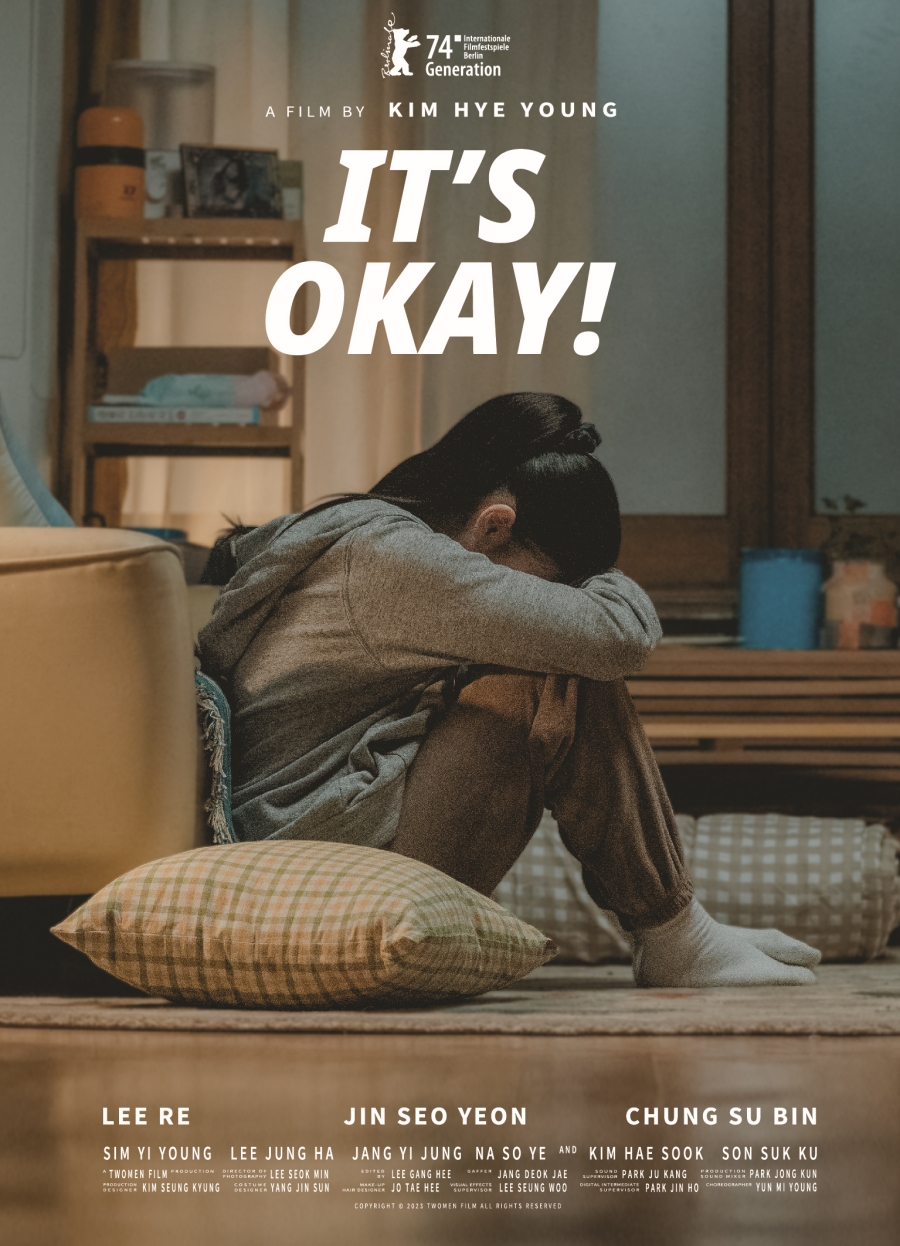
It’s Okay! (괜찮아 괜찮아 괜찮아!, Kim Hye-young, 2023)

The ironic thing about the title of Kim Hye-young’s debut feature It’s Okay (괜찮아 괜찮아 괜찮아!, Gwaenchanh-a Gwaenchanh-a Gwaenchanh-a!) is that for the most part it really isn’t but the ever cheerful heroine In-young (Lee Re) manages to face her hardship and loneliness with down-to earth-practicality and good grace. It’s her infectious happiness that begins to improve the lives of those around her, many of whom have their own issues often stemming from entrenched patriarchy, classism, and a conformist culture that railroads the young into futures they may not want and will not make them happy.

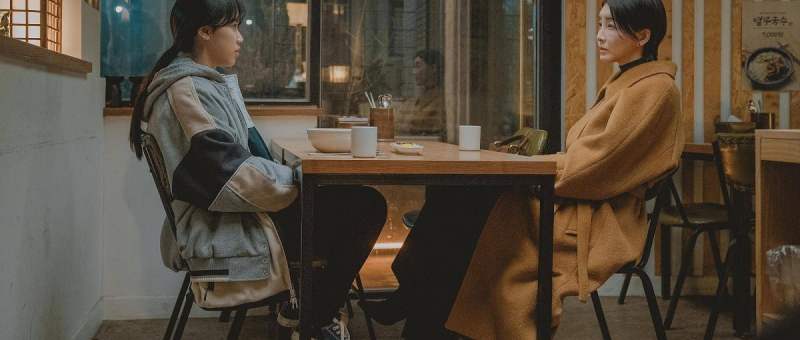
At least that’s how it is for Na-ri (Chung Su-bin), the star of Il-young’s traditional dance troupe who has developed bulimia partly to adhere to contemporary codes of feminine perfection but also as a means of asserting control over her life which is otherwise micromanaged by her mother, once a dancer herself but now a wealthy housewife who uses her privilege to ensure her daughter is always centrestage. For these reasons she crassly remarks that she envies Il-young whose mother was killed in a car accident leaving her orphaned and entirely alone but in Na-ri’s eyes free and independent. 

It’s Na-ri’s mother who later refers to Il-young as a “worthless” person who does not deserve and will not have the opportunity to steal Na-ri’s spotlight even if she were good enough to seize it. The other girls in the troupe resent Il-young because her fees are paid by a scheme set up to help children of single-parent families, though technically she isn’t one anymore. They think it’s unfair she doesn’t have to pay when they do and also look down on her for being poor and an orphan when the rest of them come from wealthy backgrounds and are serious enough about traditional dance to consider going on to study it at university. Il-young isn’t a particularly good dancer nor does she put a lot of effort into it, but unlike Na-ri whose dancing is technically proficient but cold Il-young dances with a palpable sense of joy.

That might be why she catches the attention of otherwise stern choreographer Seol-ah (Jin Seo-yeon) who harbours resentment towards Na-ri’s snooty mother but lives a life that seems very repressed, tightly controlled and devoid of the kind of exuberance that comes naturally to Il-young. Her palatial apartment is cold, neutrally decorated, and spotlessly clean while, contrary to Na-ri, she forgoes the pleasures of eating subsisting entirely on green health drinks. Her decision to take in Il-young after finding her secretly living at the studio after her landlord evicted her from the home her mother had rented, may also reflect her own desire for a less constrained life and the familial warmth which seems otherwise lacking in her overly ordered existence. Gradually nibbling at the fried spam Il-young has a habit of cooking in the morning, she begins to open herself to the idea of a less regimented, happier life.

The same is true for Na-ri who is fed up with being forced to live out her mother’s vicarious dreams, literally letting her hair down and abandoning her need for control and dominance to embrace more genuine friendships with the other girls including Il-young. The lesson seems to be that there’s too much pressure placed on these young women in a society that dictates to them who and what they should be while shunning those like Il-young who are defiantly who they are and all the more cheerful for it even in the face of their hidden loneliness. Yet as Seol-ah eventually tells her, you’re the centre of wherever you are and Il-young’s life is her own to live in the way she chooses.

What emerges is a sense of female solidarity in the various ways Il-young is also parenting Seol-ah as she at first perhaps grudgingly offers her support and acceptance while taking on a maternal role that allows her to break free of the rigidity which had left her so unhappy. Told with a true sense of warmth that belies an inner melancholia, the film advocates for laughing through the tears and meeting with the world with an openhearted goodness that in itself allows others to break free of their own grief and pain and discover a happiness of their own bolstered by a sense of friendship and community rather than live their lives isolated and alone to conform to someone else’s ideal.


It’s Okay! screened as part of this year’s London Korean Film Festival.

Trailer (English subtitles)