Yaksha: Ruthless Operations (야차, Na Hyeon, 2022)

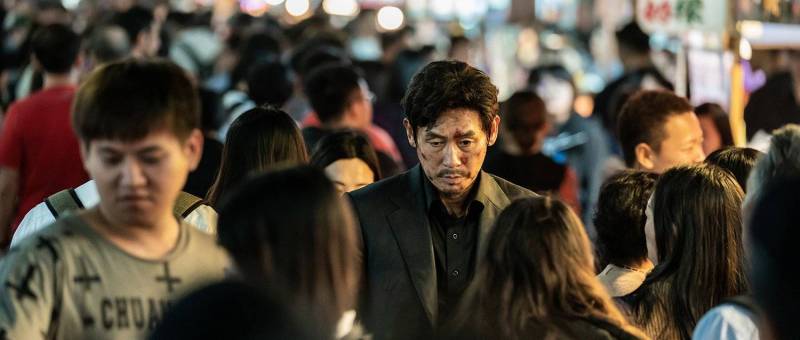
“Justice is preserved by being just” according to the idealistic hero at the centre of Na Hyeon’s Yaksha: Ruthless Operations (야차, Yacha) , though he’ll eventually come round to his sometime mentor’s belief that “Justice must be preserved by any means necessary”. Any means necessary is indeed the motto of the titular hero named for the unpredictable Buddhist deity and regarded by his superiors as a dangerous maverick though as it turns out he does indeed have justice in mind even if his idea of justice might not fully align with those whom he is intended to serve. 

The failure of the regular justice system is signalled in the film’s opening as idealistic prosecutor Ji-hoon (Park Hae-soo) finds his case against a corrupt CEO falling apart because of procedural mistakes by his own rookie team. Humiliated on the courthouse steps, Ji-hoon is given a punitive transfer to the NIS where he is kept out of trouble, told to draw a salary but given very little work. He and his jaded colleague who was once known as the “bulldozer of justice” but has been ruined by this bizarre form of punishment and no longer has the will do to anything much at all mostly spend their time doing jigsaw puzzles stave off boredom. When his colleague admits there’s no more hope for him and turns down an offer of reinstatement, Ji-hoon agrees to travel to Shengyang, a hotbed of international spies in China, to find out what’s going on with a series of false reports from their agents on the ground led by maverick black ops officer Yakska. 

What he soon discovers is that he’s been dragged into some murky geopolitical shenanigans between North Korean spies, his target’s possibly corrupt team, and the Japanese who are once again up to no good trying to prevent a possible alliance between North and South believing such a union would present too much of a threat to their economic position in North East Asia. His problem is that Yaksha’s field craft does not measure up to what he regards as appropriate conduct. He engages in firefights and commits what seem to be summary executions while later threatening to torture a hostage to force her to reveal the location of their missing asset, a North Korean financial kingpin, Moon (Nam Kyung-eup), who had been acting as a double agent for the Japanese but had become disillusioned with their imperialist outlook and decided to defect to the South bringing valuable information with him. 

It has to be said that however uncountable it may be to see a Japanese spy who behaves like a gangster committing acts of torture in a well appointed lab on a Chinese woman in China, Yaksha cannot exactly claim the moral high ground having attempted to do something similar only in his filthy hideout in an abandoned mine. Ji-hoon’s dilemma is that he doesn’t know whose side, if any, Yaksha is on or if he’s after the North Korean trillions Moon had been managing rather than a hugely beneficial national asset. Exposed to this morally grey world, however, Ji-hoon’s idealist edges begin to soften as shifts towards Yaksa’s “by any means possible” philosophy while trying to stop evil Japanese spy turned lobbyist from recovering the valuable data Moon had to sell and going on to do even more nefarious deeds undermining the possibilities for reunification along with the Koreas’ economic potential. 

Somewhat uncomfortably, the film does then more or less condone torture, betrayal, and summary execution if conducted in the pursuit of “justice” even while simultaneously approving of Ji-hoon’s idealistic pursuit of the rich and powerful who continue to misuse their position and cause pain to ordinary people. It comes to something when the safest ally is a gang of human organ traffickers with whom Yaksha seems to be suspiciously familiar. Nevertheless, what Yaksha eventually asks Ji-hoon to do is to “clean things up” hinting at the duo’s complementary qualities as they pursue “justice” in both the legal and more immediate senses. Filled with some quite literally explosive action sequences along with some admittedly broad comic book antics as the guys face off against Hideki Ikeuchi’s Japanese arch villain Yaksha is certainly a good looking film if one with a dark heart beating at its centre. 


Original trailer (English subtitles)
Good morning (안녕하세요, Cha Bong-ju, 2022)

A lonely young woman finds a new place to belong while discovering the meaning of life after being taken in by a cheerful community of patients at a hospice for those with terminal illness in Cha Bong-ju’s lighthearted drama Good Morning (안녕하세요, Annyeonghaseyo). “Good morning” is to the patients an affirmation of life and way of greeting the new day as gift rather than a burden as the heroine had come to see it while unable to escape her sense of hopelessness and futility.

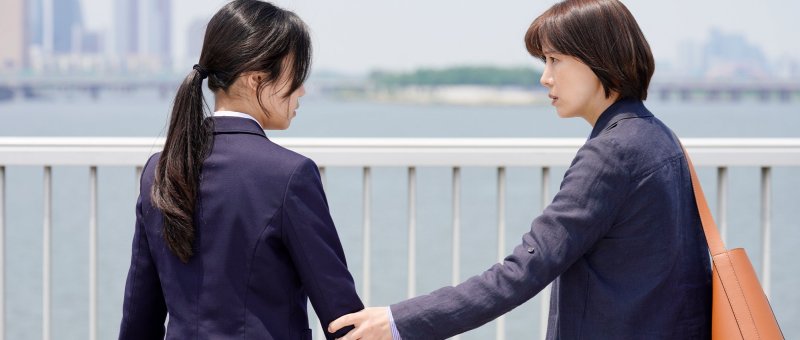
High schooler Su-mi’s (Kim Hwan-hee) desire to end her life is born largely of the circumstances she finds herself in as an orphan. Not only is she rejected by others her age who mock her for having no family, but she is trapped in an exploitative situation at a care facility where she is molested by the man who’s supposed to be taking care of her and also forced to work in his restaurant where she is expected to put up with inappropriate behaviour by drunken customers. Even if she were able to continue enduring it, she knows that she will soon come of age at which point she will be roughly ejected from the care system and expected to support herself with no further help available to her. It’s this sense of hopelessness that brings her to a nearby bridge from which she intends to jump only to be stopped by a middle-aged woman, Seo-jin (Yoo Sun), who manages to talk her down largely by promising that she will show her how to die.

That is in a sense what she does. Seo-jin works in a hospice caring for those with terminal illnesses who have each come to an acceptance of death and their path towards it. The patients are determined to live out their remaining days as best they can, remaining cheerful and committing themselves to accomplishing something be it learning English, writing a book, or finishing a painting. Su-mi bonds most closely with an elderly man (Lee Soon-jae) who had been illiterate and is working hard to learn to read and write while he still has time. What she discovers is that it is possible to find meaning in life even in the shadow of death, and that what gives her own life meaning is the sense of community she experiences at the hospice allowing her to feel part of a large family which had been denied to her during her time in the care system. 

“You just need to give them a little attention” Su-mi advises of some struggling plants at Seo-jin’s apartment, herself blossoming under the attention Seo-jin and the patients are paying to her, though there may be something a little uncomfortable in the suggestion that Seo-jin may have been partly at fault for a traumatic event in her past in assuming that things grow on their own as long you provide adequate nutrition. She blames herself for not paying enough attention and failing to realise that there was something wrong until it was too late only latterly understanding that like the plants people need more than simple sustenance to grow. Nevertheless, she and Su-mi gradually help each other to rediscover joy and happiness in life while forming a familial bond that restores something to each of them and grants them the ability to move forward into a happier future. 

Su-mi does learn “how to die” from the patients at the hospice, but what she’s really learning is how to live. The elderly man reminds her to live well and die without regret, making the most of every day doing what she wants to do and being happy while Su-mi gains a new perspective on life and death as she begins to step into herself gaining new confidence as a member of a community. Gentle and heartfelt, Cha’s lighthearted drama necessarily tackles some dark themes from suicide and terminal illness to the stigmatisation of orphanhood, difficulties experienced by those placed into the care system, and the inertia that can take hold while dealing with grief and loss but manages to lean towards the sunlight in embracing the healing qualities of relationships between people which give life its meaning.


Good morning streams in the US until March 31st as part of Asian Pop-Up Cinema Season 16.

International trailer (English subtitles)

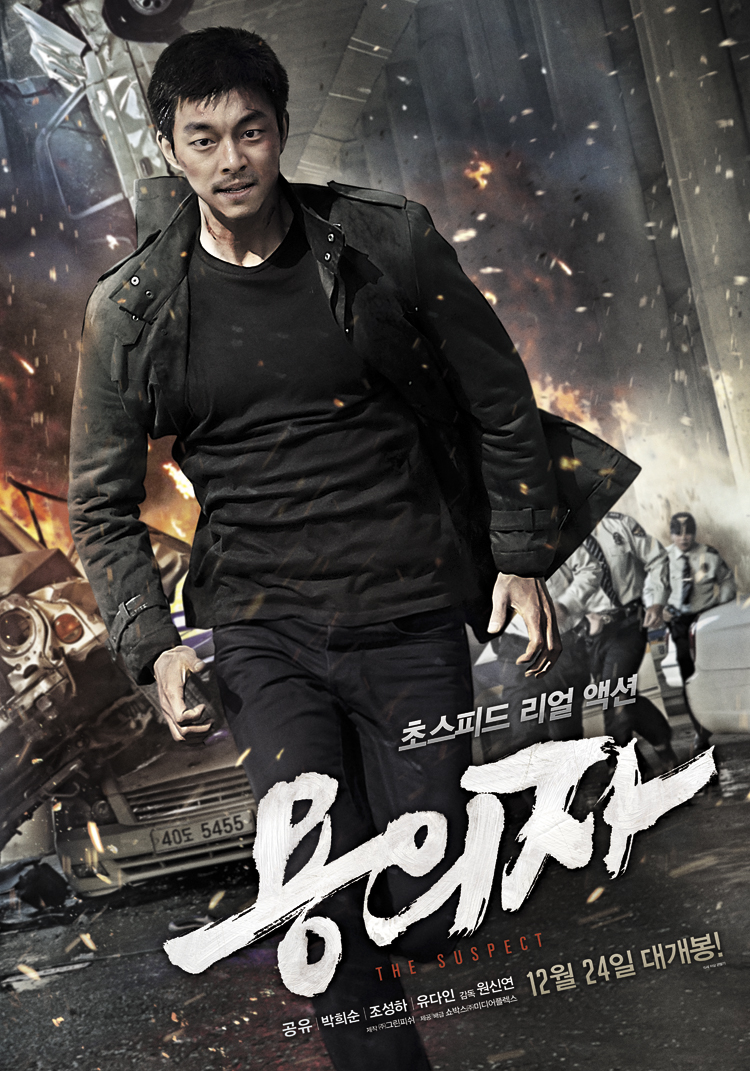
The Suspect (용의자, Won Shin-yeon, 2013)

suspect posterNorth Koreans have become the go to bad guys recently, and so North Korean spies have become the instigators of fear and paranoia in many a contemporary political thriller. The Suspect (용의자, Yonguija), however, is quick to point the finger at a larger evil – personal greed, dodgy morals, and the all powerful reach of global corporations. Opting for a high octane action fest rather than a convoluted plot structure, Won’s approach is (mostly) an uncomplicated one as a wronged man pursues his revenge or redemption with no thought for his own future, only to be presented with the unexpected offering of one anyway alongside the equally unexpected bonus of exposing an international conspiracy.

Ji Dong-cheol (Gong Yoo) is former top North Korean asset now defected to the South and working as a driver for an important CEO. His boss thinks he ought to just go home, but Ji has a mission – he’s looking for a former friend, also defected, who was responsible for the deaths of his wife and daughter as part of a wide ranging purge following the accession of Kim Jong-un. Taking pity on him, the CEO eventually gives him the address of his target, adding that he hopes Ji can learn to forgive him (which seems unlikely), but is assassinated by other agents that same night. Arriving at the scene too late, Ji finds himself framed for the killing and charged with taking care of a secret message also in the CEO’s possession at the time of his death. Teaming up with a documentary filmmaker, Ji is now on the run and determined to find his former friend turned mortal enemy before the authorities catch up with him whilst also trying to work out what to do with his boss’ coded message.

Family, debts of honour, and bonds between men are at the centre of this fast paced thriller as Ji attempts to navigate this ever changing conspiracy torn between friends turned enemies and enemies who may become friends. His main adversary is a government agent, Min (Park Hee-Soon), whom he previously encountered during a mission in Hong Kong during which he made the decision to spare Min’s life after catching sight of a photo of his wife and son in his wallet. Min, however, is less than grateful as the failed mission greatly damaged his career prospects and so he has a personal grudge with Ji which he hopes to exorcise through arresting him. On the other side, Ji is also on the hunt for his former training buddy, Lee (Kim Sung-Kyun), whom he believes to have been responsible for the death of his own wife and child though later discovers that perhaps they have all merely been pawns in a much larger game.

The larger game appears to include worldwide arms sales by turns frustrated and conducted by North Korean agents. The conspiracy, however, is very much home grown in terms of its South Korean genesis but makes clear the complicated relationship between the two territories which is very much open to abuse by those who have access to both sides. The big bad turns out not to be the totalitarian regime with its constant purges and rigid enforcement of its political power, but the greedy and venal, power hungry petty officials of the democratic regime working in concert with big business.

Won has obviously drawn inspiration from the first Bourne film, offering several blatant homages including a long car chase referencing The Italian Job by proxy. His shaky cam aesthetic is perhaps overworked, but the fight scenes are undoubtedly impressive, anchored by the astounding performance of unlikely action star Gong Yoo – hitherto known as a sensitive leading man and frequent romantic lead. Having piled on the pounds, Gong is a credible vengeful presence apparently providing many of his own stunts including a strangely overblown sequence which sees him rock climbing bare chested only to emerge panting and glistening next to the flapping North Korean flag. Nevertheless, his near silent performance is a masterclass of physical acting, adding a much needed emotional dimension to the otherwise straightforward script which leaves little time for character development in between its admittedly impressive set pieces. Overlong yet moving at a rip roaring pace, The Suspect is a surprisingly well photographed action fest which manages to add a degree of pathos to its closing scenes even if failing to completely earn it whilst engaging in a series of subtle political allegories.


International trailer (English subtitles)