Ode to the Spring (没有一个春天不会来临, Zhou Nan, Zhang Chi, Dong Yue, Tian Yusheng, Rao Xiaozhi, 2022)

There isn’t any denying that the last two years have been extremely difficult for everyone all around the world. Multi-strand “main melody” drama in praise of frontline workers Ode to the Spring (没有一个春天不会来临, méiyǒu yī gè chūntiān bùhuì láilín) may in itself be slightly optimistic in that its perspective is clearly one assuming that the worst is over and the pandemic is largely a thing of the past. Ironically the film’s release, previously scheduled for April, had to be delayed until the early summer because of rising cases in Mainland China. Nevertheless, its messages of hope and the importance of community have lost none of their power while the film’s willingness to admit that some things could have been handled better, even without expressly stating by who, is surprisingly subversive. 

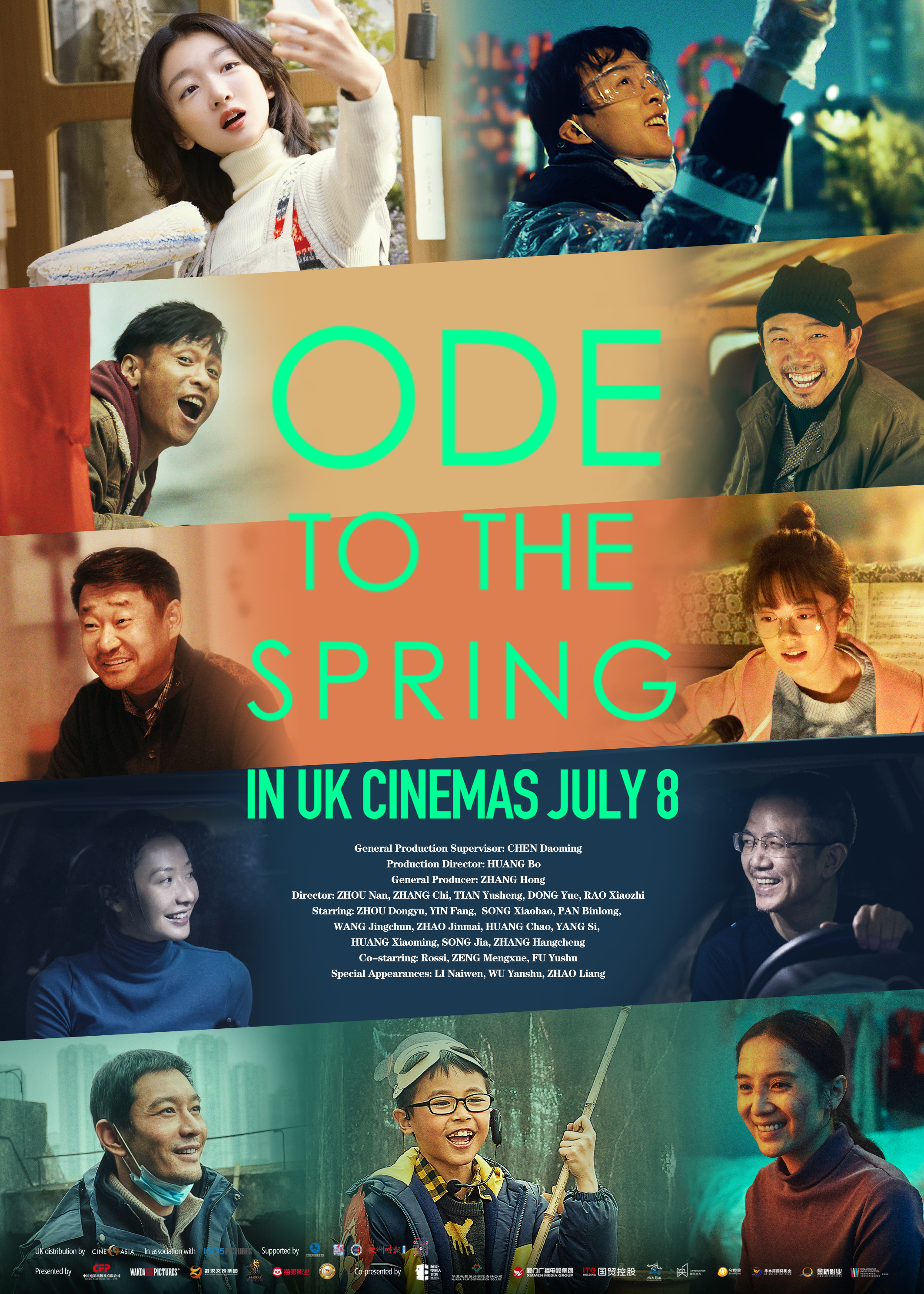
Structured as a multi-strand drama rather than a traditional omnibus movie, the film follows five groups of people mainly in Wuhan at the beginning the outbreak. The first story revolves around a young man, Nanfeng (Yin Fang), whose relationship with local florist Xiaoyu (Zhou Dongyu) had become strained by his decision to move to Shanghai to earn more money for their future. As the New Year Spring Festival approaches, he returns to Wuhan in an attempt to patch things up oblivious of the new disease engulfing the city. Xiaoyu and her mother, who had not approved of him, have each been hospitalised but were separated in the chaos and are now in different hospitals with no way to stay in touch. In a mild rebuke to modern day consumerism, the message that Nanfeng is forced to learn is that he should have been thinking how best to support his community rather than leaving to make more money in Shanghai. Running all around town looking for Xiaoyu’s mother, he eventually wins her approval but is simultaneously warned that he is too impulsive and should think more about what it is others actually want rather than giving them what he thinks they should have. 

Meanwhile a pair of migrant workers struggle to make a living but are given a load of face masks and told to sell them in Wuhan. They too are little aware of how bad things have already become. The older of the drivers is rebuked by his wife because he hasn’t come home in several months and his daughter is beginning to forget him. Though they become increasingly afraid of infection, the truckers maintain their compassion helping an elderly lady and her granddaughter, whose parents are already in a quarantine centre, get to a hospital and then deciding that perhaps they shouldn’t be trying to profit from the pandemic no matter their own desperate circumstances. 

Then again, the film is surprisingly frank about the supply problems in the hospitals which have already run out of high grade medical masks while medics are close to burn out. A doctor is forced to sleep in his car because he’s technically on call. His wife, a nurse, chooses to join him rather than stay in the hotel room they’ve been provided while their son is cared for by his grandparents. He calls a man to tell him his father has passed away and ask for additional documentation to release the body, but the grieving son is himself in a quarantine centre as are all the other family members who have so far survived. The inability to save a fellow doctor who was shortly to become a father almost breaks him, while his wife wonders what’s to become of their son if they should both fall ill. Despite having scolded the boy on the phone about not doing his homework, the doctor has recorded a poignant voice message for his son just in case letting him know that he bought him the toy he wanted for his birthday and has been paying attention even if it didn’t seem like it at the time. 

The themes of parental separation echo through each of the stories, Xiaoyu is separated from her mother, the trucker cannot return to his family because of the lockdowns and his precarious financial position, and the doctor is staying away from his son to treat the sick. In the final strand, a naughty little boy obsessed with legendary child warrior Nezha is separated from his doctor mother (Song Jia) who is despatched to Wuhan to help with the relief effort while his father (Huang Xiaoming), unused to taking care of him, is preoccupied because he unwisely invested in buying a bus he cannot now use because no one is allowed to go anywhere. The boy dreams of visiting a local Buddha statue and getting him to “awaken” from his “quarantine” to show the virus who’s boss only for the Buddha to let him take on Nezha’s form to stamp on those nasty viruses so his mum can come home.

Similarly, the head of a local neighbourhood committee struggles to deal with complaints about a young woman playing piano at all hours while left home alone because her mother is a doctor staying at the hospital. Mr. Wang (Wang Jingchun) becomes something of a local hero, selflessly caring for the residents of a series of apartment blocks ensuring they get food deliveries and dealing with disputes. When he comes down with a fever and has to isolate, the whole block turns out their lights in support waving the torchlight on their phones like tiny stars shining in the distance. It’s here that the film’s real message lies in praising the value of community, not just the doctors and frontline health workers but the civil servants who kept everything running and the ordinary people who did their best to follow the rules and stay at home, while also hinting at some of the failures in the response from the random veg that keeps turning up at the depo to lack of PPE and the total disregard for the migrants stuck far from home in the midst of an economic collapse. Shot by five directors, the strands each have idiosyncratic flare from the chaotic handheld of the hospital scenes to the gentle romance of Nanfeng’s quest and the cheerful adventures of the would-be-Nezha but are otherwise of one voice in the film’s consistent messaging of mutual solidarity and praise for frontline workers. 


Ode to the Spring opens in UK cinemas on 8th July courtesy of CineAsia.

International trailer (English subtitles)

City of Rock (缝纫机乐队, Da Peng, 2017)

201708162324218235They built this city on rock and roll! Right in the middle of Ji’An, there’s a giant statue of an electric guitar with a plaque underneath it reading “The Heart of Rock” that was erected in memory of a legendary concert given by a super famous band, Broken Guitar, who happen to hail from the region. This being a particularly musical town, Broken Guitar continues to inspire young and old alike to pursue their musical dreams, but there is trouble on the horizon. Shady mobbed up developers want to tear down the Great Guitar and put flats there instead, which is not very rock and roll when all is said and done.

Meanwhile, in Beijing, shady musical agent Chen Gong (Da Peng), who was actually the agent for Broken Guitar at the time they broke up, is working on his latest venture – trying to turn three middle-aged, pudgy rockers into a Chinese K-pop act. Needless to say it’s not going well and Gong is perpetually cash strapped. When he receives an unsolicited call from Hu Liang (Qiao Shan), a Ji’An resident who wants him to help promote a local concert as a kind of benefit to help save the Great Guitar, Gong isn’t interested and quotes him a ridiculous sum of money only to see it instantly pop-up in his account. Jumping straight on a train, Gong is met at the station by a rapturous welcome parade which includes a marching band and kids throwing garlands but quickly figures out that Hu Liang is every bit as much of a schemer as he is. Hu Liang doesn’t even have a band and needs Gong to help him find one.

Once again, the conflict is between cynicism and artistic integrity as a group of misfits comes together to help stop a monument to true rock being torn down by soulless suits. Gong, as we later find out, had musical dreams himself but, after having gone against his father’s wishes to pursue a musical career, was forced out of the conservatoire after an accident robbed him of the feeling in two of his fingers and he became too depressed to sing. Having lost his faith in music, Gong has sold out and become a cynical money man, cutting deals anywhere and everywhere he can. Rather than work on the “unique” sound of the guys he was mentoring, he’s obsessed with the idea of sending them to Korea to get plastic surgery, and turning them into some kind of K-pop inspired Chinese song and dance group.

Hu Liang, meanwhile, is just as much of a con man but his heart is in a better place. Only two people show up for his auditions to join the band – jaded alcoholic with a broken leg, Ding Jianguo (Gulnazar), and a drummer from Taiwan who calls himself “Explosive” (Li Hongqi) and sits with his back to the audience. The other bandmates include a former member of Broken Guitar now a gynaecologist (Han Tongsheng) whose daughter has forbidden him from playing rock and roll, and a little girl (Qu Junxi) who’s a whizz on the keyboards despite the disapproval of her Taekwondo loving mother who thinks things like music are a frivolous waste of time. Together they face various obstacles in their quest to save the great guitar and the spirit of rock and roll itself but finally discover that the true spirit of rock lies in getting the band back together for one last hurrah and channeling all into music.

Gong, tempted by the shady developer, is reminded that money can save lives but dreams cannot. Faced with a dilemma, Gong falls back into cynicism and rejects the new sense of fun and togetherness he’d found as a peripheral member of the band. Yet reuniting with his hopeless wannabes and easing back into his soulless Beijing life, he begins to realise what he’s been missing and rediscovers the the true nature of rock and roll which isn’t trapped inside a giant concrete guitar but inside the hearts of musicians who need their instruments to help bring it out. Dreams, it seems, save lives after all. An often hilarious, sometimes silly comedy, City of Rock (缝纫机乐队, Féngrènjī Yduìis as full of heart as it encourages its protagonists to be, arguing for the importance of the right to express oneself in a society which often actively suppresses it.


Screened at the 20th Udine Far East Film Festival.

Original trailer (simplified Chinese subtitles only)

https://www.youtube.com/watch?v=UznsmmUjYlY

Monster Hunt 2 (捉妖記2, Raman Hui, 2018)

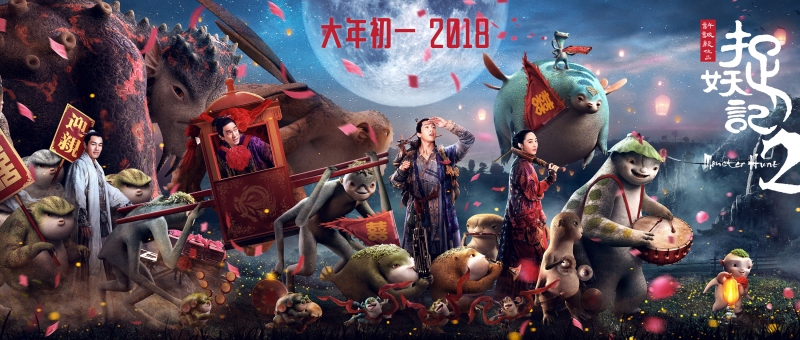
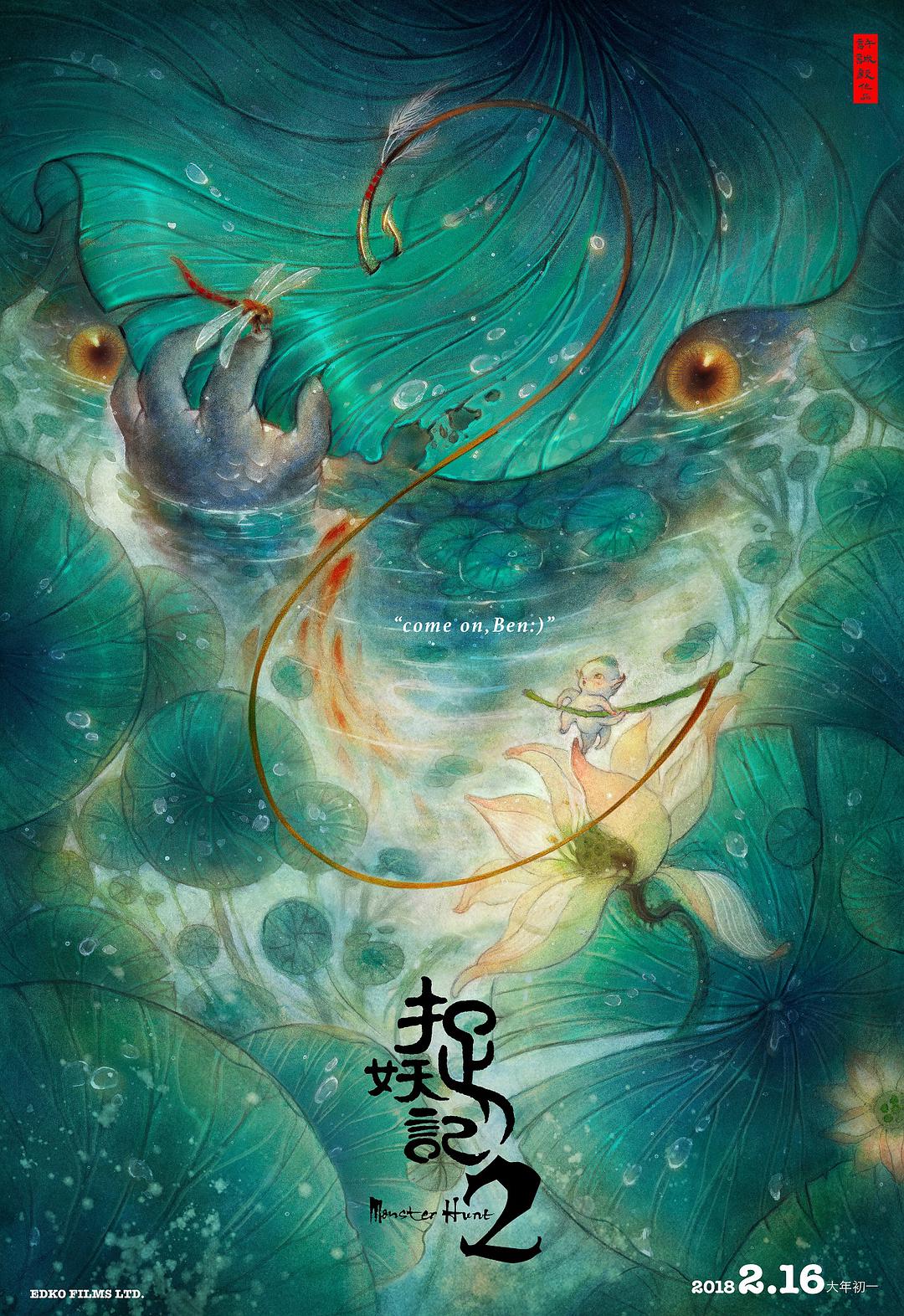
Monster Hunt Poster 2Despite numerous production difficulties, Monster Hunt went on to become a bona fide box office smash and international pop culture phenomenon on its release in 2015. Children and adults alike fell in love with the adorable little radish monster Wuba who, in grand fairytale tradition, is the secret heir to all of Monsterdom and the subject of a prophecy which posits him as the long awaited unifying force set to restore equality between humans and their Monster brethren. By the time this sequel, Monster Hunt 2 (捉妖記2, Zhuō Yāo Jì 2), rolls around, things are looking up for Wuba seeing as no one’s actively trying to eat him, but like so many kids in modern China he misses his human mum and dad who made a difficult decision at the end of the last film that Wuba should live with Monsters in Monsterland because it just wasn’t safe for him in the human realm.

Consequently Wuba has been living happily in the forest where the Monsters have made a little village for themselves. The Monster village is a place of laughter and song where everyone is welcome and they dance cheerfully all night long. That is, until evil monsters turn up looking for Wuba again, destroying the village and leaving him on the run all alone back in the human world. Meanwhile, Tianyin (Jing Boran) and Xiaolan (Bai Baihe) are on a quest to look for Tianyin’s long lost dad – a famous monster hunter who left Tianyin behind as a child to keep him safe, just like Tianyin had to leave Wuba. Nevertheless, though Tianyin and Xiaolan have developed a sparky domesticity, they’re both unwilling to admit how much they miss little Wuba and wish they could go get him back from Monsterland even if they know he’s probably safer hidden away from those who might want to do him harm. While looking for Tianyu and Xiaolan, Wuba gets himself semi-adopted by a very odd couple of chancers in the form of shady gambler Tu (Tony Leung) and his monster partner Ben-Ben.

Once again the theme is family. Monster Hunt spoke, perhaps, to all those separated families in modern China or more particularly to the children in revealing that parents sometimes have to make difficult choices and end up living apart from their kids so that they can give them a better life. Monster Hunt 2 accepts the premise but then provides an emotional correction in making plain the pain Tianyu and Xiaolan feel on being separated (perhaps forever) from Wuba, until they eventually settle on tracking him down and facing whatever dangers come their way together. They come to this realisation after saving a mother and son who’ve been (unfairly) arrested by the Monster Hunt Bureau and witnessing their happiness just in being together despite the sticky situation they may be in.

Meanwhile Wuba, sad and alone, is happy to have found himself a surrogate family in the form of kindly Ben-Ben and the spiky Tu – a virtual mirror of Tianyu and Xiaolan when they first met. As in the first film, Tu originally takes Wuba in because he wants to sell him to Madame Zhu (Li Yuchun) – a woman he has cheated in both love and money, whose patience apparently knows no end. This brief episode of Wuba and his two new uncles is a subversive one in terms of mainstream Chinese cinema, and unlike the early union of Tianyu and Xiaolan there is little comedy in the easy coupledom of Ben-Ben and Tu who become two men raising a child together in relative happiness. This is perhaps the reason for the strange coda in which Tu and Ben-Ben have a brief chat about girls, relegating Tu’s earlier awkward admission of affection one more of brotherhood than love and affirming their total heterosexuality (both the female love interests are also from the same species, just to make things crystal clear).

Yet the message is strong – families want to stay together, parents want to be with their kids and kids want to be with their parents so maybe the world should just let them, even if those families aren’t quite like everyone else’s. With much better production values than the first film and a much more consistent tone, Monster Hunt 2 is a vast improvement on its predecessor though it treads more or less the same ground and is content to meander between several set pieces with more than a few seemingly extraneous sequences of Tu getting up to mischief or Xiaolan using her feminine wiles on a nerdy inventor (though these at least add to the more complex arc of the feminised Tianyu and masculine Xiaolan each moving towards a gender neutral centre). Monster Hunt 2 maybe more of the same and little more than the next instalment in a series, but nevertheless its winning charm and gentle warmth are enough to ensure there will still be devotees of Wuba ready to reserve their seats for the inevitable part three.


Currently on limited release in UK cinemas. Screening locations for the UK, Ireland, US and Canada available via the official website.

International trailer (English subtitles)