
Adorable CGI panda Huhu may have been a symbol of Chinese sovereignty in the original Panda Plan, eventually rescued by Jackie Chan and returned to a panda sanctuary on the Mainland. In Panda Plan: The Magical Tribe (熊猫计划之部落奇遇记, xióngmāo jìhuà zhī bùluò qíyù jì), however, which doesn’t actually have much in common with the first film, she’s more like a surrogate child who must be protected, but not to the extent that it stunts her growth or robs of her of the confidence to make her own decisions, after mysteriously entering the territory of a “magical tribe” where children are expected to independent at six and hugs are taboo.
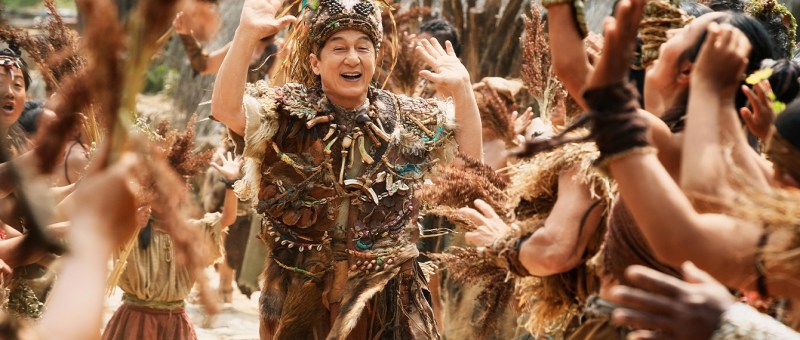
The humour is distinctly old-fashioned and the way the film treats the hidden indigenous community at its centre, which conveniently speaks Mandarin even if its writing system is apparently different, seems insensitive and out-of-touch. Nevertheless, the problem here seems to be emotional austerity and, by extension, an authoritarian parenting style that ironically leaves children in an arrested state of development. Fairly useless princeling Telu (Yu Yang), who goes around wearing a crown, is ridiculed for addressing the chieftain (Ma Li) as “mom”, which might, in any case, be a little childish though reflects his sense of inadequacy and desire for maternal affection. When Huhu and Jackie arrive in this strange world, the panda-worshipping tribe thinks it’s part of a prophecy that says that disaster will prevail after the Great Creature arrives which could turn to prosperity if only they could ward it off.
This, however, requires Chan and Huhu to scale an impossible mountain so that Huhu can call the gods from an unreachable summit. Some of the tribesmen claim not to like it that an outsider is guiding Huhu to the mountain and use it to cultivate intrigue by convincing Telu to try and win his mother’s favour by killing Chan and leading Huhu to the mountain himself. Chan, meanwhile, is intent on finding a way back to the regular world as soon as possible, only to end up in a strange relationship with his would-be-assassin. Qiangshan (Qiao Shan) seems to have some kind of Tiresias syndrome and changes sex every time he gets hit on the head. The film treats this as a mildly homophobic joke as Qiangsheng begins to act in stereotypically feminine ways while creating a domestic environment for Chan by taking him into his home, cooking and cleaning for him.
Nevertheless, the later part of the film is concerned with the necessity of moving on from “outdated” rules such as the prohibition on shows of affection. The chieftain makes a show of smashing the stone tablets to make it clear that they’re setting themselves free from past oppressions to lead lives that are more emotionally healthy. Chan gives them some ironic advice about the importance of good parenting that focuses on encouragement and praise that give the chid the confidence to thrive, rather than punishment and discipline that leave them feeling afraid and insecure leading to poor decision making.
This being a Lunar New Year release, it’s not surprising that the focus is family, though the family in question here increasingly seems to point towards the Chinese people as a whole. Only by standing together can we overcome hardship, Chan tells the tribe while eventually coming up with the idea of a human pyramid as an expression of solidarity that helps the nation reach the summit. We must hug each other tightly, he adds, as the tribe arranges itself into a rugby scrum and the lower levels bear the strain, creating the tension that allows others to climb higher. Little Huhu can’t complete the village’s test of climbing a pole with all the strangers prodding her behind and shouting, but eventually does something similar on her own while chasing a butterfly whose name is later said to be “encouragement.”
The giant Wicker Panda in the tribe’s central square might never come into use, but lends an ominous air to this weird place that is originally not very hospitable to Chan but eventually comes to believe he’s some sort of prophet serving their Great Creature and can help them avert the oncoming catastrophe mostly by teaching them that it’s alright to hug it out and there’s nothing embarrassing about telling your family that you love them. Relatively light on action, the film focuses on bizarre comedy while rooting itself in its wholesome-seeming but perhaps self-serving message of the importance of family, solidarity, and encouraging others rather than putting them down as Chan and Huhu do their best to avert disaster and return to their previous lives.
Panda Plan: The Magical Tribe in released in US cinemas on April 17 courtesy of Well Go USA.
Trailer (English subtitles)


 Windows on Worlds