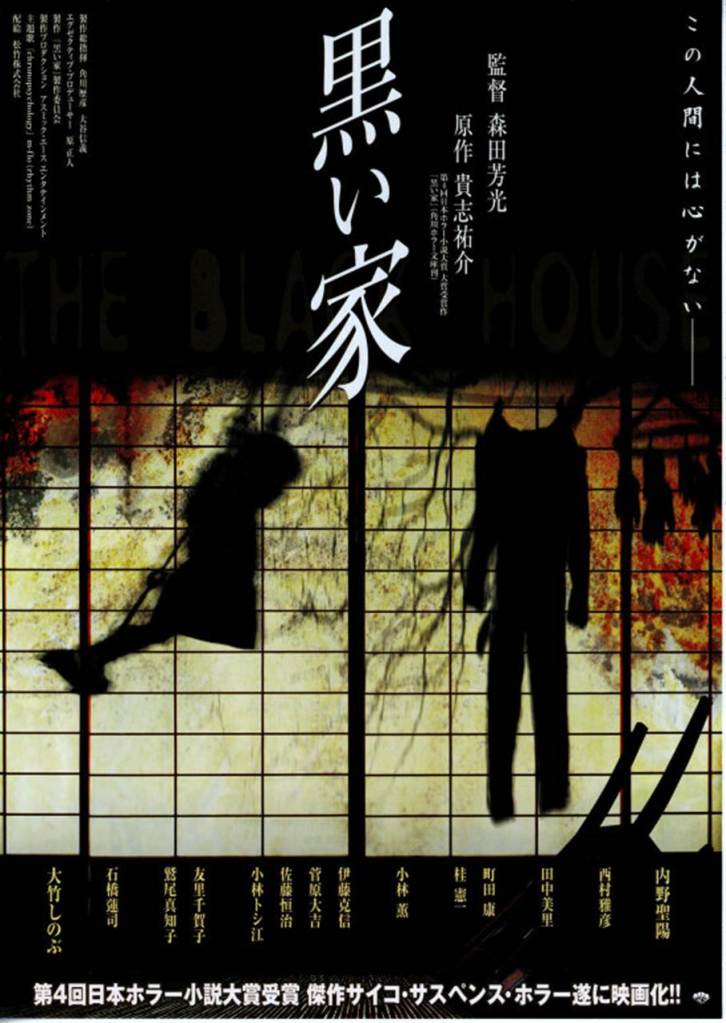
 Yoshimitsu Morita, though committed to commercial filmmaking, also enjoyed trying on different kinds of directorial hats from from purveyor of smart social satires to teen idol movies, high art literary adaptations and just about everything else in-between. It’s no surprise then that at the height of the J-horror boom, he too got in on the action with an adaptation of Yusuke Kishi’s novel of the same name, The Black House (黒い家, Kuroi Ie). Though tagged as “J-horror” you’ll find no long haired ghosts here and, in fact, barely anything supernatural as the true horror on show is the slow descent into madness taking place inside the protagonist’s mind.
Wakatsuki (Masaaki Uchino) is a nice young man with a good job investigating claims at an insurance office. Unfortunately, this gives him a slightly dim view of humanity as he comes into contact with scamsters and even people willing to maim themselves just so that they can claim on their policies. One day, he receives a strange phone call from a woman who wants to know if her insurance policy will pay out in case of suicide. Wakatsuki, slightly panicked, tells her that it really depends on the circumstances and, jumping to the conclusion she plans to kill herself, urges her to get help and talk things over with someone before doing anything rash.
The next thing he knows, Wakatsuki is despatched to her house to sort things out whereupon he makes an extremely gruesome discovery – the woman’s son, though only a child, has hanged himself in the back room. Obviously extremely shocked and distressed, Wakatsuki heads home with the nagging suspicion that Sachiko (Shinobu Ootake) and her husband Komoda (Masahiko Nishimura) have done something truly dreadful. The couple take turns coming into the office to find out what’s taking so long with their claim and gradually the situation begins to spiral desperately out of control.
Always one for irony, Morita’s tone varies widely here. There’s an oddly Twin Peaks-like vibe with the jolly jazz score giving way to synths at moments of high tension, not to mention the run down industrial town setting. If that weren’t enough Lynchery, there’s even a moment where a severed hand is found in a patch of grass, crawling with ants just like the ear found by Jeffrey at the beginning of Blue Velvet. Morita seems to be telling us not to take any of this too seriously yet his subjects include parents harming or even murdering their children to claim on an insurance policy as well as bloody violence and dismemberment of corpses.
In fact, the insurance guys don’t spend too long trying to figure out if the boy actually killed himself but Wakatsuki becomes preoccupied by the idea the husband, Komoda, is behind the whole thing (the boy was only his step-son after all) and will now try and kill his wife to claim her insurance too. The couple are certainly both very strange people and the insurance company also have a problem as the policy was signed off on during a campaign drive in which a now dismissed employee made use of a personal connection to try and meet her unrealistic quota. Wakatsuki eventually engages an equally eccentric psychology professor who takes him out on a weird nighttime odyssey to a seedy strip club where he expounds on a epidemic of psychopathy among the younger generation. Even Wakatsuki’s girlfriend, Megumi, has some off the wall ideas based on an essay Sachiko wrote in elementary school (though actually Megumi’s view has some merit).
Things hit a more conventional note from this point on landing us with a familiar slasher villain who begins stalking Wakatsuki, even trashing his apartment before kidnapping his girlfriend and keeping her prisoner in the “Black House”. Wakatsuki heads to the den of evil by himself in the dark (in true horror movie fashion) where he finds a whole bunch of other dismembered corpses (and a few other surprises). He might think he can put his troubles behind him after this extremely traumatic incident, but this is still a horror movie so the killer gets away to strike again by throwing a bright yellow bowling ball at his head through the office toilet window.
Morita is not being serious at all, even for a second, but somehow he still manages to create an oddly threatening atmosphere of suspense despite the extremely weird things which are going on. He creates a complex set of visual cues from the recurring sunflower motif repeated on Sachiko’s shirt to the glistening yellow bowling ball, goldfish (in a toilet bowl if not a percolator), repeated sounds of cockroaches and old fashioned reel printers, and even the green glow from both old fashioned computer systems and the company’s insurance documents. Undoubtedly bizarre, The Black House is mind bending psychological-horror-movie-cum-Freudian-slasher that is primed for both head scratching puzzlement and confused chuckling as Morita has a lot of fun messing with our senses.
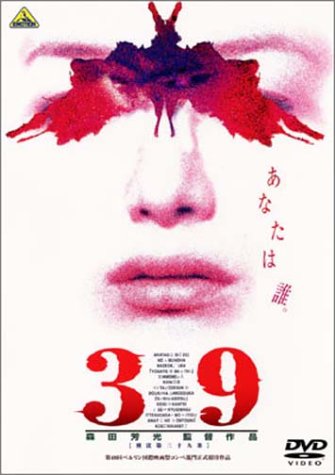 Article 39 of Japan’s Penal Code states that a person cannot be held responsible for a crime if they are found to be “insane” though a person who commits a crime during a period of “diminished responsibility” can be held accountable and will receive a reduced sentence. Yoshimitsu Morita’s 1999 courtroom drama/psychological thriller Keiho (39 刑法第三十九条, 39 Keiho Dai Sanjukyu Jo) puts this very aspect of the law on trial. During this period (and still in 2016) Japan does nominally have the death penalty (though rarely practiced) and it is only right in a fair and humane society that those people whom the state deems as incapable of understanding the law should receive its protection and, if necessary, assistance. However, the law itself is also open to abuse and as it’s largely left to the discretion of the psychologists and lawyers, the judgement of sane or insane might be a matter of interpretation.
 Windows on Worlds