Laugh, Everyone! (みんな笑え, Taichi Suzuki, 2025)

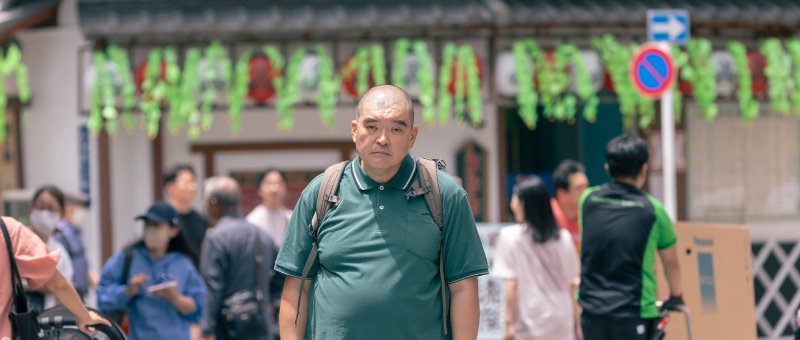
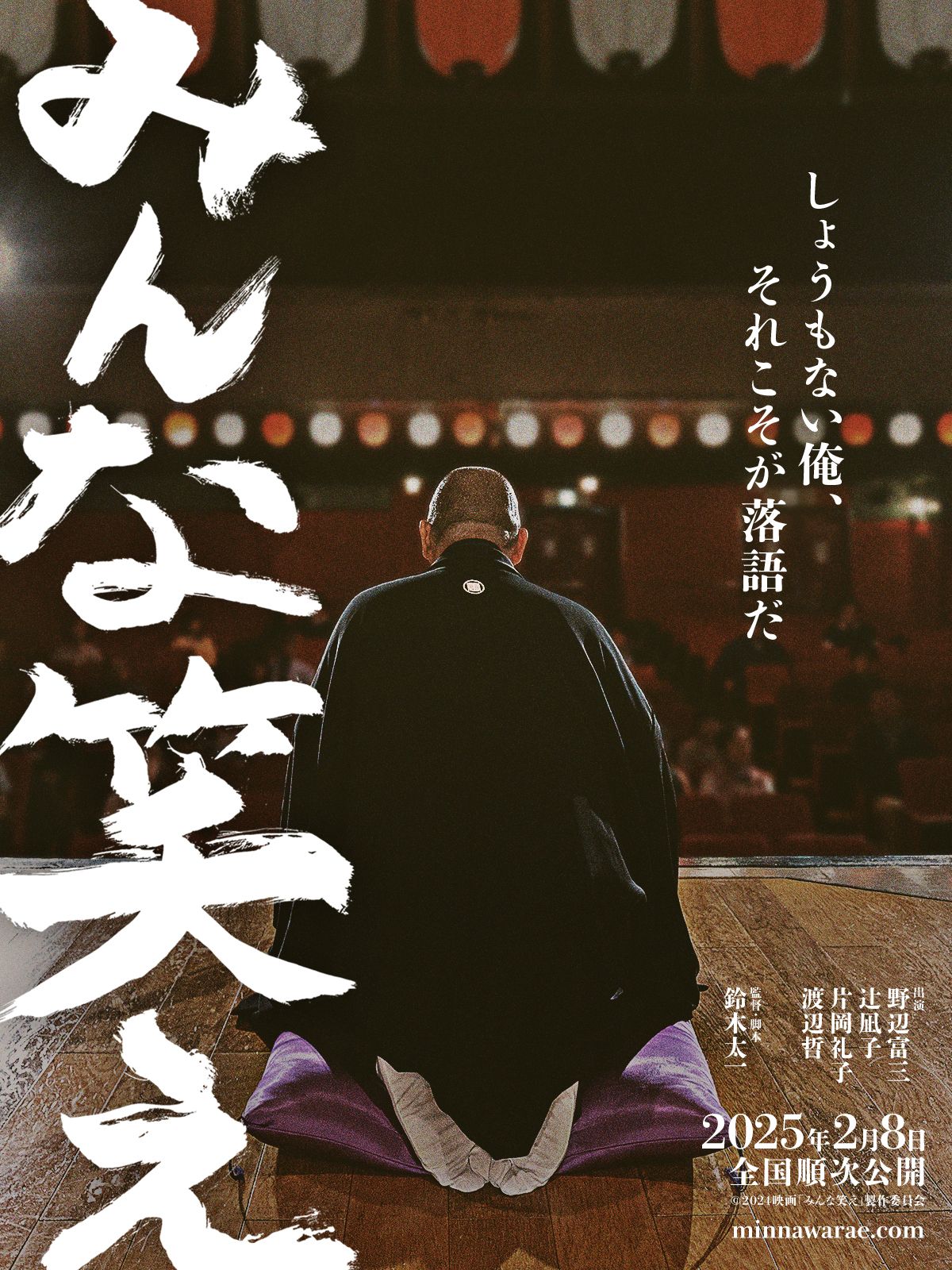
A down of his luck second generation rakugo storyteller begins to discover a new way of life after meeting an aspiring female comedian in Taichi Suzuki’s lighthearted dramedy, Laugh, Everyone! (みんな笑え, Minna Waremashit). The title is taken from a moment of madness in which a resurgent Tamon pleads for everyone to just laugh rather than being at each other’s throats or feeling like they want to die, but that’s something he himself may not be able to do until he’s truly made peace with his demons.

Chief among them would be his father, Kenzo, a rakugo master who’s tormented and bullied him his whole life. In general, rakugo storytellers recite a canon of classical tales that have been passed down since the Edo era, but despite having inherited his father’s stage name, Tamon avoids performing the classical repertoire and sticks to original material. His acts don’t seem to please the audience, and it’s clear that his father’s other disciple, Kannosuke, resents that it was Tamon who became the official heir despite having no talent when he was the rightful successor. Unfortunately, Kanzo failed to plan for his retirement and now has dementia, meaning that he can no longer perform. Unable to make money through rakugo, Tamon has a part-time job in a warehouse to try to make ends meet all while being berated by Kanzo for bing a useless failure.

There are some touching moments later on in which Kanzo bonds with the son of his carer and plays with him as if he were Tamon, hinting that he might have liked to have been a different kind of father and have a different kind of life if it were not for the pressure of passing on his rakugo name. For his part, Tamon has become timid in the extreme and has been running away from anything challenging or unpleasant his whole life. In fear of not living up to his father’s legacy, Tamon avoids the old stories and sticks to telling the same original tale he’s been doing for the last 30 years. 

But if his problem is that he can’t master the classics, Kiko’s is that she can’t innovate and all her original material is pinched from somewhere else. She and her comedy double act partner Chi-chan have been trying to break into television, but can’t catch a break with their largely improvised act. While auditioning, they encounter entrenched sexism as the male panellist tells them that women aren’t funny and don’t take comedy seriously. Kiko’s mother Yoko experiences something similar at her bar where her sleazy backer is all over a younger hostess with whom he eventually hopes to replace her, while Chi-chan has also fallen prey to a predatory man working at a host club. She has been financially supporting Joe to help him achieve his dream while he forces her into sex work to make him more money, pushing her to quit comedy and work for him full-time. This kind of exploitation has regrettably become so common that a specific law was passed in 2025 to prevent young male “hosts”, who work in bars where they charm women into buying drinks and gifts, forcing their patrons into debt and then sexual exploitation. 

Nevertheless, Kiko strikes gold when she hears Tamon’s baseball-themed routine and realises it’s the same one her mother used to listen to on cassette tape. Reworking it as a manzai routine, she sees a way through her creative block even if it’s sort of plagiarism. After getting his permission to use his material, Kiko begins to think of Tamon as a mentor while he almost thinks the same of her as they encourage each other through their comedic failures even while working in opposite directions. A kind of rapport emerges between them as they were actually an accidental manzai double act along with a more positive paternal relationship than that seen between Kanzo and Tamon which is fuelled by a fear of obsolescence, ego, and resentment. Through his friendship with Kiko and rekindling that with her mother, Tamon eventually gains the courage to stop running away and face himself in classic rakugo both making peace with the complicated relationship he had with his father and carving out a new identity for himself in emerging from his father’s shadow. Sparrows fleeing the cage, both he and Kiko rediscover the healing power of laughter and with it the courage to face their troubles head on rather than continuing to run away in fear of failure and miss out on the joy the craft can bring to those around them.


Laugh, Everyone! is available to stream until 14th September 2025 courtesy of Chicago Japan Film Collective.

Trailer (English subtitles)

August in Tokyo (愛の小さな歴史, Ryutaro Nakagawa, 2015)

august in Tokyo posterFollowing on from the dark series of coming of age tales in Plastic Love Story, Ryutaro Nakagawa continues to examine his central themes of unusual connections, lingering effects of past trauma, and the dark side of familial dysfunction in the cheerfully titled August in Tokyo (愛の小さな歴史, Ai no Chiisana Rekishi). Beginning with a framing sequence involving suicide and depression, Nakagawa spins back for a no happier look at two very different people facing much the same problems as they attempt to reconnect with family members, pursue doomed romances, and generally fail to move forward even though they each strive to put the past behind them. Yet there is hope here as the framing sequence proves in its insistence that loss is an inevitable part of life but that the end of one relationship does not mean no others should start.

A young girl, Natusmi (Asaka Nakamura), receives a phone call from the police telling her that her best friend has committed suicide. Left reeling, Natsumi also attempts to kill herself but is saved by a young man with whom she later develops a friendship after bonding over their shared loss in each having lost someone close to them who died by their own hands.

Their story gives way to that of another man and woman who don’t know each other but are living very similar lives in close geographical proximity. Natuski (Eriko Nakamura), having left a job at a book shop following a failed affair, has a part-time job delivering bento. Approached one day by a young man (Sosuke Ikematsu) who tells her that her estranged father (Ken Mitsuishi) is in a bad way, Natsuki decides the best form of revenge might be to move in and look after him. Meanwhile, Natsuo (Takashi Okito) is a petty gangster becoming disillusioned with his life of senseless unpleasantness. Reencountering his younger sister Asuka (Manami Takahashi), Natsuo decides to reassume his familial responsibilities by “saving” her from her dead end life as a drug addicted casual sex worker.

Abandonment and familial breakdown are the threads which bind the stories of Natsuki and Natso together. Living out their eerily similar lives, they each reflect on why it was they were born if their parent(s) did not want them enough to bother looking after them. Natsuki’s memories of her father who left when she was small are not positive. She has a scar on her chest from where he burnt her with a cigarette and still resents him for the drunken beatings he inflicted on her mother who later died when Natsuki was only ten years old. She wonders if her life might have been different if she’d had a normal childhood. A failed a attraction to a middle-class pianist only serves to ram home her sense of insecurity and inadequacy, leaving her to wonder if she can ever escape the cycle of suffering to which her father’s failures seem to have condemned her.

Natsuo and his sister have it harder, each wondering why it was they were born, preferring to think it was all just an unhappy accident of a biological urge rather than the expression of a love they themselves have never felt. At some point Natsuo made the decision to abandon his family, leaving Asuka to deal with it alone. Attempting to care for their abusive father with senile dementia, Asuka’s life was destroyed, leaving her no way to support herself until an ill advised romance led her into the path of drugs and the sex trade. Natsuo wants to put things “right”, but he may be running out of time.

Natsuki and Natsuo struggle, each trying to do the “right” thing but finding themselves conflicted. Natsuki can’t forgive her father for everything he’s put her through. The young man who convinced her to help him, perhaps disconnected himself, describes Natsuki’s father as “like a father” to him – a figure of nobility who stood up for others and was the only man who took him for drinks and spent time with him as a father might. Natsuki says says her only purpose in life is hating her father, yet in the end she can’t. Natsuo’s worries are equally self focussed in his guilt over having abandoned his sister and her subsequent fall into dangerous drug dependency but his late in the day attempts to “save” her and their patronising paternalism often frustrate his essential goal.

Running in parallel these two sad stories are tragedies waiting to happen but, even in their darkness, they hold the potential for salvation. As in the framing sequence, such unexpected connections may be born from sadness but there is happiness to be found if you can find the strength to carry on. Maintaining his familiar aesthetic of naturalism mixed with expressionist dance sequences, Nakagawa’s latest examination of human relationships and contemporary society is bleak but also hopeful, insisting that patch work hearts are the path to a brighter future.


Available in most territories via iTunes, Amazon, YouTube, and Google Play.

Trailer (English subtitles/captions)

https://www.youtube.com/watch?v=kmErCX23mkc