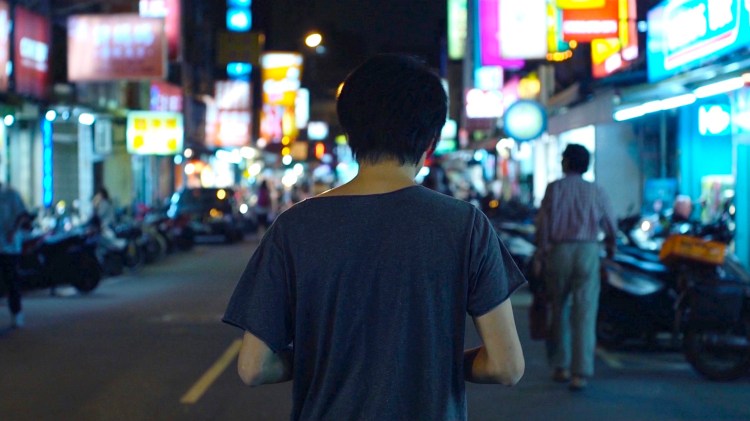
Out There (Takehiro Ito, 2016)

out-thereWe don’t move forward in this dance, comments the lady currently being waltzed by a charming lost soul. Don’t worry, he says, that’s not a bad thing. Indeed, Out There, the first independent feature film from director Takehiro Ito exists in a fixed yet liminal space, here and not there as its protagonist finds himself without the proper place to be. Conceived as a way of salvaging some of the material collated for a documentary on the late Taiwanese director Edward Yang, Out There takes more of its cues from Tsai Ming-liang or even Lav Diaz in its preoccupation with the intersection between time, existence, and place. If that all sounds to weighty, there’s a little whimsy in here too, but the intent is a serious one as nationhood (or the lack of it), drifting cultures, love and history all conspire to confuse and distract the course of a young man in search of an identity which is entirely his own.

Beginning with an interview or perhaps an audition, the onscreen director questions the man who will be our star, Ma, about his motivations for applying – only, characteristically, he doesn’t quite know. From what he tells us, it seems his interests are largely introspective, unable to find a place to exist, perhaps he can carve one out for himself inside the fictional world of a film. Ito returns to this interview (or series of interviews?) throughout the action as Ma shows an apt desire to dissect himself on camera. The director is a minor player as Ma takes over, but like Ito he is trying to recover something from the ashes of a lost project, his producer sitting to the side, neatly picking apart the director’s somewhat thin proposal for a film about a cross cultural couple in which “everything happens by chance”.

The historical relationship between Tokyo and Taipei is perhaps a complicated one (though significantly less complicated than with many of its other neighbours), but there is a third party in this difficult romance in the spectre of America. Returning to Taiwan in the second segment, notably titled Land of Shadows, Ma talks to his parents about their views on global culture as Green Card holding Taiwanese who never made the move. In his original interview, Ma explained that one of the reasons he came to Japan was that he always felt like an outsider in Taiwan, unable to express himself fully. Having spent some time in the US as a child, Ma has a feeling America is “not for him”, but has also found that Japan is probably not the place he’s supposed to be either, and unlike his family he does not feel as if he can simply live out his days in his native Taiwan.

In a final discussion with Ayako – the actress in the film which never quite happens (in a sense, outside of the way it’s happening for us), Ma talks about the importance of memory which prompts Ayako to remark that it’s as if everything is already in the past for him. As if to symbolise Ma’s lack of forward progress, everything which happens in Tokyo bar a single flash of colour at the end of the interview sequence is cast in sharp black and white. Taiwan, by contrast, is shot in verdant colour though allowing for 16mm and 4:3 framing adding to the sense of nostalgia and homesickness which seem to invade Ma’s mind. This Taiwan is a place of backstreets and ruins, faded grandeur and unseen histories. Empty cinemas and abandoned film eventually give up their ghosts, but it’s Ma himself who seems to join them as he fades into the frame, here and not here as he repeatedly doubts the matter of his own existence.

There’s a slight irony in the way America has been idealised as a place of possibility given its (until extremely recently) severing of diplomatic ties with the island nation of Taiwan. Seeking a home in a place which refuses to acknowledge the land in which you were born exists may make one feel like a ghost, but Ma’s sense of existential dislocation runs deeper. A kind of hiraeth, a longing for a home which doesn’t quite exist, becomes a force which propels and halts in equal measure. Skating around Tokyo on his roller blades, Ma has no particular destination in mind except perhaps to escape himself. He takes photos of places because he doesn’t want to point his camera at people, refusing human connections which will have to be broken in his ongoing quest for a sense of belonging. As the director puts it, there are many endings but as long as he remains fixed on the concept of “there”, Ma risks losing the idea of “here” which remains in a state of perpetual future past, outside of this liminal space in which nothing moves or changes.

Ito’s drifting, experimental approach moving between documentary, narrative and fantasy with the borders between each as unclear as the hero’s sense of identity is one which defies categorisation, as much about the idea of place as the characterisation of the two cities at hand and the ever unseen spectre of the hovering America. Poetic, wistful, and imbued with a sense of loss, Out There is a poignant exploration of cultural dysphoria and existential confusion in an ever widening world in which past, present and future become indistinct in an endless journey onward to place or no place at all.


Currently available to stream worldwide via Festival Scope in connection with the International Film Festival Rotterdam.

Short scene from the end of the film:

Cute Girl (AKA Loveable You 就是溜溜的她 Hou Hsiao-Hsien 1980)

f_10046820_1If you’re familiar with the name Hou Hsiao-Hsien, it’s probably for his role in the Taiwanese new wave and as one of the major directors of so called “slow cinema”. It might come as a surprise then that his first three movies were pop star vehicles, heavy on catchy tunes and universal humour but light on deep themes and social commentary. However, even if everything about his first film Cute Girl is intended to be just another run of the mill populist rom-com, many of the elements from Hou’s later films are already present from long lenses and longer takes to interesting ideas about composition and a noticeable town/country divide.

The story is predictable enough, poor boy Da-gang falls for wealthy Wen Wen who quite literally doesn’t give him a second glance. That is until she runs off to stay with an aunt in the country for a last holiday before her father has her married off to the son of an important businessman. Da-gang coincidentally ends up in the same village as part of a survey team for a new road (that’s going to go right through the middle of someone’s house). Being Da-gang he also gets bitten by a caterpillar and ends up being left behind to recover whereupon he begins a tentative romance with Wen Wen at last! However, disaster strikes when her father calls her home to meet her prospective husband – will Wen Wen and Da-gang ever find the happiness they deserve? The answer’s sort of obvious but it’s still fun finding out!

The film features pop stars Fong Fei-Fei and Kenny Bee (from Hong Kong) and is unsurprisingly heavy on pop music including the title track which recurs several times throughout the film. Though Cute Girl is undeniably formulaic and intended as nothing other than disposable entertainment hoping to capitalise on its stars profile and sell a few more records, the film has undeniable quirky charm. Full of strange, not quite slapstick humour and silliness you can’t help but find yourself hugely invested in the screwball style love story of Wen Wen and Da-gang.

No, it’s not a film for the ages. It doesn’t tackle the deep themes Hou would return to time and again in his later career but it does have a degree of heart and commitment that make it a very enjoyable example of the late ’70s/’80s Taiwanese musical romantic comedies.

For the extra curious, here is the undeniably catchy tune itself!

Taiwanese Cinema About to Hit the UK in a Big Way

exit 1This is kind of another link post, but bear with me! First up Ang Lee’s first three films finally became available on DVD in the UK. Cunningly titled The Ang Lee Trilogy, you can now feast your eyes on Pushing Hands, The Wedding Banquet and Eat Drink Man Woman for the first time. Feast is the right word too as all the movies feature food in a very prominent way so make sure you have the proper supplies arranged before you sit down to watch them. You can read my review of the trilogy over at UK Anime Network. They’re all great, but I particularly like The Wedding Banquet because it’s just so funny!

Here’s an awful old school trailer for The Wedding Banquet (the film is better than this, I promise).

OK, moving on you can also pick up the award winning debut from Chienn Hsiang EXIT on DVD and VOD courtesy of Facet Films. I reviewed the film when it played at the Glasgow Film Festival and you can read that at UK Anime Network too. I also had the opportunity to interview the film’s star Chen Shiang-Chyi while she’s over here shooting The Receptionist. Contrary to expectations, Chen Shiang-Chyi was actually very chatty and super nice so the only reason the interview seems a little short is because she gave very long and detailed answers! You can checkout the interview over at UK Anime Network.

Which brings me on to the upcoming Hou Hsiao-Hsien season at the BFI which begins tomorrow. Pretty much everyone is expecting his new movie The Assassin starring his regular muse Shu Qi to appear in the film festival (it would be really strange if it didn’t right?) and I for one am really looking forward to seeing it.

Hou Hsiao-Hsien will be appearing in conversation at the BFI on 14th September (tickets apparently still available) ahead of a screening of one of his greatest films, The Time to Live and the Time to Die. I was lucky enough to see this one during the BFI’s extended season of Chinese films last year and though it’s not always an easy watch, Hou’s biographical tale of mainland refugees and their Taiwanese offspring is nevertheless a moving and fairly universal coming of age tale.

I’d also recommend Dust in the Wind 

and A City of Sadness

but I just have to post this scene from Three Times again because I love it so much

They’re also showing Hou’s Ozu tribute and Japanese set Café Lumière starring Tadanobu Asano if that’s more your speed.

That’s a lot of Taiwanese cinema all of a sudden right? It’s a good thing though! If you still want more I’ll direct you to the films of Edward Yang as mentioned in Chen Shiang-Chyi’s interview:

Yi Yi: A One and a Two

No trailers for a Confucian Confusion or A Brighter Summer Day though – both are a little more difficult to get hold of but worth the effort. A Confucian Confusion has a great Rom-Com style ending (though not as good as Comrades: Almost a Love a Story which has the best ending of any film, ever, but I digress) and A Brighter Summer Day which is an epic at four hours long but a total heartbreaker.


Yee Chih-Yen Interview (UK Anime Network)

Director-YEE-Chih-Yen-300dpiI had the opportunity to interview Blue Gate Crossing director Yee Chih-Yen on behalf of UK Anime Network when he was over here promoting his latest film, Salute! Sun Yat-Sen which was featured as the closing night Gala of the Chinese Visual Festival 2015. You can also read my review of the film which I liked very much and be sure to catch Salute! Sun Yat-Sen when it receives a UK DVD and VOD release courtesy of Facet Film Distribution on 27th July 2015.

Trailer and a few more images from the film below.


articlesubpic1597


King of Fists and Dollars (錢王、拳王, Chen Ming-Hua, 1979)

vlcsnap-2015-05-25-17h07m52s233Review of this rare martial arts movie up at UK Anime Network.


Terracotta have always been keen to bring us the best of contemporary Asian cinema but with the “Classic Kung Fu Collection” they aim to shine a light on some of the much loved movies of the martial arts golden age that have been absent from UK screens for entirely too long. This third entry in the series, King of Fists and Dollars, is a more niche release than the others in the series and has been long unavailable in its original Mandarin language version. Shot in Taiwan in 1979 but starring a host of Shaw Brothers favourites King of Fists and Dollars is a fairly typical example of its genre but perhaps fails to offer anything more.

In feudal China, a tyrannical lord, Chien, rules over the local population with extreme cruelty and disdain. Following a mining accident in which several miners are killed or injured and Chien outright refuses to pay compensation to their families and the townspeople begin to look for a champion to fight Chien on their behalf. Luckily a famous kung-fu master lives in the town, but unluckily he’s retired and not that keen on helping. Nevertheless he finally agrees and a mini rebellion begins to take place, however, Chien is not someone to be lightly overthrown.

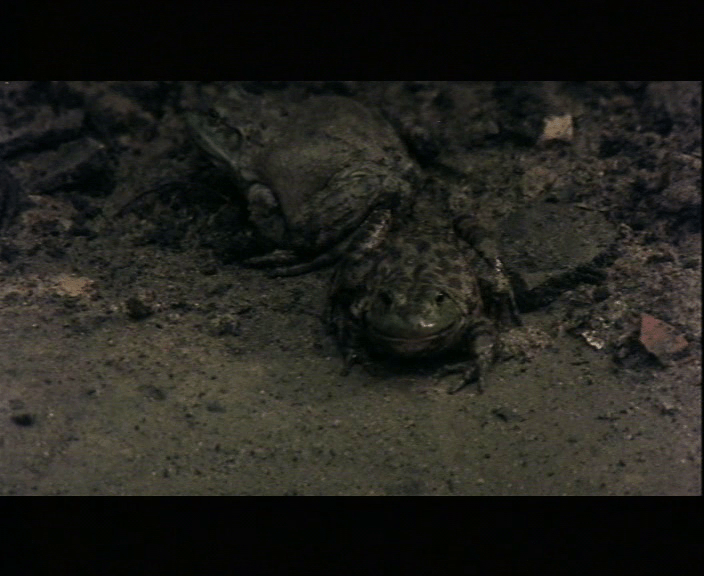
King of Fists and Dollars is pretty much your typical late ‘70s kung-fu film. The plot is fairly simple and set piece heavy with the consequence that we simply move from fight scene to fight scene with a few comedy moments thrown in. There is the standard trope of the young hopeful who is forced (or in this case tricked for comic intent) to complete a series of bizarre tasks – this time including catching 100 frogs and hanging upside down all night in a tree in order to prove worthy enough to be allowed to train with the great master. Indeed, training scenes make a large percentage of the movie as Iron Fist trains up a force to beat Chien with the usual bucket based workouts and tricky games of agility.

However when the action scenes arrive they are fairly impressive. All of the different characters fight in different styles and poses and the choreography leans more to traditional clearly defined moves than the more fluid technique prevalent later. There is a fair bit of obvious wire work and off camera trickery at play but fans of old school action will find plenty to enjoy here, especially in the later part of the film which sees the gang facing off against Chien’s seemingly unstoppable champion.

Fans of older kung-fu movies may be more likely to forgive the obvious problems with the film’s presentation which to put it kindly is “imperfect”. The film is presented in 1.78:1 aspect ratio rather than the original 2.35:1 (explaining why one character finishes her martial arts trick off screen) and has not been particularly well preserved. Crackly, worn and a little fuzzy the image quality is often disappointing though to be fair this may be the best available at the present time. The disc comes with the English dub as the default soundtrack with the original Mandarin plus French and Spanish dubs with English subtitles available from the menu screen. The Mandarin language soundtrack is similarly fuzzy with a few brief drop outs every now and then and the subtitles are generally fine. Given the film’s rarity (particularly in its Mandarin language version with English subtitles), many genre enthusiasts may find tolerating these defects an acceptable trade off in return for seeing the film but casual fans may have a much harder time forgiving them.

King of Fists and Dollars is therefore something of a mixed bag. A fairly ordinary, pretty typical Taiwanese martial arts film from the late ‘70s it offers everything you would expect but perhaps not much more. The cast of starry Shaw Brothers faces including: David Chiang, Danny Lee, Pearl Cheung Ling and Chao Hsiung are all accomplished performers doing what they best but nobody is really expected to stretch here. Genre fans will certainly jump at the chance to see this rare film but for the casual viewer its charms may be harder to discern.


Available in the UK now from Terracotta Distribution

Salute! Sun Yat-Sen (UK Anime Network Review)

articlesubpic1597Reviewed the latest film from Blue Gate Crossing director Yee Chih-Yen Salute! Sun Yat-Sen for UK Anime Network. Also interviewed the director when he was here for the film’s screening as the closing night gala of the 2015 Chinese Visual Festival (under the old title of Meeting Dr Sun). This will also be getting a DVD/VOD release from Facet Film Distribution on 27th July if you didn’t manage to make it to the festival. Good movie, kind of cute but with bite too.


Salute! Sun Yat-Sen is the long awaited new film from Taiwanese director Yee Chih-Yen which arrives a massive 13 years after the award winning Blue Gate Crossing. Like Blue Gate Crossing, Salute! Sun Yat-Sen centres around the everyday life of teenagers with a subtle level of social commentary though this time it swaps sexuality for social inequality and complicated male friendships.

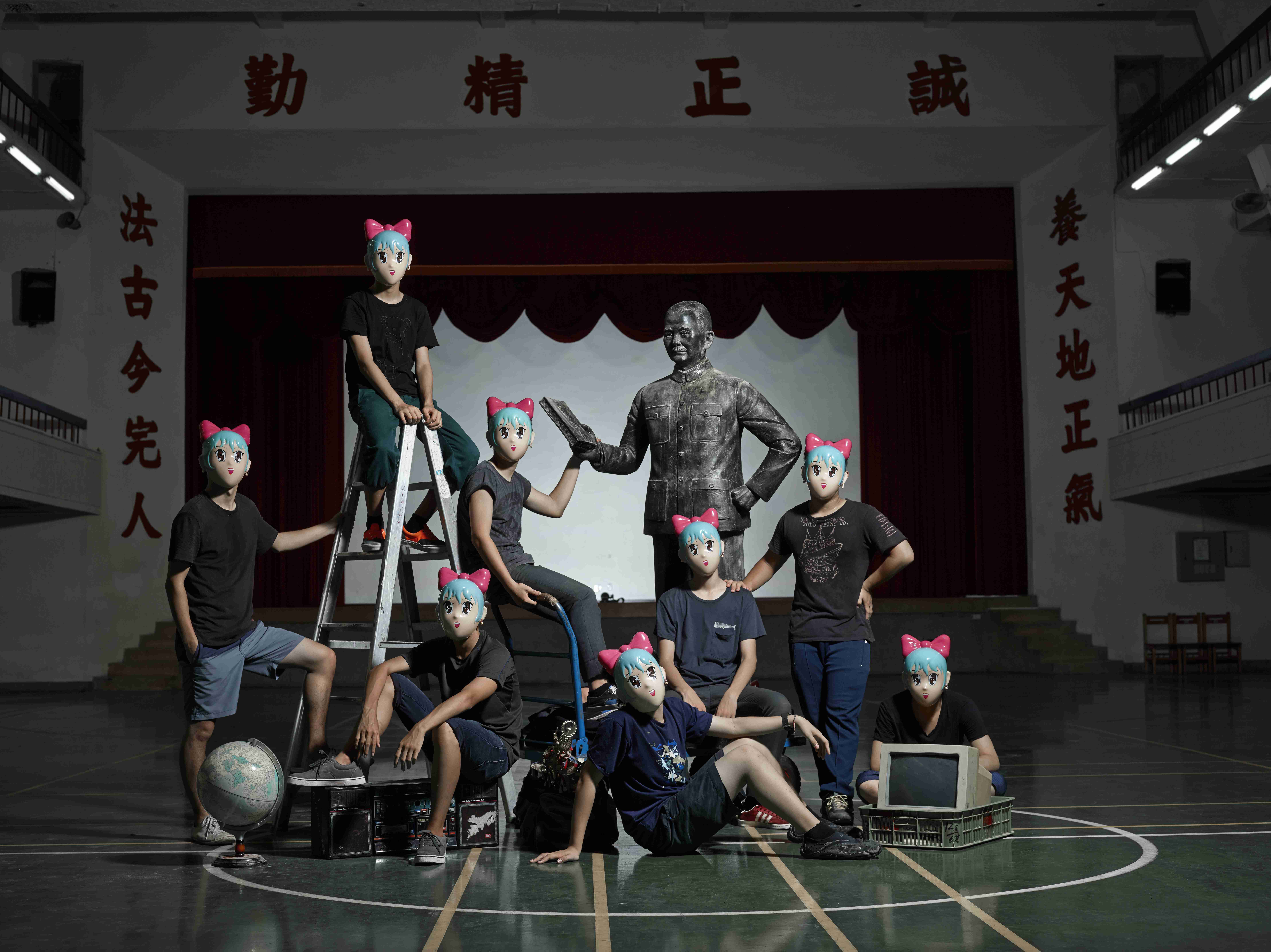
Lefty is a typical high school boy, at once giddy and lackadaisical. His major problem in life is that he’s behind on his school fees and despite his attempts to dodge the issue, it’s become an embarrassment for him around the school. Lefty lives with his grandmother who’s on a low income and he simply does not have the money to pay. That’s when he catches sight of an abandoned metal statue in a school storeroom and hatches on a plan to steal it and sell it for scrap. However, just when it looks like the plan is complete, Lefty and his friends discover another group of boys has hatched on the same idea! It’s then up to Lefty & co to figure out a way of getting to the statue before the other gang.

Salute! Sun Yat-Sen mixes comedy caper tropes with high school drama as the boys try to beat each other to this overly symbolic statue that they intend to sell for scrap. The plan is, of course, a little bit ridiculous – first of all the business of sneaking an extremely heavy and cumbersome metal statue out of the school with no one noticing and then simply taking it to a scrap metal merchant and selling it, all without anyone asking how exactly they came by this distinctive statue, is quite a childishly naive plan but one which makes for quite a lot of comedy. One of the best moments being the boys trying to buy masks to hide their faces from the security cameras and having to go for the cheapest one which happens to be a horrible anime style face which is so cheaply priced because it’s made from an awful plastic which gives you a rash and makes your face itch if you wear it too long.

Sun Yat-Sen is obviously a hugely important, inspirational and well known historical figure particularly in Taiwan but also across mainland China. However, it has to be said that he is not such a well known figure in the UK and, especially as his name is not even mentioned until a news report close to the end, UK viewers may find that the symbolism his name carries is largely lost on them as is the film’s subtle social commentary. Briefly put, Sun Yat-Sen was the “father of the Chinese Republic” who sought to steer China towards a democratic and more egalitarian society after the collapse of the Qing dynasty and the Chinese revolution in 1911. Sadly, his utopian vision for the new China was not to be but his idealism and humanitarian thinking are still widely praised in Chinese culture. He also still appears on Taiwanese bank notes and so may be primarily linked with money in the minds of these young boys, but there is a central irony that it’s a statue of the left leaning Sun Yat-Sen that these money strapped young men have chosen to steal and melt down to get the money they so desperately need to get by.

However, even without grasping all of the complex political allusions to Taiwanese cultural issues both historical and contemporary, Salute! Sun Yat-Sen still succeeds as a warm and amusing coming of age tale in which a group of teenage boys on the cusp of adulthood come to realise a few things about themselves and the culture they live in. Though the central two boys are in someways very different, in other ways they have a lot in common and it’s a fun ride seeing how their conflicting personalities rub up against each other until a tentative friendship eventually develops. The second boy (who repeatedly avoids telling Lefty his name throughout the film) is, in many ways, in a far worse position than Lefty which has made him bitter and devoid of hope for the future but thanks to Lefty’s optimism perhaps begins to think it’s not all as gloomy as he once thought.

Like Blue Gate Crossing, Salute! Sun Yat-Sen is a quiet sort of film where plot takes second place to character (although all the heist shenanigans are undeniably entertaining – especially one horror movie inspired episode). The film feels authentically youthful, manages to imbue its young cast with an unusual degree of realism and it’s very hard not to be charmed by Lefty’s giant smile and happy go lucky attitude. Simply put, Salute! Sun Yat-Sen is unlikely to spark a revolution but its quietly encouraging messages are certainly a good start.


Exit (迴光奏鳴曲, Chienn Hsiang, 2014)

exit 1Review of this existential character drama from Taiwan up at UK Anime Network. This one was screened at BFI London Film Festival but now it’s at Glasgow too and will be getting a further UK release courtesy of relatively new distributor Facet Films in April!


Sometimes it’s the little things that wear you out; stretching over years, becoming almost invisible until a surge of troubles washes over you and leaves you gasping for air in stormy seas. So it is for Ling, an ordinary, middle aged Taiwanese woman who finds herself alone with her husband working in Shanghai (constantly incommunicado even via telephone) and a teenage daughter, Mei Mei, who’s not very interested in spending quality time with her mother when she’s suddenly made redundant from her job as a seamstress at a factory and also discovers she’s heading into the menopause. Ling has also become the de facto carer for her mother-in-law who’s in hospital (not that her mother-in-law seems to appreciate it very much) where she becomes increasingly fascinated by a badly injured man in the bed opposite who has no family to visit him or take care of his daily needs. In a gesture of kindness, Ling begins by trying to ease some of his discomfort by mopping his brow and dripping water on his parched lips but soon transitions to bed baths. This purely physical relationship with a blinded stranger begins to reawaken something in Ling but will it be enough to save her from life’s disappointments?

Exit is the feature debut from director Chienn Hsiang, an award winning Taiwanese cinematographer (Blue Gate Crossing) and stars frequent Tsai Ming-liang collaborator Chen Shiang-Chyi in the leading role. Unfolding slowly with minimal, naturalistic dialogue the shadow of Tsai looms large (not that that’s ever a bad thing) but Chienn handles this extended moment of existential crisis with a steady hand and interesting compositional choices. Occasionally, his metaphors feel a little overplayed – the sticking lock on Ling’s front door for example and her general trouble with blocked exits are nice ideas but call attention to themselves a little too readily. That said, Chen’s central performance keeps the film well anchored in its everyday mundanity and ordinary despair whilst also ensuring Ling maintains the audience’s sympathies.

At heart, Exit is an intense character study of one woman’s struggles in modern Taiwan as she finds herself caught between several different transitionary moments. Everybody in Taiwan, it seems, is on their way to China. Ling has already lost her husband who never takes her calls any more, she’s just lost her job because the factory owner’s sons are all obsessed with the idea of the mainland – all everyone ever seems to talk about is leaving, there’s no more work here. She lives alone in a pretty run down apartment where the wallpaper is peeling off the walls (she reseals it with sellotape) and she’s plagued by amorous noisy neighbours next door. Her only ray of sunshine is the dance club run by a former work colleague which, aside from also providing a bit of income in the form of costuming and repairs, is the only thing that seems to catch Ling’s attention.

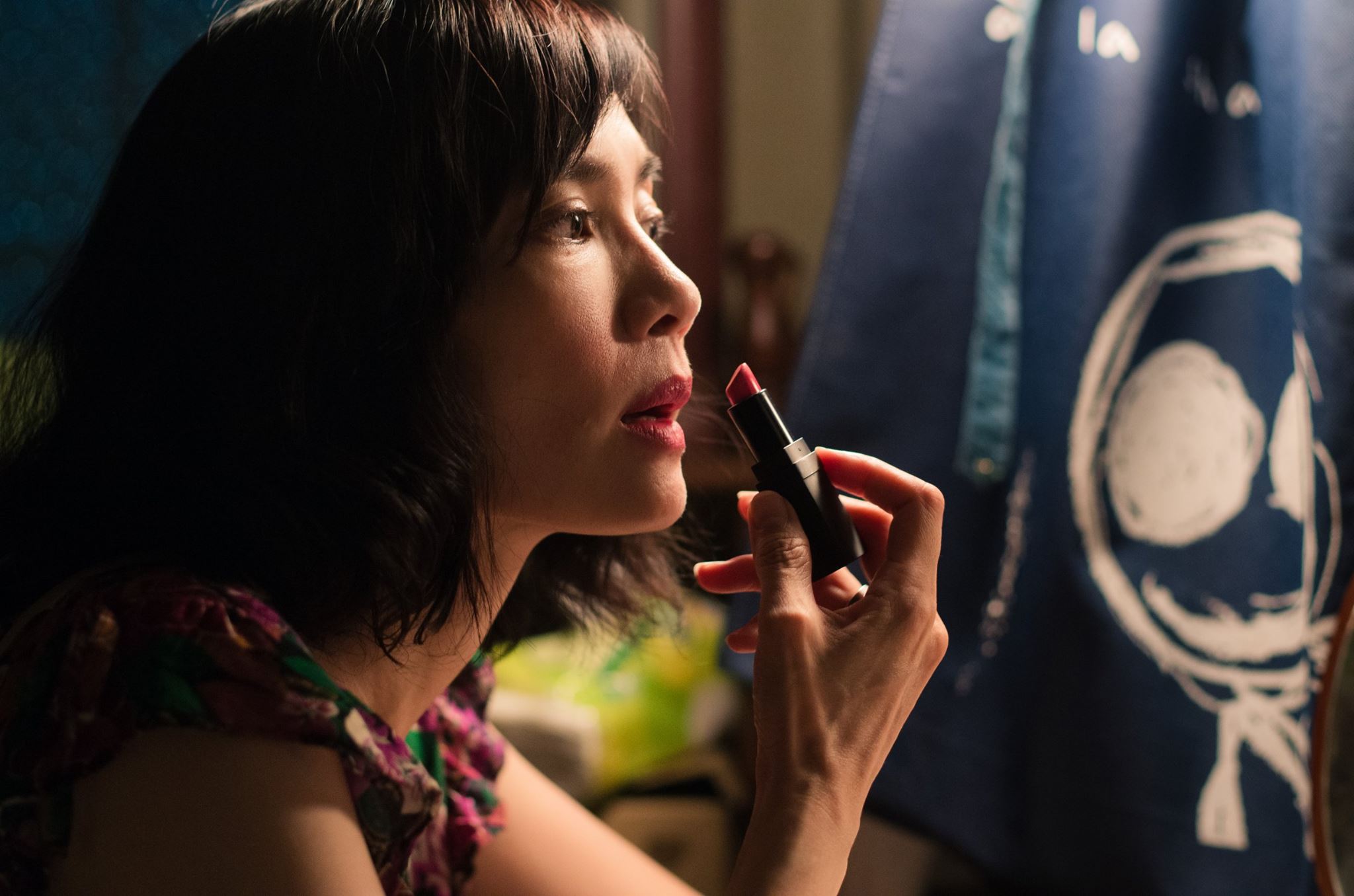
That and the mysterious stranger in the hospital with his strange and terrible injuries. Ling’s encounters with the blind man take on an oddly intimate, sensual quality but as soon as his eye bandages come off she becomes shy or possibly ashamed. Likewise, having made herself a nice new dress and wearing the new shoes suggested by her dance club owning friend Ling goes for a rare night out only to catch sight of her daughter. Once again conflicted, Ling removes her make-up in haste ready to confront Mei Mei (who also rejects her telephone calls) only to discover the girl and her boyfriend have already left leaving only a vague air of shame and discontent behind them.

Exit is a nuanced and engaging snapshot of a moment of crisis in an ordinary woman’s life. It may be true that we all lead lives of quiet desperation but Ling’s troubles are, sadly, of the relatable kind. Trapped in a rapidly changing city and isolated by its social circumstances and cultural constraints it isn’t surprising that Ling’s frustrations finally come to a head but like everyone else Ling has to find a way to go on living and watching her getting back to herself becomes an intensely moving experience.