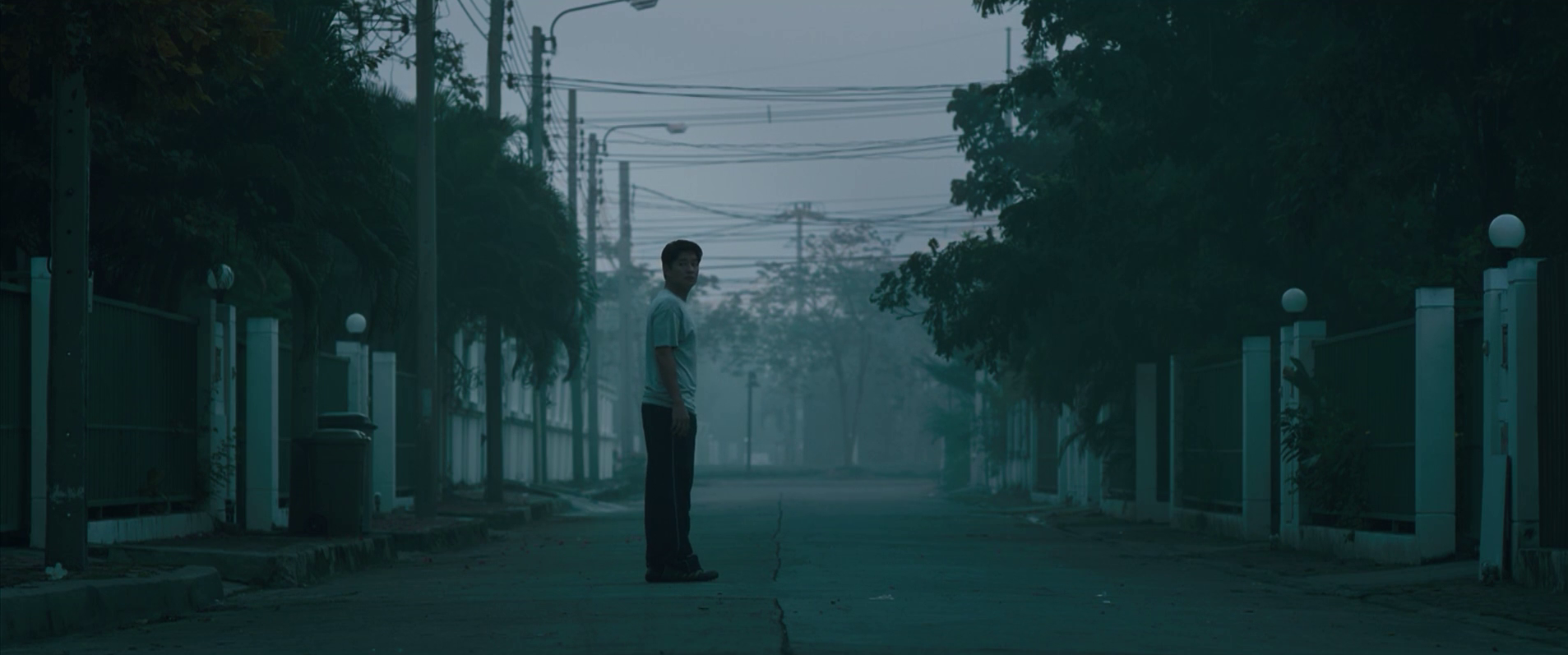
Phobia 2 (5 แพร่ง, Paween Purijitpanya, Visute Poolvoralaks, Songyos Sugmakanan, Parkpoom Wongpoom, Banjong Pisanthanakun, 2009)

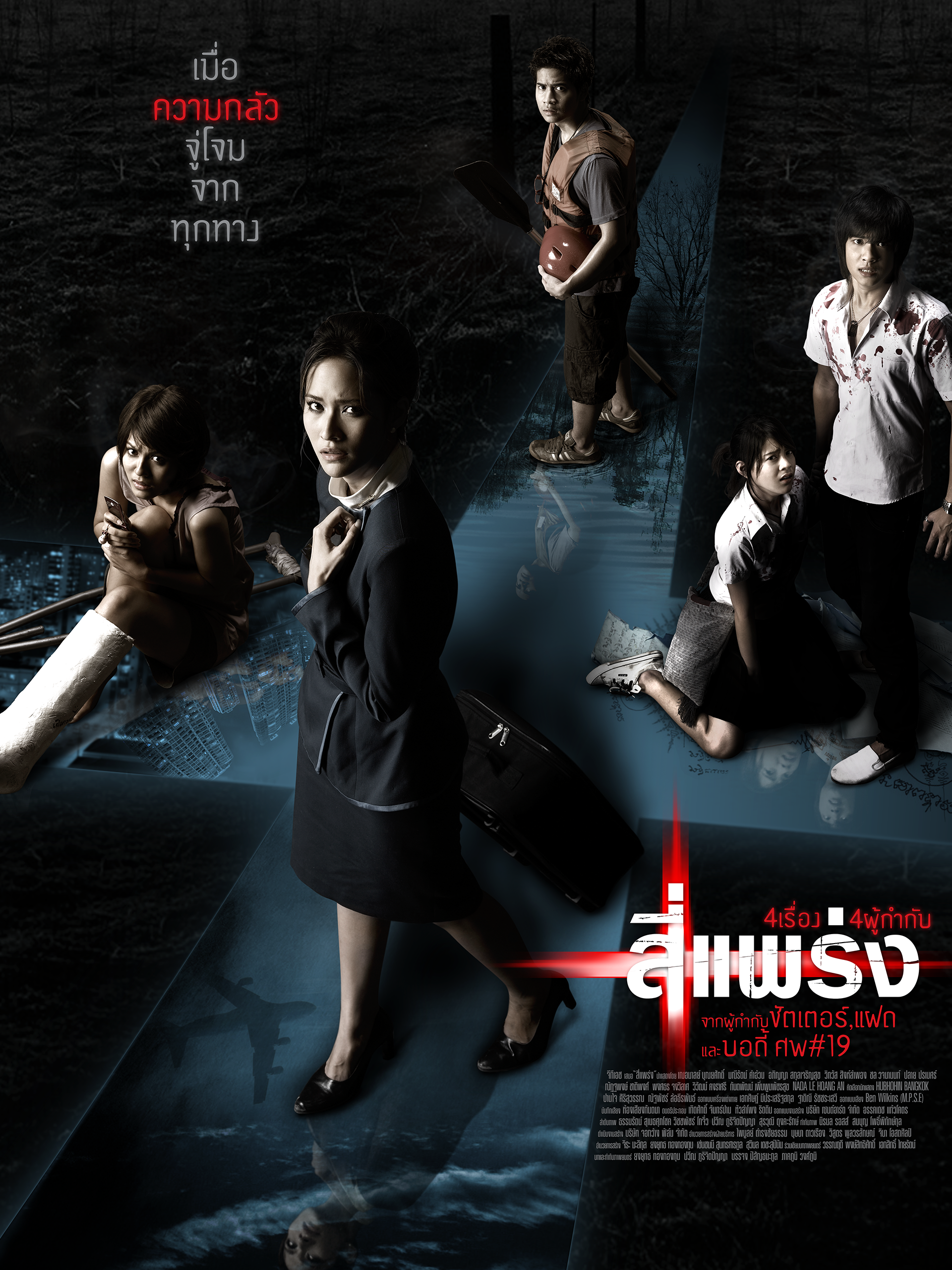
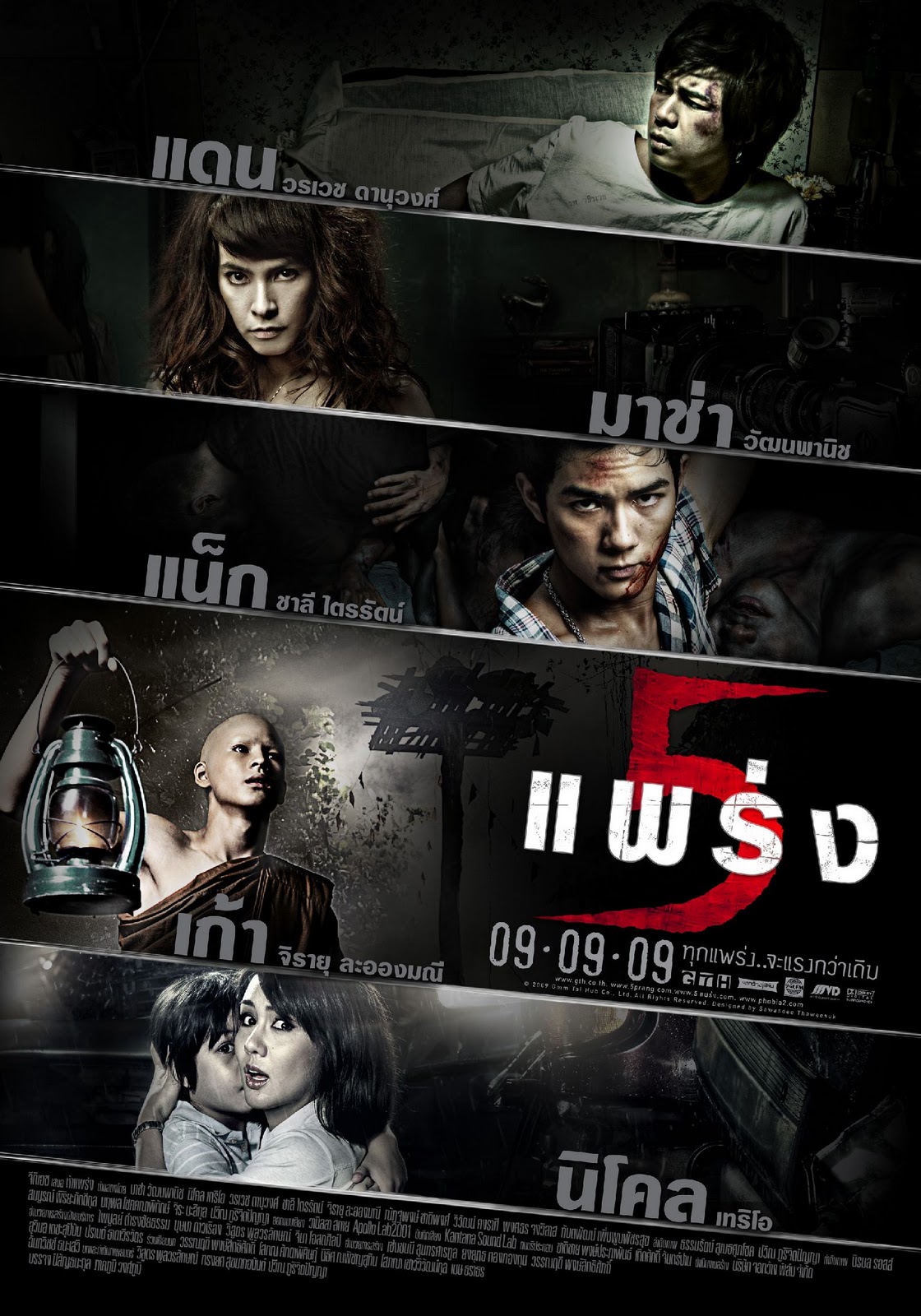
Aptly termed “5bia” but retitled in English as Phobia 2, this sequel to the original four-part anthology adds an additional director for five tales of Thai horror. Unlike the first film, there aren’t any particular linking details though they each someway turn on an anxiety towards cars and other forms of transportation along with exploring the effects of unresolved guilt and natural justice in the form of karma.

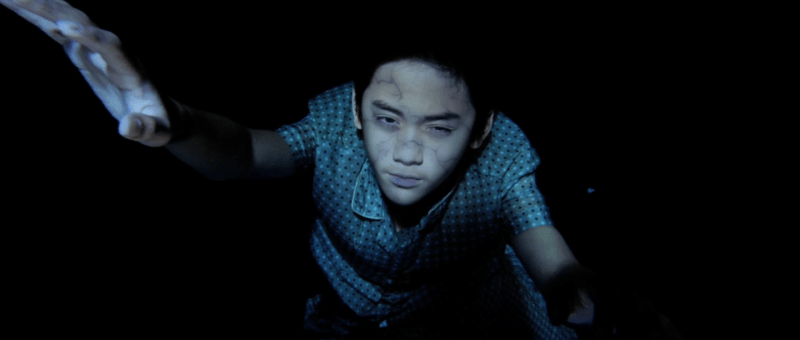
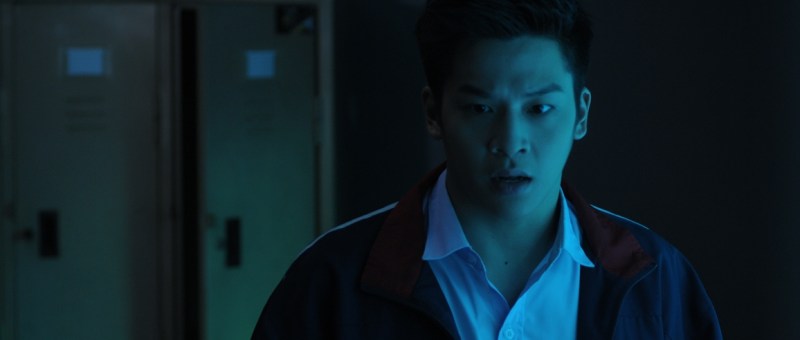
Thus in the first sequence, Novice, a young man, Pey (Jirayu Laongmanee), is sent to a temple to hide out after being involved with a crime. He evidently did not want to become a monk and is resentful towards his mother and stepfather for bringing him here. But what he soon becomes involved with is a haunting, a hangover from the hungry ghosts festival that confronts him with his unresolved feelings towards his mother and lingering guilt over the crime he committed. Elegantly lensed, the film has a creeping sense of dread and eerieness as Pey begins to accept responsibility for his actions even if as it seems he must also pay for his lack of respect towards traditional custom.

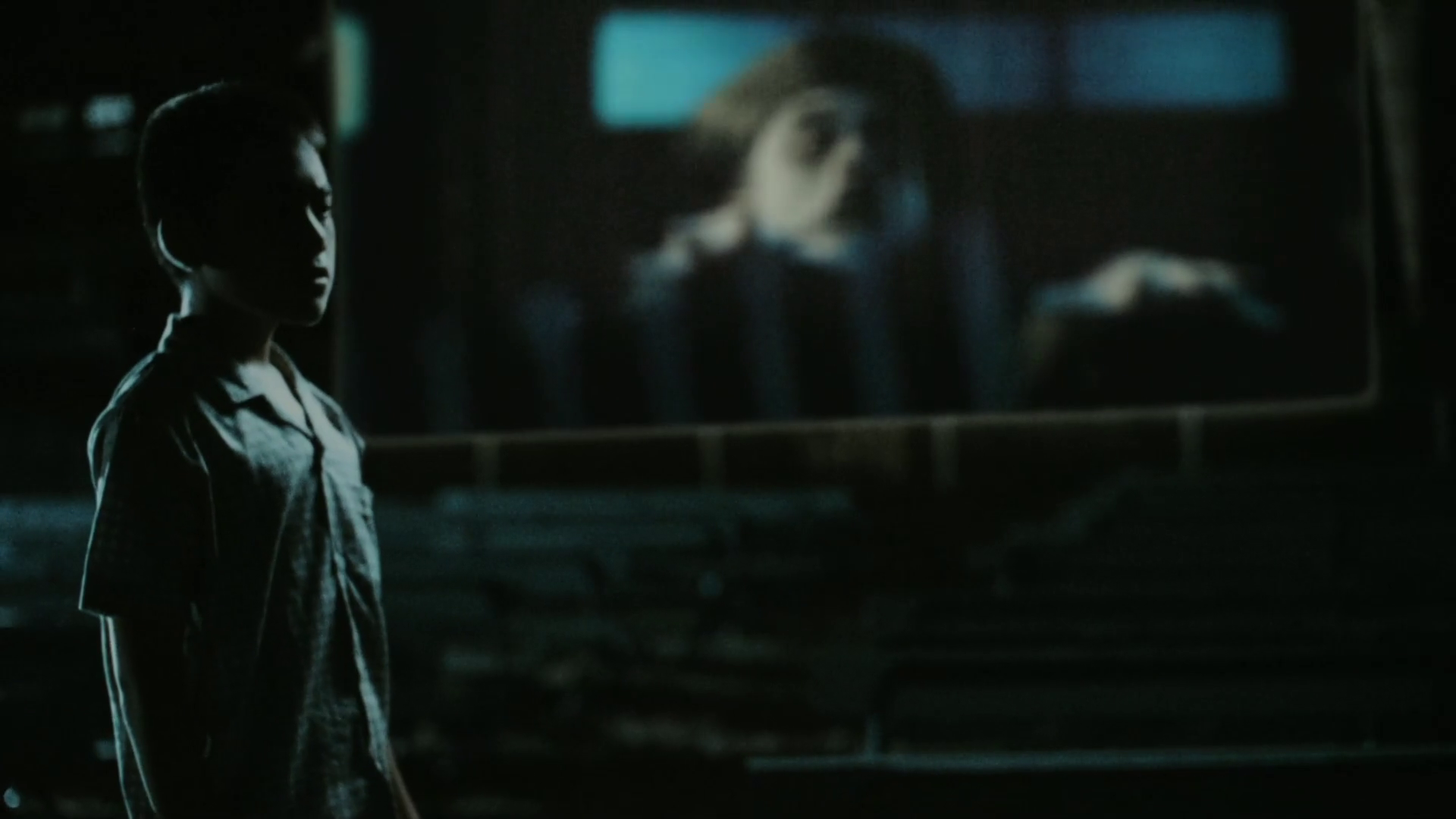
Continuing the theme, in the second part, Ward, a young man, Arthit (Worrawech Danuwong), with casts on both of his legs is intrigued by the patient in the next bed, a former priest who it seems is not quite ready to move on. Rendered vulnerable by his incapacitation, Arthit can only watch as a weird ritual seems to unfold while the hospital staff do not seem to take his distress seriously. Despite its grim strangeness, there is a dark humour underpinning the action along with a kind of absurdity in the oddness of this weird black magic.

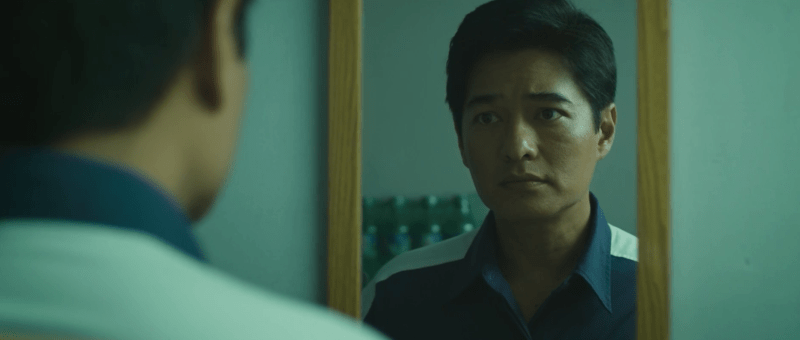
There’s nothing quite so supernatural in the third instalment, however, as a pair of Japanese hitchhikers are unwittingly picked uo by a people trafficker whose entire cargo turns out to be dead because his son tried to use them as drug mules. The film might have something small to say about exploration and the devaluing of the human life, but soon slips into zombie drama as the truckers try to outrun the consequences of their actions while the tourists pay a heavy price for their naivety. 

Just as in the earlier sequences, Salvage too finds a source of fear in the car but this time its largely because it’s haunted, both literally and by the spectre of amoral capitalism embodied by the boss’ attempts at corning cutting. Nuch (Nicole Theriault) has largely been making her money by buying wrecks and selling them as second-hand without telling the new owner they were involved in a fatal accident. After being taken to task by a mother who complains her son was nearly killed, she can’t find her son Toey anywhere and while looking at him is confronted by the ghosts of the various people who’ve been killed by her cars. It’s a neat indictment of the various ways capitalism is killing us even if ending on a note of improbable cruelty.

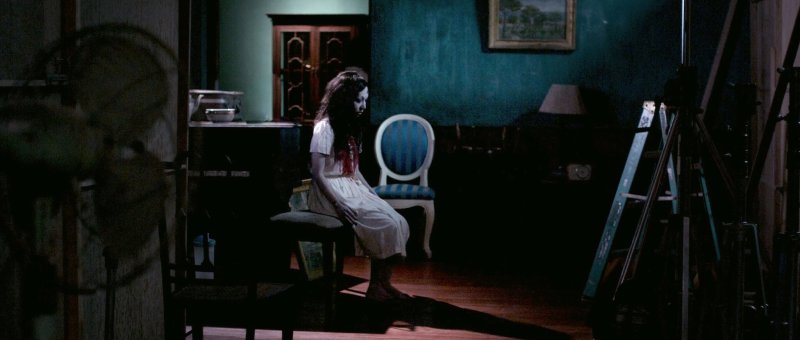
The fifth, final, and best instalment meanwhile takes on a meta quality. Directed by Shutter’s Banjong Pisanthanakun, it follows the action on the set of a sequel to his film Alone and stars the same actors as his segment in 4bia which Banjong Pisanthanakun humorously references while inverting its structure. After the supporting actress is taken ill, a rumour begins that she has in fact died only for her to turn up on the set provoking terror from the boys who become convinced she’s s vengeful ghost.In any case, it turns out it wasn’t the supernatural they really needed to look out for but a sleepy, overworked driver. Like Man in the Middle, the gentle camaraderie between the guys and zany humour help carry the witty tale alone as the gang start suspecting each other and acting irrationally in an attempt to escape “the ghost.” All in all, it’s a fitting way to end the series, concluding on a note of cosmic irony as the real threat turns out to be all too human and an exmplifcation of an exploitative employment culture rather than a vengeful spirit seeking revenge from beyond the grave.


Trailer (English subtitles)
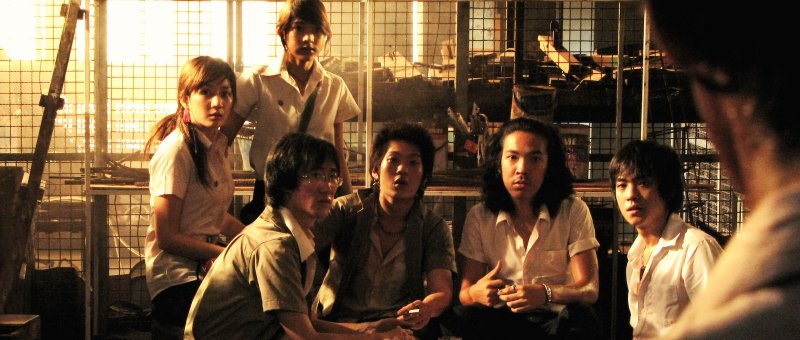
4bia (สี่แพร่ง, Youngyooth Thongkonthun, Banjong Pisanthanakun, Parkpoom Wongpoom, Paween Purijitpanya, 2008)

A quartet of Thai directors come together for four tales of horror in the appropriately titled 4bia (สี่แพร่ง). Though the stories are largely unconnected save for a few common details that locate them in the same universe, they each deal with a particular kind of anxiety and different sorts of ghosts who for various reasons are haunting the protagonists. What’s certain is that if you’re targeted by an otherworldly spirit, finding escape will not be easy.

That’s something quite obvious even in the first episode in which a young woman trapped alone in her apartment after breaking her leg in a horrific car crash begins chatting with a total stranger who sends her a random text message. Of course, replying to a message like that is not very sensible and even perhaps dangerous, as Pin (Maneerat Kham-uan) herself may release when she asks the (presumably) male messenger to send a photo only to be sent back the one she just sent of herself with the reply that he’s in it next to her. In any case, the real malevolent force here seems to be loneliness itself which is what motivates Pim to message back having already spent 100 days without interacting with another human being. The messenger has also spent the same amount of time alone in what he calls a “cramped space,” which is why he wants company. It’s gradually revealed that the pair share a kind of destiny which is an inversion of the kinds of meet-cutes you might find in a romantic comedy that makes Pim’s 100 days a purgatorial space of borrowed time in which she might as well have been a ghost herself.

But in the second chapter, Tit for Tat, it’s almost the opposite of loneliness that’s the problem as bunch of delinquent high school students and recreational drug users bully a bookish boy, Ngid (Nattapol Pohphay) and end up killing him. The boy then becomes a vengeful spirit and uses black magic to take them all out. Though one of them quips that they need to start smoking less weed, there’s no real question that the ghost is real or that the gang pretty much deserve what’s coming to them for having been so obnoxious in real life. The later part of the drama focuses on Pink (Apinya Sakuljaroensuk), a peripheral member of the gang who did try to tell the others to stop but otherwise did nothing to help Ngid and is punished for her sin of omission, though she does eventually think of a way to break the curse if only ironically in poetic justice for simply standing by and watching in the face of injustice. 

The third sequence, Banjong Pisanthanakun’s Man in the Middle is, however, a meta textual-delight that asks why ghosts in films always have long hair and pale faces. Four boys go on a rafting trip and swap campfire stories about how you should never sleep on the end when you’re close to the jungle in case a succubus comes to get you. When they get into an accident on the water and are separated, it leads to a sense of suspicion as some wonder if their friend actually died and is a ghost come to haunt them who, like in the Sixth Sense, may not know he’s dead. Though the twist maybe somewhat predictable, the tale is told with good humour and a sense of narrative cohesiveness that is lacking in some of the other chapters. 

Similarly, the final instalment Last Fright, is a chamber piece focusing on a stewardess who is unexpectedly charged with escorting a princess (Nada Lesongan) who’s fallen out of favour on her trip to Thailand where she spent her honeymoon. Pim’s (Laila Boonyasak) secret is that she’s been having an affair with the princess’ husband whom she met on their honeymoon flight which is why the incredibly imperious woman tortures her all the way through the flight before dying in a hotel room on arrival. Pim must, for reasons that don’t really make sense, escort the body back only to begin going out of her mind while haunted by the princess’ spirit. This is the only sequence which flirts with the idea of the ghost not actually being real but a manifestation of Pim’s guilt, or else a vengeful spirit come to punish her not for her secondary crime but for the transgression of adultery. Despite its potentially moralising overtones it’s a pretty chilling moment on which to end the film suggesting that in the end there is no real escape either from a vengeful ghost or your own questionable decisions.


4bia is available as part of Umbrella Entertainment’s Thai Horror Boxset.

International trailer (English subtitles)
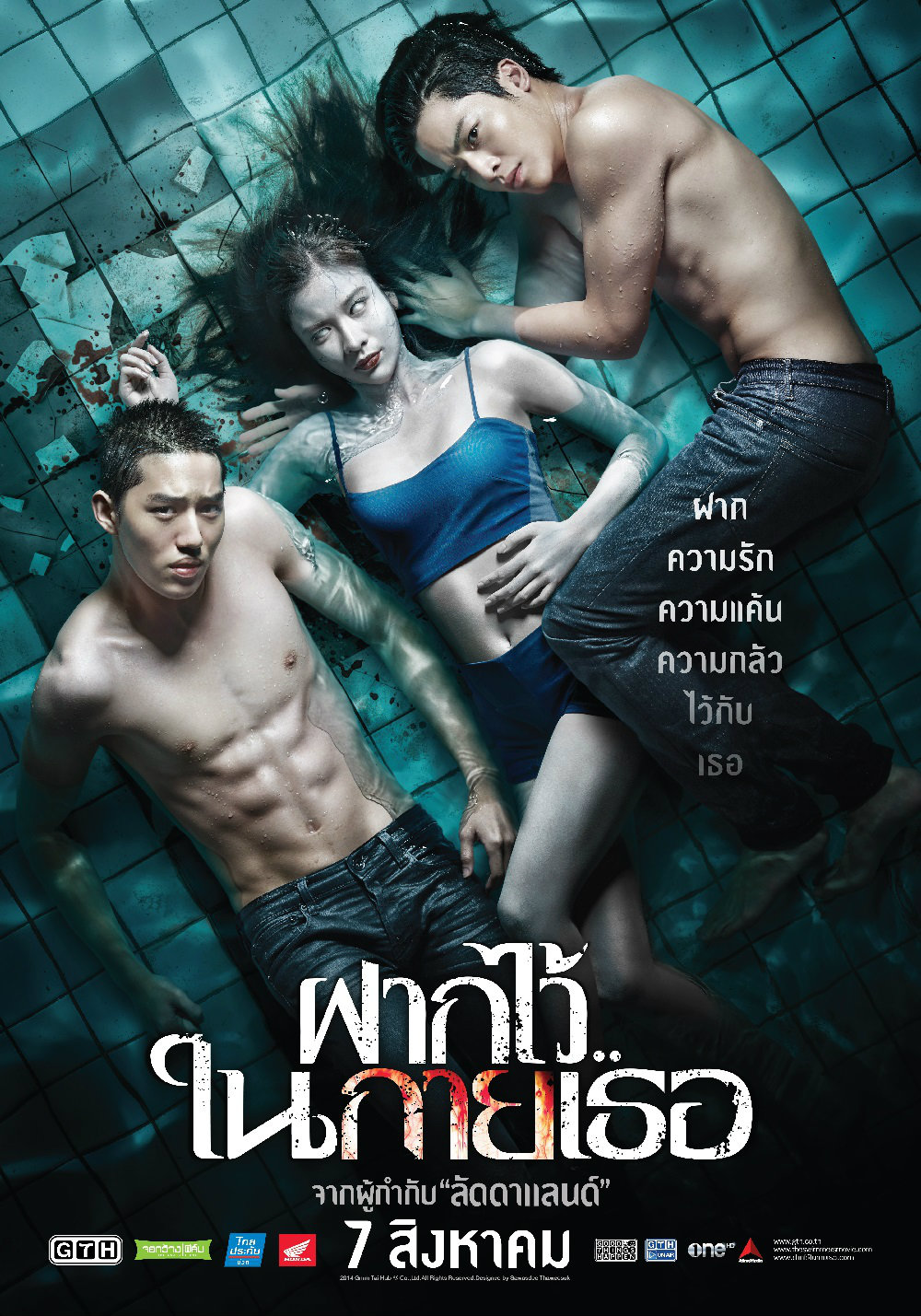
Alone (แฝด, Banjong Pisanthanakun & Parkpoom Wongpoom, 2007)

A young woman returns to her apartment in Seoul to find the lights don’t work. She begins to feel uneasy, as if there’s a presence around her she can’t see or hear. Slowly, she moves towards the source of her discomfort, but the lights soon come back on. This isn’t a haunting, it’s a party. Her devoted boyfriend Wee (Vittaya Wasukraipaisan) has organised a surprise birthday celebration, though Pim (Marsha Wattanapanich) is indeed a haunted woman attempting to outrun her ghosts in a new country a world away from the nexus of her trauma.

This is just one of many ways in which Banjong Pisanthanakun and Parkpoom Wongpoom attempt to misdirect us while foreshadowing Pim’s eventual confrontation with ghosts of her past on returning to Thailand after her mother suffers a stroke and is hospitalised. A brief prologue sequence had seen her mother sewing a dress that’s oddly shaped, we later realise intended for her daughters who are conjoined twins. A guest reading the tarot at Pim’s party had hinted that something she’s lost would soon return, or else someone to whom she’d broken a promise would come back seeking recompense. This soon proves to be true, Pim haunted by the spectre of her sister Ploy (also played by Marsha Wattanapanich) who passed away unable to adjust after Pim’s apparently unilateral decision to separate.

It’s for this reason that Pim feels intense guilt, convinced that she killed her sister in breaking their promise to always stay together because she desired individual fulfilment. To that extent, some might wonder if the ghost Pim sees is “real” or merely a manifestation of her unresolved trauma. Wee eventually convinces her to see a psychiatrist, who is also a good friend of his, who tells him that Pim is suffering from a delusion while advising her to try to make peace with herself over her sister’s death if she wants to stop seeing the ghost. But perhaps there really is something dark and malevolent, a resentful spirit haunting her family home which is otherwise full of childhood memories. Pim flips through old photos all featuring her and her sister living their shared life of enforced closeness that is at first blissfully happy in its isolation but then suffocating and constrained. 

Nevertheless, though it’s Pim who’s left “alone” in being the one left behind, it’s also true that Pim’s actions have left Ploy “alone” too, only on the other side. The film plays into their nature as twins who represent two halves of one whole rather than two separate beings and locates the source of trauma in their separation as if they must in some sense be reunited in order to exorcise its taboo. In many ways, the psychological drama revolves around a quest for identity as Pim tries to reassert herself in the face of Ploy’s reflection, to become the whole rather than an orphaned part of it, while in other ways affecting a persona that is not quite her own. One cannot take the place of the other, just the new dog the pair get after moving to Thailand cannot replace their old one even if as Pim says they are otherwise identical. 

Yet Pim wonders if it was alright to desire an individual future, choosing herself over Ploy and thereby condemning her to a life of loneliness. To that extent, her dilemma is that of a contemporary woman torn between familial devotion and personal fulfilment, though of course, her words turn out to have a hidden implication suggesting that all is not quite as it seems even if she begins to confront her trauma by finally explaining the circumstances of her separation to an ever supportive but increasingly worried Wee. As the tarot reader had implied, perhaps all promises must in the end be fulfilled as the grim conclusion suggests, literally burning down the house as if to purify this space and restore order in uniting the sisters in an eternal embrace, alone together. Banjong Pisanthanakun and Parkpoom Wongpoom engineer a slowly creeping sense of dread in the gothic eeriness of Pim’s family mansion while edging towards the fatalistic conclusion in which a kind of balance is finally restored, the sisters are both separated and united once again two halves one perfect whole.


Alone is available as part of Umbrella Entertainment’s Thai Horror Boxset.

International trailer (English subtitles)
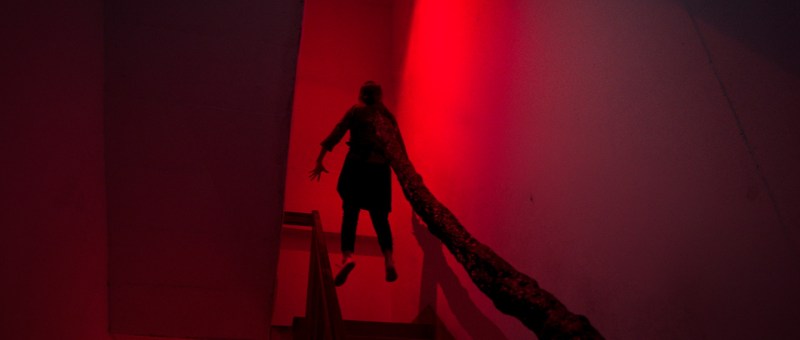
Dorm (เด็กหอ, Songyos Sugmakanan, 2006)

“Are you scared of ghosts?” one child asks another. Perhaps it’s an odd question. Ghosts are generally assumed to be frightening, but they can also in a way comfort though their presence may be painful. Songyos Sugmakanan’s poignant ghost story Dorm (เด็กหอ) casts the school at its centre as an infinitely haunted place, not just because of the associations it later takes on in the mind of the protagonist, but a prison-like space of emotional repression that nevertheless later becomes one of friendship and liberation.

It isn’t surprising that it feels like a prison to Chatree (Charlie Trairat) who has been abruptly sent there by his father (Suttipong Tudpitakkul) he feels as a kind of banishment for a very particular transgression. According to his father, however, it’s all because his school isn’t strict enough and Chatree spends too much time playing games and watching television. Intensely authoritarian, Chatree’s father soon alienates his son who bears intense resentment towards him not only for his severity and unwillingness to recognise his autonomy, but because of his failures as a father and eventually exiling of him because of the challenge he presents within this household. 

Further challenging notions of masculinity, Chatree’s father had told him that “a man must be able to live anywhere.” Though he had said the school had everything, the environment is grey and austere. Chatree is met by a rather cold woman, Pranee (Chintara Sukapatana), who takes him to the dorm where he will be sleeping which is in a large room with high ceilings and several rows of camp beds. Parnee cooly tells him that he’s expected to fend for himself, while his immediate neighbours proceed to haze him by telling him several ghost stories said to take place the school. Chatree’s school days continue in utter misery until he befriends Vichien (Sirachuch Chienthaworn), another lonely boy seemingly shunned by the others but as Chatree gradually realises actually a ghost unable to move on from the scene of his trauma just as Chatree is unable to move from his abandonment by his family. 

To that extent, the school is a kind of liminal place and it becomes clear that Pranee is also haunted by her own sense of guilt for something that turns out not to have been her fault after all but has, as the other boys say, turned her “weird”. The guilt that she feels has made her turn in on herself, become cold and repressed denying the boys the kind of maternal love and affection she appears to give them in flashbacks to her younger days. Chatree’s attempts to help Vichien are also attempts to liberate Pranee and himself from the limbo of the school and exorcise their traumas so that they may live again.

In Chatree’s case, his quest to help Vivhein is what allows him to make friends with the other boys, lifting the perpetual gloom of the school building and returning to him a sense of familial warmth that he felt that he had been denied in being exiled from his family. Though his resentment towards his father may in a sense ease, he does not seem to have forgiven him for his failures or transgressions but rather let his traditional family go in favour of friendship acknowledging that even the hardest times in life will soon pass if you have one close friend at your side. There are of course hints of queerness in the relationship between the two boys each of whom are in some way different and alike in their feelings of otherness and lack of belonging, while it may also in other ways explain Chatree’s father’s harshness towards him along with his preoccupation with traditional masculinity and obsession with academic success.

In that way unlike similarly themed nostalgia dramas, the school does not remain a purgatorial space and Chatree’s decision to remain within it is not an acceptance of limbo but of moving on in accepting himself and his identity and actively choosing a place to belong which is with his new friends rather than the repressive atmosphere of the traditional family as represented by his father. With shades of The Devil’s Backbone and Les Diaboliques, Songyos Sugmakanan conjures a gothic atmosphere of lingering dread but tempers it with humour and warmth in the genuine friendship between two lonely boys who in the end save each other and make what was once a prison a space of liberation.


Dorm is available as part of Umbrella Entertainment’s Thai Horror Boxset.

Trailer (no subtitles)

Laddaland (ลัดดาแลนด์, Sophon Sakdaphisit, 2011)

Laddaland (ลัดดาแลนด์) is a strangely haunted place. The people who live there are mainly ghosts, but also haunted by the spirits of financial anxiety and toxic masculinity amid the continual impossibility of an aspirational suburban existence and happy family life. In the opening scenes, a man patiently sets up the new home he’s bought for his family, painting a cherry blossom tree on his daughter’s wall and throwing a Ben 10 quit over his son’s bed. “I’m glad all four of us are finally together,” he sighs to an empty room while sitting alone at his dining table. 

But there are already cracks in the foundations of this family which probably can’t be repaired by simply moving into another life. They had already been separated by financial anxiety with eldest daughter Nan (Sutatta Udomsilp) living largely with her grandmother who seems to come from a much wealthier, class-conscious background. Her father Thee’s (Saharat Sangkapreecha) desire to reunite his family breaks that Nan had formed with her grandmother, to whom she is constantly on the phone, and it is unsurprising that she isn’t happy about being forced to leave her friends in Bangkok to live in this suburban paradise. Yet her attitude towards her father is in part motivated by his failure to give her this life, repeatedly reminding him that he essentially abandoned her and is incapable of doing what is expected of a man in providing for his family.

It’s this sense of toxic masculinity that may have prompted Thee to embark on this grand venture. The house he’s bought on an aspirational housing estate in a recently gentrified area is a large family home and as his wife Parn (Piyathida Woramusik) reminds him, the mortgage is bit of a stretch. But Thee is so focused on his dream that he can’t think of anything else. He’s given up his steady job and gone in with a friend on what is very obviously a dodgy pyramid scheme. The foundations of his new middle-class life are built on shaky ground, while every attempt at rapprochement with Nan seems destined to fail as he becomes an increasingly authoritarian father and she a resentful and contemptuous teen. 

But times are hard for everyone. The woman next door already lives like a ghost because her husband is violent and abusive. Parn tries to help her, but there isn’t much that can be done. We learn that the man is also, like Thee, under increasing strain from financial anxiety as his factory business flounders amid the turbulent Thai economy. He too is subject to the same sense of humiliation and insecurity as a man who is failing to live up to the codes of masculinity in being unable to provide his family with a comfortable life. Thee doesn’t exactly become violent, but he does later buy a gun after being burgled and fantasise about using it to free himself of his responsibility and the burden of this aspirational life that he can’t really afford.

In an odd way, the ultimate transgression may have been his attempt to hire a maid. A local Burmese woman, she is soon found dead in a house owned by a foreigner and thereafter becomes a more literal ghost haunting the local area and his family in particular due to their attempt to exploit her for cheap labour, perhaps hinting at Thailand’s relationship with Myanmar. Yet it’s also Thee who seems to have been possessed by a vengeful spirit, becoming increasingly cruel and irrational in his attempts to hold on to his home while simultaneously alienating Nan by refusing to listen to her or let her hang out with her new friends. Even Parn begins to turn against him, fed up with his financial fecklessness and pondering swallowing her pride and going back to her mother who loathes Thee for ruining Parn’s life by getting her pregnant in college. Parn suggests going back to work, but that doesn’t fit Thee’s old-fashioned vision of a patriarchal family while he also accuses her of having had an affair with her admittedly sleazy former boss and needles her about leaving him for someone with better financial means. Perhaps this the curse of Laddaland, a liminal space inhabited by hungry ghosts obsessed with fulfilling aspirational, if outdated, ideas of suburban bliss only to end up destroying the very house they were trying to build.


International trailer (English subtitles)
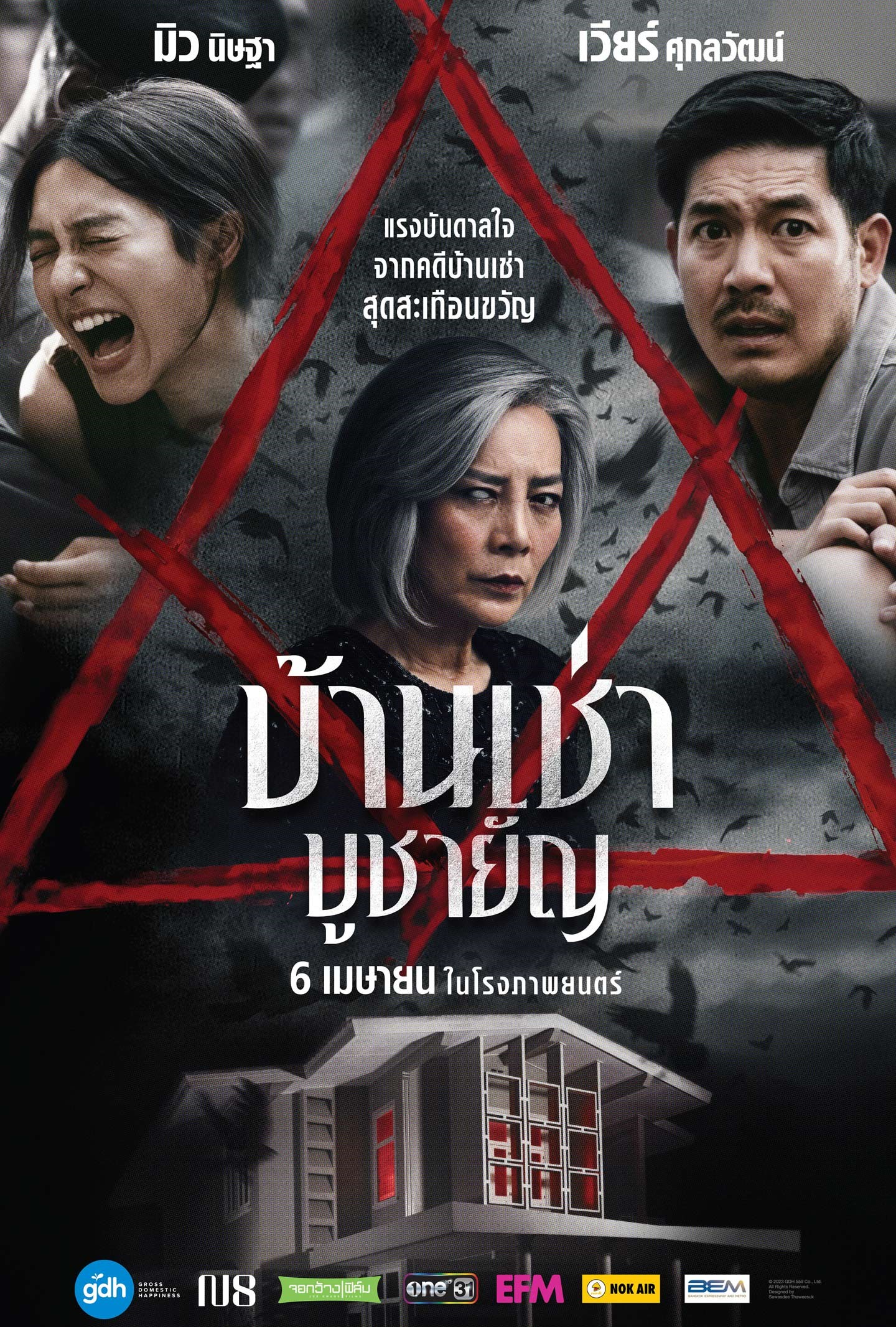
Home for Rent (บ้านเช่า..บูชายัญ, Sophon Sakdaphisit, 2023)

An inability to overcome the traumatic past leaves a family vulnerable to the dark machinations of a black magic cult in Sophon Sakdaphisit’s supernatural thriller, Home for Rent (บ้านเช่า..บูชายัญ). The film’s title is eventually revealed as a grim irony, the home in question a seat of the soul though like the director’s previous films it’s economic anxiety and social aspiration that open the door to damnation even if in this case there’s something more than fate in play.

All of Ning’s (Nittha Jirayungyurn) problems start when the flat she owns to let out is vandalised by a vacating talent. As she explains to the estate agent, Tom (Suphithak Chatsuriyawong), she can’t afford to refurbish it and the rent was covering the mortgage on the house she actually lives in which belongs to her husband, Kwin (Sukollawat Kanarot). Tom floats the idea of the family moving into the flat while they tidy it up and renting the house out instead, but Ning is worried Kwin won’t like the idea. She’s right, he doesn’t and suggests it would be easier to just sell the flat but Ning doesn’t want to do that either. The reasons for her attachment to it aren’t completely clear, but if she were keeping it as a safety net it might hint at a degree of insecurity in her marriage though as we later see she’s also job-hunting and not having much luck. Seeing the candidate next to her write down a much lower salary expectation she hastily changes hers too, fearing she’s pricing herself out of the market. 

As for Kwin’s reluctance to move, it may be a degree of snobbishness in not wanting to leave his large suburban house in a wealthy area for a small flat where he ends up sleeping on the sofa because the couple’s daughter Ing (Thanyaphat Mayuraleela) can’t seem to settle. As it turns out, Kwin has other reasons for remaining attached to the house and not wanting anyone else to live there but even as it stands it seems far too big for their small family and an obvious financial burden. Yet Kwin’s outward anxiety is to do with finding “high quality” tenants given what’s just happened with the flat. Ning is reassured by Tom’s confirmation that the prospective tenants are a retired doctor and her daughter though as Kwin points out, it’s mere snobbishness to assume a doctor will be a better tenant than anyone else. 

Nevertheless on meeting them, Kwin unexpectedly agrees only for Ning’s aunt and neighbour Phorn (Natniphaporm Ingamornrat) to report strange goings on at 4am such as ominous chanting and the sudden arrival of large numbers of crows. Strange things begin happening around Ning too, while Kwin’s behaviour has also become weird and irrational. Ning is however facing an uphill battle trying to get people to believe her that the couple renting her house are actually crazed cultists who may be targeting her daughter while others assume she’s going out of her mind because of the stress of maintaining it. 

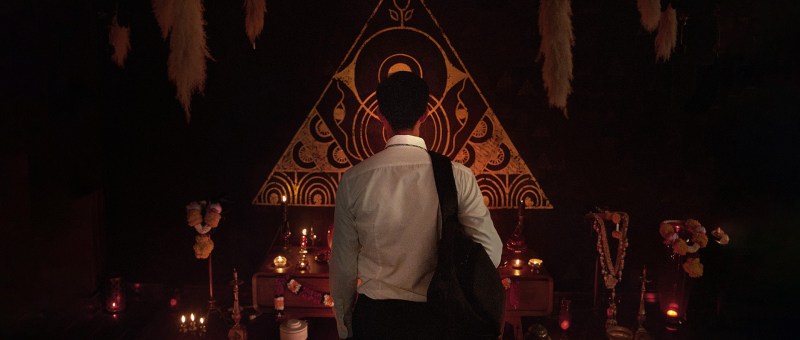
The space that’s for rent in fact seems to be the human body as it becomes clear what kind of home is being sought. Aside from financial worries, the curse essentially stems from the inability to accept loss, or perhaps also the attempt to escape it by assuming new identities rather than deal with a painful past. Only Ning remains in the dark in this triangular series of relationships with pyramids an often repeated motif mimicking the dark symbol of the cult. Sophon Sakdaphisit conjures a genuine sense of eeriness within the genial suburban environment that hints at a largely invisible but pervasive evil that has Ning and her family firmly in its sights. But in other and perhaps slightly uncomfortable ways, it may be the family that eventually repairs itself in what amounts to the complete integration of the once buried traumatic past which may have destroyed what once was but has birthed something new in its place that at last seems to be free of the gloominess that once overhung the family home having relocated to a much warmer and down to earth environment in the absence of both financial and aspirational anxiety but simply content to have found a place to call home.


International trailer (English subtitles)
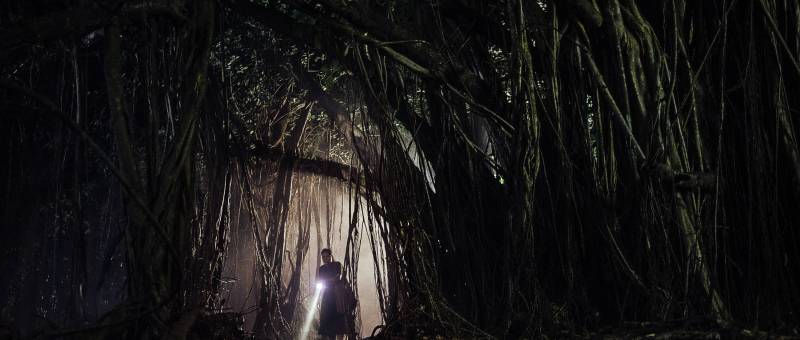
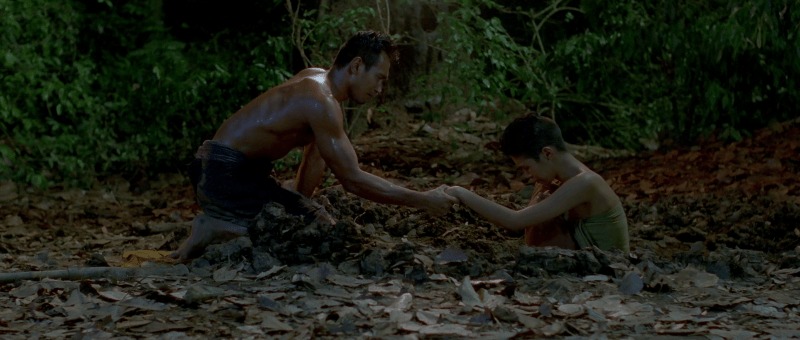
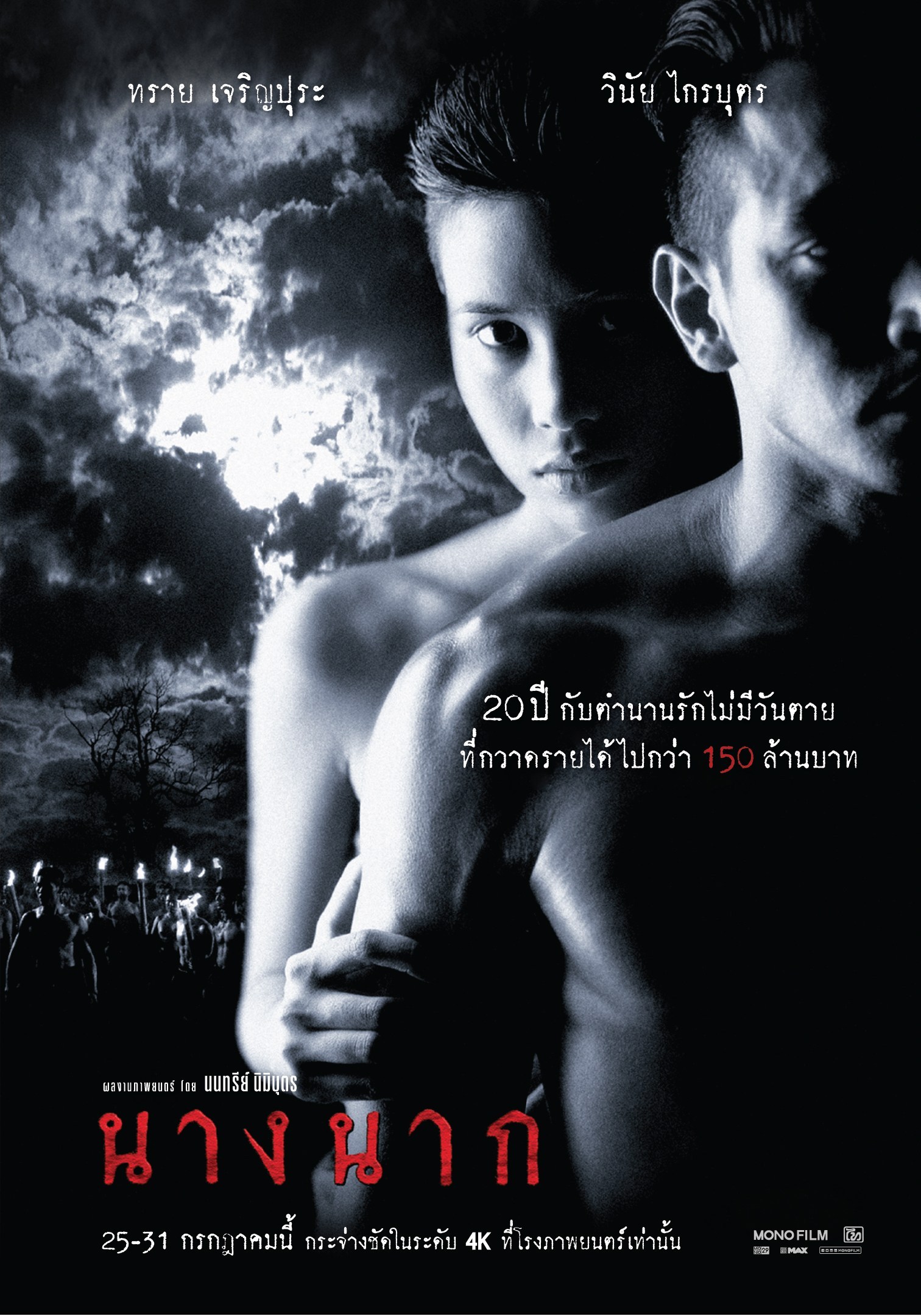
Nang Nak (นางนาก, Nonzee Nimibutr, 1999)

Mae Nak Phra Khanong is one of Thailand’s best known and most enduring ghost stories, though Nonzee Nimibutr’s 1999 adaptation Nang Nak (นางนาก) scales back a little on the inherent terror of the folktale, preferring to focus on the romantic tragedy of a loving couple separated by death. You could then read it as a tale of grief, that the husband returning from war cannot accept his wife is dead, rather than the reverse that the wife’s love and devotion is so strong that it overcomes death itself and becomes something that is in that way terrifying.

It does seem, however, that in this instance the ghost is real and it is vengeful. The wronged wife Nak (Inthira Charoenpura) takes revenge on those who betrayed her from the midwife who stole her wedding ring to a local man who tried to tell her husband, Mak (Winai Kraibutr), that his wife was actually dead. Though the framing of the tale may seem in its way uncomfortably sexist despite its romantic overtones, it’s clear that Nak suffered largely because of the male failure around her. Her husband was conscripted for a war which was really nothing to do with him leaving her, pregnant, to manage their farm alone. The implied cause of the miscarriage which leads to her death in childbirth is overwork and she appears to have received no help from the other villagers with many men apparently remaining in the village. When questioned by Mak, she tells him that the other villagers shunned her and called her an adulteress, disputing the parentage of her child with her husband already away at the war. 

But the film does not particularly blame war for Nak’s fate, seemingly accepting it as a necessary duty Mak had to further the cause of his nation which is placed above that he owes to his wife and unborn child. In fact, the ghost issue is later solved only by the intervention of a powerful Buddhist monk, Somdet, which implies that this supranational structure is necessary for maintaining order and that the village is otherwise unable to govern itself. Likewise, it paints Buddhism as a modern religion and essential means of national unity that is inherently superior to the backward superstitions of the villagers who decide to call in a shaman against the advice of the local monk. The shaman turns out to be next to useless and in fact makes things worse until Somdet can arrive and is able to talk peacefully to Nak and convince her that she needs to accept her death and move on to the next cycle of life.

It’s also Somdet who heals Mak of his otherwise fatal war wound and the intercutting of his fight for life with Nak’s during the violence of childbirth suggests that her life is somehow sacrificed for his further emphasising the depth and devotion of her love for him. When his health is recovered, Somdet recommends that Mak become a monk in order to clear out his bad karma but Mak declines explaining that he has a duty to his wife and child in his village and so must return to them. In this way, they become a kind of barrier to his spiritual destiny and emblematic of the attachments he should learn to cast off in order to avoid suffering. Like Nak, Mak’s own devotion extends beyond the grave for he does indeed become a monk and never remarries, keeping the promise to be reincarnated as Nak’s husband in a subsequent life.

The local priest had told Nak that scaring monks is a sin, which is odd in a way that it’s somehow worse to scare these spiritually powerful beings than the ordinary villagers. Nevertheless Nonzee Nimibutr gives her the somewhat familiar attributes of a Thai ghost, allowing her to hang from the ceiling with her hair flowing down while she stares at the monks with bloodshot eyes and a pale face. She is able to enchant Mak so that he does not notice the dilapidation of their home or that all their food is rotten even if he later becomes suspicious of the large number of rats around. Primarily she seems to use natural creatures to enact her revenge with the midwife’s corpse torn apart by lizards, though Mak too has terrifying nightmares of his friend dying in his arms and then melting away with quite sickening effects. Even so, it seems Nonzee Nimibutr is keener to emphasise the romantic tragedy and primacy of Buddhist thought rather than ghostly horror while making it clear that death, along with grief and loss, is something that must be accepted so the spiritual order may be maintained and with it order in the mortal realm.


Trailer (no dialogue)

The Swimmers (ฝากไว้..ในกายเธอ, Sophon Sakdaphisit, 2014)

Fragile masculinity and male failure bring about tragic consequences in Sophon Sakdaphisit’s possibly ironically named psychological horror, The Swimmers (ฝากไว้..ในกายเธอ). Though some might alternately claim that its final resolutions are overly moralising or else morally ambiguous, it’s also true that the film otherwise has a progressive quality in suggesting that it wasn’t sex itself that was the problem but the failure to use protection and a subsequent inability on the part father to accept any responsibility for an unplanned pregnancy. 

At least, though it is revealed only gradually, it seems obvious to us that high schooler Perth (Chutavuth Pattarakampol) must have fathered Ice’s (Supassra Thanachat) baby and has kept quiet about it amid rumours that she took her own life after becoming pregnant. In actuality, there’s a lot more to it than that, but it appears as if he does this mostly out of a sense of awkwardness because Ice had been the girlfriend of his best friend and rival, Tan (Thanapob Leeratanakachorn), who, though they had broken up, is now determined to enact revenge on the dirtbag who got Ice pregnant and then presumably left her to deal with it on her own at which point she decided to end her life.

We can see that Perth idolises Tan and feels inadequate in his presence. After Ice’s death, he hooks up with another girl, Mint (Violette Wautier), and asks her if she would have been interested in him if hadn’t just won a gold medal in the swimming tournament. There are others that say he only won because Tan was not able to compete. Though Ice asks him to tell Tan about their relationship himself, Perth can’t do it and continues to act sheepishly around his friend out of some kind of bro code or fear of disappointing him. But we might also wonder if his desire for Ice is only a way of mediating his desire for Tan in the context of the obviously homoerotic relationship between them though in another sense it’s perhaps more that he simply wishes to become Tan and would be glad if he were out of the way. If that were the case, however, he’d forever be haunted by the spectre of his own inadequacy with no way of knowing if he could ever really have beaten his rival and psychologically will always be in second place. 

His failure to measure up to Tan also impacts on Perth’s fragile masculinity as his coach, who has begun an affair with his mother, pressures him to eat raw eggs to improve his stamina. The fact it’s eggs he’s eating has a continual irony while Perth begins to exhibit a degree of gender confusion as he puts on weight and loses his athletic physique. He’d jokingly told Ice, after explaining he didn’t bring a condom, that he’d carry the child if they got pregnant and is now convinced that, like the seahorses they’re learning about in class, he is actually gestating his unborn baby. Perhaps as Ice would have to have done, he wears baggy jackets, binds his belly, and attempts to hide his physique at the swimming pool in the hope of concealing what he fully believes to be a pregnancy that is also the result of his latent guilt for his treatment of ice coupled with the awkwardness of Tan finding out it was him who fathered her child.

Perth’s secrecy and cowardliness are directly contrasted with the equally problematic masculinity exhibited by Tan in his obsession with revenge which sees him attempt to hack Ice’s phone and social media accounts before later beating up another boy Perth had set up as a scapegoat. One could argue much of this could have been avoided if Perth had only been honest with Tan from the beginning about his relationship with Ice, but he was incapable of doing so and is willing to go to extreme lengths to conceal the truths about himself. Sophon Sakdaphisit, however, reveals them to us patiently and exposes Perth as an unreliable narrator, a snivelling coward and insecure sociopath who will do anything and everything to avoid facing reality. Though the film may suggest that he will face no consequences for his treatment of Ice, it simultaneously implies that he will forever be haunted by the spectres of his inadequacy, male failure, and hopelessness no matter how he may otherwise prosper in life.


International trailer (English subtitles)
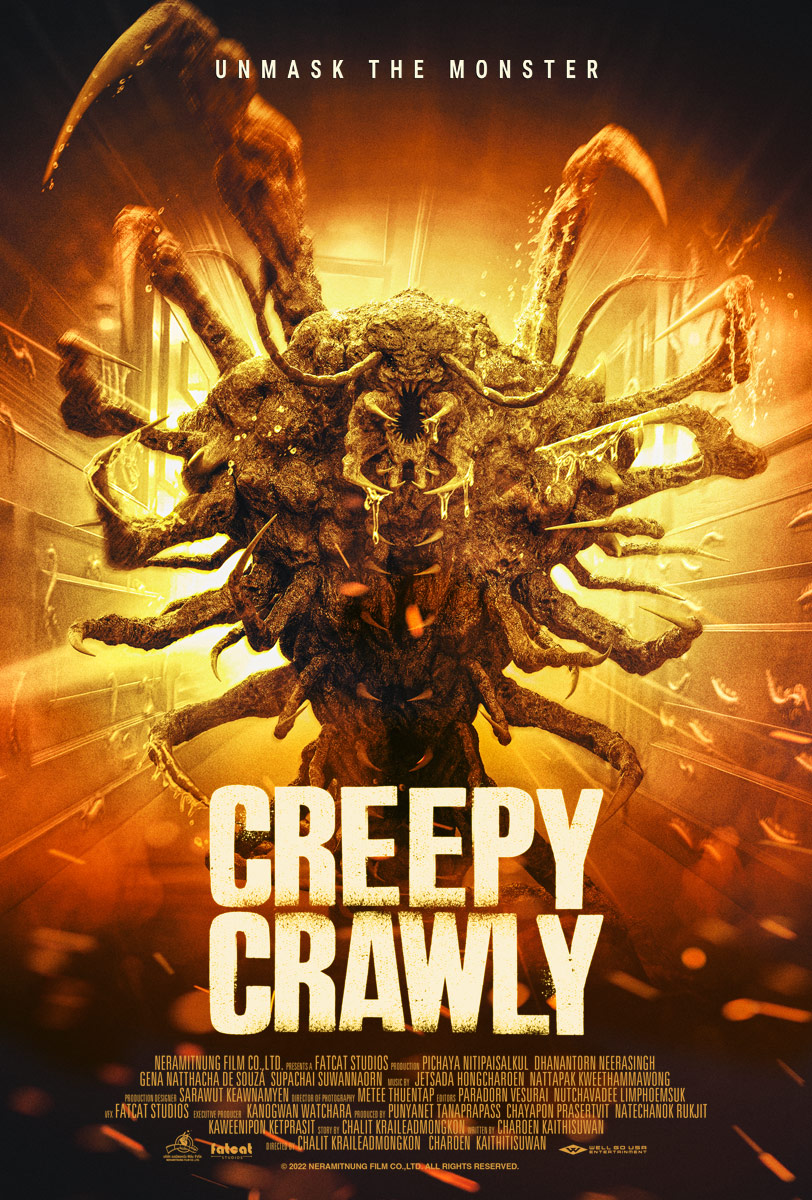
Creepy Crawly (๑๐๐ ร้อยขา, Pakphum Wongjinda & Chalit Krileadmongkon, 2022)

While everyone’s busy thinking about a high profile threat of infection, an unexpected aggressor raises its ugly head in Pakphum Wongjinda and Chalit Krileadmongkon’s insectile horror Creepy Crawly (๑๐๐ ร้อยขา). Centipedes in themselves are little creepy given the undulating motion of their many legs and tendency to crawl out from places where you’d least expect them, but this particular bug seems to have undergone a mammoth evolution to become a bloodsucking parasite capable of threatening the human race!

The film opens with a naive vlogger getting lost in the Thai countryside and deciding to pitch a tent in the middle of nowhere while unable to locate her campsite despite having encountered an elderly person bleeding profusely from the mouth whom she does nothing to help. During the night she’s bothered by giant centipedes and then has some kind of altercation with the elderly person. Some months later, an emergency order has been placed on the country due to the arrival of the coronavirus pandemic. Another YouTuber, Fame, who is well known for uploading videos criticising hotel accommodation, arrives at a hotel which has been turned into a quarantine facility along with her brother, Fiew, and a family of three, adult Taekwondo champion Leo, his naive sister Lena, and their father who is deaf. 

Obviously, the centipede, which is later described as a Tablongplum which can possess a human body and feast on its blood, has somehow made its way to the hotel and is particularly interested in Fame because she suffers from a rare disease which means that her blood would enable the Tablongplum to live a very long life. However, the bugs aren’t the only threat in the hotel even if they’re first discovered by the only remaining maid, Pond, feasting on a dead rat in a vacant room. The sleazy manager, Wit, is paranoid about the fortunes of his hotel during the pandemic considering it has already been dealt a reputational blow after being identified as the source of a covid cluster. It’s implied that he’s only got permission to re-open as a quarantine facility thanks to a dodgy deal with an important person who has also turned up, ironically belittling Wit for wearing a mask while describing covid as a “just a cold”, for a completely free and very discreet overnight stay with his mistress. 

Those are just a few of the reasons that Wit refuses to listen when Fame and Leo discover a body at the end of a blood trail, accusing them of being in cahoots doing a bit for the YouTube channel to further discredit his hotel which even on the surface of things seems not to be particularly well run. With the hotel technically in lockdown and patrolled by an armed guard, the tension begins to increase once it’s realised that the Tablongplum can possess and take on the form of any of the guests meaning no one can trusted and the bug could be anywhere. Somewhat improbably, not only is it able to fully understand human language even independent of its human hosts but also seems to have some knowledge of culture and is aware of how various things work rather than just being a giant blood sucking parasite apparently able to control vast armies of much smaller but admittedly nasty bugs especially when they appear in large numbers. 

The solution seems to be “kill it with fire”, though just the pandemic the bugs prove hard to stamp out with the infection seemingly continuing even after the big bad is supposedly eliminated as the centipedes continue to dominate human society. The film seems to be making a minor point about silly YouTubers who endanger themselves or thoughtlessly ruin the lives of others for clicks while also laying the blame on sleazy managers like Wit along with the political corruption that enables a health hazard to continue long after it should. Meanwhile, tiny bugs eat away at the surface, undermining the foundations as they go. Seeing an entire hotel covered in horrible insects is undoubtedly creepy though perhaps there was something rotten there all along. In any case, it seems there’s no escape from nature’s revenge or its bloodsucking tendrils. 


Creepy Crawly is released in the US on Digital, blu-ray, and DVD on Oct. 3 courtesy of Well Go USA.

International trailer (English subtitles)

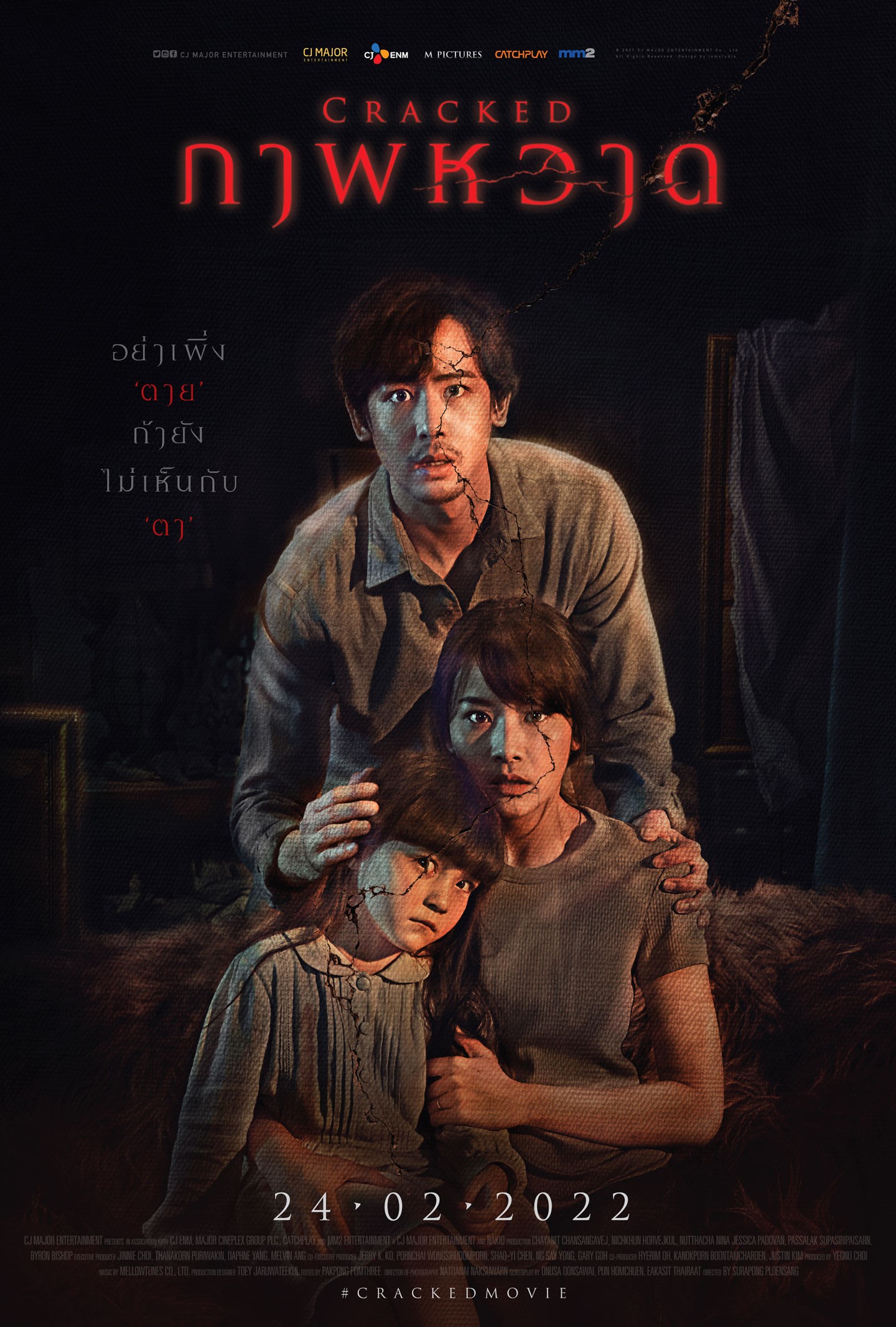
Cracked (ภาพหวาด, Surapong Plearnsang, 2022)

The traumatic past comes back to haunt a widowed single mother in Surapong Plearnsang’s eerie supernatural horror, Cracked (ภาพหวาด). A Singapore-South Korea-Taiwan-Thailand co-production, Cracked is adapted from an unproduced Korean screenplay and finds its heroine dealing with an inheritance both literal and spiritual following the death of her estranged father while she herself is filled with anxiety trying to find the money for an operation her daughter desperately needs to avoid losing her sight. 

In any case, the young Ruja (Chayanit Chansangavej) had been told “if we pretend not to see them, they cannot hurt us” which doesn’t sound like particularly good advice to begin with but perhaps fuels her reluctance to revisit the hidden past. Now living in New York with her young daughter Rachel (Nutthatcha Padovan), she is shocked when an old friend of her father’s, Wichai (Sahajak Boonthanakit), tracks her down and insists she return to Thailand her father having died. In addition to his giant gothic mansion seemingly inhabited only by a maid, her father has also left behind two famous paintings titled “A Painting of a Beauty 1 & 2” for which Wichai has found a buyer but needs Ruja’s consent. Ruja thinks the paintings are creepy anyway the recent history that the smaller was previously owned by a man who killed his entire family and then himself not withstanding and wants them gone as soon as possible especially if they raise enough to pay for Rachel’s medical treatment, but Wichai wants to have them restored first, his son conveniently enough being an art restorer. 

Ruja’s reluctance to look at the paintings is echoed in the instructions her mother had given her about unseeing the things that frighten her, yet being back in the house re-awakens a series of traumatic memories as she looks back on the way her father treated her mother from the perspective of an adult woman with a child of her own. Meanwhile, Rachel is keen to explore later explaining that she hasn’t been wandering off alone but in the company of a woman with a red scarf which is how she runs into Tim (Nichkhun Horvejkul), Wichai’s kind-hearted art restorer son. The problem is that the more Ruja is forced to look at the paintings the more they seem to decay, cracking so badly that the paint begins to fall away exposing a secondary painting below and a truth that Ruja did not want to witness. 

In a sense she’s been made to pay for her father’s transgressions, but also for her mother’s refusal to oppose them along with her discrimination towards another family she regarded as part of a “ghost-worshipping hill tribe”. Having been told to unsee Ruja is punished for the act of looking away, and perhaps also for having left and trying to make a new life for herself abroad having on some level forgotten what happened to her in the house and what she saw in her father’s studio. Surapong Plearnsang’s production design reflects her fractured viewpoint in the overlay between the broken window she peeks through and the hole in the painting while lending the paintings themselves an eerie disquiet painted as we later discover with violence and darkness by her already corrupted father later himself falling victim to a curse. 

The suggestion is that Ruja’s only escape lies in burning the past and creating a new history to pass down to her daughter free of the traumatic legacy inherited from her parents. “We only have each other now” she reminds Rachel, promising to protect her with her life while preparing to leave the eerie forest behind. Echoing the gothic in its creepy old mansion and obsession with corrupted legacy, Cracked is equal parts psycho chiller as Ruja tries to work through her buried trauma while assaulted by genuine supernatural forces of malevolence wanting her to pay for her parents’ transgressions aided by a more corporeal assistant seemingly hellbent on vengeance. Filled with a sense of dread not to mention extensive snake symbolism, Surapong Plearnsang’s haunted house creeper sends its conflicted heroine into the past hoping to fix the future only to discover that it’s not enough to paper over the cracks of an incomplete history, only by stripping the veneer and exposing the ugly truth below will you ever be free. 


Cracked screened as part of this year’s Udine Far East Film Festival.

Original trailer (English subtitles)