Female Prisoner Scorpion: Death Threat (女囚さそり 殺人予告, Toshiharu Ikeda, 1991)

It had been 14 years since the conclusion of the rebooted Female Prisoner Scorpion series and 18 since the iconic Meiko Kaji had stepped away from the role when Toshiharu Ikeda decided to resurrect the iconic Nami Matsushima for Toei’s V-Cinema line. Ikeda was reportedly a fan of the original series and put his name forward to direct with the intention of getting Kaji to return as a now middle-aged Sasori but she turned him down flat so they instead embarked on a quasi sequel in which the original Nami has died and another woman slowly takes her place to become the next incarnation of the legend.

Consequently, Scorpion is not the protagonist of this film that otherwise bears her name. Cast in the lead role of a nameless hit woman, Natsuki Okamoto was then a popular pinup model known as “High Leg Queen”. The film opens with her emerging from a barrel of concrete after being dumped by a group of men who had gang raped and then left her for dead. She’s then rescued by a yakuza, Kaizu (Minori Terada), who teaches her how to kill and is effectively her handler. After posing as a bigger to knock off an obnoxious businessman, he’s recruited by Goda (Kenji Imai), the former warden prison stabbed in the eye (though not by Nami as he claims here) in the original trilogy but now a local councillor with aspirations of being elected to parliament. The prison is about to be redeveloped and Goda claims he’s been keeping Nami a prisoner in the dungeon for the last 20 years so he needs her knocked off before anyone bothers to have a look down there.

Of course, there are a few things that don’t make sense with this scenario and are out of continuity with the events of the original trilogy. In any case, now called 701 the assassin infiltrates the prison and knocks off a woman she’s been led to believe is the original scorpion but may not actually be. It seems Scorpion has already passed into legend and the woman has become less important than the idea or the inspiration she provides to the other inmates who are then minded to rebel against authority. By hiding Scorpion away, the authorities have made a rod for their own back in allowing her apotheosis into a goddess of vengeance of all women kind.

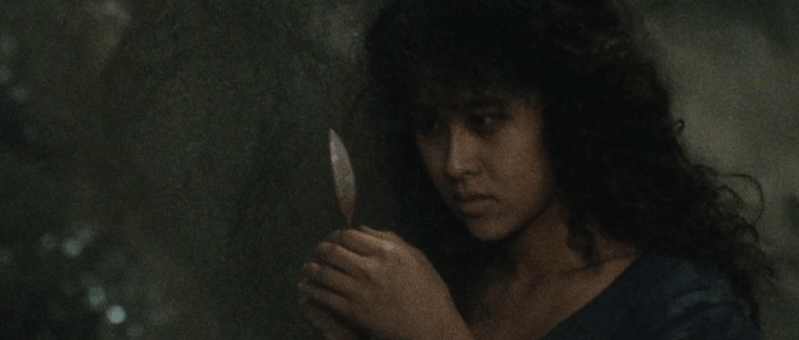
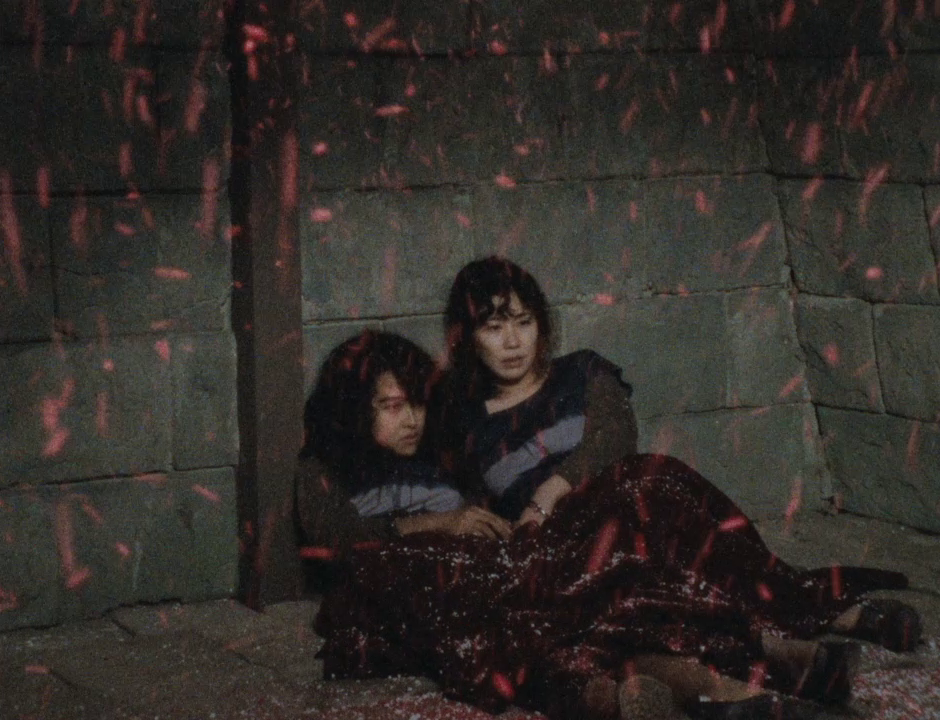
701 is in a way reborn as Sasori. Betrayed by the people who hired her, she’s crucified in the courtyard until rescued by fellow inmate and Sasori fan Shindo (Mineko Nishikawa) who helps her try to escape from the prison in an attempt to find out what happened to the “real” Nami. It’s she who first likens the fire in 701’s eyes to that of the Scorpion and begins to give her permission to take on her name and mission. A line is drawn between the two in Nami’s incasement in concrete and 701’s breaking out of it in the opening sequence. Though it would be wrong to call this horror film, Ikeda makes frequent use of ghostly techniques to imply Nami’s apotheosis such as the sound of her spoon scraping the concrete which she later bequeaths to 701 who then becomes the “new” Scorpion. 

The film was in fact a big hit for Toei video and theatrical sequel was planned as a co-production with Golden Harvest in Hong Kong though the project fell through when Okamoto took a break from show business ostensibly for health reasons though there were rumours she had objected to the requirements for nudity. Contrary to expectations for a straight to video release, there is not actually a lot of sexual content in the film which is mainly restricted to a single sequence in which two prisoners pretend to get it on in order to distract a guard to facilitate an escape attempt. Unlike other instalments in the series, the film doesn’t have a lot of women in prison elements either, though it does make space for Dump Matsumoto, a popular villain character from women’s wrestling, as a sadistic guard with a crush on another warden who is she says the only one who treated her like a woman. Instead, it focuses on 701’s passage towards becoming Scorpion and the fulfilment of her twin missions as an avenger of wronged women breaking free from the concrete dungeon of patriarchal oppression to take bloody revenge on the forces of corruption.


Trailer (English subtitles)

New Female Prisoner Scorpion: Special Cellblock X (新・女囚さそり 特殊房X, Yutaka Kohira, 1977)

After Meiko Kaji declined to appear in further Female Prisoner Scorpion movies, Toei attempted to reboot the franchise under the “New Female Prisoner Scorpion” banner much as they did with some of their other franchises such as New Battles without Honour and Humanity. This second, and in fact final, instalment Special Cellblock X (新・女囚さそり 特殊房X, Shin Joshu Sasori: Tokushu-bo X) is not a sequel to New Female Prisoner Scorpion but itself another reboot that like its predecessor takes place amid a backdrop of paranoia and political corruption. 

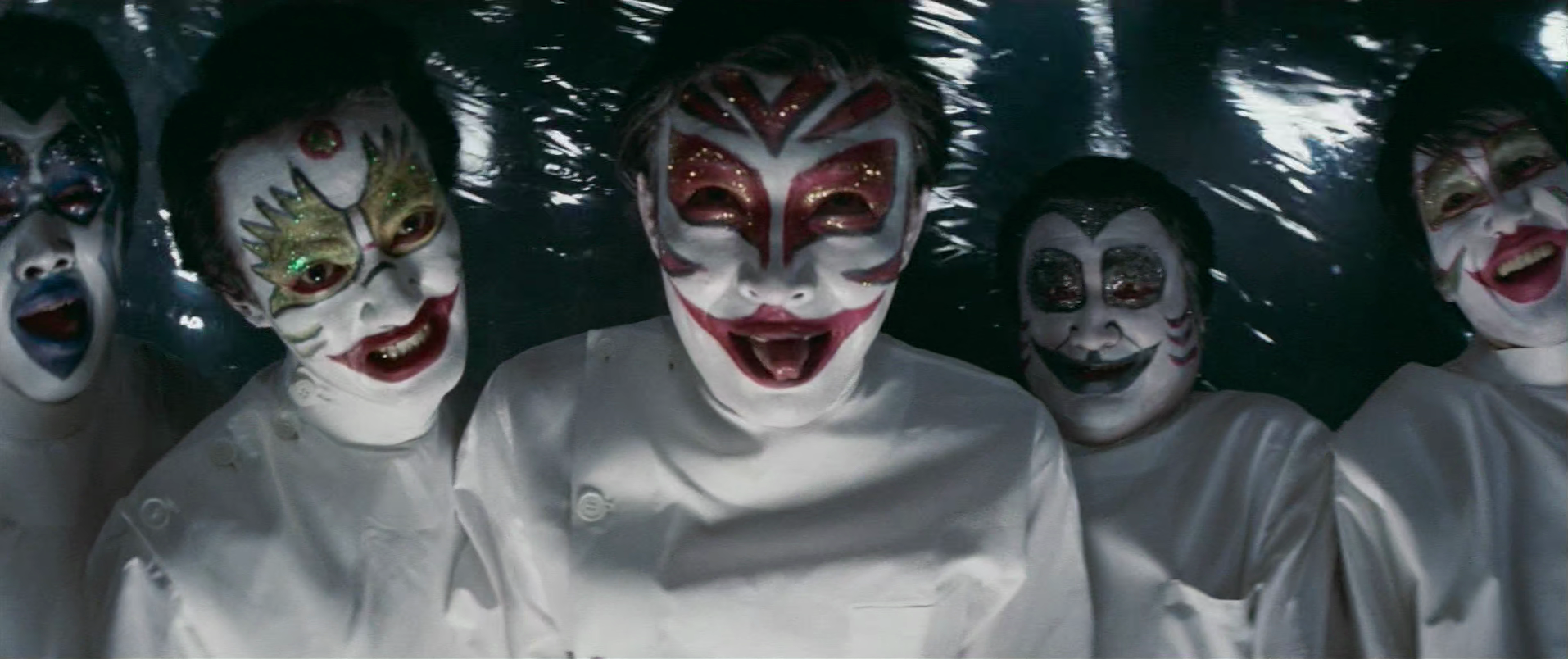
Arriving back at the prison after a failed escape attempt, this Nami (Yoko Natsuki) has an all new backstory as an idealistic nurse whose doctor boyfriend was given shock therapy that destroyed his mind and left him in a vegetative state after threatening to blow the whistle on his hospital’s decision to let the man at the centre of a growing political scandal quietly pass away. These facts are first communicated to us through a surreal fever dream Nami has presumably caused by an infected wound on her leg. She first dreams herself frolicking cheerfully with the doctor before frightening figures of darkness pull him back into an abyss while terrifying clowns leer over and then rape her. She’s only saved from her life-threatening medical condition by the intervention of Kiyomi (Kaori Ono), a fellow prisoner who feels indebted to her because of a blood transfusion she received three years earlier before everything in Nami’s life went wrong. 

But otherwise Nami enjoys little respite in the prison as the other inmates take out their frustrations on her in regards to the reprisals enacted on them following her escape attempt. Like most other prisons in the franchise, this one employs a tactic of divide and rule encouraging the prisons to turn on Nami rather than the guards for their treatment of them. But things are changing in the prison. Chief guard Kajiki (Takeo Chii) had ruled supreme, but the warden has different ideas and objects to Kajiki’s tactic of appeasement by allowing things like cigarettes and chocolate to circulate in the prison to keep the inmates happy. He brings in a super tough security enforcer from the face male Abashiri prison which means Kajiki’s career is definitely on the decline and leaving him increasingly siding with the prisoners over the cruel treatment they’re exposed to by the warden who is too busy courting the justice minister in the hope of a government position to consider things like prison regulations or the welfare of the prisoners. 

Of course, it’s also the justice minister against whom Nami wants revenge. This Sasori is even more silent than most, glaring angrily at those around her but saying little other than stopping to advise Kiyomi not to get involved with her because it won’t end well in a prediction that turns to be accurate. When she eventually assumes her Sasori persona, it’s a little different from that of her predecessors as she dresses all in white (perhaps apt for a former nurse) with a long black over coat. Her black hat has a wide, stiff brim and a feather tucked in the side. She kills with a scalpel, as if she were literally excising the corruption in society and is prepared to play a little bit dirty. The justice minister had asked the warden to kill her and pass it off as an illness. She threatens to blackmail him though it’s obvious she’s not after money and executes the warden when he delivers the pay off on a cheerful fairground ride. 

Though it may lack the striking cinematography found in Ito’s trilogy, the film nevertheless skews surreal with its strange fever dream that turns out not to be so far from the reality as you’d assume along with weird gags like Nami and Kojiki stealing the clothes of a young couple after escaping together who happened to be dressed in identical outfits. Nami teaming up with a former guard is also something of a surprise and though she fights with him and rejects his romantic advances, she seems to have genuine pity when he gives up his life to save her. In any case, they each have something in common as those who now resist the system as Kajiki became a victim of a more authoritarian regime that doesn’t like his lax approach to rule keeping and Nami pursues her desire for justice in an unjust society at all costs. Dropping a bloody scalpel behind her, she disappears into the night, justice done, but presumably onto some other kind of vengeance against a corrupt authority that equally will stop at nothing to hang on to its power.