The Abandoned (查無此心, Tseng Ying-ting, 2022)

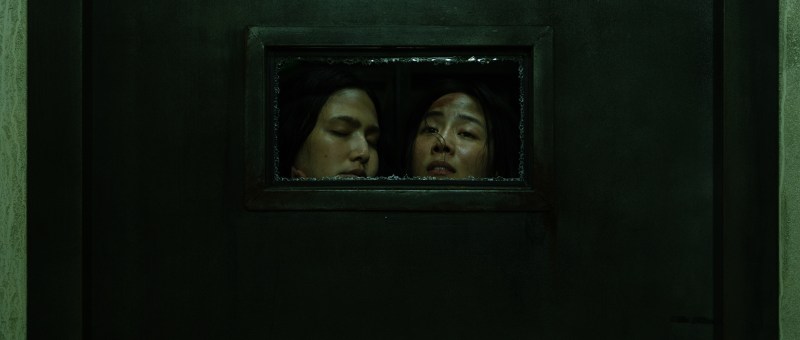
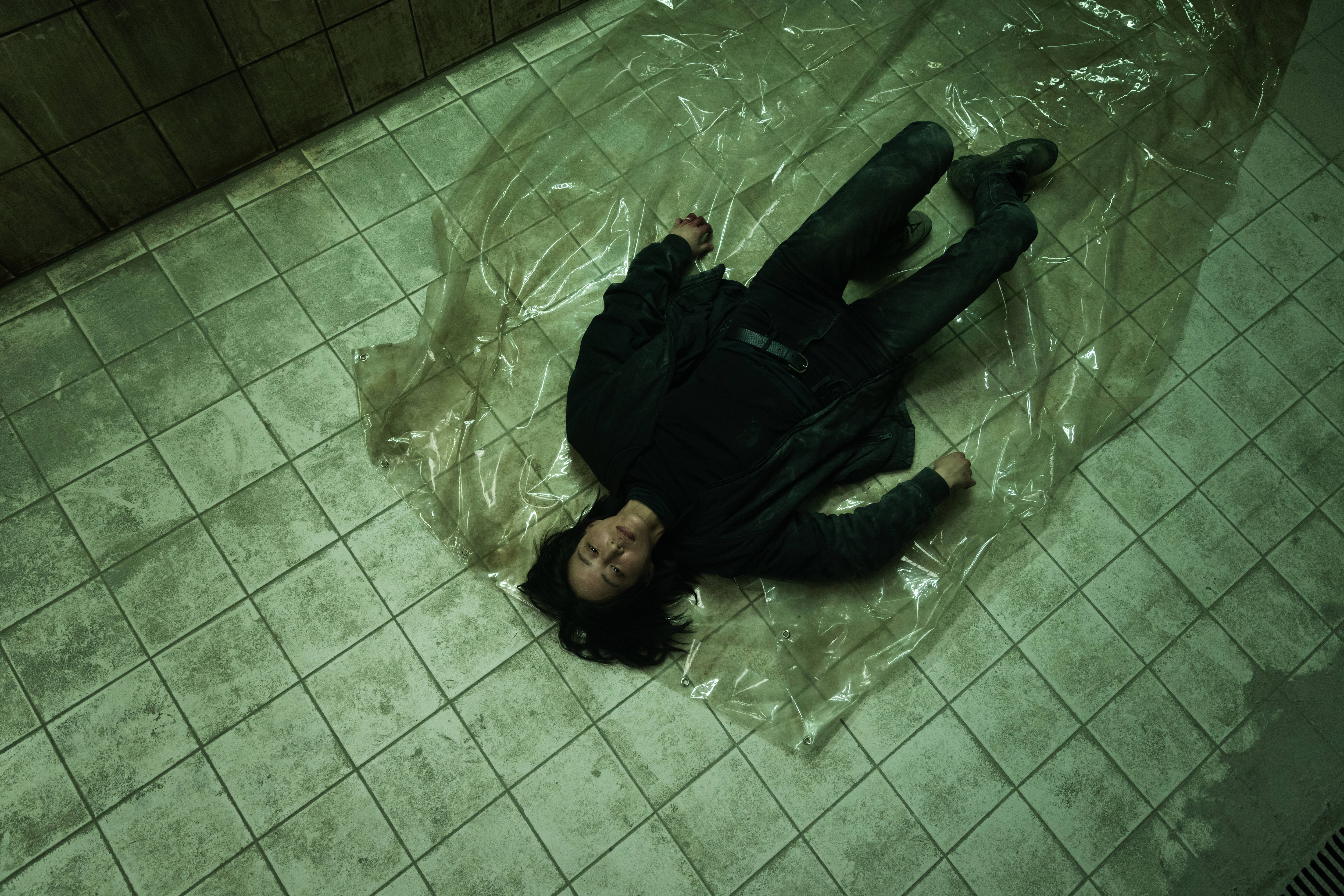
Just about everyone in Tseng Ying-ting’s psychological thriller The Abandoned (查無此心, Chá wú cǐ xīn) has been in some way left behind. The title most obviously refers to the body of a murdered woman unceremoniously dumped in a local river though as we later discover she wasn’t so much abandoned as returned, but the investigating officer is also battling her grief in feeling abandoned by her husband who took his own life and it could as well apply to the liminal status of migrant workers in Taiwan who have been largely abandoned by a society that is increasingly dependent on their labour. 

As policewoman Wu Jie (Janine Chang Chun-ning) points out to rookie Wei-shin, if she found a body she’d obviously call the police but if you can’t call the police because you’re afraid they’ll deport you you might have no other option than to make it go away. But the strange thing is that Waree’s body was left where it would be found and Jie will later claim that it is in a sense Waree who “saved” her by unwittingly frustrating her attempt to take her own life while consumed by grief and guilt over her husband’s death. Later it seems as if the killer of these women, each of whom has their heart and ring finger removed, intended to send the bodies back to their exploitative employers making a grim a point while leaving them with an impossible choice knowing that they can’t very well go to the police and risk undermining their entire business enterprise which relies on the labour of workers of who’ve either left the positions the visas they were granted were originally for or never had any in the first place.

Waree’s former boyfriend You-sheng (Ethan Juan) is left with just such a dilemma when the body of another woman, Yeti, is delivered to their factory calming the worried workers while secretly burying her himself in the mountains little knowing that a similar fate has befallen Waree whom he’s been looking for ever since she dropped out of contact as has her sister Saipin, also an undocumented worker from Thailand. The killer seems to target these women because he knows it’s unlikely anyone will look for them though they also have personal motives in their own sense of abandonment, resentful in feeling as if they’ve been deceived in love while unable to see how the other party may have felt trapped and exploited while their passport was held captive depriving them of the free choice to leave. 

As it turns out, the person who left Waree’s body in the water did it because they were worried she wouldn’t be able to return home, not wanting her to be disappeared in the way their employer might have wished her death hushed up like so many other anonymous workers whose families never hear of them again but at least acknowledged. Wu Jie is also unable to return home, mostly sleeping in the car directly below the bloodstained bullet hole under which her husband shot himself. Her boss ironically tells that if her heart remains in the car she’ll never escape, echoing the missing hearts of the murdered women taken as grim trophies by the heartless killer. 

Ironically enough, to solve the case Wu Jie must regain the desire to live finally facing her abandonment along with her grief and guilt for her inability to save her husband while working with the conflicted You-sheng who similarly feels both abandoned and guilty in the failure of his relationship with Waree whom he was reluctant to marry and might have saved if he had. Tseng aptly demonstrates the precarious position of undocumented migrant workers in Taiwan who are often exploited by their employers and rendered invisible by a society which largely treats them with disdain while left vulnerable to crime and violence in being unable to turn to the authorities for help. He also hints at a degree of misogyny present in the police force as Jie is at one point asked to leave the case as the higher ups don’t like the idea of two women working together while Jie simultaneously feels pressured to stay knowing that the situation is too complicated for an earnest rookie to manage on her own. Exploring the grimy underbelly of an otherwise prosperous nation, the film has only sympathy for those have in one way another been abandoned and can see little prospect of escape from their fear and loneliness. 


The Abandoned screens July 26 as part of this year’s New York Asian Film Festival.

Original trailer (Traditional Chinese / English subtitles)

Images: @Renaissance Films Limited. Love Me Tender Production Company

The Last Verse (最後的詩句, Tseng Ying-Ting, 2017)

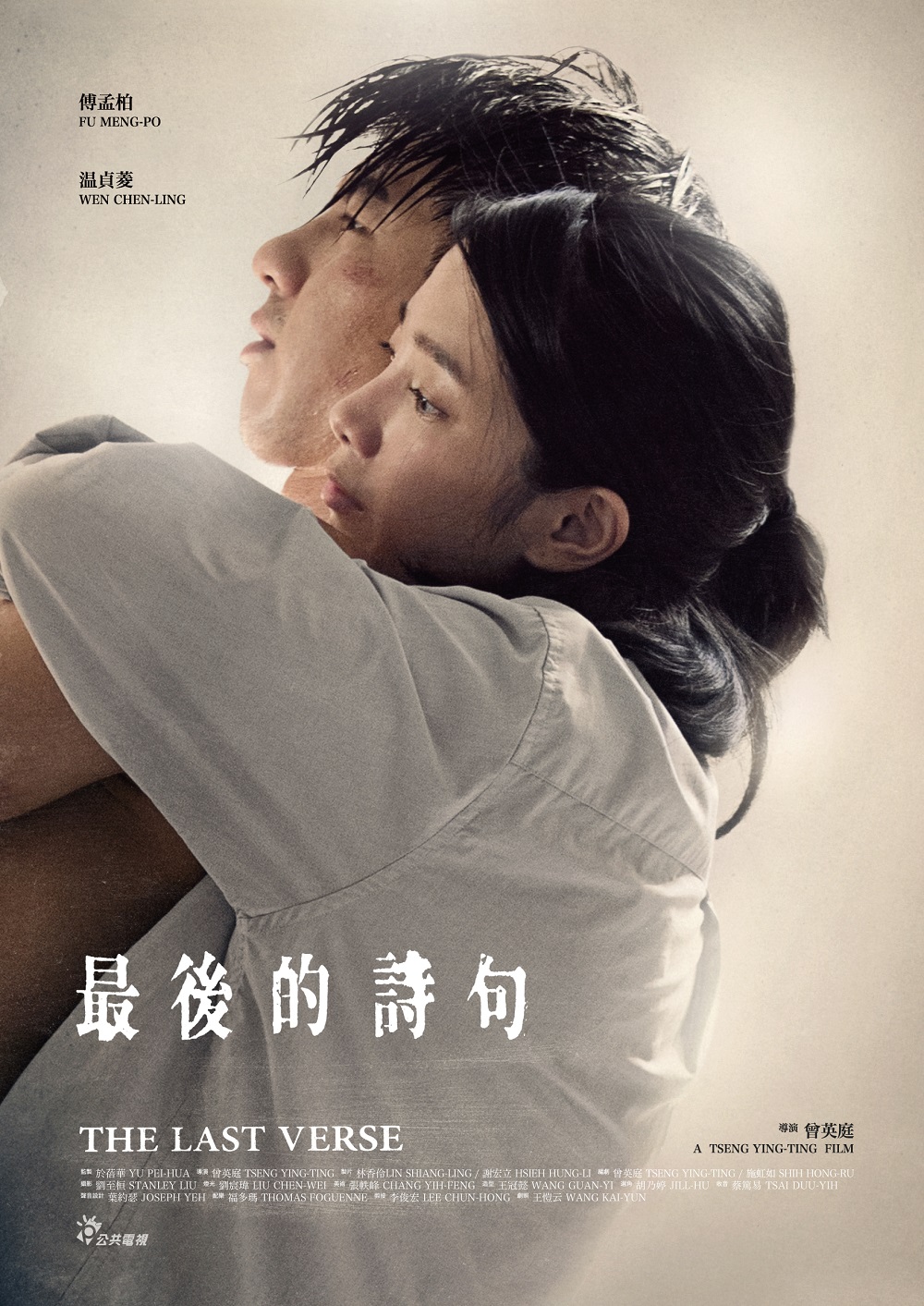
The last verse posterThe dreams of youth seem destined to elude two idealistic Taiwanese romantics as they fall in love, out of love, into debt and then despair. Set against 16 years of turbulent Taiwanese history, The Last Verse (最後的詩句, Zhòu de S) follows two ordinary teenage sweethearts whose humble dreams of conventional success are consistently undermined by familial legacy and economic instability. Society crushes the dreams of those who refuse to abandon their youthful idealism, but then again perhaps they destroy themselves through chronic insecurity and a refusal to address their own failings rather than conveniently assigning blame to all but themselves.

In the golden summer of 2000, Ren-jie (Fu Meng-Po), nicknamed “poet” meets Xiao-ping (Wen Chen-Ling), the love of his life. The pair start dating and are sure enough about their future to be discussing long term financial plans, but Ren-jie still needs to complete his military service and so their lives are currently in a mild hiatus. Everything starts to go wrong when Ren-jie receives visit a from his estranged father – a broken shadow of a man whose wife left him because of his drunken violence in the face of the humiliating failure of his business when his towel factory went bust. Ren-jie didn’t want anything to do with his dad and sent him packing, only to bitterly regret his decision when he commits suicide on the way home by gassing himself in his car.

This original failing is the fracture line from which all Ren-jie’s subsequent sufferings unfold. Despite signing away any right to his inheritance in order to avoid taking on his dad’s debt, Ren-jie can’t shake off the vicious loansharks his dad once borrowed money from. Having managed to get a well paid, if morally dubious, job as an investment broker Ren-jie’s life ought to be progressing towards middle-class success. He lives with but is not legally married to Xiao-ping who also has a good job at a magazine, but is putting off legalities until the advent of financial stability. Ren-jie is therefore stubborn. He won’t pay the gangsters off because he doesn’t want his father’s legacy and resents their intrusion into his otherwise “respectable” life. He will learn, however, that there are things that cannot just be overcome through bloodymindedness and his male need to avoid being seen to back down is primed to put those he loves in great danger.

Ren-jie’s life is indeed ruined by the precarious era in which he lives as well as the legacy of that which came before, but his destruction is also at his own hands as he falls into a well of toxic masculinity which eventually leads him to harm and then betray the innocent love of his youth. During Ren-jie’s military service, some of the other men suggest staying on in the armed forces – most laugh off the idea but it does at least offer a secure paycheque, a fixed term contract, and the possibility for advancement – all things useful if, like Ren-jie, what you want is to get married and start a family even while still relatively young. Ren-jie, however, did not take this path. We don’t find out why he lost his well paid banking job, if it was the gangsters or the economy, but a few years later sees him an embittered estate agent trying to sell rundown flats in the middle of a housing crash to clients who know they’re better off waiting. Embarrassed not to be able to “provide” for a “wife”, Ren-jie’s male pride cracks under the twin pressures of being forced to give in to the gangsters and fearing that he is not good enough for Xiao-ping, paranoid that she will eventually leave him for someone with more money.

Xiao-ping, however, remains fiercely, idealistically in love with the boy she met at the river all those years ago. Ren-jie, making a common enough though self obsessed mistake, fails to see that financial success is not something that Xiao-ping worries about in any other way than wanting to see the man she loves fulfilled. What Xiao-ping wants is a conventional family life, but Ren-jie’s constant money worries and personal insecurities consistently deny her before he eventually makes another cruel and selfish decision that will only cause her additional suffering.

Ren-jie’s internalised self-loathing eventually boils over into violence, recalling the unwelcome legacy of the father he did not want to become. Yet Ren-jie is also a failure, a drunk, a violent man having meaningless sex with married women in empty apartments in order to try and reassert some kind of control in his largely powerless life. Unfairly burdened by his father’s literal debts, a legacy of violence, and the crushing hopelessness of his existence, Ren-jie has lost the sense of “poetry” which so endeared Xiao-ping to him all those years ago at the river. The memory of those sunswept days, romanticised as it might be, becomes both a touchstone and a dangerous symbol of all that has been lost and can never be regained. Unable to reconcile themselves to the compromises of adult life, the ballad of Ren-jie and Xiao-ping is destined to end in tragedy, self-inflicted wounds the only escape from the crushing hopelessness of a relentlessly indifferent society.


The Last Verse was screened as part of the 2018 New York Asian Film Festival.

Original trailer (traditional Chinese subtitles only)

Interview with director Tseng Ying-Ting from the 2017 Busan International Film Festival.