A Samurai in Time (侍タイムスリッパー, Junichi Yasuda, 2024) [Fantasia 2024]

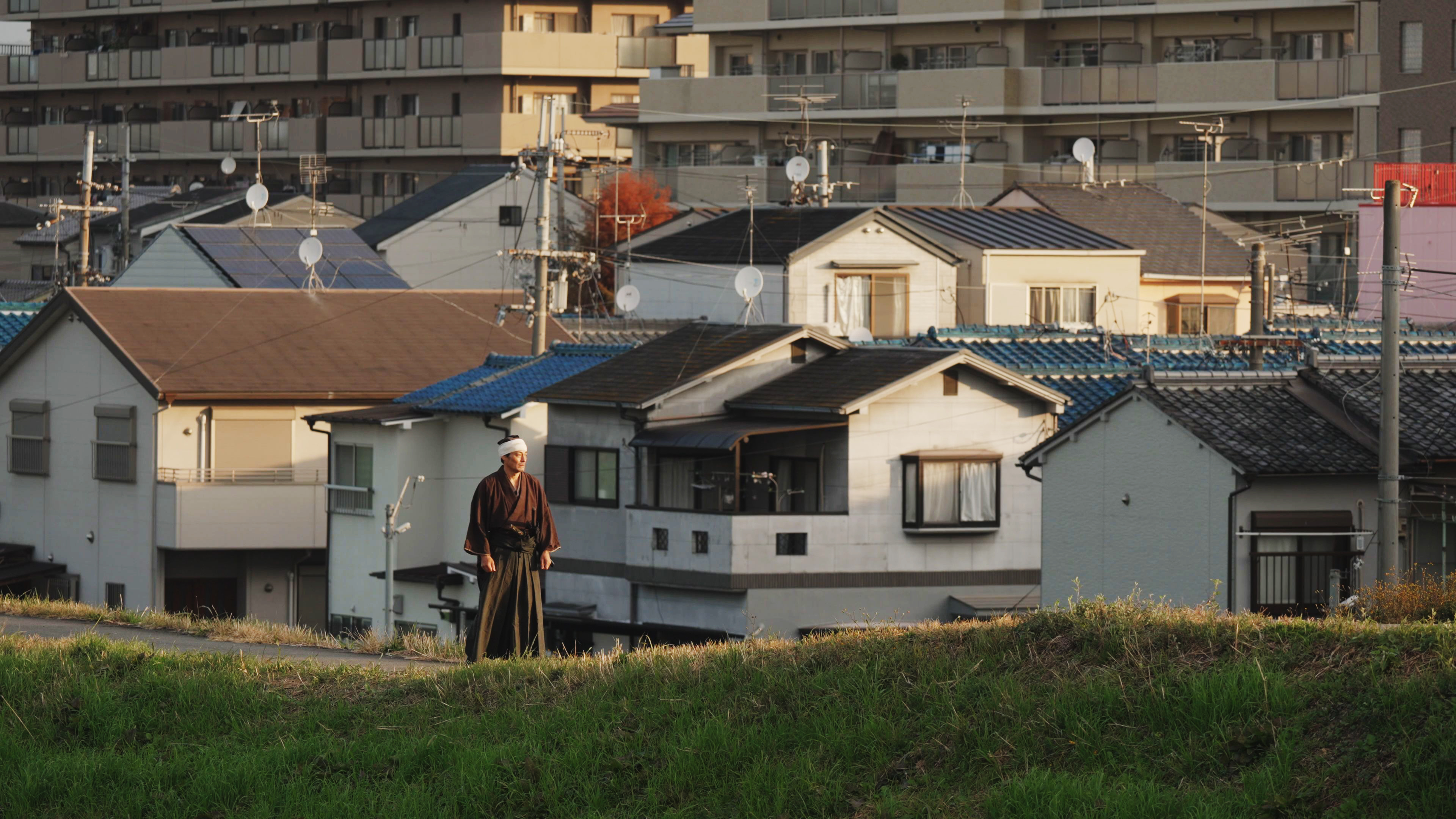
Is there something a little sad about being forced to reenact your reality as theatre, or is it something to be proud of in adapting to the times and bringing the essence of what you once were with you? Junichi Yasuda’s A Samurai in Time (侍タイムスリッパー, Samurai Time Slip) like A Boy and His Samurai sees an Edo-era retainer transported to the present day but is less about contrast with the feudal past than how to carry on or start again when your time has ended.

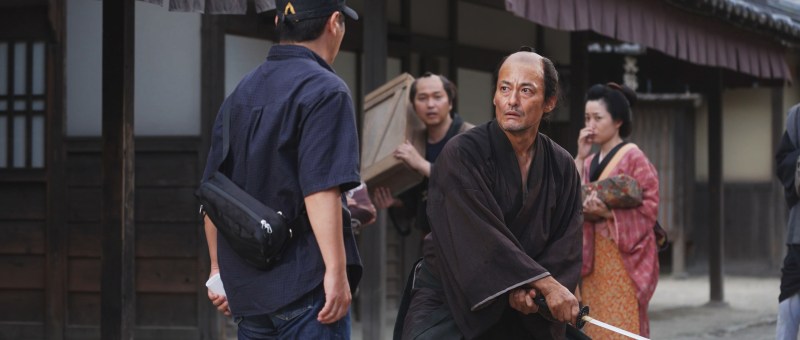
At least that’s how it is for Kosaka Shinzaemon (Makiya Yamaguchi), a member of the Aizu Clan loyal to the Tokugawa Shogunate in the twilight of the feudal era. In arriving in our present, he’s forced to admit that days of the samurai are long over, and finds himself a man with out a place, adrift in a classless society in which the only skill he possesses, swordsmanship, is all but obsolete. The irony is that, after being transported by a Terminator-style lightening strike, Shin arrives on the set of a jidaigeki, or samurai-themed television drama which is to say an artificial recreation of his reality. Thus he’s confused when he tries to ask passers-by for directions and they seem alarmed and ignore him while his attempt to intervene when a young lady is bullied by rogue samurai earns him a dressing down from a man in strange dress we obviously know is the director. When he’s knocked out from a bump on the head, everyone assumes he’s got amnesia and has become confused between his role as an extra on a samurai drama in which he may have overinvested and his “real” life, which in a way maybe true.

Just as he’d come from the end of the feudal era, so he’s arrived in the dying days of the jidaigeki. Once a mainstay of the entertainment industry in its heyday of the ’50s and ‘60s when historical dramas ruled the airwaves, the genre has long been in decline and somewhat out of favour with both filmmakers, seeing as they’re much more expensive to make, and audiences. In fact, the place where Shin arrives is a former shooting set that’s been turned into a theme park recreating the reality of the jidaigeki serial rather than that of the feudal era.

In an analogy which might prove slightly awkward, Shin’s fate is aligned with that of the jidageki itself but by accident of birth he is also on the wrong side of history both literally and metaphorically. As he later learns, his Aizu clan and the shogunate it served would not prevail. Yet ultimately he likes this new Japan, a place of prosperity where anyone and everyone is free to eat what to him seems like the food of the elite. Embarking on a career as a jidaigeki stuntman, a kiriyaku or extra who dies on screen, he becomes committed to protecting the jidaigeki in the same way he protected the shogunate even as everyone around him says he must be mad to take up this sort of work now when jobs are few and far between. 

To that extent, it’s really about learning to adapt to another reality preserving what you can (and wish to) about the past but continuing to move forward like a samurai living life fully in service of an ideal. In a sense, this is something the Aizu could not do for they were defeated during in the Boshin War which solidified the victory of progressive revolutionaries who believed that modernisation and Westernisation were the only ways to save Japan bringing the age of the samurai to a close. In strange ways, Shin finds himself re-enacting this internal dilemma through his meta performance, bringing a note of authenticity to the jidaigeki genre which as we can see from that being filmed is not always terribly serious or earnest about historical accuracy. 

There is though an earnest desire to preserve it, if also to modernise for a contemporary era accepting that the days of classic jidaigeki are over but the genre may live again if in different ways. Through roleplaying his internal conflict, Shin is able to overcome his lingering feelings of guilt towards the clan and attachment to the more destructive sides of the samurai code, rejecting his opportunity for revenge and deciding to live well instead in this brave new world seemingly filled with potential for reinvention and recreation in which the past need not be cast away or overwritten but carried forward into new futures of its own.


A Samurai in Time screened as part of this year’s Fantasia International Film Festival.

Original trailer (English subtitles)


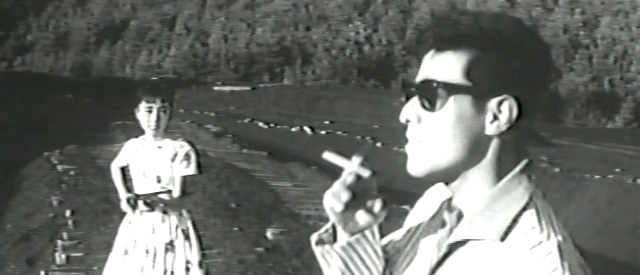
Volunteering for Villainy (悪人志願, Tsutomu Tamura, 1960)

Tamotsu Tamura is best known as a screenwriter who worked closely with Nagisa Oshima, though he did actually direct a film himself at the beginning of his career. Having originally planned to become a reporter, Tamura was offered a job at Sankei Shimbun but his employment was postponed for medical reasons and he decided to retake the entrance exam for Shochiku joining the studio in 1955. Unfortunately Volunteering for Villainy (悪人志願, Akunin Shigan, AKA The Samurai Vagabonds) was not successful at the box office and Tamura soon left Shochiku along with Oshima and became a screenwriter at his independent production company. 

In any case, the film is very reminiscent of New Wave filmmaking both in terms of theme and aesthetic. It repurposes a moribund quarry town as an almost literal purgatorial space casting the protagonists into a deep hole from which they are eternally unable to escape. As the film opens, a collection of children are taunting a young woman, Hide (Kayoko Hono), calling her a murderer and castigating her for failing to die, though it later transpires that they’ve been hired by a henchmen of Tatsuo (Masahiko Tsugawa), the brother of the man she was involved in double suicide with who is determined to become some kind of local dictator.

But even he is in some ways rebelling against his powerlessness as the son of a local politician he brands as phoney and corrupt. Tatsuo claims he hates people who claim to be good but aren’t, in much the same way as Hide claims she can no longer trust anyone. Tatsuo seems to want revenge for the death of his brother for which he holds Hide responsible but insists he doesn’t want to settle it with money nor is he in favour when a shady local man makes vague allusions to having her bumped off.

When a new recruit, Yasuo (Fumio Watanabe), joins the quarry he becomes its latest kicking bag not least because it was Hide who escorted him into town. Yasuo has a stammer and incredibly meek manner that leans towards obsequiousness. “You’re as obedient as a dog,” people often remark with Tatsuo later astutely observing that he’s the sort of person who can’t do anything without someone telling him to do it. Yet it later seems as if his desire to obey, to be liked and accepted by those around him, has led him to commit a terrible crime claiming that he only did what everybody wanted done even if they were too afraid to say so.

Ashamed of himself and his corrupted masculinity Yasuo alternately rebels and overcompensates. He refuses to hit Hide when ordered to by Tatsuo, and to sleep with her when forced by the other men, but later hits and sleeps with her possibly not quite consensually when his masculinity is challenged. The irony is that Tatsuo who claimed he wouldn’t tolerate anyone defying him cannot control Hide’s free spirit and is therefore unable to overcome his powerlessness. He bullies and harasses her insisting that she leave town, but Hide refuses to go and is continually unbothered by the way she’s treated. Hide also eventually rejects Yasuo for his cowardice, severing her ties to him on realising that he informed on one of the other men who was fugitive from justice to curry favour with Tatsuo and take the heat off himself. She tells Tatsuo that though he’s always wanted things his own way, she’s always decided for herself, infuriating him with her free decision to leave having realised how petty and meaningless it was to stay in this petty and meaningless purgatory of broken and hopeless men. 

Tamura shoots with a roving and curious camera that takes on a life of its own swooping through the dorms but lends a degree of mythic eeriness to the final confrontation in the quarry as the workers begin to dot the skyline looking down at Hide below in a scene somehow reminiscent of L’Avventura. The town’s only bright spot is presented by Tatsuo’s younger sister Kiyoko (Chiaki Tsukioka) as the voice of reason even as she  brands everything boring and meaningless but thereby suggesting that it might not have to be this way. Her words, however, fall on largely deaf ears save those of Hide perhaps finally awake to her own agency only to have it immediately crushed by fragile masculinity.

Dear Summer Sister (夏の妹, Nagisa Oshima, 1972)

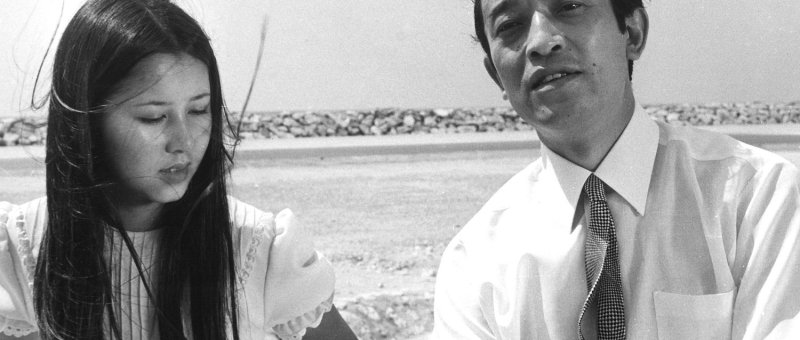
The complicated relationship between mainland Japan and the Okinawan islands is played out in the youthful identity crises of two adolescents struggling to understand the world their parents have left to them in an uncharacteristically breezy effort from Nagisa Oshima, Dear Summer Sister (Dear Summer Sister (夏の妹, Natsu no Imoto). Part Rohmerian travelogue, Oshima takes a tour around the island in the immediate aftermath of its reversion to Japan but rather than the busy tourist spots explores a legacy of colonialism and exploitation in the islands’ war memorials and red light districts. 

The irony is that Sunaoko (Hiromi Kurita) finds the person she’s looking for immediately after disembarking from the boat she’s taken from the mainland only she never realises it. Having received a letter from a boy, Tsuruo (Shoji Ishibashi), claiming that he may be her half-brother but isn’t entirely sure, Sunaoko has accepted his offer to come to Okinawa where he will show her his “brotherly affection”. Unbeknownst to her, however, he mistook the figure of her father’s much younger fiancée Momoko (Lily) for that of the teenage Sunaoko with the older woman half-heartedly trying to head off a potential crisis while understandably curious and seeking to know the truth behind her future husband’s hidden past. 

The figure of Tsuruo’s mother, Tsuru (Akiko Koyama), comes to stand in for that of Okinawa yet the central problem as we discover is that she was raped firstly by Sunaoko’s father Kikuchi (Hosei Komatsu) and subsequently by local Okinawan policeman Kuniyoshi (Kei Sato) who had previously passed her off as his younger sister. Even so the trio seem to interact with each other as if nothing had happened and they were simply old university friends reuniting after years of separation. Despite his present occupation in law enforcement, Kuniyoshi had been in prison at the time having been arrested as a student protestor and on his release raped Tsuru after she told him she had been raped by Kuniyoshi in an attempt to reclaim her body and send his sperm as a kind of advance division to prevent Kikuchi’s successfully colonising her womb with the consequence that Tsuru cannot of course be sure whose child Tsuruo is settling finally for “mine” in an answer which at least earns her Sunaoko’s respect. 

Obviously still somewhat naive and additionally provoked on discovering the attraction between Momoko and Tsuruo, Sunaoko had been unfairly judgmental in preemptively accusing Tsuru implying that she been immoral in maintaining relationships with two men at the same time. What occurs is a gradual sense of disillusionment in her father the judge when confronted, it has to be said with confusing frankness, with his own immorality in his misuse of Tsuru which is also of course a metaphor for Japan’s misuse of Okinawa, a thread picked up more directly by the old soldier Sakurada (Taiji Tonoyama) who has apparently come to Okinawa looking for a local willing to kill him in atonement for atrocities he half-heartedly claims not to have committed himself but feels responsible for simply as a Japanese person. Ironically enough he finds such a person in Rintoku (Rokko Toura), a teacher of traditional Okinawan folk music who is looking for “a Japanese who deserves my killing him”.

Nevertheless the relationship between the old men turns into one of playful animosity which does not seem to hint towards violence, a playful fight breaking out between the pair on a boat in the middle of the sea in the film’s concluding scenes in which Sunaoko offers an ironic commentary to the effect that the “killer” and his “victim” are still “singing and drinking” despite the earlier claim that there were only two kinds of people, Okinawans and Japanese, in counter to the claim that the only two kinds of people were men and women. Meanwhile, Kikuchi attempts to process the implications of his friendship and actions explaining that Kuniyoshi’s Okinawan roots were not an obstacle between them while admitting that he never thought about the position of Okinawa during their youth and wonders what he thought back then as to Okinawa’s future, whether it should revert to Japan or become independent. Kuniyoshi claims not to remember, while Tsuru explains how difficult it was to travel to the mainland under the occupation and implies that it’s better now that “we can go where we please”. 

The implication is, perhaps, that Tsuruo is his mother’s child but also a kind of orphan creating a new identity in a new Okinawa having symbolically rejected both of his potential fathers if seeking a brotherhood with his half-sister though even in this the waters are muddied with the undercurrents of incestuous desire which seem to run both ways. Even so Oshima hints at the secondary colonisation of America in conducting what doesn’t seem to be an entirely appropriate series of conversations with the young Sunaoko concerning the history of sex work on the island and the number of bars geared towards American servicemen returning from Vietnam with the suggestion that the islands remain economically dependent on the US despite the reversion while Sukurada makes similarly crass comments about his relationships with Okinawan sex workers during the war. They cast themselves as Urashima Taro travelling to the magical underwater palace of the Dragon King but wary of opening the box of truth they’ve been given lest their world crumble beneath their feet. Picturesque and strangely cheerful, Oshima’s Okinawan odyssey shot with breezy immediacy offers a characteristically thorny take on relations between the two island nations but reaches an unexpectedly hopeful conclusion in the young people’s rejection of their parents’ legacy and intention to move forward in mutual solidarity. 


Dear Summer Sister screens at Japan Society New York May 14 at 7pm as part of Visions of Okinawa: Cinematic Reflections

Images: © 1971 Oshima Productions

Violence at Noon (白昼の通り魔, Nagisa Oshima, 1966)

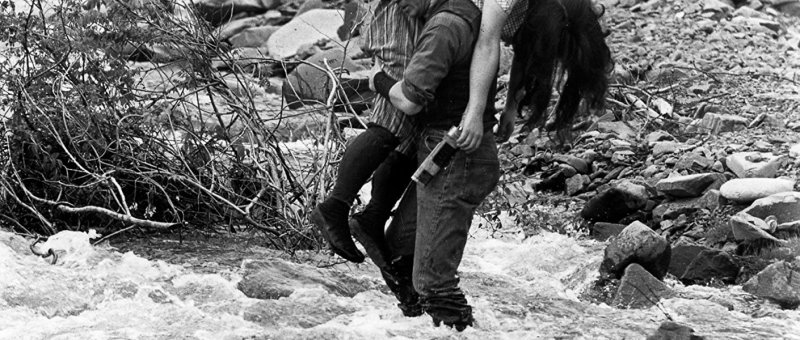
Violence at Noon posterFor Nagisa Oshima, the personal is always political and urges for destruction and creation always inextricably linked. Violence at Noon (白昼の通り魔, Hakuchu no Torima), a noticeable shift towards the avant-garde, is a true crime story but the murder here is of idealism, the wilful death of innocence as manifested in the rampage of a disaffected sociopath whose corrupted heart ties together two women who find themselves bound to him in both love and hate. Each feeling responsible yet also that the responsibility for action belongs to someone else, they protect and defend the symbol of their failures, continuing on in despair and self loathing knowing that to turn him in is to accept the death of their idealism in its failure to reform the “demon” that won’t let them go.

Bright white gives way to the shadow of a man lurking behind bars. He opens a door and gazes at a woman doing the washing, lingering on her neck before he forces himself in. The woman, Shino (Saeda Kawaguchi) – the maid in this fancy household, knows the man – Eisuke (Kei Sato), a drifter from her home town, but her attempts at kindness are eventually rebuffed when she tells him to go back to his wife and he violently assaults her causing her to pass out at which he point he decides to spare her and murders her employer instead. Rather than explain to the police who Eisuke is, Shino offers only cryptic clues while writing to Eisuke’s wife, Matsuko (Akiko Koyama) – an idealistic schoolteacher, to ask for permission to turn him in and end the reign of terror her husband is currently wreaking as a notorious serial rapist and murderer.

Eisuke, Shino, and Matsuko are all inextricably linked by an incident which occurred in a failing farming collective the previous year. Matsuko, a kind of spiritual leader for the farming community as well as its schoolteacher, preaches a philosophy of absolute love, proclaiming that those who love expect no reward and that through the eyes of love all are equal. Meanwhile, Shino – daughter of a poor family, contemplates suicide along with her father after their lands are ruined by a flash flood and they are left without the means to support themselves. She enters into a loose arrangement with the former son of a village elder, Genji (Rokko Toura), exchanging a loan for sexual favours, later beginning develop something like a relationship with him but one which is essentially empty. Nevertheless when Genji suggested a double suicide she felt compelled to accompany him, only to survive and be “saved” by Eisuke who, believing her to be dead, raped what he assumed was her corpse before planning to dump her body in a nearby river.

It is this original act of transgression that underpins all else. Shino believes herself in someway responsible for Eisuke’s depravity, that his rape of her “corpse” was the trigger for the death of his humanity. Matsuko, meanwhile, sees herself as the embodiment of love – she “loved” Eisuke and thought her love could cure his savage nature and bring him back towards the light and the community. Matsuko was wrong, “love” is not enough and perhaps what she has come to feel for the man who later became her husband on a whim is closer to hate and thereby a total negation of her core philosophy. To admit this fact to herself, to consider that perhaps love and hate are in effect the same thing, is tantamount to a death of the self and so she will not do it. She and Shino are locked in a spiral of inertia and despair. They each feel responsible for Eisuke’s depraved existence, but each also powerless to stop him. Shino in not wishing to overstep another woman’s domain, and Matsuko in being unwilling to admit she has given up on the idea of forgiving the man who has dealt her nothing but cruelty.

Literally seduced by nihilism, Eisuke finally rejects both women. He claims they are responsible – that if Shino had married him instead of attempting double suicide with Genji he might not have “gone astray”, going on to characterise his crimes as “revenge” against his wife’s “hypocrisy”, but then he calmly states that he is the man he is and would always have done these terrible things no matter where and when he was born. Passivity has failed, blind faith in goodness has allowed a monster to arise and those who birthed him remain too mired in solipsistic soul-searching to do their civic duty. Too afraid to let go of their ideals and take decisive action, Shino and Matsuko choose to watch their society burn rather than destroy themselves in an act of personal revolution – Oshima’s thesis is clear and obscure at the same time, “Sometimes cruelty is unavoidable”.


Original trailer (no subtitles, incorrect aspect ratio)

https://www.youtube.com/watch?v=MIkhTaJOpNg&t=33s

The Man Who Left His Will on Film (東京戰争戦後秘話, Nagisa Oshima, 1970)

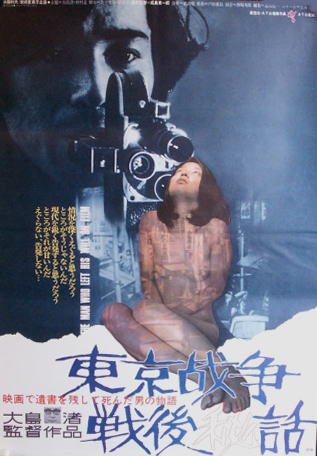
man-who-left-his-will-on-filmEvery story is a ghost story in a sense. In every photograph there’s a presence which cannot be seen but is always felt. The filmmaker is a phantom and an enigma, but can we understand the spirit from what we see? Whose viewpoint are seeing, and can we ever separate that subjective vision from the one we create for ourselves within our own minds? The Man Who Left his Will on Film (東京戰争戦後秘話, Tokyo Senso Sengo Hiwa) is an oblique examination of identity but more specifically how that identity is repurposed through cinema as cinema is repurposed as a political weapon.

The film begins with an anarchic scene in which two men argue over use of an 8mm Bolex camera. The man whose voice we can hear is angry with the cameraman who he claims has stolen his camera only to use it for “trivial” street scenes and landscapes whereas he needs it to “capture the struggle” by filming a nearby student protest. Eventually we can verify that there are two men as the protagonist, Motoki (Kazuo Goto), briefly moves in front of the camera in order to try and snatch it away from the filmmaker. The man holding the camera then runs off as breathless, handheld camera takes over. Motoki follows him and we follow Motoki as the scene takes on an ominous quality. The cameraman reappears atop a nearby building before plunging to his death camera in hand. Stunned, Motoki approaches the bloody scene and, noticing the camera is still intact, tries to retrieve it only to be picked up by the police who confiscate the camera as evidence.

Motoki then wakes up back at his left wing commune with his friends eager to know what happened. Strangely, they do not seem to be aware that one of their number has died and are more worried about the police being in control of one of their “means of production”. Even the dead man’s girlfriend, Yasuko (Emiko Iwasaki), begins to doubt the fact that he ever existed at all. Motoki and Yasuko begin investigating the mysterious presence together, chasing their elusive filmmaker and each taking possession of his form on more than one occasion but the question who owns these images, whose identity defines the narrative, proves an elliptical and ethical dilemma.

Oshima, evidently, was no right wing stooge but even if The Man who left His Will on Film takes the world of the student protests as its milieu, it does so to undermine them. Motoki’s comrades view filmmaking as a revolutionary act. They claim to turn the camera into a weapon by using it confront reality, but as Yasuko later admits much of this is a rationalisation which allows them to continue a “bourgeois” art form without abandoning their left wing principles. The cadre members spout marxist dogma and argue about who has the highest political consciousness, but all they ever do is film the ongoing struggle. Their fight is empty, their vision blank.

Notably, the first of several arguments over dogma relates to “ownership” of the camera itself and whether Motoki and another comrade fought hard enough to retrieve it from the oppressive state. Did Motoki chase after “his” camera, meaning he condones the idea of “private” property which is contrary to the communal nature of the group, or “their” camera which is a revolutionary tool? The camera itself is singular, but the group is plural. This commune is intended to work as a hive mind, the people as one with one vision and one identity but Oshima exposes this as an impossibility. The group is a collective of individuals with different ideas and opinions which do not necessarily conform to a common point of view.

This is further brought out when the camera is retrieved and revealed to contain a collection of seemingly apolitical landscapes and street scenes. The group members are quickly bored with the static shots of everyday subjects, some berating the filmmaker for his “bankrupt” politics and lack of artistry while others vow they must honour their comrade’s struggle by watching the film to its conclusion in order to derive the meaning. The unseen filmmaker has indeed left his “will” on film, not as a testament or embodiment of future policy, but his literal “will”. His individual spirit and vision are contained within the seemingly innocuous shots in a political act of revolutionary individualism. He is the film, the film is him.  His vision dominates, we must accept it or remake it as our own.

Motoki, constantly chasing shadows, attempts to remake the film in the mould of the original filmmaker but unexpectedly encounters aspects of his own life already existing within it. Yasuko’s approach is more proactive. She inserts herself into the film, makes her presence known and refuses to be invisible. She picks up the camera and fights for her place within the frame. Hers is the struggle of the true revolutionary filmmaker, imprinting herself and her vision onto the film.

Where does this leave us? We’re in the film too. We see the film and, in a sense, recreate it in our own minds, recasting ourselves as director and protagonist. We see the film subjectively yet we cannot divorce ourselves from the original vision. Motoki’s venture fails because he only sees the landscapes, whereas Yasuko takes the same images but repossesses them, remaking them in her own image in a true act of cinematic revolution. Yasuko has seized the means of production and overthrown the tyranny of anonymous images in refusing to be constrained by someone else’s will. The camera is a weapon, but it is we who choose what it sees, and in turn what it sees in us.


Original trailer (English subtitles, NSFW)