Hunter Brothers (獵人兄弟, Su Hung-en, 2024)

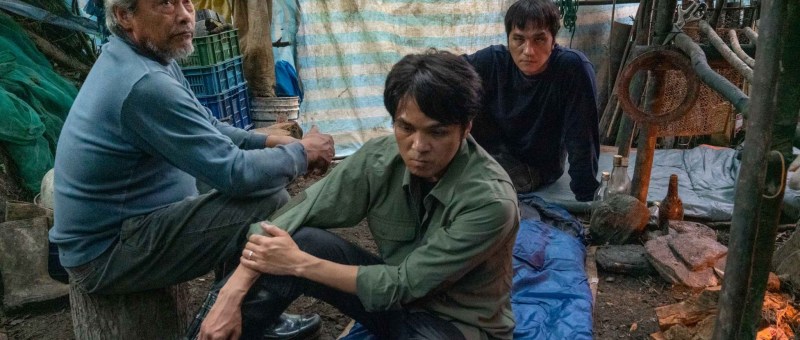
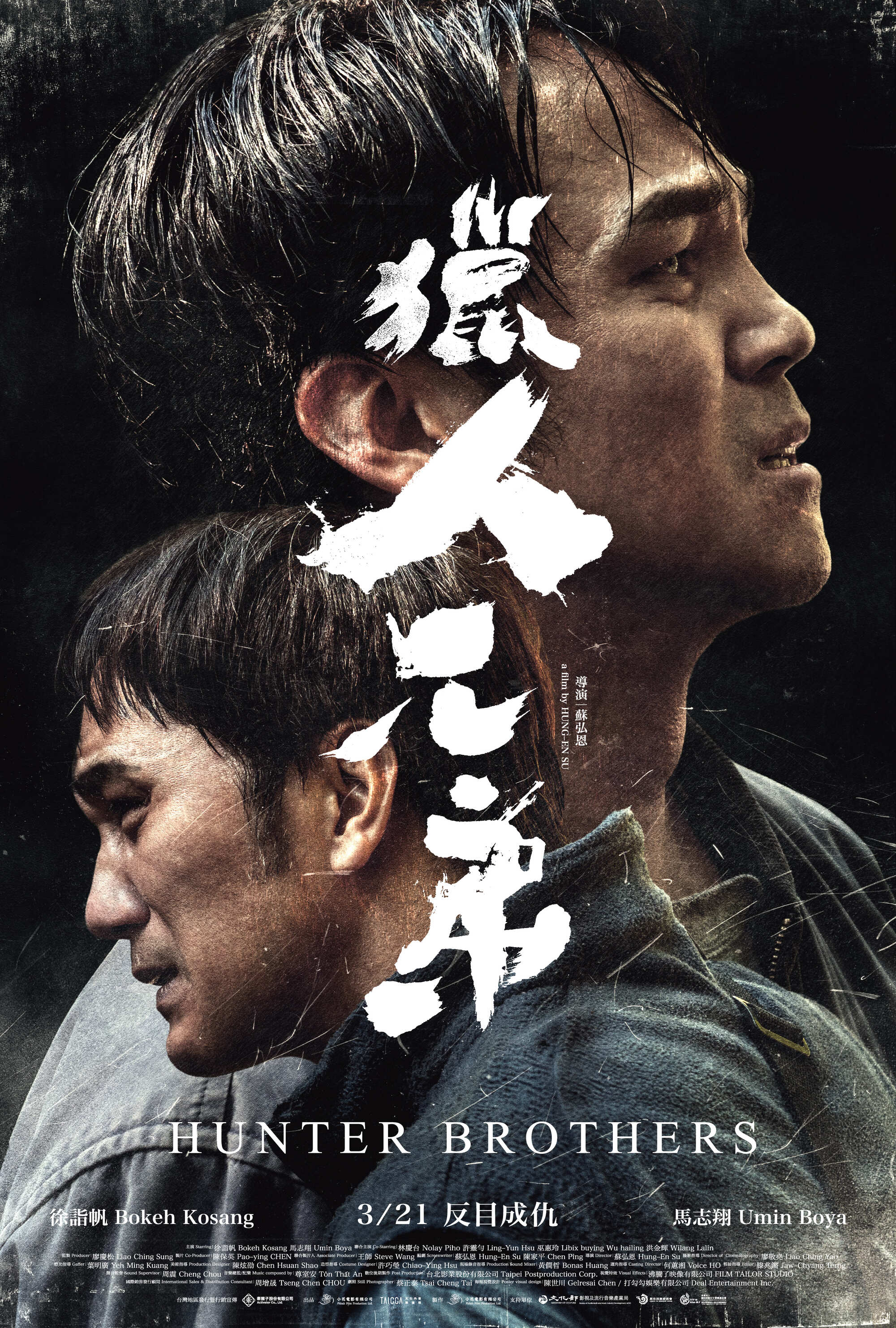
Two brothers find themselves on opposite sides of tradition and modernity as they descend into a state of warfare over the future of the ancestral hunting grounds in Su Hung-en’s familial drama, Hunter Brothers (獵人兄弟). Exploring the complicated position of the indigenous community marginalised by an increasingly capitalistic urbanity the film also critiques contemporary visions of masculinity in the wider society as the brothers each try to find new ways of defining themselves amid changing notions of manly success.

In the opening scenes of the film, Teymu celebrates the fact that his son, Yuci, has become a doctor because now he will never have to do manual labour and will have a more comfortable standard of living. But in private, Teymu seems upset. He feels as if he has failed the ancestors because in the eyes of their community, Yuci is not a proper man. Many people tell him that he is “not cut out to be a hunter,” and he has no desire to be one anyway, but still suffers from a serious inferiority complex and wounded male pride. To find some kind of answer, Teymu forces Yuci against the wishes of his mother to accompany him to the mountains for one last hunting trip to prove himself by killing a wild boar and finally validating Teymu’s own fractured sense of masculinity that his son is indeed a “proper man.”

It’s during this trip that Teymu is killed in mysterious circumstances. Yuci’s brother Siring ends up going to prison for the crime, but unlike him had been more of the son his father wanted. Yuci had been clever and studious, but Siring is more of a traditional mountain man who lives for the hunt and has a very unreconstructed sense of masculinity. But he also loved and understood his brother, knowing this life wasn’t for him and trying to protect him from their father who was in other ways a failure. Teymu drank and was violent, objecting to his wife’s attempts to stop him taking Yuci to the mountain by threatening her and using incredibly offensive language. Yuci’s reaction against this traditional society is also towards his father and everything he represented. But this traditional world is the only one a man like Siring can live in. He has no real qualifications or other skills and cannot survive outside of their community. On his release from prison, Yuci is keen for him to get a job and against his return to hunting, but it soon becomes clear that isn’t a way that Siring can live.

In that respect, they represent opposing polls. Yuci is the modern man of science, a doctor, while Siring is a man of the forests and mountains, Then again, Yuci is a devout Christian and his religion also seemingly a challenge to traditional indigenous practices though also alien to the mainstream society. The boys’ mother is living with dementia and those around them tell Siring that she has most likely been cursed by the ancestors who are angry with them for doing something “dishonest” which might be why she starts insisting Yuci go to the police and that they made a bad decision that should be put right. Yuci, for his part, does not appear to feel guilt for the role he may have played but is anxious that the life he’s built for himself in which is accorded a man by his career success, marriage, and fathering a son, may now crumble if Siring will not fall into line.

Tensions come to a head when Yuci decides to sell their ancestral hunting grounds which are earmarked for a development that would destroy the mountain altogether. Siring obviously objects, this world is the only one he can live in, but can do little about it. He resists his brother’s modernity and becomes estranged from him, but they are both in their way exiles and neither of them can fully live in this society. The natural affection they hold for each other as brothers is not enough to bridge this divide and merely leaves each of them lonely and alone, mired in futility and unable to move forward in any meaningful way. The ebb and flow of their lives is reflected in the way they are alternately called by their indigenous names and Mandarin equivalents, each of them living in two worlds but never really at home in either while fever divided from themselves.


Hunter Brothers screens in Chicago 29th March as part of the 19th edition of Asian Pop-Up Cinema.

Trailer (Traditional Chinese / English subtitles)

Listen Before You Sing (聽見歌 再唱, Yang Chih-lin, 2021)

A remote mountain school facing closure pins its hopes on showcasing the singing ability of the local indigenous community in Yang Chih-lin’s gentle social drama Listen Before You Sing (聽見歌 再唱, Tīngjiàn Gē Zài Chàng). Set almost entirely within its mountain village, Yang’s cheerful tale is as much about embracing an indigenous identity as it is about the consequences of rural depopulation, economic inequality, and the importance of community while also prioritising the necessity of giving children the confidence of external approval as they learn to discover their own voices. 

There are however only about 50 children left in the small rural village inhabited by the Bunun indigenous community which is why the local school is under threat of closure even though the nearest alternative is over two hours away. The headmaster laments that the reason this school in particular will be merged with another is that they have “nothing special” to offer as reason to save it. Where other schools boast professional sports players among their alumni, the best they can do is that their volleyball team is considered above average for the area. Seeing as the indigenous community is famed for its beautiful polyphonic singing, someone suggests starting a choir hoping that they may be able to gain a reprieve if they demonstrate some kind of success on a national level. Luckily, they’ve just been sent a new substitute music teacher, Yunfan (Ella Chen Chia-hwa), who agrees to provide accompaniment but they also need a conductor and no one it seems is very keen to take on the role until PE teacher Bukut (Umin Boya) reveals an unexpected musical talent. 

Just arrived from the city for a new job at a school which may be about to close, Yunfan is less than impressed with the early preparations for the choir fearing first of all they don’t have enough kids and that there aren’t enough strong singers in the group. Bukut even ropes in his volleyball team to bulk out the numbers but tells them to remain quiet and just mime rather than actually sing lest they disrupt the harmony. The other problem they face is that each of these children has their own particular circumstances with many needing to return home after school either to help with farm work or to care for elderly relatives. Many of them are living either with grandparents or more or less alone while their parents are in the city for work. Of the ones that remain, the father of two boys from the volleyball team is unhappy with them participating in the choir in the first place, viewing it as a waste of time and possibly not as a suitable activity for his sons. 

Even so, the reason for their failure in an early concert is attributed to their attempt to conform to the standard singing style of the other schools rather than embracing the uniqueness of their traditional culture leaving them as the judge puts it failing to stand out from the city kids. Though the indigenous community maintains its traditions, many of the children do not really speak Bunun, communicating with each other in Mandarin if understanding when the elders talk to them in the indigenous language, and perhaps feel insecure in their cultural identity. Only by embracing their Bunun heritage does the choir start come together, reminded that it’s important sing with your ears, picking up the harmony from those around you rather than each singing independently as a collection of individuals. 

While Bukut deals with some personal trauma concerning his musical ability and a bullying teacher, and Yunfan does her best to integrate into the indigenous community which is extremely warm and welcoming eager to share their culture with her, they eventually learn to put themselves and their fears over their job insecurity to one side while doing their best to help the children shine as they learn to find their voices through reconnecting with their indigenous roots. The school may still have to close, there may be no real answer as to how to mitigate the effects of rural depopulation or as to how to preserve traditional culture in an increasingly capitalistic society, but rather than simply giving up the children learn to embrace and be proud of their difference while learning to sing in harmony as part of a community founded on love and mutual respect.


Listen Before You Sing screens in San Diego on Oct. 29 as part of this year’s San Diego Asian Film Festival.

Original trailer (English subtitles)