Devils Stay (사흘, Hyun Moon-seop, 2024)

Unable to accept his daughter’s death, a father refuses to let her soul rest in Hyun Moon-seop’s possession thriller, Devil’s Stay (사흘, Saheul). The film’s Korean title “the Third Day” hints at its inverted religious overtones as a priest explains that she will indeed rise again like the Lord himself three days after her death, but as a destroyer of worlds in the incarnation of powerful demon. Heart surgeon Seung-do (Park Shin-Yang) isn’t sure that’s such a bad thing if only his daughter survives.

Then again, there’s a sense that Seung-do himself may share that So-mi’s (Lee Re) plight was partly down to his hubristic conviction in his skills as a surgeon that he alone could save her. So-mi evidently had some kind of serious medical condition that could only be cured by a heart transplant, but the obvious implication of that is if So-mi is to survive then another child must die. There is a kind of equivalent exchange in play and a wager that Seung-do is making with the universe. He may not think of it that way, but he is in fact making a deal with the Devil in his willingness to commit a human sacrifice to save his own child at the expense of someone else’s that in turn would colour the rest of So-mi’s life even if she had not become possessed by a demon.

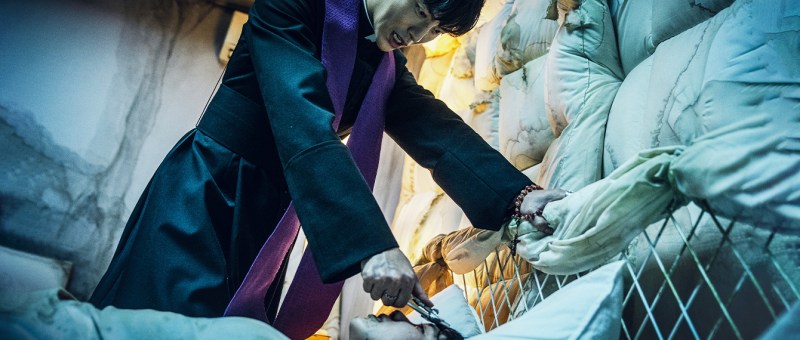
Father Ban (Lee Min-Ki), a young and intense priest very committed to exorcisms and demon hunting, presses Seung-do as to how he came by this heart that he gave to his daughter, already sensing that this is how the demon crept in. Seung-do must in effect wrestle with the decision he made that has both damned and saved his daughter in equal measure along with the reality that whatever has survived is not So-mi, or at least, not So-mi alone. Father Ban tells him that when the demon rises on the third day, it will immediately turn on those closest to its host. He must then place another wager, deciding whether saving So-mi is worth risking the lives of his wife and son in addition to his own rather than letting her go gracefully and attempting to go on with his life while carrying the burden of paternal failure. 

But to all around him, it appears as if Seung-do has lost his mind. He rants and raves, insisting that his daughter isn’t really dead and even at times interfering with the funeral process to take charge of her body. Like him, Father Ban is also considered an outsider by other members of his church who think he’s too invested in demonology and possibly also blame him for the death of another exorcist priest who saved him when he was demonically possessed himself while serving in the army. Perhaps subversively, the film heavily implies that there was more than friendship to Father Ban’s relationship with the other priest and that his desire to vanquish the demon is also one of vengeance. In this, he may be Seung-do’s enemy as he is gradually seduced by the demon and considers appeasing it to save So-mi, encouraged to make another equivalent exchange and in a sense enact his own funeral to take her place.

In this way, the religiosity is undercut by the implication that the “light” that guided So-mi belonged to father rather than to God as he fulfilled his role as a her polestar and his promise that he’d come find her if she made sure to stay where she was. Even so, it amounts to an awkward advocation that father knows best in that So-mi’s salvation lies in her obedience to Seung-do, rejecting her autonomy to place her faith in her earthly father to save her as he promised he would. In many ways, it’s a story of paternal redemption in which Seung-do must reckon with the transgressive choice he made, no longer able to run or hide from it to but forced to accept his weakness and failure along with the morality of what he did. Essentially a character study, Hyun Moon-seop’s conjures a palpable sense of evil and eeriness but also hope as Father Ban’s mentor had reminded him, that demons too can be beaten though the worst of all dwells in the human heart. 


Devils Stay is released in the US on Blu-ray, DVD and Digital March 18 courtesy of Well Go USA.

International trailer (English subtitles)
Greenhouse (비닐하우스, Lee Sol-hui, 2022)

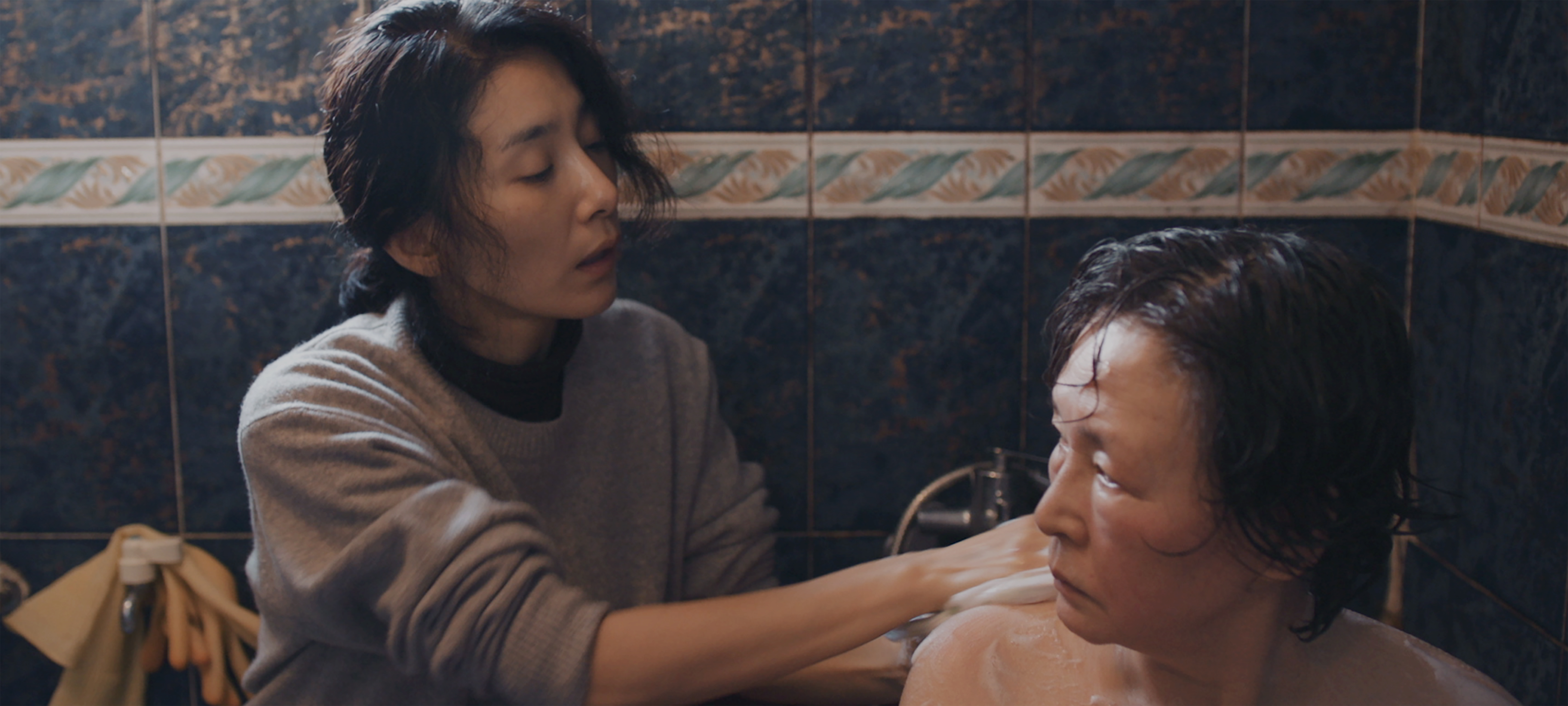
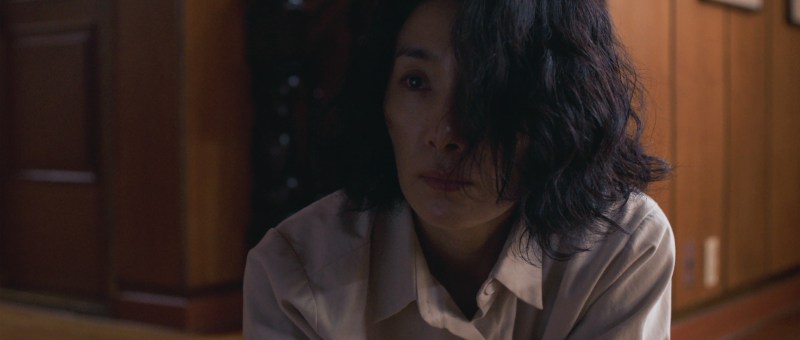
A middle-aged woman makes a series of questionable choices while pursuing her dream of a stable home with her teenage son in Lee Sol-hui’s downbeat tale of life on the margins of contemporary Korea, Greenhouse (비닐하우스). The Korean title of “Vinyl House” might be a little more accurate, in that the heroine lives in a disused polytunnel on an allotment her son later says the family used to go to every weekend before his parents’ divorce while eagerly waiting for his return after which she hopes to start again.

The son, however, first says that he has no desire to live with her and intends to stay with an uncle after leaving juvenile detention. The film never directly states what led him there, but he later mentions he and some friends all seemingly released at the same time used to break into houses owing to having “nowhere to drink.” One of his chief objections seems to be his mother’s lack of a more traditional home and the embarrassment it causes him with his delinquent friends which is one reason why Moon-jung (Kim Seo-hyung) is desperately saving her money for a deposit on a modern flat and a life of comfort she can otherwise only dream of. She has a job as a housekeeper for a wealthy older couple, the wife has dementia and is paranoid Moon-jung is trying to kill her, and the husband has all but completely lost his sight, but faces the implosion of her dreams with the announcement that they are considering moving into a nursing home.

In a repeated motif, Moon-jung often violently slaps herself on the side of the head in an apparent act of self-harm. Explaining that she used to see a psychiatrist but can no longer afford it, she joins a support group for people in a similar position and encounters a vulnerable young woman, Soo-nam (Ahn Ji-hye), with whom she later develops a sisterly connection after realising that she may be trapped in an abusive relationship she is unable to escape because of her learning difficulties. 

They are each in their way pushed out of mainstream society by virtue of their age, poverty, or disability and largely reliant on the kindness of strangers that rarely comes their way. The film only ever hints at the hard life Moon-jung may have lived but suggests that her past trauma may help to explain some of her otherwise incomprehensible decisions after the old lady hits her head and presumably dies in a domestic accident. While she cares for a wealthy older couple who remain independent in their own home, Moon-jung’s mother lives a miserable life in an inexpensive nursing home. A woman visiting her roommate soothes and strokes her mother encouraging her to keep on living as long as possible even if it’s “like this” while Moon-jung seems to have mixed emotions, on one level guilty not to be able to care for her mother herself and perhaps wanting to be relieved of any responsibility towards her. 

In some ways, Moon-jung’s tragedy may be that she is at heart just an ordinary, decent person and is torn between a genuine desire to help and care for others and a cynicism that tells her she is foolish for doing so. She wants to help Soon-nam perhaps identifying with her suffering, but is also resentful of her sudden attempt to latch on to her and fearful her presence may disrupt the new life she dreams of with her son which is the only ray of hope in an otherwise miserable existence. When that dream is threatened she decides to anything she can to save it even if it seems obvious that her series of bad decisions will not pay off because her subterfuge will quickly be exposed. 

What she doesn’t bank on is the sheer magnitude of cosmic ironies the film throws at her in which every avenue of her life is somehow undermined by another from her relationship with the elderly couple to her friendship with Soon-nam, and a romance with a man who may have been in someway abusive. Exploring the hopelessness experienced by an abandoned generation whose children have mostly moved abroad and outsourced their care, the plight of women like Moon-jung trying to do their best but frustrated by extreme bad luck, and vulnerable young people like Soon-nam who has no one to defend her as an orphan with learning difficulties, the film may suggest that they are each trapped in the hothouse of the modern society baked alive by hopelessness and indifference while struggling to find a place for themselves in an increasingly unforgiving city. 


Greenhouse screened as part of this year’s New York Asian Film Festival.

Original trailer (Korean subtitles only)

Chorokbam (초록밤, Yoon Seo-jin, 2021) [Fantasia 2022]

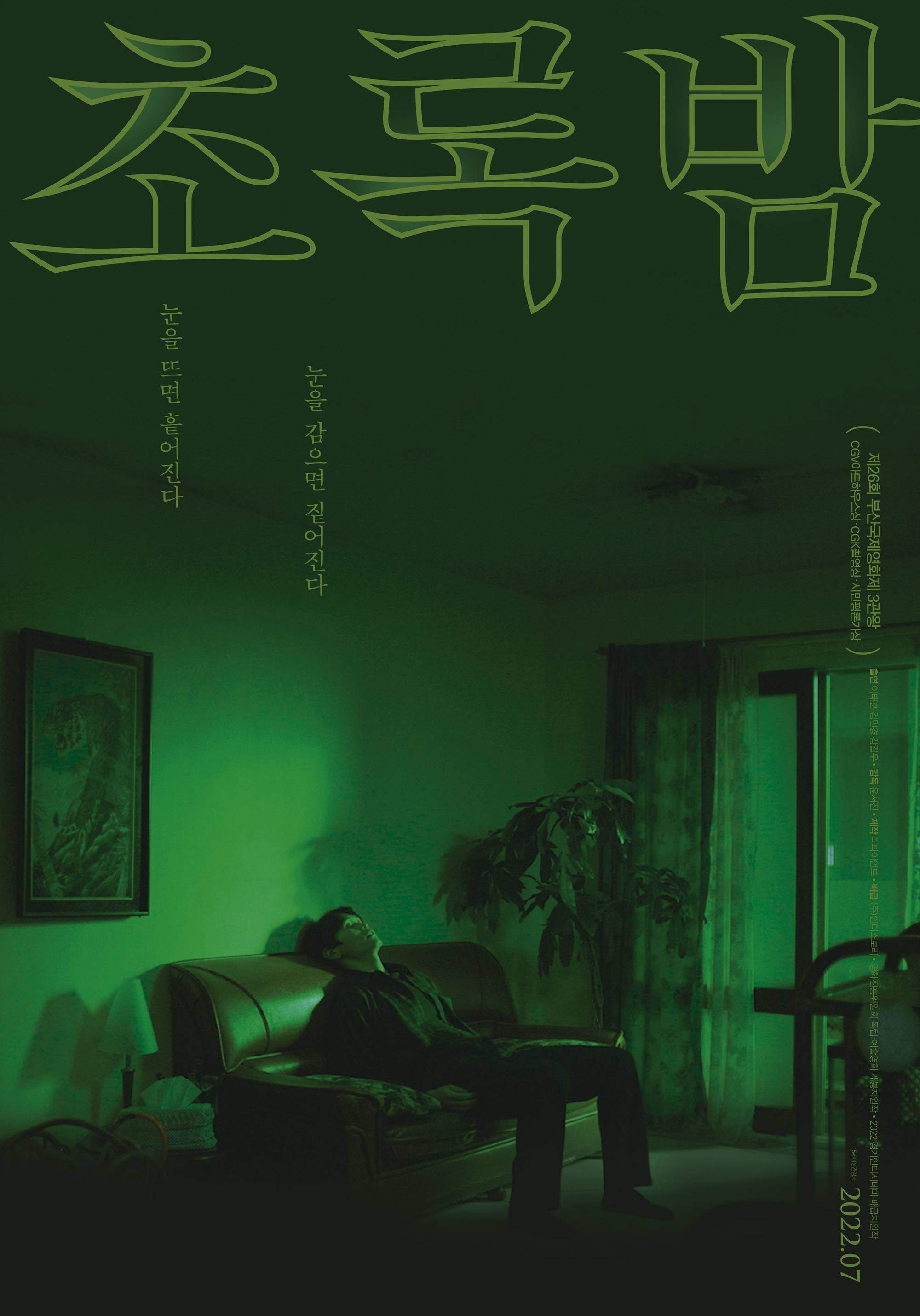
A small family contends with the persistent unfairness of contemporary Korean society in Yoon Seo-jin’s slow burn indie drama, Chorokbam (초록밤). Translated literally, the title means “green night”, the family often bathed in a neon green that seems to reflect their sense of despair and anguish unable to envisage much of a future for themselves in a world ruled by greed and envy which leaves them little option other than to become insensitive to the joy and pain of others. 

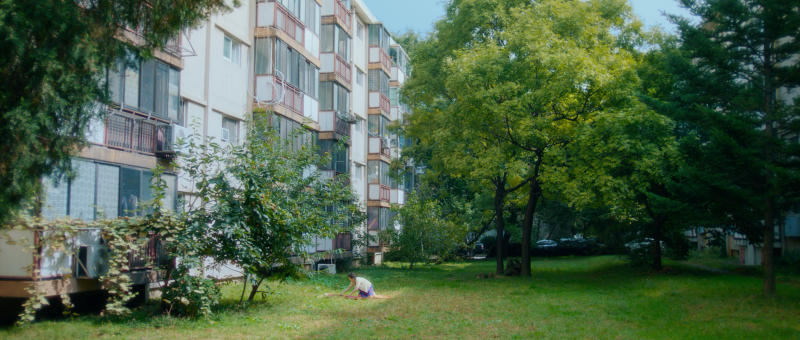
As the film opens, the nightwatchman patriarch is busy giving out parking tickets when he suddenly spots a cat hanging from from a children’s climbing frame. Shocked and feeling pity for the small creature, he cuts it down and buries it by the green light of the moon but finds little sympathy when relating his traumatic discovery to his wife. The nightwatchman’s wife is preoccupied with more practical affairs, irritated by her husband’s annoying habits such as leaving the bathroom door open and not washing his hands after finishing his business, while their grown-up son Won-hyung wants to get married but can’t afford a place to live on his salary as a care worker. When it comes to that, they’re soon to be turfed out themselves because their landlord wants to tear the building down. 

Matters come to a head when the grandfather passes away, the nightwatchman’s sisters getting into an actual physical altercation at the wake while loudly complaining about who did or didn’t pay for the funeral. Totting up the condolence money they accuse supposedly cheapskate guests of freeloading, implying they only turned up for a free meal that they have in a sense stolen. Meanwhile, the sisters also want to ensure that their father’s house is sold quickly so they can divvy up the inheritance. What they realise, however, is that there were things about their father’s life they may not have known which raise questions about moral responsibility when it comes to dealing with the affairs of someone who has died. 

The nightwatchman comes to identify with the strangled cat, though the spectre of hanging seems to loom over the rest of the picture with even the nightwatchman’s wife eventually discovering the body of someone whose death she may unwittingly have contributed to. She complains about her husband’s fecklessness, that he, who barely talks at all, makes her deal with anything unpleasant including his hotheaded sisters. She tells him that she regrets marrying into his “horrible” family and is thoroughly sick of dealing with them only to be pursued by a wounded dog with whom she perhaps also identifies. The nightwatchman’s wife is often excluded from the frame, a disembodied voice from behind a wall as she is as she feeds her husband breakfast and again when he asks her to deal with an emotionally difficult situation in a cafe. The nightwatchman simply smokes by a widow as if physically removing himself from the scene. 

Won-hyung meanwhile becomes increasingly resentful with his friends’ wedding coming up, unable to escape the feeling of belittlement in being unable to marry or move forward with his life with little prospect that anything will change. Yoon frames the family’s dilemmas with a deadpan realism, bathing the everyday grimness of their lives in an putrescent green that suggests there may be no escape from this maddening society where all relationships are built on transaction. The family are doing their best but are also estranged from each other, the nightwatchman barely speaking while his wife is left to deal with the uncertainty of their lives alone. She even laments they’ll likely not see the sisters again until the next person dies because their familial connection is essentially hollow and valueless in a society ruled by money. 

The nightwatchman comes to think of himself as a strangled cat, finding himself facing a noose during a poetic dream sequence that encourages him to think of suicide as the only possible escape from his impossible situation. Bleak in the extreme, Kim’s slow burn drama paints an unflattering portrait of the contemporary society as one in which all hope has long been lost leaving only dread and despair in its wake. 


Chorokbam screened as part of this year’s Fantasia International Film Festival.

Original trailer (English subtitles)

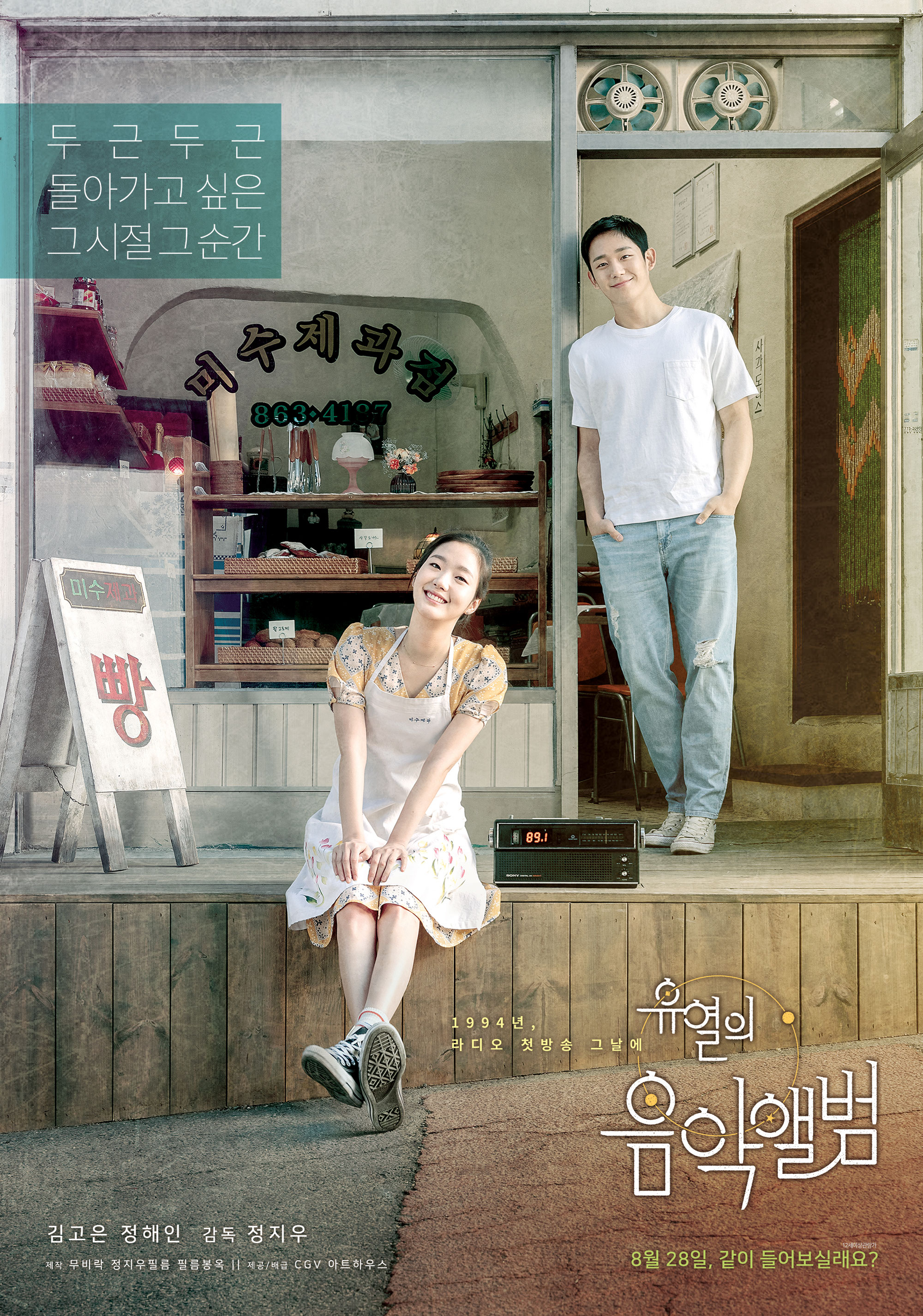
Tune in for Love (유열의 음악앨범, Jung Ji-woo, 2019)

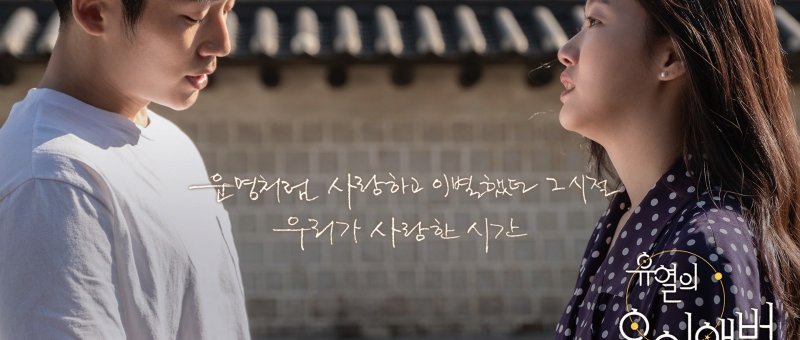
Tune in for love poster 2The course of true love never did run smooth. Another in the recent series of nostalgic ‘90s romances, Tune in for Love (유열의 음악앨범, Yooyeolui Eumakaelbum) takes a pair of nervous youngsters and charts the course of their love story over a decade which, though not quite turbulent, saw its share of difficulties and a host of technological changes. “Miracles are nothing special” the heroine tells us, but when it comes to love miracles are all there is and in the end you’ll just have to learn to trust them.

On Oct. 1, 1994 Hyeon-u (Jung Hae-in) walks into Mi-su’s (Kim Go-eun) bakery looking for something with tofu in it. While inside, he hears the first broadcast of Yoo Yeol’s Music Album, a new morning program which seems to signal the beginning of a new era. Though Mi-su is quick to realise that the only reason someone would be desperately looking for plain tofu early in the morning is because they’ve just been released from prison, she decides to offer him a part-time job in the bakery where he becomes a member of the family alongside her “aunt” Eun-ja (Kim Guk-Hee) who’s taken care of her since her mother died. His past, however, refuses to let him go however much he tries to move away from it. Tracked down by his delinquent friends, Hyeon-u is unable to return to the bakery and will spend the next decade trying to do just that.

Fate parts the youngsters repeatedly, but always brings them back together again seemingly by chance. Military service, changes of address, miscommunication and changing technology all conspire to keep them apart but like any good rom-com the problems aren’t so much circumstantial as personal. A deeply wounded young man, Hyeon-u is taken with the familial atmosphere at the bakery because he feels a sense of acceptance he hasn’t anywhere else, but deep down he still doubts he deserves the “normal life” he so deeply craves. His friends doubt it too, always turning up unexpectedly to remind him of their shared trauma and the debt of guilt he can’t repay. His insecurity prevents him from sharing the source of his pain with Mi-su, keeping her somehow outside the bubble of his shame as the only one capable of knowing the “real” him. She meanwhile is frustrated in realising that he’s holding something back, hurt he doesn’t trust her enough to let him in, and worrying he’ll never truly be ready for full commitment. 

Nevertheless, though often apart they remain painfully in sync, until that is fate brings them back together. As young man with a checkered past and no safety net, Hyeon-u has to fight twice as hard to get ahead, eventually graduating high school and getting into college while supporting himself with part-time jobs. Mi-su, meanwhile, is burdened by the knowledge that she’s lost her mother’s bakery and is desperate to get it back. Dreaming of being a writer, she turns down an internship at the all important radio show to go for a steady job she’s told is at a publisher’s but is actually somewhere more like a print shop where she’s stuck doing incredibly boring admin work. Hyeon-u is unable to get back in touch with her after miraculously reappearing because he’s ashamed to admit that he ended up getting in trouble again thanks to his awful friends even though it really wasn’t his fault. She meanwhile confesses that a part of her was relieved not to hear from him because she too is unhappy in herself, feeling lost and confused, disappointed not to be living the kind of life she could be proud of. 

Times change, but their one constant is the radio show broadcasting every morning and providing additional though indirect methods of communication when they are otherwise unable to make contact. Pay phones give way to email and then to mobiles all the way into the early days of the smartphone era, but face to face conversation remains the most difficult. Mi-su gives up on Hyeon-u while he, ironically, probably does sort something out by having a good old fashioned punch up with his generally unhelpful friend. She wonders if she’s better off to make the “smart” choice rather than waiting on love. Hyeon-u is hurt that in the end she didn’t trust him, but is eventually made realise that the problem was that he didn’t trust himself. Then again, you can’t fight the power of true connection or the pain of its absence, all you need to do is a little fine tuning to make sure the signal comes through loud and clear.


Currently available to stream online via Netflix in the UK (and possibly other territories)

Netflix trailer (English subtitles)