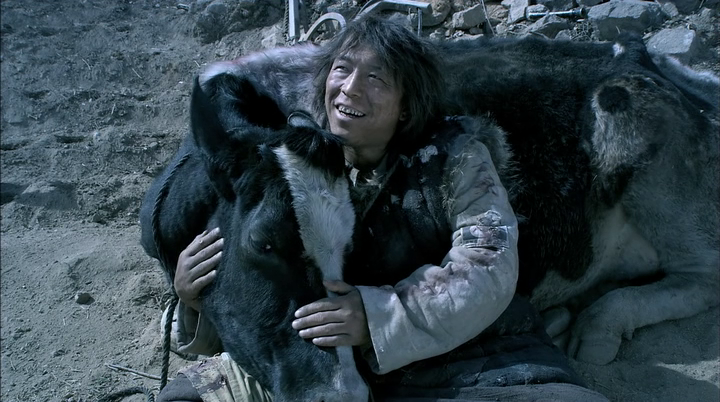
Cow (斗牛, Guan Hu, 2009)

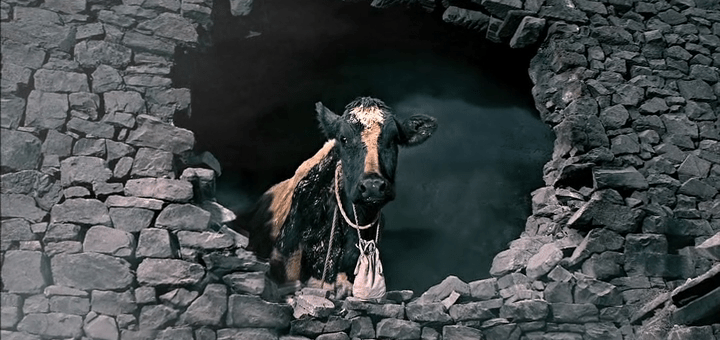
“We’ll stay in the mountains and never go back down,”  embattled peasant Niu Er (Huang Bo) insists having safeguarded his Dutch cow through the Sino-Japanese war and onward towards the new China. A satire revolving around the senselessness of war and the endurance of Chinese everyman, Guan Hu’s Cow (斗牛, Dòu Niú) is also testament to the bond between man and beast who somehow manage to survive through the chaos and the carnage all around them.

That said, Niu Er was not originally happy about being forced to take care of the giant black and white cow he christens Jiu after his feisty wife (Yan Ni). He had a cow of his own. A nice little yellow one he thought was perfectly fine. He didn’t really see why his little yellow cow didn’t deserve the fancy grain reserved for Jiu and got into trouble for giving some of it to her. But when the entire village is wiped out by the Japanese with the cow the only other survivor, Niu Er thinks he has a duty to save it because the village was supposed to be keeping it safe for the 8th Army. It turns out it was an anti-fascist cow sent by the Dutch to feed wounded soldiers busy fighting the Japanese and the 8th Army are supposed to be coming back for it after they return from a strategic retreat. 

But Niu Er’s problem is he’s not just in hiding from the Japanese because there’s also fighting going on between the nationalists and communists. Once bandits have killed all the Japanese who invaded Niu Er’s village, refugees soon turn up with their eyes on the cow. Because he’s a nice man, Niu Er shares some of the milk with a starving woman cradling a baby before realising there’s a whole crowd of other displaced people behind her. But as much as Niu Er gives them, they can’t be satisfied, and insist on over milking Jiu until she becomes ill with mastitis before one of them suggests killing and eating her instead. Not only is this quite shortsighted given that it will only feed them immediately whereas Jiu could still go on producing milk indefinitely if only they were a little less greedy, but it speaks to the loss of their humanity in the midst of their desperation. When Niu Er makes it clear he’s not on board with them killing his cow, the doctor leading the refugees pretends to help cure Jiu’s illness but is really trying to corner Niu Er so they can kill him and eat the cow anyway. In any case, they end up paying for their greed and cruelty by falling foul of all the booby traps the Japanese troops left behind.

To that extent, the Japanese aren’t all that bad. One of them, whom Niu Er finds hiding in a tunnel, used to be a dairy farmer and shows Niu Er how to treat Jiu’s illness which is why Niu Er decides to save him and take him with them to their place of salvation in a cave in the mountains. But a nationalist is already hiding there and the pair end up killing each other. The film seems to ram the point home that there was no real difference between these men who had no particular reason to fight when Niu Er ends up burying them together in a makeshift grave. Setting himself apart from all this war and absurdity, he resolves to stay above it by living in the mountains with Jiu and planting new grain up there for them both to live on.

Seven years later when the PLA eventually turn up, they’ve forgotten all about the cow and are keen to tell Niu Er that they don’t take things off peasants so the cow is now lawfully his. The soldier may be a representative of the new Communist and caring China, but it otherwise seems that Niu Er has been become a guardian of the China that existed before the Japanese with the petty goings of his random village in a way idyllic and filled with nostalgia. Yet it had its problems too. The village chief seems to have had a xenophobe streak, restricting milk from those not born in the village like the widow Jiu who became Niu Er’s wife. She is in many ways an envoy of an idealised communist future in her feminist attitudes and feistiness even amid the sexist and traditionalist culture of the village. Nevertheless, Niu Er and Jiu the cow seem to have found a little alcove of serenity up the mountains of the real China free from the chaos below.


Trailer (Simplified Chinese / English subtitles)
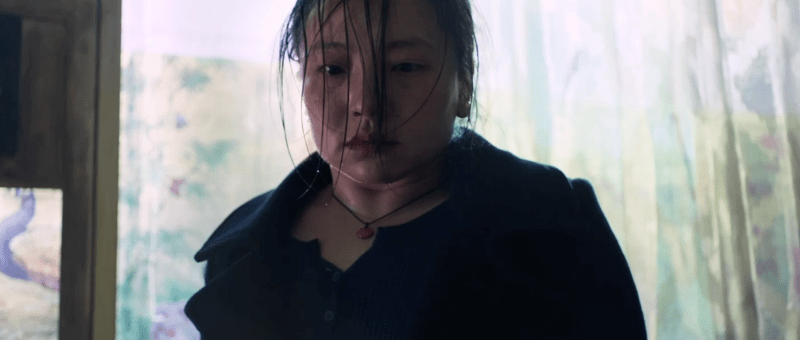
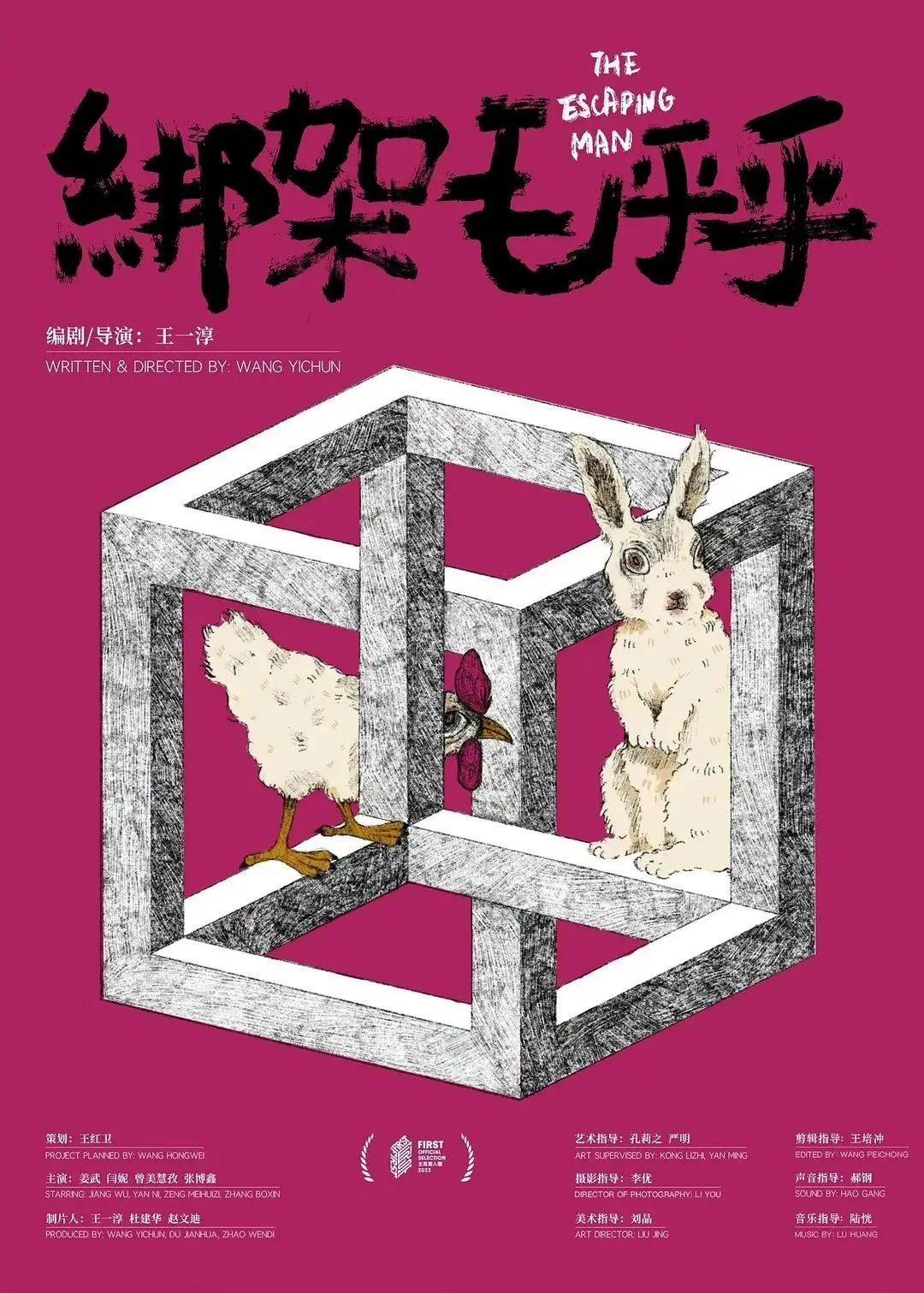
The Escaping Man (绑架毛乎乎, Wang Yichun, 2023)

“Life isn’t much better on the outside,” according to Sia (Zeng Meihuizi), the heroine of Wang Yichun’s deliciously ironic dramedy, The Escaping Man (绑架毛乎乎). Escaping men is in part what she’s tried but otherwise failed to do while constrained by the socio-economic conditions and entrenched patriarchy of the modern China. All of the men in the film are, as many call them, “idiots”, but all things considered it might not necessarily be such a bad thing to be even if their guilelessness makes them vulnerable to the world around them albeit in much different ways to Sia.

At least its this boundless cheerfulness and inability to see the world’s darkness that caused Fluffy (Eric Zhang) to be rejected by his status-obsessed mother (Yan Ni) who seems to have got rich by becoming what in charitable terms might be called a motivational life coach though others might describe her as a cult leader. She’s determined to get Fluffy into an elite primary school so he can “win at the starting line,” a buzzword in the contemporary society which basically means engineering privilege for your child so they can elbow other kids out of the way before the race even starts. The irony is rammed home by the fact that Sia, who works as the family’s live-in nanny/housekeeper also has a daughter named “Fluffy” who is one of China’s left behind children living with her seemingly bedridden grandmother in the provinces while Sia is in the city earning money to support the family having apparently divorced her daughter’s father. 

20 years previously, Sia’s mother had accused her lover of rape and had him sent to prison where he’s remained ever since having apparently gone along with the legal process in the mistaken belief Sia would eventually clear up this misunderstanding. She later later says the police wouldn’t let her and that she was never actually interviewed, but also continues to insist that they live in a “law-based society,” and nothing can be done without evidence. On his release, Shengli (Jiang Wu) comes straight to find his former lover in order to confirm that he did not in fact rape her and their relationship was consensual which she agrees it was. This determination is symbolic of his romanticism in continuing to believe in his dream of love despite all he’s been through, convincing himself he can start again with Sia while she continues to manipulate him with the almost certainly false promise of a happy joint future.

But then you can’t really blame her. A little way into the film, Sia is dressed in a white outfit very similar to the one worn by her boss when she goes to see Fluffy in a school play in which, at his own request, he played a tree. Sia is every bit as a accomplished and she has a warm and loving relationship with Fluffy which seems to elude his haughty mother. Later in the film she reveals that she came third in the national university exams but was prevented from going because she was born in a small rural province rather than the big city like her employer Mrs Mao. The fates of the two women are easily interchangeable depending on the circumstances of their birth while Mrs Mao continues to wield her privilege to ensure Fluffy can win at the starting line despite her resentment towards him for his lack of academic acumen or the things that denote conventional success in the modern China. Though he is cheerful and kind, she sees these qualities as actively harmful to his future success rather than embracing the little ray of sunshine he actively is.

Then again, Fluffy’s guilelessness also leaves him vulnerable which is why he cheerfully walks off with Shengli when he agrees to Sia’s kidnap plot and even rejoices in the grave-like pit they’ve dug to keep him in rechristening it as his underground fortress. He’s so nice that he doesn’t even realise the other kids are bullying him for being “stupid” and thinks they’re his friends, just happy to be included in the game. In this way, he and Shengli are alike, a pair of hapless fools living in a world that’s nowhere near as good as they think it is. The irony is that though Shengli perhaps begins to wake up to the realities of his relationship with Sia, his last wish for Fluffy is that he get into the fancy primary school and win at the starting line so he won’t end up like him. Suddenly it seems ironic that Shengli was a breakdancer because in the end he cannot break free of the prison that is the modern China. Filled with a darkly comic humour, the film is a fierce critique of the inequalities of the contemporary society and gentle advocation for the right to just be nice in world in which kindness has become a character flaw.


The Escaping Man screens July 26 as part of this year’s New York Asian Film Festival.

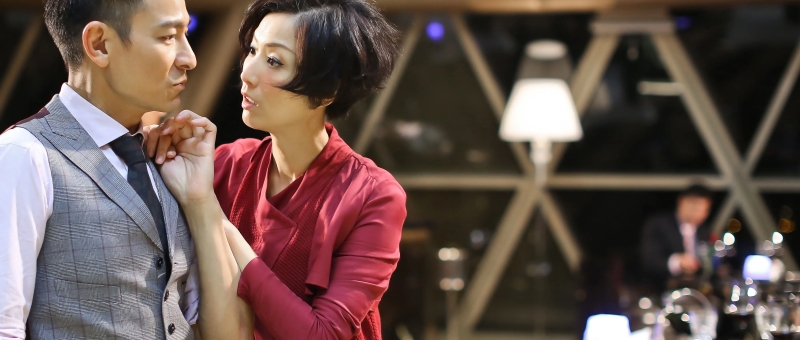
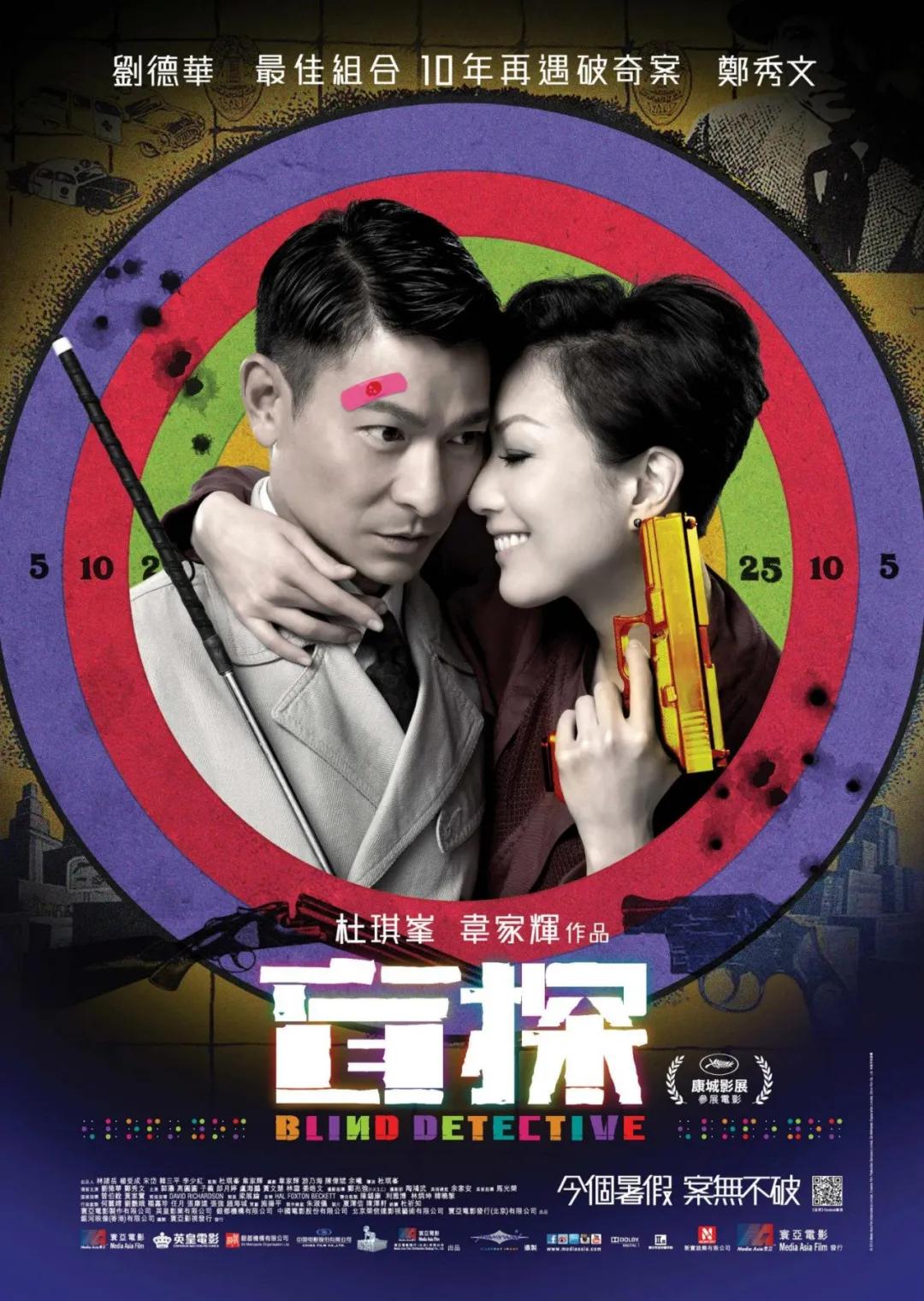
Blind Detective (盲探, Johnnie To, 2013)

Ever get that feeling someone is looking at you, but actually they were looking at someone else? The mismatched cops at the centre of Jonnie To’s black comedy love farce Blind Detective (盲探) seem to encounter this phenomenon more often than most as To and screenwriter Wong Ka-Fai delight in waltzing the audience towards an unexpected conclusion filled with ironic symmetries and persistent doubling as the detectives role-play their way towards truths literal and emotional. 

Former policeman Johnston (Andrew Lau Tak-wah) lost his sight after ignoring an eye problem in order to solve his case and has been working as a kind of private detective ever since, looking into cold cases with reward money attached. His old buddies, however, have a habit of exploiting him as they do while trying to stop a series of sulphuric acid attacks unfairly denying him his payout by following him and then technically arresting the criminal “first” so his work doesn’t count. That is however how he first meets agile yet clueless heiress/struggling investigator Ho (Sammi Cheng Sau-man) who lives in a palatial flat left to her by her parents. Regarding him as the god of solving crime, Ho asks Johnston to help her solve a mystery which has plagued her since childhood in the disappearance of Minnie (Lang Yueting), an “unsociable” young girl with no friends who confessed to her that she was worried about becoming the kind of person who could kill for love as her mother and grandmother had done. Little Ho was frightened and stopped hanging out with Minnie even though she stood outside her apartment block just staring up at her in loneliness. Adult Ho feels guilty and ashamed, hoping she can make amends by finding out what happened to her friend. 

Like the earlier Mad Detective, Johnston has a special gift and unconventional investigational style which involves a lot of method acting and physical role-play even going to far as to force Ho into getting the same tattoo as one of the victims in a case he’s pursuing. His sightlessness at times allows him to see what others do not, but even his gaze is occasionally misdirected. Ironically enough he’d put off asking out his crush until after he finished his case only to then go blind, while she in turn had put off seeking out hers until after her competition only to lose sight of him, Johnston never realising that when he thought she was looking at him she was actually looking at someone else. The same thing happens with Ho and Minnie, Ho unaware of all the facts never realising there might have been another reason for Minnie’s behaviour. Frequently they look for one thing and find something else, accidentally uncovering a prolific cross-dressing cannibal caveman serial killer living alone in the woods surrounded by skeletons which turns out to have little relationship to their original case save for its tangential link in the killer’s preference for brokenhearted women. 

Everything is disguised as something else, the killer of the first case setting up the crime scene to look like his victims killed each other with no one else present while two brokenhearted souls stowaway in wardrobes hoping to reunite with lovers who have rejected them, the second later changing their appearance in order to get a second chance. Love does indeed make you do strange things, the sulphuric acid thrower apparently taking some kind of indirect revenge for his wife’s infidelity as he reveals through a manic phone call first berating and then forgiving her while randomly buying a big bottle helpfully marked “sulphuric acid” from a local supermarket. Yet in this screwball comedy throwback it takes a little while for the oblivious Johnston to realise that he’s fallen for his infatuated new partner who can’t quite be sure he hasn’t fallen for her bank balance instead. 

Despite the persistent darkness of serial killings and crimes of passions, Blind Detective is at heart a romantic comedy filled with absurdist, slapstick humour in which the heroes literally tango their way to emotional authenticity, a dance which in part at least requires each partner to look away from the other. To’s delightfully arch comical mystery romance is a tale of misdirected glances and buried truths but eventually allows its equally burdened detectives to step away from their personal baggage and embrace a happier future. 


Original trailer (English subtitles)

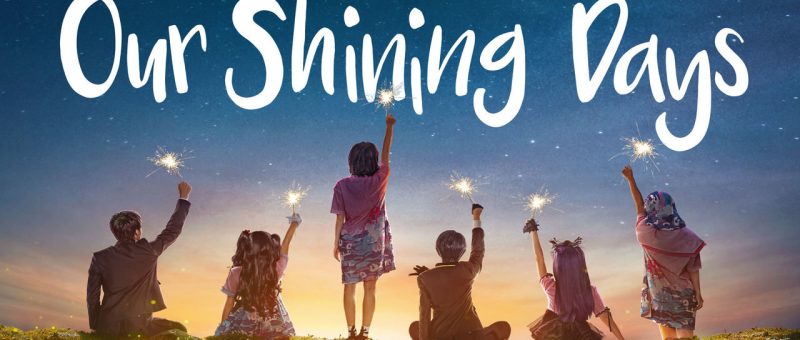
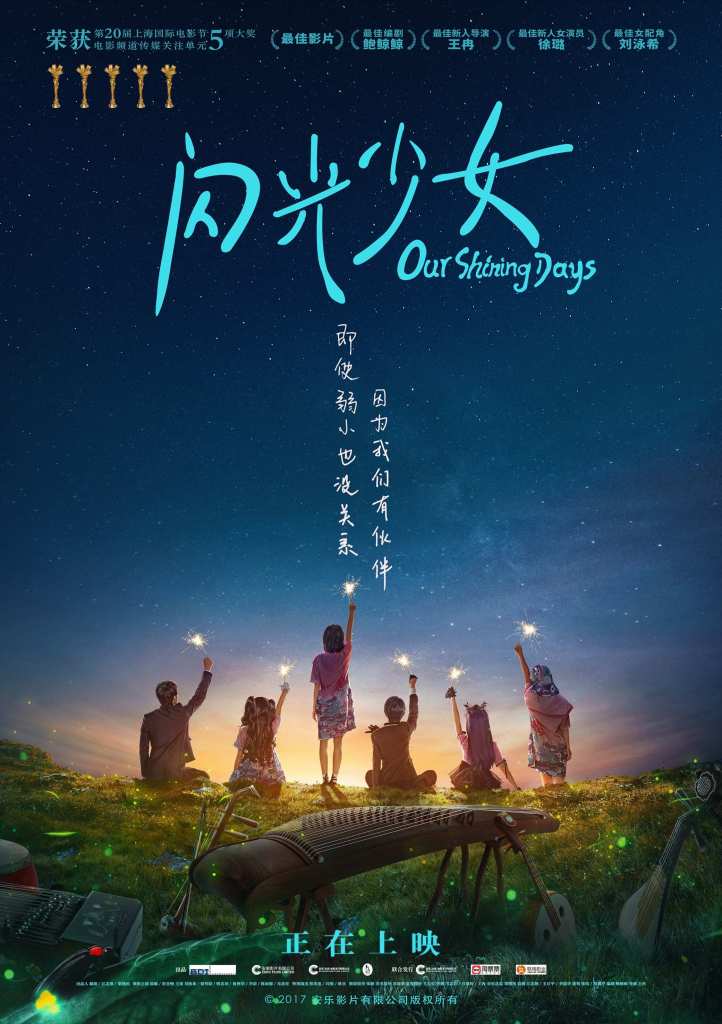
Our Shining Days (闪光少女, Wang Ran, 2017)

Doesn’t everyone deserve their time to shine? For the students at the music conservatoire at the centre of Our Shining Days (闪光少女, Shǎnguāng Shàonǚ), a glittering future may be difficult to imagine. Another in the recent series of Chinese youth comedies, Wang Ran’s debut may clearly be inspired by Japanese anime, but adds a noticeably patriotic beat in making its heroes devotees of traditional music facing off against the “pretentious” threat of European classical. 

The academy is strictly divided along class lines with the snooty classical kids pretty much ruling the roost. When an actual fight breaks out between factions, the conservative headmaster sides with the classical club and erects a series of prison-style gates to confine the folkists to their own corridors while also banning them from staying too late or eating in their rooms. Airy fairy nerd Chen Jing (Xu Lu) hadn’t previously cared about the folk vs classical drama, but is pulled into it when she falls for handsome pianist Wang Wen (Luo Mingjie). That’s why she naively volunteers to be a page turner for him at a big concert, not quite understanding she’s being made fun of. Determined to prove herself to him, she decides to form a traditional folk ensemble but finds it difficult to get recruits, ending up with a group of four otaku girls everyone else is scared of who only agree on the condition that she buys them all plastic model kits every week. 

A true underdog story, Our Shining Days makes heroes of its “losers” whose uncool tastes have seen them roundly rejected not only by their fellow students but also by their families. Chen Jing is a talented Yangqin player, but conflicted in her ambivalence towards traditional Chinese music. Internalising a sense of shame about her niche interest, she half convinces herself that she’s only learned yangqin because her parents made her and is not truly invested in the instrument, which is why she immediately assumes they’ll dissolve the band as soon as her mission of winning Wang’s heart is over. 

The otaku students, however, rediscover a love of the admittedly fantastical music, giving it a cool modern edge inspired by their love of anime and games. The otaku live in the “second dimension” and have already more or less othered themselves, but begin to actively enjoy being part of the band along with the communal pleasure of making music together. Meanwhile, the scruffy Chen Jing begins learning a little about life from the sacred otaku texts of her new friends, only to take their shojo manga-style advice a little too seriously in deciding to make a public confession to Wang which brutally backfires. Wang is planning to go abroad to study classical music, he’s not interested in lowly yangqin players. 

The class drama reaches a crescendo when the conservative headmaster announces that as of the following year the school will cease admitting students playing traditional instruments altogether. Spurred on by Chen Jing and the otaku girls, the oppressed folkists finally find the strength to resist, rising to prove there is a viable ensemble for folk instruments to counter the “sophisticated” classicists. The classicists adopt the motto “let my music be the soundtrack of war”,  but the folkists are all about team effort and peaceful co-existence. When the local inspector reminds the headmaster there is no conflict in music and expresses disapproval of the school’s prison-like environment, the folk ensemble, rather than trying to defeat the classicists, come up with a “better” solution in which they can work together so that folk music can still be heard as part of the big end of year concert. 

A cheerful coming of age tale which ends in the message that there’s a place for everyone and that those who are generous of spirit are the likeliest to prosper and be happy as they do, Our Shining Days also has its share of high school drama as the scruffy Chen Jing gradually progresses to towards a more mature elegance while her best friend Li (Peng Yuchang) gets the courage to confess his feelings in a much less ostentatious manner. Subtly patriotic in its suggestion that traditional folk music is “better” than the false sophistication of pretentious Western classical, the central messages are of love, acceptance, and authenticity, insisting there’s a place for everyone who comes with an equally egalitarian spirit. 


Currently available to stream in the UK (and possibly other territories) via Netflix

Singapore release trailer (English subtitles)

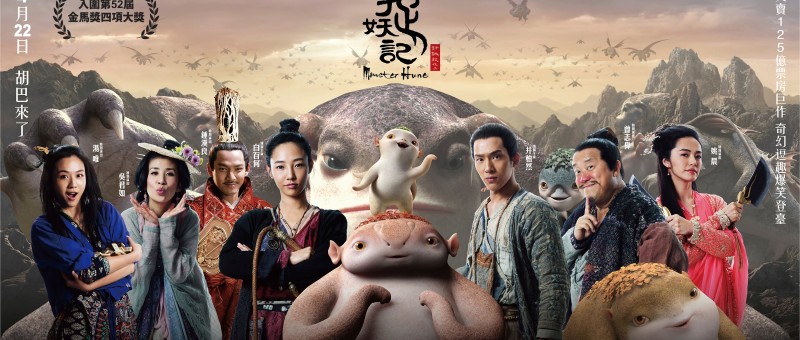
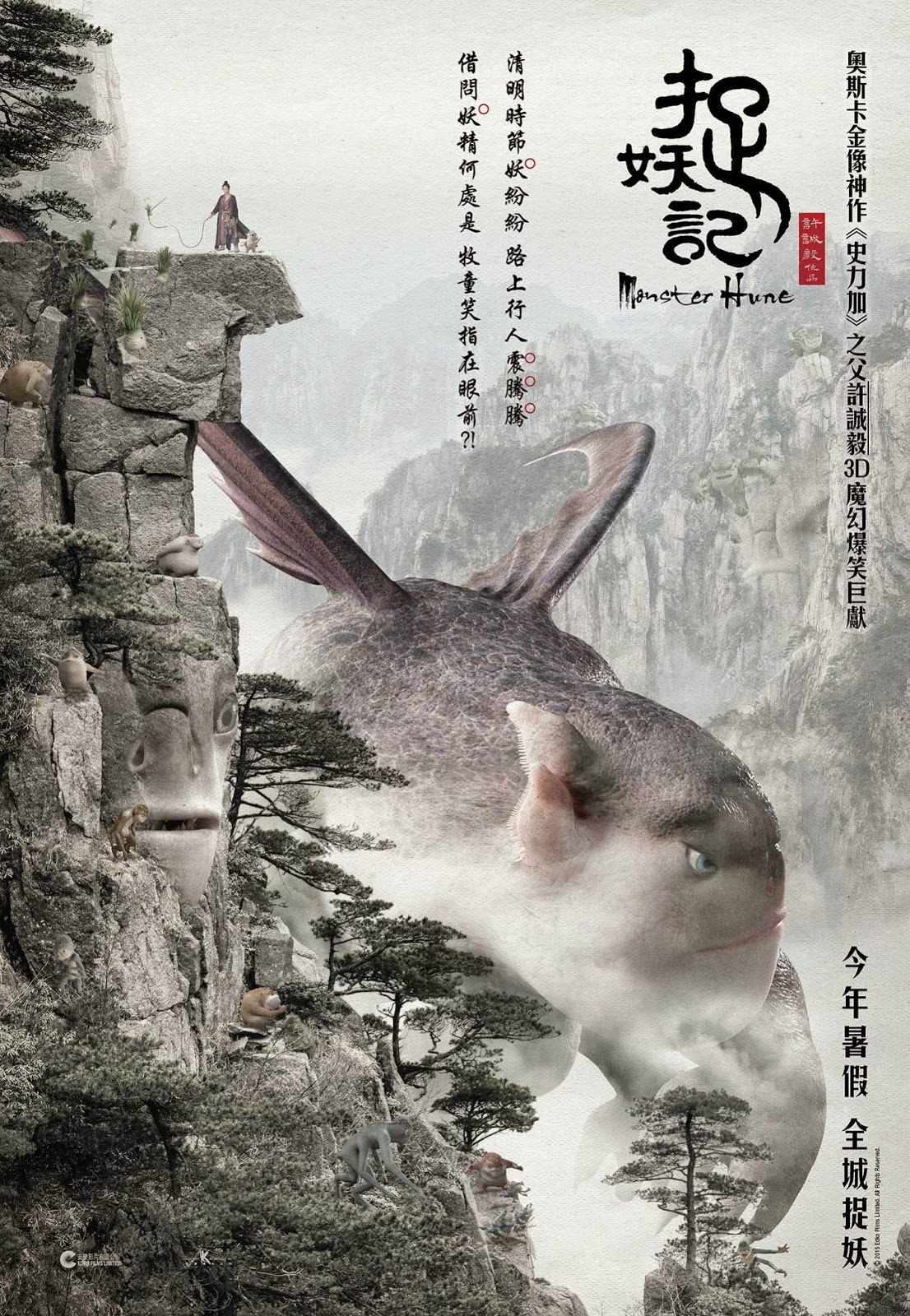
Monster Hunt (捉妖記, Raman Hui, 2015)

Monster Hunt posterA runaway box office hit and veritable pop culture phenomenon, you’d be forgiven for assuming that 2015’s Monster Hunt (捉妖記, Zhuō Yāo Jì) is nothing more than a slice of family friendly entertainment in the vein of a dozen other live-action/animation hybrid fantasy films. The monsters are cute, yes, and there is enough darkness here to rival Lord of the Rings, but there’s a little more going on under the surface of this otherwise heartwarming tale of a persecuted minority and its hidden princeling. A family drama of epic proportions, Monster Hunt speaks directly to China’s left behind children and to those who, perhaps, were worried their destiny had always been misplaced.

Set sometime in the distant fantasy past, Monster Hunt takes place in a universe in which men and Monsters co-exist but, owing to their defeat in a war, the Monsters have been forced back into the forests and mountains away from humankind many of whom no longer even believe they exist. However, there is fresh strife among the Monsters forcing a pregnant Queen to flee along with her retainers, straying into the human world in hope of saving her baby. Luckily she finds herself in a small village presided over by a kindly mayor with a limp, Tianyin (Jing Boran), who is also the son of a long missing Monster Hunter but much prefers domestic tasks such as cooking and sewing to hunting Monsters. The Queen manages to “transfer” her baby to Tianyin just before she dies, leaving him quite literally holding the baby assisted only by cynical bounty hunter Xiaolan (Bai Baihe).

Inspired by ancient folklore, Monster Hunt plays the chosen one trope to the max as Tianyin wrestles with his destiny while the baby, a true king displaced from his throne, awaits in ignorance. Like many contemporary fantasy tales, Monster Hunt also revels in subverting genre norms with its noticeably feminised hero. Tianyin is the son of a great warrior, but it’s his grandmother who practices kung fu and goes out looking for her long lost son, while Tianyin professes his love of domesticity, staying home cooking and sewing. His simplicity and softness is contrasted with the more masculine figure of the cynical Monster Hunter Xiaolan who becomes Tianyin’s casual love interest and the putative “father” in the loose family unit they form with the tiny baby radish-like figure they eventually christen Wuba.

The formation of a family unit in itself proves a problematic development for both Tianyin and Xiaolan who have both been abandoned by their own families and left to fend for themselves (with almost opposite results). Resentful at having been cast out by his apparently “heroic” father, Tianyin has definite views about the nature of fatherhood and the mistakes he does not wish to repeat with his own children while Xiaolan has grown wary of forming attachments altogether and strives to remind herself that she is only looking after Wuba until he’s big enough to sell on the Monster Hunter black market. Nevertheless, the pair cannot help becoming “accidental” parents even if they must first make a mistake they later need to rectify in trying to abandon their charge for financial gain. Tianyin “repeats” the “mistake” of his own father but finally comes to understand it for what it was – a father’s sacrifice of his paternal love to keep his child safe. Something that will certainly ring true for children who may be living apart from their own parents for reasons they don’t quite understand.

Yet a fairytale darkness is never far away as Tianyin and Xiaolan consider selling off little Wuba to a dodgy mahjong obsessed Monster fence (Tang Wei) who apparently knows how valuable he is but is planning to sell him to a local restaurant anyway. Despite the fact that everyone has forgotten Monsters exist, Monster meat is a delicacy reserved for the super rich (a subtle dig at China’s eat anything that can’t run faster than you philosophy ushered in by the sight of caged monkeys at the roadside) and little Wuba does look quite like a tasty daikon radish.

Cute monsters getting chopped up and eaten may be a horror too far for sensitive young children (if it weren’t for the fact the Monsters are all inspired by veggies Monster Hunt might be the greatest proselytising mechanism for vegetarianism the world has ever seen) but rest assured, little Wuba is quite the resourceful little tyke and he does after all have a grand destiny awaiting him. A tribute to unlikely heroes, gentle men, feisty women, and atypical families, Monster Hunt is an oddly subversive family friendly adventure and one which has clearly hit its mark in capturing the hearts of a whole generation who will doubtless be excited for the further adventures of Wuba as he moves closer towards his own Messianic destiny.


International trailer (English captions)