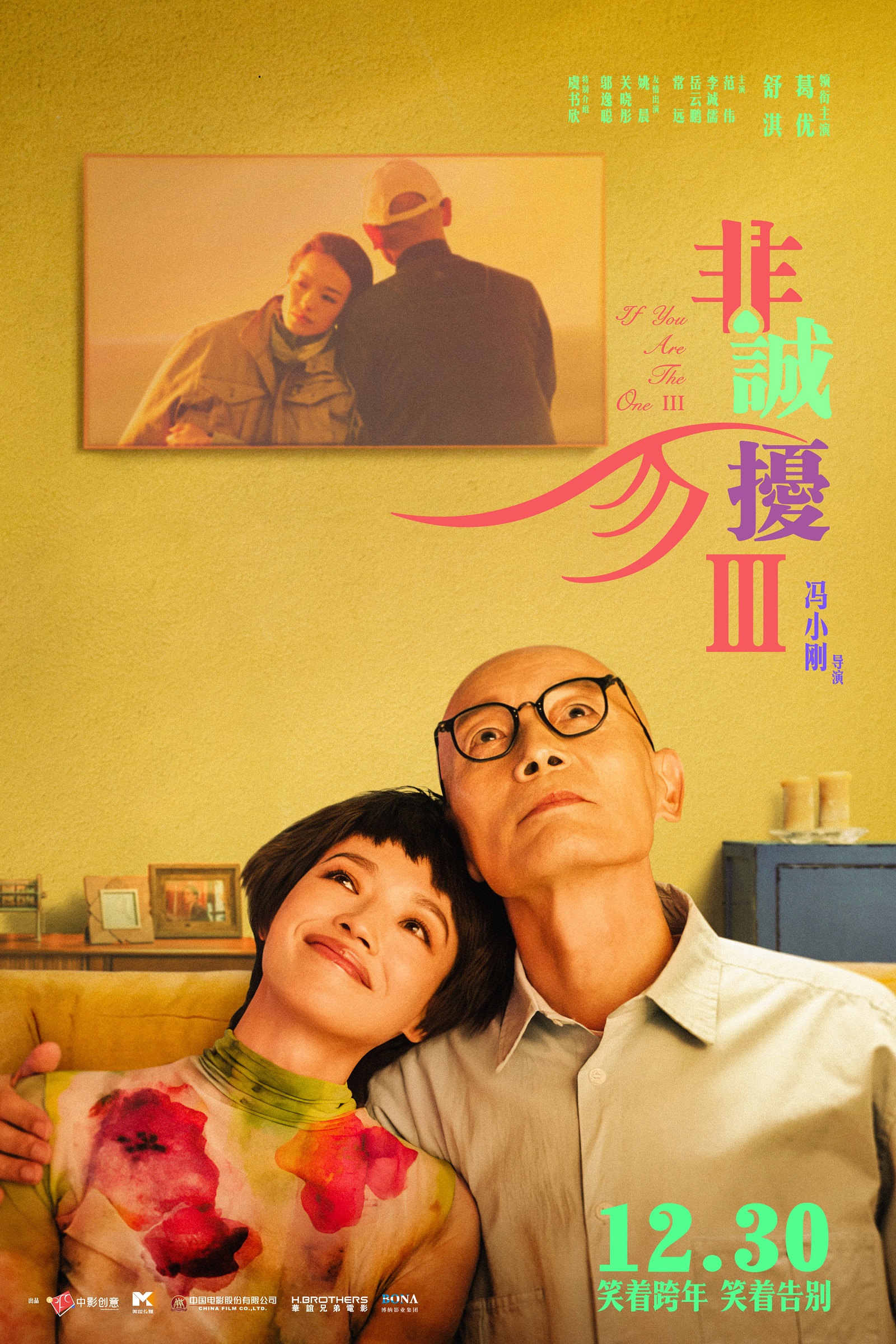
If You Are the One 3 (非诚勿扰3, Feng Xiaogang, 2023)

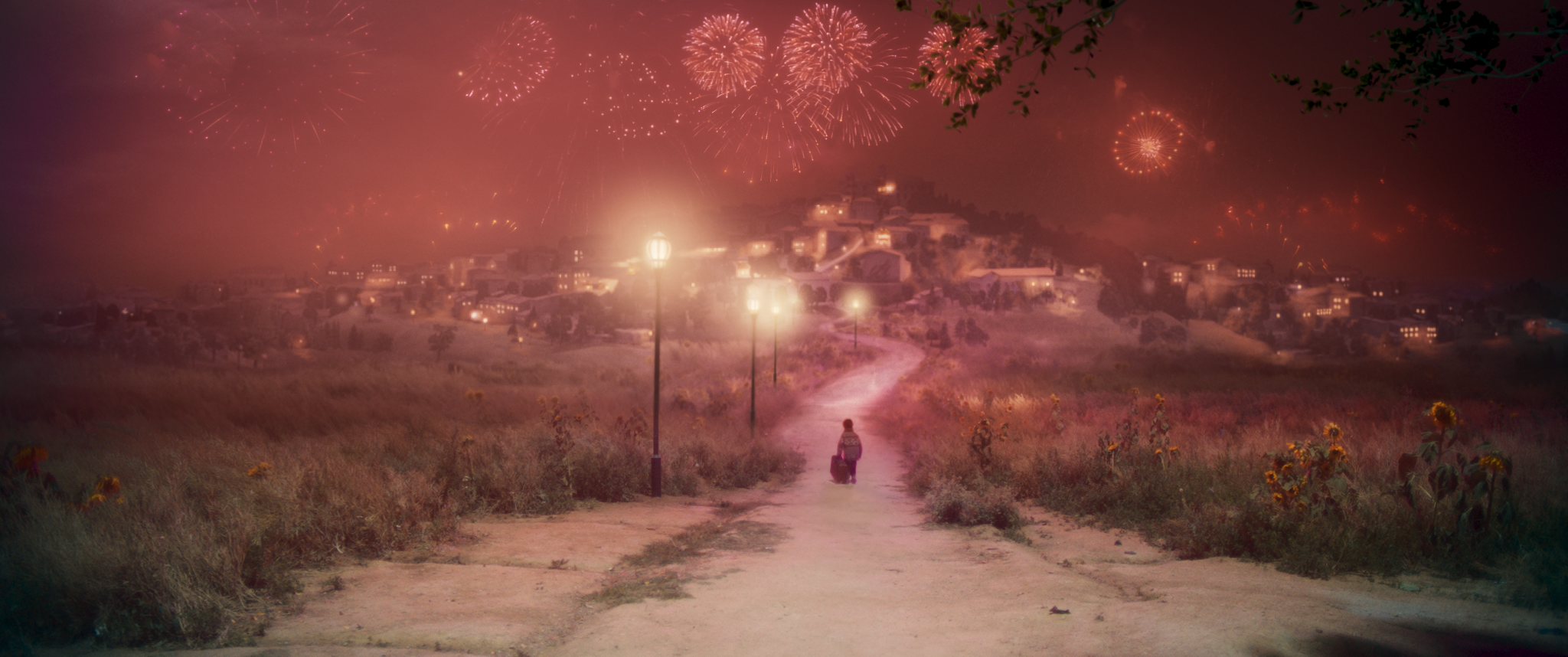
It’s been 15 years since the release of Feng Xiaogang’s If You Are the One, a phenomenally popular romantic dramedy in which a seemingly mismatched pair of lovelorn souls attempt to build on the spark of connection. A sequel was released in 2010 that turned a little more wistful in meditating on the brevity of life and its circular qualities, but returning all these years later Feng ventures in a surreal direction setting the film, as the sequel promised, in 2030 as Qin Fen (Ge Yu) approaches his 70th birthday in a colourful vision of an AI future.

Qin Fen still lives in the same house as he did in If You Are the One 2 only it’s had a complete redesign. Before it was cluttered and traditional, a comforting cabin overlooking the beautiful Chinese countryside but now it’s fairly minimalist and heavily stylised in a bold colour scheme that echoes the fashions of the mid-20th century. We learn that he has not seen Xiaoxaio (Shu Qi) for 10 years since she abruptly took off with a bunch on cult-like international rubbish collectors but has been patiently waiting for her return. His old friend Lao Fan (Fan Wei) who has launched a successful company selling uncannily real AI robots gifts him one that looks just like Xiaoxaio though it of course lacks her sarcastic character and is programmed to obey him totally which is how he thought he wanted but of course is nothing like the real Xiaoxiao.

At this point, the film seems to open a dialogue about the nature of love and the realities of marriage. Can the lonely Qin Fen be satisfied by this ersatz recreation of the woman he loved, or will it only cause him more pain? The answer seems to be a little of both, especially as she cannot eat or drink with him let alone sleep in the same bed. Meanwhile, unbeknownst to him the real Xiaxiao has returned but is too nervous to approach him having been out of contact for a decade, only now getting bored with rubbish collecting which is being taken over by AI robots anyway. Disguising herself as a upgraded version of the robot, she attempts to figure out how he really feels about her in a strange echo of the trial marriage from the previous film wondering if he’ll be able to figure out which version of her is “real” and which a fantasy of his own projections.

Then again, set largely within this futuristic cabin, now a little more surrounded by other similar dwellings, we might start to wonder if something else of going on and this place doesn’t quite exist in the way we think it does as if Qin Fen were literally living inside a memory. Having jumped on an additional eight years, the timelines and details do not always mesh exactly with a reappearance of Xiangshan’s daughter who should be around 30 but appears more like a sullen college student in the company of Xiangshan’s second wife, Mango (Yao Chen), who was not her mother nor raising her but apparently continued caring for her mother-in-law after her ex-husband’s death. Small splinters in the reality encourage us to doubt it, as if they corrupted files in Qin Fen’s ageing memory.

Feng presumably doubts our memory too, inserting frequent flashbacks to footage from the other movies whenever one of the returning cast allude to them in addition to providing a lengthy recap at the beginning of the film. Playing out a bit like a greatest hits compilation, the flashbacks prove unnecessarily clumsy and largely disrupt the flow of the ongoing drama while perhaps helping to fill in the blanks for those jumping in to part three without having seen one or two given that it has been fifteen years since the first film’s release. A little surprisingly given the tightening censorship regulations, Feng was able to continue the sympathetically presented running gag of Qi Fen’s male admirer, now having undergone a K-pop makeover and looking even younger, who also finds himself contemplating the nature of love after commissioning a Qin Fen robot to cure his own lovelorn desires.

A nod to the present day is given in a Lunar New Year movie-style epilogue (though the film was released around Western New Year) in which Shu Qi and Ge Yu play themselves dressed in matching outfits and nostalgically look back reflecting that young couples who came to see If You Are the One in 2008 might have teenage kids of their own or at least fond memories of an old love that wasn’t to be. Just at the end at they drop in the words that marriage is a commitment worth its weight in gold which feels like an approved message tackling the historically low rates of young people getting married. Nevertheless, it’s a cute and quirky way to bring the series to a close following the surreal absurdity of the two hours which preceded it.


International trailer (Simplified Chinese / English subtitles)

Flaming Cloud (三贵情史, Liu Siyi, 2023)

Regrets can turn into curses too, according to a melancholy middle-aged woman in Lin Siyi’s beautifully designed romantic fable, Flaming Cloud (三贵情史, Sānguì qíng shǐ) The English title refers to the deaths of gods and goddesses and a physical harbinger either of the joy of reunion or the sorrow of parting. Of course, in one way it’s all the same, every hello is also a goodbye and a curse can also be a blessing depending on how you look at it. 

As the narratorial voiceover explains, the heavens is where all of this starts as bored gods in a casino on a cloud place bets on the lives of mortals. A young woman approaches and places a wager on the existence of true love which is immediately countered by the bar’s musician. To carry out the wager, the gods decide to curse the then baby Sangui that anything he kisses will fall into a deep sleep until he kisses his one true love. 

A kind of reverse sleeping beauty, the film follows Sangui’s path through a fairytale world where he meets various others suffering in similar ways to himself but is otherwise regarded as an outcast because of unusual ability to put people to sleep. A young woman, Yuyu (Zhou Ye), who thinks he might be her prince, introduces him to a “witch” who promises to cure his curse if only he’ll treat her chronic insomnia in which he’s had not a drop of sleep in the last 12 years. What he discovers is that she is not a witch at all but the faded star, Yuexin (Yao Chen), who tells him that she cannot cure his curse for there is nothing really wrong with him and some might even see his ability as a gift, especially those like her who have trouble sleeping. 

Yuexin’s insomnia is born of past regret and the pain of lost love. She can’t sleep because she lacks the courage to face her past, while Sangui too is afraid unable to search for the girl he believes to be his one true love whom he met in childhood in case she has forgotten him or like everyone else regards him as a “freak”. Yuexin warns him that if he never gains the courage to look for Tingting (Zhou Yiran) he may regret it in time and that regret could become its own kind of curse. But in the fairytale society of White Stone he discovers only more prejudice and cruelty, stumbling on a hidden factory staffed by enslaved workers who describe themselves as being, like him, “freaks” unlikely to be missed by the world above. The villain is an exploitative factory owner whose business model is dependent on their forced labour though a mysterious ally has been helping them by smuggling medicine through the steampunk pipes that puncture their environment. They alone stand up to the factory owner, insisting that the workers are “no different” from themselves and defiantly resisting the authoritarian austerity of a wicked stepmother turned capitalist fat cat. 

But the film’s Chinese title reminds that this is a story of Sangui’s love and whether his curse can be lifted or not. Yuexin realises that the choice she made may have been mistaken, while the musician who bet against the existence of true love later admits he did so because he knows it’s real but the reality is painful for him or else he just wanted to see it proved and send a message to his own lost love that they would one day meet again. Even so, that doesn’t necessarily mean there will be a happy ending. The course of true love is always bittersweet and whichever way you look at it destined to end in a farewell though that doesn’t mean it isn’t worth following and not doing so out of fear is as Yuexin discovered only to suffer from the curse of regret. Featuring exquisite production design from the opening animation to the whimsical fairytale town gleefully melding eras from Yuexin’s flapper-esque costuming to the 1950s aesthetic of the factory owner’s wife and the steampunk quality of factory itself, Lin Siyi’s charming romantic fable is as much about middle-aged regret for the forgotten dream of love as it is about finding the courage to seek it out no matter the risk. 


Flaming Cloud screened as part of this year’s New York Asian Film Festival

Original trailer (English subtitles)

The Eight Hundred (八佰, Guan Hu, 2020)

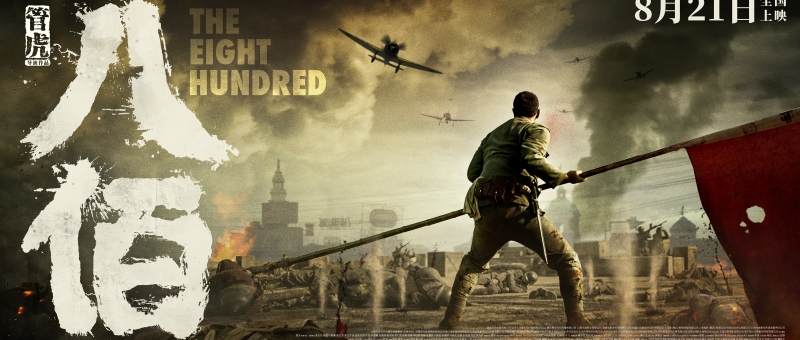
“Enjoy Shanghai. Enjoy Your Life” reads a neon-lit sign in the art deco paradise of Shanghai in the 1930s. Across the river, however, a war is raging. Guan Hu’s The Eight Hundred (八佰, Bābǎi), the first Chinese film to be shot in IMAX and boasting an unprecedented budget of US$80 million, was the last in a series of movies to be ignominiously pulled from a festival slot, the opening night of the Shanghai International Film Festival no less, for “technical reasons”. In this case, most have interpreted the nebulous term as a squeamishness on the part of the censors’ board to the fact that the film celebrates the heroism not of the PLA but of Chiang Kai-shek’s Nationalist Revolutionary Army who put up the last stand during the fall of Shanghai, securing a warehouse on the opposite side of the river from the British Concession knowing that there was no hope of stopping the Japanese, but hoping that their defiance would inspire foreign powers over to the Chinese side. 

The action opens in October 1937 shortly after the outbreak of the second Sino-Japanese War. Shanghai is falling and the Japanese will soon be on their way towards Chiang’s capital, Nanking. Nevertheless, the Japanese have resolutely avoided encroachment into the foreign concessions for fear of inflaming international relations in ways which might be inexpedient for their current goals. As a diplomat later puts it, war is always a matter of politics. Ordered to hold the line, the last remnants of the NRA are expected to die as an act of political theatre. There is no practical benefit to their sacrifice save the vindication that they went down fighting, their moral righteousness a tool to garner sympathy firstly with the international community who might be persuaded to intervene at an upcoming conference in Brussels (which is finally postponed because of a corruption scandal engulfing the Belgian PM). 

In Guan’s retelling, however, it is a much more domestic audience which becomes the ultimate target. A contrast is repeatedly drawn between behind the lines China, a wasteland of fire and rubble, and the glittering lights of the foreign concession with its billboards for Hollywood movies, famous actresses surveying the scene while the sound of opera both domestic and Western wafts over the river and business carries on as normal in the large casino run by an eccentric short-haired madam dressed in a Western suit. Cynical journalists chase the story from the comparative safety of a balcony above the bridge, chiding the Chinese reporter, Fang (Xin Baiqing), who has also been working as an interpreter for the Japanese, that he acts as if this war is nothing at all to do with him. The heroism of the 800 is the key to unlocking the latent patriotism of those living in the dream of the foreign concession where war happens only across the water, in another world no more real to them than a movie. They stand by the water and they watch, increasingly grateful to the soldiers for their protection until they too remember that they are also Chinese and this war is also their war. Women extend their hands towards those retreating across the bridge while the Peking opera turns its drums to the rhythms of war and the casino madam gives up first a flag and then a large stash of morphine hidden in her safe for probably obvious reasons. 

The flag might be one of several explanations for the censors’ squeamishness in that it is obviously now the flag of Taiwan and reminds us that these men are members of Chiang Kai-shek’s NRA, more often characterised in ideological terms as traitors rather than heroes. They are not however saints in the propaganda movie mould and it is even perhaps suggested that they are not much better than the Japanese, ruthlessly executing their own men as deserters and using prisoners of war as target practice for untrained, nervous recruits (the Japanese meanwhile publicly dismember their prisoners with the intention of intimidating Chinese forces). The youngest of the soldiers is only 13, a farmer’s son pulled off his land with his older brother who was tricked into the war machine by the desire to see the shining city of Shanghai and perhaps travel to England. Some of them try to run, torn between the desire for escape and a responsibility to their fellow men, each eventually fully committed to their forlorn hope determined to hold the warehouse if only to prove that they held the line for as long as it could be held. 

That same diplomat encourages commander Colonel Xie (Du Chun) that what he does here will be remembered, and that his men are the “real Chinese people” in another statement that probably rankled with the censors. Repeated references to legendary general Guan Yu paradoxically link back to the contemporary context as the narrator of a shadow play echoes that the Han restoration rests with the young while an angry soldier rants about planting a flag on Mount Fuji as revenge for everything they’ve suffered, making the case for the resurgent China beholden to no one something echoed by the moving scenes juxtaposing the ruined warehouse with the ultramodern city which now surrounds it. Yet Guan opens with a peaceful image of pastoral serenity which stands in stark contrast to the chaos of war as his numbed camera slowly pans between one scene of carnage and the next. Men blow themselves up, cry out for their mothers, send letters home, and call out their names as they die to prove that they existed while a beautiful white horse runs wild in the vistas of desolation. Unashamedly patriotic despite its slightly subversive context, The Eight Hundred presents war as the meaningless chaos that it is, but also lionises the men who fought it in the mythic quality of their heroism as they alone stood their ground and finally convinced others to do the same.


The Eight Hundred is in UK Cinemas from 16th September courtesy of Cine Asia.

UK trailer (English subtitles)

Send Me to the Clouds (送我上青云, Teng Congcong, 2019)

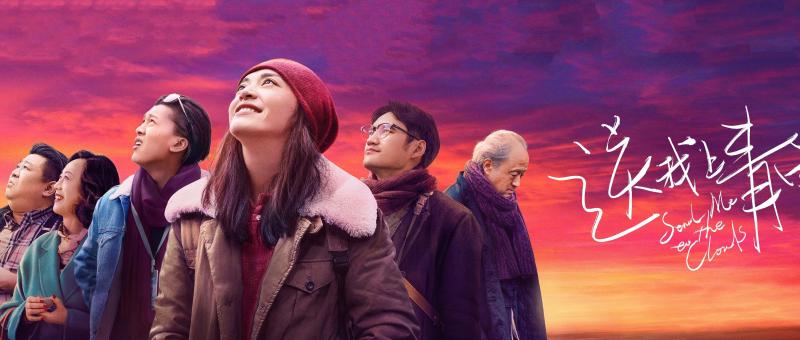
Send me to the clouds posterWomen hold up half the sky, Chairman Mao once said, but in contemporary China sexual equality is an unrealised dream of a previous era. The debut feature from Teng Congcong, Send Me to the Clouds (送我上青云, Sòng Wǒ Shàng Qīngyún) follows one “left-over” woman as she attempts to assert her independence in a world which still expects her to accept her subjugated position in a male dominated society by marrying and subsuming herself within a man’s career.

Ageing investigative journalist Shengnan (Yao Chen) whose name literally means “surpass men” has a cynical eye and fiercely independent nature but is struggling to make a living while protecting her integrity in an increasingly acquisitive culture. Getting kicked in the stomach by a “nutcase” while looking for evidence to support her theory that a local wildfire was started by a politician hoping to capitalise on successfully putting it out forces her to make a long delayed trip to the doctor who tells her that the pain in her abdomen is a result of advanced ovarian cancer and that she needs expensive surgery as quickly as possible.

As she’s been keen to ensure she acts ethically, ready money’s something Shengnan doesn’t have a lot of. Confiding in her cynical, ambitious best friend Simao (Li Jiuxiao) who has no such scruples, Shengnan finds him unwilling to help because, after all, there’s a chance Shengnan might die anyway which would mean it’s a bad investment because she won’t be able to pay him back. He does, however, offer her a job ghostwriting an autobiography for the eccentric father of the local official she was just in the business of exposing for shady double dealing. Understandably she doesn’t want to take the job and decides to try asking her parents without disclosing what the money’s for. Shengnan’s skeevy industrialist father (Shi Qiang), however, is currently losing out in the precarious Chinese economy and actually deigns to ask Shengnan for a loan before she can even broach the subject leading to a spiky father daughter argument. Shengnan has to take the job and throw her lot in with Simao even if she doesn’t feel quite right about it.

Simao cynically affirms that a problem which can be solved with money isn’t a problem, but unlike Shengnan he has no qualms about bowing before power if he feels there’s something to be gained by it. Shengnan nearly blows the gig when she takes offence to the official’s extremely condescending attitude but does after all have little choice given that her life is on the line. Meanwhile, the job is further complicated by the unexpected arrival of her mother (Wu Yufang) who decides to tag along while feeling neglected seeing as her now estranged husband is having yet another affair leaving her entirely alone in a culture which expects women to go back in their boxes until the menfolk want to take them out.

Shengnan and her mother come from very different generations, but in essence not much has changed. Shengnan’s mother married young and had her only daughter at 19 only to see her husband tire of her and the deeply entrenched idea that a woman’s career is a home and family exposed as a fallacy. Shengnan meanwhile was born during China’s reformist period and told that she had total equality only to be frequently criticised for her “manliness” in her desire to assert her independence. On visiting the doctor she displays worryingly little awareness of her health in her confusion regarding the cause of her cancer, stating that her love life ended years ago, but even if she’s quick to roll her eyes at Simao’s insensitive story about a woman who had the surgery and found it ruined her sex drive eventually decides she’d like to have one last hurrah with someone she really likes only to have her proactive stance on female desire rejected as unfeminine.

Yet this hyper capitalistic, intensely sexist environment is also harming men as Shengnan discovers in her unsatisfying encounters both with Simao and with a philosophical photographer she meets on a boat. Shengnan develops an attraction for Guangming (Yuan Hong) because of his softness and seeming desire to see further than others but eventually he disappoints her, trapped as he is by a hierarchal system to which he can offer only token resistance while hating himself for his cowardly complicity. Simao meanwhile has jumped headlong into the consumerist dream, obsessed with getting rich and not particularly caring what he has to do to make that happen.

The most meaningful connection Shengnan makes turns out to be with the subject of her biography, a randy 80-year-old poet (Yang Xinming) who quickly sets about romancing her mother with a series of cryptic text messages. The old man knows his son is a “complete moron” and even changed his name to something bland and commonplace so that the police might arrest someone else by mistake if he got caught while committing a crime, but has a sort of exasperated love for him and for the world that transcends his failing body and worldweary philosophy. Thanks to his refreshing earthiness, Shengnan starts to see a way forward, once again claiming her independence and resolving to live her life in the way she chooses for as long as it lasts while the men around her largely crumble under the weight of social expectations and a rampantly capitalist society.


Send Me to the Clouds  was screened as part of the 2019 London East Asia Film Festival.

International trailer (English subtitles)

Lost, Found (找到你, Lü Yue, 2018)

Lü Yue’s Lost, Found (找到你, Zhǎodào Nǐ) follows hot on the heels of Korean kidnap drama Missing but it is not, apparently, a remake but part of an increasing trend of global filmmaking in which an original scenario is developed for several territories simultaneously with Qin Haiyan’s script reportedly produced while the Korean version was shooting. Despite sharing the same plot outline, however, Lost, Found puts a distinctly Chinese spin on the central dilemma as its cynical heroine is forced to reassess her life choices and her entire relationship with her society when her daughter disappears.

Li Jie (Yao Chen) is a high flying, cynical lawyer who only cares about winning cases. At home, she’s mother to two-year-old Duo Duo and is currently engaged in a custody battle with her daughter’s father following the breakdown of her marriage to a successful surgeon. To help her out at home with her busy schedule, she’s employed a young woman, Sun Fang (Ma Yili), as a nanny but is at times jealous that her little girl seems more attached to the traditionally maternal home help than to her biological mother. Her worst fears are realised one day when she returns home to find dirty breakfast dishes still on the table and the flat empty. Worrying her mother-in-law has managed to snatch Duo Duo, Li Jie is reluctant to get the authorities involved but is eventually forced to acknowledge that something more serious may have occurred with Sun Fang nowhere to be found.

Talking to her former husband, Li Jie insists that a woman’s future shouldn’t be decided by love or marriage and that she wants Duo Duo to have more freedom but she’s distinctly slow to warm up the theme of female solidarity as shown by her callous treatment of the defendant in her divorce case in which she is trying to win custody on behalf of an adulterous husband by calling into question the wife’s mental stability. Despite the woman’s pleas as one mother to another, Li Jie coldly tells her that the circumstances are largely irrelevant – she is merely a lawyer wielding the law and will do her best to win the case because that is her job.

Forced to investigate the life of Sun Fang, however, her perspective begins to shift. Busy as she is, Li Jie did not perhaps pay as much attention to her nanny as she should have. She took the word of a neighbour with whom she was not particularly close that Sun Fang was a trusted relative with childcare experience without asking for documentation or employment records. Besides, Sun Fang was good with the child and Duo Duo seemed to like her so Li Jie felt comfortable leaving her in Sun Fang’s care. What she discovers is that Sun Fang had experienced many difficulties in her life which she, as an urban middle-class and highly educated woman, had largely been protected from. Because she personally had not suffered, she was content not consider the suffering of others and thought only of herself, even perhaps regarding possession of Duo Duo as something to be won on a point of pride rather than an expression of maternal love or a deeply seated belief that she could offer better care.

Despite its fairly progressive message of social responsibility and female solidarity, Lost, Found takes a disappointing turn for the conservative when it implies that Li Jie should ease back on her career to focus on motherhood rather than allowing her simply to re-embrace her love for her daughter without fear or anxiety. Yet it does also encourage her to contemplate the increasingly unequal nature of the modern China – men/women, town/country, rich/poor, destinies are decided largely by circumstances of birth rather than individual merit. If Li Jie had been born in the same place as Sun Fang, her life might have been much the same. Realising she should have taken more of an interest in the woman raising her child, Li Jie is forced to accept that her own privilege has blinded her and that she does indeed have a responsibility to others and to her society if most particularly to her daughter. A tense, frantic tale of frustrated motherhood, Lost, Found is at once a condemnation of modern disconnection and a quiet plea for a return to kindhearted altruism.


Lost, Found was screened as part of the 2019 Udine Far East Film Festival.

Original trailer (English subtitles)

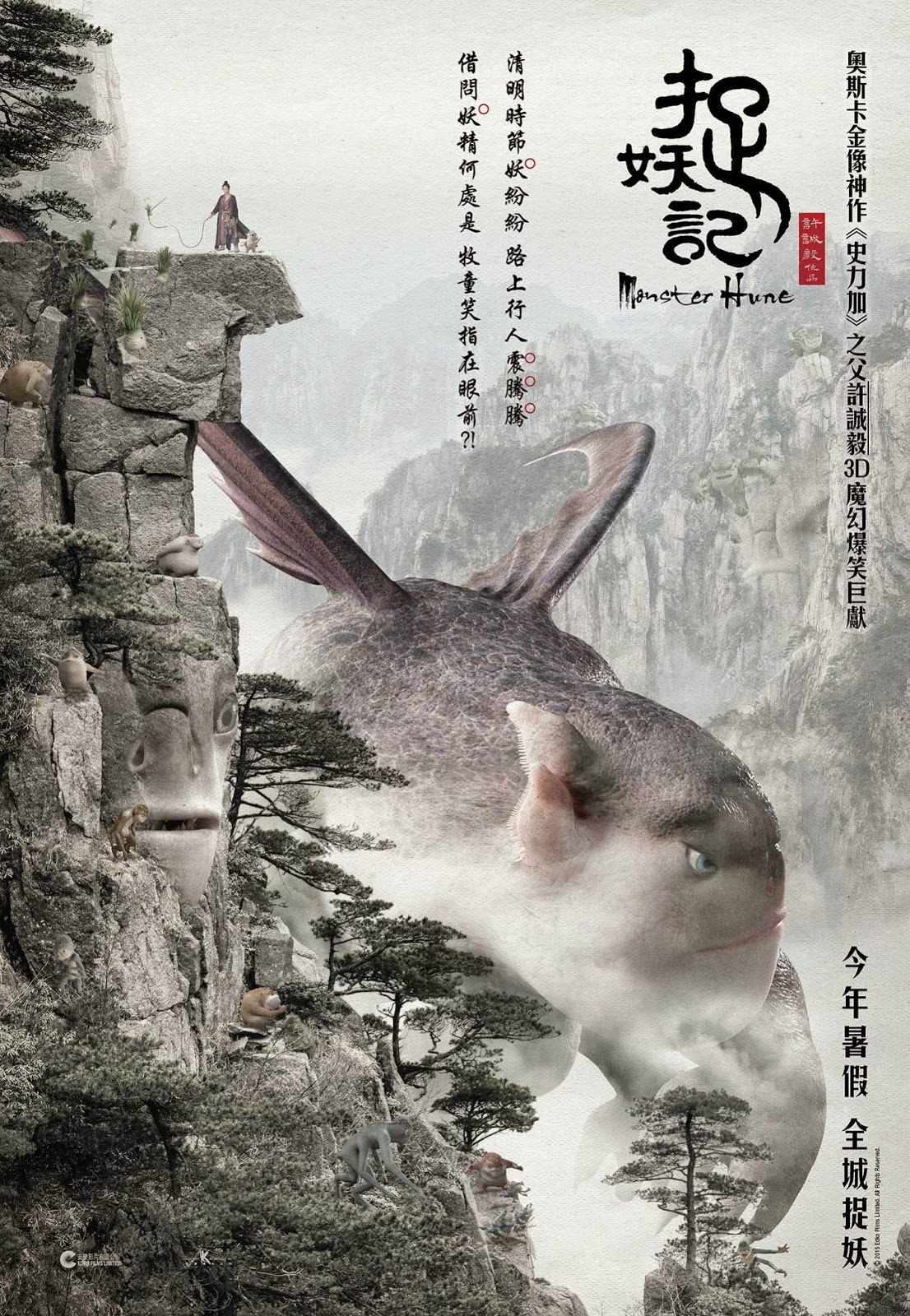
Monster Hunt (捉妖記, Raman Hui, 2015)

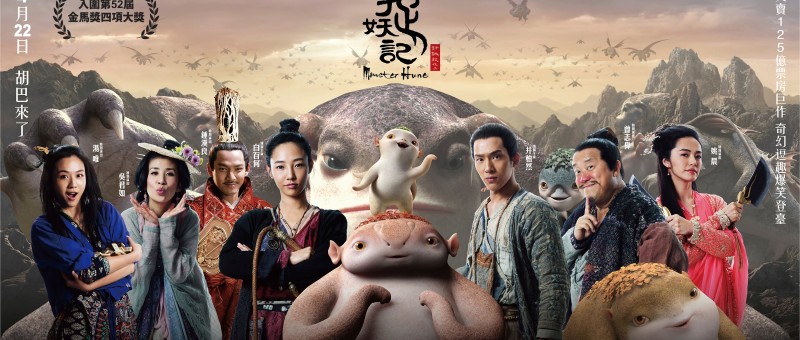
Monster Hunt posterA runaway box office hit and veritable pop culture phenomenon, you’d be forgiven for assuming that 2015’s Monster Hunt (捉妖記, Zhuō Yāo Jì) is nothing more than a slice of family friendly entertainment in the vein of a dozen other live-action/animation hybrid fantasy films. The monsters are cute, yes, and there is enough darkness here to rival Lord of the Rings, but there’s a little more going on under the surface of this otherwise heartwarming tale of a persecuted minority and its hidden princeling. A family drama of epic proportions, Monster Hunt speaks directly to China’s left behind children and to those who, perhaps, were worried their destiny had always been misplaced.

Set sometime in the distant fantasy past, Monster Hunt takes place in a universe in which men and Monsters co-exist but, owing to their defeat in a war, the Monsters have been forced back into the forests and mountains away from humankind many of whom no longer even believe they exist. However, there is fresh strife among the Monsters forcing a pregnant Queen to flee along with her retainers, straying into the human world in hope of saving her baby. Luckily she finds herself in a small village presided over by a kindly mayor with a limp, Tianyin (Jing Boran), who is also the son of a long missing Monster Hunter but much prefers domestic tasks such as cooking and sewing to hunting Monsters. The Queen manages to “transfer” her baby to Tianyin just before she dies, leaving him quite literally holding the baby assisted only by cynical bounty hunter Xiaolan (Bai Baihe).

Inspired by ancient folklore, Monster Hunt plays the chosen one trope to the max as Tianyin wrestles with his destiny while the baby, a true king displaced from his throne, awaits in ignorance. Like many contemporary fantasy tales, Monster Hunt also revels in subverting genre norms with its noticeably feminised hero. Tianyin is the son of a great warrior, but it’s his grandmother who practices kung fu and goes out looking for her long lost son, while Tianyin professes his love of domesticity, staying home cooking and sewing. His simplicity and softness is contrasted with the more masculine figure of the cynical Monster Hunter Xiaolan who becomes Tianyin’s casual love interest and the putative “father” in the loose family unit they form with the tiny baby radish-like figure they eventually christen Wuba.

The formation of a family unit in itself proves a problematic development for both Tianyin and Xiaolan who have both been abandoned by their own families and left to fend for themselves (with almost opposite results). Resentful at having been cast out by his apparently “heroic” father, Tianyin has definite views about the nature of fatherhood and the mistakes he does not wish to repeat with his own children while Xiaolan has grown wary of forming attachments altogether and strives to remind herself that she is only looking after Wuba until he’s big enough to sell on the Monster Hunter black market. Nevertheless, the pair cannot help becoming “accidental” parents even if they must first make a mistake they later need to rectify in trying to abandon their charge for financial gain. Tianyin “repeats” the “mistake” of his own father but finally comes to understand it for what it was – a father’s sacrifice of his paternal love to keep his child safe. Something that will certainly ring true for children who may be living apart from their own parents for reasons they don’t quite understand.

Yet a fairytale darkness is never far away as Tianyin and Xiaolan consider selling off little Wuba to a dodgy mahjong obsessed Monster fence (Tang Wei) who apparently knows how valuable he is but is planning to sell him to a local restaurant anyway. Despite the fact that everyone has forgotten Monsters exist, Monster meat is a delicacy reserved for the super rich (a subtle dig at China’s eat anything that can’t run faster than you philosophy ushered in by the sight of caged monkeys at the roadside) and little Wuba does look quite like a tasty daikon radish.

Cute monsters getting chopped up and eaten may be a horror too far for sensitive young children (if it weren’t for the fact the Monsters are all inspired by veggies Monster Hunt might be the greatest proselytising mechanism for vegetarianism the world has ever seen) but rest assured, little Wuba is quite the resourceful little tyke and he does after all have a grand destiny awaiting him. A tribute to unlikely heroes, gentle men, feisty women, and atypical families, Monster Hunt is an oddly subversive family friendly adventure and one which has clearly hit its mark in capturing the hearts of a whole generation who will doubtless be excited for the further adventures of Wuba as he moves closer towards his own Messianic destiny.


International trailer (English captions)