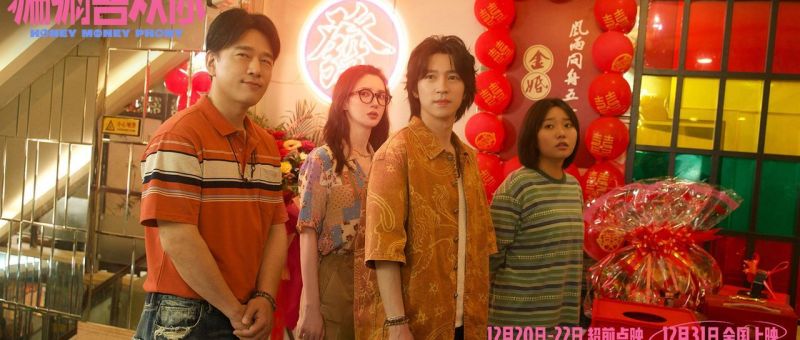

Honey Money Phony (“骗骗”喜欢你, Su Biao, 2024)

Can you really say a scammer who just takes people’s money without messing with their feelings is any better than one who just robs them? That’s a justification put forward by fraudster Ouyang (Sunny Sun) in Su Biao’s remake of Thai rom-com The Con-Heartist, but it’s a difficult one to swallow. After all, even if you just trick someone out of a small amount of cash,the psychological effects can be devastating though the pain may not be quite the same as getting your heart broken in a love scam.

Qinglang (Jin Chen) has indeed had her heart broken by the lothario Zijun (Wang Hao) whom she met at a tennis class she started going to after moving to the fictional city of Aoo Kang. Later it’s revealed that the cause of her move was getting fired from her company for reporting her boss for sexual harassment while she was also in a bit of debt from breaking a non-compete clause by getting another job, something which Zijun apparently sorted out for her. But not long after she took out a loan to give him money supposedly for his university tuition, Zijun ghosted her and she realised she’d been the victim of a romance scam. Now she’s on the hook for that too, working a series of part-time jobs in fast food restaurants and walking dogs as well as an unsuccessful gig as a vlogger in addition to her regular job in insurance. 

Experience is maybe why she suddenly thinks twice after being contacted by someone purporting to be from the vlogging site telling her she’s been suspended and needs to pay a fine. After getting Ouyang’s info from the bank she threatens to expose him but then makes a deal, if he helps her scam Zijun into giving back the money she gave him she won’t take this any further. Of course, there’s no guarantee Ouyang hasn’t just switched to a different con while Qinglang remains quite naive and despite herself trusting him. Then again, he’s the exact opposite of Zijun who took advantage of her despair and offered himself as a source of constant support. His aloofness and apparent honesty about what he is may in their way reassure her. 

There is something that might be comforting in Ouyan’s unflashiness. Though he drives a convertible, it’s not a particularly glamorous sort and has a busted taillight and in any case, he also lives in it. According to him, that’s so he can get away quickly if he needs to, but also suggests that it’s not really all about the money. Zijun, meanwhile, is greedy and materialistic, hopping from one wealthy woman to the next while hoping to join the social elite and live a high life of fast cars and wild parties. A justification for Ouyang’s scamming is given in a tragic backstory which may or may not be true suggesting that he was born out of wedlock and his mother died in childbirth. He was raised by his grandmother and uncle while his birth father entered his life at one point and tried to connect with him but it turned out it was all because his other son from a different relationship needed a bone marrow transplant. As soon as he found out Ouyang wasn’t a match, he disappeared from his life. 

The implication is that Ouyang scams as a kind of revenge because he doesn’t trust people and therefore is unable to live an ordinary, honest, life but through connecting with Qinglan and falling in love he develops the desire to live with more compassion and stability. Qinglang, meanwhile, gains confidence in herself and realises that her low self-esteem left her vulnerable to manipulation. Her friend, Xiaohui (Li Xueqin), who was also in massive debt and ended up posing as a blind person to carry out accident scams, also puts the skills she’s learned to good use to progress her acting career which might all be a very contradictory message even if there’s something satisfying about scamming a scammer and especially one as full of himself as Zijun. Released for Western New Year, the film has a zany wholesomeness despite its bleak subject matter and hints at a sense of despair in contemporary life in China but does indeed suggest that cheaters don’t necessarily need to prosper and you do have a degree of control over your life even if it’s just deciding to choose love and move on rather than wallow in a sense of futility. 


International trailer (English subtitles)
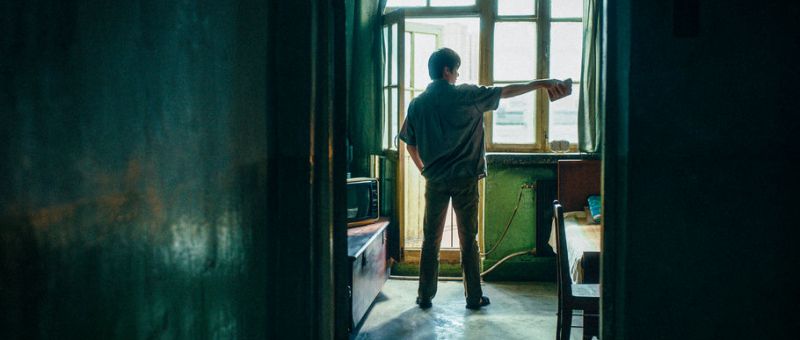
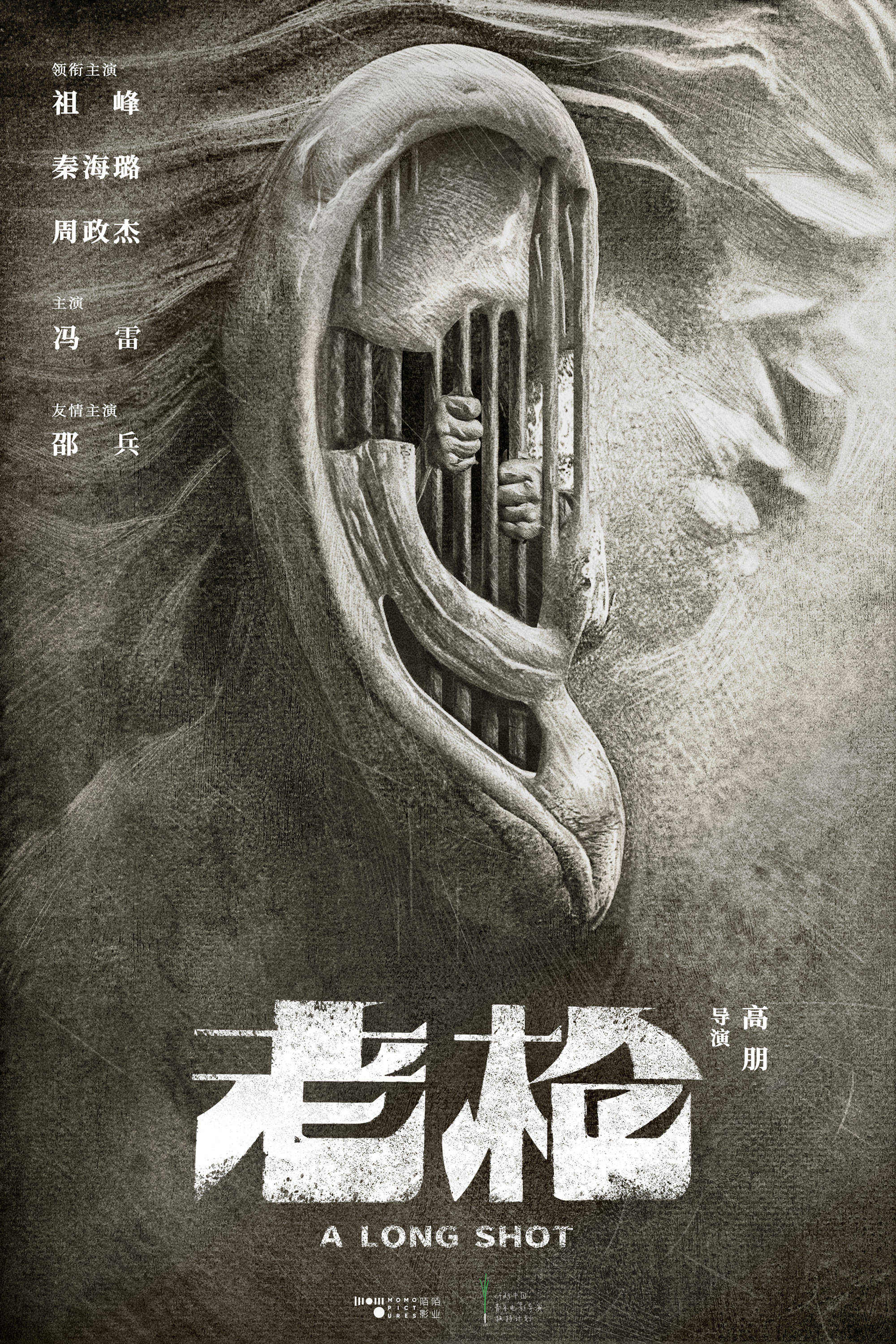
A Long Shot (老枪, Gao Peng, 2023)

The hero of Gao Peng’s A Long Shot (老枪, lǎo qiāng) is forever reminding himself to “regain your focus”, yet in other ways it’s something that he’s making an active choice not to do and that others wish he wouldn’t. Set amid the chaos of China’s mid-90s economic reforms, the film suggests that Xue Bing has little other option than to tune himself out and avoid being a direct part of the corruption all around him as he has little power to stop it.

In a prologue set five years before the main action, Xue Bing (Zu Feng) had been a sharpshooter on the national team but is told that he has experienced hearing loss which may affect his balance and is subsequently let go. The hearing loss is perhaps symbolic of the fact that Xue Bing does not listen to the lies and double talk around him and maintains an integrity that is nothing but irritating to his morally compromised colleagues. On the other hand, he later tells Xiao Jun (Zhou Zhengjie), a teenage boy to whom he’s become a kind of father figure, that staring at a bull’s eye all your life isn’t good for your eyes hinting at his problematic hyper focus in which he’s just trying to keep his head down and do the best job he can under the circumstances.

But the circumstances are grim for everyone. Now with shaggy hair and a look of disappointment in his eye, Xue Bing works as a security guard at a moribund ferroalloy factory where the workers haven’t been paid in years as the nation goes through a number of complex economic reforms that are changing the face of the nation and giving rise to a new class of wealthy elites who’ve gained their riches through immoral and exploitative means. With people not being paid, thefts are a common occurrence but the security guards have turned to taking bribes, tacitly turning a blind to equipment going missing if the thieves are willing and able to pay a small fee. Xue Bing doesn’t like to go along with this and avoids joining in, but is powerless against the other guards including his boss Chief Tian (Shao Bing). 

The film frames the factory as a microcosm of the wider society which has become a vicious circle of corruption. But on the other hand, the workers guards, and even in the management see themselves as taking what was rightfully theirs but has been unfairly denied them. The workers steal from their employer because their wages weren’t paid, the guards aren’t getting paid either so they extort the workers and rip off the company, while the management know the factory’s effectively bust so they’re asset stripping while they still can. Chief Tian runs into one of the thieves who’s since started a “trading company” having taken some cues from a Russian working at an equally moribund shipyard where he’s no longer monitored by the authorities and has been selling off warships as scrap hinting at the disintegration of post-war communism and the resulting capitalist free for all that followed. 

Xiao Jun, the son of a woman Xue Bing thinks he’s in a relationship with but the reality is somewhat ambiguous, is caught amid this crossfire as a young man coming of age in complicated times. He resents the corruption he sees around him and bonds with Xue Bing thinking he’s a straight shooter only to be disappointed by his defeated complicity which he also sees as a kind of unmanliness. Xiao Jun’s mother, Jin (Qin Hailu), had been trying to run her own business but later gets a job in a nightclub that seems to be sex work adjacent thanks to her relationship with another corrupt businessman, Mr Zhao. She remarks to Xue Bing that there are so many ways to earn a living these days she doesn’t understand why anyone would go back to the factory, laying bare the wholesale change in the society. Xiao Jun has taken up with a gang of seeming delinquents who frequently loot the factory complex, but even they are only taking what they think is theirs as one of the boy’s fathers was killed in a workplace accident and the family was only given a certificate of commendation rather than financial compensation for the father’s lost wages without which they are unable to support themselves. 

The guards have been told they’ll finally get paid after the company’s 40th anniversary celebrations, with corrupt manager Sun telling Tian he’ll need his help to keep the others in line when he presses him and is finally told they’ll only get two months’ worth of the back pay they’re owed. Xue Bing is told Sun was selling off the lathe machines in order to pay the workers, and it seems like he believes them naively falling for their greater good narrative while Xiao Jun seems on a collision with adult hypocrisy refusing to sign a false confession to get the managers off the hook. Gao lends Xue Bing’s world a greying hopelessness in which the only two choices are to close his eyes and ears or go down fighting, closing with a lengthy shootout in which firecrackers mingle with gunshots masking the sound of rebellion from a continually unheard underclass.


 A Long Shot screened as part of this year’s New York Asian Film Festival.

City of Rock (缝纫机乐队, Da Peng, 2017)

201708162324218235They built this city on rock and roll! Right in the middle of Ji’An, there’s a giant statue of an electric guitar with a plaque underneath it reading “The Heart of Rock” that was erected in memory of a legendary concert given by a super famous band, Broken Guitar, who happen to hail from the region. This being a particularly musical town, Broken Guitar continues to inspire young and old alike to pursue their musical dreams, but there is trouble on the horizon. Shady mobbed up developers want to tear down the Great Guitar and put flats there instead, which is not very rock and roll when all is said and done.

Meanwhile, in Beijing, shady musical agent Chen Gong (Da Peng), who was actually the agent for Broken Guitar at the time they broke up, is working on his latest venture – trying to turn three middle-aged, pudgy rockers into a Chinese K-pop act. Needless to say it’s not going well and Gong is perpetually cash strapped. When he receives an unsolicited call from Hu Liang (Qiao Shan), a Ji’An resident who wants him to help promote a local concert as a kind of benefit to help save the Great Guitar, Gong isn’t interested and quotes him a ridiculous sum of money only to see it instantly pop-up in his account. Jumping straight on a train, Gong is met at the station by a rapturous welcome parade which includes a marching band and kids throwing garlands but quickly figures out that Hu Liang is every bit as much of a schemer as he is. Hu Liang doesn’t even have a band and needs Gong to help him find one.

Once again, the conflict is between cynicism and artistic integrity as a group of misfits comes together to help stop a monument to true rock being torn down by soulless suits. Gong, as we later find out, had musical dreams himself but, after having gone against his father’s wishes to pursue a musical career, was forced out of the conservatoire after an accident robbed him of the feeling in two of his fingers and he became too depressed to sing. Having lost his faith in music, Gong has sold out and become a cynical money man, cutting deals anywhere and everywhere he can. Rather than work on the “unique” sound of the guys he was mentoring, he’s obsessed with the idea of sending them to Korea to get plastic surgery, and turning them into some kind of K-pop inspired Chinese song and dance group.

Hu Liang, meanwhile, is just as much of a con man but his heart is in a better place. Only two people show up for his auditions to join the band – jaded alcoholic with a broken leg, Ding Jianguo (Gulnazar), and a drummer from Taiwan who calls himself “Explosive” (Li Hongqi) and sits with his back to the audience. The other bandmates include a former member of Broken Guitar now a gynaecologist (Han Tongsheng) whose daughter has forbidden him from playing rock and roll, and a little girl (Qu Junxi) who’s a whizz on the keyboards despite the disapproval of her Taekwondo loving mother who thinks things like music are a frivolous waste of time. Together they face various obstacles in their quest to save the great guitar and the spirit of rock and roll itself but finally discover that the true spirit of rock lies in getting the band back together for one last hurrah and channeling all into music.

Gong, tempted by the shady developer, is reminded that money can save lives but dreams cannot. Faced with a dilemma, Gong falls back into cynicism and rejects the new sense of fun and togetherness he’d found as a peripheral member of the band. Yet reuniting with his hopeless wannabes and easing back into his soulless Beijing life, he begins to realise what he’s been missing and rediscovers the the true nature of rock and roll which isn’t trapped inside a giant concrete guitar but inside the hearts of musicians who need their instruments to help bring it out. Dreams, it seems, save lives after all. An often hilarious, sometimes silly comedy, City of Rock (缝纫机乐队, Féngrènjī Yduìis as full of heart as it encourages its protagonists to be, arguing for the importance of the right to express oneself in a society which often actively suppresses it.


Screened at the 20th Udine Far East Film Festival.

Original trailer (simplified Chinese subtitles only)

https://www.youtube.com/watch?v=UznsmmUjYlY