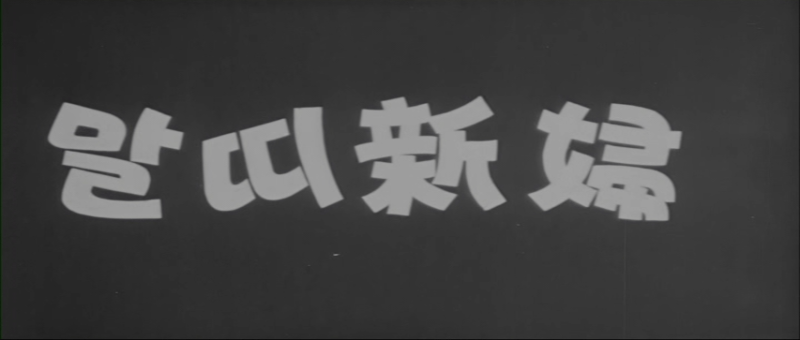


In the relatively conservative Korean society of 1966 it’s surprising that film like the Horse-Year Bride (말띠新婦 / 말띠신부, Maltti Sinbu) could have been made at all. On the one hand it embraces and subverts common notions of gender by positioning its “horse year women” as somehow deviant from the norm, difficult to deal with and undesirable, but also places them centerstage as individuals making independent choices in their own lives rather than simply trailing along behind their men. Technically the second in a trilogy of films, the first and last being directed by Lee Hyung-pyo, Kim Ki-duk’s Horse Year Bride is a raucous sex comedy, tame by modern standards but transgressive by those of the time. Adopting a mild, if ironic, issue movie stance, Kim also satirises social attitudes to “horse year women” and councils against a trend of aborting babies set to be born in the year of the horse lest they be female and turn into vicious harridans.
The film opens with a wedding in which middle-aged (presumably 35 or 36 year old) Bok-soon (Hwang Jung-seun) marries the extremely miserable looking professor Seok-du (Park Am). The wedding photographer who later turns out to be a horse woman herself and a private eye is surprised to notice that Bok-soon has horse’s hoofs rather than fancy shoes under her wedding dress. A fortune teller (Kim Hee-kap) then introduces us to his matchmaking service and claims the wedding we have just witnessed is a result of his best ever match before introducing us to two more couples – Soo-in (Nam Mi-ri) whose husband Sang-won (Yoon Il-bong) has gone full on domestic to look after her while she’s pregnant, while Mi-hae (Um Aing-ran), also pregnant, fends off the sexual advances of her frustrated husband Keun-ho (Shin Seong-il). The two as yet unmarried horses include the aforementioned private detective, Young-hee (Bang Seong-ja), and a dancer, Suk-ja (Choi Ji-hee), who is engaged but not above making use of her sex appeal for material gain.
Bok-soon, one horse cycle ahead of Soo-in and Mi-hae, laments her long period of matronly virginity and is keen to make up for lost time. Seok-du, however, is not exactly a love machine and is completely worn out by his wife’s appetites, even going so far as to return to the fortune teller and complain that his excellent matchmaking has turned him into an exhausted sex slave. The matchmaker suddenly grabs a picture of Napoleon and has a novel explanation for where the famous general’s hand might be. Anyway, his advice is to practice yoga to increase stamina and keep Bok-soon happy.
Meanwhile, Soo-in and Mi-hae have both lied to their husbands about being pregnant in order to avoid sex so that they don’t conceive a daughter that, like them, will be born in the year of the horse. This particular “White Horse” year is thought to be especially inauspicious and daughters born as White Horses will apparently be total nightmares and have terrible lives. The two relationships send up various culturally accepted norms of martial gender roles as the women both manipulate their husbands to get their own way. Soo-in’s Sang-won is so solicitous about the pregnancy that he’s put Soo-in on virtual bed rest and blossomed into a mother hen clucking around doing the housework but making a total mess of it (because, after all he’s a man, and men aren’t “built” for this sort of thing). Mi-hae’s problem is the opposite in that Keun-ho’s sexual needs are a constant source of frustration to him in which he resorts to pounding a giant mortar in an unsubtle attempt to relieve his pent-up energy. Bok-soon too is subtly manipulating Seok-du by feeding him an “aphrodisiac” and secretly practicing yoga herself to get the most out of her married life.
Unmarried Suk-ja attempts to manipulate men by promising more than she means to give but finds herself in hot water with a grumpy salaryman (Joo Sun-tae) who seems determined to take what he thinks he’s owed. Suk-ja later pays heavily for her rejection but the other women rally to her side to take revenge on the lecherous businessman whom they regard as “human scum” and intend to “re-educate” to treat women better. The vengeful band of women taking revenge on the male sex with each of its various double standards and chauvinistic assumptions derives part of its humour from the relative lack of power available to them but does manage to make a sensible point about the sexist world they inhabit.
Eventually, when the women have given up their power and allowed themselves to become pregnant by their men, even the doctor at the hospital assumes they will want abortions to avoid the threat of White Horse daughters. By this point the women have also resolved that there’s nothing wrong being Horse Women or even White Horse Women, with women excising power (even if in necessarily feminine ways), or with enjoying full relationships with their husbands, but they’re still bound by otherwise typical ideas of female gender roles in the importance of maternity and dream their daughters will be Miss Koreas rather than great scholars or forces for good in the world. The doctor raises an interesting point when he suggests the fear of White Horse Women is an unwelcome foreign import from Japan which both paints it as another symptom of colonial corruption and ignores the fact that the reasons for the ongoing stigma are part of the essential social fabric of Korea. He does, however, find some darkly comic reasons against abortion in citing the economic effects of empty schools and lonely classrooms while also suggesting the women’s daughters may have an easier ride thanks to the lack of competition.
In contrast to his previous films, Kim adopts a youthful, pop-culture infused approach which makes frequent use of domestic and foreign pop music with a lengthy animated title sequence plus extended scenes of music and dance often unconnected to the main drama. Extremely frank in its treatment of modern sexual relations, Horse-Year Bride is an unlikely ‘60s Korean sex comedy filled with silly gags and slapstick humour but proves an extremely effective satire of the complicated social mores of ‘60s Korea.
Available on DVD as part of the Korean Film Archive’s Kim Ki-duk box set. Also available to stream online for free via the Korean Film Archive’s YouTube Channel.
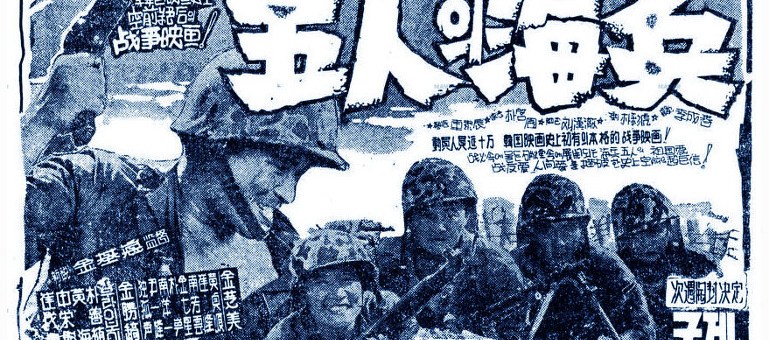


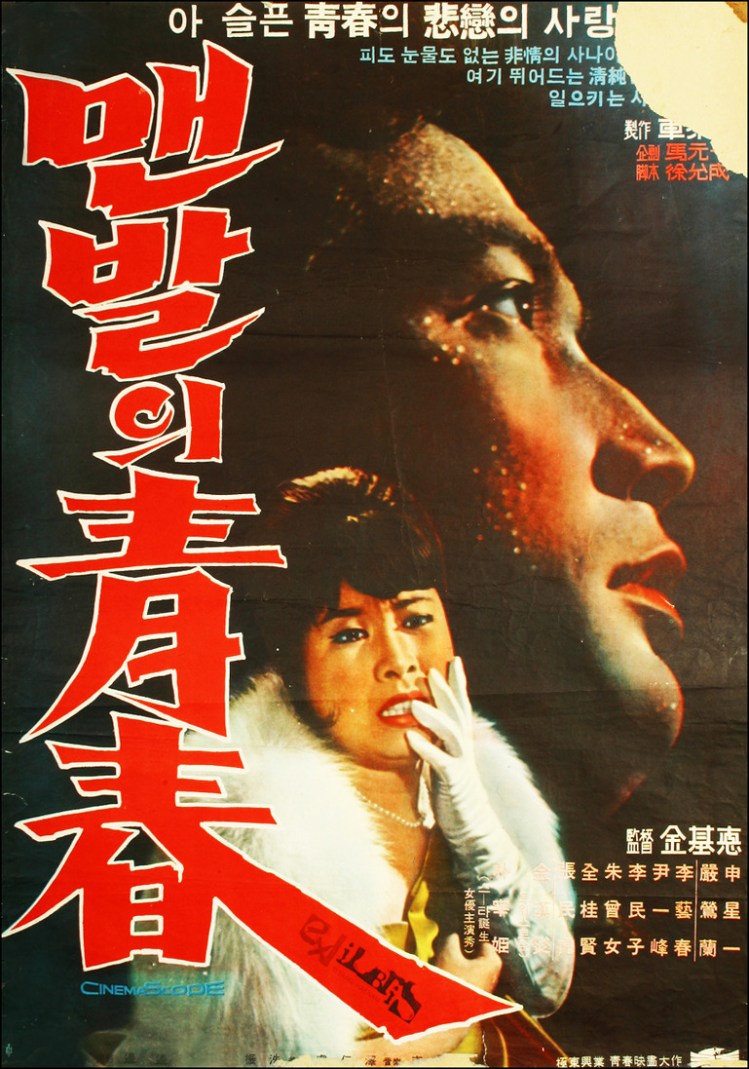
 Post-war cinema took many forms. In Korea there was initial cause for celebration but, shortly after the end of the Japanese colonial era, Korea went back to war, with itself. While neighbouring countries and much of the world were engaged in rebuilding or reforming their societies, Korea found itself under the corrupt and authoritarian rule of Syngman Rhee who oversaw the traumatic conflict which is technically still ongoing if on an eternal hiatus. Yu Hyun-mok’s masterwork Aimless Bullet (오발탄, Obaltan) takes place eight years after the truce was signed, shortly after mass student demonstrations led to Rhee’s unseating which was followed by a short period of parliamentary democracy under Yun Posun ending with the military coup led by Park Chung-hee and a quarter century of military dictatorship. Of course, Yu could not know what would come but his vision is anything but hopeful. Aimless Bullets all, this is an entire nation left reeling with no signposts to guide the way and no possible destination to hope for. All there is here is tragedy, misery, and inevitable suffering with no possibility of respite.
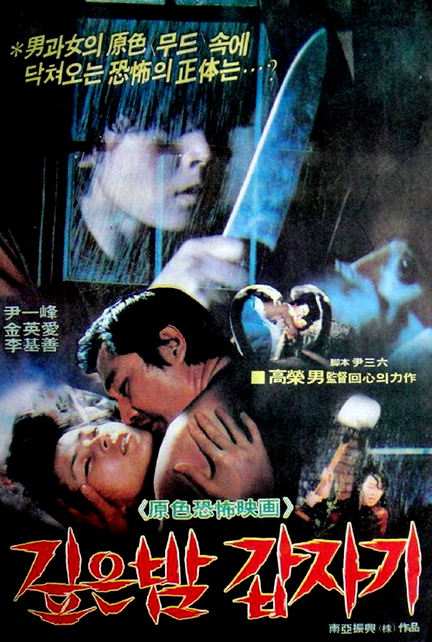 Everybody ought to have a maid, goes the old adage, but finding one you can trust can be a tall order. Kim Ki-young’s The Housemaid clearly sounds a warning call to husbands everywhere not to be tempted by the enticements of pretty young girls or conniving social climbers with designs on upending the domestic order by supplanting the legitimate wife from within her own home. The Housemaid is melodrama rewritten as horror in which a parasitical force colonises the domestic environment hell bent on taking it over through a subversion of its binding yet taboo foundation – sexual desire. Twenty years later, Suddenly in the Dark (깊은밤 갑자기, Gipeun Bam, Gapjagi) returns to the same theme but from a different angle. A once harmonious household is suddenly turned upside down following the introduction of a second female, provoking a series of crises within the already strained mind of its wife and mother.
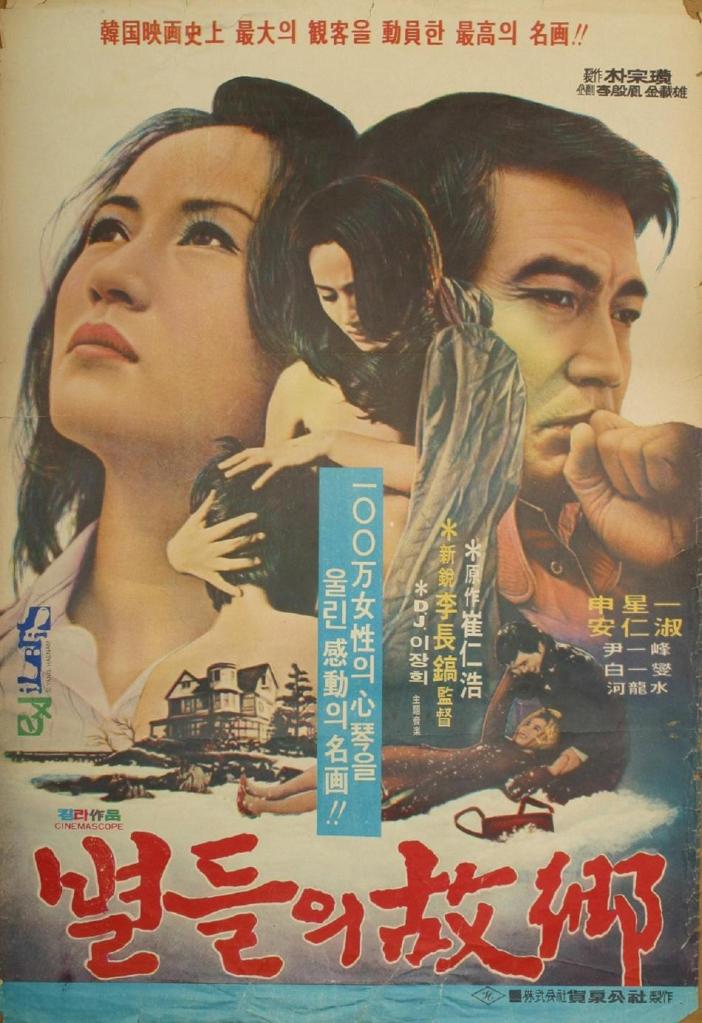 In writing the original novel which inspired Heavenly Homecoming to Stars, Choi In-ho stated that he wanted to tell the story of “a woman whom a city killed”. The novel itself was first serialised in a newspaper where it quickly became a must read and popular discussion point among readers of all ages. It’s perhaps less surprising then that this completely radical film adaptation by first time director Lee Jang-ho proved to be the big cinema hit of 1974. A new “youth culture” movement was beginning inspired by social and political developments from overseas and there was a growing appetite for films and novels which were equally revolutionary. Heavenly Homecoming to Stars managed to provide this but also, crucially, was able to appeal to older age ranges too thanks to its re-imagining of classical melodrama.
 Windows on Worlds