Rainbow Over the Pacific (夜明けの二人, Yoshitaro Nomura, 1968)

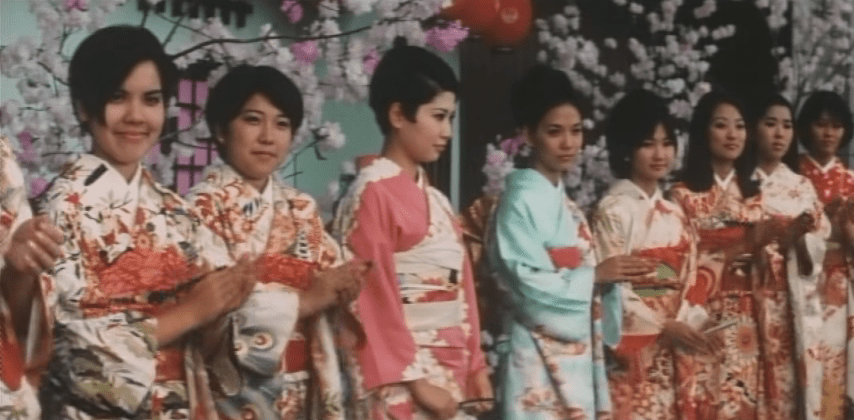
Yoshitaro Nomura is most closely associated with a series of gritty crime thrillers that dug deep into the dark heart of post-war Japan. It may seem surprising therefore to see him helming this generally cheerful if occasionally melancholy musical romance created as a star vehicle for singer Yukio Hashi in commemoration of 100 years of Japanese migration to Hawaii. Curiously pitched, Rainbow Over the Pacific (夜明けの二人, Yoake no Futari) arrives somewhere between extended tourist reel and accidentally colonialist soft propaganda that nevertheless never shies away from the complicated relationship between the two nations. 

As the film opens, hero Hideo (Yukio Hashi) is a something of a slacker working in a photo studio with a crush on an aspiring model. When she shows up late to what he thought was a date and then tells him she’s getting married before dumping her fiancé’s ex on him, he finds himself taking pity on the jilted girlfriend while they drown their mutual sorrows in the beerhalls of post-war Tokyo. Audrey Reiko Misaki (Jun Mayuzumi) is a third generation Japanese-Hawaiian who loves all things Japan and is becoming quite fond of Hideo though he abruptly tells her that it’s been fun but they live in different countries so it’s best they call it quits. Reiko goes back to Hawaii and tries to forget about her double romantic heartbreak in Japan while Hideo continues to be an unserious man berated by his grumpy granddad and exasperated mother not least because of his reluctance to get married. A year later his mentor takes him with him on a trip to the US stopping over in Hawaii where finds himself hoping for a fateful reunion with Reiko. 

Before that, however, he and his boss are met by a Japanese-American man who takes them on a tour of the island and explains that all the swanky hotels are owned by Japanese companies. “Anything you can find in Japan you can find in Hawaii” he insists, at once exoticising the environment and trying to sell it as a place that the growing Japanese middle classes might feel comfortable going on holiday because it is almost like being in Japan only of free of the intense atmosphere of the era of high prosperity where everyone works all the time. But then something a little strange happens, Sakata (Hiroyuki Nagato) points at the elephant in the room and begins talking about Pearl Harbour before visiting a cemetery where many men of Japanese descent who lost their lives fighting for the US in Europe are buried. Even so, he quickly points out that the Japanese community continue to dominate the political realities of the island with several Japanese-Americans elected to the Senate one of whom he actually interviews on camera. 

As for Hideo, he is at times a fairly crass tourist who accidentally mocks the traditional singing of a middle-aged Hawaiian. Much of the narrative appears to have been designed to take in most of the important tourist sites on the islands which are each marked with onscreen katakana as are several important landmarks in Japan in the later part of the film which almost does the same thing in showing off historical Kyoto and the Nara deer. After re-encountering Reiko, Hideo finds himself sucked into various kinds of romantic drama, accidentally coming between a local girl and her boyfriend whose relationship is strained by his wealthy father’s disapproval (much like Hideo he is thought to be an unserious man) and then getting into a dangerous situation with a rival suitor whose cool exterior masks a volatile intensity. 

Ironically enough, through his Hawaiian adventures Hideo becomes a “serious” man resolving to buckle down and work hard though seemingly abandoning his dreams of romance out of a kind of misplaced bro code that in a roundabout way undermines the message of solidarity between Hawaii and Japan in implying that Reiko must choose between the two but then refusing to respect her choice. Further parallels are drawn in the reunion of Hideo’s great uncle who has since become a respected teacher at a Japanese school and his grumpy grandfather who is exposed as a dissolute layabout who returned to Japan in disgrace after giving up in the face of the harshness of life for Japanese migrants, Nomura utilising stock footage to demonstrate the many difficulties they faced in trying to make new lives for themselves in Hawaii. Of course, this being a star vehicle for Hashi, he gets several opportunities to sing including a rendition of the title of song while the film at times turns into a musical though the melancholy, foggy conclusion perhaps plays against the expectations of the genre. In any case, the film appears to be a fascinating document of an increasingly globalising Japan which nevertheless looked for itself even while seeking escape.


Edogawa Rampo’s Beast in the Shadows ( 江戸川乱歩の陰獣, Tai Kato, 1977)

Edogawa Rampo (a clever allusion to master of the gothic and detective story pioneer Edgar Allan Poe) has provided ample inspiration for many Japanese films from Blind Beast to Horrors of Malformed Men. So synonymous with kinky terror is his name, that it finds itself appended into the title of this 1977 adaptation of his novel Beast in the Shadows (江戸川乱歩の陰獣, Edogawa Rampo no Inju) by veteran director Tai Kato best known for his work in the yakuza genre. Mixing classic European detective intrigue with a more typically Japanese obsession with method over motive, Beast in the Shadows, like much of Edogawa Rampo’s work twists and turns around the idea of atypical sexuality, one side cerebral and another physical as the “Westernised” sadomasochism of the heroine’s husband becomes the driving force of the narrative.

Our hero, Koichiro Samukawa (Teruhiko Aoi), is a best selling author who likes to describe himself as the creator of “serious” mystery novels. In this he contrasts himself favourably with the coming younger generation who rely on sensationalised tricks and twists rather than the intricately plotted, traditionally constructed crime stories which Samukawa prides himself on writing. The particular object of his rage is a recently successful rival, Shundei Oe, who is making quite a splash in literary circles in part due to his mysterious persona. Refusing all in-person contact, Oe’s whereabouts are completely unknown and though he supplies a “real name” at the back of each book, there is great speculation as to who he really is, how he lives, and where he might be.

Down south to supervise a movie shoot based on one of his novels, Samukawa is thrilled to run into a fan – particularly as she’s such a beautiful young woman. Shizuko (Yoshiko Kayama) is the wife of a wealthy businessman, Oyamada, who has recently returned from an extended spell abroad though he doesn’t share her passion for literature even if he brings home such luxuries as fancy European gloves. The relationship moves beyond mutual appreciation when Shizuko asks for Samukawa’s help in investigating a series of threatening letters she’s been receiving from an old boyfriend who may or may not also be stalking her. The real kicker is that the letters purport to be from Shundei Oe – apparently the pen name being used by a man who fell deeply in love with Shizuko when he was a student but couldn’t take no for an answer when his creepy behaviour became too much for the then school girl. Though Samukawa is sure the letters are all talk and commits himself unmasking Oe for the perverted cretin he is, Shizuko’s husband is eventually murdered just as the letters threatened.

Though the final twist is one which most seasoned mystery lovers will have seen coming, Kato keeps the audience on its toes with plenty of intrigue and red herrings as Samukawa attempts to discover the truth behind the death of Shizuko’s husband as well as taking the opportunity to indulge in a little intellectual vanity by unmasking his rival. The movie subplot quickly gets forgotten but Samukawa is also helped/hindered by his publisher, Honda (Tomisaburo Wakayama), who keeps reminding him about the looming deadline for his latest work. The case at hand provides ample distraction for the harried writer whose writer’s block is only made worse by thoughts of Shundei Oe’s growing success and his resentment of this new, sensationalised form of crime novel which seems to be eclipsing his own.

If the way he acts in “real life” is anything to go by, Samukawa’s detective novels owe much to the European tradition but still, there’s a persistent fear of the foreign underlining much of the proceedings despite the heavy presence of Westernised clothing, music and culture which seems to diffuse itself throughout daily life. Shizuko’s husband may have just returned from abroad but it seems he brought back much more with him than some fancy gloves and an elegant English mistress (pointedly named Helen Christie). The English style riding crop in Oyamada’s study is not mere affectation but the cause of the nasty looking wound on Shizuko’s shoulder which first caught Samukawa’s attention. Oyamada’s sadistic tendencies are posited as a credible reason he could himself be masquerading as Oe, getting off on driving his wife half crazy with fear, but his eventual murder would seem to rule that out.

Nevertheless the game is one of pleasure and pain as Samukawa comes to the realisation that he is integral to the plot. Challenged by his literary rival to a game of minds, Samukawa is putting his detective abilities to the test as his rival is writing their latest story in reality rather than on the page. Love, lust, betrayal, violence and tragedy all come together for a classic gothic detective story which looks ahead to noir with its melancholy fatalism yet remains resolutely within the dark and ghoulish world of the gothic potboiler. Kato shoots a prestige picture with the undercurrent of repressed eroticism in his strange low level angles and unusual compositions which bind, tie and constrain the elusive Shizuko within the window panes and doorways of her home. Light levels fluctuate wildly, isolating the haunted protagonists in their supernatural gloom until we hit the expressionism of the theatrical finale which takes place in an entirely red, almost glowing attic space. The atmosphere is one of profound unease as Oe is thought to be perpetually watching, hidden somewhere in the house, out of sight.

The Beast in the Shadows does not just refer to the unseen voyeur but to the repressed eroticism which his actions symbolise and is perhaps brought out in the various sadomasochistic relationships created between each of the protagonists. Then again, where are we in all this – sitting in the dark, watching, undetected, seeing things we had no right to see. Kato takes our own voyeuristic tendencies and serves them back to us with visual flair in a late career masterpiece which perfectly captures Edogawa Rampo’s gothic world of repressed desire and brings it to its cinematic climax as two detectives go head to head in a game so high stakes neither of them quite realised what it was they were playing.


Original trailer (no subtitles, NSFW)

By a Man’s Face Shall You Know Him (男の顔は履歴書, Tai Kato, 1966)

by a man's faceJapanese cinema has not been as shy as might be supposed in examining uncomfortable topics concerning the nation’s mid 20th century history but perhaps prefers to tackle them from a subtle, sideways viewpoint. By a Man’s Face Shall You Know Him (男の顔は履歴書, Otokonokao wa Rirekisho) is, in essence, a fairly straightforward gangster pic – save that the rampaging gangsters are a mob of “zainichi” Koreans rather than post-war yakuza or petty hoodlums. Less about what it is to be an outsider or the quest for identity in second generation immigrants, Kato’s film is about what it says it is about – a man’s face.
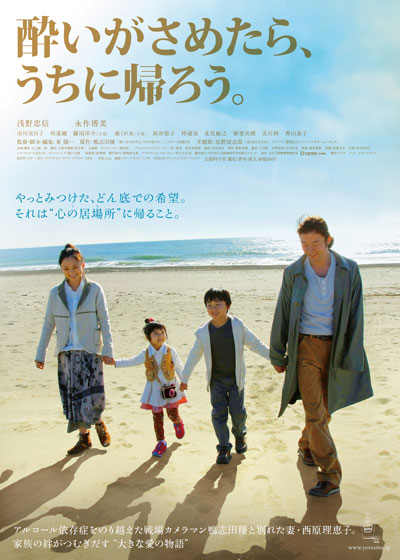
The film begins in the contemporary era when morose doctor Amamiya is contemplating a transfer to an island posting which proves unappealing to him. Shortly after, a badly injured man is brought in following a car accident and, though Amamiya originally suggests the man be taken to a hospital as his chances of survival are slim, he changes his mind after lifting the sheet and recognising the man on the stretcher. The two men go back a long way – firstly to the battlefield where “Shibata” was a private in the army serving alongside Amamiya and secondly to an incident which dictated the rest of Amamiya’s life when he ran the local GP’s office and also happened to own the deeds to some land a bunch of Korean gangsters wanted to get their hands on. Thanks to their earlier association, “Shibata” now returning to his Korean name “Choi” was able to assist Amamiya in mitigating the gangster onslaught as he himself was a member of the gang.

Perhaps more to do with the production styles of the time, all of the “Korean” gangsters are played by Japanese actors and only ever speak Japanese even to each other. Nevertheless, they all want “revenge” for Japan’s treatment of Korea and Koreans during the years of occupation and warfare. In 1949 Japan is still in ruins and the gangsters see this as a prime opportunity to finally take Japan apart and presumably also profit in the process. The leader of this particular gang has set his sights on taking over the “New Life Marketplace” (a pregnant title if ever there was one) with the intention of turning it into an “entertainment district”. His guys, including one totally crazy foot soldier played by a particularly manic Bunta Sugawara, run roughshod over the town until finally raping and murdering Japanese women which they dismiss as par for the course given Japan’s treatment of Korean women over the past thirty years.

This is not a subtle examination of Korean Japanese relations in the post-war environment, these are gangsters and movie gangsters are generally all the same. They say they want to destroy Japan but ultimately they want what all gangs want – to control the area and extort maximum profit. Choi, and the young female Korean Gye, were born in Japan, have never even been to Korea and can’t really claim to have a great deal of Korean cultural knowledge. All they have are their names, now reclaimed after Japan’s wartime defeat. Throughout the war years, Choi used the Japanese version of his name “Shibata” and tried to pass himself off as Japanese (apparently successfully) but is now committed to embracing his Korean heritage even if it once again sees him placed in a subjugated position.

Amamiya returned from the war and took over his father’s medical clinic in his home town. He’s cynical and apathetic. He treats the people who come in to his clinic without discrimination but he doesn’t care very much about the area either. The only thing he really cares about is his nurse, Maki, with whom he’s been having a passionate affair and seems to be deeply in love. Amamiya makes an enemy of the Koreans early on when he fights off some guys who are hassling his nurse proving that he’s no pushover. The title deeds for the land the market is built on also belong to Amamiya who is unlikely to surrender them. The townspeople first turn to the regular Japanese yakuza who are unable to help with their currently depleted manpower leaving Amamiya as their only form of salvation.

When Amamiya’s hotheaded brother turns up and starts causing all sorts of trouble with the Koreans as a way of avenging Japan’s wartime defeat, Amamiya is dragged into a battle he had no desire to fight. Shunji was too young to fight in the war but is a representative of the younger generation who can’t accept the new post-war society and what they see as their older siblings failure to support the nation. Though a strong attraction develops between Shunji and Gye, their love story becomes another casualty of the harsh post-war world. Reluctantly, Amamiya becomes the last defender of these put upon people leading to a High Noon style solo stand against the Koreans whilst the terrified populace look on in fear and hope.

Kato creates a colourful world rich in symbolism such as the early scene in which Choi’s red blood drips down the white sheet accidentally recreating the Japanese flag. Amamiya’s prominent scar becomes both a plot point and a symbolic motif as it echoes the film’s title in bearing out his “history”. A man’s life is indeed written on his face, and Choi’s wife’s urging to her daughter that they watch Choi’s face as he fights for his life is another indication that one’s true nature is seen most clearly in times of duress. The film closes on an ambiguous note, in one sense, but closes its thematic line neatly. Amamiya faces a choice and no choice at the same time but through his face we know him and so we understand.


http://www.youtube.com/watch?v=d1qI-ZewOuA


Wandering Home (酔いがさめたら、うちに帰ろう, Yoichi Higashi, 2010)

wandering homeAlcoholism is not a theme which has exactly been absent from the history of cinema. From the booze drenched regret of Days of Wine and Roses to the melancholic inevitability of Leaving Las Vegas and the disdaining irony of Barfly, there has been no shortage of unsympathetic portrayals of drunkenness when it comes to the silver screen. Yoichi Higashi’s Wandering Home (酔いがさめたら、うちに帰ろう, Yoi Ga Sametara, Uchi Ni Kaerou) walks something of a middle road here as it embraces the classic “issue drama” mould but also aims for a naturalistic character study in adapting the true life memoirs of photojournalist Yutaka Kamoshida (husband of well known mangaka Reiko Saibara).

The film begins with a touch of magical realism as Tsukahara (Tadanobu Asano) literally falls off his barstool and has a vision of his wife and two children urging him to get up. Of course, they aren’t “real”. Tsukara lives with his mother after his marriage to a successful mangaka broke down due to his alcoholism. Returning home and ignoring his mother’s advice to get something to eat, Tsukarahara has another drink whilst swearing that this time he’ll be sober when he sees his kids but shortly after retreats to the bathroom to vomit where he experiences a massive haemorrhage and is taken to hospital. Things have already gone too far, he’s told he’s lucky to be alive and the next time this happens he will die.

Swearing to finally come off the booze, Tsukahara goes home but is immediately tempted by a side dish in a restaurant which contains alcohol. He makes the wise choice not to buy the vodka in the off-licence but eventually talks himself into buying beer which he drinks right away and then falls over and hits his head on the way home. His ex-wife, Yuki (Hiromi Nagasaku), and his long suffering mother have gone through this too many times before to even be disappointed. Eventually, they ship Tsukahara off to a residential facility in the hope that they can finally help him beat the booze for good.

Wandering Home is inspired by the real life story of a photojournalist which has also inspired a few other films including the following year’s Kaasan which told the same story from the point of view of Kamoshida’s mangaka wife. Therefore, the ending of this story might perhaps be known to you already but needless to say it isn’t an altogether happy one. The film doesn’t go into the reasons Tsukahara started drinking save for emphasising that it’s rarely one root cause that starts someone on the road to alcohol addiction. Tsukahara’s father had been an alcoholic and had also behaved violently in the home – something which Tsukahara despised and yet he ultimately became exactly like his dad. Having started to drink as a young teenager he drifted into an aimless life and then witnessed a number of traumatic events in his career as a photojournalist which also left their mark on him.

Though the film is never shy about the disruption Tsukahara’s drunkeness causes to his family, it mitigates the effects by casting them as surreal episodes such as the only scene in the film where Tsukahara is shown to be violent towards his wife in which another soot covered version of himself emerges from a zipper in his back to shout abuse and trash the place as his children retreat in horror to their bedroom. It’s not Tsukahara, it’s the alcohol, the film tries to say but actually lays the message on a little thick and often neglects the trauma that his behaviour is, in turn, causing to his own son and daughter.

That said, there is remarkably little animosity between Yuki and her ex-husband despite the way that he has behaved. Yes, the pair are divorced but Yuki is called right away when Tsukahara is taken to hospital and when she brings the children to visit him the couple talk warmly with no bitterness or recrimination. The children too are happy to see their father and do not seem afraid of him in any way at all.

Higashi does, however, fall into standard “issue drama” tropes and perhaps spends too much time exploring the rehab facility where Tsukahara is sent for treatment. Though hearing something of the other characters’ paths to alcohol dependency is enlightening, it can’t help but feel more like a public information film at times than the affecting character drama it should be. Small touches like Tsukahara’s longing for something a simple as being able to enjoy curry again like everyone else on the ward or his more frequent difficulties of being able to distinguish a hallucination from something he’s doing for real lend weight to the central story but they can’t quite save it.

Higashi’s tone is generally straightforward and mostly avoids melodrama or sentimentality except during the film’s ending. This sounds like a strength but turns out to be a weakness as something about Tsukahara’s plight never quite grabs the heartstrings in the way it seems to want to. The film’s unsentimental depiction of alcohol dependency and one man’s struggle to try and regain his place within his own family is an admirable one, but Wandering Home ultimately falls far short of its intended destination.


The Japanese dvd/blu-ray release of Wandering Home includes English subtitles!

Unsubtitled trailer: