Organ Child (器子, Chieh Shueh Bin, 2024)

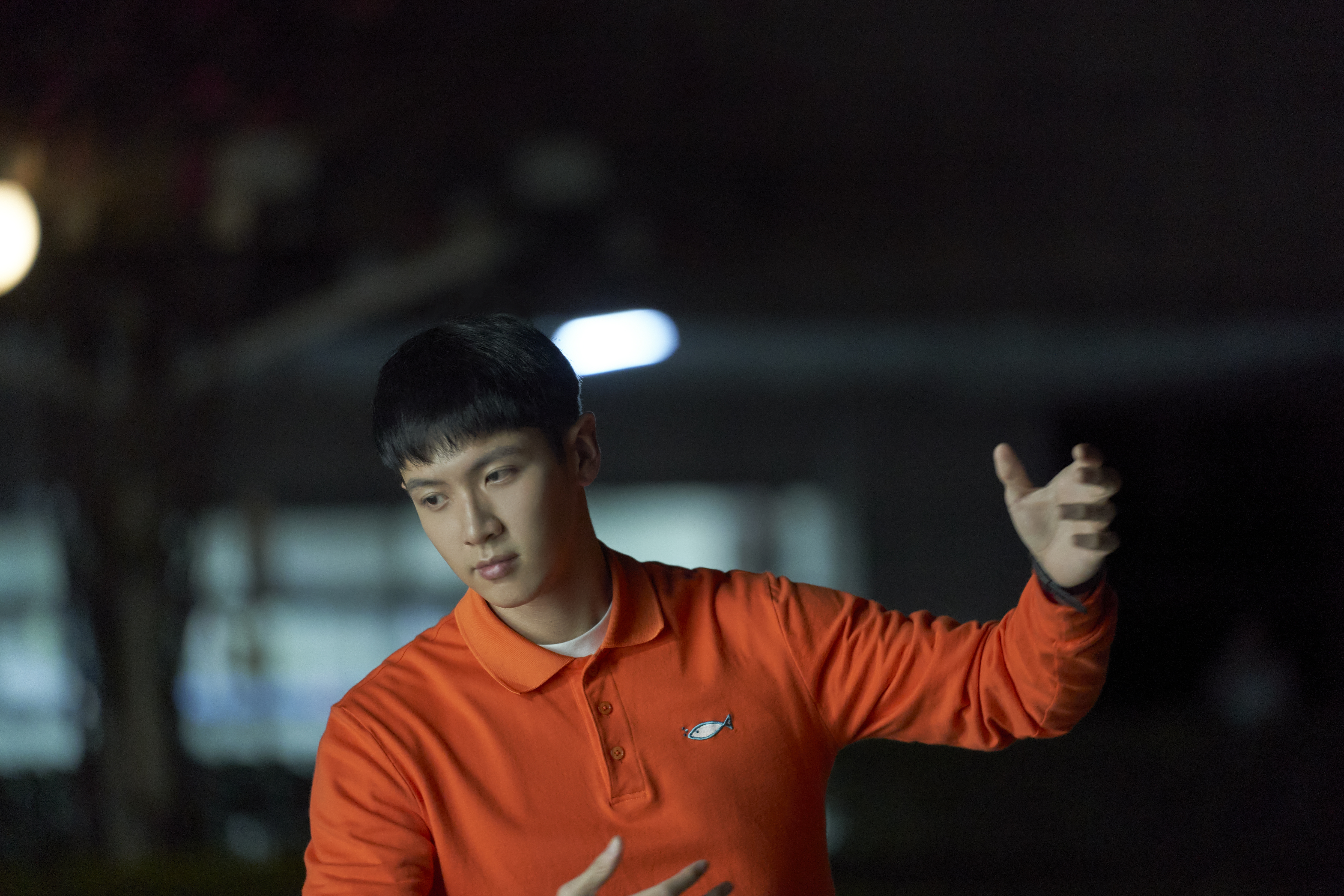
How far would a father go for his daughter? There’s an ironic duality at the centre of Organ Child (器子, qìzǐ) in that the vengeful man at its centre and the man he is chasing are basically the same and may have made the same choices were the situation reversed. Nevertheless, a terrible and morally indefensible crime has taken place which will lead to many more of the same as bereaved father Qi-mao (Joseph Chang Hsiao-chuan) stealthily tracks down all those who stole his newborn daughter and sold her to an organ trafficking ring. 

The film is keen to paint Qi-mao as a figure of uncompromised fatherhood through his association with a group of orphaned boys. Working as a baseball coach at the orphanage, he becomes a surrogate father to them and provides a familial environment as he and his wife frequently invite the boys for dinner. When his daughter is born, she automatically gets a whole baseball team of overprotective brothers, but that doesn’t stop her being snatched one day when her mother turns her back for an instant to pick up her bottle. The more Qi-mao searches for his daughter, the more he becomes convinced that she was stolen to order and the hospital is somehow involved. After getting too close to the truth, he’s framed for murder and sent to prison for 18 years during which he plans his bloody revenge.

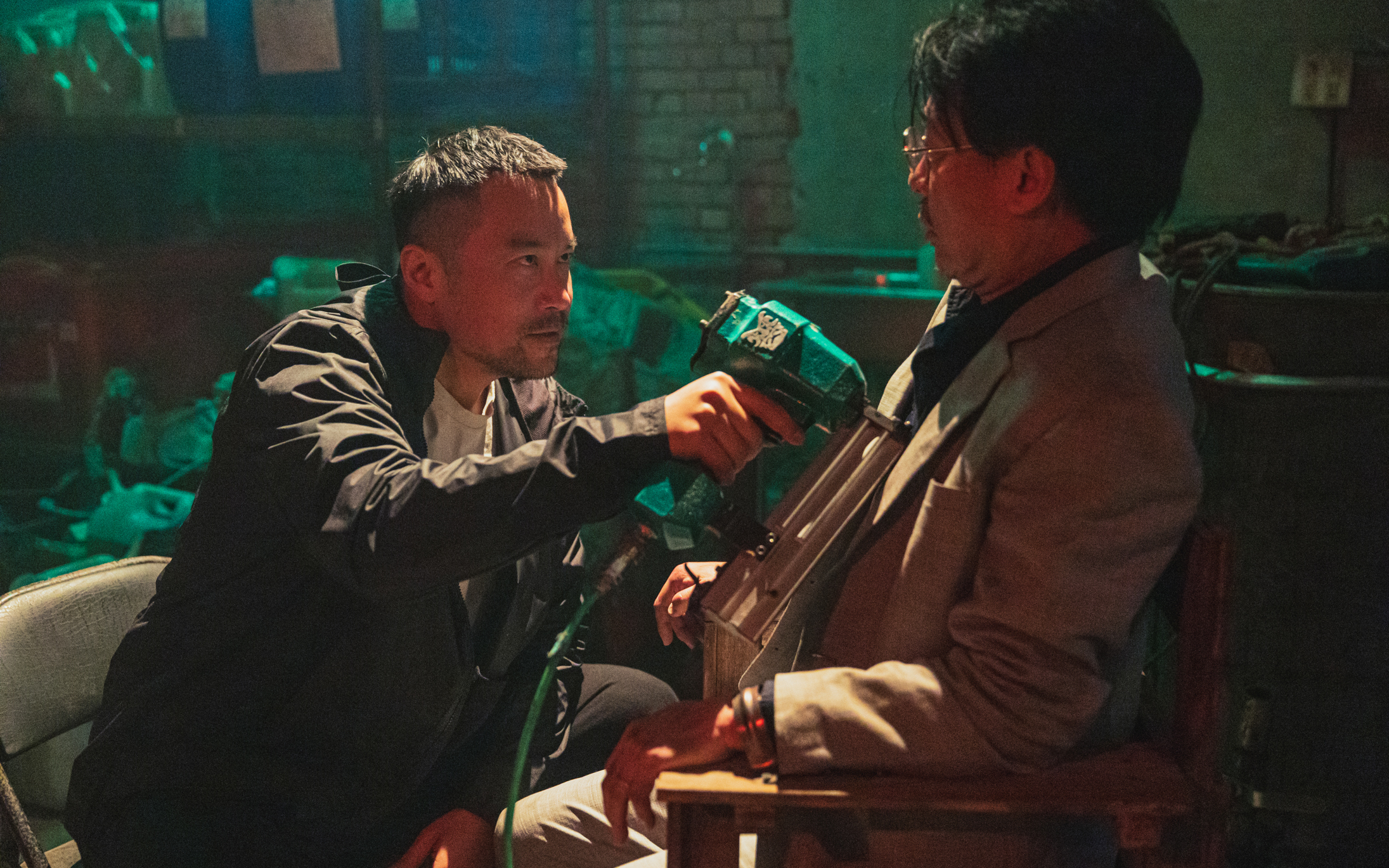
What he uncovers is a vast ring of human trafficking run through the dark web in which rich people can buy poor ones and harvest their organs to save those they love rather than waiting for a good candidate to present themselves. This is apparently what filthy rich businessman Xu did when his newborn daughter needed a heart, so Qi-mao is led to believe his daughter must be dead but is after answers and the location of her body more than to expose the network which appears deeply entrenched among the elite because it so very lucrative. Yet if Qi-mao is going to all this trouble now, perhaps he may have done the same as Xu if the situation were reversed. He appears blasé about putting other people’s children in danger while torturing their parents to get to the truth even if as it turns out he may not have actually intended to harm them. Just like him desperate to save their child, the parents largely give in when they are threatened and promise to tell him everything he wants to know if only he let them go. 

But there is something quite insidious in Xu’s plan given that it may be one thing to buy a living body off a website and never have to think about the person whose life will sacrificed, but quite another to be prepared to kill someone that trusts and loves you. Xu uses his money to employ a poor yet oblivious family while collaborating with a hospital to fake medical records and manipulate his daughter Qiao who thinks the biggest problem in her life is her forbidden romance with the son of one of their servants, again echoing the class divide that makes Xu think he can do what he likes with those he feels to be lesser than himself. The real “family” turns out to be that created by the orphans which is then spread to the younger generation who are eventually freed from their parents’ corruption and the boundaries of class to live in a freer world less bound by capitalistic imperative than simple solidarity. 

But for all that, Qi-mao is orphaned too in realising that even if his daughter were alive and he could still save her, she likely wouldn’t accept the man he’s become. Qi-mao is man of rage and vengeance. He brutally tortures those connected with his daughter’s disappearance and commits acts of heinous violence that render him unable to return to mainstream society despite his position as an idealised father figure to the orphan boys. A subplot about sexual abuse at the orphanage is under explored, but hints at the institutionalised corruption in which the powerless can be exploited by those in power when no one cares enough to stop them. Qi-mao may not really care that much about opposing the system, but certainly does about the boys and his missing daughter as he wades into hell in search of answers but also retribution. 

Organ Child screens 27th July as part of this year’s New York Asian Film Festival.


Trailer (English subtitles)
Mama Boy (初戀慢半拍, Arvin Chen, 2022)

A diffident young man gets a few lessons in love after falling for a middle-aged madam in Arvin Chen’s charming romantic dramedy, Mama Boy (初戀慢半拍, chūliàn mànbànpāi). The English-language title at least is a kind of pun, the awkward hero both described as a mother’s boy and falling for the mama of a hotel providing sexual services, but also hints at the awkwardness involved in his attempt to assert his independence at the comparatively late age of 30 by choosing to spend time with a mother the polar opposite of his own. 

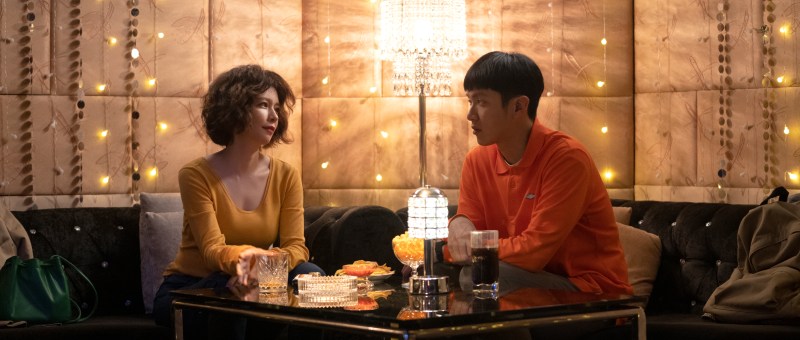
Xiao-hong’s (Kai Ko) mother Meiling (Yu Tzu-yu) describes him as “shy”, though the mother of one of the girls she attempts to set him up with less charitably brands him “not normal”. Not normal is closer to the way Xiao-hong thinks of himself, wishing his mother would stop with the blind dates knowing that in his awkwardness he ends up making women feel uncomfortable and has no idea how to talk to them. His sleazy cousin/boss at the tropical fish shop where he works, insists on taking him to an exclusive brothel where he is instantly captivated by the middle-aged madam, Sister Lele (Vivian Hsu). Too shy to say anything, he continues returning to the hotel and hiring a sex worker to sit blankly in the room solely for the opportunity of exchanging a few words with her. 

The two of them are in a sense in similar positions, a mother frustrated by a wayward son, and a son frustrated by his possessive mother. Some of Xiao-hong’s attraction at least is maternal in seeking a freer parental hand. Unlike his mother, Lele boosts his confidence by making him believe that he’s alright and girls are going to like him, while taking him to cosy nightspots and teaching him the basics of romance. She meanwhile admires him as an ideal son the polar opposite of her own. Weijie (Fandy Fan) only contacts her to ask for money (his father no longer answers his calls) and seems to be involved in several dodgy get rich quick schemes the latest of which is selling knock off wine while he’s also got himself in trouble with loansharks. 

There is something a little uncomfortable in the contrast presented between the two women, the prim and proper mum Meiling raising a sweet, polite child like Xiao-hong who nevertheless lacks several important life skills because of her overparenting, while the child raised by former sex worker Lele is a no good two bit wise guy. Lele certainly seems to see Xiao-hong as a symbol of her failed maternity believing that his mother must have raised him well while she blames herself for her son’s failings feeling as if she couldn’t give Weijie the attention he deserved because she was a single mother who had to work to support him. 

Meanwhile they are also each lonely, Xiao-hong shy and isolated and Lele spending her nights drinking alone in bars being chatted up by sleazy men. Spending time together they develop a tentative bond of love and affection only to find their connection interrupted by Weijie and Meiling each of whom obviously disapprove. Meiling has a suitor of her own in a retired police academy professor she rejects out of a sense of repressive properness but eventually warms to after feeling she needs police assistance to reclaim her son from Lele realising that he’s stopped picking her up from work in order to give Lele lifts instead. 

Despite the romantic themes, both women are essentially reduced to the maternal through their experiences with good son Xiao-hong, Lele trying to patch things up with the wayward Weijie while Meiling realises that she’s overstepped the mark and and will have to let go a little to let Xiao-hong live his life or risk turning him into a perpetual mother’s boy who’ll be all alone once she’s gone. Xiao-hong meanwhile begins to gain confidence, asserting himself as an individual free of his mother’s control now no longer so diffident in talking to women thanks to the patient ministrations of Lele. With its quirky production design and fairytale atmosphere Chen’s tale of first love delayed is also one of unexpected connection and mutual acceptance that perhaps missteps in effectively negating the relationship at its centre but nevertheless has only sympathy for its lovelorn hero. 


Mama Boy screened as part of this year’s New York Asian Film Festival.

Original trailer (English subtitles)

Images: © 2022 Filmagic Pictures Co.