Such in the confusion in mid-90s China that the chaos has penetrated all the way to a remote village in Li Yongyi’s satirical farce Deep in the Mountains (如意饭店, rúyì fàndiàn). What begins as gritty Sino-noir soon turns into black comedy as the unfairly demoted policeman hero finds himself chasing a serial killer right into a traditional village community that seems to be home to some of the nation’s least astute people who are themselves caught between the old China and the New but also obsessed with their own status and petty vendettas.
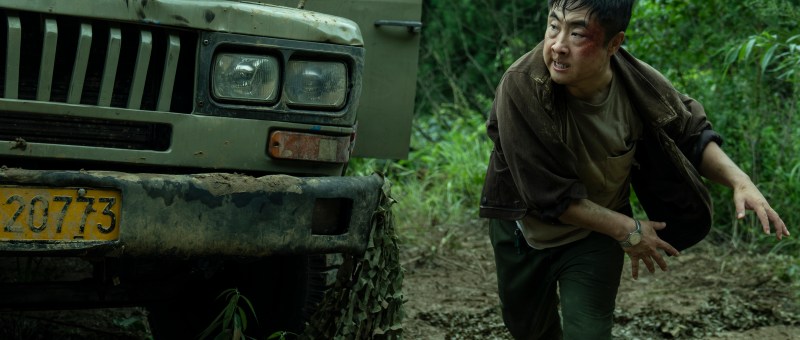
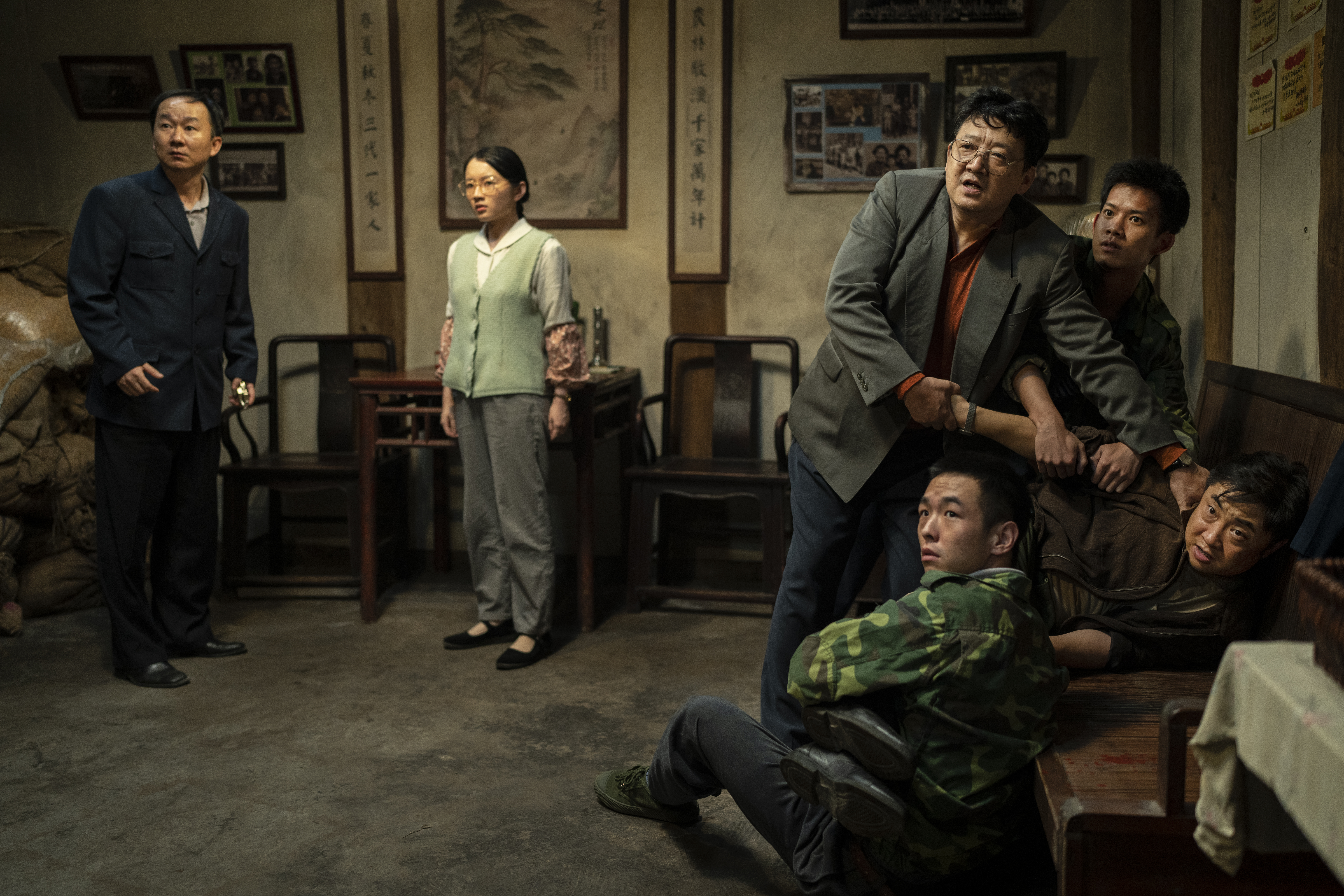
The problems begin when middle-aged former detective Yao (Qiao Shan), now working as a vehicle checker after being demoted for chasing a woman he thought was a missing person while in his underpants which frightened her so much she ran into traffic, is knocked out by criminal mastermind Ge Wenyong (Wang Yanhui) and the pair are taken into custody by the current village chief’’s daughter. She hopes that by catching the “thief” before the public security representative she can secure her succession to the role. As such, she’s inclined to believe Ge Wenyong when he says that he caught Yao breaking into his restaurant while as Yao came out in search of his missing friend on his off hours, he doesn’t have anything on him that proves he works in law enforcement. The villagers’ inability to believe him signals their declining faith in the authorities, while Ge Wenyong signals the rise of the new merchant class which is in this case quite literally bludgeoning the workers to death.
As a vehicle checker, Yao is immediately suspicious when one of the fog light caps he fitted on a now-missing lorry turns up on another one. The increasingly nervous driver tells him there’s an out of the way place where people sell parts from scrapped vehicles on the black market. Amid the economic reforms of the 90s as the nation transitioned away from the planned economy to a market one, many lost their jobs along with, at least as far as the film goes, their moral compass. Infected by greed, they climb over each other in search of material wealth. In some ways repentant lorry driver Yang is symbol of this newly materialistic impulse. His business went bust and he’s racked up massive debts which is why he ended up becoming a long-distance lorry driver. Even if his gift of pretty white shoes for his wife hints at this new consumerist society in their frivolity, the fact that Yang is dying of pancreatic cancer suggest that he too has been poisoned by the corrupting influence of capitalism. Now his only wish is to clear his debts so that his wife and daughter won’t be burdened by them when he’s gone.
There are a series of family photos that appear in the film besides the one that Yang keeps in his lorry beginning with the wedding photo which is dramatically shattered in the opening sequence. The “missing” woman we’re first introduced to is perhaps of this new China and looking for a more modern “freedom” in fleeing an abusive marriage to a man who tells the police that he didn’t hit her “that hard”. But unfortunately, she ends up running into Ge Wenyong who takes her prisoner and forces her to be a tool in his dark and exploitative criminal enterprise which involves knocking off lorry drivers and stealing their vehicles which are often carrying new consumerist goods such as televisions and video players. Yet, suave and manipulative, he manages to convince the villagers that he is actually an undercover public security agent while Yao is just a thief.
Meanwhile, they squabble amongst themselves while ironically preparing to accept an award as a “civilised advanced village”. The title cards at the end of the film assure us they were all punished too for “obstructing official duties, picking quarrels and provoking troubles”, though they are perhaps symptomatic of the problems of the old China, which have not exactly gone away, in their petty politicking at the expense of the people they’re supposed to be protecting. Yao, however, is redeemed by solving the case, if not without a few casualties, and is rewarded with reinstatement as a detective. He continues to be plagued by anxiety about the “missing persons” of China’s transitionary period as a representative of an authority almost certainly a little less benevolent than it’s being made out to be if also positioned as the only real force of resistance towards the rise of rampant capitalism and heartless “entrepreneurs” like Ge Wenyong.
Deep in the Mountains screened as part of this year’s New York Asian Film Festival.


 Windows on Worlds