Carlos (カルロス, Kazuhiro Kiuchi, 1991)

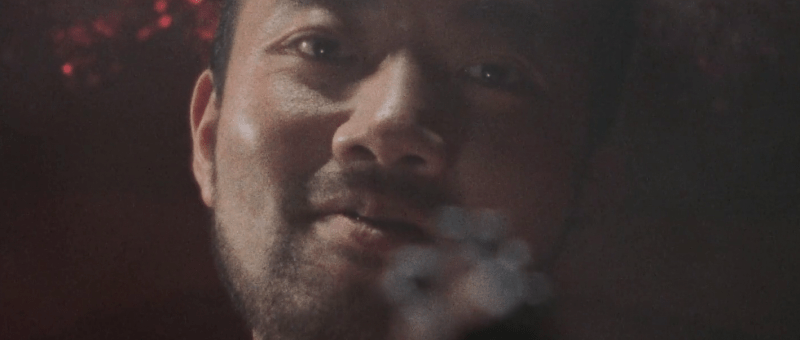
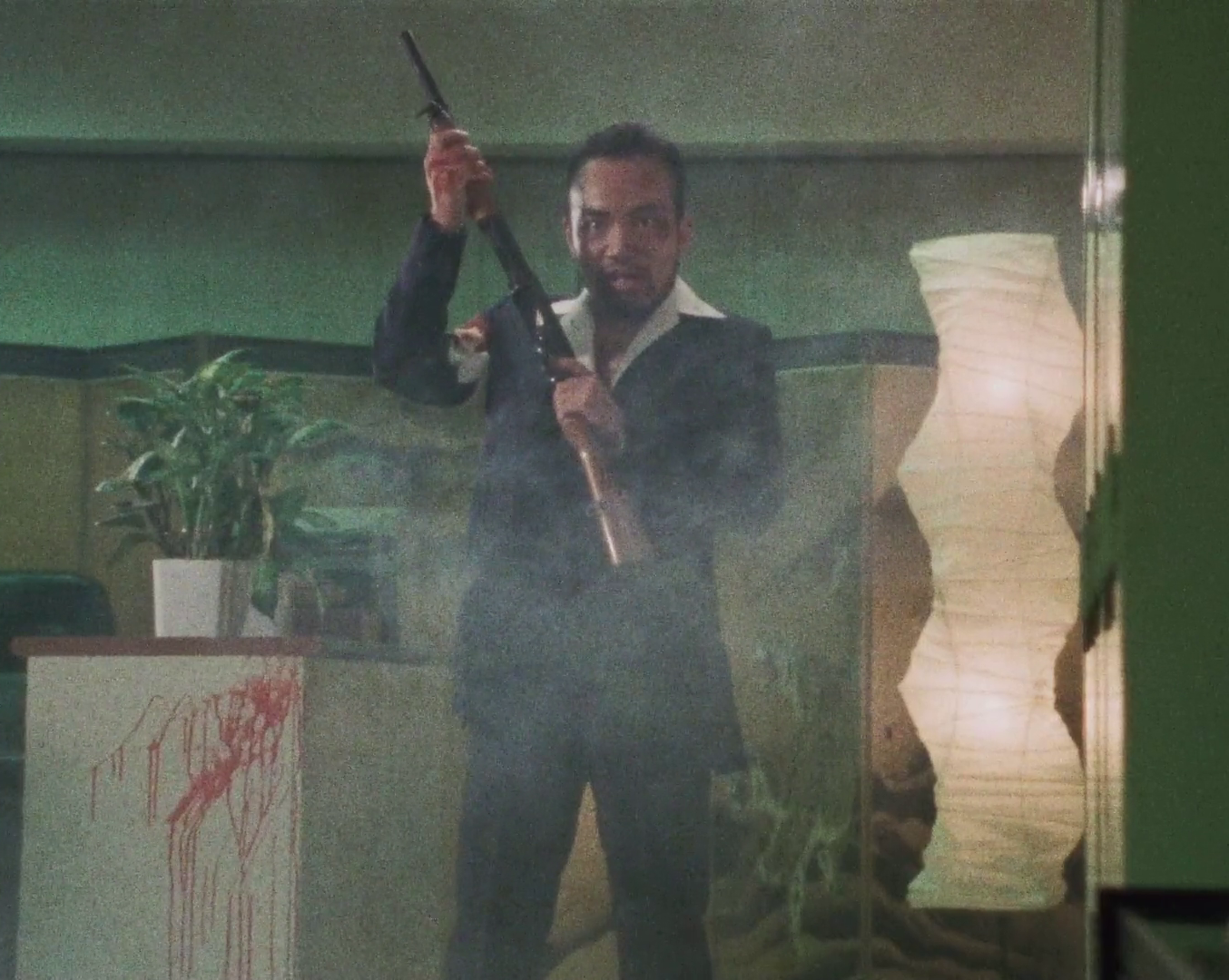
Fleeing a gang war with Columbian drug lords, a Brazilian gangster of Japanese descent tries his luck on the mainland but finds himself a perpetual outsider who can’t get himself taken seriously in Kazuhiro Kiuchi’s moody adaptation of his own manga, Carlos (カルロス). Owing a little bit to Brian De Palma’s Scarface, the tale takes place in a Japan mired in hopelessness and despair amid the spectre of economic collapse, while Carlos tries to play one gang off against another to exploit the terminal decline of the old school yakuza.

What we have here is a succession crisis. The Yamashiro boss (Minoru Oki) is planning to step down due to ill health though in the middle of a long-running dispute with the Hayakawa gang. When two of their guys are randomly killed, they assume only Hayakawa could be behind it little knowing that Carlos (Naoto Takenaka), a Brazilian-Japanese gangster on the run in Japan after killing eight policemen in a gang war in Brazil, killed them because they thought they didn’t need to obey the rules of the underworld with a “foreign” gangster. “We don’t need to treat those Brazilians as equals,” one says while already late to their appointed meeting. They haven’t paid Carlos for the guns he sold them, and when challenged, try to intimidate him into giving them away for free. But Carlos is sick of being intimidated and bumps them off himself. 

Carlos faces constant microaggressions about not being Japanese enough, though he speaks the language fluently without an accent. “Your crude taste doesn’t fly in Japan,” a yakuza tells him, criticising his outfit for being too informal when yakuza of this era generally dress in fancy suits and style their hair with military precision. That’s not really something that bothers Carlos, but he’s annoyed to be so easily dismissed and it’s true enough that he’s being used because they think he’s disposable. Not only is he not a “yakuza”, but as they don’t see him as Japanese either, they don’t need to accord him even the dignity they’d grant to a gang member. When Katayama hires Carlos to knock of his rival for the succession, Sato, he’s pissed off when Carlos takes things too far and puts on a show that threatens to blow the whole thing wide open by massacring Sato’s guys at baseball practice. To a man like Katayama, this is total idiocy and attributable to Carlos’ foreignness, both in his capacity for unnecessary violence and his lack of understanding of the rules of Japanese gangsterdom.

But the one place Carlos and his brother Antonio are fully Japanese is in the home of his aunt who also migrated from Brazil and their Japanese-born cousin Tomomi. Carlos’ aunt refers to them both by their Japanese names, Shiro and Goro, and cooks them Japanese food like sukiyaki. This pleasant domestic environment seems to represent a more settled life Carlos could have found outside of a crime family, especially as his brother Antonio grows closer to Tomomi, but there are also hints of darkness in his uncle’s early death from cirrhosis of the liver which suggests he may have had a hard life in Japan and taken to drink. Nevertheless, his aunt seems to have made a nice life for herself and her daughter and is overjoyed to expand her family by welcoming Carlos and Antonio.

Yet this sort of life seems outside of Carlos’ reach while he continues to play the yakuza gangs off against each other while simultaneously longing for some kind of recognition and almost willing them to figure out it was him who killed Sugita and Yano, the obnoxious Yamashiro guys. Meanwhile, the weakened yakuza have also turned to a foreign hitman, a brooding and robotic American who lacks compassion or compunction and unlike Carlos seems to be a mindless killing machine. When Carlos bests him, it’s an eerie moment echoing Blue Velvet as his body rocks and then falls. By contrast, when Carlos fights his way to the head of the Yamashiro gang, Yamashiro gets puffed up and draws his sword swearing he’ll teach Carlos what a mistake it is to underestimate the Japanese mob, only Carlos simply shoots him in a moment of clear victory over this outdated adherence to a traditional code. Nevertheless, it’s clear that Carlos can’t win here either and there is no room in Japan for a man like him. His only option is to go out all guns blazing as a means of validating himself as a force to be reckoned with, someone who was worthy of attention and of being taken seriously. Shot by the legendary Seizo Sengen, Kiuchi’s manga-informed compositions dissolve into visions of loneliness and despair but in its final moments reaches a crescendo of defiance if discovered only in futility.
Record of a Tenement Gentleman (長屋紳士録, Yasujiro Ozu, 1947)

There are no real villains in the world of Ozu, though the immediate post-war world does its best to create them despite the best efforts of those quietly trying to live amidst the devastation. The misleadingly titled Record of a Tenement Gentleman (長屋紳士録, Nagaya Shinshiroku), the Japanese title a more ironic “a tenement who’s who”, is, like Hen in the Wind, a kind of manifesto statement for the postwar era only a much warmer one which looks forward to Ozu’s celebrated family dramas as its decidedly frosty heroine finds her emotional floodgates breached by the unexpected arrival of a problematic little boy. 

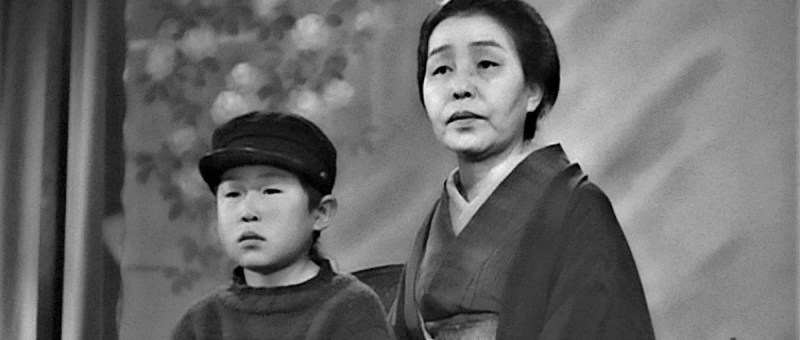
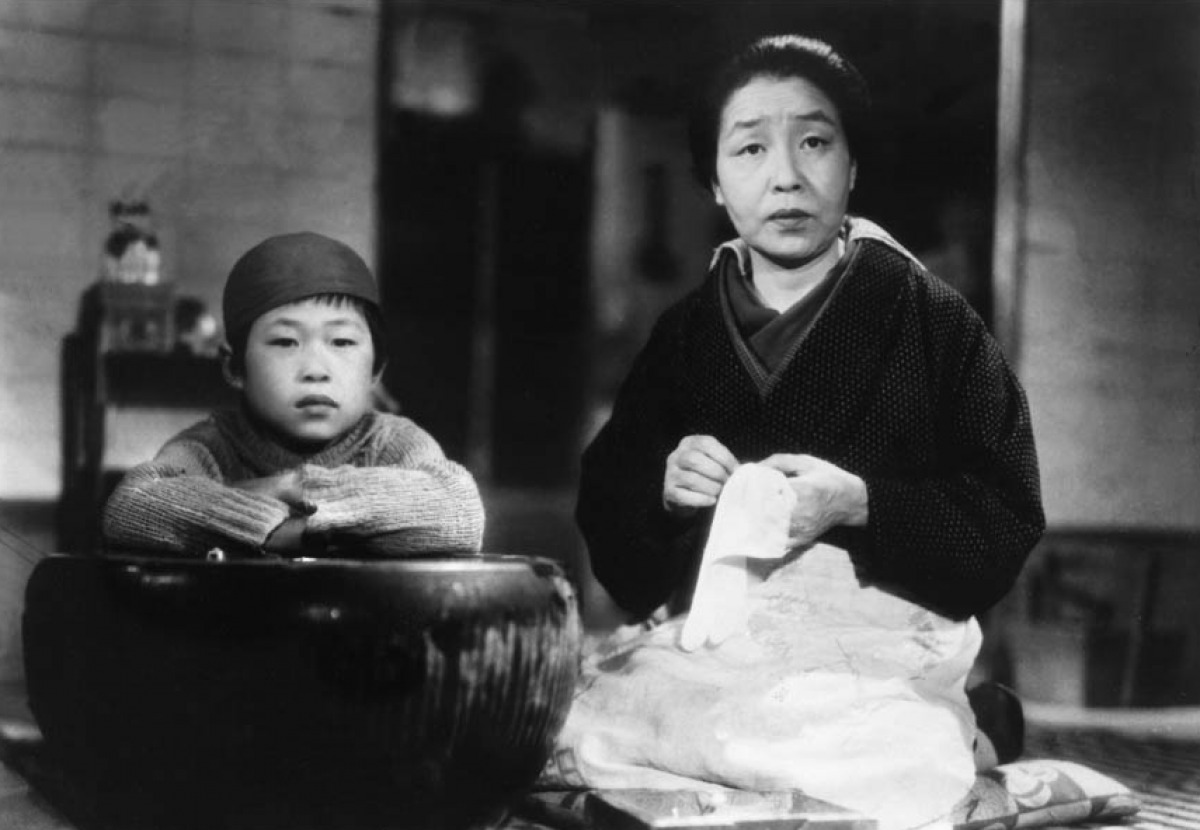
The little boy, Kohei (Hohi Aoki), is brought home by tenement gentleman Tashiro (Chishu Ryu) who found him wandering around in the town after becoming separated from his father. Tashiro’s roommate Tamekichi (Reikichi Kawamura) is unwilling to shelter the boy and so they decide to foist him on the grumpy old woman opposite, Tane (Choko Iida), who doesn’t want him either but is left with little choice. Tane is quickly angry with the boy because he wets the bed, ruining her spare futon, and tries to convince another neighbour who already has three children to take him in instead but is tricked into taking him back to the place he was previously living after Tamekichi rigs a game of straws. Travelling with him in the hope of finding his father, Tane wanders bombed out Tokyo and comes to the conclusion that Kohei’s dad has most likely abandoned him. 

A widow with no other family, or so it would seem, Tane is a cold and wily woman supporting herself with a small tenement shop. A sharp contrast is drawn when a childhood friend of hers, Kiku (Mitsuko Yoshikawa), arrives to ask about the best way to acquire a hose and shares some dorayaki sweets which have become a rare luxury in an age of rationing and privation. Kiku has married well and become a fine lady, not quite boasting but obviously very pleased with the walnut dressing table she had made with the mirror Tane helped her get on a previous occasion. Still, Tane is not embittered or especially unhappy just cynical and used to practicality. She didn’t see herself as the maternal type and had been intent mainly on ensuring her own survival.

Even so, she is touched and saddened to think a man might abandon his child even if she herself did not want to be burdened with him. She often scolds Kohei, frightening him with her stern expression, but later apologises when Tameshiro takes the blame for supposedly eating some of the persimmons Tane was drying at the window, even handing him the remaining fruit from the line. Talking with Kiku she recalls her own childhood as happy and carefree, tugging on her parents’ sleeves asking for pocket money while Kohei’s pockets are filled with cigarette butts and nails for the carpenter father Tane is sure has abandoned his son. This last fact is the one that finally touches her heart. Despite his fear and his hurt, Kohei has continued to think of his father and has been selflessly collecting little presents on his behalf to give to him when they are reunited. 

The innocence and selflessness of children is further emphasised by the son of a neighbour winning a prize in the lottery leading some of the other residents to insist that children are more likely to win precisely because they enter with a pure heart not with the intention of winning or monetary gain. Tane tries the theory out by making Kohei buy a lottery ticket with money Kiku had given him as a treat but of course he doesn’t win and Tane is upset, blaming him for not being as goodhearted as she’d assumed, but later giving him the money back when he bursts into tears (which is something he does often, perhaps understandably but out of keeping with the mentality of the times). Nevertheless, despite herself Tane becomes fond of the boy and even begins to think about adopting him as her own son. 

Eventually Kohei’s father returns, but Tane’s conversion is so complete and absolute that the tears she cries are not in lament for herself but in happiness to know that the boy’s father was not the awful man she thought he was but a doting parent distraught at the thought of his missing son. She is moved by the happiness they must feel in their reunion and realises that her time with Kohei has taught her many things, not least among them that she has allowed the times to cool her heart. The post-war world, the ruins and devastation we can glimpse beyond the tenement, has forced people to become self-interested, little caring if others starve so long as they aren’t hungry. She regrets that she wasn’t warmer to the boy when he arrived, and wishes we could all be more like children kind to others without thinking of ourselves. Cementing what would come to be his iconic signature style, Ozu ends, somewhat uncharacteristically, on a melancholy scene of street children, a crowd of war orphans abandoned by the society which created them through militarist folly. As much a chronicle of everyday life in the ruins of a major city, Record of a Tenement Gentleman is also an unsubtle argument for post-war humanism in a society it sees as in danger of failing to learn from past mistakes.