Paradise of Solitude (孤独な楽園, Ikki Katashima, 2024)

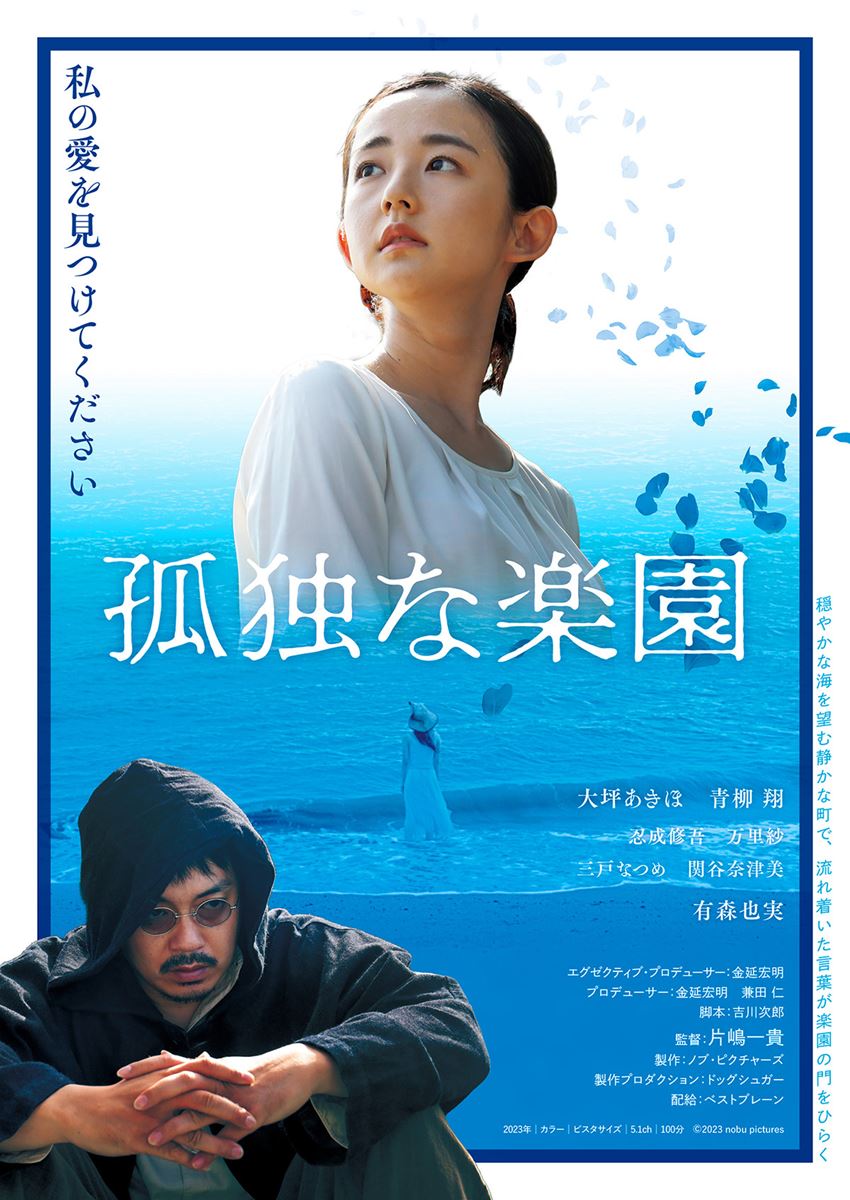
A blocked writer and a introverted young woman discover unexpected connection through accidental epistolary communication in Ikki Katashima’s poetic drama, Paradise of Solitude (孤独な楽園, Kodokuna Rakuen). Each wondering what exactly “paradise” means, the pair of them eventually find new ways to face the past and move on with their lives all while undergoing a vicarious romance with yearning at its centre that may or may not develop into something more “real” or else achieve its power solely through its lack of resolution. 

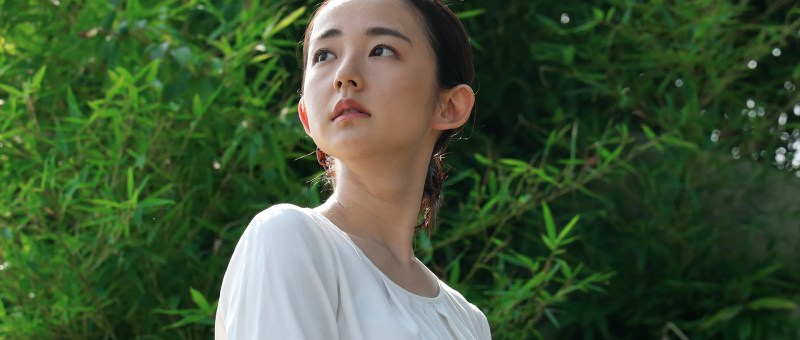
Yu Tsushima (Sho Aoyagi) is a writer struggling to meet his deadlines on a new serialised novel. Suffering with an illness, he’s retreated to his hometown and is now unable to leave because he experiences seizures on boats which understandably leaves him preferring not to get on them. One day, he receives an incredibly poetic love letter from an anonymous address only to notice a link to a porn site at the end of the email like a cruel punch line. Meanwhile, Ayame (Akiho Otsubo) is a nervous and introverted young woman working at a factory on the next island over. To begin with, it seems like she has suffered under the authoritarian rule of her aunt Tsukiko (Narimi Arimori), though as we later discover she may have meant well. 

Showing a talent for writing which sees her exploited by the factory boss, Ayame is tasked with writing a love letter on behalf of her friend Elena to a man she’s apparently only seen once yet has fallen hopelessly in love with. There’s something a little strange about this proposition, and not least because it seems like Elena may actually want this letter for herself and has unspoken (in Japanese, at least) feelings for Ayame. Elena is not the only non-Japanese person working at the factory at which it seems there may be some racist attitudes and behaviour among the employees, though there may be other reasons she feels isolated and otherwise drawn to Ayame.

But somehow, the letters find their way to Yu who is then “inspired” to write a new serial basically ripping off the anonymous correspondence but rewriting it in his own way while Ayame, having read his stories in a literary magazine, is not exactly angry yet confused and continues writing in order to complete this literary back and fore in crafting a new story together. Though the letters spin a tale of a lovelorn soul, it’s really the past that Ayame longs to revisit in the resultant trauma of her mother’s unexplained abandonment.

On top of the weird island drama, Katashima builds on the sense of uncanniness with a subplot about a cult-like local church and its own desire to reclaim Ayame thereby preventing her from fully confronting her past. Just as Yu is suffering from a medical condition, Ayame too experiences panic attacks when in contact with the church. Though it’s not always clear what is objectively true and what part of the story Yu is constructing from Ayame’s prose, parallel stories develop in which Ayame’s father hoped to liberate her mother’s soul though she eventually decided to chase paradise somewhere else. 

Because of her experiences, Ayame comes to believe that love within her has died, but perhaps begins to regain something of it thanks to her correspondence with Yu who becomes remorseful in learning that his actions may have been additionally unethical in encouraging Ayame to engage with her past trauma and risk dragging it all up again. He, meanwhile, begins to discover his creativity and overcomes the psychological dimensions of his condition by leaving his island and breaking out of his self-imposed isolation. The correspondence is like the message in a bottle discovered by Ayame’s mother which claimed to be from “paradise”, a hand across the ocean promising a better world over the horizon. Whether or not they find each other eventually in a more direct sense may not really matter, for simply having this invisible presence has enabled each of them to move past their internalised inertia and restart their lives. They may be trapped in a paradise of solitude, but on the other hand not quite alone and now a little more open to life’s possibilities rather than bound by its hurts and disappointments too frightened to leave the safety of their isolation in search of a more perfect paradise.


Paradise of Solitude screened as part of this year’s Cinema at Sea.

Trailer (no subtitles)
Tokyo Sonata (トウキョウソナタ, Kiyoshi Kurosawa, 2008)

Orphaned salarymen are the soulless ghosts haunting an increasingly empty city in Kiyoshi Kurosawa’s eerie tale of urban anxiety Tokyo Sonata (トウキョウソナタ). Undermining the certainty of the traditional family, Kurosawa paints it as a simulacrum dependent on each member playing their respective role blindly or otherwise, though in this case the integrity of the family unit is shaken by an economic intervention in which the accepted rules of the society have been upended with a vindictiveness that seems inexplicably unfair. 

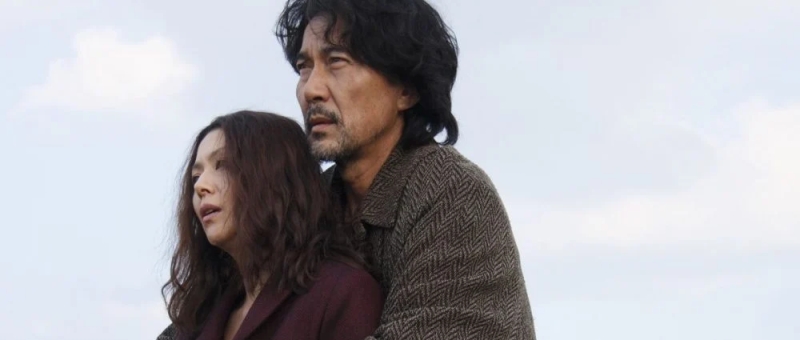
This is the bargain of the salaryman dream. A man like Sasaki (Teruyuki Kagawa) now aged 46 came of age at the tail end of an era of economic prosperity. He was brought up in an atmosphere of jobs for life in which the corporate family was almost more “real” than the emotional which is one reason why it comes as such a shock when his boss effectively divorces him. He’s found someone new, planning to outsource Sasaki’s entire department to China while less than kindly explaining that as he has no other skills he of no more use to the company. Sasaki immediately clears his desk in anger, walking home early with a pair of carrier bags then, after meeting his son in the street, attempting to climb in through an upstairs window to avoid alerting his wife, Megumi (Kyoko Koizumi), to the fact he’s home early.

Sasaki is unable to tell her that he’s lost his job in part because of the acute embarrassment it would cause him. Somewhat dazed and confused, he’s become one of many disenfranchised salarymen who survived the 15 years of economic stagnation only to have the rug pulled out from under them. Being a salaryman was in a way his whole identity and without it he doesn’t know who he is, which is one reason he puts on a suit every day and goes to sit in the park surrounded by other similarly dressed men with briefcases who now seem to haunt the city like crows ominously dotting the horizon. In a repeated motif, Kurosawa shows us people trapped in kafkaesque queuing situations shuffling around buildings while prevented from moving forward but forced to keep pace with the increasingly glacial environment. At the moment an old school friend he runs into, Kurosu (Kanji Tsuda), seems to give up he is swept into a great parade of the suited and hopeless while Sasaki hovers on its edges. 

It’s this threat to Sasaki’s masculine pride which is largely founded on his economic ability to support a family that kickstarts a chain reaction in his home even he becoming increasingly violent and authoritarian in an effort to overcome the sense of humiliation and powerlessness he feels after being made “redundant”. His younger son, Kenji (Kai Inowaki), tells him he wants to learn the piano but Sasaki irritably shuts him down either because he’s now worried about the money or simply sees it as a frivolous waste of time. Later when Megumi asks him why he won’t he change his mind he insists that he has to stick to his original decision otherwise it would undermine his patriarchal authority as a father. 

But this “authority” was perhaps already largely illusionary given that an intense work schedule meant he was rarely home to do much parenting. After finding out Kenji spent his lunch money on piano lessons behind his back he ironically shouts at him for lying and keeping secrets even though this is obviously what he himself has been doing in keeping up the illusion of his identity as a conventional salaryman. His older son, Takashi (Yu Koyanagi), was keeping secrets too his being his desire to join the US military believing that Japan no longer has a future for him in an atmosphere of stagnation not only economic but emotional and spiritual. Takashi tells his mother she should leave Sasaki, but to her question of who would play the role of mother replies that it makes no difference simultaneously encouraging her to reclaim an individual identity and perhaps robbing her of one just as Sasaki lost his in being shorn of his salaryman credentials. 

Lying on the sofa one evening she raises her arms and poignantly asks someone to lift her up but Sasaki has already gone to bed without even looking at her. Her life as a housewife is thankless and emotionally unfulfilling. Donuts she spent ages making go uneaten while her husband and sons brood on their own problems alone. At a car dealership, the salesman shows her a people carrier explaining that it’s perfect for family camping trips while she gravitates towards a red convertible, mesmerised by the way the roof can just disappear as if it were literally freeing her of her stultifying existence. On showing Takashi the shiny new driving license she’s just got as a symbol of her desire for independence, he scoffs that she’ll never use it but she counters him that it’s for “ID” which it is in more ways than one.

The family is imploded, the illusions of a conventional middle-class life upturned as Sasaki and Megumi each ask themselves if there’s a way to start again and escape their sense of middle-aged futility and disappointment. Cracking under the weight of conventionality, the foundations begin to fracture but the family nevertheless finds itself returning if with greater degrees of clarity and perhaps with less inclination to play the play the roles assigned to them rather than those they might wish to play as embodied by Kenji’s moving performance at the piano capturing all of the chaos and confusion of the world around him but finding in it also harmony and a gentle breeze that feels almost as if the city itself were breathing once again.


Tokyo Sonata screens Feb. 18 as part of Family Portrait: Japanese Family in Flux

International trailer (English subtitles)

Hamon: Yakuza Boogie (破門 ふたりのヤクビョーガミ, Shotaro Kobayashi, 2017)

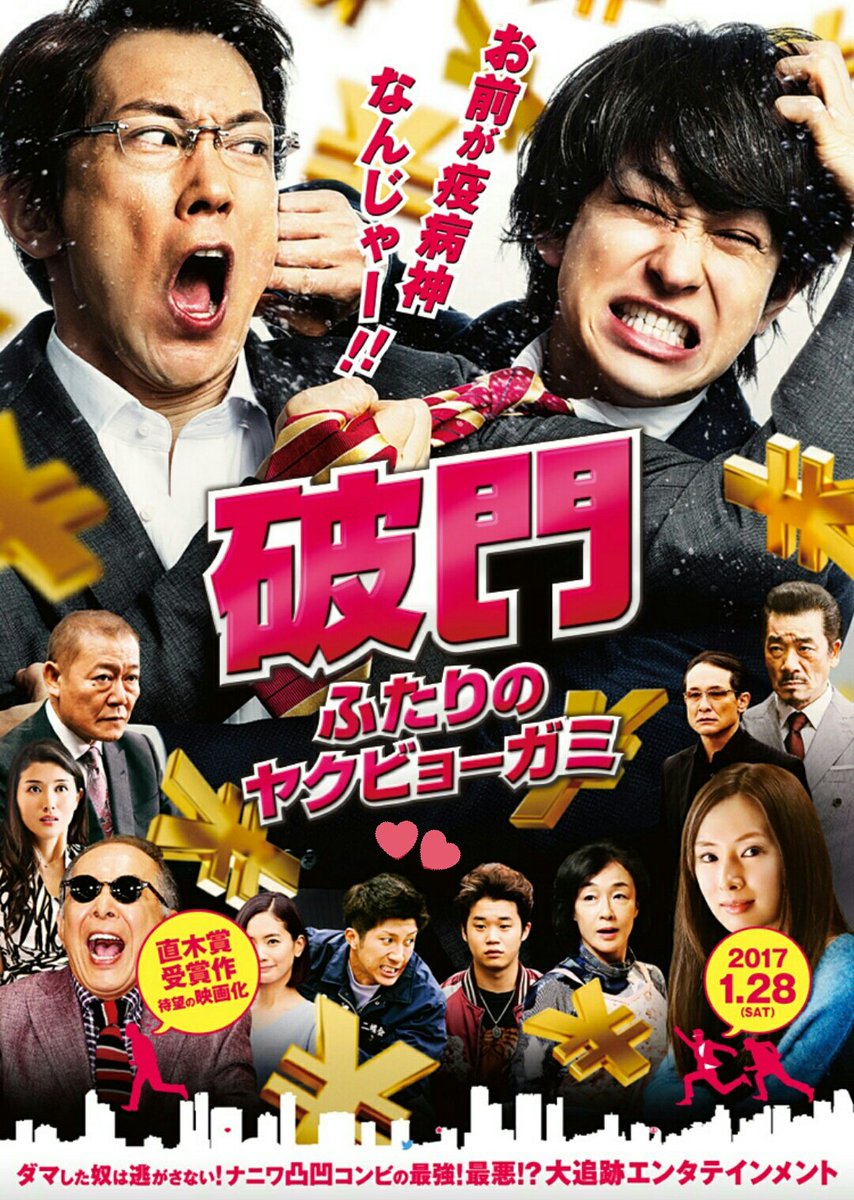
hamon posterConventional wisdom states it’s better not to get involved with the yakuza. According to Hamon: Yakuza Boogie (破門 ふたりのヤクビョーガミ Hamon: Futari no Yakubyogami), the same goes for sleazy film execs who can prove surprisingly slippery when the occasion calls. Based on Hiroyuki Kurokawa’s Naoki Prize winning novel and directed by Shotaro Kobayashi who also adapted the same author’s Gold Rush into a successful WOWWOW TV Series, Hamon: Yakuza Boogie is a classic buddy movie in which a down at heels slacker forms an unlikely, grudging yet mutually dependent relationship with a low-level gangster.
Ninomiya (Yu Yokoyama), a classic slacker, makes ends meet by acting as a kind of liaison officer between the normal world and the yakuza one. His contact, Kuwahara (Kuranosuke Sasaki), is a scary looking guy but as yakuza go not so bad to work with. Following the government’s organised crime crackdown, Ninomiya finds himself at more of a loose end and so when an elderly film director, Koshimizu (Isao Hashizume), comes to him and asks to meet a yakuza first hand, Ninomiya sets up a meeting. Yakuza and movies can be a dangerous mix but somehow or other Koshimizu manages to charm the pair and even gets Kuwahara’s boss, Shimada (Jun Kunimura), to invest some of his own money.

Unfortunately, this is when things start to go wrong. Koshimizu’s pretty “daughter” is really his mistress (as Kuwahara suspected) and the wily old bugger has taken off for the casino paradise of Macao with both the beautiful woman and suitcase full of yakuza dough. Kuwahara is now in a lot of trouble and ropes in Ninomiya to help him sort it out but in their pursuit of Koshimizu they eventually find themselves caught up in a series of turf wars.

Yakuza comedies have a tendency towards unexpected darkness but Hamon’s key feature is its almost childish innocence as Ninomiya and Kuwahara go about their business with relatively few genuinely life threatening incidents. Though the pair bicker and argue with Ninomiya always secretly afraid of his big gangster buddy and Kuwahara fed up with his nerdy friend’s lack of know how, the relationship they’ve developed is an intensely co-dependent one which fully supports the slightly ironic “no me without you” message. Eventually growing into each other, Ninomiya and Kuwahara move increasingly into the other’s territory before finally re-encountering each other on more equal footing.

These are less rabid killers than a bunch of guys caught up in a silly game. Shady film director Koshimizu turns out to be some sort of cartoon hero, perpetually making a sprightly and unexpected escape despite his advanced age while the toughened gangsters hired to keep him locked up find themselves one hostage short time after time. Ninomiya’s worried cousin Yuki (Keiko Kitagawa) keeps trying to talk him into a more ordered way of life which doesn’t involve so much hanging round with scary looking guys in suits, but Ninomiya is reluctant to leave the fringes of the underworld even if he seems afraid for much of the time. Kuwahara is a yakuza through and through, or so he thinks. This latest saga has left him in an embarrassing position with his bosses, not to mention the diplomatic incident with a rival gang, all of which threatens his underworld status and thereby essential identity.

Still, all we’re talking about here is having a little more time for solo karaoke, not being bundled into the boot of a car and driven to a remote location. Filled with movie references and slapstick humour this is a yakuza tale inspired by classic cinematic gangsters rather than their real world counterparts but it still has a few things to say about human nature in general outside of the fictional. An odd couple, Ninomiya and Kuwahara couldn’t be more different but besides the fact they don’t quite get along, they make a good team. No me without you indeed, solo stakeouts are boring, even if you do bicker and fuss the whole time it’s good to know there’s someone who’ll always come back for you (especially if you tell them not to) ready to take the wheel.


Hamon: Yakuza Boogie was screened at the 19th Udine Far East Film Festival.

Original trailer (no subtitles)

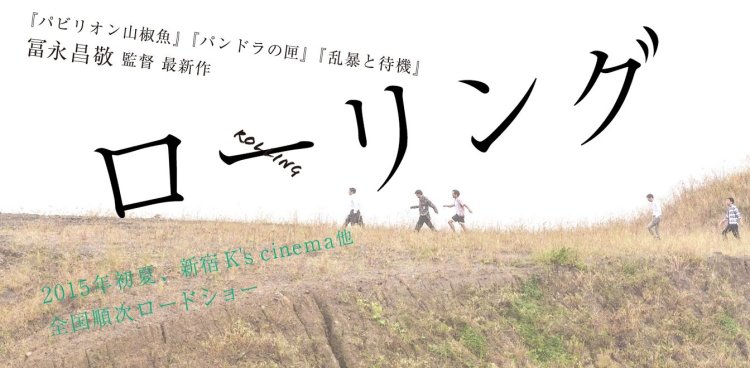
Rolling (ローリング, Masanori Tominaga, 2015)

384f90_4054bb8ba5554cc186f2bce4c6beb853“Weird teacher” is almost becoming a genre now. Even so, the teacher at the center of Masanori Tominaga’s Rolling may give them all a run for their money (well, for about five yards before having somekind of bizarre accident, anyway). Gondo is a feckless middle aged man who was fired from his teaching position ten years previously after having been caught secretly filming the girls’ changing rooms. Now he’s back in his old stalking ground after having pulled off an improbable white knight routine by rescuing the young and pretty Mihara from a bad boyfriend in Tokyo. However, his former students have not forgotten him or his pervy ways! It’s not long before the entire town of twenty somethings are on Gondo’s case hoping for a little vengeance for their teenage betrayal.

However, Gondo’s fortunes improve slightly when it’s discovered that some of his secret recordings feature some rather salacious goings on starring a former classmate whose TV career is just about to kick off. Smelling money in the air, Gondo is suddenly everyone’s best friend again. Gondo is…still Gondo though so as you may expect this state of affairs will not last. He’s even lost Mihara to a former student of his, one he even quite likes too…

Despite his failings and protestations to the contrary, what Gondo ultimately remains is a teacher. Yes he’s made some mistakes (understatement of the century), and he’s actually quite unpleasant in a lot of ways but somehow he still wants to protect this ragtag bag of not quite young people that he previously harmed. Coming to the realisation that his actions not only resulted in revulsion and violation of trust but also had a disruptive effect on the educational progress of his students simply resulting from his abrupt dismissal, Gondo does at least want to make amends (in his own way).

However, Gondo’s just the kind of guy things never work out for. “All my students are idiots” he proclaims at one point and he’s not altogether wrong. Attempting to hatch a blackmail plot with a very strange group of a idol managers-cum-gangsters and an ex-policeman, the gang get themselves into a whole world of trouble which is only exacerbated when the almost famous subject of the video comes forward and makes a very surprising request of her old flame and Gondo’s kindly love rival Kanichi.

Darkly comic, Rolling has the air of a film noir B movie with its ever present voice over and thriller trappings including secret video taping, a blackmail plot and trio of business-like gangsters. It is though, also firmly grounded in the now despite its often surreal humour. Also branded an “erotic comedy” Rolling is fairly high on sexual content adding to its generally sleazy feeling. It may well go down as a cult hit simply for the phrase “I’m going to make a milkshake out of your filthy boob juice” which gives you some indication as to the tone.

Far from perfect but oddly touching if sometimes baffling too, Rolling is another strange and surreal adventure from Tominaga. Its slightly vulgar tone may put off some but by and large it gets away with it through sheer cheekiness and absurd humour. Gondo is a dreadful person almost all of the time, selfish and needy yet he also seems to have this yearning for redemption which makes him seem not so bad really, as does the fact that most of his former students have not turned out all that well – even the “hero” Kanichi has his problems. For those that can accept its oddly surreal tone and decidedly old fashioned gender politics, Rolling is a rewarding and delightfully absurd film that does also manage to pack in a decent (if subtle) amount of social commentary.


Reviewed at Raindance 2015.

Review of Masanori Tominaga’s Rolling (ローリング) – first published by UK Anime Network.