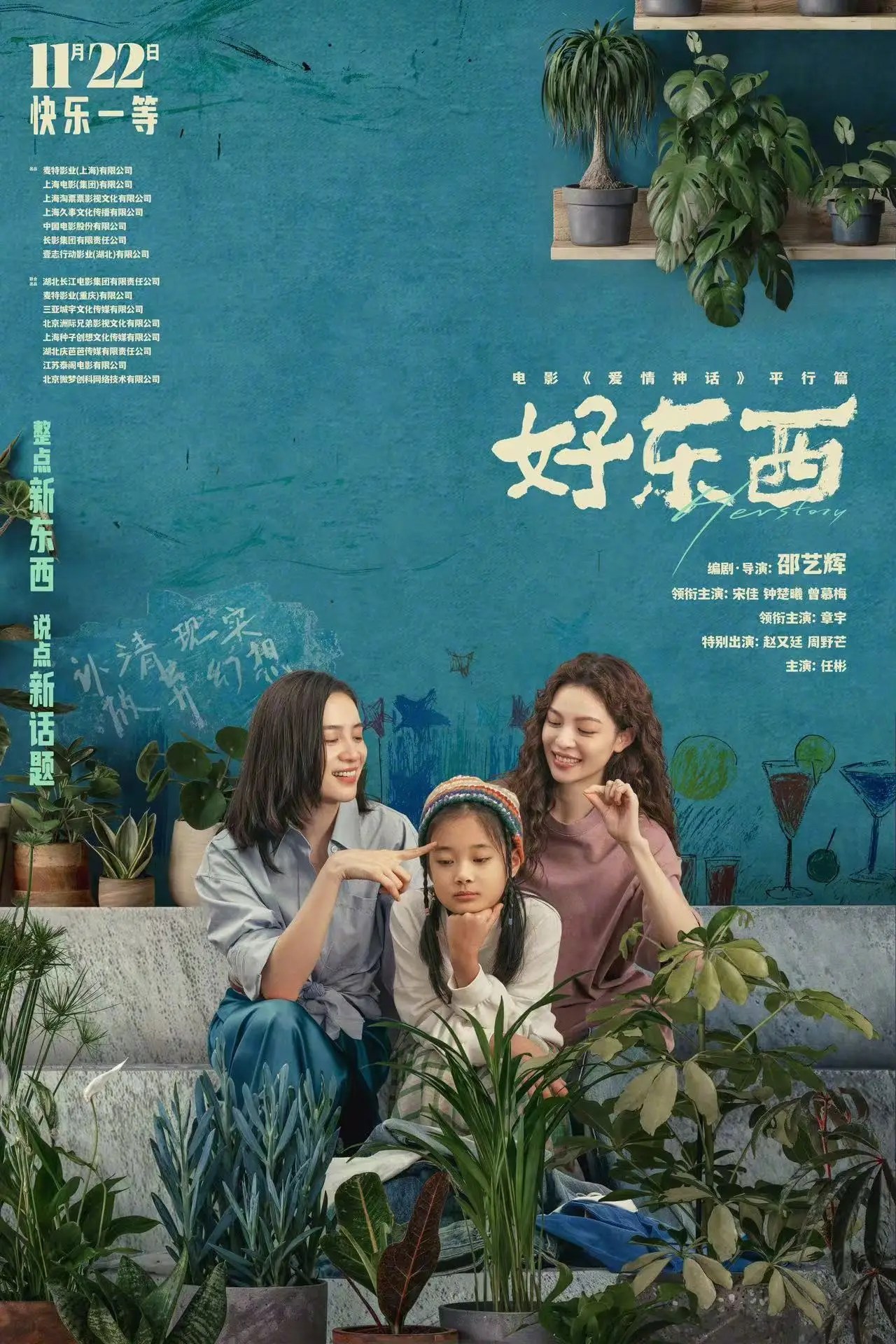
Nine-year-old Molly (Zeng Mumei) says she doesn’t have any dreams anymore and is content to remain a member of the audience which is the role she’s been assigned as part of orchestra class. In truth, that might be something she’s picked up from her mother, Tiemei (Song Jia), who also says that she no longer has dreams because she’s seen the reality. Shao Yihui’s Her Story (好东西, is being hailed as something of a landmark film given that mainstream Chinese cinema does not often engage with feminist issues or at least not quite so directly as in this strangely joyful celebration of female solidarity and found family.
Indeed, the Chinese title of the film is “good things” which Tiemei and Molly begin to find after being forced to move to a cheaper apartment in an old-fashioned walk-up building because Tiemei is struggling to find work in a shrinking journalism industry. She later tells a colleague at her new job working for a friend’s online news outlet that she took a break from her career as an investigative reporter not because she had her daughter but because she realised she didn’t have the strength to go on fighting the system.
Yet in a way she’s fighting the system solely in the way she lives as a divorced woman raising her daughter alone. It later transpires that it was her husband who wanted the divorce because he got fed up with living with as househusband even though that was his choice, though he seems to regret the decision and randomly tells Tiemei that he’s getting a vasectomy as some kind of strange proof of loyalty in insisting Molly will be his only child. Since they’ve split up, he’s apparently come to a feminist awakening and is cognisant of his male privilege thanks to actually reading Tiemei’s articles but ironically still feels the need to insert himself into conversation.
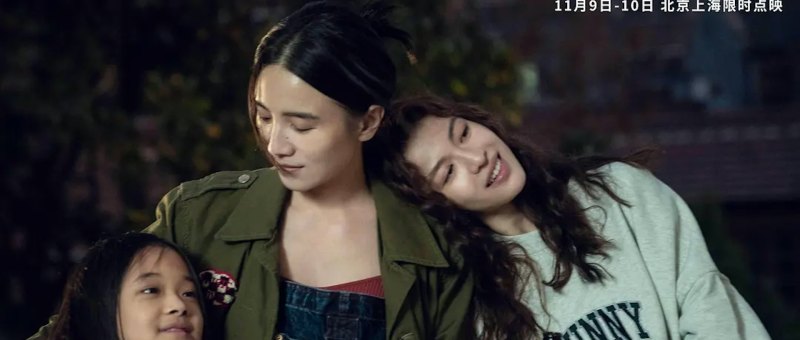
In any case, after moving into the apartment, Tiemei and Molly become friends with the bohemian woman who lives upstairs and is the singer of a rock band. Ye (Zhong Chuxi) is a very chaotic presence and the total opposite of Tiemei’s defiant practicality, but despite herself Tiemei becomes a kind of maternal figure to her after scaring off a creepy guy who was following her late at night. But equally Ye becomes a kind of big sister or secondary maternal figure to Molly, offering her a more relaxed vision of womanhood along with a creative space to express herself.
Perhaps surprisingly for a mainstream Chinese film in which LGBTQ+ themes, the two women effectively end up raising this child together almost as if they were a couple in a happy familial environment. They often share a bed and at one point are actually mistaken for lesbians by Ye’s sometime optometrist boyfriend Hu to whom she lied about having a child so that he wouldn’t see her as clingy, effectively adopting Tiemei’s persona. Tiemei even helps Ye sort of break up with him by posing as the scorned lesbian partner, hilariously laying it on thick to get Hu to trip himself up and admit to being a playboy womaniser. Though it’s obviously true that they are not in fact romantically involved, the film nevertheless does not only acknowledge the existence of lesbian women and even lesbian women raising children but tacitly approves and accepts them as part of its broader feminist themes. It even opens on a shot of what appears to be queer longing in lingering on a very striking Ye leaning out of her window drinking in the daytime as Molly looks up from below in wonder.
It is in fact Molly who becomes the centre of the film as she regains the ability to have dreams again while discovering herself and gaining the courage to take risks in search of happiness in a society all too keen to slap women down. Tiemei writes an article about what it’s really like to be a working single mother but is quickly attacked by internet trolls causing Molly to retreat into herself, realising that if her mother hadn’t written the article she wouldn’t be getting trolled. But thanks to the supportive environment around her and the relationship between Teimei and Ye, Molly resolves not to let the world beat her into submission. The scenes of her rocking out on her drums while the drippy boy who keeps “denouncing” her at school flounders at the dull music club concert speaks volumes. She may realise that she prefers being in the audience anyway, but that’s alright. Writing is her outlet, something else she may have have picked up from her mother, and she’s less of a bystander than observer humorously recording the compromises and contradictions of the world around her while bolstered by her found family and a gentle sense of female solidarity.
Original trailer (English subtitles)


 Windows on Worlds