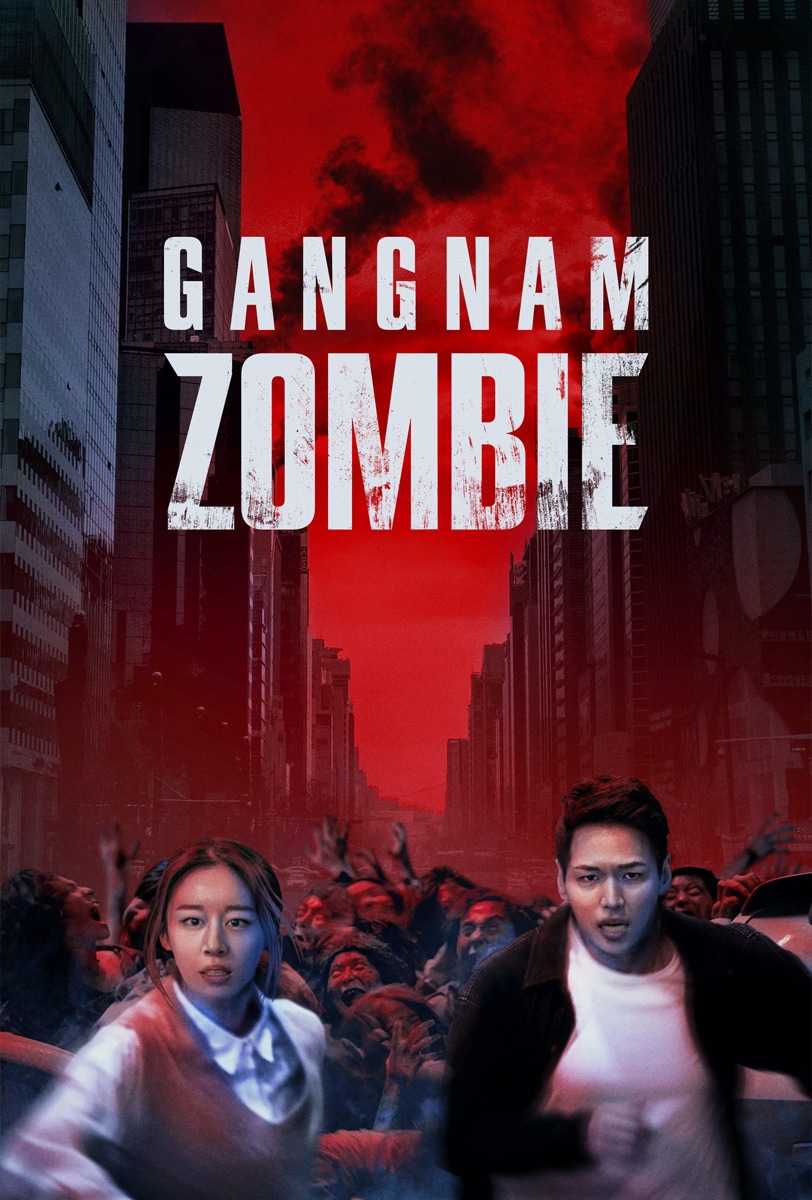
Gangnam Zombie (강남좀비, Lee Soo-sung, 2023)

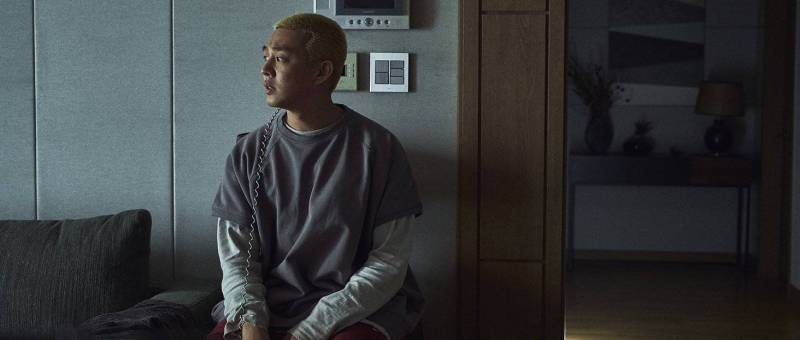
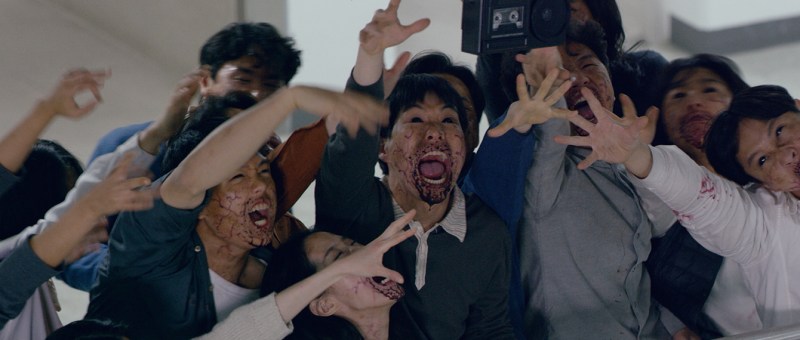
A struggling YouTuber takes on sexism, classism and the zombie apocalypse in Lee Soo-sung’s office-bound horror Gangnam Zombie (강남좀비). Lee apparently chose the title to appeal to international audiences hoping to cash in on the cachet of Gangnam Style and the film does have a made for export aesthetic, but even so it tackles some of the ills of contemporary Korea from work-based sexual harassment to the difficulties of getting a foot in the door in media and calls from your mother asking you to go home and farm melons with her rather than hang around failing to make it Seoul. 

For all that, however, Hyun-seok (Ji Il-joo) is a fairly cheerful man actually quite excited about asking his colleague Min-jeong (Park Ji-yeon ) out to a Christmas concert even if voices on the radio warn that we’re not so much living in a post-pandemic world as with a virus that could easily mutate again and there’s no telling when the next great pathogen may arise to kill us all off for good. This is essentially what the film suggests the zombie virus is, though the implication that it was shipped in from China may be in fairly poor taste along with the immediate allusion to the first cases of COVID-19 in Wuhan in 2019. In any case, patient zero acquires the virus from a zombie cat apparently trapped inside a container vessel he was in the middle of robbing and then goes on to kill his accomplice. 

Meanwhile the film devotes much of its time to the travails of Hyun-seok who is accosted by the landlady of the building where his office is because his boss is way behind on their rent while Hyun-seok counters he hasn’t been paid for three months either. The boss is also sexually harassing Min-jeong but she feels she can’t say anything because it was difficult for her to get this job and she’s worried about being blacklisted if people find out she reported her harassment. Hyun-seok had run into her outside work standing up for two women against to two chauvinistic men who’d apparently tried to use a date rape drug on one only her friend had noticed and saved her. Min-jeong feels confident standing up to them, citing the law to prove her point, but has mixed feelings when Hyun-seok intervenes pointing out that if they get lawyers it could be him going to jail not them. 

But then again, the law’s not much use in a zombie apocalypse. Hyun-seok is also a reserve member of the national Taekwondo team which is certainly a handy skill to have, but it’s also true that he sometimes ironically falls into a sexist hero mode in his desire to protect Min-jeong even if he does teach her a few moves she can use against both zombies and sleazy bosses allowing her to hold her own and in fact save him on more than one occasion. Meanwhile they are both saddled with the snooty landlady who is forever complaining that “the poor” have no manners, sense of responsibility, or inclination to save up for things while insisting no one call the police because it’ll lower the property prices and she’s trying to sell the building. It might be tempting to see her as an embodiment of a rabidly capitalist society consuming its workers and turning them into mindless, flesh-hungry drones if it weren’t perhaps also true that the film is not all that sympathetic about Hyun-seok’s failure to make it as a YouTuber. Perhaps he ought to listen to his mother and go home to farm melons after all. 

Lee does his best with a limited budget, as Hyun-seok and Min-jeong desperately try to escape the corporate prison of the office building to seek freedom and safety outside but largely saves the zombie action for the climactic final sequences in returning to the film’s opening while otherwise focussing on Hyun-seok’s romantic diffidence and the problematic atmosphere in his moribund live-streaming office. But then again it seems to say that just because you got away once doesn’t mean you’re safe or the aggressors of a dog eat dog society won’t necessarily wake back up when you least expect it to embody the city once again consuming those who cannot escape it with increasingly bloody violence. 


Gangnam Zombie is released in the US on Digital, DVD, and blu-ray on Sept. 26 courtesy of Well Go USA.

International trailer (English subtitles)

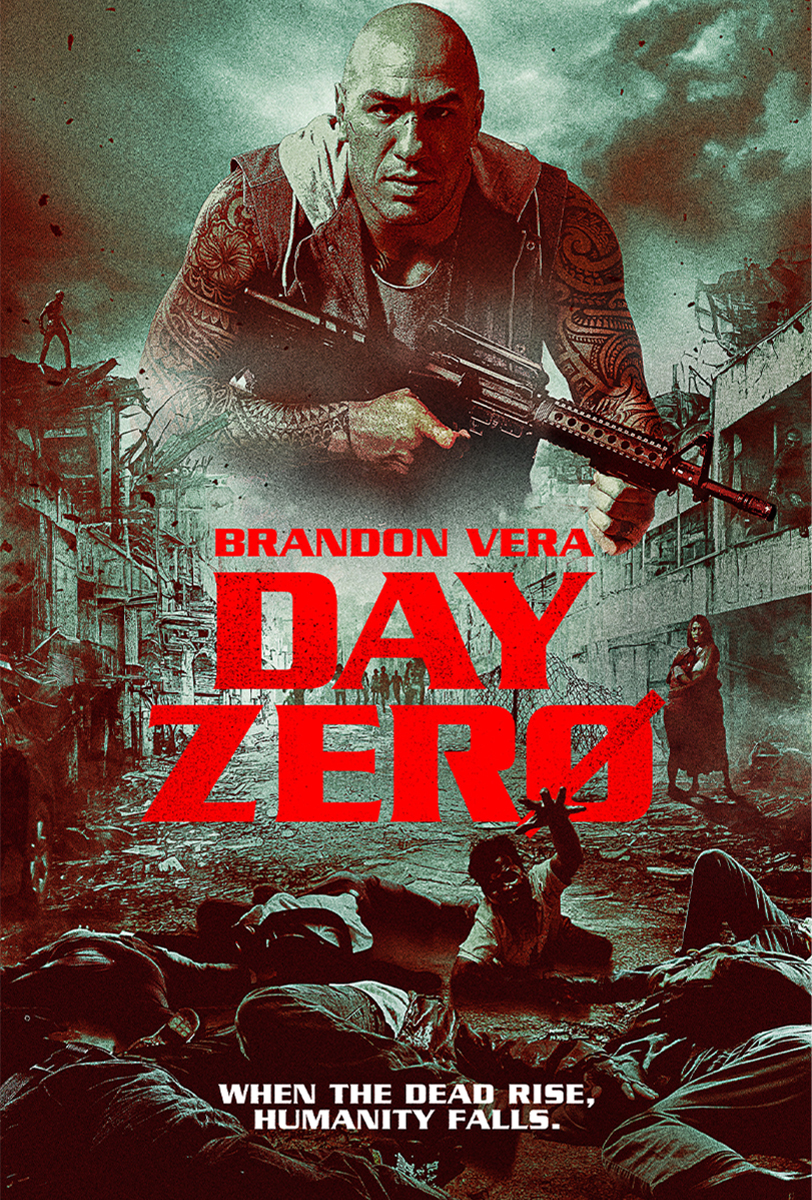
Day Zero (Joey De Guzman, 2022)

“This has been a really catastrophic day” according to a sympathetic, if not very reassuring, voice on the radio at the conclusion of Joey De Guzman’s zombie horror Day Zero. As the title suggests, the film takes place over 24 hours and marks the beginning but not end of the outbreak which will continue long after the end credits roll with ordinary people desperately trying to escape the seemingly endless stream of undead assailants. 

Perfectly placed to face off against them is Emon (Brandon Vera), though he’s spent the last few years in prison for serious assault resulting in permanent disability. Emon is a former US special forces soldier and has apparently been a model prisoner so has won his parole and is hoping to return home to his wife Sheryl (Mary Jean Lastimosa), and daughter Jane (Freya Fury Montierro), who is deaf, but his hopes are dashed when he’s surrounded by other prisoners who attack him when he sticks up for his timid friend Timoy (Pepe Herrera) at which point his release is cancelled. As it turns out, that doesn’t matter very much because of an outbreak of suspected Dengue fever which has mutated causing corpses to come back to life and attack people. The warden apparently had a moment of compassion before becoming a zombie and opened the gates telling the prisoners to escape and allowing Emon and Timoy to try to make their way back to Sheryl and Jane.

Like the similarly themed Train to Busan, the narrative arc is paternal redemption as Emon must reclaim his role as a father by becoming a man who can protect his family even if it’s true that it’s the same self-destructive forces, his capacity for violence, which enable him to do so. Even the warden had remarked on Emon’s intimidating physicality admitting that it’s unsurprising the other inmates largely leave him alone while his attempt to impress Sheryl by telling her how some guys hassling Timoy had walked away when they saw him coming backfires as she sees it as evidence that he really hasn’t changed and is still wedded to a destructive code of masculinity founded on dominance and violence. The implications of the fact he learned these skills as a member of the US military otherwise goes largely uncritiqued as does the presence of heavy weaponry including an assault rifle in the home of a local police officer.

Then again, police chief Oscar (Joey Marquez) later becomes a secondary enemy after turning on some of the other survivors when someone close to him is zombified though it’s Sheryl, not Emon, who must eventually contend with him. The two men present conflicting visions of fatherhood, one protective and the vengeful prepared to kill a child just to get revenge against her father. In any case, Emon must learn to channel his violence in a more positive direction by killing as many of the zombified locals as possible to clear a path for Sheryl and Jane to escape the apartment building where the family have become trapped. Though he may eventually be able to reclaim his paternity, it’s also true the problematic violence that allows him to do so may prevent him from reintegrating into his family in a more “normal” post-outbreak world. 

The film doesn’t have much time to go into its zombie mythology save the allusion to Dengue fever, but does give them the novel quality of falling asleep when not otherwise engaged allowing the survivors to escape through a life or death game of grandmother’s footsteps. This leaves Jane additionally vulnerable because of her disability but also grants her an advantage as the family can communicate through sign language to avoid waking the zombies. Most of the action is however left to Emon who staggers through darkened corridors armed with an assault rifle, pistol, knife, and finally just his fists facing off against the zombie hoards hoping to hold back the tide so his family can escape to look for safety and stability. Mostly serious in tone, the film allows a few moments of dark comedy such as a teenage survivor’s attempt to take care of a zombie using a rechargeable drill frustrated by its battery life, but mostly relies on the claustrophobic atmosphere of the darkened apartment block and heartwarming story of familial reconciliation along with intense zombie action to carry itself through.


Day Zero is available on Digital now in the US and released on DVD & blu-ray July 11 courtesy of Well Go USA.

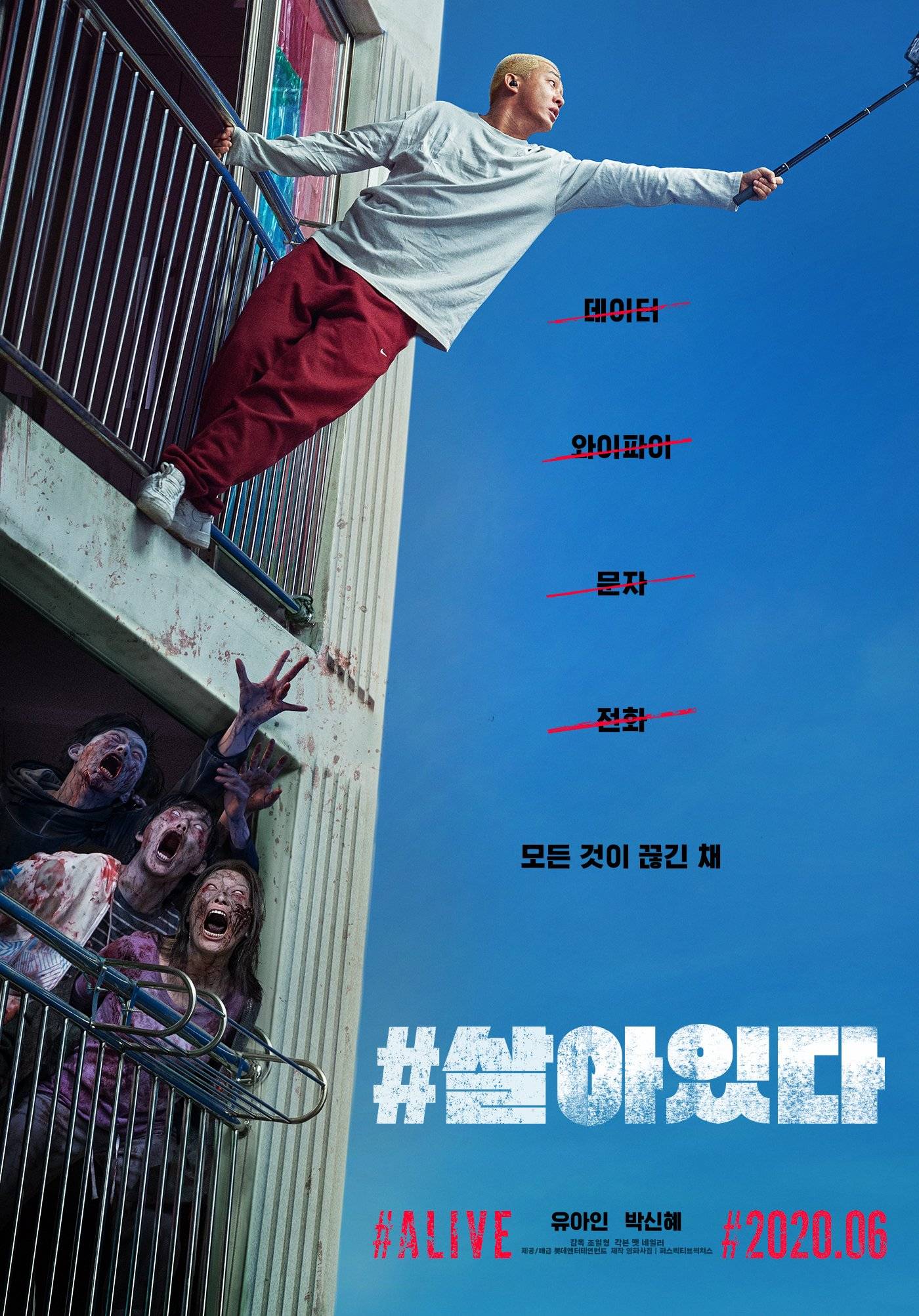
#Alive (#살아있다, Cho Il-hyung, 2020)

Is solidarity really the answer to alienation? The latest in a short line of zombie-related crisis movies, Cho Il-hyung’s oddly prescient #Alive (#살아있다, #Saraitda) presses directly into what it means to live in a time of isolation as its already introverted hero discovers the existential dread of true aloneness, orphaned by his society and quite literally surrounded by cannibalistic threat only to rediscover the desire for life in the company of others vowing to survive not out of obligation but individual will. 

A young man in his 20s, Jun-u (Yoo Ah-in) lives at home with his parents and seems to be a virtual shut-in not quite supporting himself as a pro-gamer/vlogger. He ought to be in his element when he turns on his television one day to discover that a violent riot has apparently erupted all over the city, apparently spreading like a virus which causes aggressive behaviour and cannibalistic frenzy. Unfortunately, Jun-u’s parents left early that morning and didn’t have time to prepare food, leaving him money to go out for groceries but obviously it’s too late for that now and it looks like they won’t be coming home. Jun-u is entirely alone, and all the more so when his usual lines of communication are cut. 

Like the thematically similar EXIT, with which #Alive shares its faith in mountaineering, #Alive concerns itself less with the zombie threat than with youthful alienation and a sense of hopeless despair. Jun-u ought to be in his element, but finds himself ill-equipped for surviving the apocalypse given that he lacks basic adult life skills and those he does possess are now ironically unhelpful. Resourceful as he is, he remembers a smartphone app that would help him communicate via FM radio and all he’d need would be a standard earphone jack only all his earphones are wireless. Making the most of his unstable connection he uploads a single photo of himself holding his address written on the side of a cardboard box with the hashtag #I_MUST_SURVIVE to his Instagram in the hope that someone will see him but becomes increasingly despondent as his food and resources dwindle and he receives a disturbing voicemail which suggests his family may not have escaped the disaster. 

Hitting rock bottom he considers taking his own life but is saved by a literal light in the darkness, a laser shone from an opposing apartment signalling another presence he had previously missed. Believing he was alone in the world, Jun-u lost the will to live and faced with the prospect of waiting to starve to death or venturing out among the zombie hoards chose the only agency available to him in deciding the time and manner of his death. Realising he is not alone restores his desire for life, yet Yu-bin (Park Shin-hye), though much more well prepared, is also dealing with her own trauma in the face of crisis in the memory of a climbing fall that leaves her additionally anxious and fearful of physical risk. Where Jun-u flounders, lamenting as so many of us has in recent years, that no one seems to know what’s going on, the news continually flashing the same info screen while telling viewers only to stay home, Yu-bin has constructed a mini fort complete with a series of booby traps perhaps content in her independence having resolved to live and glad to have discovered she is not entirely alone. 

In contrast to disaster movie tropes, the pair instantly bond in their shared bounce back from despair, developing unconventional means of communication while Yu-bin willingly shares her food stash which in turn gives Jun-u the courage to venture outside for supplies. Eventually reuniting they do their best to withstand the zombie hoards, standing in as they are for the various anxieties which otherwise surround and oppress them, only to find themselves betrayed, worried that perhaps they have after all been abandoned and that no one is there looking out for them. Their salvation lies in their connection, the derided social media proving a lifeline that both affirms their existence and restores a sense of community that returns their safety, airlifting them from the locus of despair finally #Alive and returned to the world secure in the knowledge that they are not alone.


Netflix trailer (English subtitles)

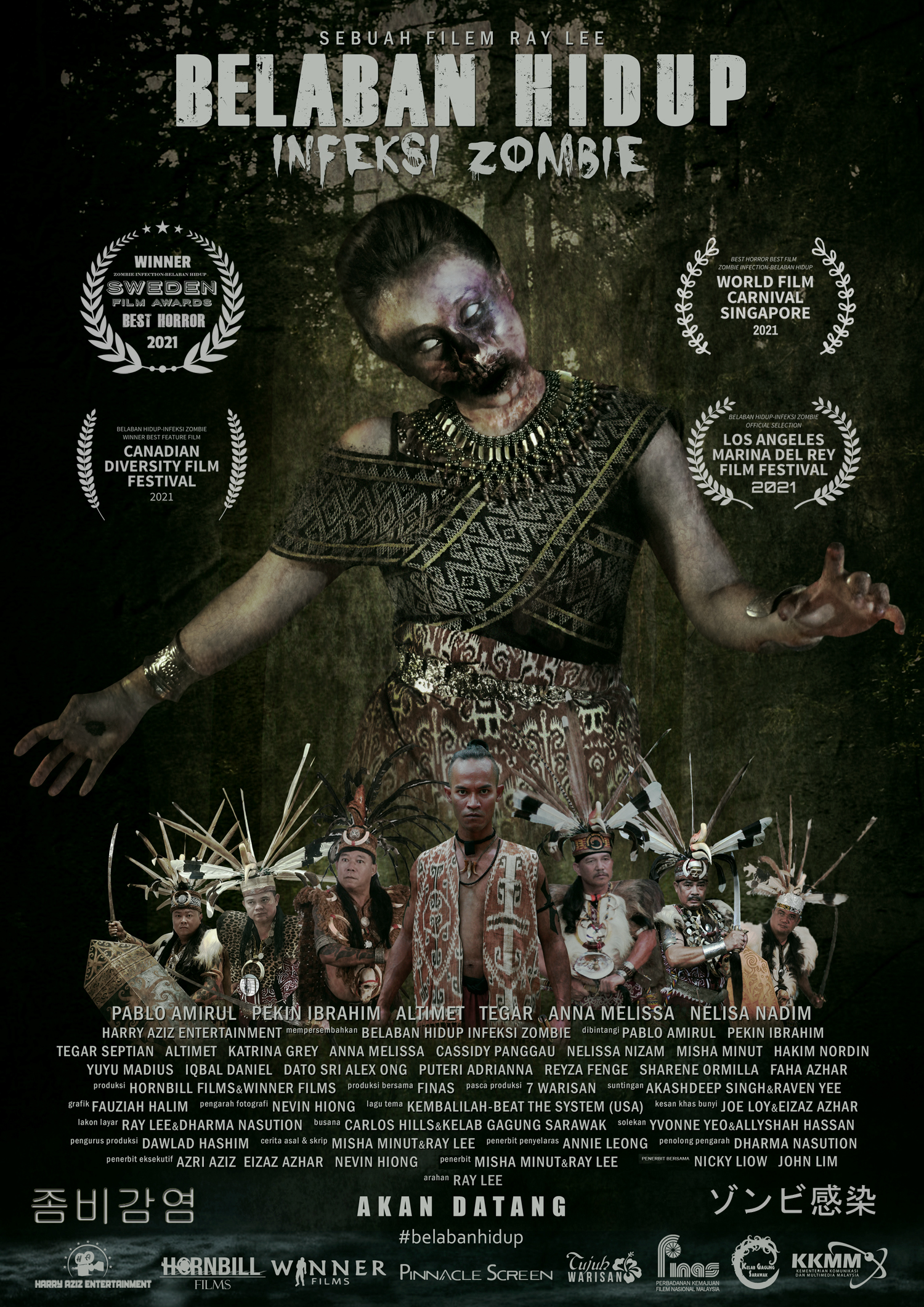
Zombie Infection (Belaban Hidup: Infeksi Zombie, Ray Lee Voon Leong, 2021)

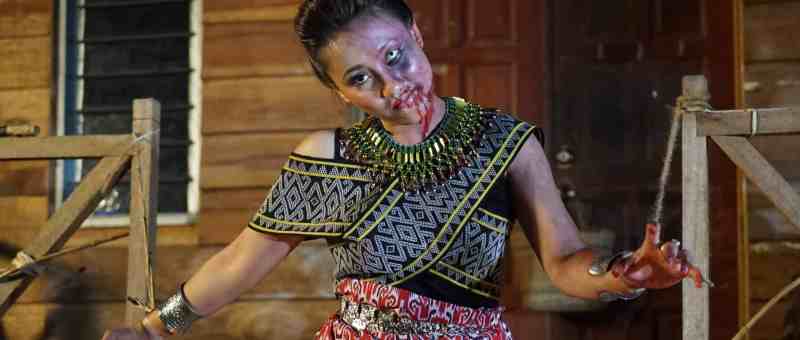
An indigenous village finds itself under threat thanks to concurrent waves of colonialism in Ray Lee Voon Leong’s indie undead drama, Zombie Infection (Belaban Hidup: Infeksi Zombie). “Don’t concern yourself with outsiders. Our longhouse should be our only concern” advises the village head, yet as the heroes will shortly discover nowhere is really as isolated as it might at first seem and the consequences of exploitation and abuse will eventually reach even the deepest of forests.

As detailed in the opening voiceover animation, evil Russian mad scientist Dr George (Weeam Shawaheen) has fled to Borneo after creating chaos elsewhere and is currently conducting his nefarious experiments on the marginalised taking villagers off the streets and tricking orphans with the promise of free medical care in return for participating in “clinical trials”. Unfortunately, Dr George’s marvellous medicine turns people into zombies which becomes a problem when a bunch of them escape along with a handful of orphans fleeing their captivity at the hands of the exploitative physician. After searching a nearby mall looking for a missing sister and picking up a little boy orphaned by his zombified mother, the gang make their way into the forest assuming that the rough terrain will make it harder for the zombies to follow them but unfortunately they are not quite correct in their assumption. 

Meanwhile, an indigenous village is going about its normal life hunting in the forest little knowing they are already under threat despite the persistent nightmares plaguing village head’s son, Gadang (Pablo Amirul). Gadang is soon to become a father for the second time but his relationship with his young daughter Suna is beginning to fray, his wife Jawai (Anna Melissa) cautioning him that he can’t keep making promises only to disappoint her later as he agrees to take her swimming in lieu of allowing her to accompany him into the forest. His father patiently sharpens knives, insisting that it’s best to be ready for any eventuality though village life seems to be happy and as far as they know there is no reason to feel unsafe. Nevertheless, the infection soon catches up with them even if they are slow to believe claims of an undead invasion coming from “outsiders” later blamed for bringing evil into the forest. 

Only, it wasn’t the orphans who brought it, one of whom has indigenous tattoos on his shoulders and speaks the same language as the other villagers, but arguably two of their own who had sold out their people to collaborate with Dr George in return for riches. Realising the scale of the problem on his hands, Dr George determines to look for an antidote but there’s nothing he can really do to put right the chain reaction his immoral greed has caused in his exploitative misuse of the marginalised members of a small South East Asian nation. 

“What has happened is indeed alarming” according to one of the villagers in what might be the understatement of several centuries, but isolation is no longer enough to protect their longhouse from the ravages of colonialism as they find themselves assaulted by hordes of man-eating monsters created by the greed and amorality of the infinitely corrupt Dr. George. Gadang is forced to face his nightmares, anxious in assuming his father’s responsibility to protect the village while mindful that he has perhaps in a sense neglected his duties as a husband and father while playing the big man in the forest. It’s just as well his dad sharpened all those knives, because they are its seems their last defence even as they’re forced deeper into the forest in search of a safety that may no longer exist. 

At its best when exploring the lives of the indigenous community, Zombie Infection reaches its stride only when arriving at the forest even while its attempt to shift focus from the fleeing orphans to the villagers is only partially successful. Nevertheless, the film makes the best of its meagre budget with some impressive prosthetics and zombie choreography as the villagers go after the undead threat with indigenous weapons and wearing traditional dress. Yet as the film’s melancholy conclusion perhaps implies, the legacy of colonialism can’t be overcome so easily leaving the survivors in the middle of a battle seemingly far from its end. 


Zombie Infection streamed as part of Yubari International Fantastic Film Festival 2021.

Original trailer (no subtitles)

Empire of Corpses (屍者の帝国, Ryoutarou Makihara, 2015)

empire of corpses posterEmpire of Corpses (屍者の帝国, Shisha no Teikoku) is what would happen if someone’s vast library of Victorian literature was destroyed in a fire and then someone tried to put all the not too singed pages back together based on their knowledge of international pop culture. Inspired by Project Itoh’s novel of the same name and the first of three planned adaptations of his works, Empire of Corpses is a very specific kind of absurd, boys own action adventure based around the idea of empire supported by a zombified proletariat.

Beginning in London in 1878, this is steampunk paradise only steam power is quickly becoming old hat as the greatest discovery of the age turns out to be the city’s largest untapped resource – its dead. Reanimated corpses can be trained to fight wars, wait tables, or work as servants but they’re tools now – not people, they may be able to follow an order but they have no mind to act with. Corpse Engineer John Watson has unwisely reanimated his friend Friday, but is distressed not to be able to restore his friend’s soul along with his body.

Watson ends up being dispatched on a secret mission by Her Majesty’s government to reclaim the notes made by the famous Dr. Frankenstein who has succeeded in creating a sentient creature known as The One. The notes are apparently in the possession of Russian scientist Karamazov. Watson travels to India with Burnaby, a mercenary bodyguard, and Friday where he also teams up with a mysterious flame thrower wielding busty blonde, Hadaly.

Empire of Corpses touches on some interesting philosophical questions such as the nature of the soul, the border lines between death and life, and the repurposing of a body as a fleshy tool. Though it stops short of delving into what the British Empire was really based on, the idea is very much that using reanimated corpses to fight your wars remotely is an absurd solution to an unnecessary problem.

That said, these “zombies” are a well trained and docile bunch. Until of course, they aren’t. Certain forces have planned to harness the zombie hordes for their own ends to create mass panic and wholesale destruction across the world. This might be the first mission the later famous John Watson will tackle, but he’s about to realise that there’s a lot more going on here than a set of secret documents no one wants to fall into the “wrong” hands.

Empire of Corpses remained unfinished when Project Itoh unfortunately died at a relatively young age. The concept is filled with extremely interesting ideas which are only ever dealt with in a superficial sense, though one wonders if the novel he might eventually have completed would have progressed so far down the ridiculous fantasy historical epic route. Very clearly channelling ‘30s style, post-penny dreadful tales of derring do starring familiar names, Empire of Corpses steals a host of famous literary characters from across the international canon as well as a number of historical personages, though only really borrows their names or perhaps a few other minor details. After raising such interesting ideas, the film quickly reverts to riduclous B-movie genre tropes as the gang get caught up in a zombie apocalypse with flashing mystical lights and the transmigration of souls thrown in for good measure.

No, it doesn’t make any sense though it isn’t really supposed to. Patient viewers will be rewarded with a post credits sequence shining a little more light but just as much bafflement onto the characters and their possible futures, though the intention is clearly just to raise a knowing wink from the well read members of the audience. By the time it all turns into The Wizard of Oz, some will undoubtedly have followed the yellow brick road out of the cinema but it is worth sticking around to see the final coda.

What Empire of Corpses has going for it is the extremely impressive visuals. Backgrounds in particular are gorgeously drawn making for an always interesting spectacle even if other aspects of direction can seem a little uninspired. Clumsily plotted and often incoherent, Empire of Corpses has its fair share of problems even aside from the inherent absurdity of its original premise, yet it isn’t completely unsalvageable and those who come expecting a B-movie style slice of incomprehensible hokum might well find much to enjoy.


Reviewed as part of the “biennial” Anime Weekend at BFI Southbank. Empire of Corpses has also been licensed for UK distribution by All the Anime (and Funimation in the US).

Unsubtitled trailer: