 Written by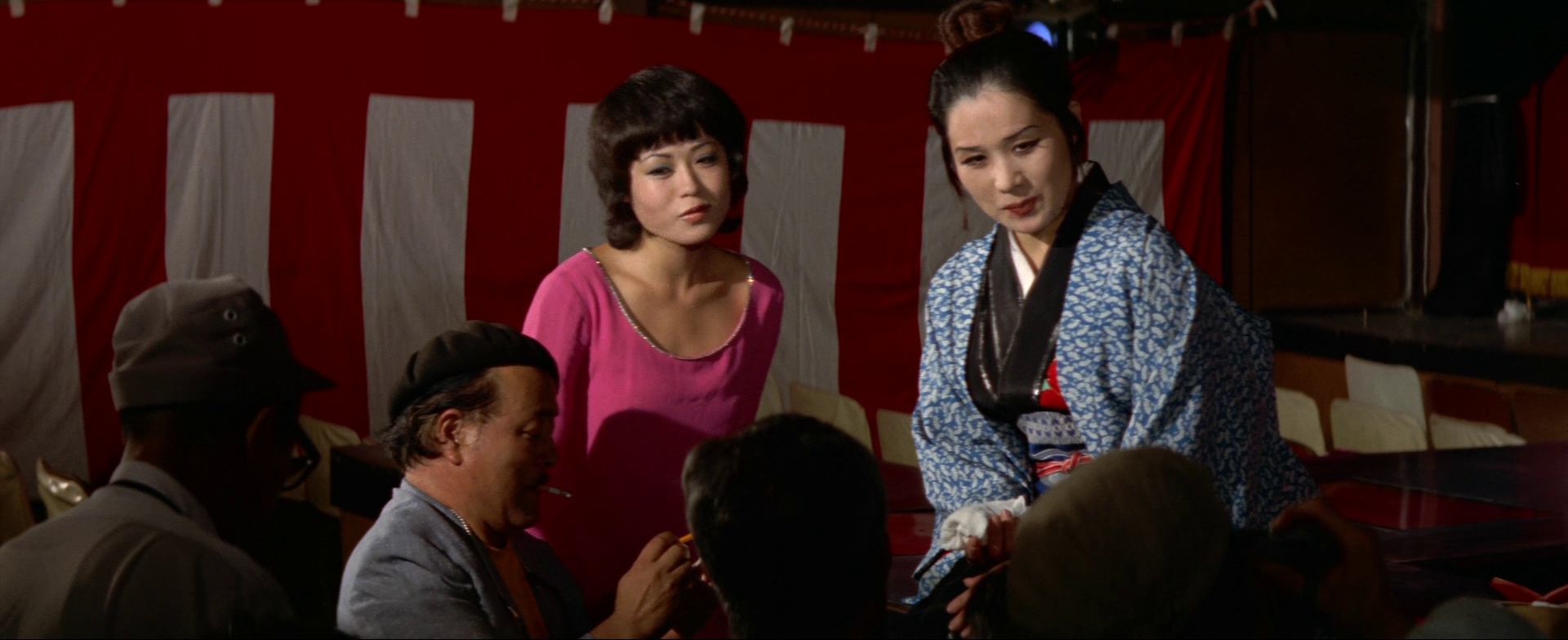
The opening text at the beginning of Tatsumo Kumashiro’s Ichijo’s Wet Lust (一条さゆり 濡れた欲情, Ichijo Sayuri Nureta Yokujo) informs us that though the film might be inspired by the life of Sayuri Ichijo, queen of the strippers, it is fiction. Truth be told, Sayuri Ichijo isn’t in it all that much, but her presence seems calculated given the fact that Ichijo had also been having frequent troubles with the censors over her erotic cabaret appearances. Her signature set piece involved passing around a magnifying glass so that audience members could inspect her vagina, which got her charged with obscenity.
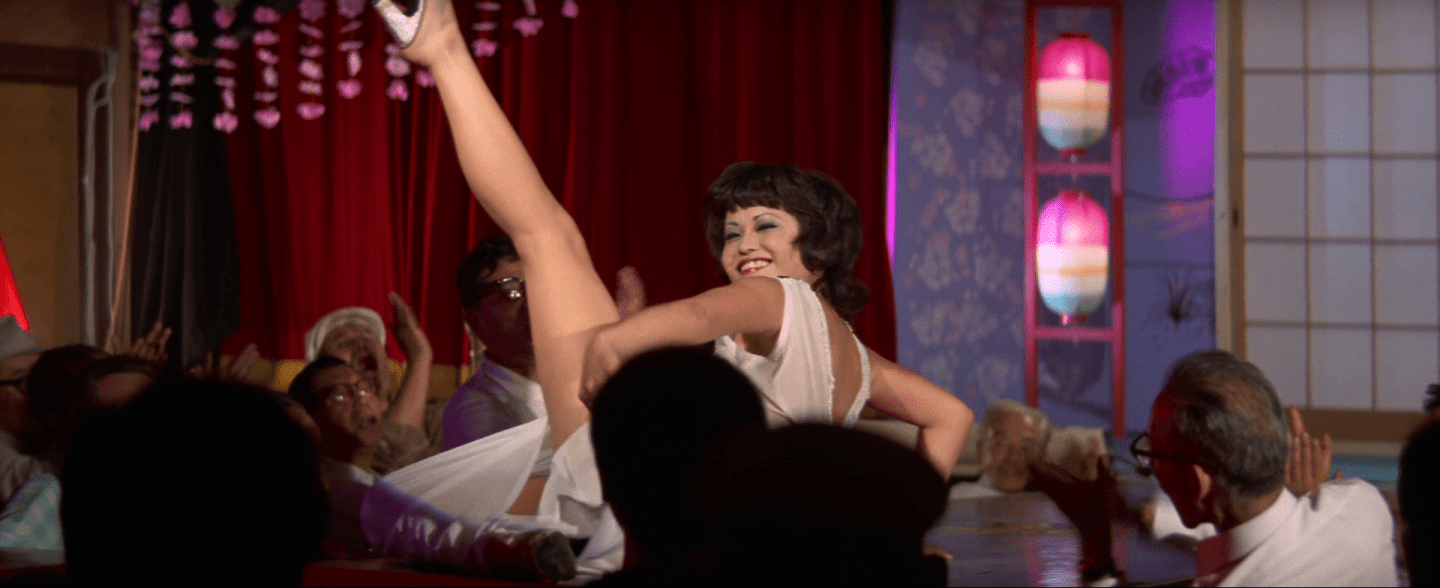
Shortly before the film’s release, Nikkatsu had shifted production almost entirely to its Roman Porno line of erotic dramas. In 1972, a charge of obscenity was levelled at them in relation to the film Love Hunter, after which they became embroiled in a lengthy series of legal battles which continued until 1978. Kumashiro was the screenwriter for Love Hunter, though he penned it under a pseudonym. He apparently reached out to Ichijo as a gesture of solidarity and she agreed to be in the film, though she’d previously turned down an offer from Toei, because she thought the script seemed promising and was persuaded by Kumashiro. The dig at Toei appears to be mirrored in the film as Ichijo performs a routine dressed as a samurai noblewoman dancing to the theme from Red Peony Gambler, while her other acts mix a music hall sensibility with transgressive eroticism such as candle play.
In the wake off her legal troubles, Sayuri has quit the business to open a sushi restaurant while struggling to shake off her past. An obnoxious customer seems surprised about the idea of a stripper eating ramen, only for Sayuri to remind him that they’re normal people too and eat normal food like everyone else. She may be the queen of the strippers, but Sayuri still occupies a kind underclass in the regular world in which she’s looked down upon for her erotic art even if she personally regards it empowering. Even so, the slightly younger Harumi (Hiroko Isayama) seems to want to knock her off her perch and alternates between fawning admiration and resentment.
Trying to curry favour, she tells Sayuri that she identifies with her backstory of being an orphan that they may have grown up in the same children’s home in Saitama despite her broad Osaka accent. She also tells her husband, recently released from prison after being convicted of murder, that her father was sentenced to death, though this appears to be another detail pinched from Sayuri’s biography, which may not be true in her case either. Harumi later admits that nothing she’s said about herself is actually true, which could also be a lie, as she otherwise seems intent on stealing Sayuri’s identity and with it the top spot at the club. After getting arrested and fined, she tells her friend that she’s quitting their lesbian floorshow show because, she insensitively says, the lesbian stuff’s just for talentless hacks and she’s apparently turned off by other women’s genitalia.
To try to take down Sayuri, Harumi uses sex to manipulate the men around her including her besotted husband and another man he stabbed in the leg. Scenes of Sayuri’s show are intercut with Harumi having sex on a rollercoaster while a female attendant tries very hard not to laugh and another woman looks up in confusion from the ground. Harumi seems to be making a show of her life in a different way at least to Sayuri who is courting controversy and may have sensationalised aspects of her biography to give herself a sob story but otherwise affects refinement, every inch the queen holding court when questioned by reporters about her legal troubles and retirement. Nevertheless, she too may be threatened by Harumi, point blank telling her not to make trouble at her last show and or steal her candle act when she leaves. Sayuri’s acts become more extreme as a consequence which is what gets her in trouble with the censors, while Harumi tries to perfect a weird gimmick of squirting milk out of her vagina. Even so, she goes about it with reckless abandon and a sense of fun that lends the film a breezy, down to earth sensibility that itself is, in fact, a rebuke to the censor and a defiant depiction of a young woman living a life without constraints.

