Ichijo’s Wet Lust (一条さゆり 濡れた欲情, Tatsumi Kumashiro, 1972)

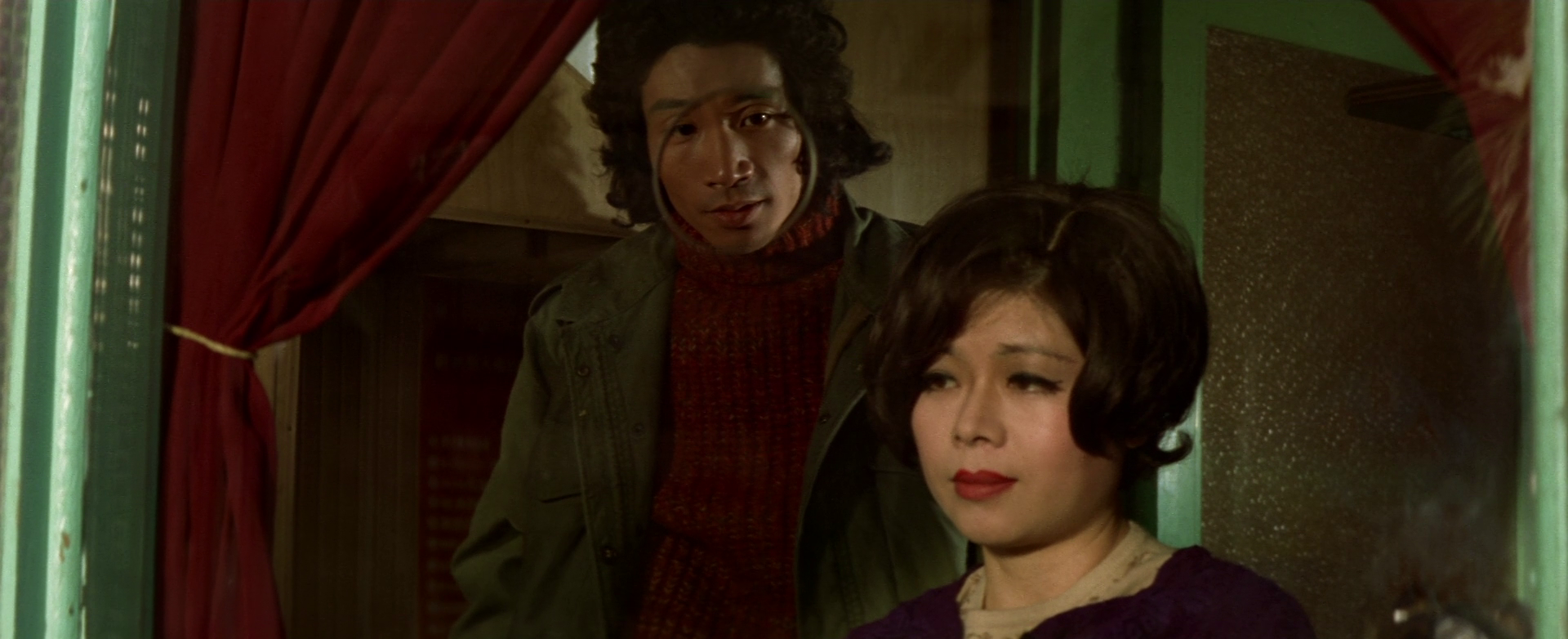
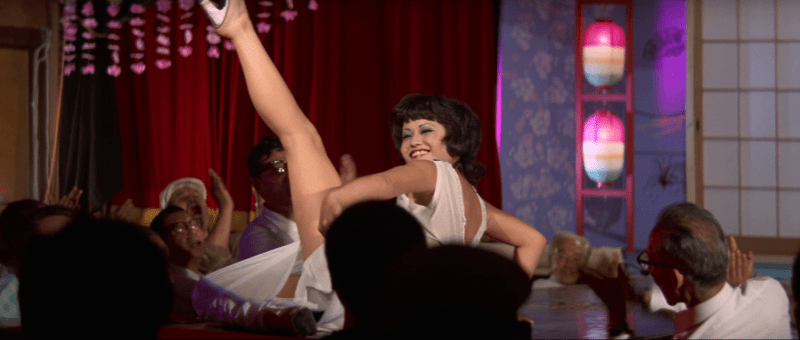
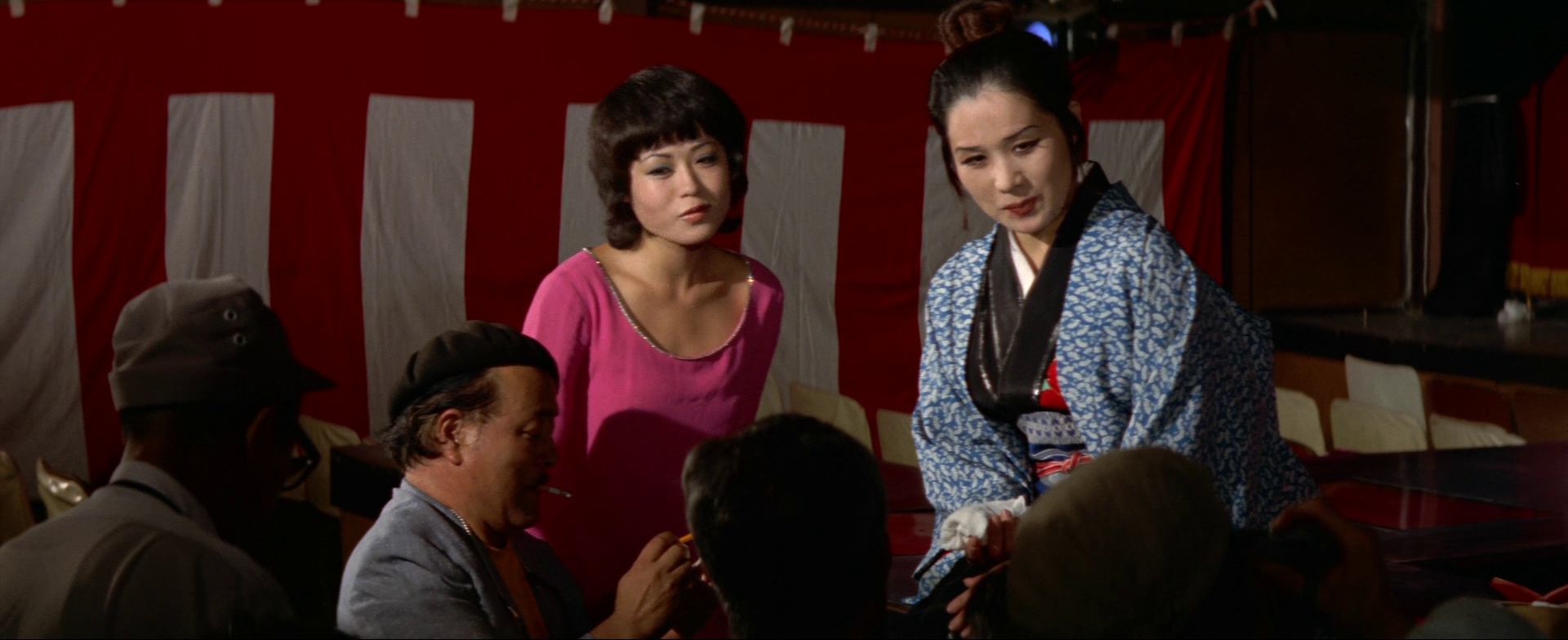
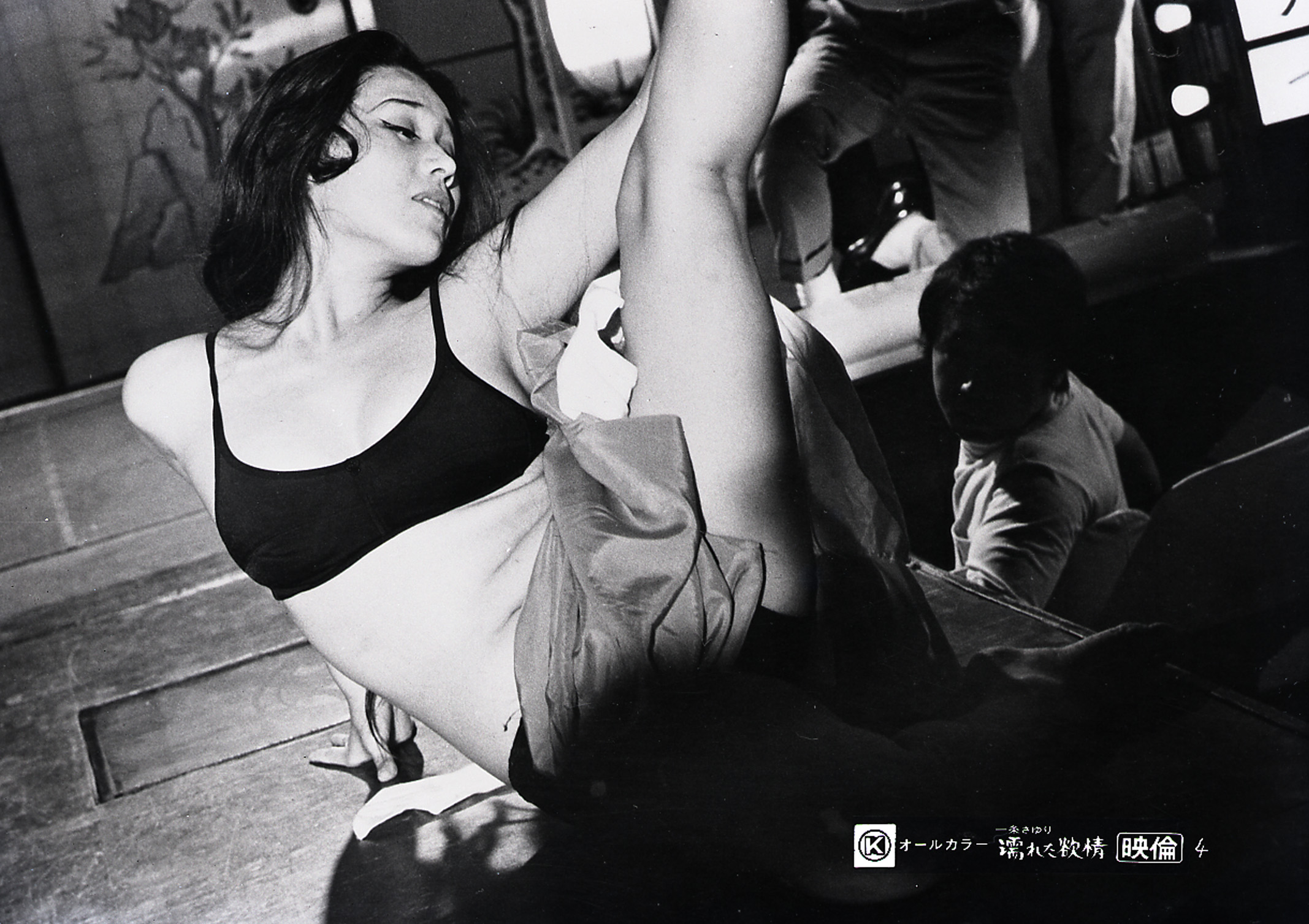
The opening text at the beginning of Tatsumo Kumashiro’s Ichijo’s Wet Lust (一条さゆり 濡れた欲情, Ichijo Sayuri Nureta Yokujo) informs us that though the film might be inspired by the life of Sayuri Ichijo, queen of the strippers, it is fiction. Truth be told, Sayuri Ichijo isn’t in it all that much, but her presence seems calculated given the fact that Ichijo had also been having frequent troubles with the censors over her erotic cabaret appearances. Her signature set piece involved passing around a magnifying glass so that audience members could inspect her vagina, which got her charged with obscenity. 

Shortly before the film’s release, Nikkatsu had shifted production almost entirely to its Roman Porno line of erotic dramas. In 1972, a charge of obscenity was levelled at them in relation to the film Love Hunter, after which they became embroiled in a lengthy series of legal battles which continued until 1978. Kumashiro was the screenwriter for Love Hunter, though he penned it under a pseudonym. He apparently reached out to Ichijo as a gesture of solidarity and she agreed to be in the film, though she’d previously turned down an offer from Toei, because she thought the script seemed promising and was persuaded by Kumashiro. The dig at Toei appears to be mirrored in the film as Ichijo performs a routine dressed as a samurai noblewoman dancing to the theme from Red Peony Gambler, while her other acts mix a music hall sensibility with transgressive eroticism such as candle play.

In the wake off her legal troubles, Sayuri has quit the business to open a sushi restaurant while struggling to shake off her past. An obnoxious customer seems surprised about the idea of a stripper eating ramen, only for Sayuri to remind him that they’re normal people too and eat normal food like everyone else. She may be the queen of the strippers, but Sayuri still occupies a kind underclass in the regular world in which she’s looked down upon for her erotic art even if she personally regards it empowering. Even so, the slightly younger Harumi (Hiroko Isayama) seems to want to knock her off her perch and alternates between fawning admiration and resentment.

Trying to curry favour, she tells Sayuri that she identifies with her backstory of being an orphan that they may have grown up in the same children’s home in Saitama despite her broad Osaka accent. She also tells her husband, recently released from prison after being convicted of murder, that her father was sentenced to death, though this appears to be another detail pinched from Sayuri’s biography, which may not be true in her case either. Harumi later admits that nothing she’s said about herself is actually true, which could also be a lie, as she otherwise seems intent on stealing Sayuri’s identity and with it the top spot at the club. After getting arrested and fined, she tells her friend that she’s quitting their lesbian floorshow show because, she insensitively says, the lesbian stuff’s just for talentless hacks and she’s apparently turned off by other women’s genitalia.

To try to take down Sayuri, Harumi uses sex to manipulate the men around her including her besotted husband and another man he stabbed in the leg. Scenes of Sayuri’s show are intercut with Harumi having sex on a rollercoaster while a female attendant tries very hard not to laugh and another woman looks up in confusion from the ground. Harumi seems to be making a show of her life in a different way at least to Sayuri who is courting controversy and may have sensationalised aspects of her biography to give herself a sob story but otherwise affects refinement, every inch the queen holding court when questioned by reporters about her legal troubles and retirement. Nevertheless, she too may be threatened by Harumi, point blank telling her not to make trouble at her last show and or steal her candle act when she leaves. Sayuri’s acts become more extreme as a consequence which is what gets her in trouble with the censors, while Harumi tries to perfect a weird gimmick of squirting milk out of her vagina. Even so, she goes about it with reckless abandon and a sense of fun that lends the film a breezy, down to earth sensibility that itself is, in fact, a rebuke to the censor and a defiant depiction of a young woman living a life without constraints. 

Lovers Are Wet (恋人たちは濡れた, Tatsumi Kumashiro, 1973)

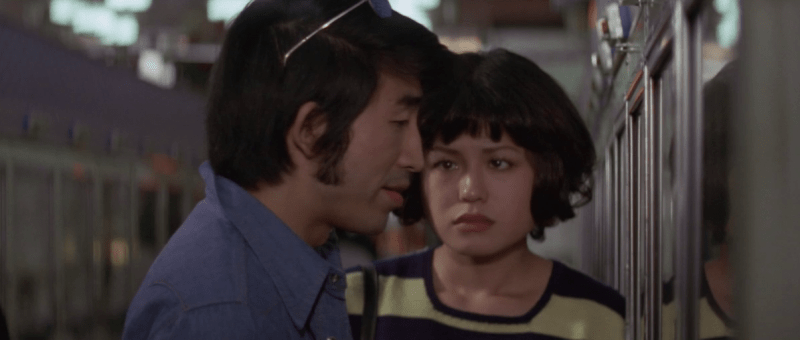
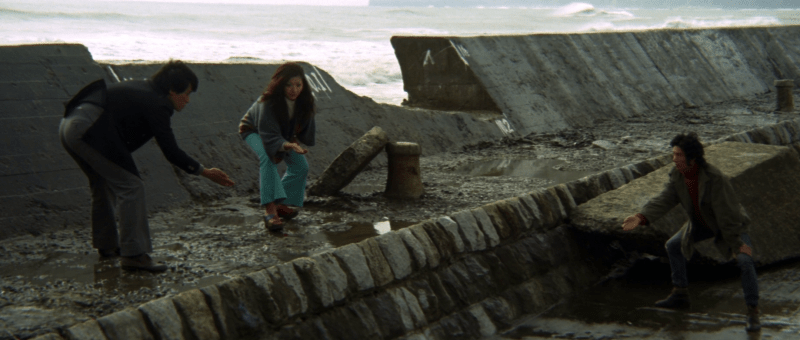
Everyone keeps asking Katsu (Toru Ohe) if he’s Katsu, but he continues to deny it. No matter how insistent those around him are that this is his hometown, Katsu refuses to acknowledge it while claiming no other identity. It is in a way, the ultimate negation of the self and the town to him is a kind of liminal space in which he’s only ever waiting for something or else putting off the act of leaving as if prevented from moving on.

This sense of listless rootlessness may reflect that of a youth generation orphaned after the collapse of the counter-culture movement. Katsu sings bawdy folk songs in the manner of a protest singer with nothing to protest. Yoshie (Moeko Ezawa), the wife of the owner of the cinema where Katsu is working, asks him if he’s a member of the far-left movement on the run from the authorities, but Katsu says he’s not smart enough for something like that, though later admitting that he does seem to be on the run from something. 

Though she’s curious about his past, Yoshie doesn’t seem to question him about being Katsu and rather appears to want him to be an embodiment of her projected desires. She is too is trapped in this place, pinned behind the box office window with only a cat for company. Her husband rarely comes home and spends all his time with a mistress. He knows that Katsu is sleeping with his wife, but couldn’t care less. Or rather, he’s sort of grateful because it’s one less thing for him worry about. Yoshie, meanwhile, clings to him because Katsu is her only means of escape from this moribund existence. She pleads with him to stay and to love her, but Katsu doesn’t seem to be capable of love and is only sticking around for the occasional tryst. 

Catching sight of another couple having sex in the wild, he stops to peep and gets into a fist fight with the man, Mitsuo (Rebun Hori), after which they become awkward friends. Mitsuo sets him up with another girl despite Katsu’s insistence that he’s not hard up for them, but Katsu immediately tries to rape her as if asserting his primal masculinity. Ironically enough, he rides around with the banner for Sex Animal on his bike as a means of advertising and Yoko (Rie Nakagawa), the girl, later remarks that he’s reenacting the poster in his attempt to rape Sachiko (Chizuyu Azami). A sex animal seems to be what he’s become as he purses meaningless and impulsive sex that care little for the woman’s feelings, only about dominance and conquest. Sachiko later brings Katsu’s mother as if to remind him of his true identity but her rejects her, while the girl later gets the upper hand by telling both the men to get lost and no matter how much they might think they’ve won, they really haven’t.

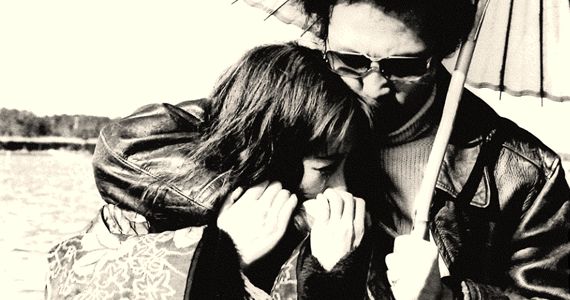
As Katsu rapes Sachiko, Yoko and Mitsuo share ironic banter in voiceover offering a running commentary while doing nothing to help Sachiko. They too seem bored and listless, which might be why Yoko seems drawn to Katsu even if in him she perhaps sees a shadow of death which would be another way of leaving this town. He later tells her that he killed someone for money, offering the money as proof, though it’s a fairly meaningless gesture as is the money itself which doesn’t seem to have increased his possibilities. Probably, he doesn’t know what to do with it. He describes Yoshie’s warmth as like a womb, and is apparently in this town waiting either for death or to be reborn, though Yoshie’s own failed suicide attempt seems to suggest there is no real escape from this purgatorial existence. When he tells her he wants to go somewhere else, Yoshie tells him that it’s the same everywhere anyway, so leaving will make no difference and there is nowhere he can go. 

The increasingly prosperous Japan of the mid-1970s in which the student movement has died seems to have no place for him. Kumashiro kicks back against this sense of ennui partly through his ironic use of censorship which cannot help but suggest what it hides. The large black bars and scratched out pools of white hint at an attempt to erase and oppress sexuality, which is the means by which Katsu and fails to find freedom, just as they oppress freedom of expression. Katsu meanwhile continues to block things out, rejecting his identity and behaving like a character from a film more hollow archetype than man just as Yoko seems to be an embodiment of his projected desires. She too may have only one destination available to her in this inescapable cycle of unfulfilled longing and crushing ennui.


Delicate Skillful Fingers (白い指の戯れ, Toru Murakawa, 1972)

Toru Murakawa is most closely associated with his long and fruitful partnership with Yusaku Matsuda which came to define a certain kind of 1970s cinema, but he began his career at Nikkatsu in 1959 in the sales department before resigning and rejoining a year later as an aspiring director. At Nikkatsu he worked with established directors such as Toshio Masuda and Ko Nakahira, as well as with external directors such as Shiro Moritani before making his directorial debut in Nikkatsu Roman Porno, a line of soft core pornography the studio launched amid the collapse of the studio system, with Delicate Skillful Fingers (白い指の戯れ, Shiroi Yubi no Tawamure), in 1972.

Murakawa would actually leave the studio in the same year having completed two more Roman Porno films, returning to his hometown of Yamagata where he had married into the family of well-known metalwork artist Kenten Takahashi both training with him and helping his older brother Chiaki Murakawa set up the Yamagata Symphony Orchestra. In any case, his temporary withdrawal from the film industry had nothing to with a lack of success in his debut feature. Delicate Skillful Fingers was a critical hit and the first of Nikkatsu’s Roman Porno line to feature in Kinema Junpo’s prestigious Best Ten. It was also the debut film for lead actress Hiroko Isayama and, perhaps not entirely coincidentally, the first time the studio put the male star front and centre in their branding campaign. 

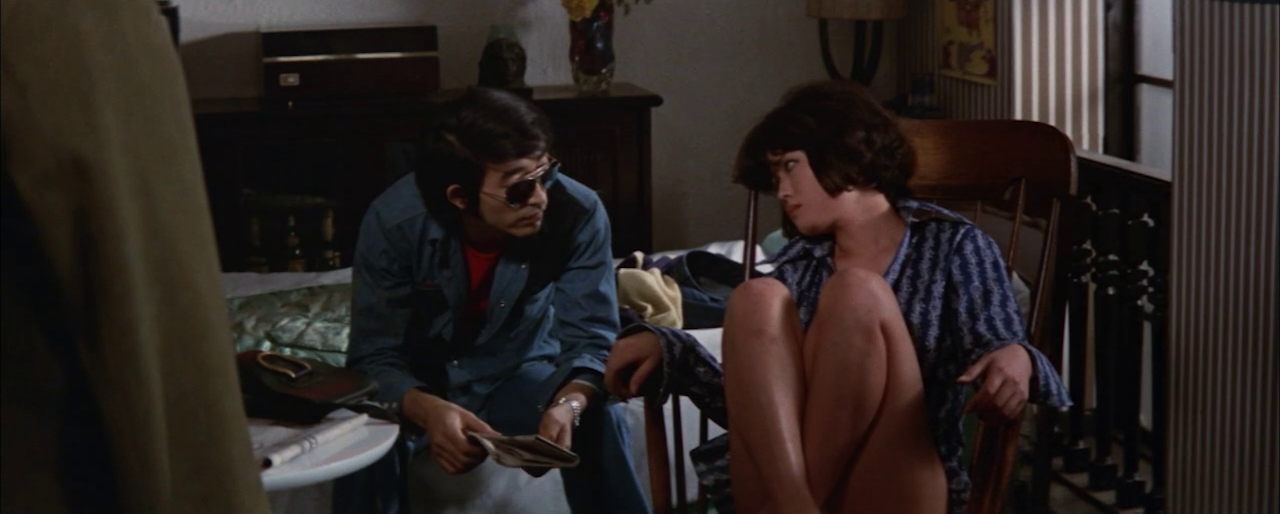
Co-scripted by another top Roman Porno name Tatsumi Kumashiro, the film follows the innocent and naive Yuki (Hiroko Isayama), who is so sensitive that the sight of a wrecked car makes her cry in sympathy, as she falls deeper into the world of petty street crime after being chatted up in a cafe by a goofy guy who just happens to have a problem with kleptomania. At least according to his sometime girlfriend Shoko, Jiro (Hajime Tanimoto) came from a wealthy family and attended a fee-paying school, seemingly stealing for the thrill of it rather than financial need. It has to be said that Yuki is rather ditsy, bamboozled into buying food to cook Jiro dinner while entering into a strange dialogue with a robot offering greetings in Chinese as to whether she should give him her virginity which she eventually does, perhaps recklessly, though it ends up not going particularly well, with Jiro having to explain that “the ceremony is now ended” without it seems much fanfare. In any case when he’s picked up by the police and put away for three years because he already had a record, Yuki has to quite her factory job because of persistent police harassment and bizarrely ends up living with Shoko who has predatory lesbian designs on her Yuki responds to but with a degree of internalised shame. 

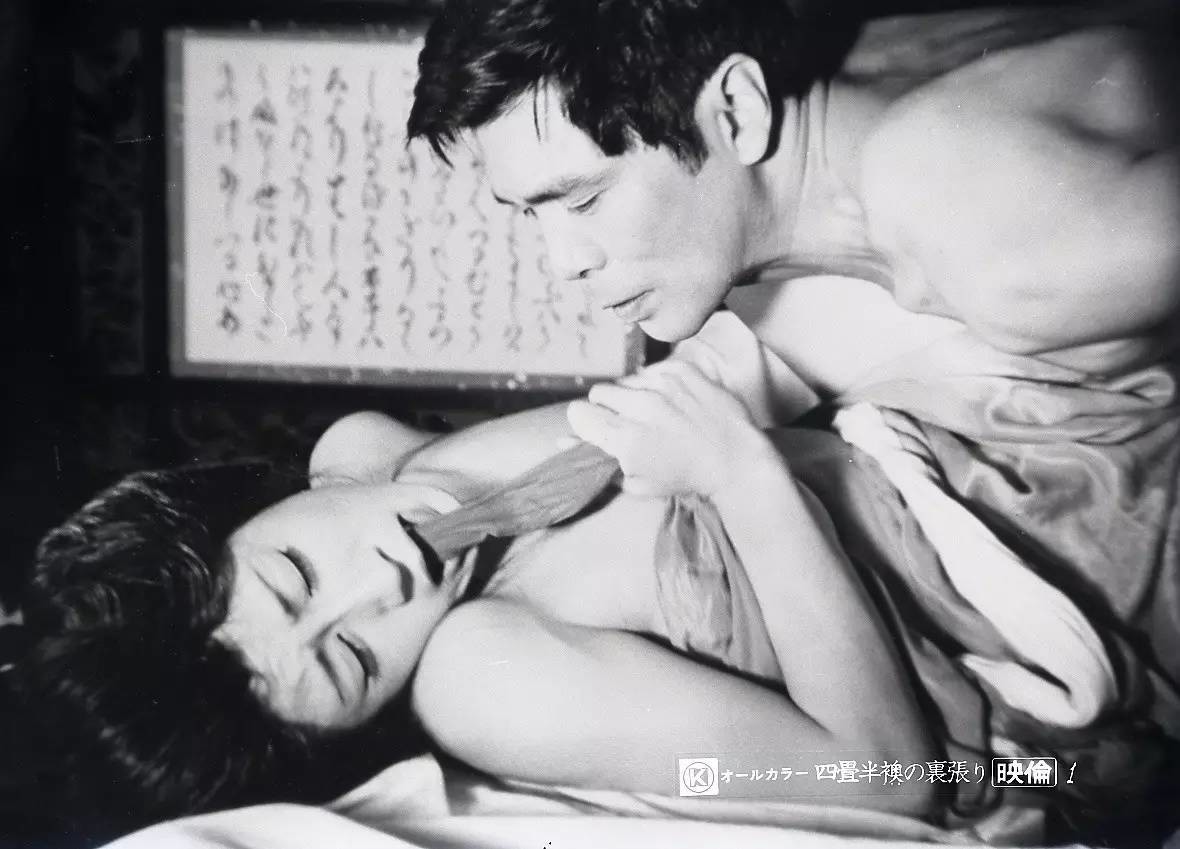
Shoko’s desire for other women is in someways depicted as an expression of corruption caused by her pickpocket lifestyle as she implies sometime later in suggesting that Yuki will “come to like it” linking the idea of lesbian sex and the act of pickpocketing as implied by “delicate skilful fingers” of the film’s title. Yuki’s bodily submission but mental resistance is intended to suggest her lingering innocence, yet to submit herself to the hedonistic amorality of the pickpocket lifestyle. Rejecting Shoko, she later becomes sexually involved with Jiro’s former cellmate Taku (Ichiro Araki) who is responsible for teaching her how to pickpocket. Taku is otherwise seemingly less interested in sex, but allows Yuki to take the lead while he remains somewhat passive, lying still and still and chewing gum, always with his sunshades remaining firmly on. He even at one point passes her off to an associate in the middle of making love to her, Yuki first resisting on realising what’s going on but eventually giving in to it though clearly not willingly. 

The contrast between the two men, Jiro and Taku, is stark with Jiro clearly asking for consent at each step and waiting for Yuki to confirm it even if in the end he fails to perform whereas Taku seems to be merely using sex which doesn’t interest him to earn her trust and convince her to help him out in his various criminal operations. Yuki is seduced into a world of crime, but remains romantically naive, foolishly sacrificing herself for Taku and insisting she alone was responsible when cornered by the police while he simply walks away and then jokes with a policeman that he’ll look after her when she’s out. Even so, her loyalty to Taku, in contrast with Shoko’s continuing cynicism, proves that she is not fully corrupted by the pickpocket life, even if she foolishly damns herself by needlessly protecting him at the cost of her own future and wellbeing. On the other hand, to so is entirely her own choice just as it was her own choice to sleep with Jiro in the full embrace of her agency. Murakawa’s Nikkatsu debut is a gritty, grimy urban tale of amoral post-war youth but, even in its tragic conclusion, signals the hero’s spineless indifference and hands victory to the heroine who remains uncorrupted but only to her eternal cost. 


The Inferno (地獄, Tatsumi Kumashiro, 1979)

No one can escape from their sins according to the ominous voiceover that opens Tatsumi Kumashiro’s loose reimagining of Nobuo Nakagawa’s Jigoku, The Inferno (地獄, Jigoku). Then again, some of these “sins” seem worse than others, so why is it that a woman must bear a heavy burden for adulterous transgression while the man who killed her seemingly suffers far less? Perhaps hell, in this case, is born of conservative social attitudes more than anything else besides the darker elements of the human heart such as jealousy and romantic humiliation. 

Those negative emotions are however as old as time as reflected in the folk song which opens the film about a young couple, though not the young couple currently onscreen, who are eloping because their incestuous desire is not accepted by the world around them. The connection between the couple onscreen might also be deemed semi-incestuous for Ryuzo (Ken Nishida) has run off with the wife of his brother, Miho (Mieko Harada), who is carrying (what she claims to be) Ryuzo’s child. Unpei (Kunie Tanaka), the brother, finally catches up with them and shoots Ryuzo with a shot gun. Miho tries to escape, but her foot is caught in a bear trap and Unpei decides to leave here there to die, while Ryuzo’s jealous wife Shima (Kyoko Kishida) later does the same. The body is found by local hunters, and in a strange miracle the baby is born from Miho’s dead body while Miho is dragged to hell for her “sins” where she learns that her baby has been born in hell but remains above. Not knowing what to do, the locals give the baby, Aki, to Shima but she obviously doesn’t want it and so swaps it with a foundling thanks to a weird old man, Yamachi, coming to love this other child, Kumi, as a daughter. 

This is quite literally a tale of the sins of the parents being visited on the child, the 20-year old Aki (Mieko Harada) later lamenting that she has no identity of her own and is solely a vehicle for her mother’s revenge. Though she apparently ends up in the same rural town “by chance” knowing nothing of her past, she resembles her mother physically and discovers she has some of her talents such as an innate ability to play the shamisen. What she also has is a trance-like lust that bewitches the men around her, though this is in a sense complicated by the fact it does not seem to be of her own volition so much so as a manifestation of her mother’s curse. Thus she ends up sleeping with the vulgar younger brother of the man she actually likes, Suchio, who in truly ironic fashion is actually her half-brother. She describes herself as having her mother’s “tainted blood”, while Shima later adds in a degree of class and social snobbery revealing that Miho had been a geisha Unpei unwisely fell for and was unworthy even of being a maid in their upper-middle class household let alone the wife of the second son. 

For all of her resentment, Shima is otherwise a loving mother to her sons and even to Kumi whom she is able to accept as a daughter in a way she would never have accepted Aki who was after all an embodiment of her husband’s betrayal. Colder and more austere than Aki or Miho would seem to be, she clings to the mummified body of her husband kept in a secret vault as a secret triumph over her humiliation laughingly remarking that now he’s hers forever and will never cheat on her again. Even if she left Miho to die, Shima does not particularly resist her fate well aware that her son has fallen for his half-sister (which probably wouldn’t have happened if she hadn’t swapped babies) and merely hoping Aki can be convinced to leave town alone rather than plotting any more drastic action. 

But the inferno of hell envelopes them all, crying out for retribution as the cycles of repressed or inappropriate attractions repeat themselves. Kumi realises that her love for her brother, Suchio, is actually not inappropriate because they are not related after all but is then consumed by her own hell in realising that he does in fact love his biological half-sister but is uncertain if he accept damnation in order to pursue it. What she, Miho, and Aki are punished for is female sexual desire aside the arguably taboo qualities of its direction though in hell it seems men are punished for this too, or more accurately for giving in to it, in a way they often aren’t in the mortal realm. “They cut their own flesh and blood for the vision of a woman in the future,” the guide explains as the brothers and Unpei literally climb over each other reaching for an illusionary representation of Aki/Miho at the top of the tree. In the mortal world they do something similar, grappling with each other, mired in competitions of masculinity as mediated through sexual dominance, conquest, or humiliation. 

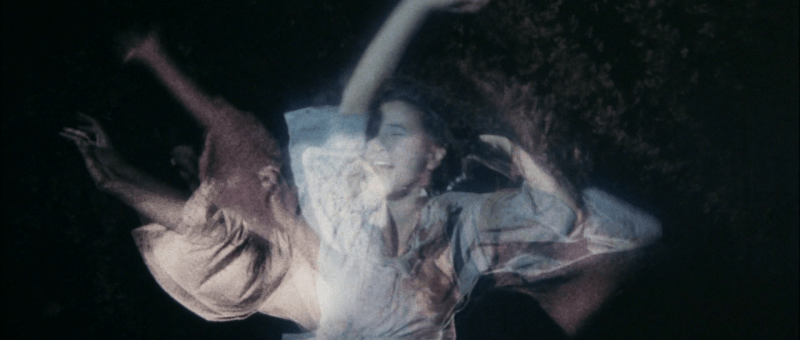
Yet Aki’s path to hell is also a confrontation with her femininity and her search for an identity as a woman by reuniting with the birth mother who died before she was born. Kumashiro’s visions of hell are terrifying and outlandish, a giant land in which the dead are thrown into a huge meat grinder they then have to push themselves. For the sin of eating meat, others are condemned to spend eternity eating human flesh. Miho has lost all sense of reason and is incapable of recognising her daughter seeing her only as another source of food but there is a kind of rebirth that takes place even if it’s only once again to be born in the underworld. Surreal and harrowing, Kumashiro’s eerie land of giant demons and shuffling corpses does indeed suggest that as the opening titles put it we all live our lives alongside hell.


Original trailer (no subtitles)

Nippon Connection 2017 – Nippon Retro Preview

sada abe posterEach year the Nippon Connection film festival runs a retrospective programme alongside its collection of recent indie and mainstream hits. The subject for this year’s strand is Nikkatsu’s Roman Porno. Heading into the 1970s, Japanese cinema was in crisis mode as TV poached cinema audiences who largely stayed away from the successful genres of the 1960s including the previously popular youth, action, and yakuza movies which had been entertaining them for close to 20 years. Daiei, one of the larger studios known for glossy, big budget prestige fare alongside some lower budget genre offerings went bust in 1971, Shochiku kept up its steady stream of melodramas, but Nikkatsu found another solution. Taking inspiration from the “pink film” – a brand of soft core, mainstream pornography shown in specialised cinemas and made to exacting production standards, they created “Roman Porno” which made sex its selling point, but put big studio resources behind it, bringing in better actors and innovative directors to lend an air of legitimacy to its purely populist ethos.
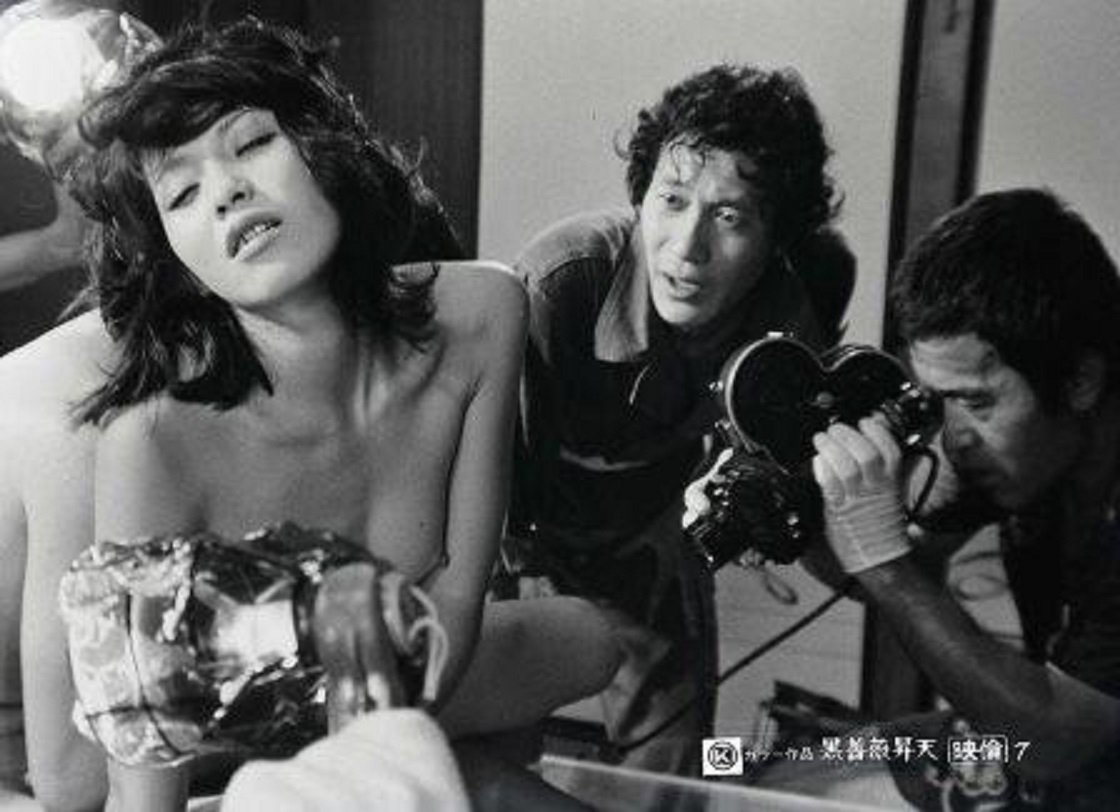
Over 40 years later, Nikkatsu Roman Porno has been rebooted for the modern era and two of these more recent films – Kazuya Shiraishi’s Dawn of the Felines, and Akihito Shiota’s Wet Woman in the Wind will also be screening in the festival’s Nippon Cinema strand. The retrospective offers the opportunity to see some of the original 1970s offerings curated by pink film expert Jasper Sharp who will also be in attendance to present some of the films as well as a lecture on the history of Roman Porno and Japanese erotic cinema.

All the films on offer are directed by one of two directors each of whom is closely associated with the Roman Porno movement:

Tatsumi Kumashiro

Tatsumi Kumashiro’s career took a while to get going – in fact he made his feature debut at 41 with A Thirsty Life (AKA Front Row Life) – the story of a stripper and her daughter who also wants to strut her stuff on the stage. Sadly, although the film attained some critical success, it flopped at the box office. Kumashiro retreated into television before making a return to the cinema when Nikkatsu launched its Roman Porno line. In contrast with Tanaka, Kumashiro leant towards gritty realism and stylistic experimentation which brought him critical acclaim even from overseas, mainstream critics.

ecstacy black roseEcstacy of the Black Rose is a more comedic effort than most of Kumashiro’s output and takes an ironic look at the genre as a put upon director gets fed up when his leading actress falls pregnant and becomes obsessed with finding a woman whose moans he overheard at the dentist’s.

FOLLOWING DESIRE stillFollowing Desire received a Kinema Junpo award for best screenplay as well as the best actress prize for Hiroko Isayama who plays a stripper intent on taking down her rival for the top spot!

TAMANOI, STREET OF JOY (A.K.A. STREET OF JOY) stillKumashiro’s Tamanoi Street of Joy takes place on the last day of legal prostitution in 1958 and follows the girls as they mark the occasion in their own particular ways.


TWISTED PATH OF LOVEFurther proving Kumashiro’s critical stature, Twisted Path of Love was among Kinema Junpo’s 1999 list of the greatest Japanese films of the 20th century. The story of a young man who returns to his hometown but attempts to shed his identity, burning a hole in the conventional village life through sex and violence, Twisted Path of Love also displays Kumashiro’s interesting use of common censorship techniques for artistic effect.

woman with red hair stillOften regarded as Kumashiro’s masterpiece, The Woman with the Red Hair picked up a Kinema Junpo best actress award for Junko Miyashita, as well as ranking fourth in their annual best of the year list. The story centres on construction worker Kozo who, along with friend Takao, rapes his boss’ daughter who subsequently becomes pregnant. While she asks Takao to marry her, Kozo embarks on an affair with the mysterious red-haired woman.

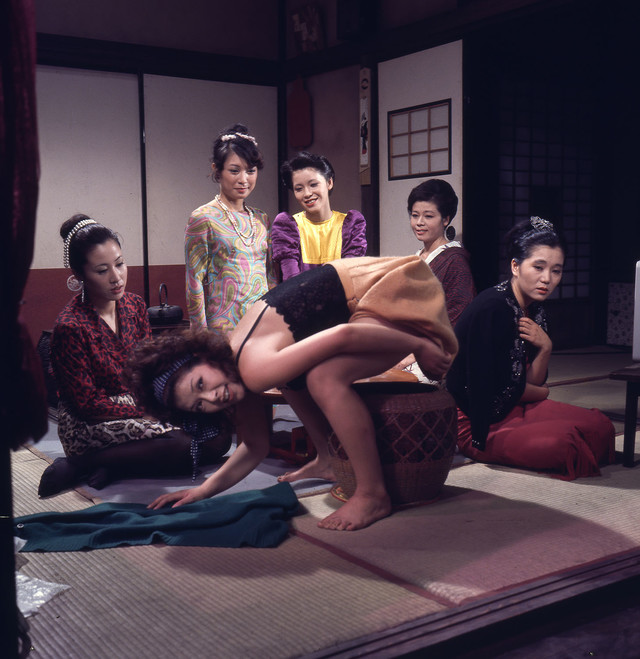
world of the geisha - stillAnother of Kumashiro’s most well-regarded Roman Porno, The World of the Geisha takes place in a geisha house in 1918 and examines the various tensions which exist between the women themselves and their customers who have come to the house to escape external political concerns. The film again demonstrates Kumashiro’s tendency to ironic commentary as he tampers with intertitles to make a point about censorship.
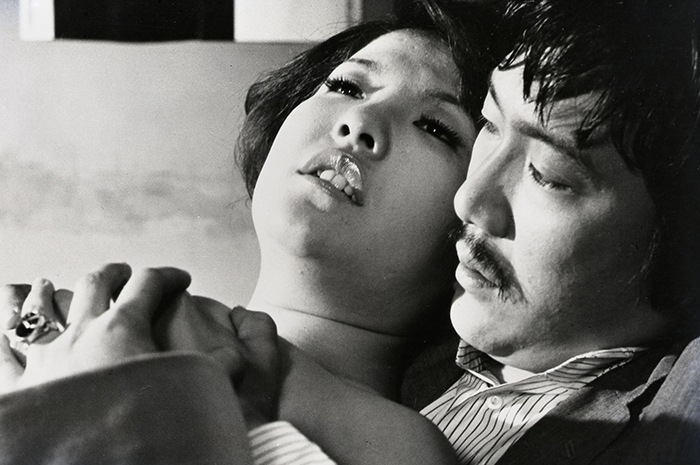

Noboru Tanaka

Though Tanaka was often overshadowed by Kumashiro and another director, Chusei Sone, he is now regarded by some as the finest of Roman Porno filmmakers. Interestingly enough, Tanaka studied French literature at university but later developed in interest in poetry which eventually led him into filmmaking as a way of expressing his rich visual world. After working as a production assistant on Kurosawa’s Yojimbo, Tanaka applied to Nikkatsu and was accepted onto the directing track where he worked with such legendary figures as Seijun Suzuki and Shohei Imamura. Where Kumashiro’s films lean towards realism, Tanaka’s are often surreal and known for their poetic qualities and unusual use of colour.
NIGHT OF THE FELINES stillNight of the Felines provides the inspiration for Kazuya Shirashi’s reboot Dawn of the Felines and follows the comical adventures of three prostitutes.
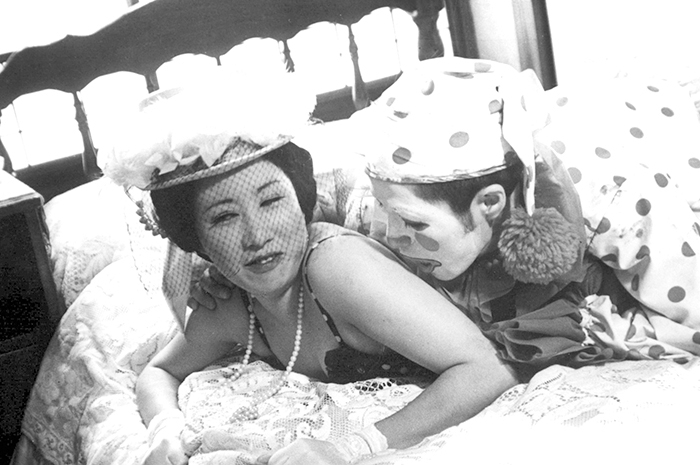

stroller in the attic stillStroller in the Attic is among the best known in the Roman Porno canon and adapts an Edogawa Rampo short story about a ’20s boarding house filled with eccentric guests.
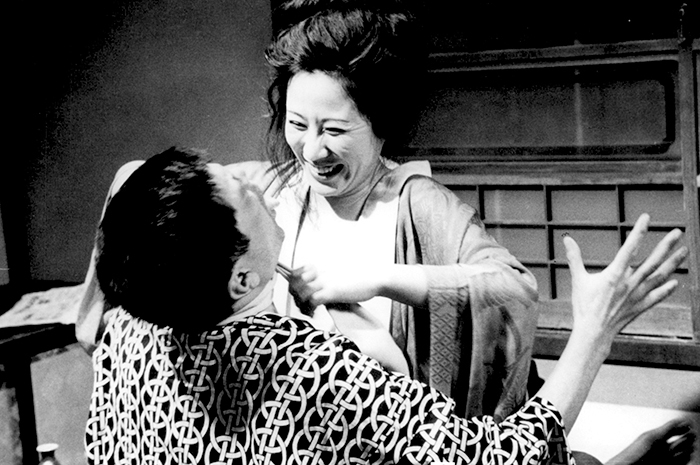

SADA AND KICHIInspired by the same real life case as In the Realm of the Senses, Noburu Tanaka’s Sada and Kichi takes a more lurid look at the strange case of Abe Sada who strangled her lover after a brief affair and then cut off his genitals to wear as a kind of talisman.


You can get more information on all the films via Nippon Connection’s official website, but tickets for this strand are only available directly from the Deutsches Filmmuseum. Behind the Pink Curtain author and pink film/Roman Porno expert Jasper Sharp will also be giving a lecture on the genre on Friday 26th May at 3pm at Mousonturm Studio 1 (admission free!).

Nippon Connection 2017 takes place from May 23 – 28, 2017 in Frankfurt, Germany. You can find the full details for all the films, screening times and ticket links on the festival’s official website and you can also keep up with all the latest news via the Nippon Connection Facebook PageTwitter account, Instagram channel and blog.