Y Vân: The Lost Sounds of Saigon (Khoa Hà & Victor Velle, 2025)

How can it be that someone can be universally renowned, famous beyond their wildest dreams, but seemingly forgotten only fifty years later? Filmmaker Khoa Hà moved to the US at 17 and never met the grandfather who passed away before she was born leaving behind a forgotten musical legacy. Other family members have told her various things about him, but the one that fascinated her was that Y Vân had been one of the foremost composers before the war through none of his work apparently survives.

Y Vân: The Lost Sounds of Saigon is partly a mystery as Khoa decides to try retracing her grandfather’s steps, trying to bring his music back into the modern era. But it’s also an exploration of family, legacy, and the brutality of the war during which most of Y Vân’s work was either deliberately or otherwise destroyed. Not only does Khoa struggle to find anything of her grandfather’s music, but is repeatedly told that nothing much survives of music made before 1975 due wartime destruction and/or the new regime who destroyed anything they deemed to be decadent. 

The totality of the destruction seems shocking. That an entire era could just be erased as if it never existed is somehow chilling in its implications. Y Vân was one of a handful of major songwriters whose work was known by all. In those days, publishers sold sheet music for songs on a similar level to records so people could learn the song by following as they listened, and you’d think that something like this would stick in the collective memory as people keep the songs alive by singing them. The problem is, however, that without any of Y Vân’s records, Koha isn’t left with much to go on, not really knowing who any of her father’s collaborators might have been to try asking them for their thoughts and recollections. 

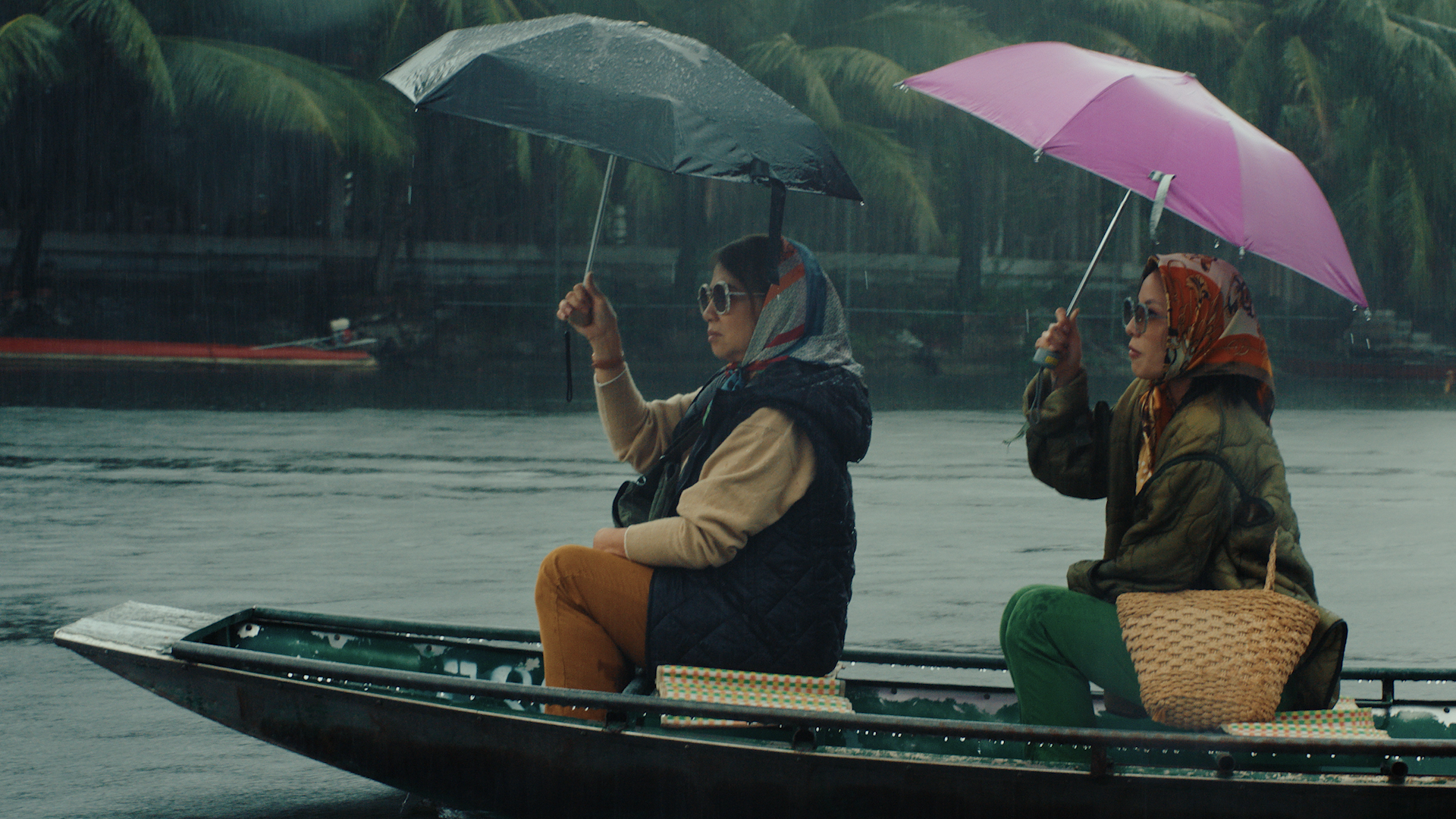
All she really has to rely on is family, though Y Vân himself had said that’s all you really need. Looking for her grandfather’s legacy enables Khoa to reconnect with her family in Vietnam including her great-aunt and uncle as well as Y Vân’s first wife from whom he eventually separated. After a while, he mother joins her on her quest, deepening their own connection as they delve into family history and travel all over Vietnam trying to track down Y Vân’s music.

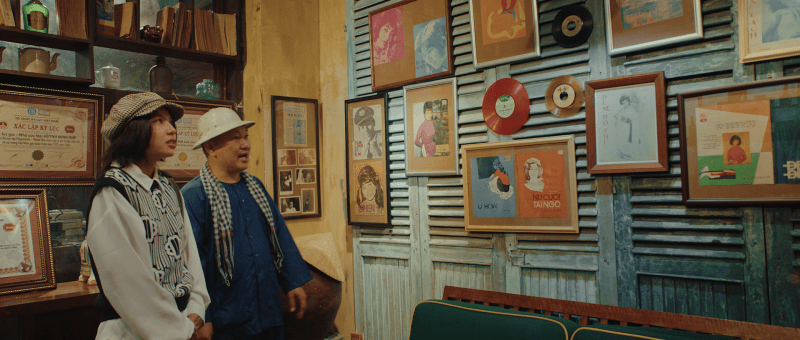
It’s a family connection that eventually puts them on to a collector who, like Khoa, has been trying to reclaim something of the past. Before the war, his family owned a music cafe, and so he’s been collecting records to recreate his childhood. His desire to restore this lost past is a means of trying to heal the trauma of the war and push past this dividing line to reclaim the lost Vietnam that lies behind it just as Khoa is attempting to reconnect with the cultural roots she felt herself in danger of losing in the US. 

Y Vân himself seems to have been a casualty of these changing times. He was temporarily sent for re-education and prevented from using his stage him with the consequence that he gave up writing music while many of his songs were banned. He passed away at a comparatively young age with his musical legacy all but forgotten. The singers who performed his music went to the US where they were unable to continue their singing careers and had to focus on making new lives for themselves. Through uncovering and archiving her grandfather’s music with the help of the collector who agrees to help her digitise his tapes and LPs so that everyone can hear them, Khoa is helping to preserve this history for future generations. As she says, art has the ability to heal old wounds and bring people together, enabling her to reconnect with her family and restore something of what was lost. Told with true visual flair, the film’s soundtrack mainly uses 60s covers of American songs, while animated sequences help to recreate the pre-war society in which Y Vân became famous, though ironically his actual dream was to study maths rather than becoming a musical superstar. Chapter markers see Khoa walking through a desert searching for Y Vân’s music and eventually finding her way toward accepting herself and culture through the preservation of her grandfather’s legacy.


Y Vân: The Lost Sounds of Saigon screened as part of this year’s San Diego Asian Film Festival Spring Showcase.
The Road to Sydney (Benito Bautista, 2025)

As a young person in Palawan, Sydney Loyola found herself the victim of toxic masculinity and a fiercely patriarchal culture. She recalls that her father once made her fight a neighbour’s son and threw her into a lake in what she then felt to be a rejection of her femininity. This feeling of being unloved by her father and responsible for the breakdown of her parents’ marriage has left a permanent scar on her life that continues to haunt her even as she begins the steps towards embracing her authentic self.

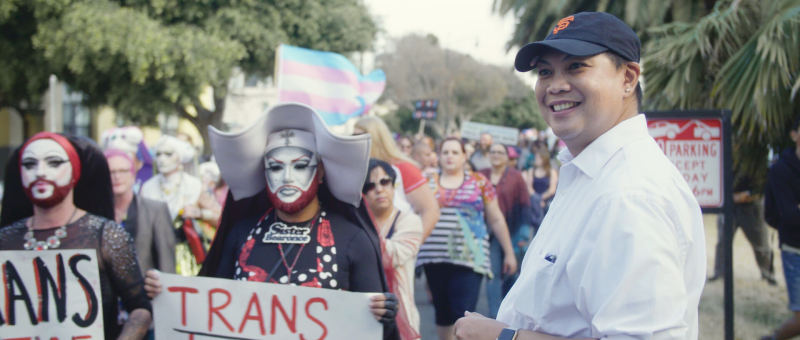
Shot over several years, Benito Bautista’s documentary follows Sydney through her transition having moved to the United States where she encounters a different kind of rejection and discrimination. A dancer and choreographer well versed in the traditional dance of Palawan, Sydney nevertheless had a survival job in San Francisco working for a property management company. When she told her boss that she needed medical leave to recover from surgery and that, on her return, she would be known as Sydney, he was apparently supportive. When she returned to work, however, the situation was quite different and her employers seemed to seize on any chance to dismiss her. Despite having sought advice from former fire fighter Mia who had undergone a successful transition in the fire service and assured Sydney that transgender people already enjoyed workplace protections in San Francisco she is eventually let from her job, forcing her to move out of her apartment, too.

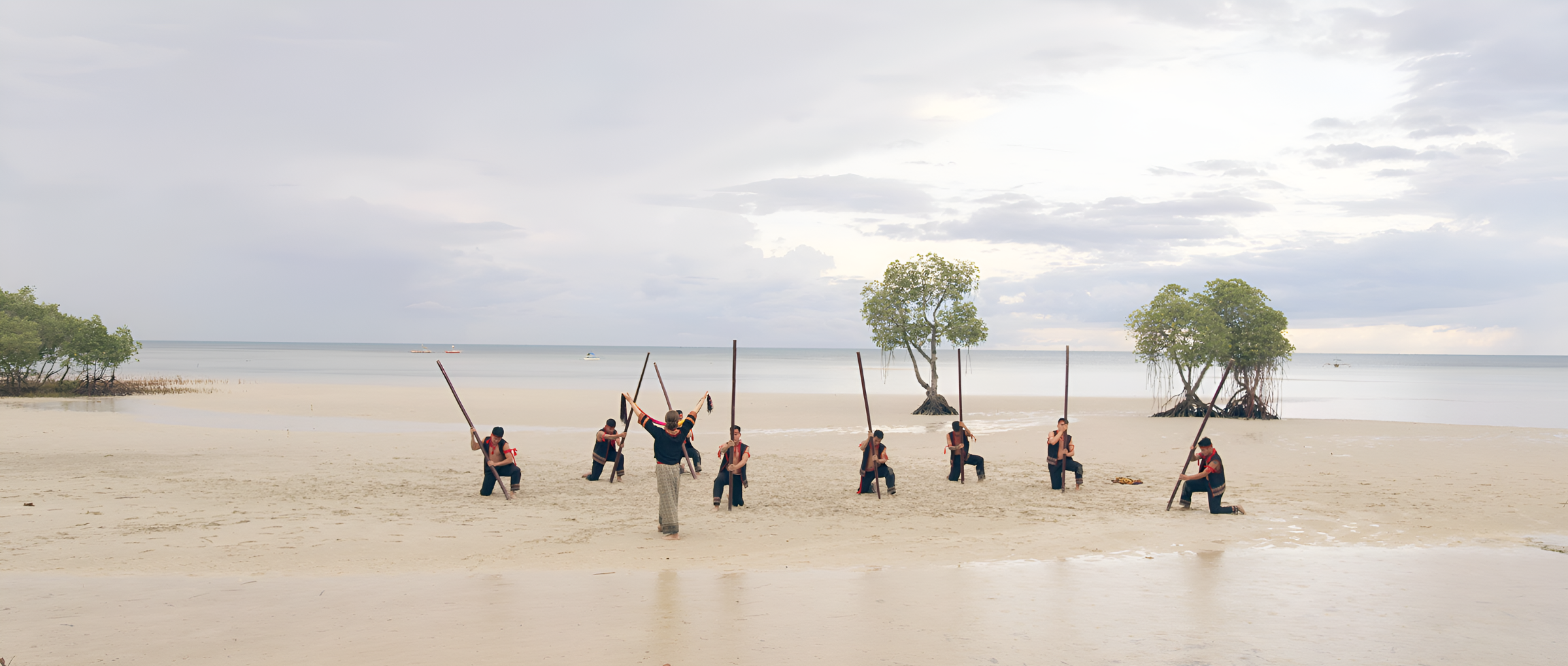
But in another way, being forced out of her apartment is only another migration that acts as a fresh start at the beginning of her new life as Sydney. On reconnecting with her dance background, Sydney returns to the Philippines to choreograph a new routine inspired by a local folksong about a man who swore he would return for a woman. Sydney has done something quite similar, returning to reclaim not only her authentic self but her culture as rooted in the history of Palawan by choreographing a routine that incorporates traditional elements and western-inspired dance. Performed on the shores of a local beach, hers is a dance of migration inspired by the nomadic Batak people that reflects her journey toward becoming Sydney, embracing her authentic self, and eventually coming home.

Even in the US, Sydney had said that dance was the only place she felt truly safe while those who remember her from her youth in Palawan state that she was already able to express her authentic self even if she was too afraid of her parents’ reaction to do so openly. She recalls that she repressed herself and did everything she could not to stand out and be noticed, though the other children at school called her effeminate and bullied her. Even as an adult, she breaks down in tears wondering why people look down on others. Several of the other interviewees, some of whom are also from the Philippines, recall similar stories of being rejected by their families for not conforming to rigid gender roles.

Sydney says that she never felt loved by her father and suspects that his rejection of her was born of a feeling of inadequacy, that her femininity brought his own manhood into question. On reuniting with him, it seems as if her feelings toward her father may have been due to a lifelong misunderstanding, or at least, he doesn’t seem to remember her childhood in the same way she does and though the meeting is more of a positive experience than she feared it might be, she’s left feeling shortchanged for a lack of acknowledgment for all she suffered. Though she describes her mother as more supportive, Sydney also waited until after she died to pursue her transition fearing that it should be too difficult or her understand and cause further strain near the end of her life. Despite having gone to America to be free of this patriarchal culture, coming back to Palawan allows Sydney to come full circle by reclaiming her authentic identity and overcoming a past sense of rejection. Resolving her situation in the US and rediscovering old friends in Palawan, she finally arrives at herself and a moment of serenity having become the person she always knew herself to be.


The Road to Sydney screenedas part of this year’s San Diego Asian Film Festival Spring Showcase.
Diamond Diplomacy (Yuriko Gamo Romer, 2025)

Perhaps it’s strange to think of a sport as a national pastime, given that many transcend borders with global networks and shared histories that span centuries. Yet American-born sports are largely played only in America and perhaps it’s the relatively small scale of their most successful export, baseball, that makes it such a rich source of cultural exchange. There might therefore be a mild contradiction that both the US and Japan think of baseball as a national game as if it could belong only to one, though they don’t so much tussle for the soul of the sport as bounce it back and forth in a continual process of exchange. 

Yuriko Gamo Romer’s documentary Diamond Diplomacy explores the way in which baseball has fostered a relationship between the two nations that has survived severe strain. As a historian points out, baseball predates judo in Japan and became a symbol of its modernisation during the Meiji era. As soon as they began to play, Japan was beating the Americans at their own game as teams of schoolboys triumphed over elite squads from local warships leaving the sailors with a degree of wounded pride to have lost at a game they created. 

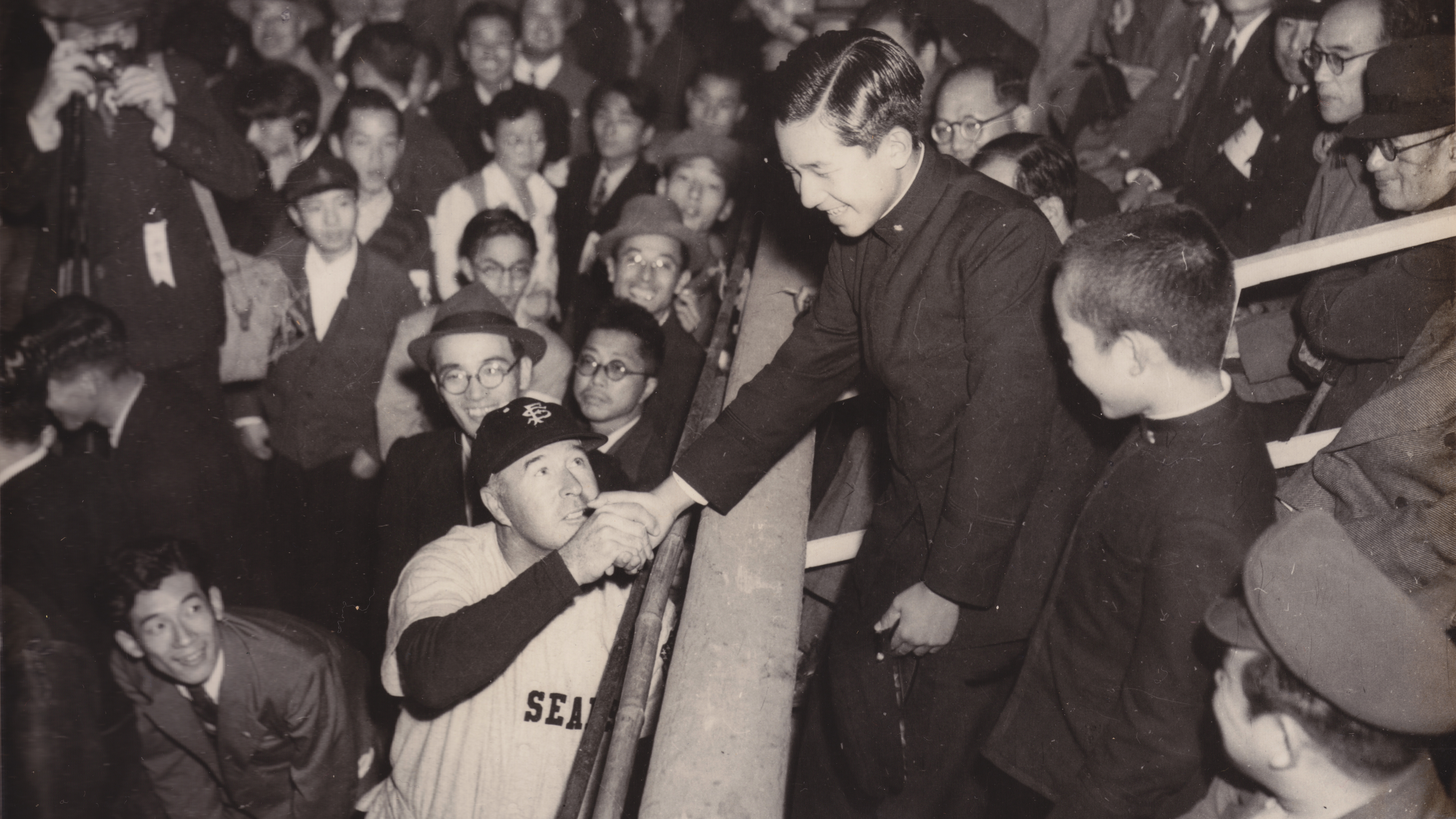
A video montage likens the equipment worn by the catcher to that worn by kendo players with its chest armour and grilled visor, while other interviewees wonder if it doesn’t play into a cultural mindset in which the individual sublimates themselves into a collective and commits themselves to a higher goal as a member of a team. Others describe it as Japan’s first purely recreational sport and suggest that it adopted samurai traits and martial arts philosophy which gave it a seriousness and a rigour that was at odds with the way the game was played in the US. American players who later came to play in Japan report consternation with the training regime, explaining that in general they only practised for a couple of hours before hitting the golf course while Japanese players trained 10 hours a day. This intensity may have contributed to the team spirit, but also, according to some, reflects a fundamental difference in cultural philosophies, While American players believe one is born with talent and can sharpen it only to a certain extent, in Japan they believe that it’s hard work that produces results and the more you train the better you can get regardless of innate talent.

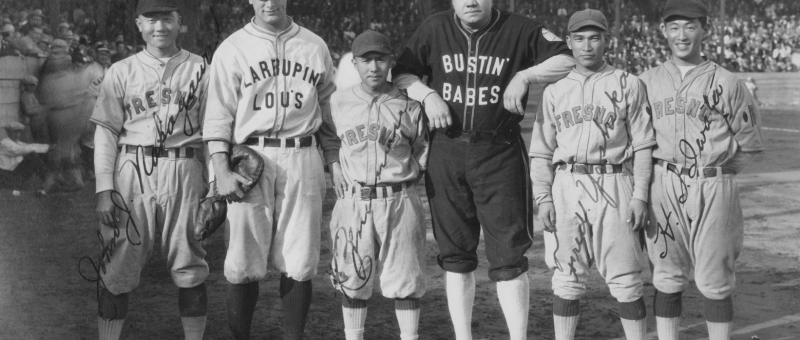
Nevertheless, according the documentary, Japanese baseball fans continue to look up to the American leagues and it was the process of bringing over top stars such as Babe Ruth and Lou Gehrig during the 1930s that fostered a sense of connection between the two nations. These sporting relationships became a way of staving off conflict and brokering peace, though endured even once war had broken out. Internees in America describe finding hope and purpose in self-built diamonds, while the resurgence of baseball also contributed to the post-war recovery and a restored sense of national pride. In America, however, Japanese players were prevented from joining the major leagues and faced discrimination until Mashi Murakami was signed to play in the US in the mid-1960s. No other Japanese players were allowed to go play in America until Hideo Nomo exploited a loophole by retiring to accept a transfer only to be viewed as a traitor in Japan.

Nevertheless, the nation soon came round and Nomo’s games were later broadcast live on television making him a national hero. The film positions Ichiro Suzuki and Shohei Ohtani as the inheritors of this legacy, continuing the cross-cultural interplay between the two nations into the present day. An interviewee charts changing attitudes to the US and finds a correlation between the presence of Japanese players in America, suggesting that they fell to their lowest in the post-war period during the economic conflicts of the 1980s in which the US feared the newly dominant force of Japan in the bubble era, but improving with the arrival of Japanese players in US leagues in the lost decade of the ‘90s. Baseball continues to be a more isolated sport than some with each nation mainly focussed on their domestic game with no formal infrastructure for international competition outside of special organised matches, but perhaps that’s what makes this unique relationship possible in the push and pull of cross-cultural interaction through the shared love of sport.


Diamond Diplomacy screens 25th April as part of this year’s San Diego Asian Film Festival Spring Showcase.
Trailer (English subtitles)