 Written by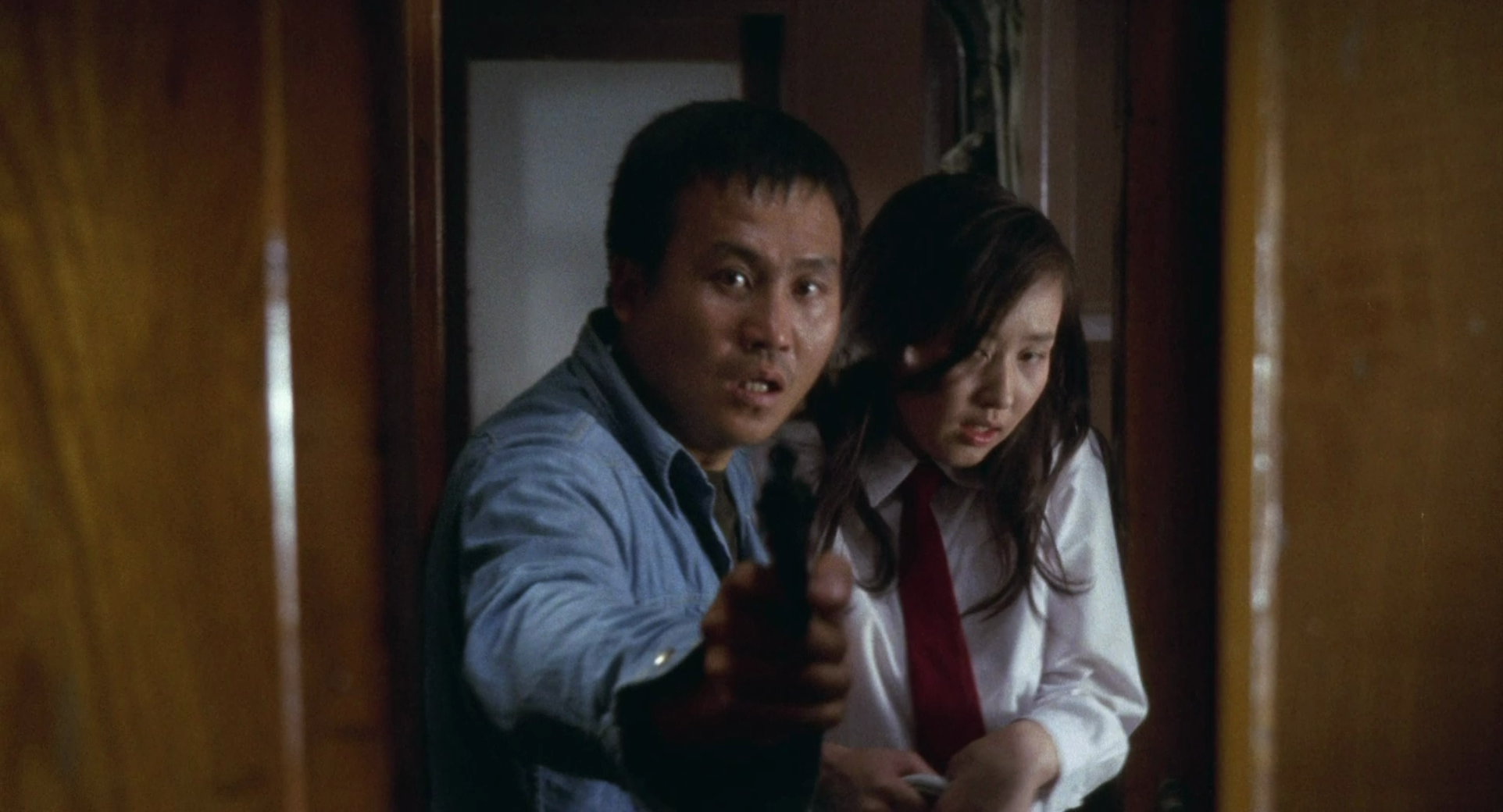
Despite its lurid title which contains the classic signifier “wet”, Yukihiro Sawada’s Retreat through the Wet Wasteland (濡れた荒野を走れ, Nureta koya wo hashire) is more sleazy nihilistic drama than classic Roman Porno. Though it obeys many of the genre’s rules, the placement of its erotic scenes feels less formulaic and the film as a whole less about eroticism than abject despair in the wake of Asama-Sanso in a Japan that has become an authoritarian paradise ruled by bruiser cops driven fragile by egos and greed.
The central mystery is, for some at least, whether fugitive cop Nakamura (Hirokazu Inoue) is really “mad” or merely using the mask of mental illness to protect himself from his former colleagues who want him dead because he knows too much. The truth may be, however, that Nakamura has wilfully retreated inside his mind as a means of escape from a world of constant corruption. Or else, that his desire for the world to be better is in itself a mental illness that’s seen him institutionalised and tortured with shock treatment in an effort to cure him of his problematic humanitarianism. In any case, he has lost all his memory and knows himself only as “Number 19” having been robbed of selfhood and individuality. All of which might suggest that he isn’t as much of a threat to his colleagues as they seem to believe him to be, though the question is why exactly they fear him so much when it’s clear that they face no consequences for their actions.
The film opens with a gang of thugs raiding a church where the pastor has been collecting money to help villages in Vietnam rebuild after the war. The thugs beat the pastor and rape his daughter who is captured in a beatific pose with a crucifix on her chest as choral music plays. When the pastor calls the police, we see the policemen receive the call while one is busy stuffing the tracksuits the thugs were wearing into the boot. They are assigned to investigate the crime they have just committed while it appears that their superiors at the station are all well aware of these kinds of activities are taking place and are even encouraging of them. The police is now the biggest gang and anyone not a part of the corruption cannot tolerated in this system because it’s underpinned by an idea of mutually assured destruction.
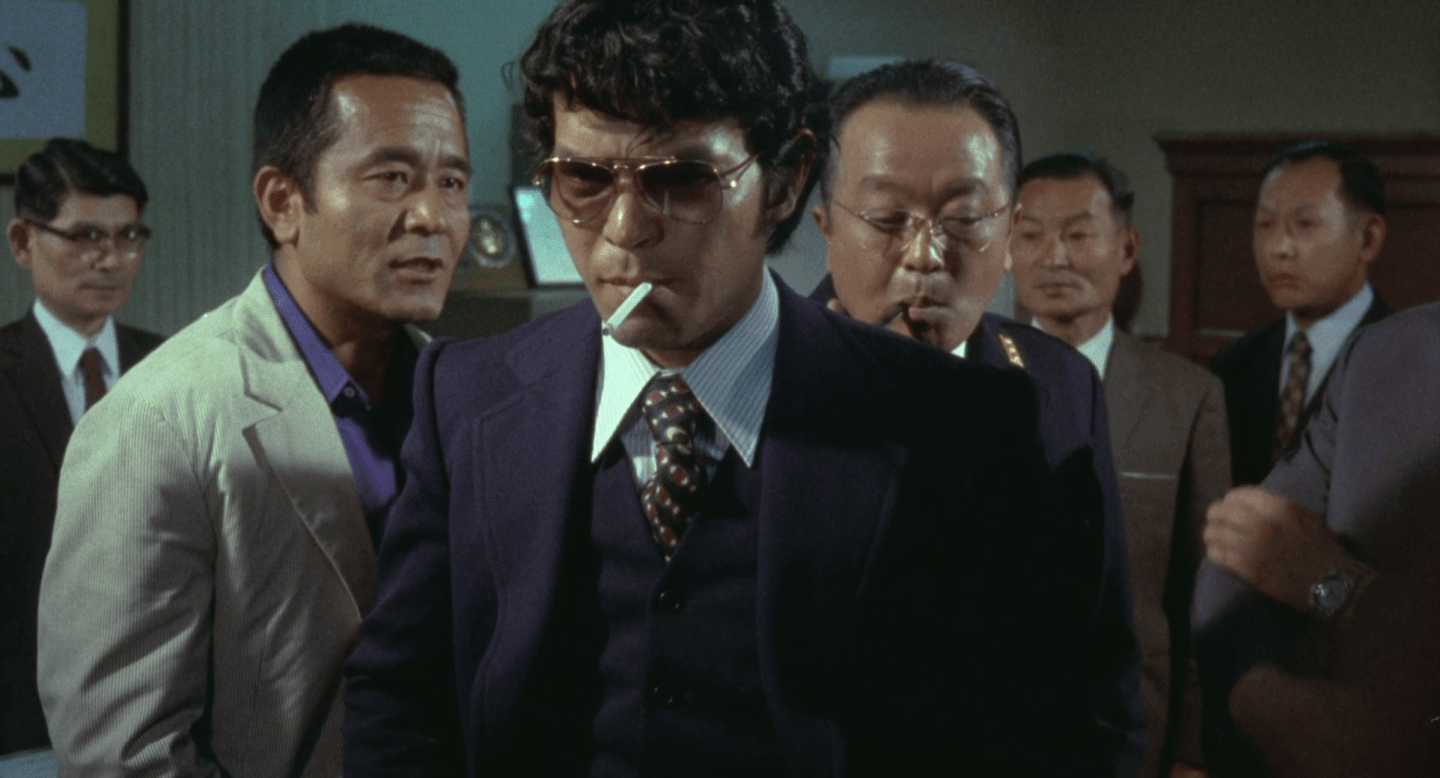
Nakamura appears to have been a more idealistic officer and though it is not clear whether he participated in the corruption himself, evidently opposed it at least philosophically, which is what has destroyed his mind. He was once Harada’s (Takeo Chii) mentor, cautioning against his desire to become stronger as becoming strong and powerful only makes you an oppressor which is not, evidently, what he considers the proper role for a policeman. To an extent, the film frames Harada as the hero as perhaps he would be in a certain kind of crime thriller. He’s effortlessly cool in his sunshades with a cigarette hanging from his lip, but he’s also a broken loser hollow on the inside and nothing without the authority granted to him by being a member of the police force. When he and Kato (Akira Takahashi) visit a sex worker, she complains that Harada can’t get it up as if signalling his essentially powerlessness and implying his violence is rooted in fear and insecurity.
Haunted by what seems to be flashbacks to an Anpo protest, Nakamura is apparently a counter to these authoritarian instincts. Having escaped the psychiatric hospital, he’s accompanied by a young woman who seems to be something of an outsider herself and the film’s real moral compass. She feels sorry for Nakamura and sees his inner purity, while in turning to Harada at the film’s conclusion and exclaiming that she pities him too reasserts her power over him. It’s she who takes Nakamura to her cousin’s travelling theatre troupe wandering the “wasteland” outside of the cities and thereby wilfully existing outside of mainstream society. Nevertheless, they are at first invaded by Harada and his partner Kato who have brought along Nakamura’s wife, and then by rightwing bikers who destroy their camp. Even these small enclaves cannot be permitted to exist and no attempt to escape the system can be tolerated. Sawada expresses this oppressiveness though the overuse of censorship bars many of which are not hiding anything that might be considered objectionable but are, in a certain sense, merely decorative. In Harada’s final demonic grin as he retreats across the wasteland, the film seems to suggest that there is no other way to escape this world of corruption other than madness or death.
Retreat Through the Wet Wasteland screened as part of Japan Society New York’s Kazuhiko Hasegawa’s Anarchic Ethos.
 Windows on Worlds