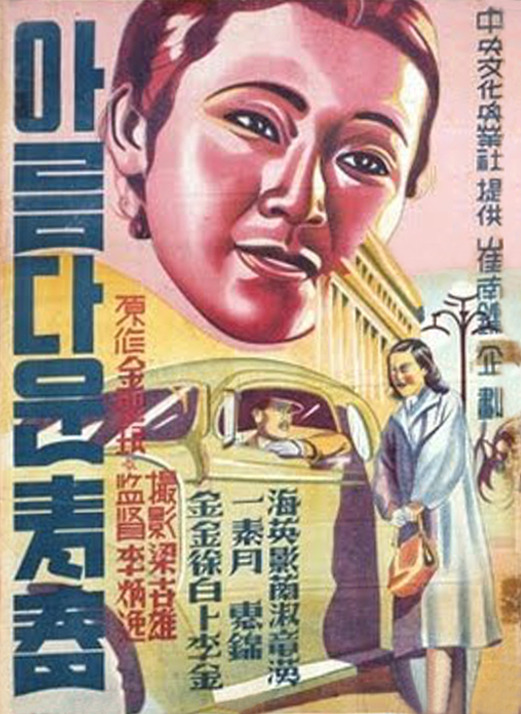
Spring of the Korean Peninsula (반도의 봄, Lee Byung-il, 1941)

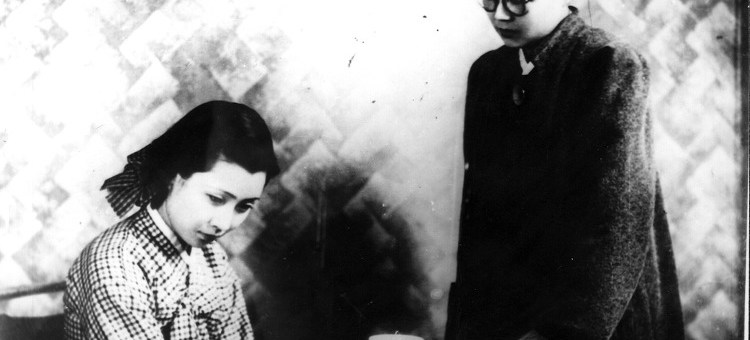
Spring on the Korean Peninsula posterExamining the few films which have survived from the colonial era, signs of resistance are few and far between even if there is often a degree of subversion detectable in foregrounding of background issues such as continuing poverty or patriarchal oppression. 1941’s Spring of the Korean Peninsula (반도의 봄, Bandoui Bom), however, appears much more complex than it might at first seem. Ostensibly a tale of the trials and tribulations of would-be-filmmakers in underpowered Korea, Lee Byung-il’s debut feature undercuts its eventual slide into one nation propaganda through the background presence of its sullen director who is forced to bear all stoically while seemingly dying inside.

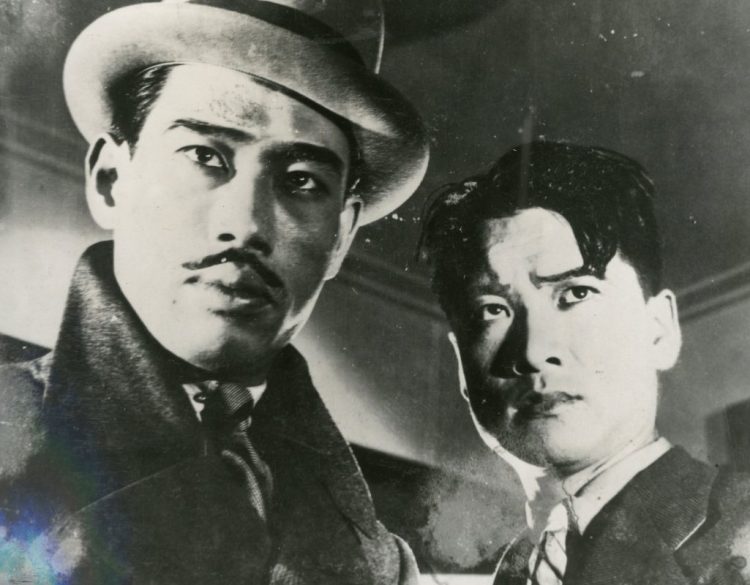
The action begins in the contemporary era (and not) as we see the heroine of the film director Heo Hoon (Seo Wol-young) is trying to make strum a gayageum before her lover arrives and the camera pulls back to reveal that we are on a film set. Attempting to film another version of the famous folktale in which the scholar Mong-ryong falls in love and secretly marries the lowborn daughter of a gisaeng, Chun-hyang, only for their romance to be threatened by a corrupt and lecherous lord, Heo has several problems to contend with, the most serious being a severe lack of money and the second being the unhappiness of his leading actress, An-na (Baek Ran), who eventually quits the production without warning.

Meanwhile, film producer Yeong-il (Kim Il-hae) welcomes an old friend en route to study in Tokyo who has brought along his little sister, Jeong-hee (Kim So-young), who is desperate to get into films. Rather than immediately ask her over to his film set, Yeong-il fobs Jeong-hee off by advising she continue her music career, offering to introduce her to a record producer he knows, Han (Kim Han), who is actually bankrolling his film as a vehicle for An-na who is his current main squeeze. Unfortunately for everyone, Han is a serial womaniser who takes a liking to Jeong-hee which causes a rift in his relationship with An-na who quits movies to go back to bar work. Jeong-hee gets the part (without really understanding why) but when Han declares himself out of money (at least, out of money when it comes to Heo’s personal expenses), Yeong-il makes a fateful decision in misappropriating some funds in the belief that he can make up the money when a cheque he’s expecting from a competition eventually comes through.

Despite the setting there is relatively little overt mention of the Japanese until the film’s conclusion when a new film company has finally been formed leading to a speech from the chairman to the effect that they now have a new duty to sell the one nation idea to the masses as loyal subjects of the Japanese empire. Lee Byung-il, like the majority of directors in this era, had himself trained in Japan and perhaps shared Heo’s envy in the established nature of the Japanese film industry which was well funded, economically successful, and technologically advanced. The more positive of Heo’s colleagues hope that the new collaborations with Japan will lead to an upgrade in the positioning of the Korean film industry but Heo is not so sure. Seated at the dinner and listening the propagandistic speeches he sits impassively while staring sadly into the middle distance as he watches Yeong-il prepare for his mission to Japan in which he is supposed to tour the film studios and bring what he’s learned back to Korea.

Meanwhile, Heo can’t pay his rent and is living on scraps and passion. His story is, however, somewhat peripheral as we become embroiled in the central melodrama of the love quadrangle developing around Jeong-hee, Yeong-il, An-na, and Han. An-na, who is looked down on as people suspect her of having worked in the sex industry in Tokyo which is probably where she met Han, is aware that he will soon tire of her and has fallen for “nice guy” Yeong-il who remains completely oblivious to the fact that both she, and the little sister of his best friend Jeong-hee, have fallen in love with him. Han, meanwhile, is a serial sexual harasser as his assistant tries to signal Jeong-hee even while being unable to prevent her getting into his car on her own.

Interestingly enough, “bad girl” An-na only speaks Japanese, while “nice girl” Jeong-hee only speaks Korean and dresses mostly in hanbok though many of her scenes feature her playing the heroine of Chun-hyang who, it could be argued, is a kind of embodiment of “Korea”. The choice of Chun-hyang is in itself subversive in its obvious “Koreanness” let alone the persistent subtext that positions the retelling as that of a purehearted Korea struggling against the “corruption” of the Japanese colonial regime as embodied by the piece’s villain. Nevertheless, the love square resolves itself in unexpected fashion as the two women bond over their shared love of Yeong-il. An-na, forced to reflect on her “problematic” past, eventually makes a pure love sacrifice to clear the way for the two “nice” kids to get together, becoming a figure of intense sympathy as she absents herself from the frame to exorcise the kind of “corruption” she has been used to represent from the innocent romance of Jeong-hee and her real life Mong-ryong Yeong-il.

Lee would make no further films during the colonial era. In 1948 he left Korea to train in Hollywood and then sat out the Korean War in Japan, only returning to Korea in 1954. After setting up his own studio, Donga Film Company, Lee went on to direct Korea’s “first” comedy The Wedding Day and thereafter to a hugely successful career. Like Heo, it seems he remained pessimistic and conflicted about the Korean film industry’s increasing dependence on Japan (despite his personal experiences). Nevertheless, his debut strikes a surprising note of discordance in its subversive themes and melancholy closing as its director stares ambivalently into an uncertain future, left behind as his emissaries ride off in search of a new and more modern world.


Spring of the Korean Peninsula was screened as part of the Early Korean Cinema: Lost Films from the Japanese Colonial Period season currently running at BFI Southbank. Also available to stream online via the Korean Film Archive’s YouTube Channel.
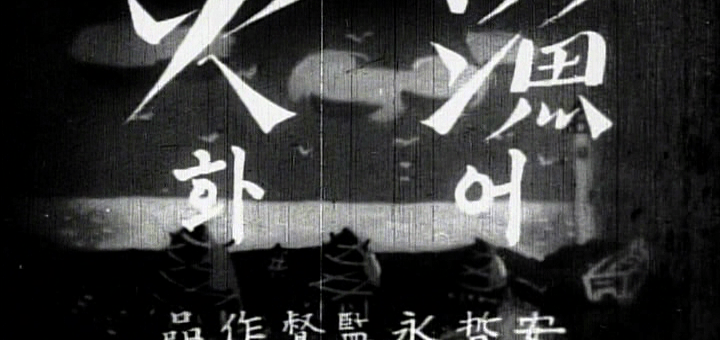
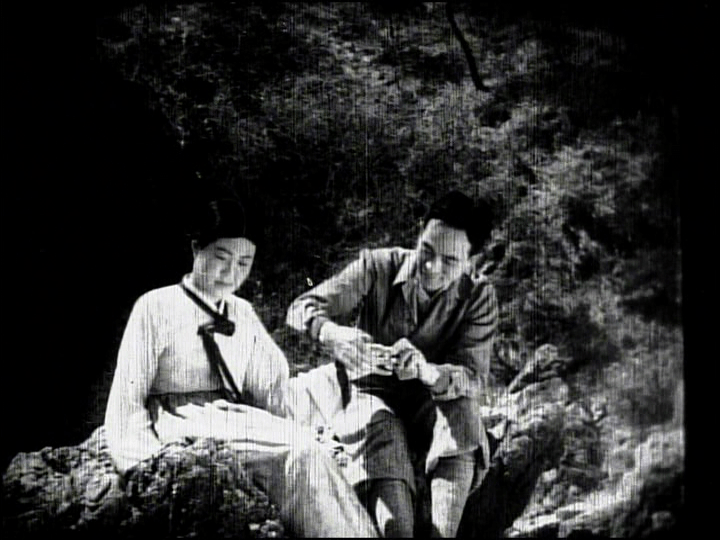
Fisherman’s Fire (漁火 / 어화, Ahn Cheol-young, 1939)

vlcsnap-2019-02-18-01h49m56s589Late into the colonial era, Korean Cinema became heavily invested in selling the “one nation” idea. Signs of “Koreanness” such as language, dress, and customs were actively discouraged if not directly suppressed while censorship regulations prevented any negative comment on the Japanese empire. Back in Japan, however, there was an appetite for an exoticised view of the colonial landscape which in part played into the idea of Korea as a “backward” land in need of Japanese sophistication. 1939’s Fisherman’s Fire (漁火 / 어화, Eohwa) was directed in Korea by Ahn Cheol-young as a collaborative project between the studio he had co-founded, Keuk-gang Film Company, and the well established Japanese studio Shochiku where it is was “supervised” by Yasujiro Shimazu who prepared the film for Japanese audiences.

Like many Japanese films of the 1930s, Fisherman’s Fire revolves round a young woman from the country who is mis-sold dreams of freedom and urban sophistication only to be misused and betrayed by unscrupulous men. In-soon (Park Rho-kyeong), a fisherman’s daughter, is in love with local boy Chun-seok (Park Hak) but her family is poor and her father has taken on a huge debt from the local lord, Mr. Jang. In-soon longs to follow her friend Ok-boon (Jeon Hyo-bong) to Seoul where she might be able to earn money to help repay the debt but her family aren’t keen for her to go and even though Ok-boon has apparently been able to make an honest life for herself other girls gossip about those who went to the city with big dreams but ended up pressed into sex work.

When her father is lost at sea in a storm, Mr. Jang pressures In-soon’s mother to give him In-soon as a concubine in exchange for the debt. Horrified, In-soon doesn’t know what to do but is unexpectedly saved by Jang’s son Cheol-soo (Na Woong) who gives her mother the money to cancel the arrangement. In-soon ends up going to Seoul, where she has arranged to meet Ok-boon, with Cheol-soo but when she gets there discovers that he has ulterior motives. He traps her in his apartment for 10 days while claiming he has been unable to contact Ok-boon, eventually taking advantage of her before she is able to (temporarily) escape.

In-soon’s sorry tale is one familiar from Japanese cinema of the 1930s – that of a young woman who has been betrayed by an inconsistent level of modernity from which she receives only the dangers and none of the benefits. Then again, her village home was not so innocent – she was after all about to be sold as a concubine to a lecherous old man, meaning that this isn’t simply tale of the pastoral innocence versus urban sophistication. As we discover, Ok-boon found herself in a similar situation to In-soon but was able to escape it and not only that, she has also become “financially independent” which is what she encourages In-soon to become as the only way of freeing herself from the clutches of cads like Cheol-soo who press their patriarchal privileges in order to take advantage of naive girls like In-soon who haven’t been made aware they have the power to refuse.

Unlike the heroine of Sweet Dream whose desires of leading a more fulfilling life eventually lead to nothing but a dead end, In-soon is in a sense allowed to leave her disappointments behind in the city and, as Ok-boon surprisingly advises her, forget about what happened with Cheol-soo and live her life. Traumatised and shamed by her experience, In-soon eventually ends up in sex work, attempting suicide when confronted by a leering Cheol-soo, but discovers that her friends and family have not changed their opinion of her and though she may be looking at it with new eyes, her village is still as beautiful as it has always been.

The village’s visual beauty is, in a sense, the point in that the film was quite obviously made to showcase the idyllic country landscapes of the colonial territories along with the charming local customs which is perhaps why the film is bookended with documentary-style scenes of the fishing community singing and dancing to folksongs as well as including minor details like a shrine visit. Indeed, some Japanese critics felt the film had “failed” in its aims precisely because of In-soon’s eventual journey to the city which loses the feeling of local flavour they regarded as its selling point. What the Japanese audience craved was an exoticised vision of ultra-Koreanness that was in fact entirely created in Japan – something many felt the film did not sufficiently offer which is why it did not prove popular with audiences or critics. Supervised and prepared in Japan for Japanese audiences by Shochiku’s Yasujiro Shimazu, edited by Kozaburo Yoshimura, featuring music by the Ofuna Orchestra (repurposing a traditional Korean tune), and utilising a narrative familiar from domestic films, Fisherman’s Fire is an attempt to sell a manufactured vision of Korea as charmingly unsophisticated and rooted within the romantic pastoral past.

Nevertheless, it has its surprising elements such as the startlingly progressive Ok-boon whose independent city life is praised rather than criticised even if In-soon eventually retreats back to her idyllic village home. Cheol-soo, the feckless landlord’s son, gets a comeuppance for his wicked ways in being fired from his job for unreliability and incompetence which stands in for a kind of karmic punishment for his cavalier misuse of In-soon and other women like her in his attempt to assert his feudal entitlement in the improper environment of the modern city. Unlike the conservative Sweet Dream, Fisherman’s Fire finds scope and possibility for the young women of a new society and is prepared to be forgiving of them even when they fail.


Fisherman’s Fire was screened as part of the Early Korean Cinema: Lost Films from the Japanese Colonial Period season currently running at BFI Southbank. It is also available as part of the Korean Film Archive’s The Past Unearthed: the Second Encounter Collection of Chosun Films in the 1930s box set. Not currently available to stream online.

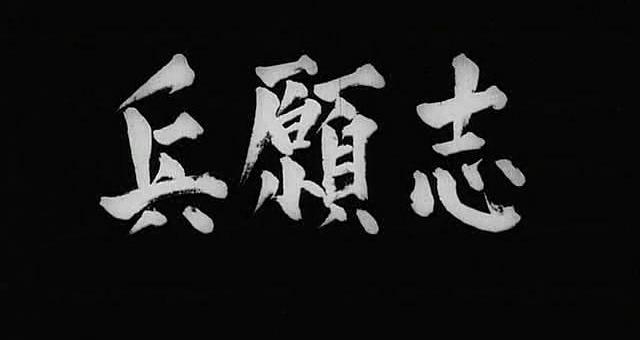
Volunteer (志願兵 / 지 원병, Ahn Seok-yeong, 1941)

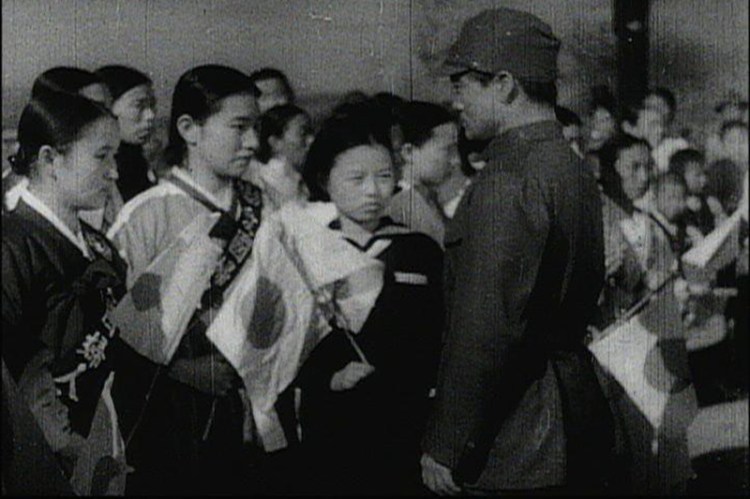
volunteer still 1Despite a severe lack of manpower, Japan delayed opening its armies to potential soldiers from outside of the mainland until late in the war. A valuable propaganda tool, Korean cinema had become increasingly invested in the one nation idea, but convincing young men that they should willingly enlist to offer their lives in service of an imperial power was a much bigger ask. 1941’s Volunteer (志願兵 / 지 원병, Jiweonbyeong) was produced as a pure propaganda film designed to raise awareness of the volunteer soldier system the Colonial Government had instituted and thereby help to convince young men who felt oppressed or hopeless that their best chance for advancement lay in embracing rather than opposing the colonial regime.

The hero of the tale, Choon-ho (Choi Woon-bong), is a reluctant farm boy who has inherited his father’s estate and with it his position as the tenant farmer. Choon-ho’s big project is cultivating some land on the side of a hill next to his fields which has previously been left fallow. However, Choon-ho is a poor farmer and woefully inexperienced (a fact which can perhaps be forgiven given his relative youth). He is a constant source of resentment and consternation in the local farming community with many old hands throwing their weight behind his rival, Duk-sam, who has been agitating for the position of tenant farmer since he and Choon-ho’s father were young. Eventually the landlord, Mr. Park, decides to fire Choon-ho and promote Duk-sam, leaving him dejected and hopeless. That is until, of course, he is bitten by the patriotism bug and realises that his demotion is really a good thing because now he can devote himself fully to serving his nation.

Well, perhaps not quite – at this point Korean men are still not permitted to join the army, something which seems to irk Choon-ho, adding to his deep seated sense of personal inadequacy in being deemed not quite a proper citizen and definitely not equal to a man born on the Japanese mainland. Nevertheless, the film opens with a joyous celebration of locals sending off a troop train filled with young men who are able to serve. Flags are flown, chants are shouted, and the men inside the train are feted like heroes as they prepare to defend their country with their lives if necessary.

To Choon-ho, who now feels as if he has failed on almost every level as a man, the army offers a very real opportunity to prove himself someone worthy of respect. Not only has Choon-ho failed at farming, he also risks failure at romance in dallying over his long delayed marriage to beautiful fiancée Boon-ok (Moon Ye-bong) who has been waiting patiently for the last few years. Duk-sam, not content with wrestling the tenancy position away from Choon-ho, is also intent on having Boon-ok marry one of his sons and has a very real chance of breaking the engagement now that Choon-ho is no longer in such a privileged position.

Meanwhile, it also seems that Park’s younger sister Soo-ae, who is now a fancy modern lady living in Seoul, has a soft spot for Choon-ho, arousing a degree of hopeless jealously in Boon-ok who believes she is not really good enough for him owing to her lack of education and unsophisticated country ways. The real drama however occurs as Choon-ho falls out with his best friend when he suspects him of attempting to woo Boon-ok in one of her lowest moments. His friend’s “transgression” not only disrupts their relationship, but further exacerbates Choon-ho’s sense of wounded masculinity as he faces the fact another man might have been about to steal his girl out from under him.

The army has always been a prime path to advancement for young men from disadvantaged backgrounds, offering a steady pay check, career path, and training in valuable skills but ideologically speaking these benefits are unlikely to convince many to risk their lives in service of a colonial power they may privately feel to be oppressive. Then again, the army was not particularly looking for ordinary young men from the fields but for middle-class, well educated ones like Choon-ho. It is therefore doubly interesting that Choon-ho is sold not on the benefits of army, but on his own inadequacy and on militarism as its cure. Watching boys playing soldier, he begins to fantasise about himself as an almost faceless component of a perfectly oiled machine marching relentlessly forward into an ordered future free of the burden of choice or personal responsibility.

When the army opens itself up to Korean men, Choon-ho feels seen and whole, a fully fledged citizen with rights and duties to which he now intends to devote himself entirely. Mr. Park, who demoted him for his failure to make an impact, now suddenly respects him on seeing his name among those of the volunteer soldiers listed in the paper. So that we can be sure that Choon-ho’s decision is not “selfish” or unfilial, Park decides to support his family while he’s away serving so that his mother and sister will be well looked after and he won’t need to worry about them. Meanwhile, Boon-ok, wearing a sash denoting her as a member of the patriotic women’s association, is happy and relieved that Choon-ho has found his purpose, urging him to go on to be a great soldier serving his nation. It’s her face, rather the cheering, flag waving masses, that Ahn leaves us with as she watches the man she loves ride away towards a supposedly brighter future, staring directly into the camera with something that looks like pride mixed with mild accusation.


Volunteer was screened as part of the Early Korean Cinema: Lost Films from the Japanese Colonial Period season currently running at BFI Southbank. It is also available as part of the Korean Film Archive’s The Past Unearthed: the First Encounter box set. Not currently available to stream online.

Sweet Dream (迷夢 / 미몽, Yang Ju-nam, 1936)

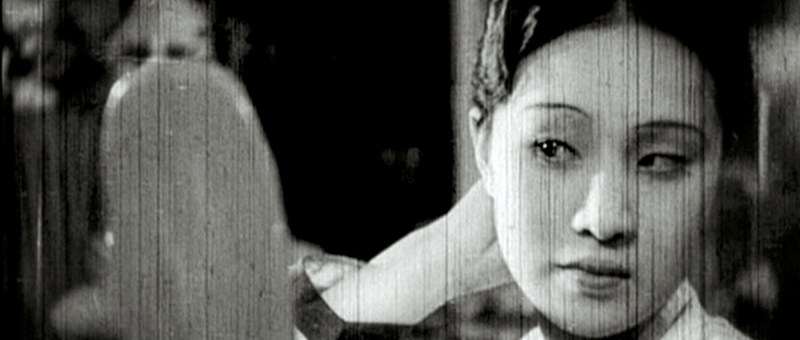
Sweet Dream still 2The picture one gets of the 1930s is largely one of fear and oppression, especially in Korea under the increasingly brutal Japanese colonial regime, but then it was also a time of intense social flux in which the continuing influence of Western culture and the effects of the great depression placed the traditional way of life into question. 1936’s Sweet Dream (迷夢 / 미몽, Mimong, lit. “delusion”) is, at the time of writing, the oldest extant sound film, and perhaps attempts to kick back against the “corruptions” of the modern age in telling a tragic story of ruined motherhood in which a young woman’s desire for material wealth and a social freedom eventually draws her to her doom.

Our “heroine” is Ae-soon (Moon Ye-bong), a married wife and mother who resents the restrictive nature of her life and attempts to escape it through embracing the “modern” hobby of shopping – with her husband’s money of course, while neglecting her young daughter Jeong-hee (Yoo Seon-ok) whom she perhaps sees as a symbol of the forces which make her a prisoner of her own home. It’s on a shopping trip that she begins her descent into ruin when she’s spotted by the extremely suspicious-looking Chang-geon (Kim In-gye) who swipes her handbag while she’s busy wrapping up purchases only to give it back to her as a kind of meet cute. Nevertheless, Ae-soon is smitten, especially as she believes that Chang-geon is extremely wealthy. Kicked out by her husband for her increasingly unacceptable behaviour, Ae-soon moves in with Chang-geon at his hotel and embarks on the fun loving and fancy free life of her dreams.

As might be expected, the film does not end there and Ae-soon will pay for her “selfish” choice to pursue pleasure in her own life rather than channelling all of her hopes and desires into her family as a woman is expected to do. Truth be told, Ae-soon is not a particularly sympathetic woman, especially as her husband Seon-yong (Lee Keum-ryong) is portrayed as kind, sensitive, and devoted to his daughter who is clearly his primary point of concern in his dealings with his wife. It is therefore difficult to sympathise with her dissatisfaction in her married life which, externally at least, appears comfortable, stable, and close to the ideal that many young women would hope for in a society which continues to favour arranged marriage.

What Ae-soon wants is something which a woman is not allowed to have – freedom. Then again, the film asks us to set aside the natural desire to be free and see Ae-soon’s refusal to conform as a corruption born of excess modernity. Rather than abandon her home to pursue a career or a dream, Ae-soon leaves in pursuit of a man and even then she pursues him not for reasons of love or desire but greed. No sooner has Ae-soon begun to discover that Chang-geon is not all he claimed to be than she’s planning the next conquest in chasing a famous dancer she quite liked the look of at the theatre the previous evening when Chang-geon skipped out to meet a “business associate” leaving her feeling neglected. Unable to chase material success off her own bat, she chases it through men by using her sexuality which places her at the wrong end of just about every social code going even while she herself continues to abide by the tenets of those social codes by remaining in a monogamous relationship with Chang-geon which is in reality not so different from her marriage save for the absence of her daughter, the fact they live in a serviced hotel, and the illusion of having more money and with it more social power.

Ae-soon is no Nora. Her decision to abandon her daughter isn’t born of a sudden awakening to the destructive effects of patriarchy (which the film otherwise belittles in its casting of Ae-soon’s dissatisfaction as a dislike of housework), but of “mistaken” ambition which, paradoxically, she pursues through trading up her sexual partners in order to increase her material wealth and social standing. Ae-soon rejects her maternity and with it her daughter because she wishes to assert her own identity and finds it impossible to maintain both within the society in which she lives, but allowing a woman to reject the ideas of home and family, as Ibsen had done 50 years previously, is too dangerous an idea for the Korea of 1936 and so Ae-soon’s “sweet dream” is in effect a siren song which will lead her down a dark path towards the only redemption possible for a woman who has betrayed the very idea of what society believes a woman to be.

Strangely enough, Sweet Dream was commissioned as a public information piece sponsored by the Choman Traffic Office as the first “traffic film” intended to increase awareness of traffic safety which is why the subject features so prominently throughout culminating the heavily foreshadowed traffic accident that provokes Ae-soon’s reawakening to her latent maternity. Understandably unhappy, the sponsors requested that the next traffic film be “more cheerful and artistic” yet what could be more symbolic (except perhaps a train) of the dangers of modernity than a speeding motorcar? Ae-soon should perhaps have learned to look both ways and cross when the going’s clear, but then again the film seems to insist that the safest place for her to be is inside the cage, that the only path to “happiness” lies in learning to accommodate oneself within its confines as any attempt to deviate from the accepted course will lead to disaster not only for the individual but for society as a whole.


Sweet Dream was screened as part of the Early Korean Cinema: Lost Films from the Japanese Colonial Period season currently running at BFI Southbank. It is also available as part of the Korean Film Archive’s The Past Unearthed: the Second Encounter Collection of Chosun Films in the 1930s box set, as well as online via the Korean Film Archive’s YouTube channel.

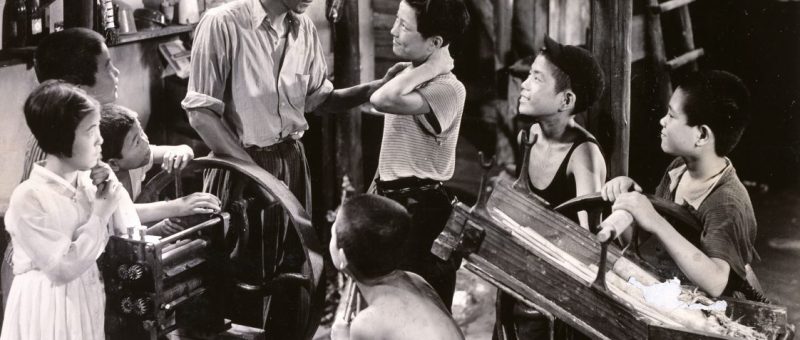
Angels on the Street (집 없는 천사, Choi In-kyu, 1941)

By 1941, Korea had been under Japanese colonial rule for over 30 years and was subject to the same kinds of increasingly oppressive militarism as Japan itself. This of course included tightly controlled censorship of the arts which eventually edged towards the suppression of all Korean language cinema. Nevertheless, even while superficially obeying censorship directives, conflicted directors were able to subtly undercut the desired effect by foregrounding other concerns. Choi In-kyu’s Angels on the Street (집 없는 천사, Jibeopneun cheonsa) is a case in point in its focus on impoverished children and the Christianising forces which eventually “save” them.

The two youngsters at the centre of the tale, teenage older sister Myeong-ja (Kim Sin-jae) and her little brother Yong-gil (Lee Wuk-ha), seem to be orphans and have been taken in by a street family led by Mr. Kwon who forces them to sell flowers and other small items in return for food and shelter. The kids get into trouble when Yong-gil spends some of the money on sweets rather than bringing it all home for which he is severely punished, leading Mr. Kwon and his wife to further press Myeong-ja to become a bar girl so that her brother won’t be hungry anymore. Hearing Myeong-ja give in, Yong-gil runs away hoping to spare his sister such an unpleasant fate. While he falls in with a troop of street kids and is eventually “rescued” by a socially minded minister, Father Bang (Kim Il-hae), Myeong-ja eventually finds an ally in a drunken doctor who often comes into the bar where she sells flowers and offers to take her in as a trainee nurse.

What is clear is that poverty and its associated problems are rife leading to a large number of orphaned, abandoned, and runaway children living on the streets where they remain extremely vulnerable to manipulation by unscrupulous adults like Mr. Kwon. Then again, the kindly intentions of Father Bang are in themselves not unproblematic. As in many of these kinds of films, Father Bang is only interested in rescuing boys whom he later sets up in a kind of dorm/commune where he can “reform” them into upstanding, respectable young men filled with Christian virtues. His end goals allow him to overlook that his approach is also exploitative in that he requires the boys to fix up a barn he has borrowed from his embittered brother-in-law Dr. Ahn (Kang jeong-ae) to make it into a place fit for habitation and thereafter expects them to work, in this case making noodles, to provide economic support for the entire enterprise.

Father Bang seems to have spent at least some time in Germany, as has his brother-in-law, and has a deep seated protestant work ethic that perhaps leads him to feel that “hard work” is the best way of reforming these otherwise feral children whom he sees as lazy and selfish. Nevertheless, he is profiting directly from their labour in much the same way as Kwon even if his end goals are different. Like Dr. Ahn, who seems to have become cynical and embittered after losing his wife in believing that the children are beyond saving and all Bang’s efforts merely futile, Father Bang has committed wholly to protestantism in so far as giving both his children European Christian names while his wife has also taken the name of Maria (Moon Ye-bong). This seems like a fairly controversial step when many Koreans are being encouraged to abandon their birth names in favour of adopting new Japanese ones, let alone that militarists might not be keen on the introduction of religious themes which, sometimes but not exclusively, conflict with their prevailing ideology.

That aside, Bang appears to align himself with the colonial elite rather than native Korean nationalism. When introducing Yong-gil to his new “brothers”, he points out the smallest one as a promising bugler who will one day make a fine volunteer soldier. Later the same boy is pictured blowing his bugle with the Japanese flag flying somewhat heroically above him, while the boys who generally speak Korean with one another freely reel off the Imperial Rescript with relative ease. Choi subtly undercuts the essential propaganda effects of including the pledge in having Bang add a post-script of his own credo which is essentially repackaged Christian virtues but allows the implication to remain that Bang is preparing these young men to become muscle for an imperial power even if inculcating in them a notion of moral goodness (indeed, there is also perhaps the implication that these boys stand in for a “Korea” in need of moral education which can be earned through exerting themselves to become more “Japanese” as in Ahn’s final assurance that they will become “excellent people” “of great service to our country” if they continue to heed Bang’s teachings).

“Goodness” however seems to win out as even the villainous Kwon is made to renounce his life of exploitative criminality and Dr. Ahn’s sense of social justice is reawakened on seeing the effect Bang has had on the previously directionless boys. After completing Angels on the Street, Choi would refuse to make any more pro-Japanese films for the next three years before being convinced to return by committed rightist Han Hyung-mo, filming a trilogy of similarly compromised dramas before doing a complete about face in 1946 by directing the very first post-liberation film Hurrah! For Freedom which, ironically enough, celebrated the activities of the Resistance during the final days of occupation.


Angels on the Street was screened at the Korean Cultural Centre in conjunction with the Early Korean Cinema: Lost Films from the Japanese Colonial Period season currently running at the BFI Southbank. It is also available on DVD as part of the Korean Film Archive’s The Past Unearthed box set (currently OOP). Not available to stream online.

Short scene from the end of the film featuring the Imperialist Rescript (Japanese with Korean subtitles )

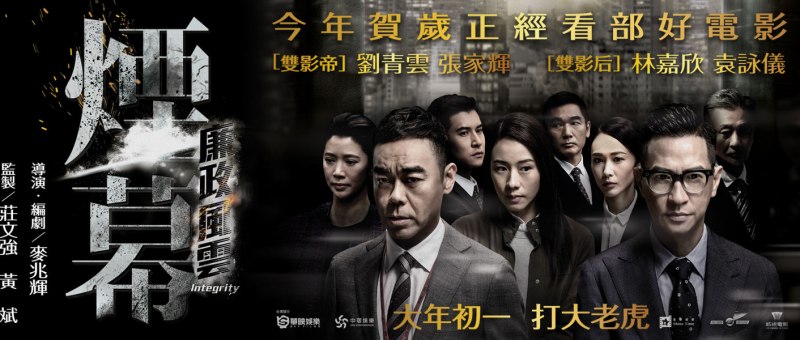
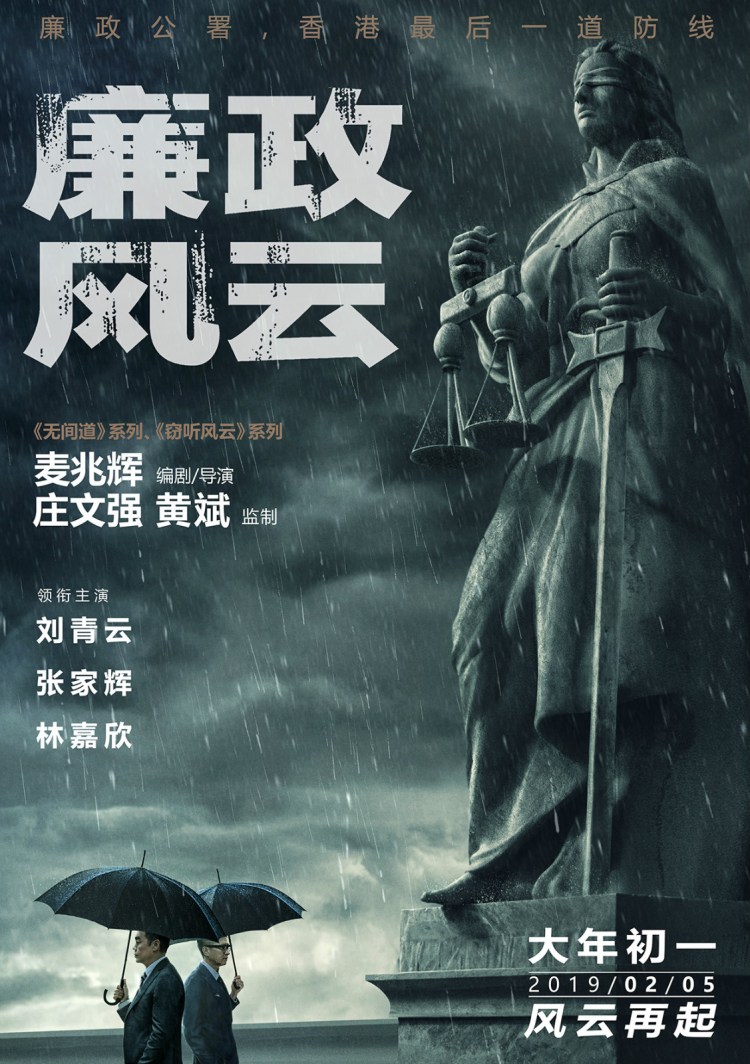
Integrity (廉政風雲 煙幕, Alan Mak, 2019)

Integrity poster 1Alan Mak made his name with the phenomenally successful Infernal Affairs (co-directing with Andrew Lau) which later blossomed into a trilogy – a pattern he repeated with the Overheard series, making time for a few standalones in between. 2019’s Integrity (廉政風雲 煙幕), released as gritty alternative to the saccharine and silly fare usually on offer for Lunar New Year, finds him in similar territory and is once again touted as the first in a projected trilogy this time revolving around the ICAC who have become a Hong Kong movie favourite as of late. Drawing inspiration from classic ‘70s thrillers and American New Cinema, Integrity has a few questions to ask about the nature of corruption and the limits of control.

The drama begins with ICAC officer King (Sean Lau Ching-wan) briefing star witness Jack Hui (Nick Cheung Ka-fai) on their upcoming court case. Shortly after Jack has handed over a USB stick containing new evidence, he slips his protective detail and disappears leaving King’s case with a giant hole in the middle, especially considering one of the two defendants has also skipped town. Given a seven day recess, King reluctantly allows his wife, fellow ICAC officer Shirley (Karena Lam), to travel to Sydney to chase Jack while pressing his available leads in the form of defendant two and the rest of the USB stick.

Eschewing action in favour of intricately plotted conspiracy, Mak keeps the tension high as he slowly reveals the ambiguities of the case, reminding us that no one is quite as innocent as we might assume. We find out the relationship between Jack and King (pregnant names indeed) may not have been as straightforward as we first assumed while we’re also made aware of the extremely lucrative trade in black market cigarettes and the backhanders to the customs bureau that make it possible. Then again we have to ask ourselves why it is a top accountant like Jack might suddenly decide to turn whistleblower when he’s been perfectly content with his complicity in corruption for the last 20 years.

King is intent on catching “The Puppet Master” by following their financial trail, convinced that taking down the middlemen in the tobacco smuggling scam will eventually flush them out. He thinks he holds all the cards but isn’t quite aware what game it is he’s playing. Desperate to catch his quarry, King is in danger of crossing the line as he convinces defendant two to tell all by (falsely) promising her immunity as a prosecution witness. She eventually spills the beans, but warns him that people will die – something that tragically comes to pass when the Puppet Master starts taking care of loose ends.

Obsessed as he is, King isn’t quite sure he cares who might get hurt in his quest for justice. Then again, King’s need to catch the bad guy, as his boss (Alex Fong) tries to point out as kindly as possible, is a kind of displacement activity designed to get his mojo back so he can patch things up with his put-upon wife. Despite talk of divorce, the pair are still wearing their wedding rings and have romantic photos as their smartphone wallpaper while they continue to bicker (somewhat) affectionately via text message. The awkward romantic subplot is most likely intended to set up a series motif though it seems wholly out of place with Mak’s more serious themes, especially when tipping into unwelcome clichés such as Shirley’s impromptu shopping trips paid for with King’s card when she gets fed up with his persistent sexism.

The central theme of King’s own fracturing “integrity” gets lost in the shuffle but is dealt a killer blow by the extremely unwise ‘90s flashback and its eventual ‘80s counterpart which undercut almost everything that’s gone before, creating a series of inconvenient plot holes in the process. Mak isn’t quite sure where he wants to go and presents us with a series of trick endings, the final of which is a step too far even if it perhaps plays into his themes of karmic justice and the costs of betrayal (not to mention making it 100% clear for the mainland censors’ board that crime never pays). Though managing to nail the the tense ‘70s conspiracy thriller vibe in its early stretches Integrity’s ridiculous third act plot twists ruin an otherwise promising tale of greed and suspicion while perhaps reinforcing the idea that no one can be trusted and all connections are, to a point at least, mercenary.


Currently on limited release in UK cinemas.

Original trailer (English subtitles)

Asian Pop-Up Cinema Returns for Season Eight

High Flash still 2Chicago’s Asian Pop-Up Cinema returns for its eighth season from March 12 to April 24 with 16 films screening at AMC River East 21 and various venues around the city.

March 12, 7pm: Fly Me To The Saitama

Introduction and Q&A with director Hideki Takeuchi

Fly Me to Saitama bannerFumi Nikaido stars as the cosseted son of a corrupt Tokyo Governor alongside pop star Gackt as a “mysterious transfer student” in Hideki Takeuchi’s adaptation of the popular ’80s manga.
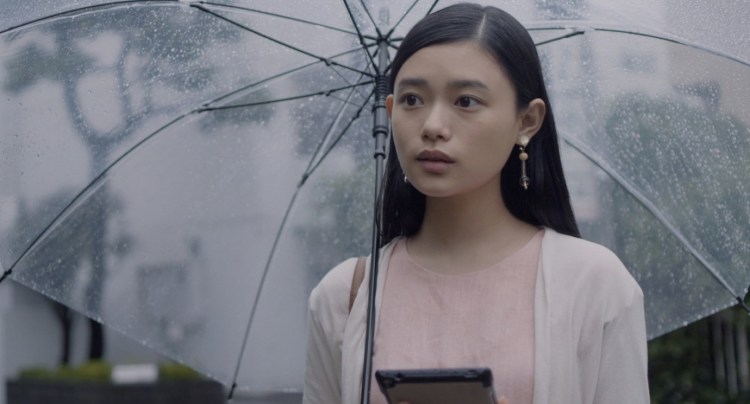
March 13, 7pm: Ten Years Japan

Introduction and Q&A with segment director Akiyo Fujimura

10 Years Japan still 1Five young directors provide their visions of a near future Japan in an omnibus movie inspired by the Hong Kong original and produced by Hirokazu Koreeda. Review.

March 16, 2pm: The Ito Sisters

Introduction and Q&A with director Antonia Grace Glenn and lead scholar Evelyn Nakano Glenn 

ito sistersDocumentary exploring the experiences of early Japanese migrants along with their American-born children.

March 19, 7pm: Out Of Paradise

Introduction and Q&A with director Batbayar Chogsom

Out of Paradise still 1A man and his heavily pregnant wife make a perilous journey to the Mongolian capital in order to get a caesarian section but once there discover they are unable to cover the medical fees.

March 20, 7pm: A Land Imagined

Introduction and Q&A with director Yeo Siew-hua.

land imagined still 1Singaporean police officer Lok investigates the disappearance of migrant worker Wang in Yeo Siew-hua’s Locarno prize winning crime drama.

March 21, 6.30pm: Funan

Funan still 1French/Cambodian animated co-production set during the Khmer Rouge revolution of 1975 in which a young mother searches for her four-year-old son who was taken away by the regime.

March 26, 7pm: Show Me Your Love

Introduction and Q&A with actress Nina Paw Hee-ching

Show me Your Love still 1A young man making a rare visit home to Malaysia on the death of an aunt is forced to reconnect with his estranged mother whom he left behind when he went to university in Hong Kong. Actress Nina Paw Hee-Ching will be present at the screening for an introduction and Q&A as well as to collect the Career Achievement Award.

March 27, 7pm: Sen Sen

Introduction and Q&A with director An Bon & actress Nina Paw Hee-ching

Sen Sen still 1A young man whose brother has recently passed away makes a surprising discovery on the cell phone he left behind – the live streams of an elderly cab driver known as Granny.

March 28, 7pm: High Flash

Introduction and Q&A with director Chuang Ching-shen & Actor Chen Chia-kuei

High Flash still 1A medical examiner investigating the death of a fisherman who self immolated to protest corporate giant TL Petrochemical uncovers a major conspiracy in Chuang Ching-shen’s crime thriller.

April 6, 2pm: Up the Mountain

up the mountain still 1Documentary by Zhang Yang focussing on the studio of artist Shen Jian-hua in a remote village in Yunnan Province.
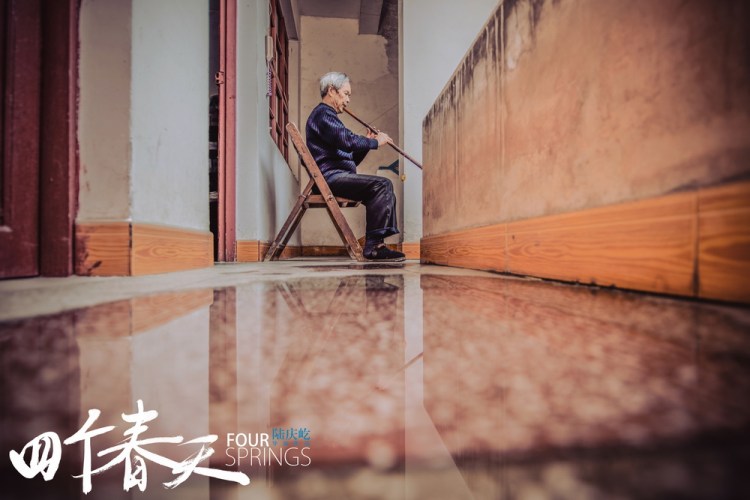
April 7, 2pm: Four Springs

Introduction and Q&A with director Lu Qingyi moderated by Shelly Kraicer

four springgs still 1Director Lu Qingyi follows the everyday lives of his parents over four years in the remote town of Dushan in southwest China.

April 12, 6.30pm: Circle of Steel

Introduction and Q&A with director/producer Gillian McKercher and main cast Chantelle Han.

Circle of SteelCanadian chemical engineer Wendy Fong ponders her future in the face of industry layoffs in this special presentation in collaboration with the Consulate General of Canada in Chicago.

April 16, 7pm: The Pension

Introduction and Q&A with segment director Junghuh Deok-jae 

The Pension still 1Omnibus film set in a small hotel which becomes home to parents attempting to come to terms with the loss of their child, a couple trying to rekindle their marriage, a woman who insists on staying in her preferred room, and the substitute manager who invites his girlfriend over for the evening.

April 17, 7pm: Memories of a Dead End

Introduction and Q&A with director Choi Hyun-young

memories of a dead end still 1A young woman in a long distance relationship with a man from Nagoya decides to visit him when he drops out of contact only to discover he is engaged to someone else.
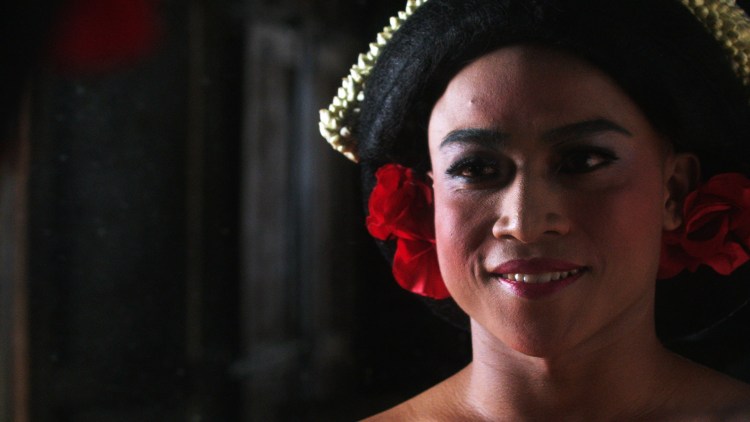
April 23, 7pm: Memories of My Body

Memories of my body still 1A Lengger dancer looks back on his life as a tale of growing acceptance of sensuality lived against a turbulent political backdrop.
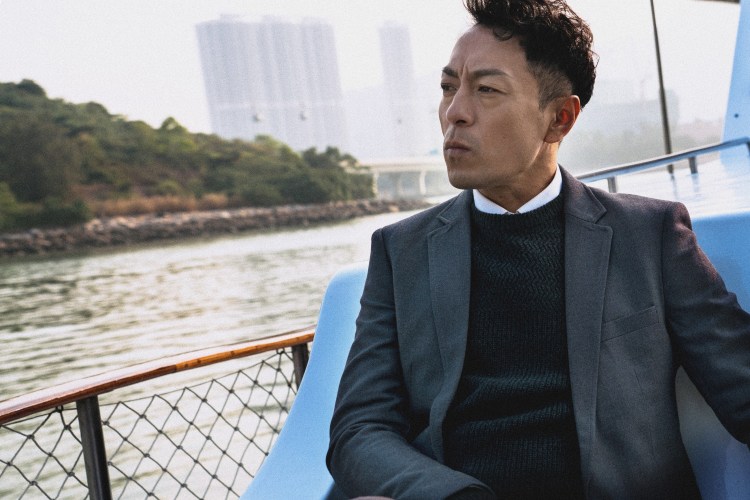
April 24, 7pm – Tracey

Tracey still 1A 51-year-old married father begins to reconsider his life choices after the death of a friend, eventually coming to an acceptance of a transgender identity.
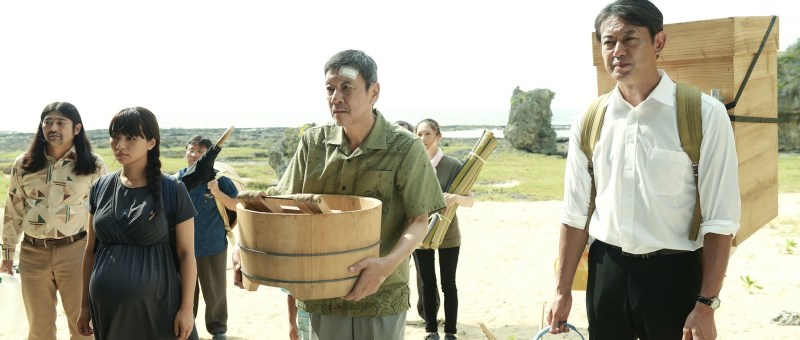
Asian Pop-up Cinema Season 8 runs March 12 to April 24. Full details for all the films are available via the festival’s official website. You can also keep up with all the latest news by following Asian Pop-up Cinema on FacebookTwitter, and Instagram.

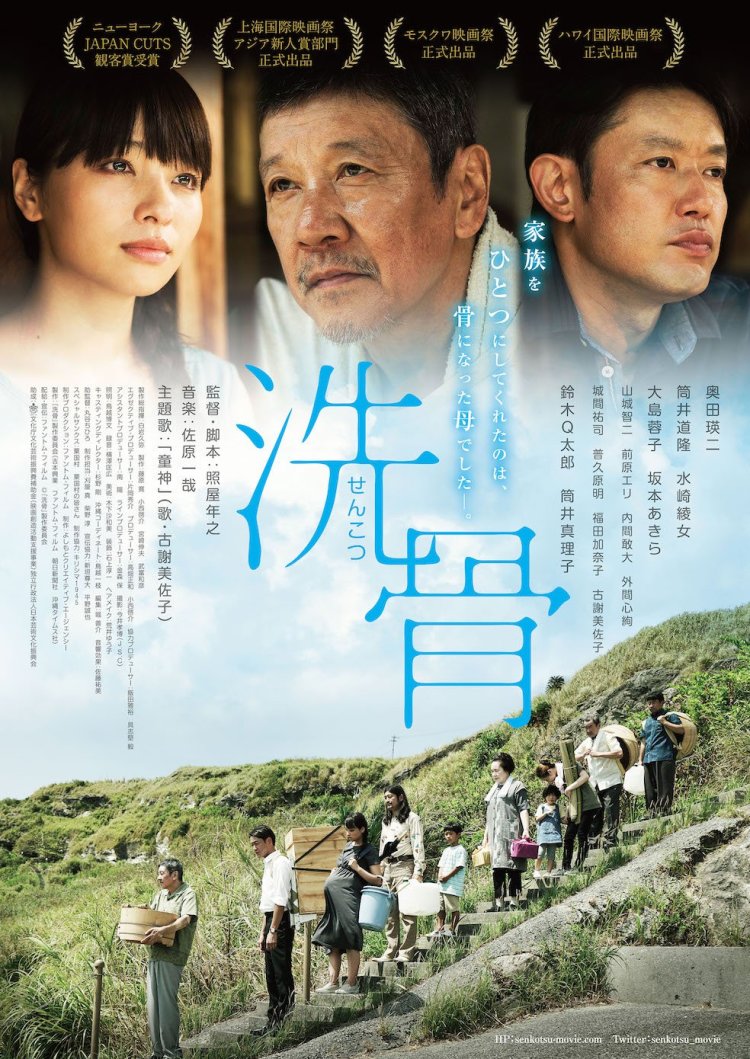
Born Bone Born (洗骨, Toshiyuki Teruya, 2018)

Bone Born Bone poster“Is this really Japan?!” asks the bemused boyfriend of the protagonist of Born Bone Born (洗骨, Senkotsu), only to be met with the reply “on paper, at least”. Comedian Toshiyuki Teruya, better known as Gori, returns to his native Okinawa for his second feature but to an island culture of which he was completely unaware. Aguni is one of the last on which the ancient ritual of “Senkotsu” or “bone washing” still takes place.

Beloved matriarch Emiko (Mariko Tsutsui) died four years ago. Now the time for her “senkotsu” is approaching. Daughter Yuko (Ayame Misaki) has come home, but with a secret. She is heavily pregnant and as yet unmarried, a fact she knows will scandalise the still conservative island community. Meanwhile, her her father Nobutsuna (Eiji Okuda) has retreated into drunken reverie, unable to accept his wife’s death or the many disappointments of his life. Yuko is waiting for her brother, Tsuyoshi (Michitaka Tsutsui), to arrive before explaining any further about the baby, but he even he is much less supportive than she hoped he might be and seems to be dealing with some troubles of his own which might explain why his wife and daughter have not accompanied him on this very difficult family occasion.

The island of Aguni practices open air burial, which is to say the bodies are enclosed in a wooden coffin and entombed in cave. Four years later the relatives return, retrieve the body and wash the bones before re-enclosing them in a smaller casket which will then be interred on the island’s “other world”. It is, of course, a difficult and frightening prospect to consider seeing one’s loved ones in such an altered state – so much so that many cannot bear to do it without getting roaring drunk which at least ameliorates the solemnity of the occasion. The human terror is in a sense the point as an exercise not only in memento mori but in acceptance of total loss and the finality of the physical.

Before all that, however, you still have to live and the Shinjos are having a fairly hard time of it. A small island somewhat trapped in the past, Aguni is intensely conservative and so the local old ladies can’t get their heads around Yuko’s unwed pregnancy. Yuko of course knew this would be the case but could hardly refuse to come and has braced herself for the worst of it. However, after the initial shock has worn off, she finds an unexpected ally in her stern aunt Nobuko (Yoko Ohshima) who assures her that if she finds it hard to raise the child on her own she can always come back to the island where she and Nobuko’s daughter will help if needed. Her father Nobutsuna, in boozy fog as he is, is also broadly supportive even if her brother shows little sign of coming round, engaging in unexpected small town conservatism as he accuses his little sister not only of shaming the family but of becoming a burden on it too.

In a motif that will be repeated, it’s the men who struggle to cope with loss while the women get on with life with stoicism and fortitude. Nobutsuna has remained unable to come to terms with Emiko’s death, drinking himself into oblivion while blaming himself for placing undue strain on her after their family business went bust. Nevertheless he is a good hearted man who wants the best for everyone even if his mild-mannered deference has Tsuyoshi sniping at the sidelines for his supposed fecklessness. He too blames his father for his mother’s death, but is also struggling with the elders’ expectation that he will return home to the island to take over as head of the family while there is evidently something else going on in his life which has left him irritable and judgemental.

If nothing else the Senkotsu ritual forces each of them to accept the fact of Emiko’s death, but also of her life and their own place within a great chain of humanity stretching both forward and back. In a sense, as Tsuyoshi puts it, it’s their own bones they’re washing in honour of the undying part of Emiko that exists in all of them and something of her kindly spirit certainly seems to be present on the beach that day as the family slowly repairs itself, emerging from their deep seated grief back to the friendly island solidarity as they resolve to treasure what they have in acknowledgement of what is to come.


Born Bone Born was screened as part of the 2019 Japan Foundation Touring Film Programme.

Original trailer (no subtitles)

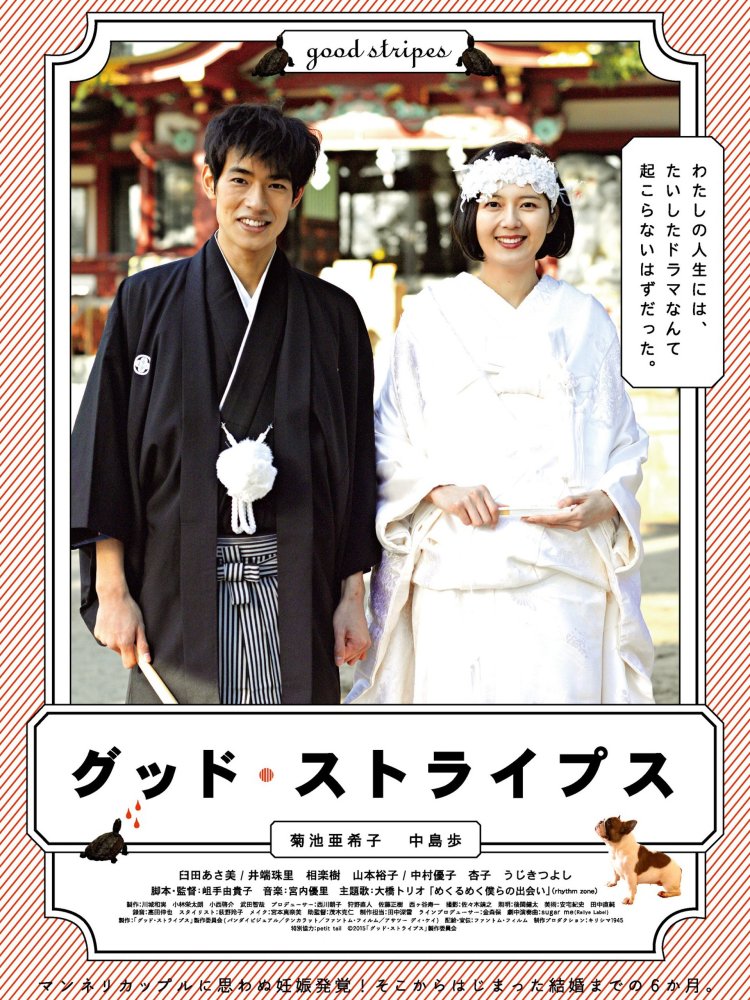
Good Stripes (グッド・ストライプス, Yukiko Sode, 2015)

Good stripes posterThe international media has become somewhat obsessed with the idea of Japan as a land of wilfully lonely singletons who’ve rejected the idea of home and family either in favour of the easier pleasures of one way virtual romance, or simply because a series of economic and social problems have made married life an unaffordable luxury. This is of course an exaggeration, but it is true enough that younger people have more choices which can, in some cases, lead to more worries and confusion. The young couple at the centre of Yukiko Sode’s Good Stripes (グッド・ストライプス) are in this sense a perfect encapsulation of their generation as they find themselves vacillating in the face of an unexpected crisis.

Midori (Akiko Kikuchi) and Masao (Ayumu Nakajima) have been together four years and truth be told the relationship seems to have run its course. Masao is about to jet off to India for three whole months yet Midori hardly seems bothered. While he’s away she stops responding to his messages, leaving him feeling even more isolated and alone so far away from home. Just when it seems the time has come to part, Midori realises she is pregnant, and as she’s already five months gone the most important decision has already been made for them. Wanting to do the “right” thing, Midori and Masao decide to marry and raise their baby in the conventional fashion yet they do so rather reluctantly and with a degree of mutual resentment.

The more we see of Midori and Masao, the more difficult it becomes to figure out how they got together in the first place. He is a typical middle class boy from a professional home (albeit a somewhat atypical one) and she a free spirit who grew up in the countryside. Midori doesn’t fit with Masao’s supercilious friends, one of whom is extremely rude and often makes a point of making fun of her while Masao eventually joins in rather than defend his girlfriend from what is really a little bit more than good natured banter. Reaching their late twenties they’re at the age where most of their friends are settling down, but they remain somewhat diffident, apparently not planning to stay together forever but not quite getting round to breaking up.

Things being the way they are, it’s all a little unplanned which is perhaps why Masao bristles when Midori finally moves into his well appointed apartment. He doesn’t have anywhere to put her things and is unwilling to shift any of his own, claiming putting up additional shelving would disrupt the balance of the room. Inviting someone else into your life must necessarily unbalance it, requiring at least a period of recalibration until a new equilibrium is reached, but Masao’s brief moment of resentment is perhaps understandable as he wrestles with being railroaded into a decision he isn’t sure he wanted to make.

Nevertheless, he tries to make the best of things by keeping quiet to keep the peace. Later when we meet Masao’s strangely “cute” doctor mother, she wonders if she made a mistake in the way that she chose to raise him. Having left Masao’s father when he was only five, she vowed to raise her son to be chivalrous – always carry the bags, be the first to apologise after a fight etc, but now wonders if she taught him to be superficially polite while inwardly seething with repressed anger and terrified of confrontation. Supportive to a point, Masao’s mother is also perhaps a little exasperated by the youngsters’ halfhearted attempt to embrace responsibility while quietly doubtful if they can really stay the course.

A meeting with Midori’s rowdy country family including her “difficult” spinster older sister and the equally free spirited younger one who makes fireworks for a living, proves eye opening for Masao as the only child of a sophisticated home but it’s an unexpected reunion with his own long absent father which eventually sets him on a course towards addressing his feelings of rootlessness and issues with intimacy. Resentful of his circumstances he begins having an affair with a pretty college friend only to come to hate himself during a torrid night in a hotel in which he suddenly realises what he’s getting up to is “all a bit animalistic”. Reconnecting with his father and realising that while they share certain similarities with each other they are all but strangers perhaps allows him to let go of his longstanding issues of abandonment and pursue his own desires which he’s fond of claiming to have abandoned altogether after discovering in childhood that nothing turned out the way he expected.

Midori and Masao may be two people railroaded into a future neither of them is quite sure they wanted, but in the end being forced to deal with a shared crisis does eventually bring them closer together if only in being forced to address their very separate issues both independently and as a couple. “Why take it out on me?” Midori snaps by accident, sensing Masao’s discomfort in dealing with some surprising revelations from his father, before thinking better of it and reverting to a more supportive position but her words do perhaps get through to her conflicted boyfriend even if he only really comes to accept his responsibility when forced to fish her out of a drainage ditch, reassured by her claims that there’s no need to worry because she’s the 100% boring sort of person that nothing ever really happens to. Giggling at the strangeness of it all, the pair vow their commitment to each other in the presence of the god of overcoming obstacles, together at last just as they prepare for their lives to be “unbalanced” all over again.


Good Stripes was screened as part of the 2019 Japan Foundation Touring Film Programme.

Original trailer (no subtitles)

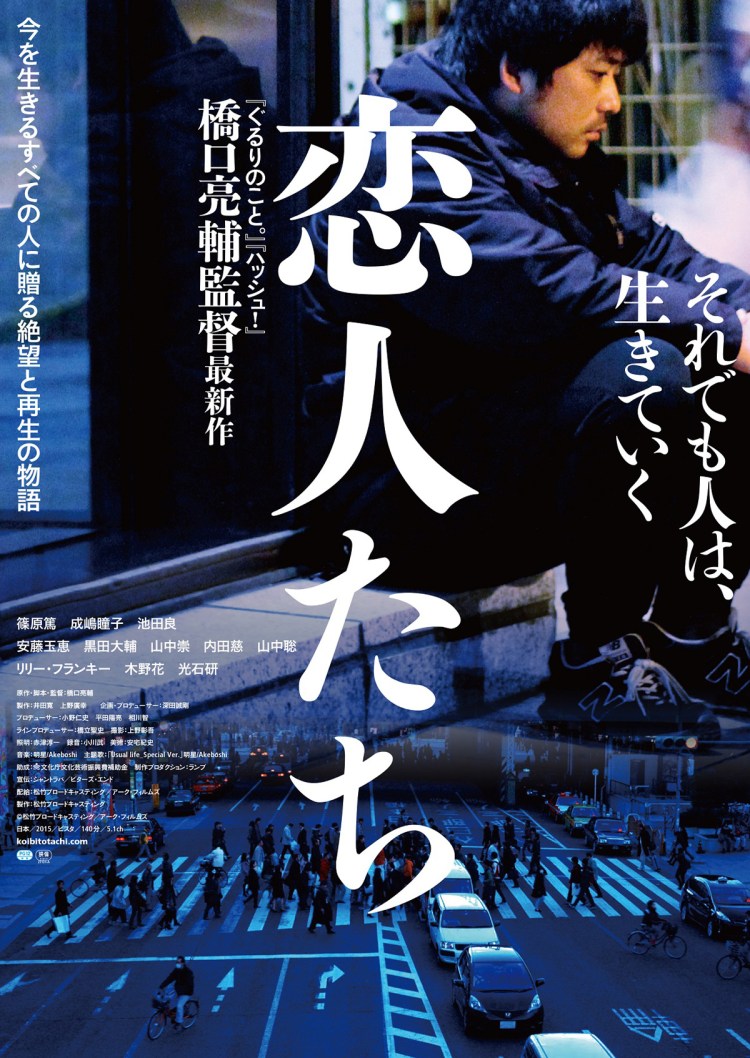
Three Stories of Love (恋人たち, Ryosuke Hashiguchi, 2015)

Three Stories of Love posterRyosuke Hashiguchi began his career with a collection of sometimes melancholy but ultimately hopeful tales of gay life in contemporary Japan. In 2008 he branched out with the finely tuned emotional drama All Around Us which followed an ordinary couple’s attempt to come to terms with the loss of a child. Three Stories of Love (恋人たち, Koibitotachi) finds him in much the same territory as he takes three very different yet equally burdened romantics and sets them on a path towards a kind of acceptance while suffering inside a system where everyone seems to be intent on exploiting other people’s unhappiness.

The first of our heroes, Atsushi (Atsushi Shinohara), is a bridge inspector whose wife was murdered in a random street attack three years previously. Ever since then he’s suffered with depression and found it difficult to hold down a job or a life and has become obsessed with getting personal revenge on the killer who pleaded the insanity defence and was committed to psychiatric care rather than to prison. Meanwhile, across town, listless housewife Toko (Toko Narushima) is trapped in a loveless marriage to a domineering husband and living with her snooty mother-in-law. Toko’s only outlet is compulsively rewatching a shaky video of the time she and her friends witnessed Princess Masako briefly exit a building. The third of our heroes, Shinomiya (Ryo Ikeda), is a self involved lawyer with a longstanding crush on his straight best friend from college who has since married and had a young son.

The three strands are only loosely interconnected, occurring as they do in the same city at the same time, though they do each share a sense of defeat and impossibility as each of our heroes struggles either to escape from or come to terms with their difficult circumstances. Atsushi’s case is perhaps the most extreme as he deals not only with his grief and anger but with the persistent stigma of being involved with violent crime. Visited by his bubbly sister-in-law he idly remembers to ask after the man she was about to marry last time they met only to be told that he abruptly dumped her after her sister’s death and not only that, all her friends abandoned her too. Getting revenge has become Atsushi’s only reason for living – he stopped paying his health insurance to get money together for fancy lawyers like Shinomiya who convinced him he could lodge a civil case but were only ever stringing him along to fleece him of money he never really had.

Shinomiya is, in a sense, our villain. He listens dispassionately to his wealthy clients – including one woman seeking a divorce (Chika Uchida) because her husband forgot to tell her he was burakumin until after they were married, but privately mocks them and is so unpleasant to his colleagues that someone eventually pushes him down a flight of stairs, breaking his leg. Intensely self-involved, he cares little for other people’s feelings save for those of his forlorn love Satoshi (So Yamanaka). Satoshi’s wife Etsuko, originally friendly and understanding, eventually takes against Shinomiya either because she doesn’t like the way he fiddled with her son’s ears or resents the two men cooing over the child and accidentally making her feel like an unwelcome outsider. Introducing his much younger boyfriend only seems to make matters worse, though the relationship does seem to have its problematic dimensions even if not in the way Etsuko decides to interpret them as Shinomiya takes pains to run down his partner in public and berate him at home. It’s difficult to resist the interpretation that Shinomiya prefers younger lovers because he can boss them around and, in truth, he doesn’t even seem very attached to this one, but he’s about to get a very rude awakening when it comes to learning that he’s not as permanent a part of everyone else’s lives as he seems to think.

Atsushi is fleeced by the Shinomiyas of the world and his heartless health insurers, but he’s wily enough to spot the obvious scam in the lovelorn office boy’s sudden enthusiasm for magical beautifying water which turns out to be part of a bar lady’s (Tamae Ando) nefarious scheme to resell the tapped variety with some of her own glamour shots attached to the front. Toko is wily enough to see it too, though she eventually succumbs when would-be-chicken-farmer Fujita (Ken Mitsuishi), whom she met at work during a difficult moment with her boss, delivers her some on spec. Lonely and insecure, Toko appreciates the unexpected interest but Fujita is not the white knight she first assumes him to be and is eventually exposed as yet another scam artist gunning for the little money she might have been able to hide away in her rabidly penny pinching home.

Shinomiya might feel himself proud to be among the fleecers rather than the fleeced, but he soon gets a comeuppance in realising he has wilfully pulled the wool over his own eyes, blinded in a sense by love. Toko, meanwhile, has learned to accept the latent feudalism of the modern society in her obsession with royalty though a brief attempt to transcend her feelings of innate inferiority seems destined to end in failure if perhaps engineering a mild improvement in her familial circumstances. Atsushi alone, a man whose job it is to assess the foundations, begins to find a degree of equilibrium thanks largely to nothing more than a good friend willing to listen and share his own suffering. Exploitation of others’ misfortunes and a series of social prejudices conspire against our three lovers but perhaps there is something to be said for learning to find the blue sky from whichever vantage point you happen to be occupying no matter how small and distant it may be.


Three Stories of Love was screened as part of the 2019 Japan Foundation Touring Film Programme.

Original trailer (no subtitles)