Walking Past the Future (路過未來, Li Ruijun, 2017)

Walking Past the Future poster 1Communism is a labour movement. It’s supposed to look after the workers, ensure fairness and equality through prosperity born of common endeavour. “Socialism with Chinese characteristics” was how the ruling powers tried to justify their headlong slide into globalised capitalism but thirty years on the modern China has left many behind while the rich get richer off the backs of the poor. The poetically titled Walking Past the Future (路過未來, Lùguò Wèilái) follows two such unlucky youngsters from Gansu who find themselves out of options in China’s shrinking industrial heartlands.

Our heroine Yaoting (Yang Zishan) has a job in an electronics factory assembling circuit boards. She lives with her parents – peasants from rural Gansu who came to Shenzhen 25 years previously in search of a better life, and a younger sister who is the family’s bright hope. Trouble is on horizon when Yaoting’s dad is taken ill and needs hospital treatment only to be unceremoniously “made redundant” when he tries to go back to work. On the very same day, Yaoting’s mother also announces she has been let go from her factory job leaving Yaoting as the family’s only earner. The day after Yaoting’s dad gets fired, his factory literally collapses and many workers are killed. You could say he’s had a lucky escape, but there are still few options for a man in his 60s with poor health and the family needs money. He decides they have no other option than to move back to Gansu and go back to farming, but when they get there, he discovers someone else has taken over his land (legally) and won’t give it back.

Meanwhile, Yingtao desperately wants to buy an apartment but with sending money back to her struggling parents her factory job is barely enough to live on. Her best friend Li Qian (Wang Ting), unburdened by a family, is addicted to plastic surgery and is saving to go to Korea for the best there is. On a hospital visit during which she is temporarily blinded, Li Qian runs into the roguish Xinmin (Yin Fang) who has a sideline recruiting desperate people to take part in potentially dangerous medical trials. Unbeknownst to either of them, Xinmin is also the “Desert Ship” to Yingtao’s “Misty Landscape”. They’ve become online best friends but have never met. Increasingly desperate to get the money for her dream apartment, Yingtao agrees to participate in a series of drug trials even though she has previously had a liver transplant and has a history of poor health.

Despite the supposed benefits of a movement led by workers, Yingtao and her family are victims of the modern era in which jobs are no longer for life, there is no community or fellow feeling between “boss” and “employee”, and those at the bottom of the ladder enjoy few rights. Yingtao’s father gets laid off when they find out he’s been ill with only a goodwill gesture of severance pay (which presumably goes up in smoke with the factory), while the same thing later happens to Yingtao when her liver condition resurfaces. When the electronics factory hits a rough patch, Yingtao is laid off for an entire week with no pay – so much for solidarity and a full belly for all.

Yingtao’s only pleasures are her constant conversations with “Desert Ship” who keeps needling her to officially accept his friendship request, but she won’t because moving their friendship to a more official level would prevent her from talking to him quite so freely. Neither Xinmin nor Yingtao is aware of the other’s identity, or that they are in fact texting each other while quietly miserable in the same room. A young orphan just trying to survive, Xinmin has a cynical and exploitative streak perfectly symptomatic of the world in which he lives but he is not completely heartless even if he is somewhat hypocritical in advising his online friend against the medical trials he has unwittingly persuaded her to undertake back in the real world. 

Pushed lower and lower, forced to undertake difficult and physically dangerous work with little protection and only the warning that their decisions are on their own heads, Yingtao and Xinmin find little to be hopeful about despite the eventual warmth of the connection between them and the innocent desire to see the snow back in the simpler world of rural Gansu. The future has indeed passed them by, marooning them in a miserable present yet, like the song the pair keep singing, they continue to dream of finding a “welcoming window” no matter how far off it seems to be.


Walking Past the Future screens in Chicago on Oct. 24 as part of the Seventh Season of Asian Pop-Up Cinema where director Lee Ruijun and producer Zhang Min will be present for an introduction and Q&A.

Original trailer (English subtitles)
A Family Tour (自由行, Ying Liang, 2018)

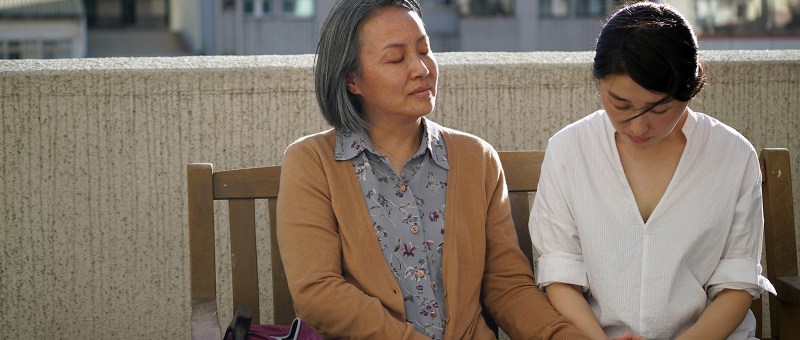
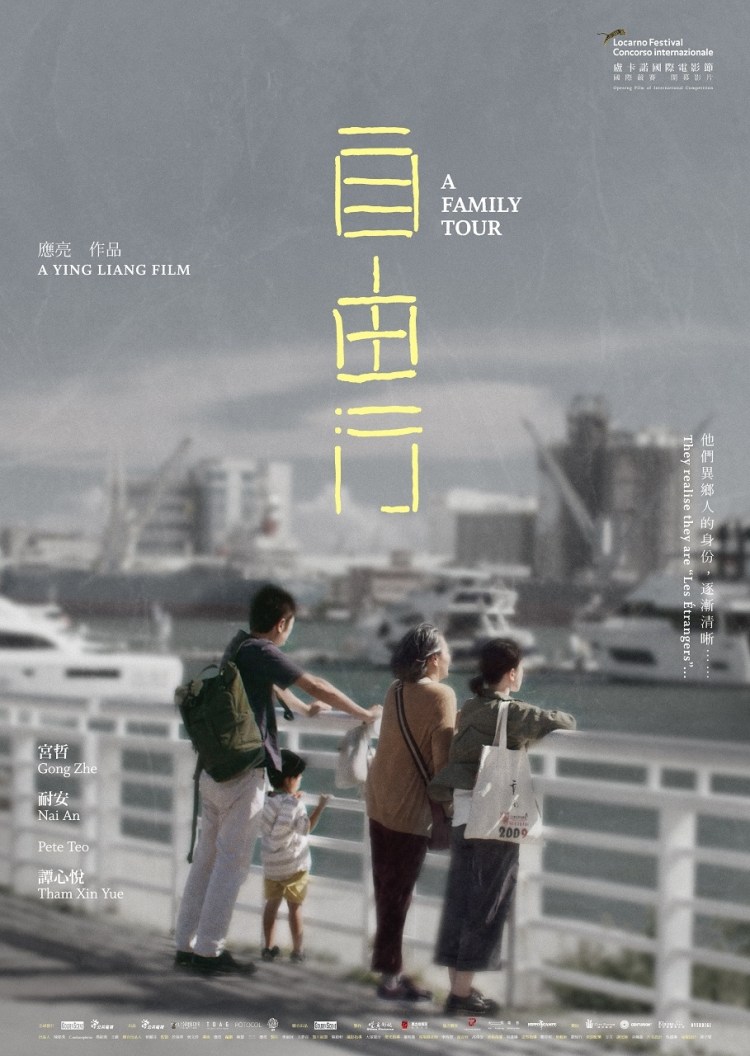
A Family Tour posterMaking films in China is far from easy, especially if you’re intent on exposing the misconduct of your own government. Director Ying Liang found this out the hard way after his third film When Night Falls fell foul of the censors and subsequently saw him exiled from Mainland China. Distancing himself slightly from his material, Ying draws inspiration from his own life in following an exiled female filmmaker’s uncover mission to surreptitiously meet up with her mother by “coincidentally” bumping into her at various tourist spots around Taiwan while she pretends to be taking part in a specially organised package tour.

Ying’s stand-in, Yang Shu (Gong Zhe), has been living in Hong Kong for the last five years after her last film, which features the same plot as Ying’s offending feature in following the mother of a man facing the death penalty for a notorious violent crime whose case may not have been properly handled, was banned. Married to a Hong Kong film programmer, Cheung Ka-Ming (Pete Teo), Yang has a young son and a teaching position but has been unable to pursue filmmaking thanks to the demands of living in exile. When a Taiwanese festival decides to screen her controversial film and invites her over to talk about it, it seems like too good an opportunity to miss. Together with her compassionate husband, Yang hatches a plot to bring her mother, Chen Xiaolin (Nai An), to the “neutral” territory of Taiwan as part of a tightly organised package tour of Mainland tourists. However, as it might cause problems for Xiaolin on her return if they are spotted together, the family will have to take care to ensure that their meetings seem coincidental – no mean feat when Xiaolin is holidaying with a crowd of sociable coach travellers who will no doubt be wondering why she keeps wandering off on her own.

The ironies of exile abound. Yang is constantly asked difficult questions of identity, whether she considers herself to be a Hong Konger or a Mainlander with pressure on all sides to give the correct response. Meanwhile, she’s confronted with the creeping authoritarianism of Beijing even in Hong Kong as a celebrity doctor who’s said the wrong thing is forced on TV to make the obligatory public self criticism in which he avows his loyalty to the “One China”. Despite being married to a Hong Kong national and mother to a son born on the island, Yang doesn’t quite feel as if she’s truly supposed to be there. As she later almost puts it in an ill-advised social media post her husband is quick to talk her out of, Yang “wants to go home” and being unable to means she can’t really settle anywhere else.

Meanwhile, she’s “free” to travel to Taiwan while her mother can only get there by bribing an official tour guide to get her on a tightly regimented bus trip which requires jumping through a lot of bureaucratic hoops to prove you will definitely be coming back. China famously doesn’t recognise the autonomy of Taiwan which has its own troubled history of colonisation and oppression. One of Xiaolin’s fellow passengers who eventually stumbles on her secret is an elderly man whose father came to Taiwan with the nationalists in 1949 shortly before he was born and was executed there, never to meet his son. The old man has come to Taiwan to see where his dad lived and died while he still has time. Politics has been destroying families since time immemorial  but never quite so insidiously as when it decides to use the natural bonds of parents and children as a tool to ensure total compliance within a cruel and uncompromising regime.

Despite having made all this effort, Yang’s interactions with her mother are strange and strained. She’s angry, resentful, guilt ridden and conflicted, unable to meet her mother on an emotional level and unwilling to accept this will probably be the last time she ever sees her. Xiaolin knows her daughter well but her country better, she’s learned to live within its oppressive confines by keeping her head down but Yang seethes with anger towards her mother’s tendency towards compliance. When Yang’s film was blacklisted, it was Xiaolin’s house the men in suits barged into, insisting she force her daughter to re-edit her film, bringing up unpleasant memories of her husband’s time in the re-education camps and making mildly threatening insinuations while Xiaolin holds her ground and refuses to cooperate. Yang’s activism has very real consequences not only for herself but for her family. Ironically enough, Ka-Ming is free to travel back and forth to the mainland, occasionally visiting Xiaolin but too afraid to take his son there in case the authorities try to snatch him.

Restrained as always, Xiaolin poignantly and without irony talks of what she terms the “Chinese way of love” – that you might have to sever connection with those closest to you in order to keep them safe. Familial love, or any kind of love at all, is a liability and a burden that puts both parties in danger from those that would seek to use their feelings against them. Like the rather brusque tour leader who has taken a significant risk in facilitating this odd reunion puts it, “what can ordinary people do?”. Ying cannot find much of an answer. Ironically enough, the Chinese title translates as “free travel” – the very opposite of a package tour in which one has the right and the opportunity to go wherever one wants whenever one wants to, unencumbered by the desires of the collective. A meditation on the inertia of exile, the pain of separation, and the cruelty of the uncompromising systems which abuse real feeling in the name of control, A Family Tour (自由行, Zìyóuxíng) is a heartbreaking exercise in futility in which the only way forward lies in melancholy resignation.


Screened as part of the 2018 BFI London Film Festival.

Trailer (English subtitles)

Shadow (影, Zhang Yimou, 2018)

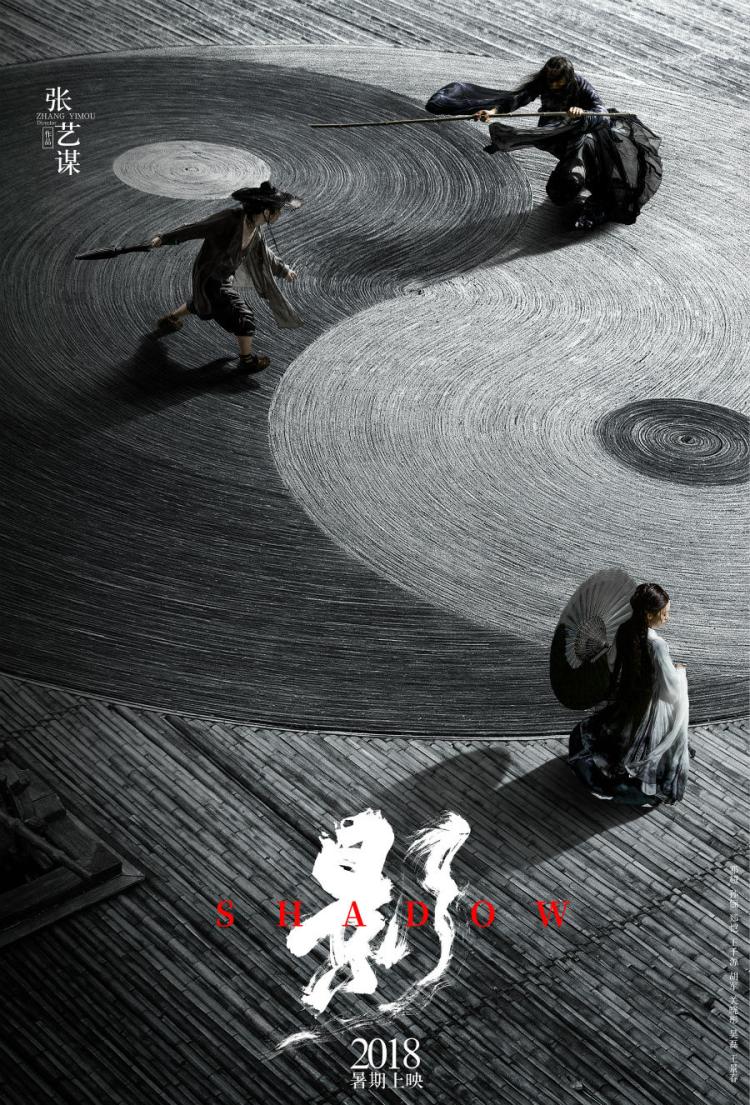
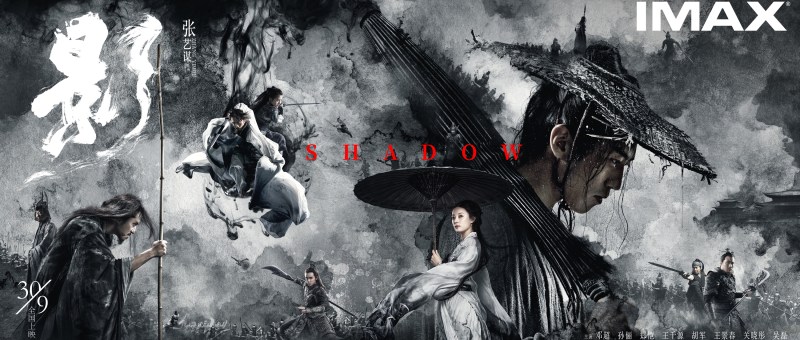
Shadow poster 1Zhang Yimou waxes Shakespearean in a tale of palace intrigue and a world out of balance in his latest return to the age of wuxia, Shadow (影, Yǐng). Drawing inspiration from classic ink paintings, Zhang’s monochromatic world has a chilling beauty even in its intense layers of oppression which make prisoners of king and subjects alike. Like the yin yang diagram on which the climatic battle takes place, Shadow is a tale of dualities and oppositions as its hollowed out hero begins to wonder who exactly he might be without the mirror.

Long ago in feudal China, the Kingdom of Pei has been living in peace thanks to an “alliance” with the Yang who are technically occupying the former Pei city of Jing. Many in the Kingdom of Pei are unhappy with this arrangement, regarding the loss of Jing as a humiliation and the king’s refusal to retake it more cowardice than pragmatism. Despite the king’s instruction that the truce must be maintained and war avoided at all costs, his trusted commander has undertaken a secret meeting with Yang in which he has agreed to a personal duel for the honour of Pei. The king is very unhappy. A lesser man might have lost his head, but the king needs his commander. What he doesn’t know, however, is that the commander is not all he seems. Nobleman Yu (Deng Chao) was badly injured during a previous fight with Yang and has retreated to the catacombs while his double, Jing (also Deng Chao), has been playing his part in court.

Jing, “saved” from poverty as a young child brought to the palace as a double for Yu, is grateful and loyal. He respects his masters and has trained hard to learn the skills needed to pass as a nobleman and more particularly as Yu. As such he has no “identity”. Even his name was given to him by his master and is simply that of the town where he was found which happens to be the disputed city itself. Jing does everything right – his instincts are good, he is clever and quick-witted with a talent for intrigue, all of which makes him both a danger and a shield for Yu. Yu, meanwhile, trapped in the same underground cell which used to house Jing, has become warped and embittered. Nursing a mortal wound, he plots and schemes against the king, scuttling goblin-like as he rails against his fate.

Yu promises Jing a release from his mental imprisonment if he agrees to take part in the duel with Yang. Jing knows that Yu’s promise is hollow and that he is not intended to survive, but submits himself to his fate anyway. He does this, partly, in hope but also because of his longstanding but unspeakable love for Madam (Sun Li) – Yu’s wife, who is one of the few people ever to express pity for his miserable circumstances. As the film opens, Madam and the king’s sister are reading proverbs together including one which insists that men are meant to rule. The king, however, is weak – he is effete and prefers the art of the brush to that of the sword, while his sister is “wild” – a bold and impetuous young woman seemingly more suited to the throne than her foppish brother.

As if to complete the theme, it’s Madam who eventually reveals the technique to beat Yang to her increasingly crazed husband. In order to defeat his hyper masculine enemy who fights with a giant sabre, Yu resolves to fight like a girl armed with one of Pei’s iconic parasols reconfigured in sharpened iron. Only by creating balance can they hope to win, meeting the weight of Yang’s blunt force with a lightness of touch and feminine elegance. 

The world of Shadow is one defined by its dualities – male/female, lowborn and high, betrayal and loyalty, arrogance and supplication. Jing’s existence is defined by that of the “true” commander – a shadow cannot exist without a form to cast it, or so it had always been thought. Offered the possibility of escape, Jing’s original identity begins to resurface. Yet his victory over his “other self” is also a defeat which infects him with the dubious moralities of the court, allowing him to become more than himself alone and leaving the world once again dangerously unbalanced. As the opening narration told us, however, it is not Jing, or Yu, or the king who hold the fate of Pei in their hands but Madam whose final decision will dictate the course of history. Set in a world of oppressive greys broken only by the driving rain and shocking redness of blood, Shadow may not return Zhang to the balletic heights of the poetic Hero, but does its best to add Shakespearean grandeur to its tragic tale of fractured identities and conflicting desires.


Screened as part of the 2018 BFI London Film Festival.

International trailer (English subtitles)

Long Day’s Journey into Night (地球最后的夜晚, Bi Gan, 2018)

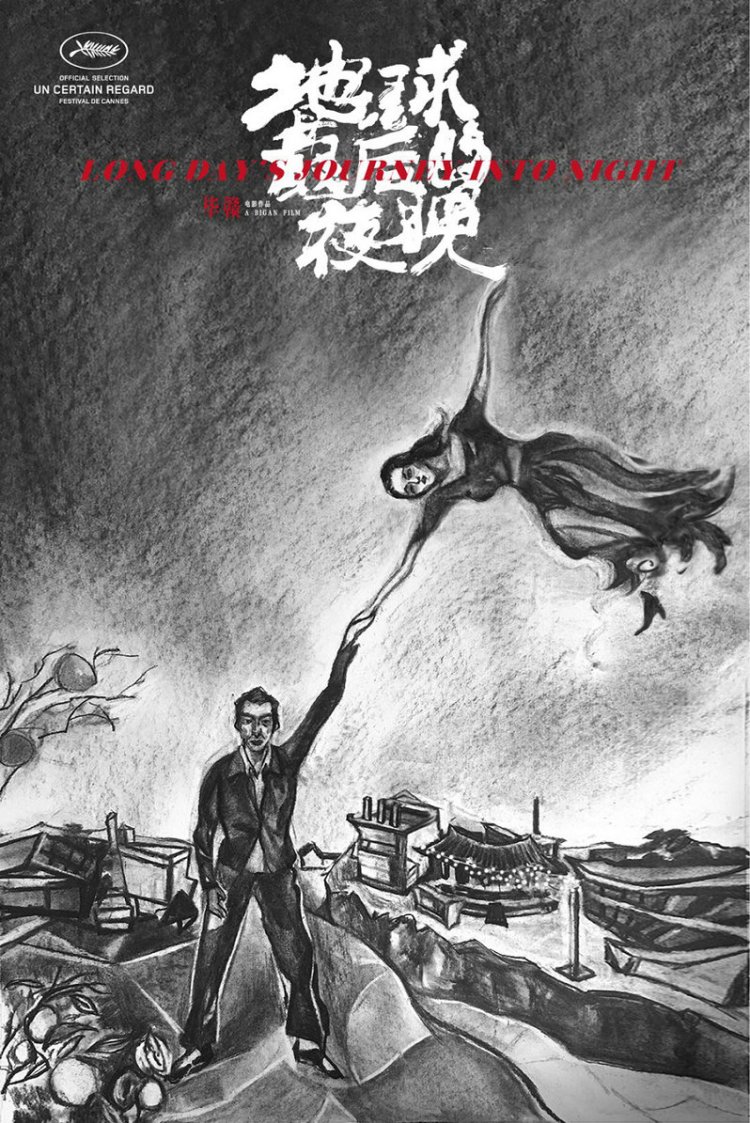
Long Day's Journey into Night poster“It’s living in the past that’s scary” an old friend advises the hero of Bi Gan’s Long Day’s Journey into Night (地球最后的夜晚, Dìqiú Zhòu de Yèwǎn). He knows she’s right, but like the best film noir heroes, the past is the place he can’t bear to visit or to leave. Stealing a title from a Eugene O’Neill play about a dysfunctional family individually lost in the fog of self-delusion and unable to escape the legacies of past trauma, Long Day’s Journey into Night is the story of a man looking for lost love but finding it only within the confines of his own memory, transient yet also eternal.

Luo Hongwu (Huang Jue) returns to his hometown of Kaili on the death of his father. As becomes apparent, there is nothing much of interest for him in a home he has avoided for years though an unexpected inheritance – a stopped clock his father could not stop looking at in the days before his death, yields unexpected treasure in the form of a black and white photograph of a young woman whose face has been burned out by a cigarette. Meanwhile, Luo walks us back through his own sad life story beginning at the turn of the Millennium when a recent divorce led to him letting down a friend, Wildcat (Lee Hong-Chi) – a roguish gambler, who was later murdered by gangster Zuo (Chen Yongzhong). Chasing the man who killed his friend, Luo tracks down his lover who bears a striking resemblance to the woman in the photograph. She tells him her name is “Wan Qiwen” (Tang Wei), and fascination soon turns into romance. As Luo has already hinted to us, Qiwen is the woman who defines his dreams – another of the disappeared, a ghost of memory which won’t let him rest.

Like the hero of Kaili Blues, Luo spends the rest of the picture looking for the missing – the mother who abandoned him in childhood, the man who killed Wildcat, and of course Qiwen. A haunted man, Luo chases ghosts and spectres of memory, attempting to repair his damaged world but perhaps half hoping not to find what it is he’s looking for and risk losing the beauty of its absence. Qiwen spins him a tale a worthy of any film noir femme fatale – of a jealous boyfriend and an impossible future. We can only be together if we live in the stars, she tells him, contributing to a noirish sense of futility which seals Luo inside a looping bubble of perpetual heartbreak and unresolvable longing.

For Luo all women and none are Qiwen whose emerald clad image echoes in every female face he sees. Memories of Qiwen and of his mother mingle uncomfortably, overlap and become one as he looks for explanations behind his twin abandonments and the heavy wound he carries in his heart. In his opening voice over, Luo tells us that dreams rise up within him and he rises with them as if his body were made of hydrogen, but that his memories are made of stone – heavy, immutable, and impossible to escape. Yet the dreamland is precious to him, because it’s the only place he can see Qiwen and where she is all he sees. Luo’s answers, if they come at all come only in dreams where the jumbled elements of his ongoing investigation reorder themselves, come together, and present a new truth holding its own transitory revelations.

In a dream Luo meets another woman who looks just like Qiwen only this time called Kaizhen with whom he trades eternity for transience and to whom he eventually gifts both. Luo’s wandering dream takes place on the winter solstice – literally the longest night on Earth, but is still too short. Drenched in perpetual rainfall, this Kaili is a lonely place of darkness and neon – a perfect encapsulation of Luo’s interior world, shaped by film noir and tragic romance which nevertheless gives way to a 3D dreamscape free of the selective editing which makes memory an unreliable narrator. Luo says that the difference between film and memory is that films are all false while memory holds both truth and lies, but in dreams dualities coalesce and absolutes disappear in a union of truth and fiction, transience and eternity. Bi Gan builds on the aching poetry of Kaili Blues for beautifully composed exploration of memory and desire mediated through frozen time and a single endless night.


Screened as part of the 2018 BFI London Film Festival.

Short clip (no subtitles)

Dead Pigs (海上浮城, Cathy Yan, 2018)

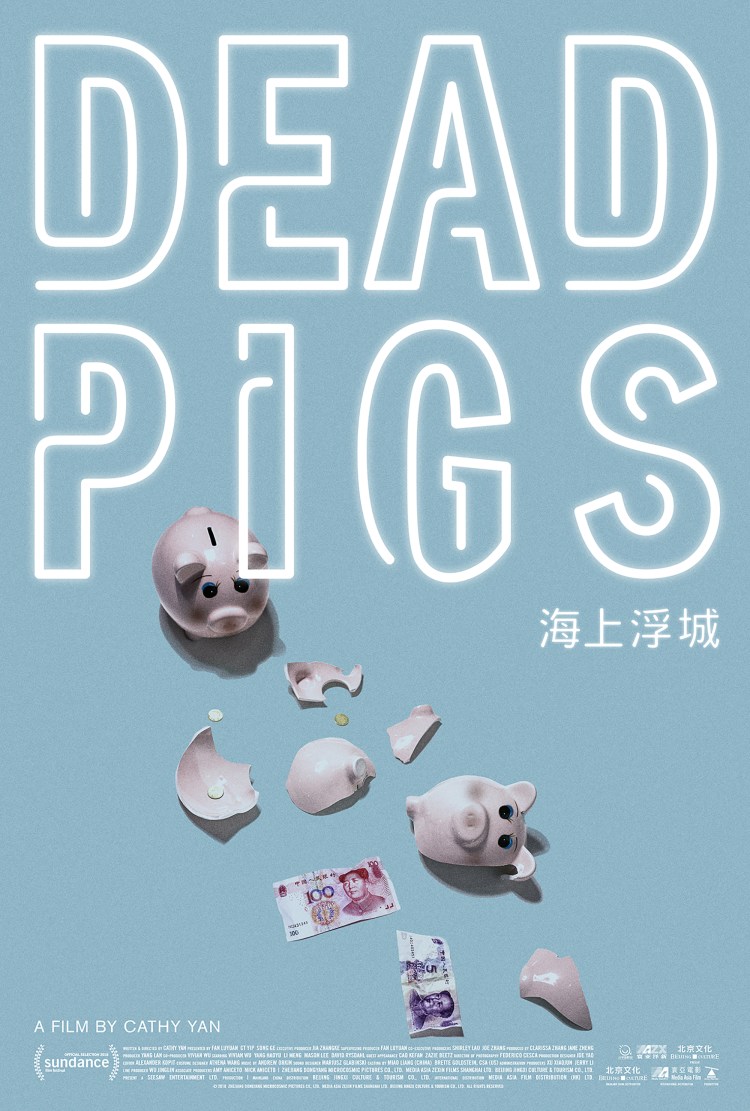
Dead Pigs posterPigs – they have the best life, according to pig farmer Old Wang (Yang Haoyu). All they do is sleep and eat while hard working folks like him go out of their way to keep them comfortable. To Old Wang, it doesn’t seem fair but, ironically enough, he seems to have forgotten the heavy price a prize pig pays for its short life of “luxury”. Nevertheless, all his hard work is about to go down the drain in the debut film from Cathy Yan, Dead Pigs (海上浮城, Hǎi Chàng Fú Chéng). Loosely inspired by the infamous Huangpu River incident, Dead Pigs is a decidedly cheerful satire of modern China’s capitalist revolution and the many changes, good and bad, it has wrought.

When all the pigs in China suddenly start dropping dead, it presents a series of problems for your average pig farmer like Old Wang. With everyone on high alert and no clear indication of what is causing the strange phenomenon, no one is buying pork and getting rid of the carcasses in the “official” way is costly, bothersome, and will alert the attention of the authorities. Therefore, pretty much everyone starts tipping their dead pigs in the river which, besides being unsightly, is also a significant risk to public health.

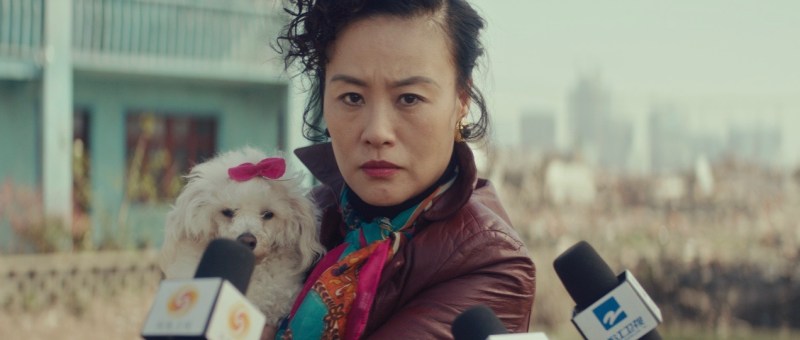
Old Wang, however, has other problems. When we first meet him, he’s become obsessed with the cutting edge art of VR technology because it feels just like the real thing, delighting in pretending to go swimming when he could actually just go swimming outside if only he hadn’t been polluting the river with pig carcasses. Not content with virtual delusions, he’s also got himself into debt by “investing” in a scheme which turned out to be a scam and lost him all his savings. In debt to loan sharks, Old Wang decides to ask his sister, Candy (Vivian Wu) – a beautician with an upbeat, inspirational marketing campaign, for help. Candy, however, is in the middle of a nasty dispute with a local property developer which has bought up all the other properties in the area to build a brand new housing complex bizarrely inspired by classic Spanish cathedral Sagrada Família and designed by American architect Sean (David Rysdahl) who has ended up in China in flight from failure at home. Old Wang considers asking his son, Zhen (Mason Lee), whom he thinks has a good job in the city, for the money to pay the gangsters, but Zhen is just a waiter (in an upscale bar/restaurant specialising in pork) and is too ashamed to tell his dad he can’t help. Meanwhile, Zhen has also fallen for disillusioned rich girl Xia Xia (Li Meng) who is currently rethinking her elitist lifestyle.

Snapping at the property developers, Candy laments that it’s all “money, money, money” and resents that they can’t see the various practical and sentimental reasons she might not want to move, assuming she’s just an old battle-axe out for more money. In the world of rich kids like Xia Xia, money is indeed all that matters – having the flashiest outfits, jewellery, cars and accessories while being seen at the trendiest bars and restaurants on the arm of the handsomest companions the elite has to offer. No one seems to care very much about how they treat others because every offence can be paid for. Xia Xia, though she perhaps suspected it before, learns the hard way when she winds up in hospital and none of her many “friends” bother to visit her, preferring to send expensive gifts instead.

Meanwhile, Wang Zhen and his dad are two guys left behind by rapid modernisation. Too ashamed to tell his father he couldn’t cut it in the city, Zhen eventually takes to deliberately crashing into oncoming vehicles with his bicycle in the hope of extracting compensation – willingly submitting himself to a system in which money has become a license to do wrong for those who can afford it. American architect Sean feels much the same as he makes plain in an impassioned speech to Old Wang in which he insists that no one has the right to call him stupid or to make out he isn’t good enough for the brave new world they are making. Sean, having ended up in China in an attempt to escape these same feelings of inadequacy and failure in his home country, finds a new niche for himself, uncomfortable as it is, as a professional Westerner for hire in series of bizarre publicity stunts managed by a talent agency specialising in such rarefied fare. 

Yet more than the greed, selfishness, and inhumanity the cruelty of capitalism has engendered, it’s the loss of community that seems to really sting. Candy wants to hold on to her childhood home as a physical expression of a long lost neighbourhood and now absent family. Tellingly, the song she’s always singing, which is later reprised as a community wide karaoke number, is a classic track by Teresa Teng known as “I Only Care About You” in its Mandarin version but originally released in Japanese as “Toki no Nagare ni Mi wo Makase” which literally means “surrender yourself to the flow of time”. You can’t stop progress – perhaps it’s a mistake to cling on to the tangible in a world constantly in flux when what really matters has always been close at hand. The message seems to be, salvage what you can but get out of the way of the bulldozer before it buries you too. Sparkling with whimsy and filled with impromptu song and dance, Dead Pigs is a delightfully surreal examination of a changing nation in which goodness and empathy eventually win out (to a point at least) against the overwhelming forces of rampant capitalist expansion.


Screened at the 2018 BFI London Film Festival.

Original trailer (English subtitles)
Teresa Teng’s I Only Care About You

Original Japanese version (Toki no Nagare ni Mi wo Makase)

Suburban Birds (郊区的鸟, Qiu Sheng, 2018)

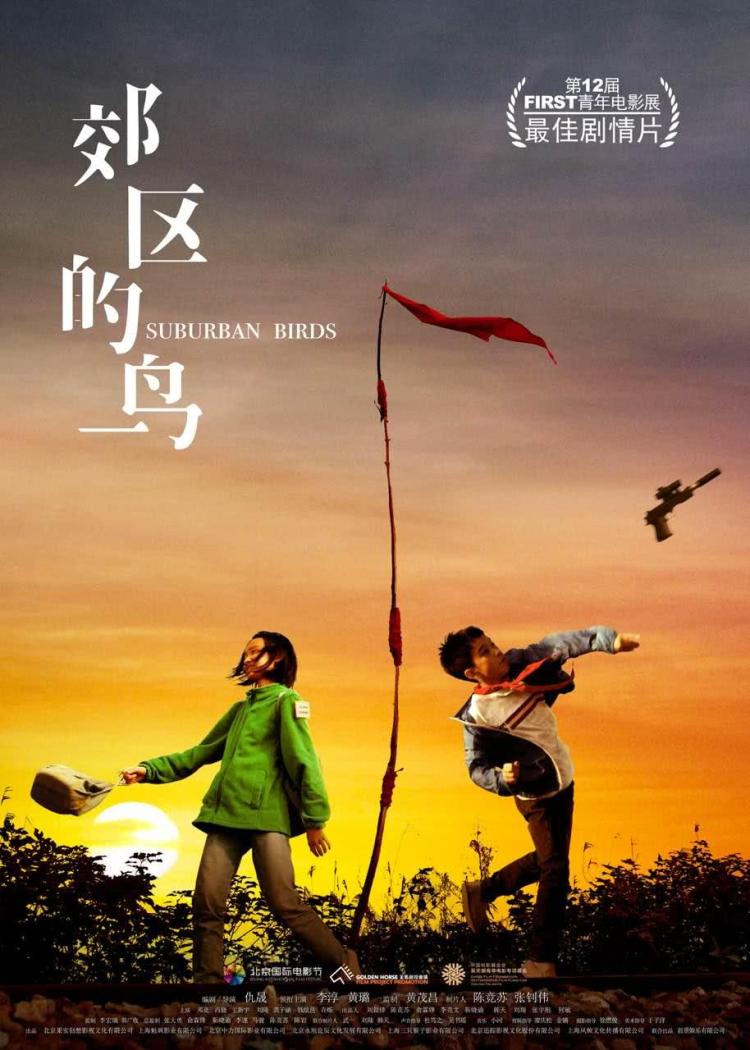
Suburban Birds poster 1Everything is collapsing in the strangely entropic world of Qiu Sheng’s Suburban Birds (郊区的鸟, Jiāo de Niǎo). Time and memory conspire to confuse and confound as man-made structures devour the natural pleasures of human existence, stepping in time with China’s rapid urban development in a hasty march towards a fractured future. Our hero dreams of finding rare avian life, but remains shackled to the earth as an agent of both destruction and creation – literally “engineering” the future while attempting to repair the mistakes of the past.

Xiahao (Mason Lee) is currently working for a government-backed team of surveyors trying to solve a massive subsidence problem which has rendered a brand new estate unfit for habitation. The subsidence problem, besides being dangerous and apparently unpredictable, is also expensive – the city is footing the bill for putting an entire neighbourhood up in a hotel while essential works on a new subway line needed to serve it are also on hold. The engineers are doing their best, but they seem ill equipped to investigate and feel both under resourced and under appreciated. The youngest member of the team, Ant (Deng Jing), is even thinking of quitting because he gets all the rubbish jobs and his girlfriend thinks there’s no future in his career seeing as there’s relatively little scope for advancement save becoming the “boss” which doesn’t actually pay very much. In between drinking, arguing, and investigating, Xiahao strikes up a relationship with one of the evictees – the pretty hairdresser “Swallow” (Huang Lu), to whom he eventually offers to show the elusive birds.

Meanwhile, a second tale takes over when Xiahao investigates an abandoned school and discovers a diary written by another Xiahao (Gong Zihan) which details the various adventures of a group of adolescent friends. Whether in reality or just in the older Xiahao’s imagination, the kids from the book echo people in his adult life from the members of his engineering team to the two female evictees he encounters at the hotel. The younger Xiahao could perhaps even be an echo of the older one’s real or imagined childhood – the aesthetics are distinctly ‘90s but the adventures are infinitely timeless. Little Xiahao and his friends communicate in person and go outside to play, fully existing in tune with their surroundings and as much part of the natural world as the “suburban birds” looking for a perch in a land under permanent construction.

Yet modern China somehow works its way into their idyllic world. The kids play in the ruins of broken broken buildings, are literally injured by the ruptured landscape, and finally begin to disappear one by one. Eventually the streams cross – the young Xiahao and the other boys come across the older Xiahao and his team dreaming away under greying skies while their optical level looks silently on at nothing. The kids stick a piece of chewing gum on the lens – an act which is both intensely irritating for the slumbering adults and a literal proof of their material existence within the same plane if not definitively the same time.

Xiahao’s dreams, as he recounts them to his bored coworkers, revolve around a terrible gushing of water as a powerful drill inexplicably turns to liquid. The loudmouth party man tagging along to chivvy the crew towards a completion of the paperwork even in the absence of a safe and workable solution, has an appropriately bawdy theory but the dream itself is later echoed by the boys who find themselves charged with carrying a large butt of water through their school until its weight gets the better of them. Xiahao is convinced that leakage lies at the heart of the subsidence problem, that shoddy workmanship and bad weather have conspired to ruin the ambitions of human engineering. Public safety is not such a concern as faith in local government. Not only has an all encompassing hunger for progress robbed the land of its beauty but has begun to erode itself from the underneath leaving only a perilous fall to the chasms below.

Xiahao dreams of a more innocent time. His ringtone alarm features bird song which is either so real you can’t tell the difference, or the ironically named Swallow has never actually heard it before outside of the movies. He wants to find the elusive “suburban birds” but turns to the internet to do so, eventually wading back into into a dream in which children play freely among the greenery while singing semi-ominous communist songs about how the future belongs to the young. A riddle besets them all – what is both long and short, fast and slow, and whole yet may be divided into many parts? The answer seems to be time, or perhaps memory, hinting at the way past haunts the future as a squatting tenant of the present which can neither speak nor stay silent. Forgetting, like the water pouring in through the inexpertly poured concrete of a half constructed subway tunnel, erodes the foundations of conscious thought. You can’t build a future on emptiness, and if there’s nowhere for the birds to sit what sort of future is it anyway?


Screened at the 2018 BFI London Film Festival.

Original trailer (English subtitles)
Interview with director Qiu Sheng from Locarno

Ash is Purest White (江湖儿女, Jia Zhangke, 2018)

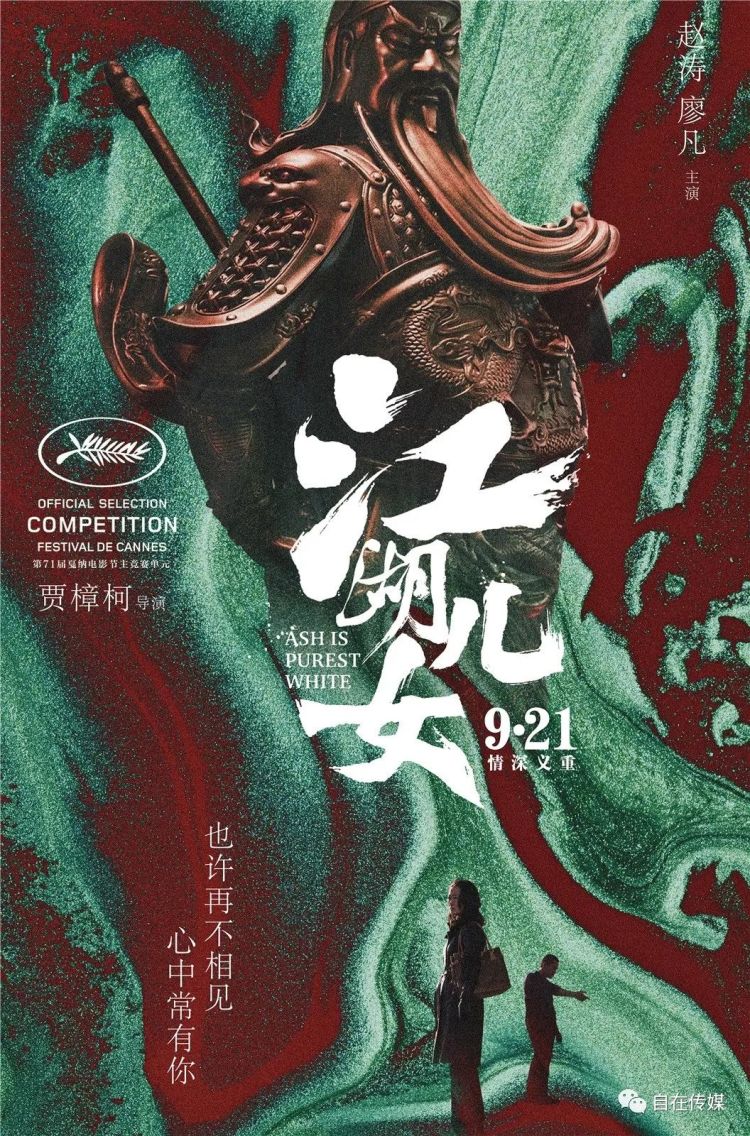
Ash is purest white poster 1Jia Zhangke returns to the world of crime for a slice of jianghu blues in his latest chronicle of modern China through the eyes of its ordinary, downtrodden citizens. Self referential in the extreme, Ash is Purest White (江湖儿女, Jiānghú Érnǚ) is a sad story of conflicting values and missed connection as a lovelorn woman proves herself too good, too pure, and ultimately too strong for the weak willed man she can neither love nor abandon. Times change and feelings change with them. To survive is not enough but integrity comes at a heavy price in a land where everything is for sale.

Echoing the time jumping narrative of Mountains May Depart, Jia opens in 4:3 and in 2001 as Qiao (Zhao Tao), sporting a black Cleopatra-esque haircut (the same as that worn by the identically named heroine of Jia’s own Unknown Pleasures from 2002) takes the bus into town. The first lady of the local “jianghu” underworld, Qiao is the devoted righthand woman of petty gang boss Bin (Liao Fan), enjoying the loyalty, honour, and respect of all in the slightly depressing environs of a small corner of dusty Datong. Bin is a walking monument to the idea of “jianghu” as mediated through Hong Kong action movies, swaggering around with a gun in his belt to prove that he’s the top dog in this tiny town. To live by jianghu is know that someone is always coming and when another prominent gangster is offed by young thugs, it’s not long before they come knocking on Bin’s door. Humiliatingly thrashed in the main square, Bin is only saved by a heroic intervention from Qiao who takes up his gun and fires into the air, a look of imperious authority on her face even as her eyes flicker with fear and excitement.

Qiao didn’t shoot anyone, but as the gun was illegal and she brought its presence to the notice of the police she gets into trouble anyway. A fierce devotee of the jianghu way, she refuses to give up Bin and insists the gun is hers and always has been. The gun was not hers in a real sense, and though she intends to lie in order to protect the man she loves from her mistake in firing it, spiritually speaking she and the gun are one. Having admired Bin’s skilful defusing of a petty gangster dispute without needing to use it, Qiao picks up the pistol and turns it over in her hands. The irony is, Qiao doesn’t need the gun but it completes her all the same, or at least completes the image she has of herself as an action movie heroine. Bin, however, has the gun because he doesn’t believe in himself in the same way Qiao does. He knows he’s weak and that his time is limited.

When Qiao is sent to prison for five years, she fully expects to find Bin waiting for her on the other side when she gets out. In the meantime Bin has proved true to form – he’s found himself another powerful woman to hide behind, though this time he’s chosen (or, in reality, is chosen by) one with good connections rather than fighting spirit. Bin has left the world of jianghu behind to try and make it in the rapidly developing capitalist economy, but as Qiao tells him when they finally reunite she had to live as a jianghu just to find him. Alone and friendless, betrayed by her love and disrespected by her new environment, Qiao turns to a cheeky strain of petty crime to get by – taking social revenge by attempting to blackmail random men over secret affairs, gatecrashing wedding parties for food, living by her wits on the streets and, if she’s honest, enjoying it.

Qiao is, in a sense, living in an imagined past. The frequent strains of Sally Yeh’s theme from John Woo’s seminal noir-tinged hitman drama The Killer underscore the yearning for an era of heroic bloodshed, brotherhood, and honour which never really existed outside of the movies. While Qiao grips her gun and fires in the air, Bin lights a melancholy cigarette watching Taylor Wong’s Tragic Hero, grumpily passive as always. Qiao saves Bin, more than once, but he can’t forgive her for it or reconcile himself to his own lack of resolve.

The film’s Chinese title, loosely translated as “the sons and daughters of jianghu” hints at the power of this double edged inheritance in which the archaic social codes of brotherly honour and loyalty are both barrier and bridge in an increasingly amoral society. Jia shows us a world of mine closures and forced migration, revisits the Three Gorges damn in which the past is sunk to pave way for the future, and introduces us to a modern day prospector with a big idea about UFOs. Bin, weak and opportunistic, doesn’t have the ability to ride the waves of China’s changing tides, but Qiao doesn’t have the will. Burned right through to her jianghu core, she sticks steadfastly to her code as she retreats to her spiritual home but owns her place within it even as the modern world rises up all around her. Qiao’s independence is both victory and defeat, an echo of the failed ideologies of a nation drunk on capitalism in which newfound freedom confuses and corrupts in equal measure. Nevertheless, there is something tragically romantic in Qiao’s lovelorn longing for a more passionate era in which the bonds between people still counted for something even if their demands were not always fair.


Screened as part of the 2018 BFI London Film Festival.

Short clip (English subtitles)

Full version of Sally Yeh’s theme from John Woo’s 1989 existential hitman noir The Killer

Drug War (毒戰, Johnnie To, 2012)

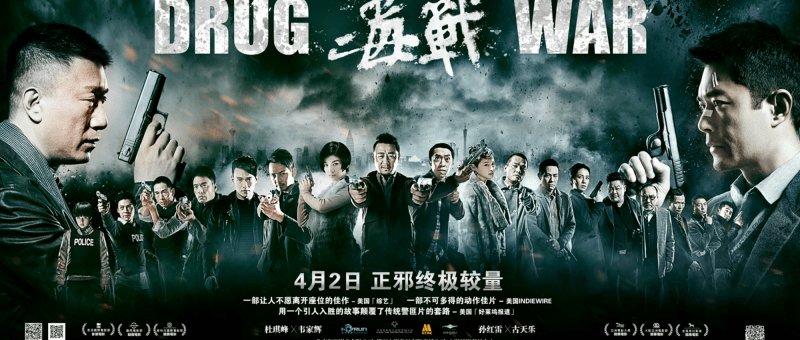
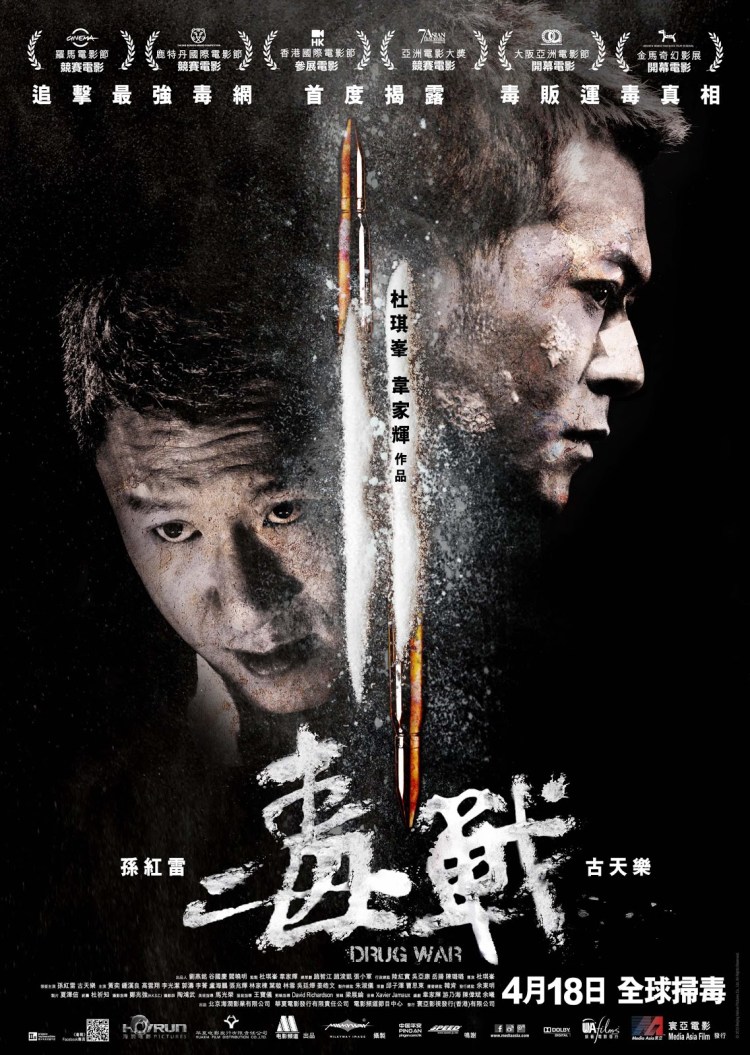
Drug War posterIn the world of the Hong Kong action flick, the bad guys are often the good guys, and the “good guys” not so good after all. Even crooks have their code and there are rules which cannot be broken ensuring the heroes, even when they’re forced into morally dubious acts, emerge with a degree of nobility in having made a free choice to preserve their honour over their life. In Mainland China, however, things are a little different. The bad guys have to be thoroughly bad and the good guys squeaky clean. You won’t find any dodgy cops or dashing villains in a thriller from the PRC where crime can never, ever, pay. And then, enter Johnnie To who manages to exactly what the censors board asks of him while at the same painting law and chaos as two sides of the same coin, each deluded and obsessed, engaged in an internecine war in which the idea of public safety has been all but forgotten.

The film begins with the conclusion of an undercover operation run by Captain Zhang (Sun Honglei) in which he successfully disrupts a large scale smuggling operation. Meanwhile, meth cook Timmy Choi (Louis Koo) attempts to escape after an explosion kills his wife and her brothers but drives directly into a restaurant and is picked up by the police. Timmy soon wakes up and tries to escape but is eventually recaptured – from inside the chiller cabinet in the morgue in a particularly grim slice of poetic irony. Seeing as drug manufacture carries the death penalty in the PRC, Timmy turns on the charm. He’ll talk, say anything he needs to say, to save his own life. Including giving up his buddies.

Timmy is, however, a cypher. His true intentions are never quite clear – is he really just an opportunist doing whatever it takes to survive, or does he still think he can escape and is engaged in a series of clever schemes designed outsmart the ice cool Zhang? Zhang takes the bait. Eyeing a bigger prize, he lets Timmy take him into the heart of a finely tuned operation even playing the part of loudmouth gangster Haha in a studied performance which reinforces the blankness of his officialdom. Zhang is certain he is in control. He is the law, he is the state, he is the good.

Could he have misread Timmy? Zhang doesn’t think so. Timmy remains calm, watchful. Eventually he leads Zhang to a bigger drug factory staffed by a pair of mute brothers who have immense respect for their boss. Suddenly Timmy’s impassive facade begins to crack as he tells his guys about his wife’s passing but it’s impossible to know if his momentary distress is genuine, a result of mounting adrenaline, or simply part of his plan – he does, after all, need to get the brothers to give themselves away. Unbeknownst to Timmy, however, the brothers are pretty smart and might even be playing their own game.

To pits Hong Konger Timmy against Captain Zhang of the PRC in a game of cat and mouse fuelled by conflicting loyalties and mutual doubts. Whatever he’s up to, Timmy is a no good weasel who is either selling out his guys or merely pretending to so that he can save them (or maybe just save himself and what’s left of his business). Zhang, meanwhile, is a singleminded “justice” machine who absolutely will not stop, ever, until all the drug dealers in China have been eradicated. Yet isn’t all of this destruction a little bit much? Zhang doesn’t really care about the drugs because drug abuse wrecks people’s lives, maybe he doesn’t really care about the law but only about order and control, and what men like Timmy represent is a dangerous anarchy which exists in direct opposition to his conception of the way the world ought to work.

There is a degree of subversive implication in the seemingly overwhelming power of the PRC coupled with its uncompromising rigidity which paradoxically makes it appear weak rather than strong, desperate to maintain an image of control if not the control itself. The final fight takes place in front of a school with a couple of completely non-fazed and very cute little children trapped inside a school bus – Timmy does at least try to keep them calm even while using them as part of his plan, but Zhang and his guys seem to care little for the direction of the stray bullets they are spraying in order to win the internecine battle with the drug dealers and stop Timmy in his tracks once and for all. A pared down, non-stop action juggernaut, Drug War (毒戰, Dú Zhàn) is another beautifully constructed, infinitely wry action farce from To which takes its rather grim sense of humour all the way to the tragically ironic conclusion.


International trailer (English subtitles)
The End of Wind (风的另一面, Fog Forest, 2018)

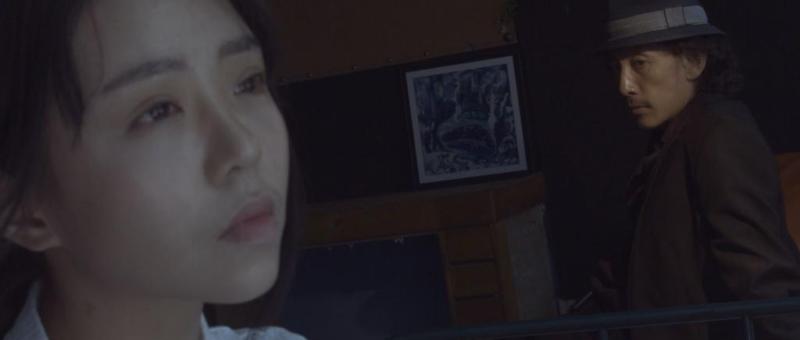
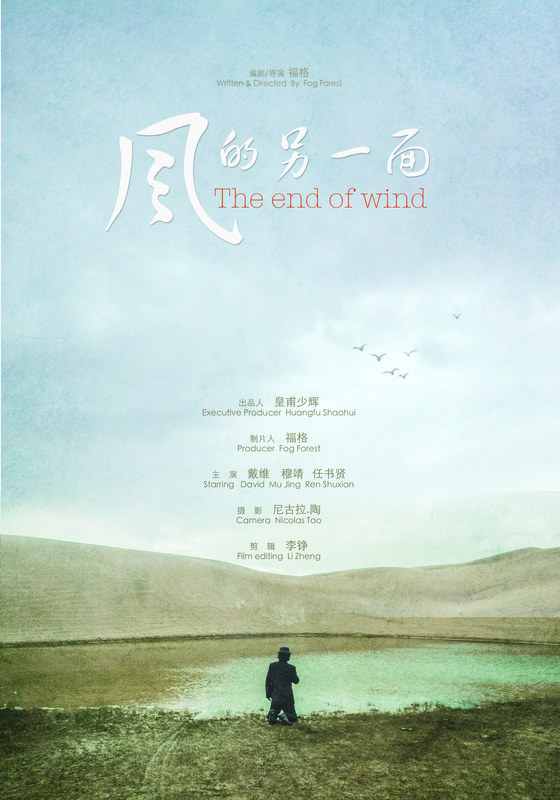
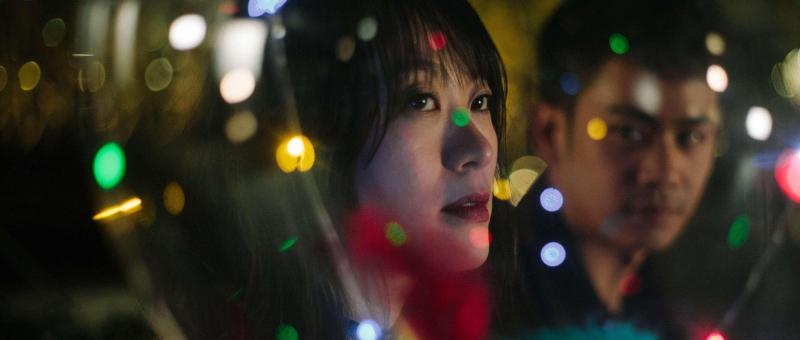
The End of Wind posterDoes beauty still exist in the world or only in the minds of lonely people? Director Fog Forest wants to know if there is anything pushing back against the forces of indifference in his debut feature, The End of Wind (风的另一面, Fēng de Lìngyī Miàn) which follows the melancholy fates of three individuals each looking for connection in an increasingly apathetic society. A salaryman with an existential crisis, a man wrongly imprisoned for a violent crime, and a young woman whose escape from North Korea led her straight into the hands of human traffickers, ponder if life is still worth living when the bonds between people have become so weak and distorted.

Wang Ran, a frustrated company man and all round snappy dresser, has long been in a depressive slump. Lamenting the attitudes of those all around him, he resents their all encompassing greed and self-interest. He can’t understand why they are so keen to destroy the “beautiful things” of the world in order to continue their quests towards materialist success. Then again, Wang is no longer sure that the “beautiful things” really exist outside of his own mind and if they do he has no idea how to find them. Meanwhile, Yang Botao has just been released from a ten year prison sentence for a crime he did not commit only to find that his mother passed away while he was inside and his father has spent all their money trying to get him released. To make matters worse, Yang is also suffering from kidney disease thanks to constant beatings from sadistic prison guards. A series of events brings the two men together when they decide to rescue a young woman, Kim Meishan, who escaped from North Korea but fell into the hands of human traffickers when her father was killed during the journey.

Each of the three protagonists is looking for some kind of connection which will restore their will to continue living even when life is so obviously meaningless and depressing. In order to find his purpose, Wang gives up his job and goes wandering, living in bare apartments and trying to make connections with kind people he finds along the way. Yang too decides to set off on a journey when his attempts to restart his life are frustrated by an inability to find a job in his hometown where the spectre of his “crime” haunts him everywhere. Unlike Wang, Yang decides to try rekindling an old connection in looking for a woman he knew before he went away who has apparently moved on, possibly to the North West. A true journeyman, Yang becomes the conduit which delivers the path to destiny that Wang has been seeking when his delivery job brings him into contact with Meishan who is able to pass him an SOS in the form of a cassette tape. Intended for her long lost mother, the message is in Korean and Wang is therefore unable to understand it save for identifying Meishan’s distress and realising that he has received a literal cry for help.

Though helping Meishan, Wang’s sense of purpose beings to return, warmed by her desire for life as evidenced by her ravenous hunger. In her he perhaps comes to believes that the “beautiful things” he dreamed of really do exist, and can be found by building genuine connections with others even if they are not supported by common language. His final answer is, however, not quite so positive and all three of our protagonists realise different destinations in their mutual quests for fulfilment. Having been abandoned by all each exists separately, unable to reconcile themselves either to the compromises of the consumerist world or discover a new one through forging bonds with other similarly lonely people. Wang’s world is one of imperfect destruction, surrounded by ruins and filled with nihilistic emptiness from which there may be no escape. Or perhaps, the only possibility of escape ends in an “end” which is not an end but a release. Poetic, if at times obtuse, Fog Forest’s debut is a noirish exploration of the sadness of being alive but one which offers no sign of hope for a society in terminal decline.


The End of Wind was screened as part of the 2018 Raindance Film Festival.

Original trailer (english subtitles)

Fat Buddies (胖子行动队, Bao Bei’er, 2018)

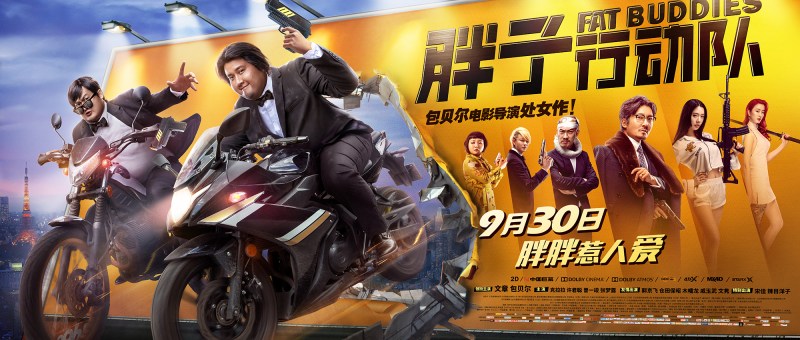
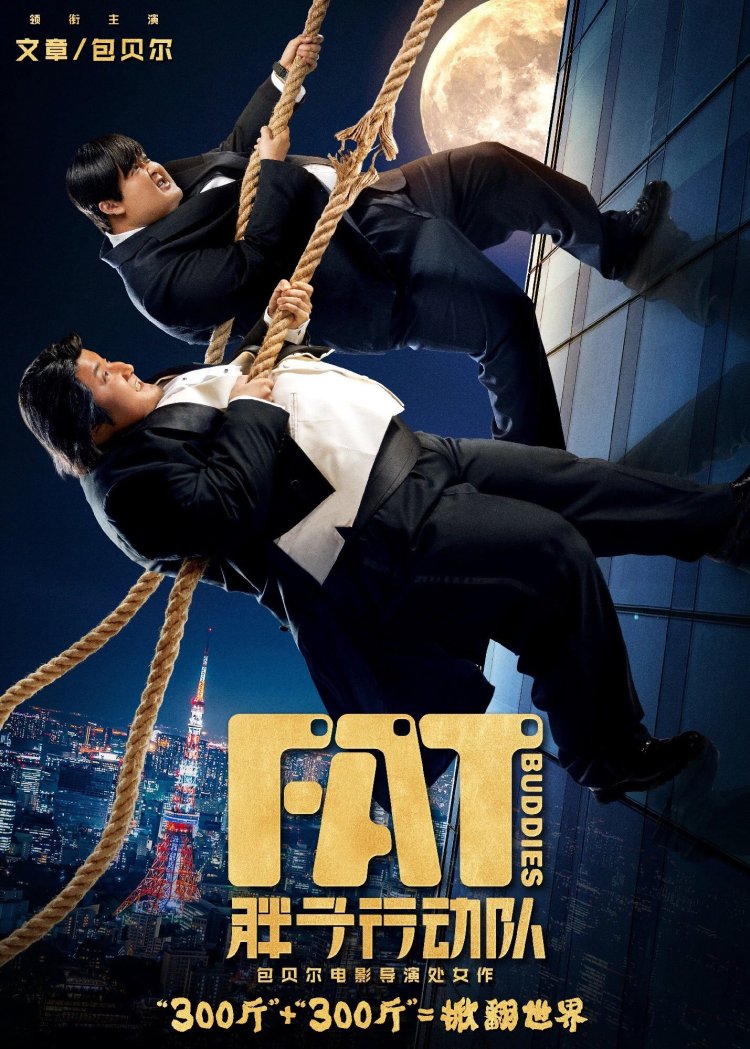
Fat Buddies posterChinese cinema hasn’t exactly had the best record when it comes to dealing with atypical heroes, but then no cinema really has. Gazing at the poster for Fat Buddies (胖子行动队, Pàngzi Xíngdòng Duì) – the debut directorial feature from actor Bao Beier who also stars, one can’t help but assume the next two hours will be one long joke at the protagonists’ expense, but to its credit Fat Buddies is not (entirely) the film it seems to be and, ironically enough, there is more going on beneath the surface than an excuse to have at a “permissible” target.

The hero, played by Bao Beier himself, is a very rotund security guard currently working in a hospital in Tokyo for reasons which will (mostly) be explained later. Though Hao is a cheerful and friendly man with a strong sense of justice, he is ostracised by the (strangely large number of) other guards and has no real friends save his extraordinarily beautiful Japanese wife. Hao’s life changes forever one day when another large Chinese man calling himself “J” arrives at the hospital and causes a ruckus by trying to escape without paying. J convinces Hao that he is an international super spy on a top secret mission and that he needs Hao’s help to get out of the hospital so he can save the world. Believing he is finally being given the chance to become the agent of justice he’s always dreamed of being, Hao is only too eager to oblige.

Strangely enough, the entire film takes place in Tokyo even though the heroes and antagonists are all Chinese. Even so, it never resorts to the comedic caricatures common in recent mainland cinema when depicting the Japanese with even the police characterised as dedicated and efficient if sometimes a little overzealous and misguided, though one does wonder if the setting was chosen solely for the sumo associations of the grand finale. There is however a degree of bite in Hao’s view of himself as a non-Japanese person living in Japan who is married to a Japanese citizen and speaks the language fluently but still remains an outsider both because of his unusual appearance and because of his nationality (with a mild implication from some that perhaps the two things are not entirely unrelated). In an early set piece, Hao and J find themselves trying to infiltrate an upscale party where they have unwittingly stolen the clothes of a pair of famous dancers and eventually end up improvising a strange routine to a bawdy song which is all about being a “foreigner” in Japan who “doesn’t understand Japanese but loves Sora Aoi” and then continues in a similarly lowbrow vein with a mix of Mandarin, international English, and intentionally broken Japanese.

Rather than a two hour fat joke – though there are a fair few of those in a recurrent motif of J getting stuck in things Pooh-style and losing his trousers in the process, the the major message is that the pair are fine as they are and apart from the aforementioned problem, their size is not a barrier to being able to do anything they want including taking on international spy missions. Despite his happy marriage, Hao still suffers from loneliness and low self-esteem due to a lifetime of being looked down and on belittled, unable to make friends because of prevalent social stigma towards those on the heavier side. The solution, however, is not a makeover or a crash diet but a gradual process towards Hao regaining his sense of self worth and realising he has plenty to offer the world despite what anyone else might say. Similarly J, who experienced rapid weight gain after a life threatening injury and also suffers from narcolepsy, proves that he is still able to do his job even if he benefits from having a partner around when he randomly falls asleep at inopportune moments.

Fat Buddies isn’t claiming to be high art and there is certainly enough of the low humour the title implies to keep those enticed by the poster happy enough, but there is also genuine heart in its odd couple buddy comedy as the two similarly under-appreciated big guys bond in their shared desire to reclaim their sense of dignity and refuse to be shamed or belittled just because of their size (even if they are otherwise quite bumbling and inefficient in their mission). Strangely uplifting, Fat Buddies is an extremely silly comedy starring two men in fat suits repeatedly bumping into things but like its heroes refuses to be bound by stereotypical conventions and manages to make heartwarming drama out of its admittedly ridiculous premise. 


Fat Buddies is currently on limited release in UK Cinemas.

International trailer (English subtitles)