The Legend & Butterfly (レジェンド&バタフライ, Keishi Otomo, 2023)

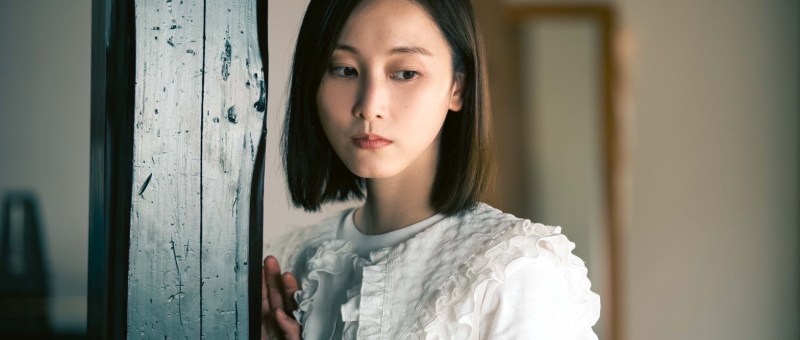
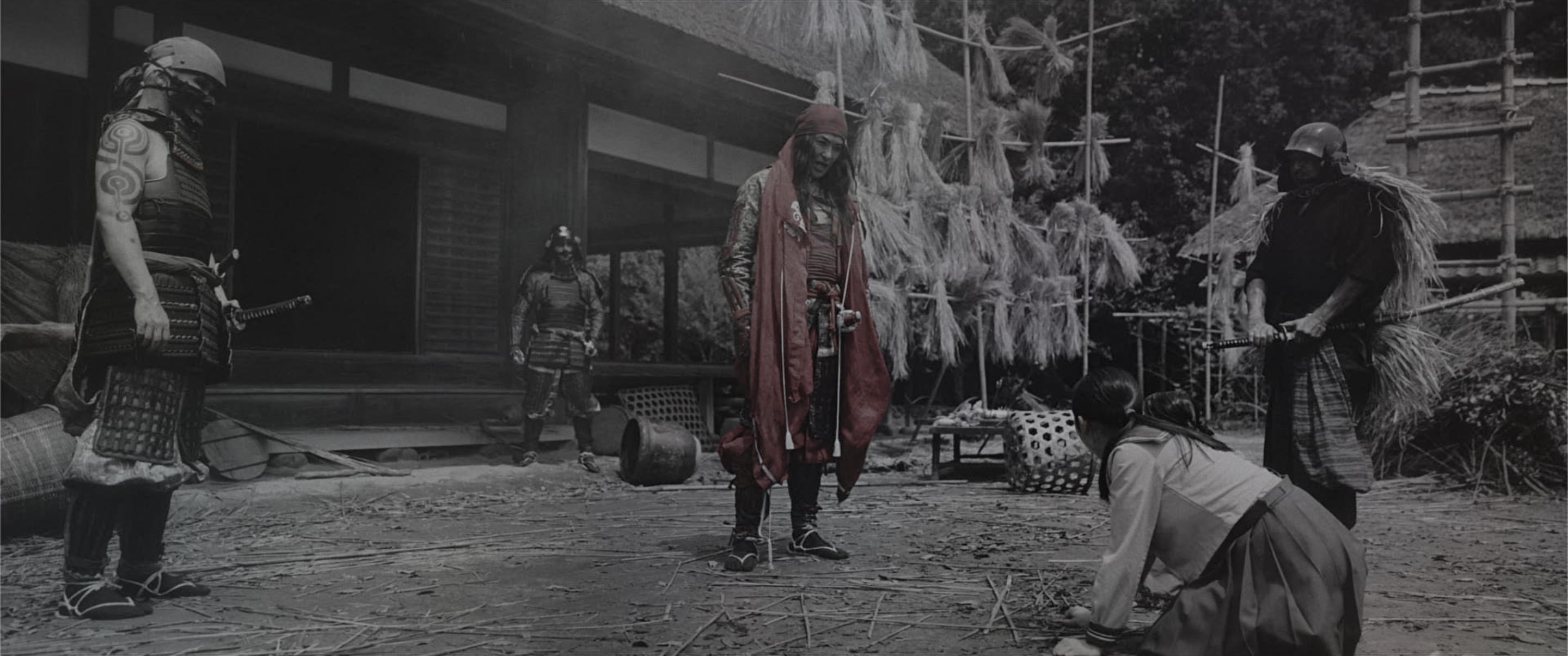
“What was everything for?” an ageing Nobunaga (Takuya Kimura) asks his attendant Ranmaru (Somegoro Ichikawa) towards the conclusion of Keishi Otomo’s historical epic, The Legend & Butterfly (レジェンド&バタフライ, Legend & Butterfly) produced in celebration of Toei’s 70th anniversary. Oda Nobunaga is such a prominent historical figure that his story has been told countless times to the extent that his legend eclipses the reality, but rarely has been he depicted so sympathetically as in Otomo’s history retold as romantic melodrama in which he and his wife, Lady No (Haruka Ayase), are mere puppets of the times in which they live dreaming only of a place beyond the waves where they might be free of name or family. 

Tellingly, Otomo opens in the spring of 1549 in which the dynastic marriage was arranged to broker peace between unstable neighbouring nations Owari and Mino. Nobunaga’s father’s health is failing and he fears in the chaos of his death Mino may attack, while No’s father fears that her brother will soon revolt against him plunging the fiefdom into disarray and therefore vulnerable to an attack by Owari. At this point, Nobunaga is known as “the biggest idiot in Owari,” a foppish dandy who cares only about appearances. As he prepares to meet No, his courtiers apply his makeup and do his hair while dressing him in a rather outlandish outfit No immediately insults as “foolish”. He treats her with chauvinistic disdain, barely speaking save to order her to pour the drinks and give him a massage only for her to point out that she’s been travelling all day and a “thoughtful” considerate husband would be giving her a massage instead. “I detest women who do not know their place,” he snaps. “I detest men who are ignorant,” she counters. The wedding night ends in humiliating failure as No demonstrates her martial arts skills and Nobunaga is forced to call his guards to rescue him. 

Little is known of Lady No in historical record, but here she is bold and defiant, as her father had said too free with her opinions for a woman of the feudal era. She claims to have been married twice before and assassinated both husbands on her father’s orders, implying that she is essentially sleeper agent more than hostage and will kill Nobunaga without a moment’s thought as soon as the word is given. Yet she also begins to guide her husband towards his destiny, mocking him as a fool but giving him useful strategic advice that wins him glory on the battlefield along with the political advancement that led him to become the first great unifier of Japan. For all that they “hate” each other, they are well matched and have a similar sensibility that allows them first to become allies and then friends before frustrated lovers.

But their love is enabled only when they escape the feudal world, shaking off their retainers to go on a “normal” date in Kyoto where they dance to Western musicians and taste foreign candy only to end up accidentally massacring some peasants when No’s martial arts training kicks in trying to stop a man beating his son. Even so, they are forever linked by their time in Kyoto in the romantic talisman’s of a carved wooden frog and a European lute even if the blood-spattered jizo and buddhist statue watching their eventual connection imply there will be a reckoning for all the blood that is spent. Jumping on a few years, the film does not elaborate on what caused Nobunaga to become a man without a heart and lose the love of his most trusted ally but positions his transformation into the “Demon King” as the kernel of his undoing just as his dream of unifying Japan and bringing about an age of peace (if one ruled by fear) is about to become a reality. 

In any case, the one thing that everybody knows about Nobunaga is how he died though then again his remains were never recovered giving rise to a happier ending in which he and Lady No were finally able to escape the feudal world to chase a freer future beyond the sea which is perhaps what they do in the film’s poetic final sequence in which they might in a sense share a dream connected by frog and lute. It might not be very historically accurate, but that is perhaps the point in hinting at the lives they might have led if the world had been different. Otomo films with a painterly eye that lends an air of poignant gravitas to a tale of romantic tragedy in which love is both salvation and destruction amid the flames of a collapsing temple. 


The Legend & Butterfly screened as part of this year’s JAPAN CUTS.

Original trailer (English subtitles)
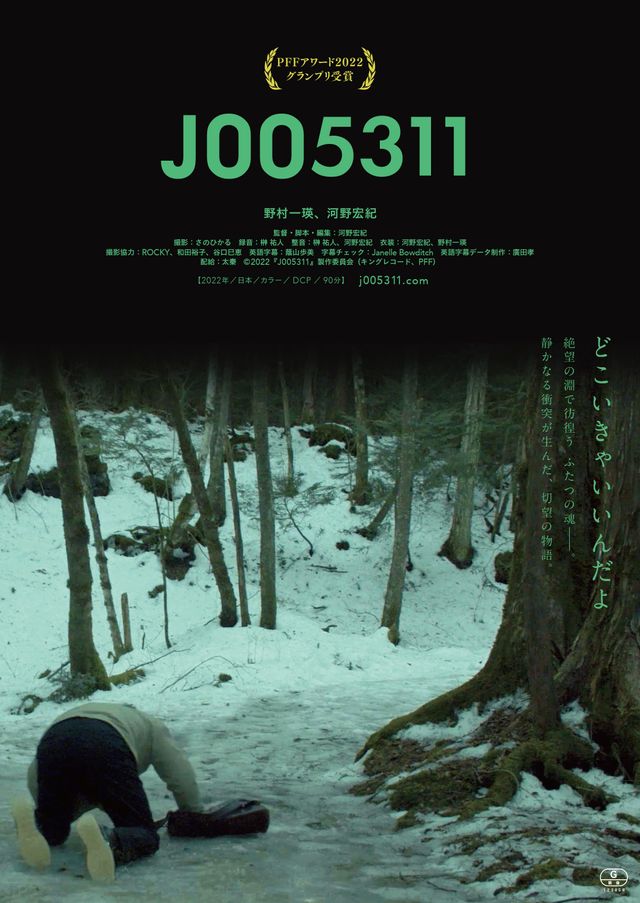
J005311 (Hiroki Kono, 2022)

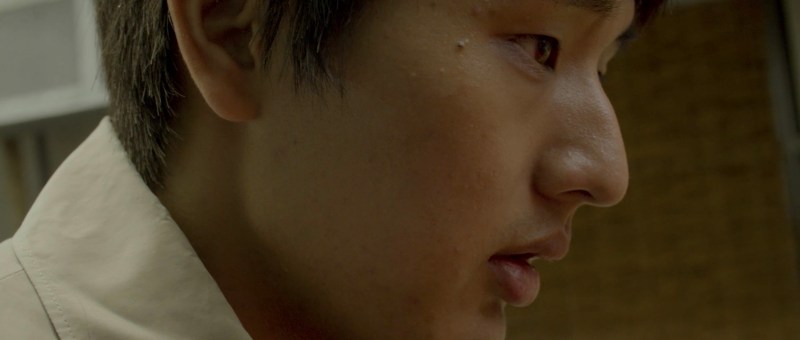
If a stranger offers you a large amount of money to drive to an undisclosed location, what would you say? Hiroki Kono’s J005311 is so named for a bright new star born when two stars already dead collided which goes some way to explaining the central relationship between the two men at the film’s centre. Though they rarely speak, a kind of connection arises between them that changes them both in unexpected and unexplained ways but perhaps gives each a new sense of hope and possibility. 

After some kind of alarming phone call, Kanzaki (Kazuaki Nomura) throws away various things in his apartment and leaves as if not expecting to return. He goes out and tries to hail a cab, but it seems as if the driver refuses to take him where he wants to go. Kanzaki slowly walks away and sits down wondering what to do next before catching sight of a young man running furiously across the road after snatching a woman’s handbag. Kanzaki wouldn’t usually be the sort to chase a thief, but tears off after the man and makes him a rather unexpected offer. He will pay him a million yen if only he’ll agree to drive him to a location near Mount Fuji around two hours away. The man is understandably suspicious and in fact tries to snatch the bag Kanzaki had the money in but is ultimately unsuccessful and agrees to the drive.

No real explanation is given for why Kanzaki is prepared to pay this large sum of money to get someone to drive him rather than taking public transport at least part of the way or booking a car through some kind of chauffeuring firm where long fares are more usual. It may be because he’s afraid whoever called him will find him on a train or bus, which would also explain why he leaves his phone behind at a service station, or perhaps he just wants company and companionship on what is looking increasingly like a final journey. Kanzaki tells the man, Yamamoto (Hiroki Kono), that he’s going to meet “a friend” which is a fairly unimaginative lie he doesn’t believe for a second though he for the moment he lets it go. Later Yamamoto notices he has a rope in his bag while we also see Kanzaki loop its strap around his neck and try to strangle himself all of which adds grim import to his final destination. 

For his part, Yamamoto is wary of the arrangement and also of Kanzaki who is awkward in the extreme. He tells Kanzaki that he can buy whatever he likes with the million yen yet when he asks what he’ll use it for he says he doesn’t know. He says he likes work that’s “easy” like construction or deliveries while evidently supplementing his income with the purse snatching which he remarks gets easier each time you do it. Several times it seems as if Yamamoto may run off with the money, or just run off leaving Kanzaki stranded, but eventually comes back if for unclear reasons that nevertheless suggest he’s begun to care Kanzaki and feels to an extent responsible for him while fearing what awaits him at his destination. 

Kanzaki too feels responsible for Yamamoto, eventually asking him to give up bag snatching as if implying that he’s better than that and ought to respect himself more. After tipping copious amounts of sugar onto his food at a rest stop, Kanzaki shoves a whole pastry into his mouth and seems as if he’s about to cry perhaps feeling rejected or that he overstepped the mark with Yamamoto before suggesting that he might want to walk the last part alone only for Yamamoto to once again return and follow him. In a sense they begin to save each other, bonding in a shared sense of despair if exchanging few words and emerging with a new sense of possibility forged by their unexpected sense of connection. Kono follows the two men with restless intensity, the camera swooping POV style or clinging tightly to them in the confines of the rented car while eventually seeming to vibrate in the poignant closing scenes. At times obscure, the film nevertheless has a wintery poetry and melancholic soul and ends on a note of silent serenity as the two men prepare to move on though who knows where to. 


J005311 screened as part of this year’s JAPAN CUTS.

Plastic (Daisuke Miyazaki, 2023)

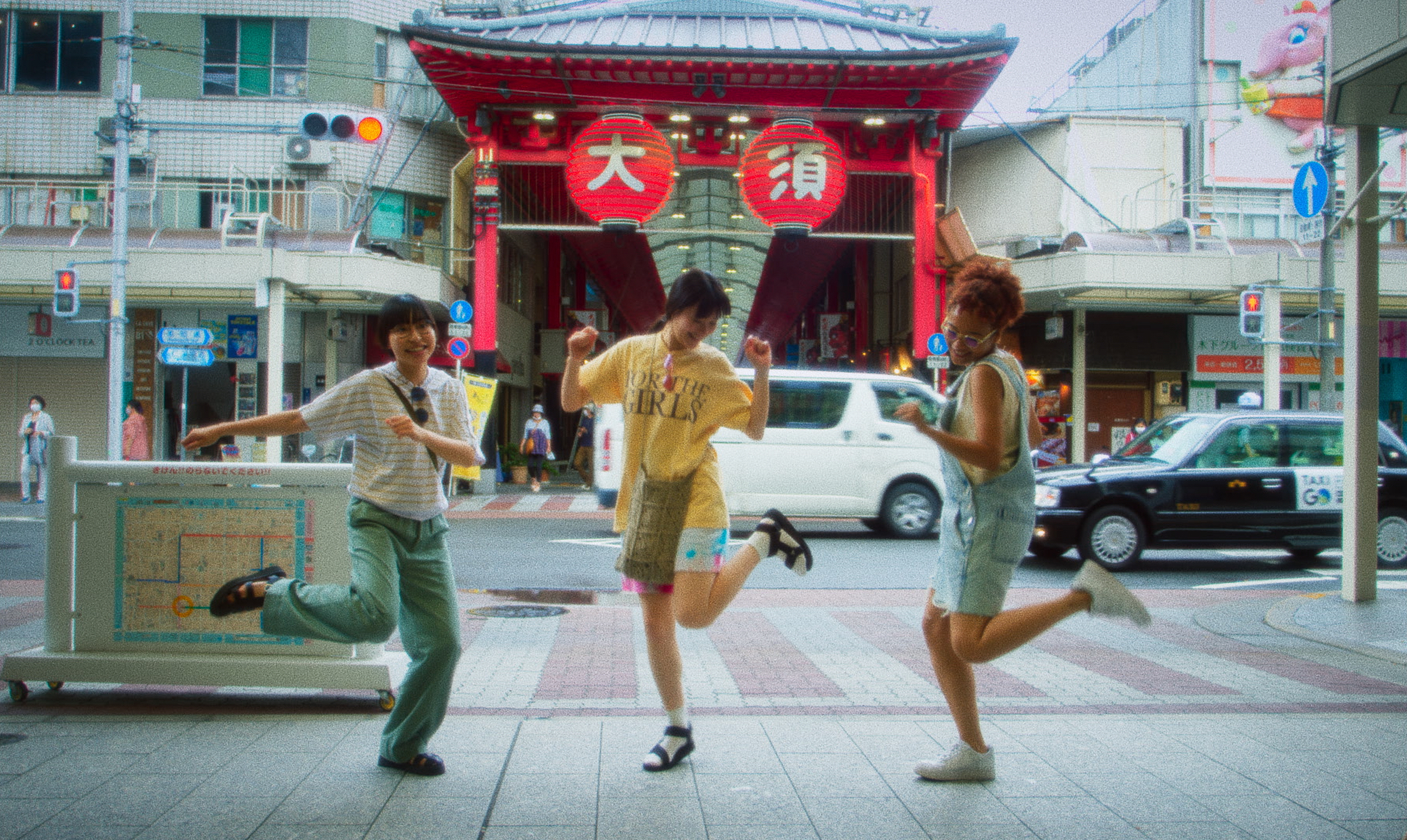
A young couple bond over their shared love of an obscure 70s glam rock band, but soon find their youthful romance eroded by the realities of impending adulthood in Daisuke Miyazaki’s warmhearted coming-of-age tale, Plastic. Emotional distance becomes a persistent theme as mediated through a message into space that might take light years to arrive not to mention the reply, which seems to echo the couple’s inability to communicate despite their star-crossed connection.

Jun (Takuma Fujie) and Ibuki (An Ogawa) bond after realising they are both fans of 70s band Exne Kedy, talking for hours at a small cafe only leaving when the place closes. Having recently relocated to Nagoya from Tokyo, Jun enrols at Ibuki’s high school and joins her after school club much to the chagrin of her two friends. The pair eventually become a couple going on a series of wholesome dates including a trip to watch Sad Vacation in a cinema and are apparently very much in love but a year later the novelty has begun to wear off. Ibuki is studying for university exams and bound for a top institution in Tokyo while Jun is planning to drop out and pursue music full-time. 

Perhaps slightly more conventional, Ibuki berates Jun for his impracticality asking how likely it is he’ll be able to support himself with the kind of music he makes. Later she has some kind of flash forward in which she imagines herself supporting him financially while he’s not even playing guitar anymore and they’re arguing about responsibilities for rent and living costs. She breaks up with him in the carpark of a convenience store but perhaps regrets it, keeping up a half-hearted friendship while he remains lost and lovelorn pursuing music on the side while working part-time. “Plastic” becomes a kind of metaphor for their relationship, something which should have lasted forever but has been subtly undermined by the microorganisms of conventionality and contemporary capitalism until it eventually broke apart. 

The distance between them is likened to that of the space radio broadcast which might not reach its target for 25,000 light years. The message was sent the same year that Exne Kedy broke up, and may well be delivered a little more than 50 years later at their reunion concert only as the narratorial voice over explains, that’s largely up to chance. Swapping notes on studying in the same way Jun’s mother and grandfather had talked about seeing Exne Kedy in concert, Ibuki’s parents had compared their flashcards to modern apps and joked that maybe someday education would all be online as in fact happened during the pandemic. Having swapped her rural home for the bright lights of Tokyo, all her classes are online which ironically gives her more time to spend with her friends but also leaves her exhausted and distant. 

When Jun wonders if his music is like the broadcast, destined not to arrive for thousands of years so he’ll never know who got it. Another school friend, Ayumu, asks him if he’s sure he hasn’t just missed a reply 25,000 years in the making which is sort of ironic because he’s clearly missed that she’s been trying to answer his message only he’s too hung up on his ex to notice. Later she asks him to move in with her, pointing out that she’s right there not 25,000 light years away like Ibuki who is now living with a DJ who doesn’t even know who Exne Kedy are. The two of them are far apart but somehow still connected, not least by their love for the band which may eventually reunite them. 

Exne Kedy is modern day creation by Ide Kensuke who had previously released the album Kensuke Ide With His Mothership ― Contact From Exne Kedy and the Poltergeists and makes a self-cameo in the film in a surreal scene featuring the band whom Ibuki and Jun unexpectedly run into doing an impromptu performance in the middle of a forest singing a song that echoes the state of the couple’s relationship in which a lighthouse no longer illuminates and cannot light the way. Yet there is always a sense of the couple as a pair of flashing beacons waiting to pass close enough to each other to be able to convey a message. Featuring cameo appearances from (former pop star) Kyoko Koizumi and Machiko Ono, Miyazaki’s strangely charming youth movie is surprisingly sincere in its romanticism but equally in its critique of the world that frustrates it while suggesting that music may once again save the day.


Plastic screened as part of this year’s JAPAN CUTS.

Original trailer (no subtitles)

Sanka: Nomads of the Mountain (山歌, Ryohei Sasatani, 2022)

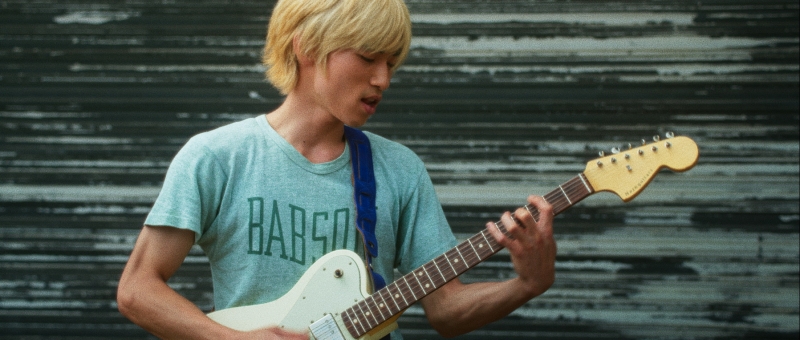
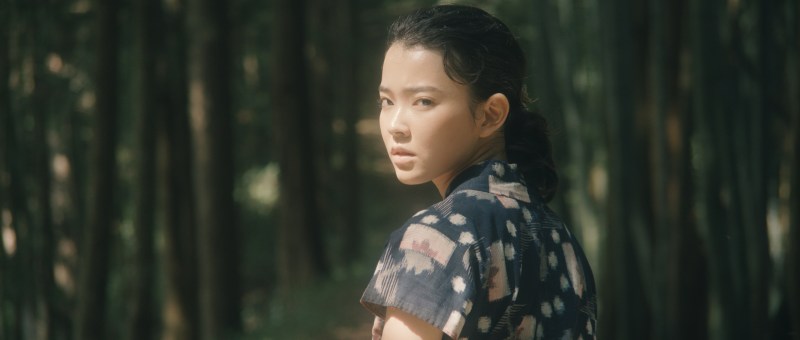
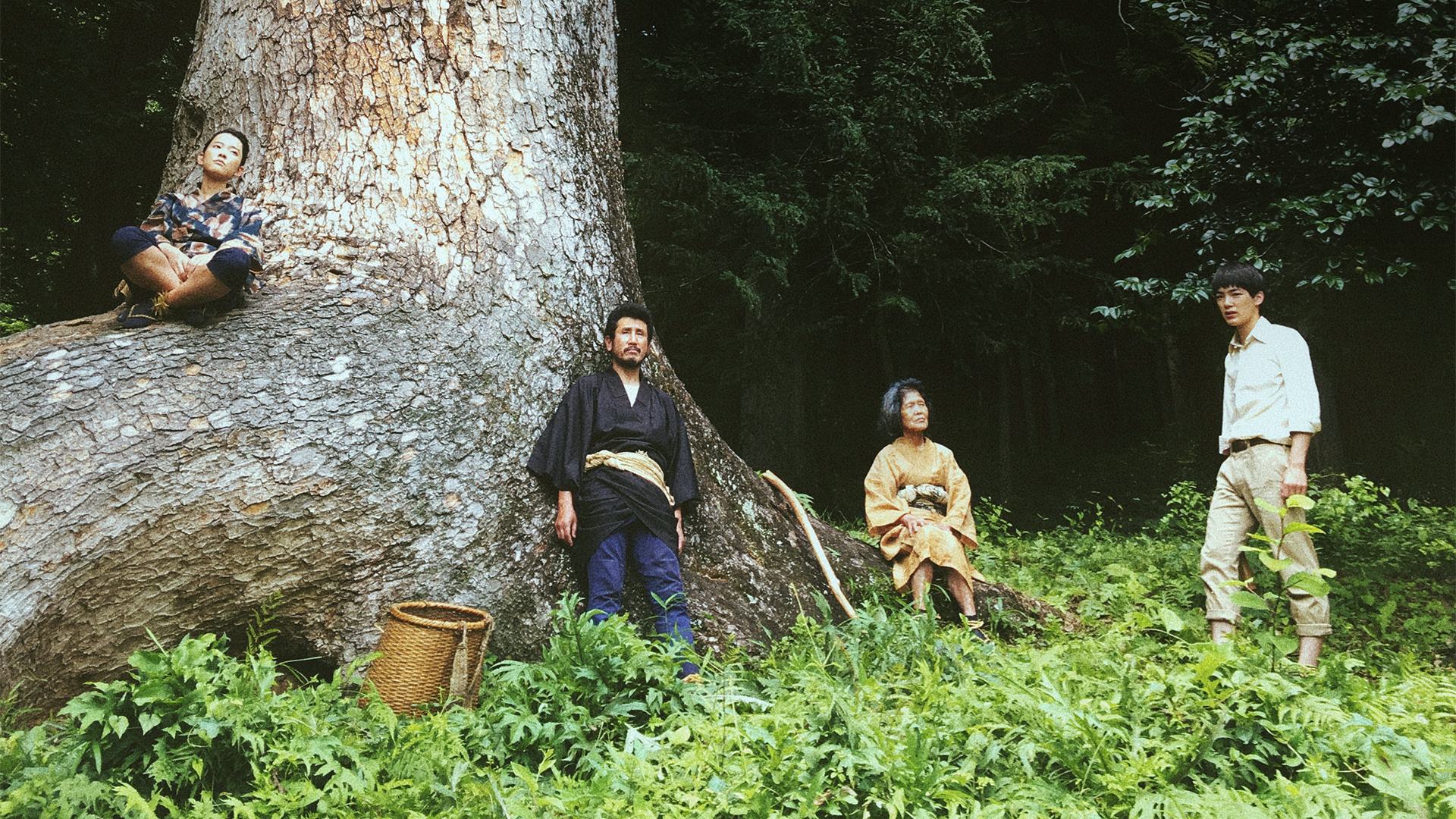
A young man finds himself caught between the new Japan and the old while befriending the last remnants of a nomadic people in Ryohei Sasatani’s poetic drama, Sanka: Nomads of the Mountain (山歌, Sanka). Set in the mid-1960s the film harks back to something older and more mystical that seems at odds with the Japan of the bullet train and economic miracle but equally sees its hero reckon with the more recent past in his father’s authoritarianism born of his militarist upbringing and wartime service.

Norio (Rairu Sugita) does seem to be a more sensitive boy. Bullied at school he comes home with a bruised face and is berated by his father Sakaguchi (Kisuke Iida) for his lack of manliness while struggling to come to terms with the death of his mother on the mountain two years previously. That’s one reason he ends up bonding with Shozo (Kiyohiko Shibakawa), one of the last remaining members of the Kenshi people who live a nomadic lifestyle migrating across the mountain throughout the year to take advantage of the terrain. Becoming a kind of father figure, Shozo teaches him how to fish and live on the mountain while Norio also develops a fondness for his daughter Hana (Naru Komukai) who appears to be around the same age as he is. 

The contrast between the two men could not be more stark. People in the town still refer to Sakaguchi as “the sergeant” and fiercely respect him for his wartime service. Norio finds a picture of his father in uniform along with a gun wrapped up in the back of drawer as if reminding him of the oppressive authority that hangs over the house. The townspeople are also grateful to Sakaguchi because he’s planning to build a golf course, a symbol of a newly prosperous society with a growing middle class, that will bring a lot of jobs to the area which is struggling economically with the decline of the agricultural industry. To build the golf course, Sakaguchi plans to get to rid of the mountain which will force Shozo and his family off the land and sever their connections with the forest and earth. 

To the townspeople the presence of the Kenshi is something taboo that embarrasses them. People accuse them of thievery and try to shoo them away. A policeman even stops Shozo and forces him to throw the fish he was trying to sell back to the river claiming that he’s frightening people just in his presence. Norio experiences an additional layer of shunning solely because of his association with the Kenshi and is later berated by his father for causing him embarrassment by associating with them. He reminds him to be mindful of his “status” and describes the Kenshi as “trespassers” as if denying them the right to exist. 

Norio obviously disagrees and is quickly seduced by the mountain’s serenity explaining that it helps him forget about the troubles of his life. But for Hana the situation is more complicated. Her friend Yoshi and her family went town from the mountain two years previously and she enviously looks on as she gossips with her school friends torn between her loyalty to her Kenshi roots and the desire for modernity in which she could live a comfortable life and get an education. If she stays on the mountain, she’ll be the last of her kind yet she struggles to reconcile herself with the idea of moving on just as Norio struggles with his own future in a rapidly changing Japan and seeks refuge in the mountains and a world beyond invisible to humans. 

Filled with a gentle poetry as Hana dances amid a rainstorm and voices echo through woods along with the sound of feet clad in woven sandals, the film is a kind of lament for an older, mystical Japan eventually eroded by a quickening modernity along with a critique of the lingering militarist authoritarianism which has simply transformed into corporate capitalism as symbolised by Norio’s cruelly conservative father. Yet as Hana had said, they’ll be Kenshi wherever they go, implying perhaps that her culture will not necessarily disappear so much as be carried forward even as the mountain itself becomes a casualty of a society in danger of forgetting its roots in a headlong dash towards a prosperous modernity.


Sanka: Nomads of the Mountain screened as part of this year’s JAPAN CUTS.

Original trailer (no subtitles)

Saga Saga (緑のざわめき-Saga Saga-, Aimi Natsuto, 2023)

Three women contending with a legacy of patriarchal failure and male violence circle around each other in the picturesque hot springs resort of Ureshino in Aimi Natsuto’s etherial drama, Saga Saga (緑のざわめき, Midori no Zawameki – Saga Saga –). Less playful than Natsuto’s previous film Jeux de plage, the oscillating action takes on a poetic, mystical direction as the forces which bind the three women together eventually become clear while each in their own way tries to overcome a lingering sense of displacement and loneliness. 

The first of them, Kyoko (Rena Matsui), left Ureshino to become an actress in Tokyo but has given up performing and resettled in nearby Fukuoka where she runs into an old hometown boyfriend, Sotaro, who is currently sort of dating Eri, a woman he met on a dating app. Despite telling Kyoko he can’t stay long after reconnecting because he has a date with someone who is “not quite” his girlfriend, Sotaro ends up going to a love hotel with another woman, Naoko (Sae Okazaki), who frequents the bookstore where he works. Though it originally appears that Naoko is jealous of Kyoko and fears she’s missed her chance with Sotaro, we soon realise that she is in fact semi-stalking her for unclear reasons but actually wants to get in touch with someone else and eventually forms a telephone connection with Anna (Sara Kurashima), a high school girl currently living in Ureshino with her aunt, Fumiko (Asuka Kurosawa). 

In a way, they are all looking for something that seems to be missing in their lives. For Kyoko it seems to be something like the concept of home as she struggles with a series of sudden changes from the death of her mother two years previously to a brush with cancer in the form of an ovarian tumour she has recently had removed. Fumiko, who was a friend of her mother’s, tells her that she’s on a journey of self-reconciliation and there is indeed something in that as she works over the mysteries of her past while looking for new directions in her future. 

Meanwhile, she is plagued by strange dreams of being lost in a forest later telling a friend that she was once sexually assaulted in the woods when she was in high school and has the feeling the person who is chasing in her in her dream may be her father who left the family when she was a child. When she was receiving treatment for the tumour on her ovary, she began to ask herself why she had been born a woman forever subject to threat and patriarchal oppression. On her return to Fukuoka, she undergoes a very strange job interview in which she’s repeatedly assured that “being a woman” she won’t be asked to do anything “difficult” while it seems that being “attractive” is enough to get by in the beginning. Also they warn her that they don’t offer “great maternity leave or anything like that”. 

The lives of each of the women have been in one way or another overshadowed by male violence, but it’s Anna’s would-be-boyfriend Toru who is eventually victimised when he’s assaulted by a woman who wanted to bring back a problematic local festival cancelled because of a sexual assault. Toru had been in the forest to consult with some kind of mystic man trying to get him to conduct a ritual to get Anna to like him only to be told it doesn’t really work like that and you wouldn’t want it to anyway. After the assault it’s Toru’s life which spirals out of control when he’s blackmailed into acts of petty crime by the witch-like woman who forced herself on him, while Fumiko too is later forced to pay the price for having kept her secrets and for compassionate reasons attempted to hide the truth from those who most wanted to know.

Finally brought together on solving their individual mysteries, the three women settle on creating a home they can each return to, anchoring themselves as a family as a means of finding stability in a world which is so often in flux in defiance of the destructive forces which connect them. Even Eri admits that in reality she may have been looking for self-affirmation in her desire to find a dating app soulmate as her friends reflect on their terrible romantic experiences which, ironically, include being stalked. In the depths of its mysticism and eeriness, the film nevertheless ends on a note of serenity and the promise of moving forward if paradoxically by making a return. 


Saga Saga screened as part of this year’s JAPAN CUTS.

Original trailer (no subtitles)

Hand (手, Daigo Matsui, 2022)

A young woman unwittingly meditates on emotional distance and the impossibility of intimacy while fixating on older men in an attempt to overcome her loneliness in feeling rejected by her father in Daigo Matsui’s contemporary Roman Porno, Hand (手, Te). Partly a critique of a misogynistic society, the film is as much interested in why old men like young girls as it is why Sawako (Akari Fukunaga) likes old men along with her general disdain for the various roles she’s expected to play. 

Sawako largely describes these as “life skills”, a brief flashback to the 20-year-old her wondering why weird old men suddenly took an interest in her when she left high school. The old guys make inappropriate banter with the woman behind bar that shocks Sawako in its crassness and leaves her wondering if she’ll be expected to “eco-exist” with men like these for the rest of her life. She decides if that’s the way it is she’ll need to equip herself which at 25 mainly involves adopting an ultra feminine persona, pretending to be stupid laughing at men’s rubbish jokes and giggling sweetly at every opportunity. Co-worker Mori (Daichi Kaneko) has, however, seen through her act especially as she doesn’t bother to put it on for him and is rather frank in her cynicism which gives her an air of authenticity that might in other ways be misleading. 

Meanwhile, she spends her time taking photos of middle-aged men and putting them in her scrapbook while sometimes going on “dates” with older guys. What soon becomes apparent is that she resents her family, with whom she still lives, and feels a little pushed out as if no one really cared about her only her younger sister Rika who in stark contrast to her is cheerful and outgoing. When she offers to make her father dinner, he doesn’t respond but apparently does when her sister asks. Sawako feels like her father thinks of her as “dark and boring” and assumes that he ignores her deliberately because he has no interest in her yet she ironically also ignores him, refusing her mother’s request that she accompany him to a hospital appointment petulantly suggesting he’d probably prefer it if Rika went. The truth is that they simply don’t know how to talk to each other, sitting far apart at the back of a bus like a couple that’s had an argument. 

A more age appropriate relationship with co-worker Mori seems as if it’s breaking down some barriers towards intimacy but finally leaves her additionally vulnerable as he too turns out to be a fairly weak, emotionally dishonest man despite his outward consideration for her. In contrast with the older men, his courtship had been coy, shyly asking to hold her hand and for permission before he kissed her while otherwise leaving her to take the lead though in the end he may not have been much different. One of the older gentlemen ironically describes her as “insecure” yet misreads her insecurity as sexual rather than emotional only for her to let the mask slip and bite back, frankly telling him that it can be “rude” to treat a woman like a girl and that his dismissiveness is offensive. If all he sees in her is “youth” then he should just date a naive teenager instead.

“Youth” may be the answer to her question about why old men like young women, something confirmed by her date’s sighing that he finds dating her “nostalgic” as if he were young again too. But what she was looking for was warmth, the closing of an emotional gap of the kind that Mori proposed when he asked to hold her hand but never really followed through on. Then again, as another said she does indeed have a habit of running away, rolling her eyes at the idea of seriousness in an attempt to mask her fear of intimacy and treating everything as a cynical joke to avoid facing reality. “Whatever you do you have to engage with people” her similarly reticent father tells while beginning to break the ice, slowly closing the gap in extending a hand across it that provokes an emotional breakthrough. Quietly poignant in the slow motion of its heroine’s gradual liberation, Matsui’s otherwise biting take on contemporary patriarchy and follies of old men nevertheless allows her to reclaim herself in opening up to others.


Hand screened as part of this year’s JAPAN CUTS.

International trailer (English subtitles)

Amiko Wins Obayashi Prize at 2023 JAPAN CUTS

Japan Society New York has announced the winner of this year’s JAPAN CUTS Obayashi Prize which was introduced in 2020 in memory of the late director Nobuhiko Obayashi and is awarded to an independently produced narrative feature from an emerging filmmaker in the festival’s sole competitive category, Next Generation. This year’s jury which included critic and essayist Moeko Fujii, Film at Lincoln Center programmer Dan Sullivan, and distributor Pearl Chan (Good Move Media, Kani Releasing), has selected Yusuke Morii’s Amiko offering the following statement:

“As Amiko peeks into calligraphy class watching other children practice discipline and character building, they play a game of who can spot her first. She is too much, too loud; she cannot be held inside the lines and there is no language to describe her. This is where the vivid auditory and visual world of the film rushes in to sketch the perspective of a child who, in her attempts to grieve, seems to only aggravate and upset those around her. Among a selection of films interested in the non-normative, Amiko stands out in its use of the surreal as a comfort, while not losing sight of the inner-lives of those looking at and after those we don’t really understand. A fantastic performance by young Kana Osawa in Yusuke Morii’s first feature.”

Hiroki Kono’s J005311 also gained a special mention for, as explained in the following comment, “its considerable formal ambition and willingness to challenge us as viewers. Made with a profound sense of economy – both in terms of its restrained yet complex execution, but also its maximisation of clearly limited means – it manages to give us a gripping, intimate and provocative filmic ride.”

Other films screened in this year’s Next Generation strand included: Yurina Kaneko’s People Who Talk to Plushies Are Kind, Aimi Natsuto’s Saga Saga, Ryohei Sasatani’s Sanka: Nomads of the Mountain, and Yuho Ishibashi’s When Morning Comes, I Feel Empty. The winner of the Obayashi prize will receive receive a trophy and monetary award of US$3,000.

Our coverage of JAPAN CUTS 2023 continues here. You can also keep up with all the latest news from Japan Society New York and the year-round film programme by following them on LetterboxdInstagramFacebook, and Twitter.

The Three Sisters of Tenmasou Inn (天間荘の三姉妹, Ryuhei Kitamura, 2022)

Caught in a space of existential limbo, a young woman struggles with the uncertain nature of life. What’s the point of living in a world that might end, she asks herself, seemingly not having realised that it’s as it always was, the world is always ending and may blink out at any given second. Ryuhei Kitamura’s adaptation of the manga by Tsutomu Takahashi The Three Sisters of Tenmasou Inn (天間荘の三姉妹, Tenma so no San Shimai) plays out a little like a mashup of Hirokazu Korea’s Afterlife and Our Little Sister, but ultimately meditates on how to live on in the shadow of loss.

After all, as the relentlessly cheerful heroine Tamae (Non) later says, life is hard but the world is not so bad and everyone has their part to play. That’s something she discovers for herself after falling into a coma following a traffic accident and arriving at Tenmasou Inn in the picturesque seaside town of Mitsuse. As is explained to her, the inn exists in a liminal space between Heaven and Earth where those caught between life and death are expected to make a choice on their direction of travel. 

But Tamae begins to enjoy her time at Tenmasou in part after learning that the owner’s daughters, Nozomi (Yuko Oshima) and Kanae (Mugi Kadowaki), are her half-sisters. They are fully aware of their liminal status and that unlike Tamae they can never return to the mortal world or make any kind of life for themselves in Mitsuse where time stands still. Nevertheless, Tamae’s relentless cheerfulness and knack for human empathy prove key assets, beginning to return an energy and warmth that has those around her giving new thought to their cosmic inertia and if it’s really possible to go on living in a constant state of timelessness. 

Tamae might want to stay, experiencing for the first time the sense of family that she’s searched for all her life. She considers giving up the rest of her time to stay with them, but is reminded that no one can stay in this transient place forever while this version of Mitsuse which seems to hang over the “real life” town may soon disappear. Those who live there describe it as like living in a dream, a confusing simulacrum of life in which no time passes. There are those who make the eventual decision to pass on towards rebirth while others opt to stay, still having unfinished business or perhaps just not quite yet ready. 

Recalling the 2011 tsunami, the film touches on the difficult subject of survivor’s guilt and how to come to terms with loss on a mass scale while Tamae tries to process what it means to live and to not to. She resolves that “people don’t end when they die” but live on in the memories of those who remember them, though her conviction that she must live on as a kind of conduit for the souls of others may also rob her of a degree of her selfhood in her own right to live simply as herself.

Even so as she admits life is hard. An old woman suffering with liver cancer who had been blind for many years looks for beauty in the afterlife only to be reminded that there are beautiful things everywhere if you take the time to look. She too has had a life of sadness, but discovers that it might not be too late to make up for lost time, while a very young woman who felt herself to be alone learns that she has a friend and there are those who care for her even she did nearly burn the inn down in a fit of temper. Unabashedly sentimental, the film is as much about moving on as it is about learning to live in the present as the various guests contemplate whether to return to the world of the living with all of its pain and loneliness, or proceed to that of the dead knowing that there’s no guarantee the next life will be any better. Melancholy but also in its way uplifting, Kitamura’s empathetic drama eventually settles on a note of poignancy in which the act of living becomes its own memorial and defiant act of remembrance in the face of constant and unexpected loss.


The Three Sisters of Tenmasou Inn screens in New York Aug. 6 as part of this year’s JAPAN CUTS.

Original trailer (English subtitles)
From the End of the World (世界の終わりから, Kazuaki Kiriya, 2023)

Charged with the responsibility of saving the world, a teenage girl wonders if she should in Kazuaki Kiriya’s pre-apocalyptic drama, From the End of the World (世界の終わりから, Sekai no Owari kara). After all, the suffering will continue. People will continue to be cruel and selfish. Maybe it’s better to let humanity fizzle out and least save the planet. But really whether any of this is “real” or not, what’s she’s looking for is an escape from her grief and loneliness and a world that is a little kinder and less self-destructive. 

Shortly after losing her grandmother, who had been raising her after her parents were killed in a car accident, Hana (Aoi Ito) begins having strange dreams where she’s cast back to what seems to be feudal Japan where she meets a young indigenous girl whose family have been wiped out by marauding samurai. The girl’s guardian, an older woman (Mari Natsuki), explains to her that her arrival in this place has been foretold by some kind of scripture painted on the ceiling of a cave and that her duty is to deliver a letter to a shrine. Not too long later, she’s accosted by some kind of mysterious authority which seems very interested in her dreams, eventually taking her to a strange base in another cave where she meets an old woman (also Mari Natsuki) who looks exactly like the one saw in her dream. The world will apparently end in two week’s time, though she alone has the ability to alter what has been written through the power of her dreams which allows her to change people’s thoughts and thereby rewrite their destiny. 

She does not do this deliberately, but reacts instinctively to the events she encounters which the old woman claims exist in the “Sea of Sentiment”, a great confluence of human thought on which the world is built. “Understanding things is overrated. Everything’s an illusion. What’s important is your feelings,” another mysterious presence (Kazuki Kitamura) tells her, a man who exists between dream and reality and would rather the world end because as long as it exists he cannot die. In some respects, he may represent Hana’s depression suggesting that to continue to live is only to prolong her suffering and that it’s better for everyone to simply give in and let fate take its course while she weighs up kindness and vengeance using her newfound powers for “selfish” reasons to end the torment she’s been suffering at the hands of a bullying classmate who’s long been blackmailing her in taking advantage of her precarious position as a financially disadvantaged orphan. 

The quest that the old woman sends her on is really into the depths of her own heart which is wounded not only by a medical issue she seems to have forgotten but a pair of childhood traumas buried behind a door she did not want to open. The real message that she’s supposed to deliver has its own paradoxical sense of poignancy, “from the end of the world to you in the future”, which signals her nihilism and despair but also a desire for some kind of continuation or rebirth in a better, kinder world less marked by suffering or selfishness. Then again, the way of achieving that world is still rooted in violence only of a more knowing kind that heads off one particular kind of disaster and allows Hana to save “herself” in all her incarnations, but perhaps doesn’t do very much to change the human “foolishness” to which the old woman ascribes humanity’s destruction.  

Logically, it doesn’t quite hang together and not all of it makes sense (understanding things is overrated), but it has its own kind of internal consistency even if at times somewhat incoherent as it well might be if it were all the dream of a lonely teenage girl who’s given up on the idea of a future for herself because her life has been too full of suffering and unfairness. It’s no coincide the date of the end of the world is set for the same day as her high school graduation ceremony. Her world really is ending if in a less literal way leaving her all alone and forced into a more concrete adulthood while her peers get to chase their dreams a little longer by moving on to higher education while she’ll have to look for work to support herself. She may feel that nothing she does makes any difference and that she is powerless to change her fate, but also realises that she is not as alone as she thought. Featuring top notch production values and some striking production design, Kiriya’s sci-fi action drama is quietly touching in its final resolution that despite everything Hana still wants to love the world even if it’s making it very difficult. 


From the End of the World screens in New York Aug. 5 as part of this year’s JAPAN CUTS.

Teaser trailer (no subtitles)

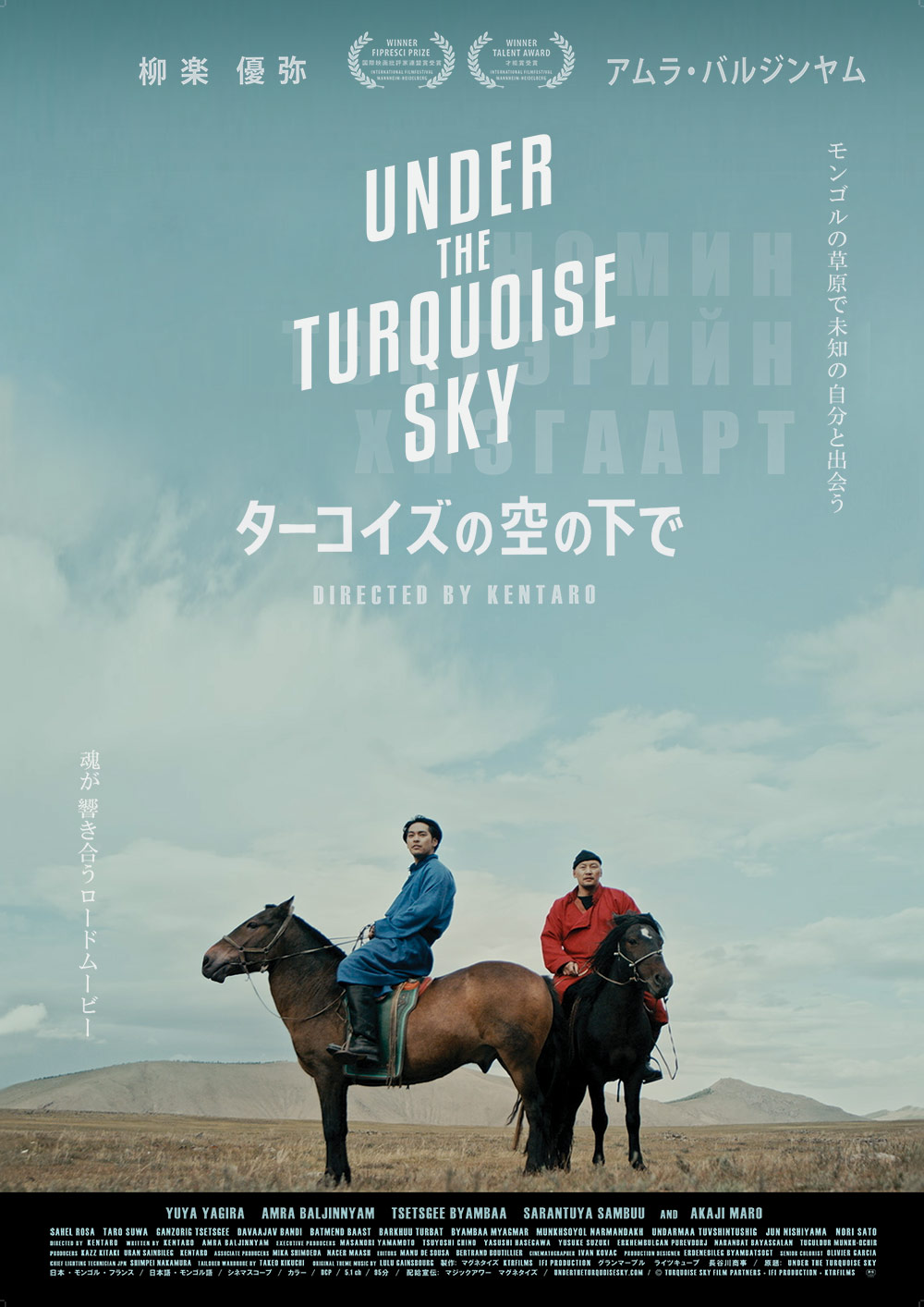
Under the Turquoise Sky (ターコイズの空の下で, KENTARO, 2021)

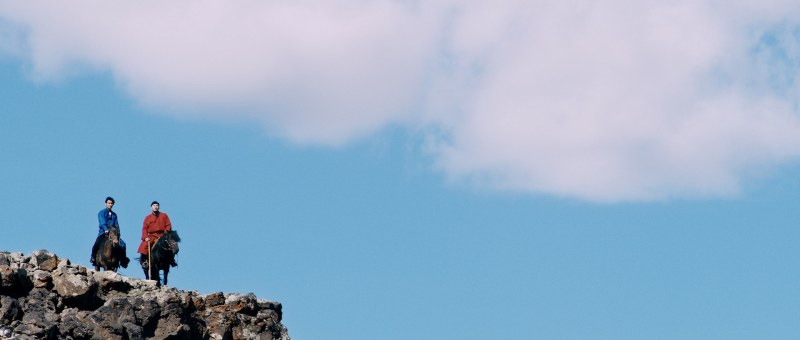
An aimless young man unexpectedly embarks on a spiritual journey after being sent to Mongolia to look for the daughter his grandfather left behind 70 years previously when he was a prisoner of war in the dreamlike debut feature from actor KENTARO, Under the Turquoise Sky (ターコイズの空の下で, Turquoise no Sora no Shita de). A circular tale of longing and abandonment, the film is both a charmingly surreal road movie and a poetic meditation on time and memory amid the infinite expanses of the Mongolian Steppe. 

Our guide is “horse thief” Amaraa (Amarsaikhan Baljinnyam) who cheerfully rides off on a stallion owned by the ageing Saburo (Akaji Maro) only to be chased down by police officers in much the same way he will be again on his return to Mongolia. Saburo jokingly asks him if he meant to ride all the way home and perhaps he did, in a way. Falling asleep in the van he later shares with Saburo’s grandson Takeshi (Yuya Yagira) he dreams of stealing an old lover away from her wedding to another man replying only that he’s been “busy” when she asks why he made no attempt to contact her during the previous three years. One might also ask why Saburo never returned to Mongolia and the woman and child he left behind, but perhaps there is no real reason save life and then it was too late. Now close to the end of his days, Saburo charges Amaraa with the mission of tracking his now 70-year-old daughter down taking the spoilt and selfish Takeshi with him in the hope that he will spontaneously discover purpose in his life. 

There is something quite poignant in the melancholy strains of My Dear Companion accompanying the van’s passage along a lonely Mongolian road, a song that at least in its more modern version is a lament for lost love and a yearning for one who seems to have disappeared to a distant land no longer caring for those they once loved. The other frequent refrain is that of Beautiful Dreamer which similarly hints at the impossibility of romantic resolution particularly as it plays over Amaraa’s fantasy of reclaiming a love he once left behind. On arrival in Mongolia, Amaraa quickly reverts to traditional dress, dismissing the driver Saburo has hired for them along with his fancy car to take off in a much more ordinary van stopping every so often to ask everyone they run into if they’ve ever heard of a woman named “Japanese Tsermaa” until getting some helpful directions from a traditional shaman with a surprisingly familiar face. 

Unable to speak the language, Takeshi mostly looks on amused but soon discovers that words are often superfluous. Amaraa even at one point has a totally wordless negotiation with a fellow nomad over borrowing his motorbike and sidecar when the van inevitably breaks down. Suddenly left alone in the expanses of the Mongolian Steppe, Takeshi enters a kind of dreamscape and almost lives his grandfather’s life over again after being taken in by a pregnant woman who gives him Mongolian clothing and shares with him the local food, but the outside world soon comes calling and just like his grandfather he leaves behind a woman and child along with the sea and the sky having experienced some kind of enlightenment that shakes him out of his hedonistic aimlessness. 

But then it’s almost as if it never happened at all. He simply takes his grandfather’s place while the wheel keeps on turning. Workers in his grey office block shuttle about like ants in an ant farm even if, as we gradually realise, united under the turquoise sky that stretches from Mongolia though fading as if goes. Unexpectedly moving in its moments of reunion, the film makes the most of the beautiful Mongolian landscape shot a stunning 8K while exploring the warmth and hospitality of the local people who share their culture with a bemused stranger who finally gives himself over to their dance. “What’s important is that we’re together now” Amaraa tells the woman in his dream, hinting at the impossibility of his circular journey and the poetic yearning that underlies these various stories of lost love some eventually recovered at least in part but others left to echo on the breeze as faint memories of other lives painfully unlived.


Under the Turquoise Sky screens in New York Aug. 4 as part of this year’s JAPAN CUTS.

International trailer (dialogue free)