Gemini (双生児 GEMINI, Shinya Tsukamoto, 1999)

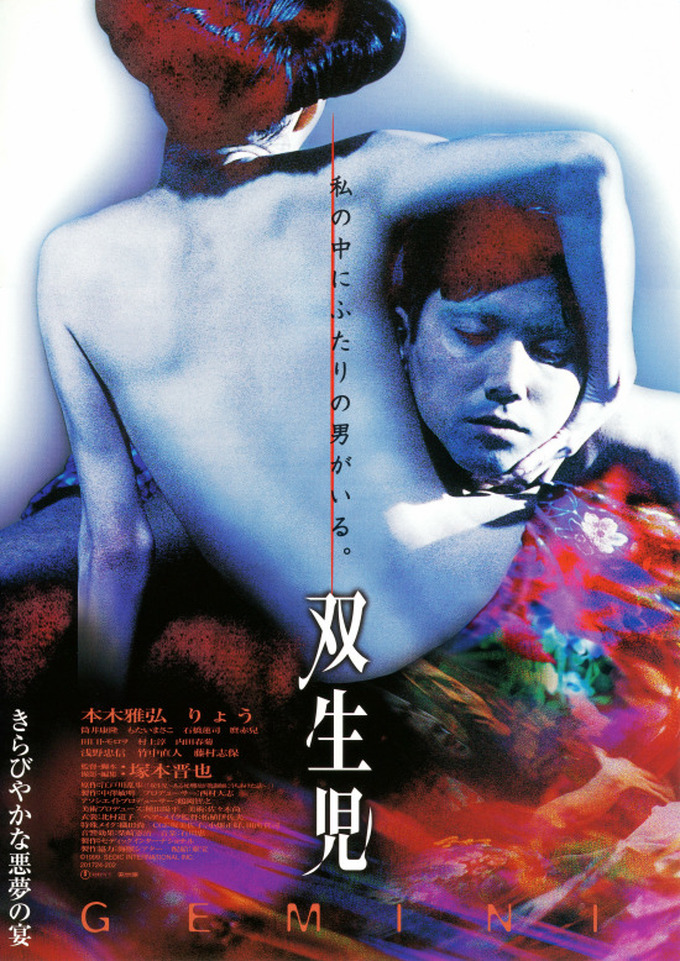
Shinya Tsukamoto made his name as a punk provocateur with a series of visually arresting, experimental indie films set to a pounding industrial score and imbued with Bubble-era urban anxiety. Inspired by an Edogawa Rampo short story, 1999’s Gemini (双生児 GEMINI, Soseiji Gemini) is something of a stylistic departure from the frenetic cyberpunk energy of his earlier career, marked as much by stillness as by movement in its strikingly beautiful classical composition and intense color play. Like much of his work, however, Gemini is very much a tale of societal corruption and a man who struggles against himself, unable to resist the social codes which were handed down to him while simultaneously knowing that they are morally wrong and offend his sense of humanity. 

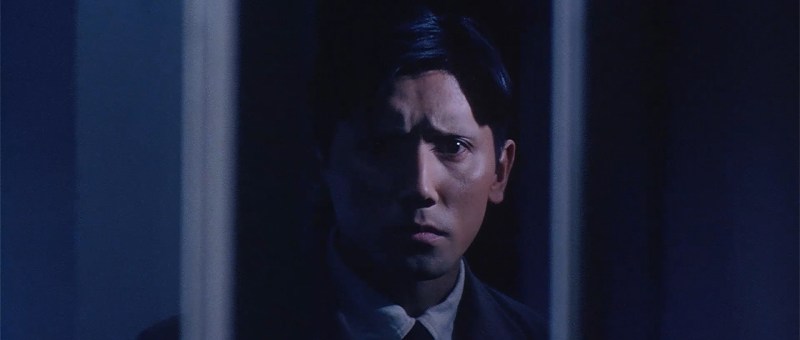
Yukio (Masahiro Motoki) is a war hero, decorated for his service as a battlefield medic saving the life of a prominent general during the first Sino-Japanese War. He’s since come home and taken over the family business where his fame seems to have half the well-to-do residents of the area inventing spurious excuses to visit his practice, at least according to one little boy whose mum has brought him in with a bump on the head after being beset by kids from the slums. “They’re just like that from birth” Yukio later tells his wife echoing his authoritarian father, “the whole place should be burned to the ground”. A literal plague is spreading, but for Yukio the slums are a source of deadly societal corruption that presents an existential threat to his way of life, primed to infect with crime and inequity. His home, which houses his practice, is hermetically sealed from those sorts of people but lately he’s begun to feel uneasy in it. There’s a nostalgia, a sadness, a shadowy presence, not to mention a fetid stench of decay which indicates an infection has already taken place, the perimeter has been penetrated. 

The shadowy presence turns out to belong to his double, Sutekichi whose name literally means “abandoned fortune”, a twin exposed at birth as unworthy of the family name owing to his imperfection in the form of a snake-like birthmark on his leg and raised by a travelling player in the slums. Having become aware of his lineage, Sutekichi has returned to make war on the old order in the form of the parents who so callously condemned him to death, engineering their demise and then pushing Yukio into a disused well with the intention of stealing his identity which comes with the added bonus that Yukio’s wife, Rin (Ryo), was once his. 

Rin’s presence had already presented a point of conflict in the household, viewed with contempt and suspicion by Yukio’s mother because of her supposed amnesia brought on by a fire which destroyed her home and family. Yukio had reassured her that “you can judge a person by their clothes”, insisting that Rin is one of them, a member of the entrenched upper-middle class which finds itself in a perilous position in the society of late Meiji in which the samurai have fallen but the new order has not quite arrived. In Rin modernity has already entered the house, a slum dweller among them bringing with her not crime and disease but a freeing from traditional austerity. In opposing his parents’ will and convincing them to permit his marriage, Yukio has already signalled his motion towards the new but struggles to free himself from the oppressive thought of his father. He confesses that as a battlefield physician he doubted himself, wondering if it might not have been kinder to simply ease the suffering of those who could not be saved while his father reminds him that the German medical philosophy in which he has been trained insists that you must continue treatment to the very last. 

This is the internal struggle Yukio continues to face between human compassion and the obligation to obey the accepted order which includes his father’s feelings on the inherent corruption of the slum dwellers which leads him to deny them his medical knowledge which he perhaps thinks should belong to all. The dilemma is brought home to him one night when a young woman is found violently pounding on his door wanting help for her sickly baby, but just as he makes up his mind to admit her, putting on his plague suit, a messenger arrives exclaiming that the mayor has impaled himself on something after having too much to drink. Yukio treats the mayor and tells his nurses to shoo the woman away, an action which brings him into conflict with the more compassionate Rin who cannot believe he could be so cynical or heartless. 

Where Yukio is repressed kindness, a gentle soul struggling against himself, Sutekichi is passion and rage. Having taken over Yukio’s life, he takes to bed with Rin who laughs and asks him why it is he’s suddenly so amorous. She sees or thinks she sees through him, recognising Sutekichi for whose return she had been longing but also lamenting the absent Yukio who was at least soft with her in ways Sutekichi never was. “It’s a terrible world because people like you exist” Sutekichi is told by a man whose fiancée he robbed and killed. Yukio by contrast is unable to understand why this is happening to him, believing that he’s only ever tried to make people happy and has not done anything to merit being thrown in a well, failing to realise that his very position of privilege is itself oppressive, that he bears his parents’ sin in continuing to subscribe to their philosophy in insisting on their innate superiority to the slum dwellers who must be kept in their place so that they can continue to occupy theirs. 

Apart, both men are opposing destructive forces in excess austerity and violent passion, only through reintegration of the self can there be a viable future. Tsukamoto casts the austerity of the medical practice in a melancholy blue, contrasting with the fiery red of the post-apocalyptic slums, eventually finding a happy medium with the house bathed in sunshine and the family seemingly repaired as a doctor in a white suit prepares to minister to the poor. Having healed himself, he begins to heal his society, treating the plague of human indifference in resistance to the prevalent anxiety of the late Meiji society. 


Gemini is released on blu-ray in the UK on 2nd November courtesy of Third Window Films in a set which also includes a commentary by Tom Mes, making of featurette directed by Takashi Miike, behind the scenes, make up demonstration featurette, Venice Film Festival featurette, and original trailer.

Original trailer (English subtitles)

Me and the Cult Leader (AGANAI -悪の陳腐さについての新たな報告, Atsushi Sakahara, 2020)

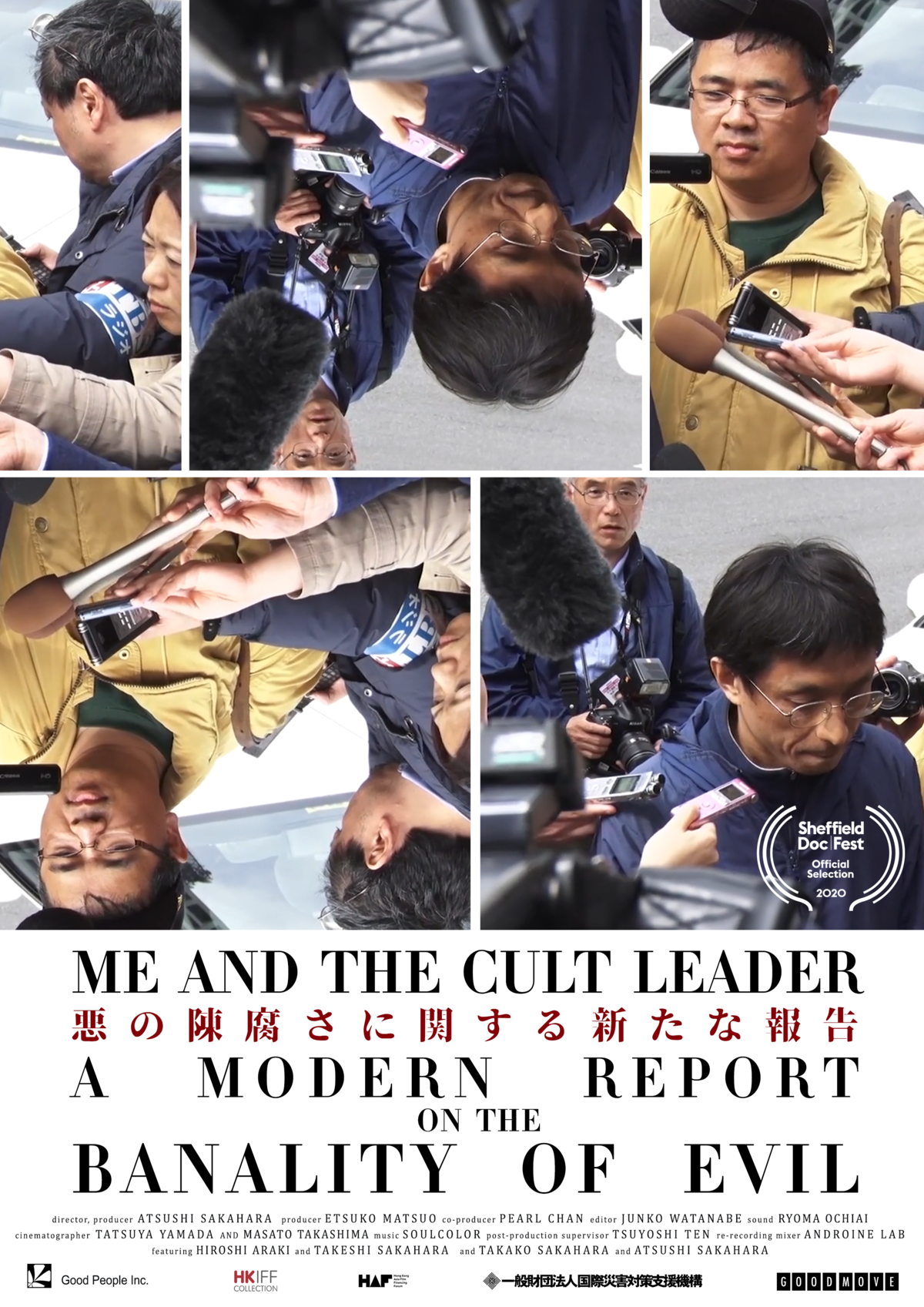
How can you continue to serve an ideology which you know is responsible for a heinous act that offends your sense of moral righteousness? That’s a question that Atsushi Sakahara, a survivor of the sarin gas attacks on the Tokyo subway, finds himself asking in his documentary Me and the Cult Leader (AGANAI -悪の陳腐さについての新たな報告, Aku no Chinpusa Nitsuite Aratana Hokoku), as he meets with Hiroshi Araki, a current member of Aleph, the successor to Aum, the cult which planned and executed the 1995 act of terrorism which led to the deaths of 13 people and left 6200 injured, many like Sakahara with life changing consequences. 

Yet Sakahara’s purpose is the opposite of polemical, he merely reaches out to Araki in an effort to understand the mindset not only of someone who joined Aum in the early ‘90s and was a member at the time of the attack though not directly involved, but of someone who stayed and continues to believe in the teachings of cult leader Asahara who was executed in 2018 after years on death row along with other members responsible for Japan’s only exposure to domestic terrorism. Throughout it all, however what he seems to want is some kind of apology, or at least an act of contrition, something which proves elusive as the distant, thoughtful Araki largely refuses to engage as if afraid to accept that the ideology to which he has devoted all his adult life may in fact be corrupt and empty. 

Araki’s justifications run mainly to technicalities. He does not exactly deny that members of Aum were responsible for the attack, but explains that their guilt is the most logical explanation given the available evidence which includes their own confessions and so concludes it is likely the truth. The two men travel together on a kind of pilgrimage back to their respective hometowns which happen to be in the same area of the country, while in another coincidence they also attended the same university at the same time. A jovial presence, Sakahara attempts to hurry the near silent Araki along, pushing him to open up which he eventually does but failing to elicit from him anything which might begin to free him from the icy grip of his ideology. 

Sakahara subtitles his film “A modern report on the banality of evil”, and there’s certainly something of that as the film opens in a subway station, Sakahara and Araki merely two ordinary middle-aged men in anoraks waiting for a train. Yet Araki is clearly not an “evil” man. He appears to be thoughtful and sensitive, often breaking down in tears as the journey forces him to remember his life before he renounced the world, the vision of his grandmother waving him off at the station after a summer holiday leading back to that of his mother as he severed connection with her to join with Aum. He doesn’t quite explain what led him to join the cult save being overwhelmed by Asahara’s charisma when he gave a speech at Kyoto university in the early ‘90s, Sakahara having witnessed him arrive the year before but jokingly shouting out for the famously outlandish cult leader to show off his talent for levitation, save that he became disillusioned with consumerism after a pencil case he lusted over as a child lost its lustre when he got it home. The training, he goes on, caused him to lose the capacity for joy or pleasure, leaving him he explains with no other choice than to join the cult because there was no longer anything left for him in the outside world which had become unbearably painful as a result.

Yet knowing what he knows, how can he go on practicing Asahara’s teachings? Sakahara tries not to push him, only once or twice pressing for an answer as to whether or not he sees and understands his suffering and feels remorse, later introducing him to both his parents in an effort to prove that actions have wider consequences, that he is not the only victim but that others suffer because of his suffering. Meeting Sakahara’s equally compassionate mother and father does appear to move something with him, evoking a loose apology even if he immediately walks back on it with some manichean justifications that Sakahara is also responsible for everything that’s happened to him because it is all a result of his choices, good and bad. 

The unavoidable conclusion is perhaps that Araki is simply afraid to confront the implications of everything he’s seeing lest his entire worldview collapse and he realises he’s wasted all of his adult life serving a corrupt and empty ideology. Sakahara acts with total warmth and compassion for his dilemma, even at one point quite literally buying him a coat because he’s only brought his anorak despite it being freezing (Araki also constantly carries a sleeping bag because his asceticism seems to extend to beds and futons), patiently listening to his often sad stories of youth but every revelation is followed by extended silence, Araki shifting back inside himself unwilling risk bursting the bubble. Sakahara, however, remains patient hoping for the day that the cultist will finally see the light. 


 Me and the Cult Leader streams in the US until Oct. 31 as part of this year’s San Diego Asian Film Festival.

Original trailer (English subtitles)
Under the Open Sky (すばらしき世界, Miwa Nishikawa, 2020)

“Am I too unhealthy to live in society?” asks the hero of Miwa Nishikawa’s Under the Open Sky (すばらしき世界, Subarashiki Sekai) of his doctor, but the only answer he gets is a wry chuckle and an exhortation not to be so “pessimistic”. Inspired by Ryuzo Saki’s 1993 novel Mibuncho, the first of Nishikawa’s six features to be adapted from secondary material is in many ways a typical Showa-era story, testifying to the fact that the world has not changed as much as we might have hoped in the intervening 30 years since Saki’s novel was published, but it’s also a lowkey condemnation of the quiet hypocrisies which continue to define our notions of civility in the story of a man who was perhaps too good to survive in our “society”.

Opening with bars and heavy snow, Nishikawa introduces us to Mikami (Koji Yakusho) as he nears release after serving 13 years in prison for killing a man in what is described by the authorities as a yakuza gang war, though Mikami is keen to point out that he’d already attempted to leave the yakuza by then and the killing was mere self defence. In any case when questioned by the officers about to release him, he admits no remorse over the man’s death only that he lost 13 years of his life over “that hoodlum”. In any case he’s thrown out into the cold, boarding a bus back into the city where he vows to go straight. Once there, however he discovers the outside world to be fairly inhospitable. Not only are the skills he learned in prison next to useless when it comes to finding employment in the contemporary economy, but he must also contend with societal prejudice and his own wounded pride.

Stepping for moment into the realms of the issue movie, Nishikawa explores the relative impossibility of re-entering mainstream society as someone who has been convicted of a crime. Having spent most of his adult life in and out of prison as a petty yakuza footsoldier, Mikami has little education and no marketable skills aside from his capacity for violence and the ability to drive, something of which he is now deprived because his licence expired while he was inside and to get it back he has to start from scratch by passing the new-style two-part test. Mikami’s life is indeed a typical post-war story, abandoned to an orphanage by his geisha mother from which he later escaped and ended up joining a gang in place of the family he never had. “Prison is the only place that won’t kick you out no matter how badly you behave” he later quips, accidentally laying bare his yearning for unconditional love found only shakily in yakuza brotherhood.

Yet that old-fashioned, post-war yakuza is an outdated institution, like Mikami himself a relic of the Showa era floundering in the late Heisei society in which gangsters wear sharp suits and have fancy offices, finding more sophisticated ways to make war with each other than open thuggery. Everybody wants out, Mikami later muses to himself, but it’s hard to fit in to society and those like him find themselves drawn back towards the vagaries of the yakuza life for all the dubious certainties it continues to offer them. His lawyer and guarantor Souji (Isao Hashizume) tells him that he needs to regain his love and trust of people, but that’s a tall order when it feels like no one loves you and they make a point of letting you know you’re not forgiven. Even a simple trip to the supermarket proves traumatic when the head of the local neighbourhood association who just happens to run it decides to pick him up for shoplifting just because he knows he’s an ex-con. Thankfully he later realises his mistake and is filled with remorse, moved by Mikami’s quiet dignity in asserting his innocence and right to shop as he pleases. 

For all that, however, Mikami is a man of violence who has known no other way of life, taught that his only acceptable emotional release lies in pain and destruction. His violence is, however, for the sake of others not himself. He does not become violent with the store manager Mastumoto (Seiji Rokkaku) who later becomes his friend, but gleefully confronts two punks hassling a terrified salaryman and teaches them a minor lesson in the way only an old hand can. This other side to his otherwise childishly naive character shocks frightens Tsunoda (Taiga Nakano), a TV director Mikami had approached with the intention of being featured on his show in the hope of tracking down the mother who abandoned him, who engages in some armchair psychology to imply that the source of Mikami’s rage lies in his alienation as a rejected child. The irony is that Souji, his wife (Meiko Kaji), Matsumoto, and Tsunoda become Mikami’s new “family”, replacing that he’d looked for in the yakuza and providing a grounding in mainstream society that allows him to shed his anger, but the compromise they ask of him is in itself soul crushing in its implications to the extent that his complicity with it is no redemption but a moral failure. 

If such is the price of civility, Mikami may have a point, perhaps it isn’t worth it. In the end, it is our world which fails to live up to his goodness, his violence a result of society’s continued indifference to human suffering. He is no more free outside the walls than in, constrained by an unforgiving emotional austerity that permits injustice in the name of harmony. If you can’t protect the ones who’ll save the flowers from the storm, then what is your freedom for? Subverting a well worn redemption narrative, Nishikawa finds a wealth of kindness in a broken world, but suggests it’s not enough save us until the world itself is redeemed. 


Under the Open Sky streams in California until Oct. 31 as part of this year’s San Diego Asian Film Festival.

Teaser trailer (English subtitles)

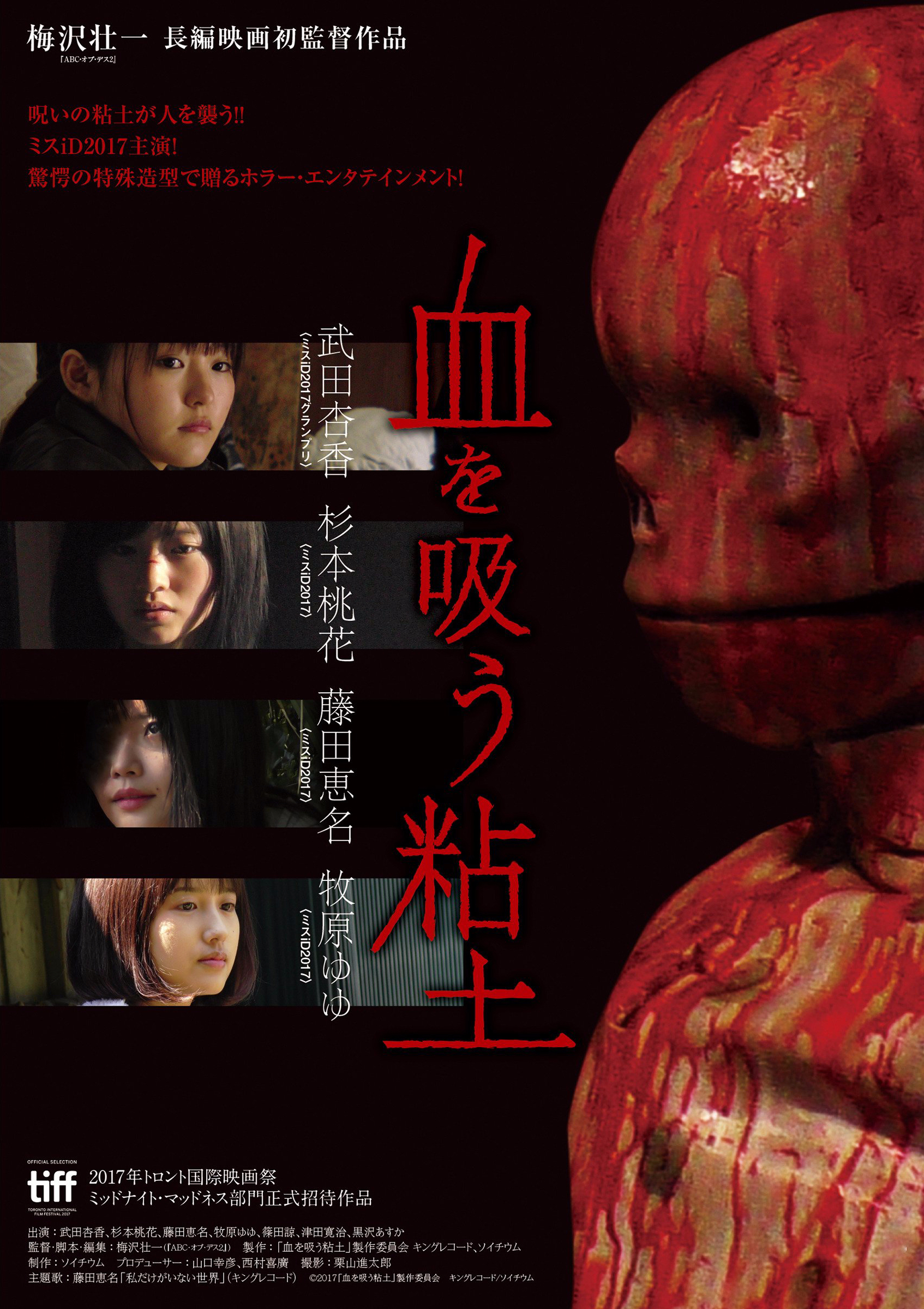
Kakame – Vampire Clay Derivation (血を吸う粘土~派生, Soichi Umezawa, 2019)

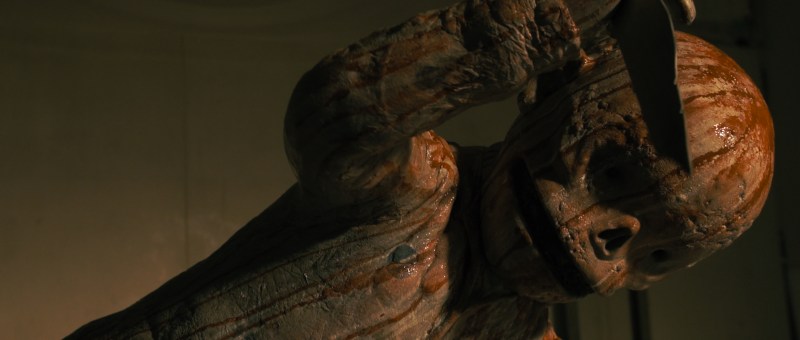
Kakame returns! Having been encased in concrete at the end of the previous film, it was perhaps inevitable that he would eventually break free to feed on the frustrated dreams of insecure artists everywhere. Kakame – Vampire Clay Derivation (血を吸う粘土~派生, Chi wo Su Nendo: Hasei) picks up shortly after the first film left off, but this time around the insecurities are less artistic than they are familial and social as those affected by the curse of Kakame find themselves wrestling with a sense of responsibility they must face alone to ensure that his bloody vengeance is contained lest he wreak more havoc on the wider world. 

After a short flashback, Aina (Asuka Kurosawa) sends the surviving student home and insists on going to the police alone but is involved in a car accident. Meanwhile, we’re introduced to the new heroine, Karin (Itsuki Fujii), the daughter of Fushimi (Kanji Tsuda) who fell victim to Kakame at the end of the previous film. His body has now been found in the art school and so the police contact Karin, who is his only living relative seeing as Karin’s mother committed suicide shortly after the marriage broke down, to identity him despite the fact they had been estranged for the last 12 years. The problem is that Karin didn’t want anything to do with her dad and so she is a bit lax dealing with his bones which still contain traces of Kakame. Meanwhile, as an aspiring artist herself, she enrols in a dodgy art project run by sleazy artist Kida (Shinji Kasahara) who makes a point of recruiting six young women in their 20s because he apparently wants to know what the women of Japan today are thinking, instructing them to unbalance the unbalanceable by disrupting the harmony of the hexagonal form. 

The strange apianism of the hexagonal theme is never developed further save a rerun of the events from the first film with the minor difference that is already “unbalanced” in the additional presence of Kida’s troubled assistant and the fact that he is the only male. Nevertheless, difficulties quickly arise among the girls and not least between Karin and her adoptive sister, also an artist though insecure in her abilities. Once again these tiny cracks between people are enough to let the murderous clay in, targeting first the melancholy assistant demeaned by her dismissive boss who refuses to let her participate in the project because the other girls are all students where as she is an aspiring ceramicist. Meanwhile, another suspect is provided in a young woman strangely fascinated with the bones of dead animals while Karin realises she is still in possession of one of her father’s lost in a tussle with her sister. It’s bone then, rather than blood, which condemns her but still she finds herself paying for her father’s sin in receiving a visit from Kakame as he makes swift work of the innocent artists. 

The sculptor’s curse refuses to die, the other Kakame apparently fusing with a worm and creating ructions underground which threaten to destabilise the world at large. As Aina had in the first film, venal artist Kida ponders using the clay for his own ends, ironically desiring to turn it into art, perhaps making good on the sculptor’s unfulfilled desires but also exposing his own less worthy goals of becoming rich and famous which is perhaps one reason why he’s busily exploiting six pretty young women rather than getting on with his work. Aina eventually reconsidered, but then finds herself facing a similar dilemma, targeted by the police who obviously don’t buy her story about demonically possessed clay turning murderous, while wondering if it might not be better to just dump the remaining powder in the river and be done with it. Maintaining his focus on practical effects, Umezawa shifts focus slightly heading into a different register of body horror as the strange clay worms work their way into the bones of our heroes before Kakame makes himself whole, but otherwise pulls back from large scale effects often switching to blackout and soundscape as in the opening car crash. Nevertheless, what we’re left with is a tale of shared responsibility as two women of different generations refuse to let the other carry the burden alone though neither of them is in any way responsible for the curse of Kakame save for the darker emotions which helped to birth him of which we all are guilty. 


Kakame – Vampire Clay Derivation screened as part of Camera Japan 2020.

Original trailer (no subtitles)

Vampire Clay (血を吸う粘土, Soichi Umezawa, 2017)

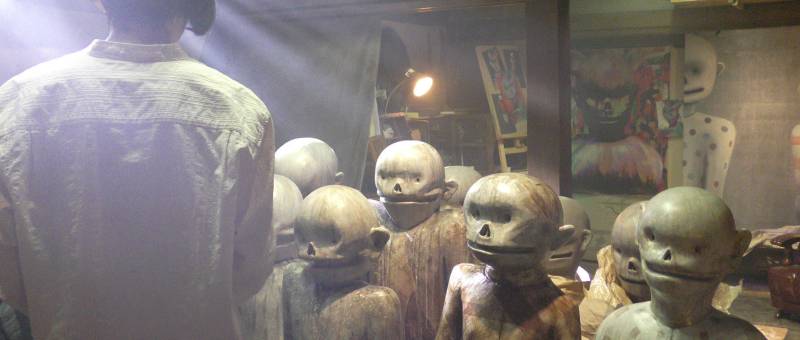
The artist consumed by their art is a potent motif, creation and destruction two sides of the same coin, but there’s rarely been a painter attacked by the canvas quite as literally as the sculptors of Vampire Clay (血を吸う粘土, Chi wo Su Nendo) are depleted by their material. The first feature from practical effects specialist Soichi Umezawa is refreshingly unpretentious, unabashed schlock designed to showcase Umezawa’s obvious skill in stop motion and prosthetics but it does perhaps have a point to make in the legacy of embittered artistry and frustrated dreams of those whose art is never recognised. 

Middle-aged sculptress Aina (Asuka Kurosawa) flees the duplicitous Tokyo art scene after being betrayed in love by her no good husband who also runs a studio specialising in training students to gain admission into one of Japan’s many exclusive art schools. In fact, Umezawa somewhat strangely opens with a title card revealing the comparatively small percentage of pupils each school accepts in contrast to the large number of applications, neatly setting up the desperation and sense of inadequacy that plagues most of our heroes, Aina included. Retreating to the country she sets up shop in a small shed which is later ravaged by an earthquake, leading to her discovery of a buried tin filled with mysterious clay and other artistic accoutrements left behind, she assumes, by the previous occupant. The trouble starts when errant student Kaori (Kyoka Takeda), who had been studying at a workshop in Tokyo, returns earlier than expected much to the chagrin of rival Reina (Ena Fujita) and discovers a new pupil has borrowed her clay. Predictably, she decides to use some from the mysterious bag, reviving the evil with water and discovering that somehow this magic substance seems to have upped her game. 

Umezama continues to flag the urban rural divide, the students beginning turn against Aina believing that it’s her time in Tokyo which has given Kaori a leg up, something that further wounds Aina in her sense of professional pride as she channels her rage and frustration into moulding her pupils into top candidates as a means of besting her ex. The sculptors knead their frustrated desires into the clay, it feeds on their misery and disappointment. This particular clay, however, is more cursed than most in that it is apparently infected by some kind of toxic disease which plagued the previous owner, symptomatic of the degree to which his art, or more pointedly the refusal of others to recognise it, destroys him. 

Aside from that there are a host of interpersonal problems between the students and their teacher. As the only male sculptor points out, they are both classmates and enemies as they are forced to compete against each other for the prize of recognition in the form of admission to an art school. Meanwhile, he is also the subject of a love triangle, refusing a homemade bento from an admirer in favour of one from another, this essential act of emotional betrayal later providing an in route for the murderous clay. 

Nevertheless, Umezawa is not so interested in the implications of the interpersonal drama as its potential for bloody action. The clay works its way into the bones of the sculptor, consuming and possessing them in a series of pleasingly retro, Cronenbergian practical effects. “I don’t want to lose my individuality to convention” Reina had snapped back in insisting that this small rural school suits her fine despite having just been given a dressing down for the “conventionality” of her final assignment. The clay, perhaps, attempts to rob them of their individuality, turning them into a mindless plastic mass fuelled only by negative emotions, thirsty for blood and hellbent on destruction. Somewhat incomprehensibly, a failed sculptor turned restaurateur convinces the original owner of the clay that his creepy creations will sell like hot cakes to hospitality establishments in the city, allowing his final humanoid legacy to become a kind of Frankenstein’s child carrying all his rage and resentment into the future but attacking, it seems, other marginalised artists rather than the hated Tokyo arts scene which is the real target of his ire. Aina, having for the moment neutralised the clay, considers unleashing it against her ex, bringing the grudge full circle in its own, ironic, way but also consumed by resentment and jealousy. The “toxic waste” of artistic disappointment refuses to die, burrowing its way underground even as the responsible attempt to bury it, lying in wait for the next tortured artist willing to sell their soul for illusory success.


US release trailer (English subtitles)

Not Quite Dead Yet (一度死んでみた, Shinji Hamasaki, 2020)

©2020 Shochiku Co., Ltd. Fuji Television Network, Inc.

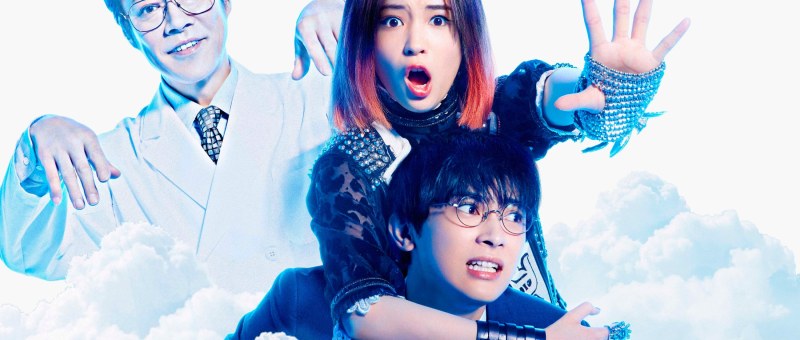
“What’s important is purpose, to live for something. Without it you’re as good as dead” according to the hero of madcap existentialist farce Not Quite Dead Yet (一度死んでみた, Ichido Shinde Mita). The feature debut from ad director Shinji Hamasaki pits a rebellious student against her overly literal, authoritarian dad as the pair begin to come to a kind mutual understanding only once he “dies” after being tricked into taking an experimental drug in order to unmask conspiracy within his own organisation. 

College student Nanase (Suzu Hirose) intensely resents her father (Shinichi Tsutsumi), the CEO of Nobata Pharmaceuticals which he has long been pressuring her to join. She’s currently the lead singer in death metal band Soulzz only according to a record scout at one of their shows their problem is that they’re all “zz” and no soul. Meanwhile, Nobata has assigned an underling, Matsuoka (Ryo Yoshizawa), to shadow her partly because Matsuoka too has very little presence and is in fact nicknamed “ghost” for his essential invisibility. The trouble starts with the escalation of a corporate feud as Nobata’s old buddy Tanabe (Kyusaku Shimada) starts manoeuvring to get his hands on the company’s research into an anti-ageing serum codenamed “Romeo”, planting a mole inside the organisation. As a consequence of his research another of the scientists nicknamed “Gramps” has stumbled on another drug which renders someone temporarily “dead” for a period of two days, naming it “Juliet”. Watabe (Yukiyoshi Ozawa), a consultant Nobata has brought in to streamline the business, convinces him to take the experimental drug in order to flush out the mole while secretly working with Tanabe to take over the company by forcing through a merger while Nobata is out of action. 

A typical socially awkward scientist, Nobata believes that life is about experiment and observation, a belief system which has thoroughly irritated his daughter who still lives at home but has divided the territory in half with clearly marked red tape. Nanase’s animosity towards her father apparently stems back to the death of her late mother Yuriko (Tae Kimura), angry with him that he never left his desk and didn’t make it to the hospital in time to see her before she passed away. “Life’s not a lab experiment” she sings, recalling her childhood during which her overly literal father took away life’s magic by patiently over explaining fairytales, scoffing that Prince Charming probably didn’t revive Sleeping Beauty with a kiss but a transfer of static electricity, while continuing to order her around in fatherly fashion now she’s all grown up. Perhaps still stuck in a petulant adolescence she started the band to vent her frustrations with the world in the form of a death metal “mass”, but she’s growing up. Her bandmates are getting jobs or getting married, she’s still stuck with no real clue about what it is she actually wants to do with her life except that she doesn’t want anything to do with Nobuta Pharmaceuticals.  

Once her father “dies”, however, she begins to gain a new appreciation for his life philosophy able to see but not hear his “ghost” while his body lies on a table in the office cafeteria. Nobata went into pharmaceuticals to help people, but has been led on a dark and vacuous path pursuing anti-ageing technology which is in itself a rejection of change and transience. Ending all her sentences with the word “death”, that’s not something Nanase can get behind. She believes in growing old gracefully, that they make drugs not to cheat death but to be able to spend longer with those they love. As her father had advised Matsuoka to do, she begins to find her purpose, rediscovers her soul, and figures out what it is she’s supposed to do with her life.

Matsuoka, however, seems to be permanently “invisible” despite the tentative romance that develops as he and Nanase attempt to subvert the conspiracy to stop them doing her dad in for good, brushing up against the venal Tanabe who seems set to muster all his corporate advantages against them partly because of an old grudge against Nobata. Of course, you have to wonder why the conspirators didn’t just poison him rather than having him go Juliet and then entering a race against time to cremate him before he wakes up, but as Nobata reminds us there are many things which science cannot explain. A cheerfully silly Christmas tale of rediscovering what it means to be “alive” in the presence of death, Not Quite Dead Yet is zany seasonal fun but with plenty of soul as its heroes learn to shake off cynical corporatism for a healthy respect of the values of transience.


Not Quite Dead Yet screened as part of Camera Japan 2020.

Original trailer (English subtitles)

Images: ©2020 Shochiku Co., Ltd. Fuji Television Network, Inc.

Haruka’s Pottery (ハルカの陶, Naruhito Suetsugu, 2019)

(c)2019 "Haruka's Pottery" Film Partners

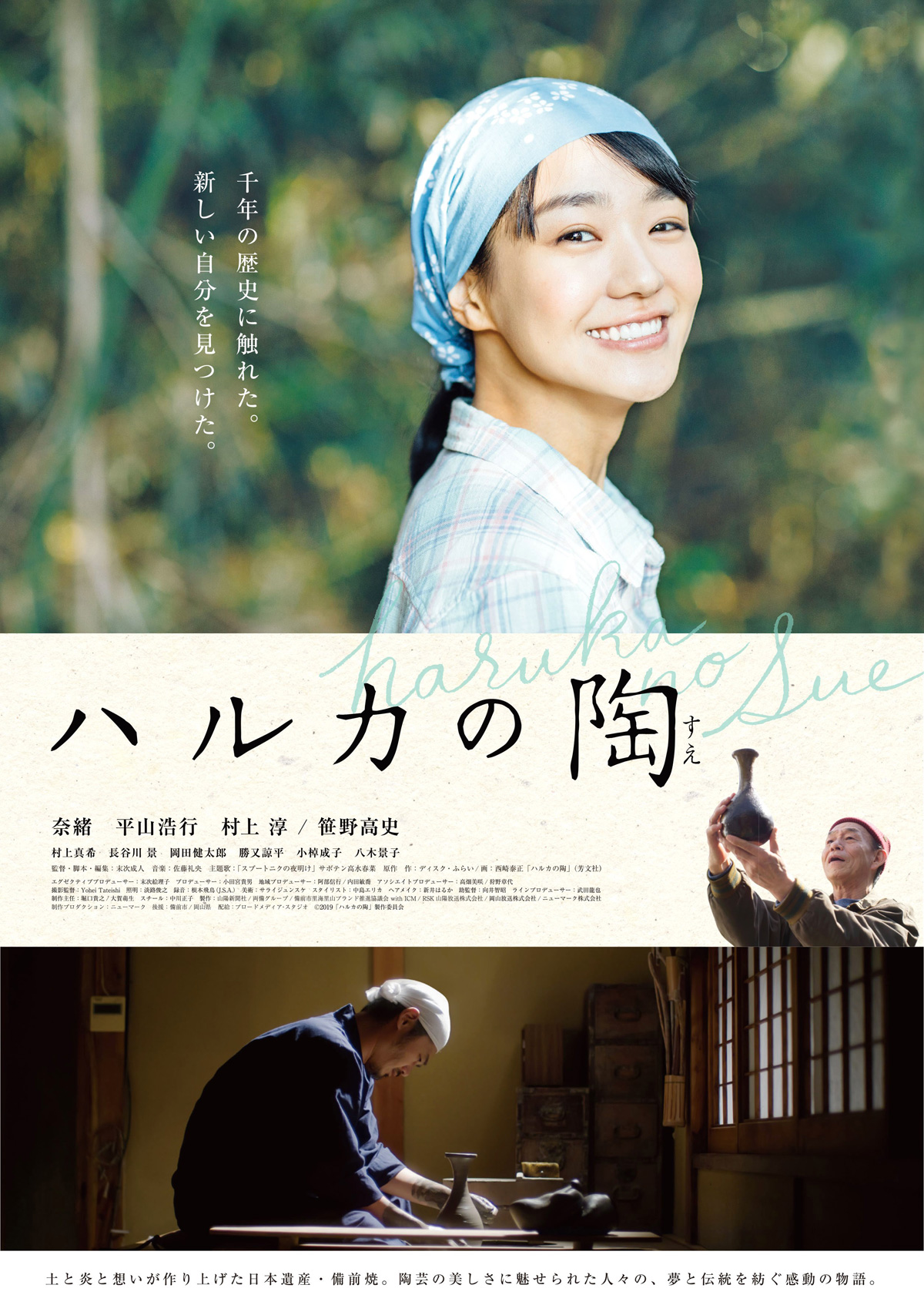
“Growth comes only through connecting with others” according to a master craftsman in Naruhito Suetsugu’s manga adaptation Haruka’s Pottery (ハルカの陶, Haruka no Sue). Japanese cinema has a long history of showcasing traditional crafts but this may be the first dedicated to Bizen ware, artisanal pottery which allows one lost young woman to find purpose in her life after being deeply moved by an oversize platter displayed in a department store exhibition. What she discovers, however, is that pottery is not an isolationist art and lives only in practical application which is in its own way impossible without interpersonal connection. 

A 20-something office worker, Haruka (Nao) laments that nothing exciting is ever going to happen to her. She has no dream or particular passion and sees nothing in her future other than an ordinary job and conventional marriage. Dragged into a department store exhibition by her boss who reminds her that she never has plans so she can’t refuse, Haruka is captivated by a large Bizen ware platter and finds herself heading to the library to find out all about this ancient craft. It’s not long before she’s made the decision to quit her job and try to become a potter herself, determined to train with the artist who made the platter, but when she arrives in the Bizen ware capital of Imbe, Okayama, she finds him cold and unresponsive. Only after bonding with an old man, Toujin (Takashi Sasano), who turns out to be a “national treasure” of traditional pottery does she manage to persuade Osamu (Hiroyuki Hirayama), the aloof and grumpy potter, to allow her to stay. 

Talking to Toujin later Haruka reveals that one of the reasons she was so struck by the platter was because her family is small and she’d always dreamed of a big gathering where everyone could eat off the same large plate. Toujin fires the same logic back at Osamu, that subconsciously he made the plate because he’s lonely. It’s not something he would ever use, in fact it’s too big to have much of a practical use at all, it was basically just a kind of beacon to summon someone to him, to express the depths of his solitude. Osamu lost both his parents as a child, his mother to illness and his father (Jun Murakami) to overwork brought on by grief, and has kept himself to himself ever since. He may have become a master potter, but according to Toujin at least he is somewhat lacking as a human which means, in essence, that his art will never progress not to mention that he’ll go on being lonely and resentful all his life if he fails to seize this opportunity to pass on his Bizen ware skills to a willing pupil.

For her part, Haruka is determined to learn and only from Osamu, the man who made the plate. While others in the town which is largely populated by other Bizen ware potters are supportive if somewhat surprised that Osamu has taken on an apprentice, Haruka finds herself at odds with Toujin’s daughter Yoko (Maki Murakami) who, according to her husband, has not exactly had it easy as a female potter. Yoko resents Haruka as an arriviste, unconvinced she’s really serious and assuming she’s another refugee from the city fed up with urban life and looking for something simpler which is to say she’s probably underestimated the commitment required to become a Bizen ware craftsman. Haruka is fond of cheerfully stating that she’ll persevere, but that’s rarely enough for Osamu or for Yoko who’d prefer to see some concrete results. Yet as Toujin had said, it’s as well to connect with as many people as you can and learning something from each of them she begins to grow in confidence, becoming a full part of the Bizen ware community and earning the respect of the other potters. 

As an old lady puts it, Bizen ware is designed to be used. Its harsh corners become soft and round through contact, and the same is true for people too. Having pushed himself too far trying to connect with his late father through their shared art, Osamu too softens assuring Haruka that pottery is not an exact science and it’s OK to fail every now and then as long as you learn something when you do. “The potter must have a strong will and be as unbreakable as the pottery itself” in order to “melt people’s hearts on the spot” Toujin had somewhat paradoxically told her, but Haruka perhaps learns that there’s truth in what he says, falling in love not only with traditional craft but with the small community of craftsmen accepted as one of their own in her unbreakable love for Bizen ware. 


Haruka’s Pottery screened as part of Camera Japan 2020.

Original trailer (no subtitles)

Fancy (ファンシー, Masaoki Hirota, 2020)

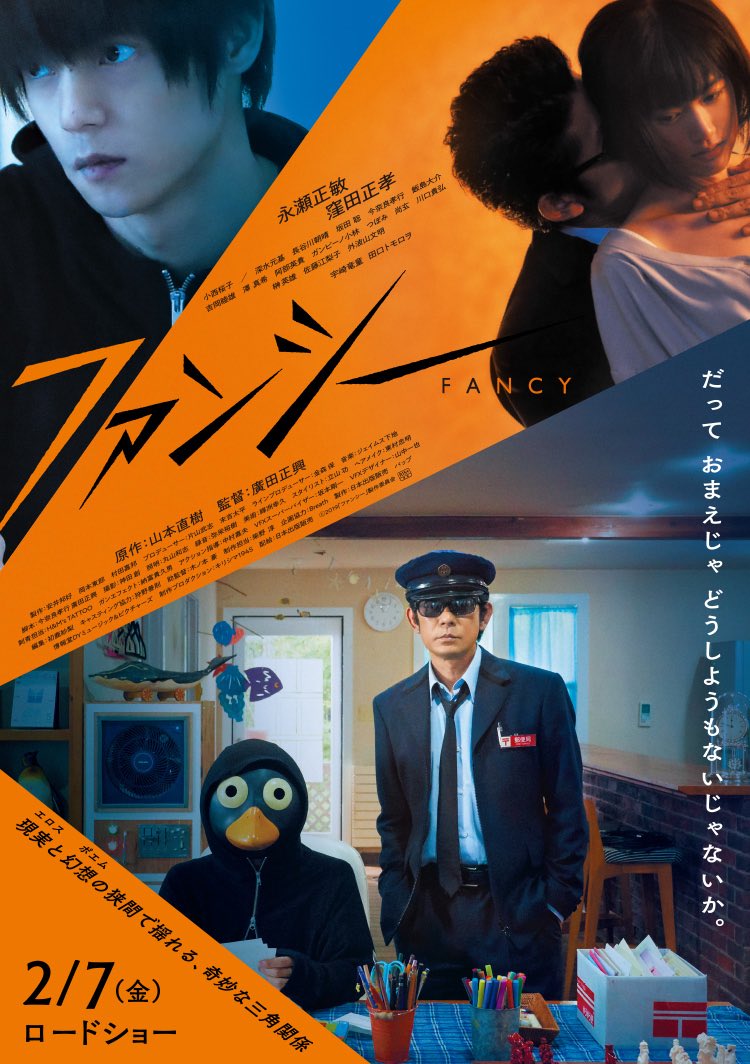
“Every minute of life is yours to make use of” according to the ultra cool hero of Masaoki Hirota’s Fancy (ファンシー), a laconic postman with a penchant for sunshades and a resigned attitude to transience. Adapted from the manga short story by Naoki Yamamoto, Fancy is indeed a transitory tale, a minor episode in the life of a poet who thinks he’s a penguin, his best friend the postman, and his penpal seeking her own kind of escape in an impromptu and probably unwise proposal of marriage. 

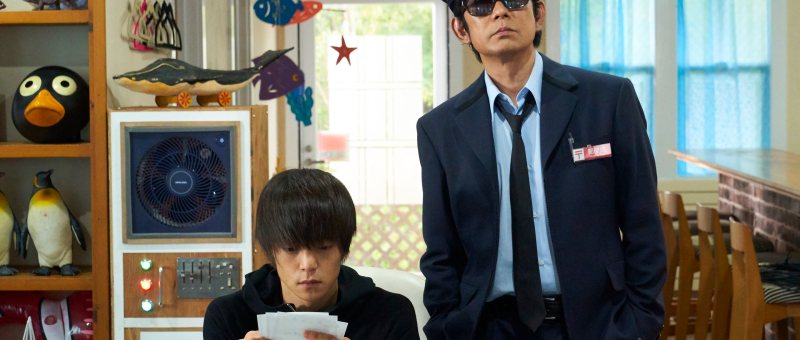
The postman, Takasu (Masatoshi Nagase), is also a tattooist, a former yakuza now reformed and living quietly in an old-fashioned hot springs town which seems to be stuck in the Showa era. As Takasu’s colleague Tanaka (Tomorowo Taguchi) puts it, it’s pretty “standard” now for everyone to have two jobs, his side hustle being a shooting gallery which is a front for the sex trade. Even the local Buddhist priest is intent on trying to sell everyone he meets a funerary monument, while Southern Cross Penguin (Masataka Kubota) is a best-selling poet particularly popular with high school girls in addition to being a flightless aquatic bird in human form. Penguin doesn’t expect us to believe him, but tells us that a penguin is just what he is and there’s no particular reason for it. So completely does he take his penguinhood that he opens the door in a full penguin mask, dresses only in black and white, mainly eats raw fish, and keeps his home ice cold with the aid of several industrial-size air conditioners. Penguin prides himself on answering the many fan letters he gets, explaining that they’re not so much “fans” as “comrades” who are also looking for the “shining country”. In any case, his fan mail is how he met the postman, his only friend, who is content to shiver in his home putting whisky in his tea to stave off the cold. 

Penguin’s life begins to change, however, when he gets a letter from “Moon Night Star” (Sakurako Konishi), a fan with whom he’d been corresponding. Moon Night Star pretty much insists on becoming his “wife”, failing to take Penguin’s hints that she might not be very happy “married” to an aquatic animal who can’t go outside. As we will later discover, Moon Night Star is in her own way rebelling against her fate, taking refuge in Penguin’s igloo and engaging in a delusion that she loves him in order to make it work. For his part, Penguin perhaps comes to like her too, but he can also see that she’s quite “depressed” stuck in the cold with him, pushing her towards the outside and into the arms of the postman. 

Takasu, meanwhile, finds himself on a series of borders as he begins to confront his past in the form of his absent father and the family he seems to have lost, sympathetically telling his pained former wife that her life is hers to do with as she wishes, perhaps in a sense cuttingly refusing her apology but also accepting her right to seize the present. Another man with two jobs, Takasu’s childhood friend is both yakuza gang boss and hotelier, confiding that the gangster stuff is too stressful and he wishes he could just focus on the hotel in the same way the Takasu has now become a postman. It’s his strange relationship with a yakuza drifter, however, that threatens to drag him back into gangsterdom as he learns that there’s been a schism in his former clan. With a turf war brewing, the loyalists have taken over his friend’s hotel, unreconstructed Showa-era yakuza on the streets of a pleasant hot springs resort. 

“We’re doomed anyway, do what you like” one of the goons intones, in one sense subverting Takasu’s mantra but in another perhaps embracing it. A memory of his father reminds him to “make very second count” while also catching him in an endless moment of gaze, unable to forget the back of the woman his father was tattooing at the time. Takasu looks and does eventually touch, but admits his jealousy obsessed with skin as canvas only latterly taking off his shades in a willingness to see and be seen. Penguin, meanwhile, who wanted to swim in a sea of words, finds himself floating free, braving but eventually succumbing to the heat before exclaiming that he’s going to close his eyes to allow a new story to start. The love of a poet is fleeting, Takasu reflects as each of the various protagonists shifts towards their “main” identity, edging back towards conventionality in abandoning the “fancifulness” of their sometimes strange existences. There will, however, be more strange adventures because even if it falls apart beneath your feet, life’s what you make it, be you a postman or a penguin. 


Fancy screened as part of Camera Japan 2020.

Original trailer (no subtitles)

A Day-Off of Kasumi Arimura Ep. 1 (有村架純の撮休 第1話, Hirokazu Koreeda, 2020)

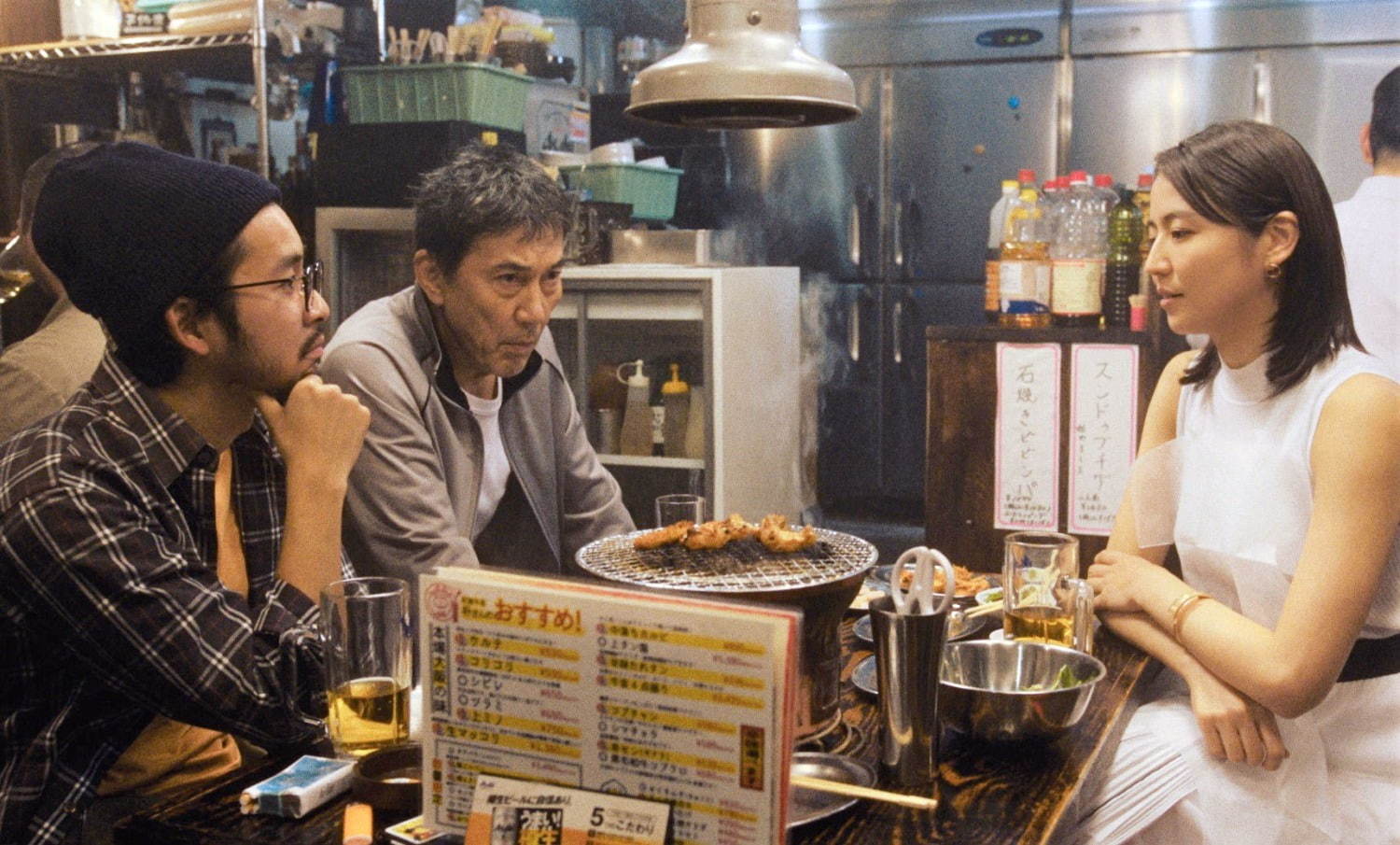
As has sadly become all too clear recently, the Japanese entertainment industry can be a brutal place rife with exploitation in which performers are often expected to push themselves well beyond the limit or risk offending their agencies and thereby disrupting their careers. That is perhaps why a “day off” for a headline actress seems like a concept incongruous enough to spawn an eight-part, late night TV drama aired on premium channel WOWWOW. Often around half an hour in length (though this one is a little longer), drama series running after midnight have the freedom to embrace darker themes and can sometimes be risqué, but more often than not cater to those looking for easy comfort watching often revolving around food and/or local culture such as in the phenomenally popular Midnight Diner which was later picked up by Netflix, or the much loved Solitary Gourmet.  

The chief draw for international viewers, however, is that the first and third episodes of A Day Off of Kasumi Arimura (有村架純の撮休 第1話, Arimura Kasumi no Satsukyu) are directed by Hirokazu Koreeda, with Rikiya Imaizumi (Their Distance; Little Nights, Little Love) and Santa Yamagishi also doing double duty, while Satoko Yokohama (Bare Essence of Life, The Actor) and Megumi Tsuno (Ten Years Japan “Data”) fill the remaining slots. Each of the eight self-contained stories features lead actress Kasumi Arimura (Sekigahara, Narratage, Flying Colors) playing a fictionalised version of herself enjoying a surprise “day off” when, for one reason or another, shooting is cancelled at short notice. In the first episode under review here penned by Sakura Higa, Kasumi is currently filming a TV drama playing a top prosecutor but is given the day off after a member of the creative team calls in sick with flu. As a producer points out, flu isn’t the sort of thing that would have held up filming in the old days but what can you do?

Accordingly, Kasumi decides to take a bullet train to her hometown in southern Japan to visit her mother, Yumiko (Jun Fubuki). Having not returned for New Year, Kasumi is perhaps slightly put out to realise that her mother seems to lead a very active life and though she is obviously happy to see her it’s clear that she doesn’t just sit around wishing her daughter would call. On their way home from the station, Yumiko takes Kasumi by the supermarket to pick up supplies for a home cooked dinner where she shows her off to the cashier with whom she seems to be on extremely friendly terms. Kasumi smells romance in air, and even if a little surprised is not unsupportive but unwittingly puts her foot in it by bringing up the fact that Mr. Onishi (Akio Kaneda) is divorced and has a son from his previous marriage. 

It’s not Mr. Onishi that Kasumi ends up worrying about, however, so much as a mysterious young man, Makoto (Shinnosuke Mitsushima), who calls in to see her mother. While Yumiko has her signing autographs for all her friends and posters of her hit movies Flying Colors and Cafe Funiculi Funicula standing in the living room, Kasumi can’t help but feel put out having come all this way only to see her mum much more interested in this random man even if she seems to have come more out of duty than of love, disappointing Yumiko by declaring she won’t be staying overnight but heading back to Tokyo to go over her lines. Out of jealousy and a slight awkwardness, she worries as to what Makoto’s true motives are, especially after hearing her mother hint that she’s been giving him money, though it’s perhaps also true enough that she is simply grateful to have someone close by to help out with small but irritating tasks like changing the chain on a bicycle or getting rid of unneeded appliances. What Kasumi realises, however, is that her mother is harbouring a sense of guilt that relates to their perhaps atypical family history, something which she herself is forced to process through her surprise journey home which finds another echo in her relationship with her sickly, or not as it turns out, colleague. 

More or less a three hander, the episode is like much of Koreeda’s work replete with the detail of everyday life and the slight awkwardness of familial reunion. On stepping into her childhood home, Kasumi is chided by her mother for behaving like a guest, signalling that she no longer views herself as someone who belongs there or has the right to simply walk in. Kasumi never gets round to talking to her mother about whatever it was she might have wanted to talk about, but through their encounter with Makoto the two women begin to repair their relationship, meditating on the things which have changed while they were apart and those which haven’t. A beautifully gentle tale of familial reconnection, Kasumi Arimura’s first day off is another slice heartwarming drama from the empathetic director in which an actress takes the day to play herself and learns to make peace with the past by accepting the present.


A Day-Off of Kasumi Arimura Ep. 1 streams in the UK 10th October 1pm to 1pm 13th October as part of this year’s BFI London Film Festival.

Series trailer (no subtitles)

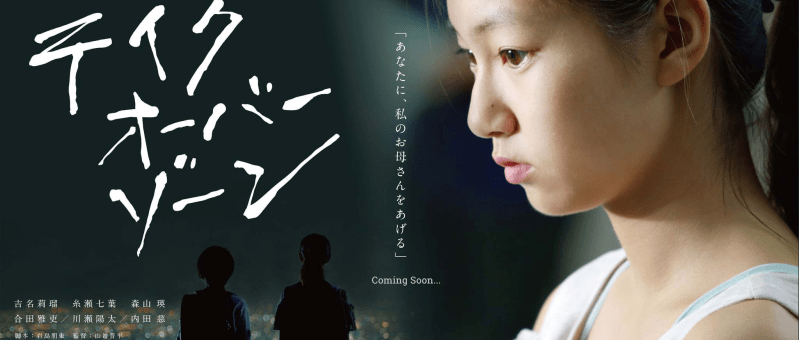
Take Over Zone (テイクオーバーゾーン, Shinpei Yamasaki, 2019)

The Take Over Zone (テイクオーバーゾーン) is where the heroine of Shinpei Yamasaki’s coming-of-age drama finds herself trapped, resentfully mired in adolescent confusion torn between the childish delusion of familial reunion and an adult acceptance of change. Sari (Riru Yoshina) is indeed on the run, a lonely loner convincing herself that freedom lies only in total independence while simultaneously justifying her new found appreciation for a team sport in insisting that they need her, basking in their gratitude when they win only thanks to her. 

Running may be the only bright spot in Sari’s life, though she can hardly be bothered even with that anymore. Two years previously her parents divorced. Sari’s mother Fumi (Chika Uchida) left with her younger brother Toma while she stayed behind with her feckless father Kenichi (Yota Kawase), a construction worker with a gambling problem. Forced to grow up all too soon, Sari is more or less looking after herself. Finding only beer in the fridge and a betting slip in the bin which explains why the cash jar is empty, she’s forced to raid her piggy bank for food while the house is a permanent mess. Understandably resentful, Sari is rude and petulant, talking back not only to her dad but to her teachers too. At school she’s a bullying delinquent, hanging out with the cool kids and picking on the captain of her track team, Yukina (Nanaha Itose). Seeking escape from her disappointing life, she tells her teacher she’s no interest in high school and plans to get a job, arrogantly refusing to train with her teammates preferring to hang out with the boys playing cards in the shed. 

A chance encounter with Toma in a local supermarket, however, begins to change her perspective. Her polar opposite, Toma is quiet and polite, though his awkward formality perhaps upsets her in his wilful distance after two years apart. Before long she runs into her mother too, discovering not only that her father hid from her the fact that she had remarried and returned to the area, but that she is actually married to Yukina’s dad which is somewhat pouring salt on the wound. Not only is her mother apparently happy, leading the kind of life she wanted to lead as a middle-class housewife, but she has a replacement daughter in Yukina who is everything she currently is not, the archetypal good girl. Bonding with Toma who is overburdened by his mother’s well-meaning ambition for him and dejected that the other kids don’t let him play because he’s no good at sports, Sari decides to run away childishly believing that the two of them can simply move in with grandma to be a family in rejection of their “selfish” parents. 

Sari resented her mother because she was always hounding her to study, perhaps a reflection of her dissatisfaction with their working class existence wanting to ensure her children enjoyed a more comfortable standard of life. Economic pressures do indeed seem to have been the motivating factor in the breakdown of the marriage, Fumi irritated by the exact same qualities in Kenichi which are beginning to drive Sari away, convincing her she’s better off alone than with her irresponsible father who has only casual employment with no prospect of advancement. She yearns for independence, not only for practical freedoms but for the emotional to simply not need to be burdened by disappointment or hurt. “Teams just hold you back” she snaps at her teacher threatening to quit the relay in favour of the solo race. 

Yukina meanwhile has problems of her own, missing her mother who passed away from illness while struggling to accept Fumi’s intrusion into her family home. A climactic event sees her moving towards the centre, claiming Toma as her own little brother while positioning herself as Fumi’s rightful daughter leaving Sari feeling further exiled, unable to process her resentment towards her mother for her abandonment while struggling to accept that her childish belief her parents would get back together and the family would be repaired will not come to pass. Yet it’s their shared love of running which eventually brings the two young women together, no longer rivals but teammates, later perhaps friends and then sisters as Sari comes to acceptance of her complicated family circumstances while realising just how unpleasant she has often been to those around her out of a mistaken attempt to push them all away. “I always ran like I was all alone” Sari admits, no longer running away but passing through her own take over zone, ready to face herself and her grief as she steps into the next stage of the relay race that is life.


Take Over Zone screened as part of Camera Japan 2020.

Original trailer (no subtitles)