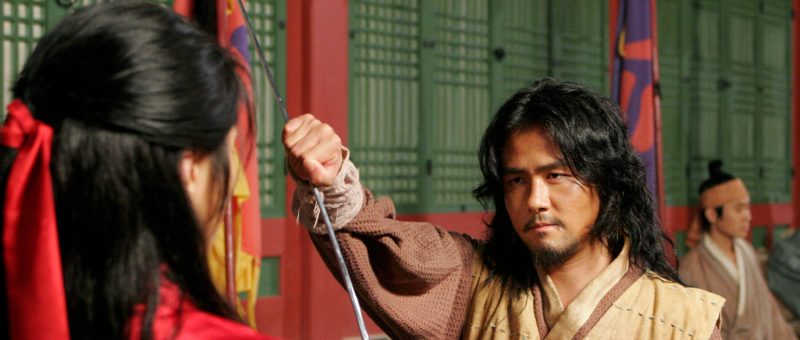
Please Make Me Look Pretty (니얼굴, Seo Dong-il, 2020)

“We all have different ways of looking at the world” according to a customer to Jung Eun-hye’s caricature stand at a local market explaining that she’s told all her friends to come and check her out because she wants them to see the world from Eun-hye’s perspective. A short time later, however, the same woman seems to attempt taking advantage of her in pleading for a little more change back than she’s actually owed because she’s handed over her bus fare home. The exchange in some sense characterises Eun-hye’s existence in her persistent battle to show others the world the way she sees it, responding to her customers’ pleas to make them look pretty that they are pretty already, while often experiencing discrimination on the grounds of her disability,

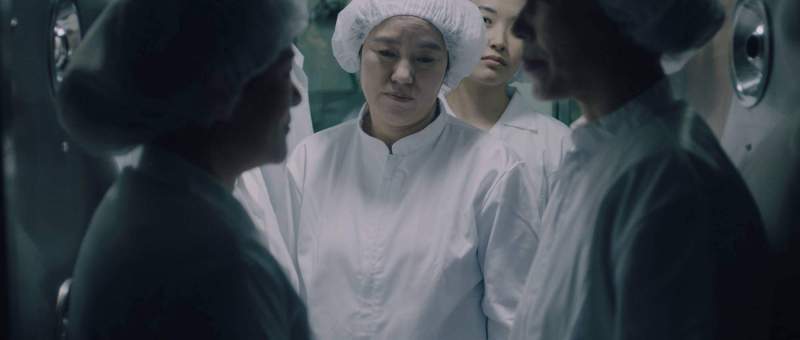
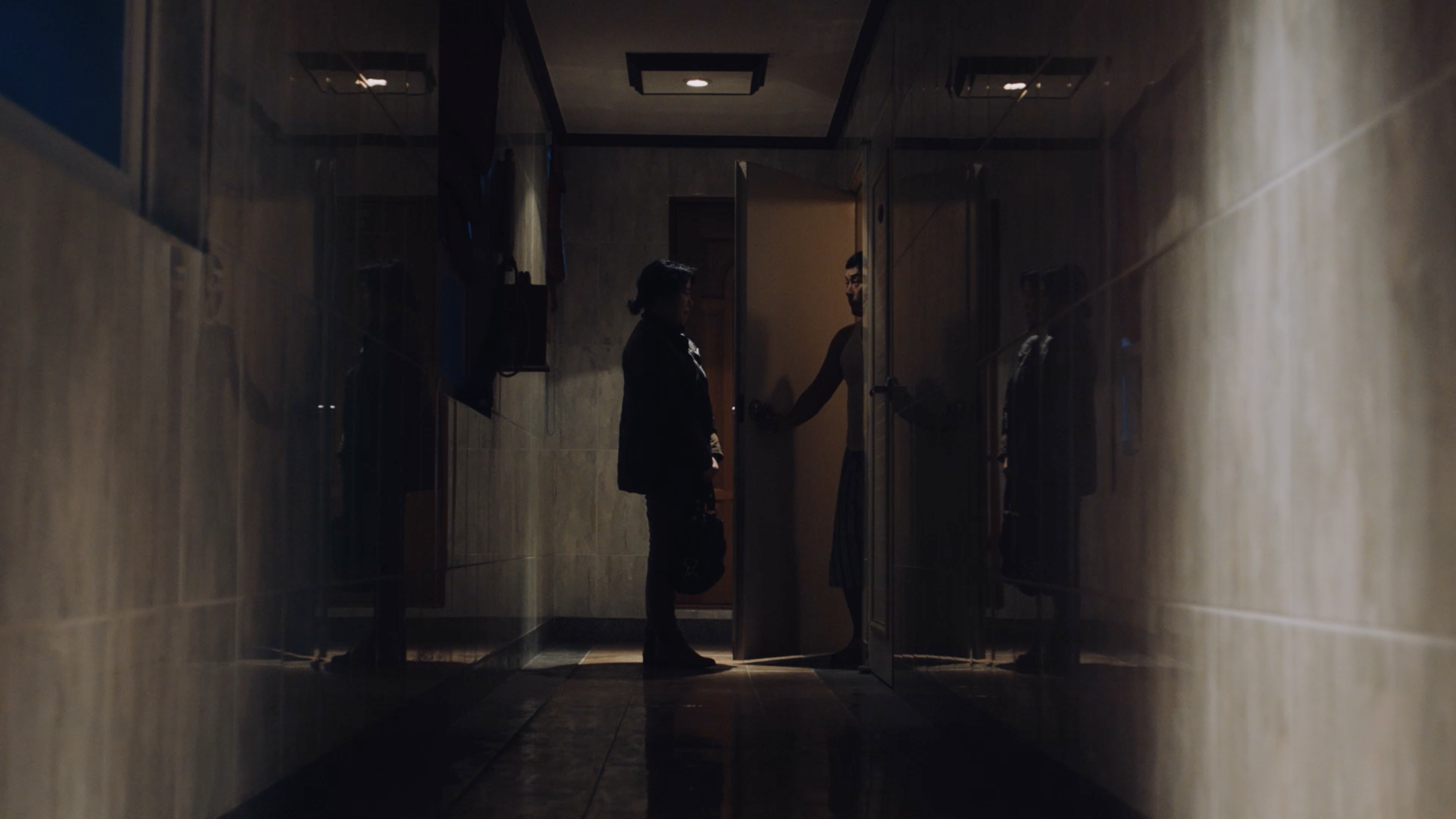
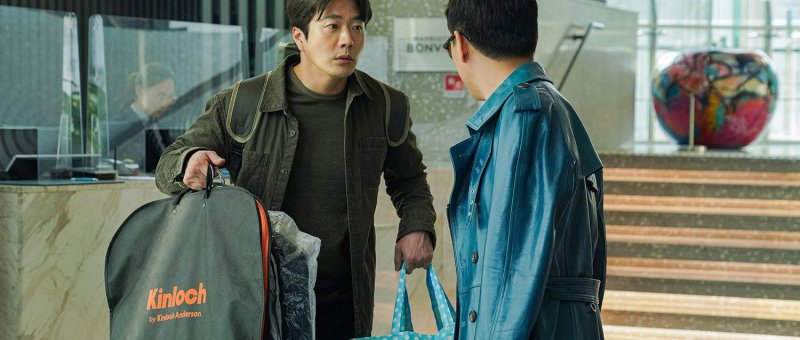
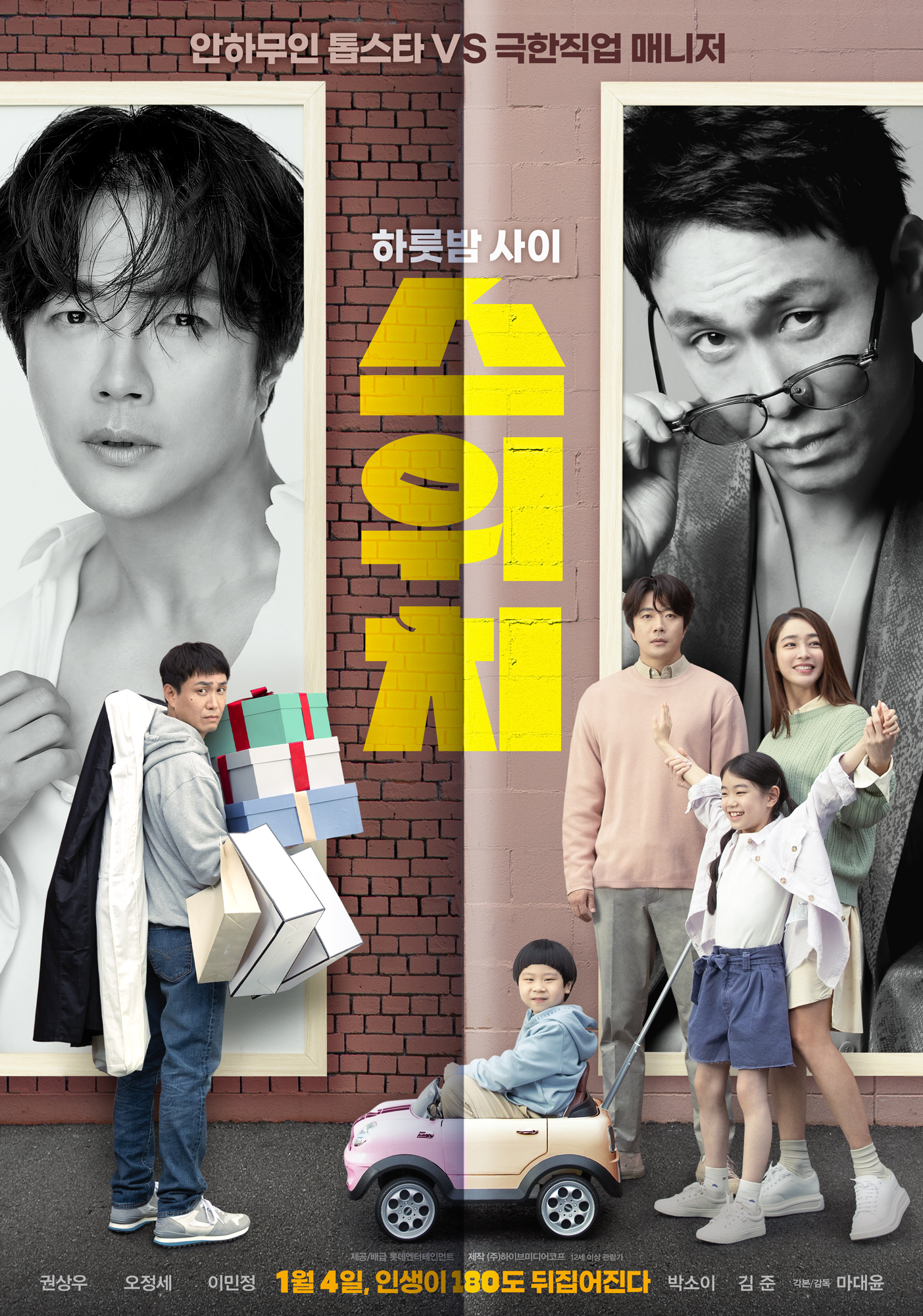
Directed by Eun-hye’s stepfather documentary filmmaker Seo Dong-il, Please Make Me Look Pretty (니얼굴, Nieolgul), follows Eun-hye over a period of three years as she develops a career as an illustrator that eventually leads to a solo exhibition and a residency at a centre promoting the work of disabled artists. Eun-hye was born with down syndrome and at 27 had been unable to secure a job, left at home all day with nothing to do but knit. Helping out at her mother’s art school she developed a desire to draw herself and adopted an unconventional style that is all her own. Her mother says that if she attempted to teach her conventional art theory, Eun-hye simply nodded and then went back to drawing instinctively. Originally with her mother’s help, she began drawing carictures at a local crafts markets and soon gained a steady stream of customers. 

Though in the beginning some may have complained and even asked for their money back, people came to love Eun-hye’s unique vision in which as she says she draws what she sees. She is clear that they are “caricatures” and not “portraits”, though looking at her compositional style they bare a strong resemblance to traditional portrait paintings from the feudal era with a comparatively large empty space at the top and the subject looking directly ahead. Her mother occasionally offers advice, telling her she should have started higher up on the paper, or that she’s made one of the people too big in comparison to the other but Eun-hye draws things the way she sees them and quickly becomes irritated with her mother hovering over her until she concedes to let Eun-hye draw in peace.

It is however quite tiring, especially in the heat of summer or in the freezing cold, and it occasionally seems like it might be too much for her but Eun-hye resolves to soldier on and eventually runs the stall all on her own even if struggling a little when it comes to figuring out the right change and dealing with confusing customers. In her spare time she writes song lyrics in a notebook that poignantly describe her loneliness and feelings of isolation as a disabled person often locked out of mainstream society, but clearly enjoys interacting with the other vendors at the market and participating in its community atmosphere. After saving money from her work, she is able to host a solo exhibition and is also invited to illustrate a book on business etiquette aimed at the disabled community as well as taking up a residency at a centre dedicated to promoting the work of disabled artists. 

What’s most evident is how happy drawing seems to make Eun-hye, giving her both an outlet and means of expressing herself while expressing her love for others in drawing caricatures which truly make their subjects feel seen as if Eun-hye has captured how pretty they are on the inside as well as out. Since the documentary was completed, she’s also gone on to become an actress playing an artist with down syndrome in the popular TV drama Our Blues and continuing to raise awareness of the lives of disabled people in a society which can often be hostile and unaccommodating. In any case, she continues to draw the world as she sees it, a place where everyone is pretty and deserving of love even if they don’t always see her the same way.


Please Make Me Look Pretty streams in the US until March 31st as part of Asian Pop-Up Cinema Season 16.

Original trailer (English subtitles)
Ajoomma (아줌마, He Shuming, 2022)

A middle-aged Singaporean woman begins to rediscover her sense of self after making an unexpected solo trip to Korea in He Shuming’s heartwarming dramedy, Ajoomma (아줌마). “Ajoomma” is the generic term for an older woman in Korean, and even in her native Singapore, the heroine Bee Hwa (Hong Hui Fang) is known largely as “Auntie” no longer possessing much of a name or identity and obsessed with Korean TV dramas in thrall to their larger than life emotions just hoping to feel something again in the midst of her loneliness. 

Bee Hwa has a grown-up son, Sam (Shane Pow), but he remains somewhat distant towards her. “He never shares anything with me” she later complains to a mother and daughter duo on the Korean tour together after a few drinks. Sam was supposed to come on the trip with her, but he got an interview for a big job in America and tried to get her to cancel. Bee Hwa would rather Sam didn’t go abroad, but her sense of loneliness is only deepened with the dawning realisation that Sam may be gay and has chosen not to share that part of himself with her. When she realises the tour is not refundable as Sam said it would be, she makes a bold decision to go on her own despite never having travelled alone before. Her confusion at the airport is palpable as she’s suddenly confronted with unexpected bureaucracy, trying to fill in landing cards and find her way to the tour group which turns out to be led by a handsome man with the look of a K-drama star but a defeated and cynical air unsuited to his role as a tour guide. 

Just as Bee Hwa longs for a closer relationship with her son, Kwon-woo (Kang Hyung-seok) is desperately trying to win back his wife and daughter who have moved in with his disapproving mother-in-law following his difficulties with employment and subsequent debts to loansharks. Kwon-woo wants to show them that he can be a responsible husband and father by holding on to his tour guide job and making enough to pay off the debts so they can get an apartment of their own, but is also his own worst enemy and prone to making mistakes not least the one leaving Bee Hwa behind after failing to make sure everyone was back on the bus before it left. 

It’s only thanks to sympathetic security guard Jung Su (Jung Dong-hwan), himself a lonely widower whose sons live far away, that Bee Hwa doesn’t freeze to death in the middle of Seoul. Just like Bee Hwa, he’s lonely even with his beloved pet dog Dookie and mainly bides his time carving figures of animals out of wood. He helps her because he doesn’t know what else to do and despite the language barrier, Bee Hwa only understands the kind of words that come up a lot in Korean drama and he doesn’t know Mandarin or much English, the pair quickly find a sense of mutual solidarity bonding in their shared sense of loss mixed with mild disappointment in life’s ordinariness. Kwon-woo asks Bee Hwa if she regrets the choices that she made that left her little room for herself, and she says she doesn’t but does perhaps hanker for something more in her life than just being a faceless ajoomma who likes Korean dramas but has lost sight of herself. 

The trip to Korea reminds her that she can do things on her own and doesn’t necessarily need Sam there to help her, finally buying something nice just for herself rather than getting it someone else. As she dances in the snow she realises that she can still have new experiences and feel childlike joy, even if she is “an auntie” she has plenty of time in front of her to do whatever she wants with no longer subject to social expectations, patriarchal husbands, or judgemental sons. Billed as the first co-production between Singapore and South Korea, He’s heartwarming drama celebrates not only the simple power of human kindness but the resilience of women like Bee Hwa seizing the freedom of age and resolving to live the rest of her life on her own terms.


Ajoomma screens in Chicago March 25 as part of the 16th season of Asian Pop-Up Cinema.

Original trailer (English subtitles)
Jiseok (지석, Kim Young-jo, 2022)

When Kim Jiseok, co-founder and head programmer of the Busan International Film Festival, passed away suddenly at Cannes in 2017 of a heart attack at the young age of 57, it sent shockwaves through the cinema industry. Kim had been a key figure in the promotion of Asian cinema which he founded the festival to showcase, but had also become mired in controversy following the decision to go ahead with a screening of a documentary about the Sewol Ferry disaster that the municipal authorities had tried to pressure the festival to cancel because it reflected badly on the government. 

Kim Young-jo’s documentary Jiseok (지석) makes no secret of suggesting that the stress of dealing with the government’s attempts to overrule the festival’s autonomy was a direct cause of his death. In a poignant clip from a 2012 interview included close the documentary’s conclusion, Jiseok is asked why BIFF has managed to survive when so many other festivals have not and answers that there has always been such a tight bond between its team members which has not so far been strained by conflict or controversy and he doubts that it ever will be. 

But this is in fact thought what happened as the organisers split into factions with differing views as to how the festival should proceed after it was targeted by the government, some feeling they should cancel all together and others wanting to go ahead. Jiseok felt himself pressed into a corner caught between opposing forces and torn between loyalty to his old friends and the desire to preserve the film festival. Industry friends also privately recall that he was personally very affected by the Sewol Ferry Disaster in which a large number of school children were killed when the ferry they were travelling on as part of a school trip capsized due to mismanagement and lax safety procedures. 

Still, Jiseok was regarded by some as a traitor for continuing to work with the festival and taking over the duties of Lee Yong-kwan who had made the decision to go ahead with the screening but was forced to resign under government pressure and later accused of embezzlement after a government audit carried out in retaliation. In subsequent years, many Korean industry figures decided to boycott the festival entirely while a question mark hung over its autonomy and artistic freedom. Most of the interviewees are able to acknowledge that Jiseok found himself in a difficult position and do not necessarily hold his decision to continue working at BIFF against him but do suggest that it was the fragmentation of these relationships, some of which went back over 30 years, that caused him additional strain and damaged his health. 

What’s most clear is that Jiseok was very well loved and is much missed not only by his wife who also appears in the documentary but by the international industry at large. Some of the biggest names in East Asian cinema such as Hirokazu Koreeda, whom Jiseok had asked to become the dean of the Asian Film Academy, and Apichatpong Weerasethakul appear on camera offering their memories of Jiseok while it’s clear that he also enjoyed warm and close relationships with filmmakers at both ends of their career. Malaysian director and actress Tan Chui Mui (Barbarian Invasion) makes a particularly poignant statement recalling the bubbling frog bath toy Jiseok had gifted her infant son who will now only know his “Korean Uncle” only from photographs and her stories of him. Other South Eastern filmmakers also pay tribute to his warm support of underrepresented national cinemas and encouragement of new cinematic voices.

Kim’s documentary may in some ways find itself caught between competing visions on the one hand keen to examine the fallout from the tightening censorship regime of the Park Geun-hye era which eventually led to the blacklisting of artists who were critical of the regime including internationally renowned names such as Park Chan-wook and Bong Joon-ho, while on the other offering a simple memorial of the man himself in an act of catharsis for those who knew him with the consequence that little else of him is revealed aside from his warmth, cheerfulness, and affability along with his passionate love of film. In any case, many of the interviewees appear close to tears as they attempt to bid Jiseok goodbye, testament to good he left behind not just in terms of cinema but as a human being.


Jiseok screened as part of this year’s Osaka Asian Film Festival.

Original trailer (English subtitles)

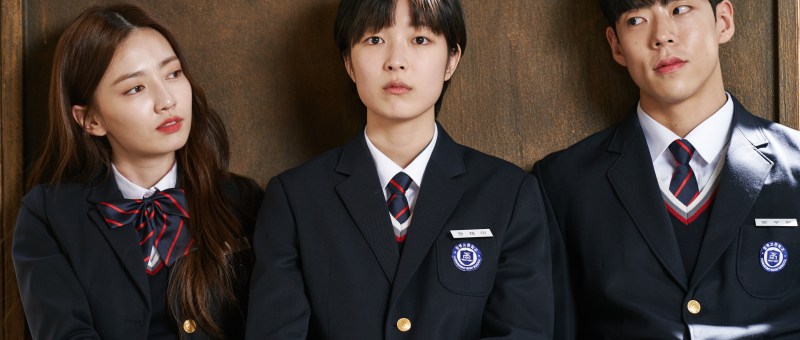
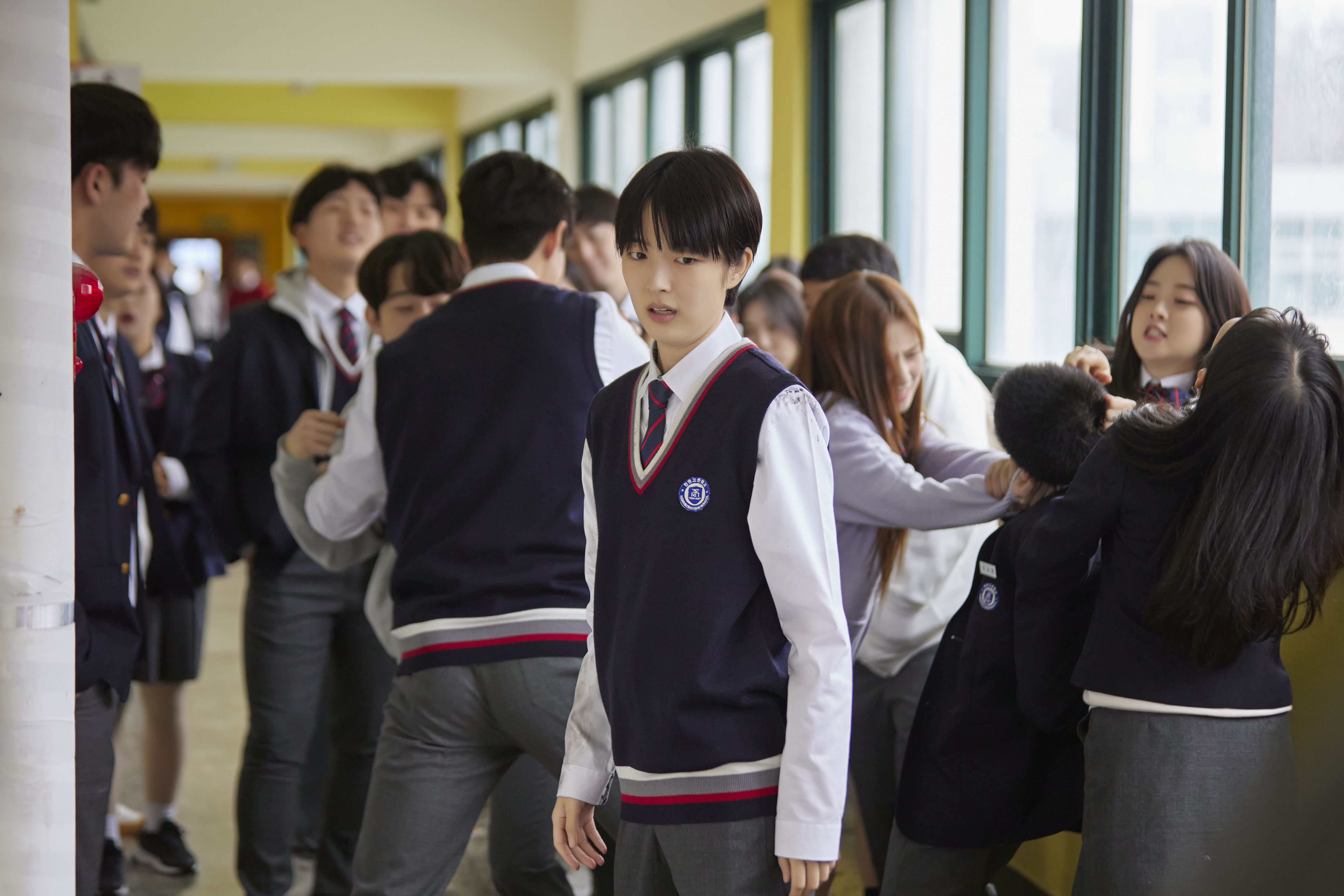
The Dream Songs (너와 나, Cho Hyun-chul, 2022)

Teenage friends wrestle with a sense of mortality, frustrated longing, and future anxiety in the etherial feature debut from actor Cho Hyun-chul, The Dream Songs (너와 나, Neo wa Na). Set shortly before the 2014 Sewol ferry disaster and shot in a washed out soft focus with a hazy nostalgic quality, the oneiric drama finds its conflicted heroine coming to an appreciation of the solipsistic qualities of obsessive love while preparing to cross the line between adolescence and adulthood in fearing she may not return from her upcoming trip or that the her that returns will not be same and the world will have moved on without her. 

The trip is only four days, but for Sam (Park Hye-su) it represents the end of her adolescence and the beginning of adulthood. As the film opens, she wakes up in her classroom after having a disturbing dream that something bad is going to happen to her best friend Ha-eun (Kim Si-eun) who is currently in the hospital though only for broken leg after being hit by pedal bike on a zebra crossing. So upset is she, that Sam manages to convince her teacher to let her leave early to verify that Ha-eun is OK with her own eyes and try to convince her to come on the school trip to Jeju with her, broken leg and all, so that whatever happens happens to them together. 

In the repeated dream imagery, it’s being left on her own that Sam seems to fear. She doesn’t want to be the only one who survives or the only one who dies and leaves her friend behind though as she confesses there was something that felt peaceful in her dream on looking at a corpse that might have been her own. The school trip to Jeju is one that many teenagers take in a quite literal rite of passage, but it’s also tinged with additional anxiety in the painful reminders of the 2014 Sewol Ferry disaster, directly referenced via a radio broadcast, in which many school children taking the trip from the area where the film takes place lost their lives. Sam’s impending sense of foreboding causes her to reevaluate her relationships and especially that with her best friend Ha-eun for whom she has developed romantic feelings she is unsure can be returned. Afraid to leave without saying anything but also worried she may be rejected and end up imploding the friendship too, Sam’s internalised conflict ironically blinds to her Ha-eun’s individual suffering in having recently lost her pet dog as well as her disappointment on missing out on the trip while recovering from her accident. 

Cho frequently lands on the image of clocks, often stopped, which hint at time running out while there are frequent allusions to death and drowning from the bird Sam finds on the ground by the school to the girls’ final parting seemingly taking place in front of a stranger’s funeral with mourners talking outside while people carry funeral wreaths directly past them. While the lines between dream and reality continue to blur, Sam sees images of herself in the two little girls playing together in the park and another with her grandmother who “saves” a toy dinosaur from drowning in an environment in which it is unable to survive. She and Ha-eun chase a lost dog and eventually end up on opposite sides of a fence which is the outcome Sam most feared, but are eventually reunited and able to have a more emotionally honest conversation now that Sam has come to an understanding of the self-involved qualities of her romantic obsession. 

Even so, for the first part of the film it isn’t entirely clear if Sam’s feelings are indeed romantic or if it’s more a case of intense teenage friendship that causes her to be jealous of others that might be spending time with Ha-eun while preoccupied with the identity of the mysterious “Humbaba” whom Ha-eun apparently wanted to kiss in a diary entry Sam was presumably not intended to read. Sam’s feelings are made clear in a letter she doesn’t have the courage to send while she seems to fear that time may slip away from her and Ha-eun won’t be there when she returns from her trip. Yet what she ends up awakening to is more like self love, or at least no longer fearing “Joy” will fly away from her when she’s not looking. Cho’s hazy, poetic coming-of-age drama excels in capturing the joyful quality of teenage female friendship and diffidence of first love if tinged with a note of melancholy nostalgia in the wake of a devastating loss.


The Dream Songs screened as part of BFI Flare 2023

Original trailer (English subtitles)

BFI Flare Confirms Complete Programme for 2023

The BFI’s LGBTQ+ film festival, BFI Flare, has announced the full programme for this year’s edition which runs at the BFI Southbank 15th to 26th March. This year there are a few features from East Asia included in the lineup including four from South Korea.

Cambodia

  • Lotus Sports Club – documentary filmed over five years following a trans man in his 60s who formed a football team for LGBTQ+ youth.

South Korea

  • The Dream Songs – etherial drama following two high school friends over the course of a day.
  • Life Unrehearsed – documentary following two Korean women who met each other at a summer camp in Germany in 1986 and have stayed in the country together ever since.
  • PEAFOWL – drama following a trans woman who is tasked with performing the memorial dance at her estranged father’s funeral.
  • XX+XY – teen comedy following an intersex high schooler who finds themselves at the centre of a love triangle.

BFI Flare runs at BFI Southbank 15th to 26th March, 2023. A small number of short films are also available to stream via BFI Player. The full programme can be found on the official website where tickets are already on sale. You can also keep up to date with all the latest news via the festival’s Facebook page, Twitter account, Instagram, and YouTube channels.

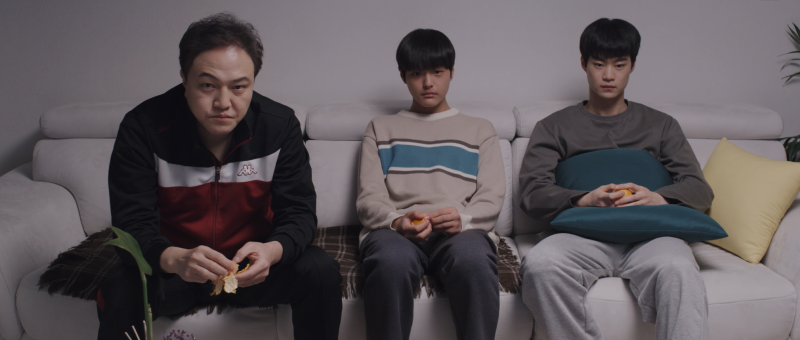
Anemone: A Fairy Tale for No Kids (아네모네, Jung Ha-yong, 2021)

“Betrayal is betrayal” according to a jaded grandmother (Park Hye-jin) reading a children’s story that’s clearly not for children to a curious little girl in Jung Ha-yong’s extremely dark comedy, Anemone: A Fairytale for No Kids (아네모네, Anemone). Later someone asks what the difference is between treachery and betrayal before conceding there might not be any, but whatever betrayal is there’s certainly a lot of it going around as a winning lottery ticket causes discord between an otherwise unhappy couple, their friends, relatives, and just about everyone else. 

As the grandmother relates reading to the little girl, Yongja is a wife and mother of one who once had an illustrious career as a martial artist and is now an aspiring children’s author. Her husband, meanwhile, is a no-good layabout and the family is in constant financial difficulty dependent on Yongja’s part-time job in the kitchen of a bar. When she has a dream about winning lottery numbers, she writes them down and tells her husband to buy a ticket before going to work. Hearing the draw on the radio, she realises she’s won and abruptly walks out on her job getting into a physical altercation with her boss as she goes, but on arriving home her husband seems confused. Eventually he admits he forgot all about buying a ticket but Yongja doesn’t believe him and is convinced that he’s stashed it somewhere and plans to keep the money for himself.  

That would obviously be quite a big betrayal, but maybe not all that difficult to understand given the relationship dynamics in play between the obviously unhappy couple. Sending their daughter to her grandmother’s, Yongja goes to great lengths torturing her husband, making him wear a nappy and trying him to a rocking horse, in an effort to get him to reveal what he’s done with the ticket only to threaten murder suicide when he continues to say he can’t give her what he never bought. Just as we’re starting to feel sorry for him, and to be honest the constant “did you or did you not buy the ticket” conversation goes on for an incredibly long time, the husband manages to escape, expanding the search for the ticket across the wider area while Yongja ropes in her gangster brother and his dodgy friend to come to her aid. 

The ticket appears to have exposed the cracks within the family unit which are largely attributed somewhat uncomfortably to a misalignment of gender roles in which the husband is feckless and useless while Yongja essentially bullies him and is consumed by a sense of resentment that she is forced to shoulder the financial burden of supporting the family. The words the grandma reads from the picture book are often at odds with the reality, presenting Yongja as having achieved success with her children’s books but showing her dismissed by an editor who ironically points out the story’s not suitable for children. The grandmother further explains that poor people buy lottery tickets because it’s their one source of hope for a better life, no longer believing they have any possibility of improving their circumstances independently, which is perhaps the case for Yongja who hopes the money can help them fix their “train wreck of a family” for a happier future. 

Then again it may be the ticket that betrays them in proving so elusive. Because of the ticket, Yongja is forced to realise that she doesn’t trust her husband and that she is right not to because he is indeed keeping something from her. Other people she can’t trust include her brother’s shady friend while he is also a liability preventing her from calling the police because there’s a warrant out on his name. The problem is that everyone wants the ticket from themselves, except perhaps for Yongja who had obviously intended to use the money for the family as a whole though it seems unlikely that a simple injection of cash could fix these toxic relationships or restore their happy home if that is ever what it was. Fairy tales are often dark and this is no exception though the reason a child shouldn’t read it is not because it’s crude or violent but simply because it would crush their tiny spirit with the overwhelming disappointment of life. 


Anemone: A Fairy Tale for No Kids screened as part of the 2022 Yubari International Fantastic Film Festival.

Broker (브로커, Hirokazu Koreeda, 2022)

Perhaps more than any other contemporary director in Japan, Hirokazu Koreeda has persistently interrogated the concept of the modern family asking what exactly the word has come to mean and how it is or should be defined. In Nobody Knows he showed us a case of parental neglect as abandoned siblings attempted to get by on their own in the absence of maternal care, while the separated brothers of I Wish struggle to define the nature of their relationships in the wake of their parents’ divorce. In Like Father, Like Son, Koreeda asks whether it’s blood relation that defines a family tie or whether it is forged more by mutual affection and shared memories, and in festival hit Shoplifters, he showed us a family who were not related by blood but had found in each other a home and a place to belong. 

Billed as a kind of companion piece, Broker (브로커) once again features a found family “brokered” by criminal activity but goes a step further, asking once again what the rights and responsibilities are when it comes parenthood and if the choice to abandon a child can ever be justified. Set in Korea where Christian morality has a greater influence, the film opens with a young woman leaving her infant child in front of a church yet abandoning him on the floor rather than placing him inside the “baby box” in the church’s wall. A policewoman staking out the church in the belief that someone is using the baby box to traffic children gently places the infant inside with what looks like maternal care but then we start to wonder, perhaps she only does so in order to see what happens when someone picks up him from the other side. 

Indeed, the policewoman will later concede that perhaps she herself was the one who most wanted the baby, Woo-Sung, to be sold so that she could catch the traffickers redhanded. We might feel a degree of revulsion towards the idea that a baby could be exchanged for money, but then perhaps we don’t stop to wonder who might buy and for what purpose. Sang-hyun (Song Kang-ho), a dry cleaner with gambling debts, and his partner Dong-soo (Gang Dong-won) who himself grew up in an orphanage, later recount selling a baby to two gay men who would otherwise be unable to adopt in the still conservative country suggesting in part that it’s a repressive society that forces people into this morally questionable underground trade in human children. It’s also societal conservatism that necessitates the existence of something like the baby box in that often very young women who bear children but cannot keep them either out of shame or simple economic impossibility have few other options than to abandon their child in the hope that someone will take it in. 

Detective Lee (Bae Doona) nevertheless brands these women as “irresponsible” and blames the baby box for tacitly encouraging their behaviour. An abandoned child himself, Dong-soo also struggles with his attitude towards the mother, So-young (Lee Ji-eun), who against all the odds does come back to reclaim her son after changing her mind. He and Sang-hyun justify their actions that they’re “saving” Woo-sung from being placed into the care system by finding him a loving home with parents who can give him a comfortable life. After taking to the road, the trio arrive at the orphanage where Dong-soo was raised which is less a home for him than a painful reminder of all he’ll never have and will never achieve as someone without a clear idea of a place to belong.

The man running the orphanage even concedes he’s not doing so well after the losing the subsidies for a few of the kids who have left, though few people adopt kids over six and the law makes it more difficult at eight which is a particular problem for football enthusiast Hae-jin (Im Seung-soo) who ends up climbing into Sang-hyun’s van and demanding they take him in. “Blood is thicker than water” the man sighs, explaining that kids are often sent back when it doesn’t work out or even end up suffering abuse despite the supposedly rigorous processes for vetting potential parents which causes some to simply buy a child on the black market instead. 

Despite the image of Dong-soo and Sang-hyun as heartless child traffickers they nevertheless take good care of Woo-sung and are up to a point careful that they should give him to someone responsible, mindful of those who might want a baby for untoward purposes or are intent on selling him on. A visual motif of tangling threads from the cotton on Sang-hyun’s sewing machine to the rope that pulls the busted back door of the van closed hints at the various ways these five dispossessed people are slowly bound together, becoming an accidental family forged through a process of mutual understanding in which Dong-soo is able to re-evaluate his feelings towards his mother through bonding with So-young and realising that in abandoning her child she may only have been trying to protect him and give him the better life that she never had. 

So-young tells Dong-soo that she sometimes has a dream in which the rain washes away her life until now, but on waking she realises it’s raining and nothing’s changed. He tells her perhaps all she needs is an umbrella that’s big enough for two, a metaphor for the protective quality of family he could perhaps have given her. Even she later concedes that had she met them earlier, none of this would have been necessary while Detective Lee’s more sympathetic partner (Baek Hyun-jin) likewise asks why they couldn’t have intervened earlier and done something to help this struggling young woman whose only problem was her aloneness before it came to this. What emerges is an unexpected compassion and the extension of an umbrella from an unexpected source in the acknowledgement that nothing’s ever quite as simple as it might seem. Koreeda leaves us with an outcome that is possibly as happy as it could be in an imperfect world, which might in itself be a little unrealistic but nevertheless in its own way hopeful in having reclaimed a notion of “family” brokered by selflessness and mutual compassion if not quite love for the orphans of an indifferent society.


Broker opens in UK & Irish cinemas on February 24th. For more information head to http://broker.film/

UK release trailer (English subtitles)

Project Wolf Hunting (늑대사냥, Kim Hong-sun, 2022)

“Remember, there’s nowhere to run” an arrogant police officer explains to collection of rapists and murderers locked aboard a cargo ship ready to be delivered to “justice” in Korea having attempted to flee to the Philippines. It is in someways ironic that these men and women, depraved as many of them may be, have been loaded onto a commercial vessel to be shipped home less like cattle than faceless and inanimate objects. Kim Hong-sun’s eerie gore fest Project Wolf Hunting (늑대사냥, Neukdaesanyang) is in many ways about the horrors of the past but also suggests that the present is little better in a world in which there is little difference between cop and thug and we are all at the mercy of looming violence. 

As one older prisoner puts it, “if this isn’t hell, I don’t know what is”. Thanks to an international extradition arrangement some of the worst Korean criminals are about to be repatriated from the Philippines only the historic event is disrupted by a suicide bombing carried out by a disgruntled victim whose smashed glasses and severed limbs are an eerie harbinger of what’s to come. After a rethink, the government decides to hire a cargo boat instead so the public won’t have access to the criminals, which is somewhat ironic, while accompanied by a crack team of veteran cops each with over 10 years of experience on the force. Already it isn’t seeming like a very well thought through plan, but as Captain Lee (Park Ho-San), who openly beats a prisoner with whom he has prior history on the dock, points out, there aren’t any cameras so he has full authority to enforce the law with no concern for the rights of inmates nor basic human morality. To cut it short, he’s little different than they are even if he isn’t, as far as we know, a multiple murderer or rapist. 

In any case, keeping a bunch of violent criminals handcuffed with only one bathroom break a day and no stimulation seems like a recipe for disaster even if it weren’t just plain inhumane. But inevitably the operation is compromised by an attempt to spring a gang boss which lets the criminals take control of the ship albeit temporarily seeing as there’s something else lurking in the bowels of this floating hellscape that is pure nightmare fuel and a not quite living embodiment of man’s inhumanity to man. Predictably, this all stems back to the abuses of the colonial era and the machinations of the equivalent of Unit 731 operating in the Philippines but has since seemingly been co-opted by a shady Korean organisation apparently also attracted to the research’s capitalistic potential in the booming anti-ageing market hoping to usher in the next stage of human evolution. 

What ensues is a parade of senseless violence in which cop and killer alike are stalked by a mysterious “monster” with wolf-like senses and preternatural strength, and that’s on top of the bloody destruction wrought by the vengeful criminals in their unsuccessful attempt to escape. As Lee had said, there really is nowhere to run though as it turns out that cuts both ways. The gang boss proves unexpectedly heroic, genuinely trying to save the moll who’d been arrested alongside him, while law enforcement reveals itself hopelessly out of depth even as Lee and his female subordinate Da-yeon (Jung So-min) pivot towards protecting the prisoners they were previously intent on oppressing as they form a temporary alliance to defend themselves against the mysterious threat, ironically a product of the “kemono” (beast) project and a reminder of what happens when you decide that some people aren’t really “human” after all. 

Even so, the rampage is indiscriminate. The “monster” doesn’t care if you’re a cop or a killer, all it knows is violence smashing in the heads of the toughest gangsters and ripping hearts out of well-built bodies without a second thought. It’s got no eyes but knows how to use a gun and it still might not be the scariest thing on the boat, at least not in the end as we wonder what exactly all this is for and what might be meant by the next evolution of our species. This is indeed hell and there’s no where to run either from the unresolved past or the malignant future. 


Project Wolf Hunting is released in the US on Digital, Blu-ray, and DVD on Feb. 14 courtesy of Well Go USA.

International trailer (English subtitles)

Kim Jong-boon of Wangshimni (왕십리 김종분, Kim Jin-yeol, 2021)

“I’m lucky” elderly market vendor Kim Jong-boon finally explains to director Kim Jin-yeol, having endured a long life filled with hardship and sadness but having learned to see the best in it in gaining experiences others might not have the opportunity to and thankful that her circumstances while certainly not luxurious are comfortable enough and her surviving children and their spouses are healthy and happy. Titled simply Kim Jong-boon of Wangshimni (왕십리 김종분, Wangshimni Kim Jong-boon), Kim’s documentary is testimony to the extraordinary stories of ordinary people and the heartwarming resilience of those who’ve known tragedy but have resolved to remain honest and kind to all those around them. 

Born in 1939 and now in her 80s, Jong-boon is still a regular fixture running a small night stall in the lower-class district of Wangshimni in Seoul where she has lived for the last 50 years. Wind and snow, she runs her business enjoying a gentle camaraderie with a group of fellow market sellers of around the same age with whom she often goes for dinner or plays cards in her small apartment where they also come together to make kimchi. Jong-boon isn’t forced to work into her 80s because of financial penury, but because she’s become a kind of symbol with people glad and reassured to see her stall where it always is. She lends money or extends a tab to those who need it whether she thinks they’ll pay her back or not. In the closing scenes a man arrives to return some money she’d lent him 30 years previously, he nervously arriving laden with pumpkins and quinces uncertain if she’d be alive but feeling relieved to finally unburden himself of this spiritual and literal debt. 

Part of this is as we later discover an extension of her private tragedy in having lost her daughter, the middle of three children, during the democracy protests of the early ‘90s. Though the climactic events of 1987 had led to the introduction of a democratic system, the left-wing, pro-democracy vote had been spilt by infighting which allowed the protege of former dictator Chun Doo-hwan, Roh Tae-woo, to become the first elected leader of a “democratic” Korea leading to an intensification of political protests led by the student movement. In university at the time, Jong-boon’s daughter Gwi-jung became involved in democratic and labour activism and was killed during a protest in which police kettled protestors with no provided exit route (as had previously been the norm) leading to a crush in which Gwi-jung was suffocated. Despite the depths of her grief, Jong-boon became a prominent figure in the movement in her daughter’s memory campaigning for justice and recognition along with others who had lost family members to police violence during the protest. Though over 30 years have now passed since Gwi-jung’s death, as many as 300 mourners still come to her annual memorial service which Jong-boon and her family cater themselves. 

Though she and her husband had actually voted for Roh, Jong-boon continues to support the causes her daughter had given her life fighting for in the hope of a better world while discovering a new community not only with the other bereaved relatives but in the students themselves many of whom continue to look in on Jong-boon and accompany her as she travels to universities around the country to give talks in Gwi-jung’s memory. Despite her grief and sorrow, we later see her collapsing in tears on visiting Gwi-jung’s grave in a small area dedicated to those who died in the protests, she’s also thankful for the new opportunities Gwi-jung has given her in travelling all around the country and meeting new people. One of the reasons she continues to run her stall is for the former student protesters, so they’ll always know where to find Kim Jong-boon of Wangshimni. Having endured crushing poverty in her youth, working several jobs from construction to domestic service and then running her stall at night, Jong-boon can declare herself happy to have lived so much experiencing things others might never get the chance to even if they’re things no-one really wants to experience like getting tricked out of a house or having all your money stolen by a credit union. A portrait of a truly extraordinary woman living an ostensibly very ordinary life, Kim’s quietly moving documentary is testament both to the hidden stories of those all around us and to the enduring resilience of a mother’s love.


Kim Jong-boon of Wangshimni screened as part of this year’s Udine Far East Film Festival.

Original trailer (no subtitles)

Hostage: Missing Celebrity (인질, Pil Gam-seong, 2021)

“This is real, birdbrain”. If you’re a famous actor, it might take a while to dawn on you that you’re in real trouble rather than the subject of an admittedly dark candid camera skit or variety show stunt. Real life and the movies begin to blur for top Korean actor Hwang Jung-min playing a fictionalised version of himself when he’s kidnapped by a gang of ruthless petty criminals in Pil Gam-seong’s meta take on Chinese thriller Saving Mr Wu, Hostage: Missing Celebrity (인질, Injil). 

Indeed the film opens with a montage of Hwang’s career to date including a degree of self-deprecation in which he describes himself as “just a petty actor” reminding the journalist interviewing him that film is a collaborative medium of which he is only a part. This version of himself that we see is modest and wholesome, going home early after an afterparty while his wife and son are away planning to relax alone. He seems to live a very lowkey life living in a fairly ordinary suburban house without domestic help or other signs of obvious wealth aside perhaps from an expensive car. Hwang is also on fairly friendly terms with the clerk at the local convenience store which he evidently visits frequently just like any other ordinary person rather than sending an underling to fetch him things or walking around with a massive entourage to remind people that he’s a movie star. Even while trying to escape his kidnappers he takes his shoes off before entering an old man’s home to use his landline telephone. 

Yet one can’t escape the fact that he is fantastically rich and perhaps out of touch with “real” life, his kidnappers targeting him mainly on a whim born of chance coincidence but also in resentment for everything he represents. The leader of the gang, Choi Ki-wan (Kim Jae-beom), is a crazed psychopath whose primary motivations are most likely sadistic rather than purely financial even if his targets are those with fancy cars but those of his underlings are perhaps more prosaic. When one of the gang members is captured, it emerges that he had massive debts to a casino loanshark while the most sympathetic of the kidnappers appears to have learning difficulties and later explains that he’s only doing this to pay for medical treatment to remove a prominent facial birthmark and scarring so he could live a more normal life. Because of his naivety he remains strangely loyal to Ki-wan believing that he’s looking after him while refusing any responsibility for his crimes. The gang’s only female member (Lee Ho-jung), by contrast, seems to be a North Korean refugee in a romantic relationship with Ki-wan’s less psychotic but no less cruel partner Dong-hoon (Ryu Kyung-soo) who just wants the money. 

Having literally played through scenarios just like these in his films, Hwang Jung-min the actor has perhaps gained a degree of experience that allows him to process his situation with a surprising degree of rationality quickly realising that as the kidnappers have made no attempt to hide their identities they most likely plan to kill him, and a young woman, So-yeon (Lee Yoo-mi), abducted alongside a wealthy cafe owner they killed when he couldn’t come up with the cash fast enough, after they’ve got the ransom payments. It isn’t that Hwang’s stingy, it’s that he knows there’s no point giving them the money but his only chance for survival lies in making them think he might. Even so, he gets to literally play the hero engaging in a battle of wits with the kidnappers before attempting to make a dashing escape while the on the outside the a dogged policewoman and her partner do their best to track them down despite the unhelpful interventions of their more conservative boss. 

Ki-wan might well have a point in admitting he’s overreached by going for such a high profile target. The police probably wouldn’t be investigating so heavily if the victim weren’t a famous movie star whose face is splashed across the papers. After all, they hadn’t done much for So-yeon whose sister had had to go to social media to raise awareness about her kidnapping fearing the police weren’t doing enough to help. Bearing out the underlying economic anxiety, So-yeon had only got the cafe job a few days previously after 37 failed interviews. Hwang’s response that he failed a hundred auditions before getting a break, people laughing at his acting dreams because he was a guy with curly hair and red skin who spoke with a strong southern accent, is intended to be reassuring in implying that even if it takes time you get there in the end but is also a little insensitive in the circumstances in downplaying So-yeon’s struggles in the contemporary economy having gone from elation in finally finding employment to being locked in a shed by a gang of psychos because of her boss’ personal greed which seems like quite the metaphor for the inequalities of the modern society. In any case, Pil crafts an intense kidnap thriller given an additional layer of absurdity in its meta dimensions but ends on a note of poignancy which suggests that Hwang himself is also and perhaps always will be hostage to his own image. 


Hostage: Missing Celebrity screened as part of this year’s Udine Far East Film Festival.

International trailer (English subtitles)