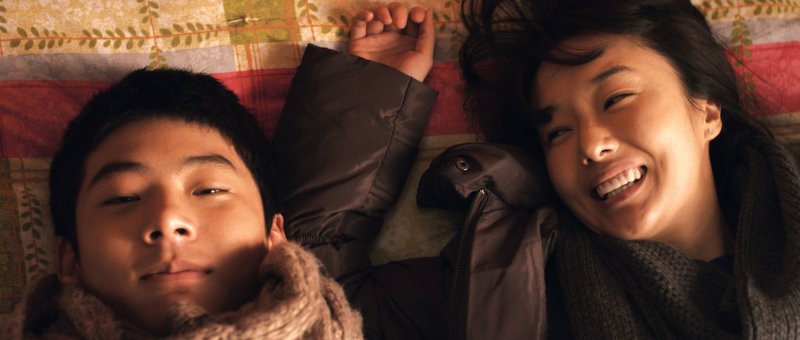

Secret Zoo (해치지않아, Son Jae-gon, 2020)

A corporate stooge begins to reassess his life choices in Son Jae-gon’s capitalist satire, Secret Zoo (해치지않아, Haechijianha). As someone belatedly points out, no matter how nice you make the enclosure, you can’t get away from the fact you’re in jail and aspiring lawyer Tae-soo (Ahn Jae-hong) might have to admit that he’s no more free than the animals he’s sent to oversee (or not, as we’ll find out) when he’s randomly sent to take over a failed wildlife park at the behest of his shady boss. 

Currently a temp working out his probation at top three legal firm JH Law, Tae-soo is desperate to be taken on as a full-time employee but as he explains to his sister who wants to sue some thugs bullying her son, that largely means he’s basically just an errand boy taking care of the unreasonable demands of their incarcerated clients who are in the main chaebol sons accused of fraud and embezzlement. JH Law is under siege from protestors angry at their role in perpetuating chaebol influence and siding with large conglomerates to frustrate workers’ rights and enable exploitative working practices. Yet it’s not squeamishness that he’s wound up working for such an awful company that has Tae-soo too embarrassed to attend the reunion for the “third rate” uni he graduated from, but shame that he is only a temp not a full-time employee. That’s part of the reason he instantly accepts a strange offer from his boss to head up Dongsan Park with the promise that he’ll be taken on as a regular employee in Mergers and Acquisitions if he can turn it around in three months. 

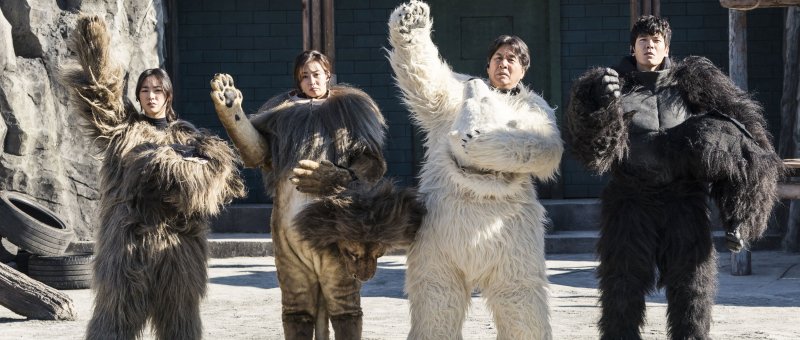
When he arrives, however, Tae-soo gets something of a shock. Most of the park’s most valuable animals have already been seized by its creditors, and international safeguards regarding the trafficking of live animals ensure that he cannot simply buy more within the three month time limit. After being surprised by a stuffed tiger while drunk after the welcome party and catching sight of some photos from a mascot day Tae-soo has a bright idea. They’ll simply have hyperrealistic costumes made and sit in the enclosures themselves keeping far enough away that the customers hopefully won’t know the difference. After all, when someone tells you’re visiting a zoo it probably doesn’t occur to you to question whether the animals are “real”.

Secret Zoo, or more accurately a zoo with a secret, is on one level a mild satire on public perception and fake news. You hear the word zoo and have a set of expectations. Unless something happens to convince you otherwise, your brain naturally smoothes over any minor issues you might have because it would be ridiculous for someone to “fake” a zoo. Despite the evidence of his eyes, the only thing the corporate stooge sent to inspect finds suspicious is the animals’ “funny” names which all end in the same syllable. The zoo becomes an unexpected viral phenomenon when Tae-soo, wearing the polar bear suit, is snapped drinking Coca-Cola just like the advert but even then no one questions the idea that he’s not a real polar bear, or that it’s perhaps not ethical for a polar bear to be drinking Coca-Cola in the first place or for guests to be throwing objects into the enclosures and especially not with the intention of harming the animals. 

Only conflicted doctor So-won (Kang So-ra) questions the zoo ideology, pointing out that however nice they make the enclosures it’s still a prison for animals that they are in essence exploiting. Secret Zoo is at pains to make a direct comparison between Tae-soo caught in the corporate cage of modern-day capitalism and the animals he’s impersonating as prisoners of the world in which they live. Tae-soo’s shady boss is, as might be expected, essentially corrupt. As Tae-soo begins to figure out, if this job were important he wouldn’t be doing it, he’s been sent because he’s desperate and expendable while his boss snidely remarks that it’s not a job to be done by someone “brought up soft” hinting at the class snobbery that further oppresses him as a “weed” coming up from a “third class” university. 

So desperate to achieve conventional success by becoming a member of the elitist club, Tae-soo doesn’t really question what it takes to get there until bonding with the employees and becoming invested in the idea of saving the zoo only to discover that his shady boss never really meant to “save” it anyway. Yet the only solution on offer is it seems merely a nicer cage which in power rests firmly with the same corrupt chaebols only now persuaded that it’s in their interest to be more socially responsible as a means of improving their personal brand which of course merely enables them to continue their exploitative business practices even if implying that Tae-soo too has a modicum of power in the ability to manipulate them. Black Nose, the polar bear driven mad by confinement, cannot be returned to the wild but regains his “freedom” in a polar bear sanctuary in frosty Canada, Dr. So-won too freeing herself of her problematic need to protect him by keeping him close. Tae-soo getting a dose of his own medicine in being observed by a young couple who press him for a selfie as the director of that “fake zoo” seems to have gained a little more awareness of what it’s like to live in the enclosure of an inherently corrupt social system akin to corporate feudalism but like Black Nose has perhaps at least improved the quality of his captivity. 


International trailer (English subtitles)
Beauty Water (기기괴괴 성형수, Cho Kyung-hun, 2020)

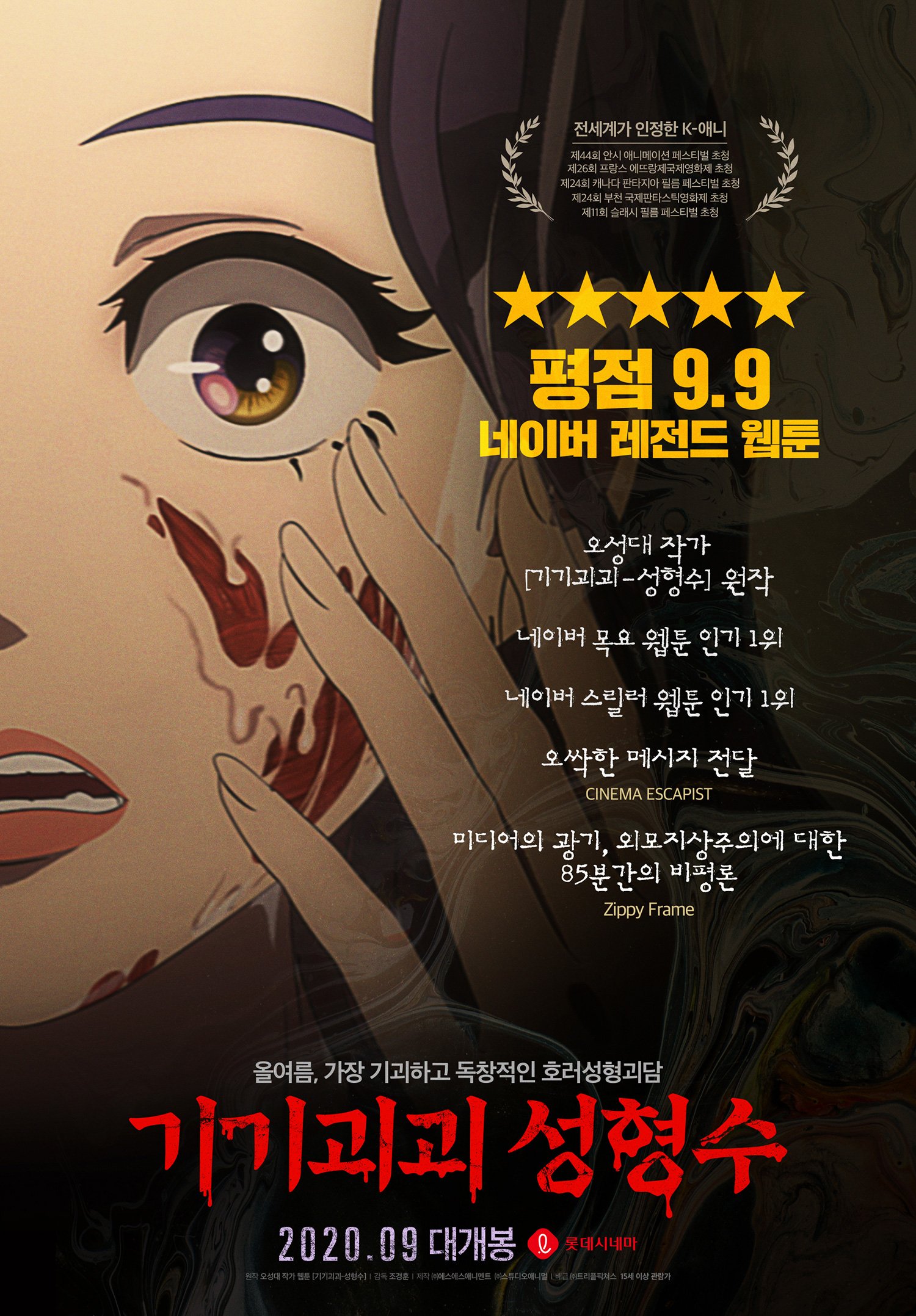
“Nothing matters more than being beautiful” according to an ironic statement made by a crazed revenger apparently both consumed by and resentful of South Korea’s obsession with conventional “beauty” standards. Beauty may well be in the eye of the beholder, but in this case the beholder has a noticeably conformist eye which is why it’s become something of a running joke that every manufactured pop star, model, or actress, has the same face. Not to be considered “beautiful” is to be relegated to a kind of underclass in which one’s thoughts and achievements are not accounted credible to the extent that employment prospects and class status are often dependent on meeting closely controlled constructs of physical beauty. Though it is true that men are also increasingly subject to these same definitions of attractiveness, they are not usually faced with the same kind of “invisible wall”, as the heroine of Cho Kyung-hun’s animation Beauty Water (기기괴괴 성형수, Gigigoegoe Seonghyeongsu) later puts it, which so limits a woman’s prospects in the fiercely patriarchal society. 

Yaeji (Moon Nam-sook) is a case in point. Ironically working as a makeup artist, she is regularly insulted by those around her including diva of the moment Miri (Kim Bo-young) who has her banished from the room, not wanting to see such an “ugly pig” so early in the morning. Only new recruit actor Ji-hoon (Jang Min-hyeok) treats her with any kind of kindness, remarking on the peculiar beauty of her eyes and later suggesting they do his makeup in a quiet corridor so she won’t be subject to Miri’s green room tantrums. Unexpectedly asked to fill-in for an absent extra sitting at a table laden with food, she later finds herself going viral, branded a “greedy fatty” online while journalists start bothering her at home trying to get her side of the story. She locks herself away in her room and refuses to come out. It’s then that she receives a mysterious text message followed by a parcel containing “Beauty Water”, an experimental substance which claims it can make even the least attractive of people “beautiful”.

“I just want to be loved” Yaeji plaintively claims, fully believing love is something you cannot have when you are not beautiful. Tragically she later realises that she was loved after all in recalling her parents’ reassurances during a traumatic childhood episode in which she came second in a ballet competition convinced that she danced better than the other girl but lost out because of her “ugliness”, but rather than learning to love herself in rejection of socially defined notions of conventional attractiveness Yaeji goes down the dark path of the quick fix entrusting her future to Beauty Water. She rebrands herself as Sul-hye and embarks on the cynical life of a vacuous influencer, dating various wealthy men but dismissing them all in her caustic interior monologue now confident enough to feel she can do better but leveraging only her looks in order to catch a useful man rather than trying to forge a life of independence. She is now fully a prisoner of the oppressive and tightly regimented gender-based social codes of a fiercely patriarchal society. 

Nevertheless, in the grand tradition of experimental serums, Beauty Water changes her soul as well as her face. Obsessed with the pursuit of perfection in beauty, Sul-hye becomes increasingly violent and aggressive, bullying her parents into lending her money for extra treatment by holding them responsible for giving birth to an unattractive child. We hear TV reports of young women in their 20s going missing and half-wonder if Sul-hye herself or someone like her, another victim of Beauty Water, may be responsible, but equally we see that the entire entertainment industry which Sul-hye is now trying to enter as another means of attaining success and fulfilment is entirely built on the exploitation of female “beauty” which is itself used as a means of control. Ji-hoon, apparently kind and sensitive, retires from showbiz because he can’t live with its manipulative cruelty and warns Sul-hye about Miri’s manager whom he believes bought Miri her career through pimping her out to “powerful” men and then embezzled all her money. Miri has since gone mysteriously missing. 

Finally we’re shown that appearances can be deceptive, that the “beautiful” are not always nice, nor exceptional in any other way than their physical appearance, and are unfairly prized by a superficial society. Judged for her purchases at the convenience store Yaeji stumbles on the way home while her building’s security guard offers no help, only the rude instruction that she should lose some weight then she’d be able to walk better. Meeting Sul-hye, the same guard reacts quite differently. Suddenly nothing is too much trouble, which might just be a problem of the opposite order in its vaguely threatening creepiness but just goes to show the extent to which a woman like Yaeji is held in contempt while those like Sul-hye are placed on a pedestal. 

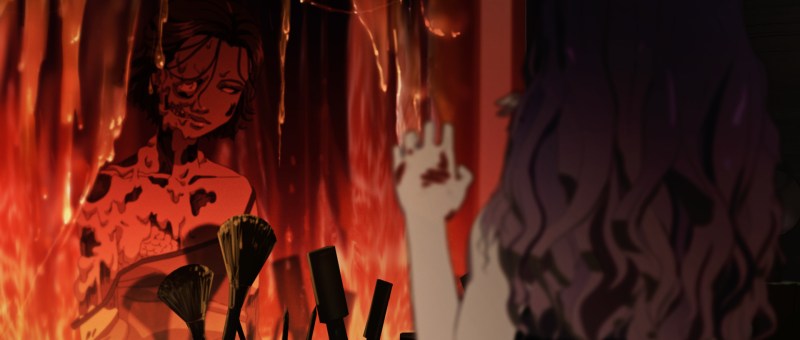
Internalising a sense of shame and inadequacy in “failing” to meet these “arbitrary” standards, Yaeji is content to destroy in order to remake herself. “Say goodbye to the face you know”, Beauty Water’s instructional video teases before descending into surreal gore as a woman literally slices away her ugly facade to expose the beauty hidden beneath. Reminiscent of Perfect Blue, Beauty Water’s B-movie sensibilities send Yaeji/Sul-hye into increasingly paranoid and uncertain territory, desperate to remain “beautiful” so that she might be loved but never learning to love herself while quietly murdering her essential self to attain a soulless image of idealised beauty. A late swerve into an unintended transphobia nevertheless undermines the central messages of the dangers inherent in society’s obsession with aesthetic perfection as the heroine struggles to escape her internalised shame only in an extreme act of self-destructive masking. 


Original trailer (English subtitles)

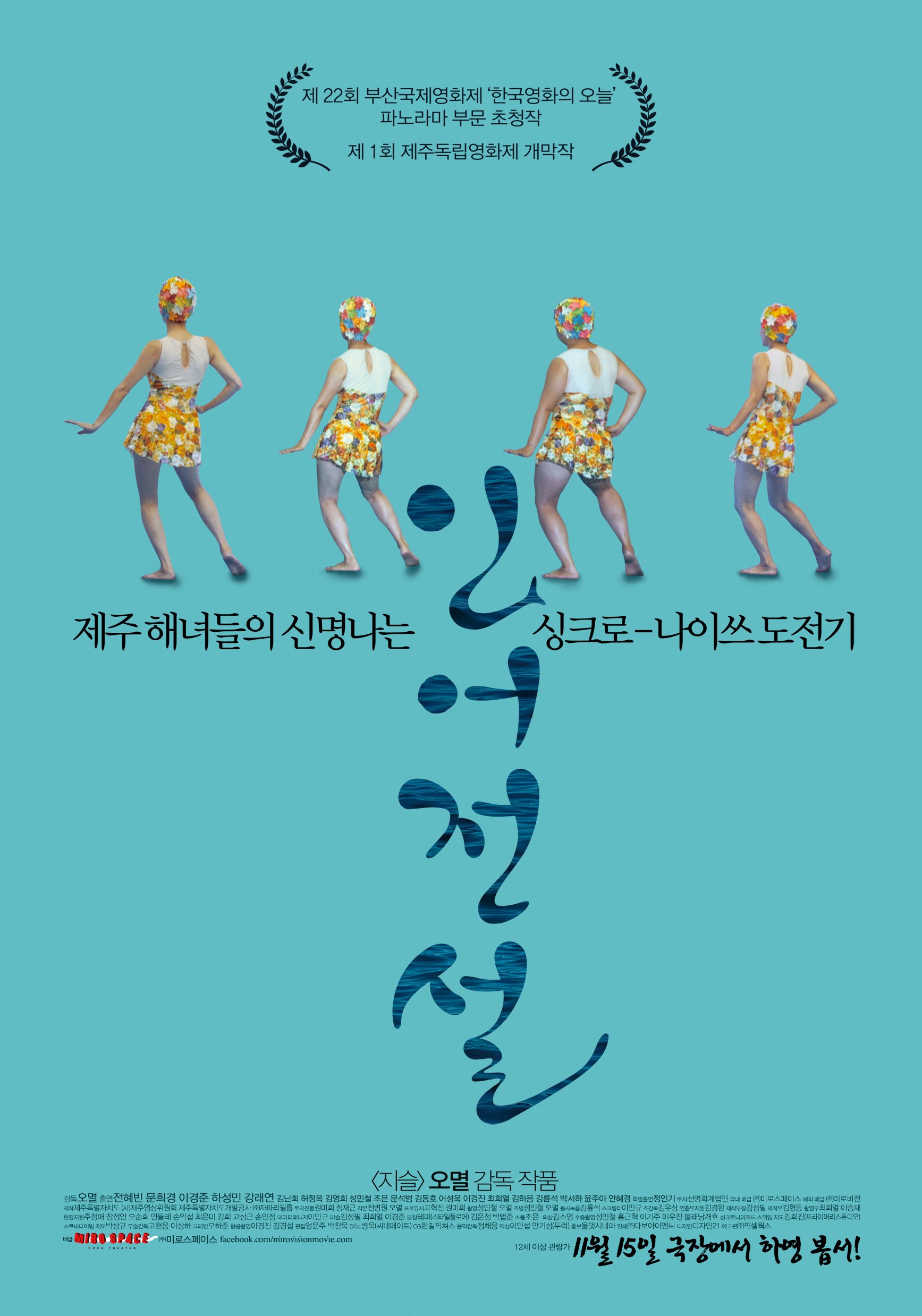
Mermaid Unlimited (인어전설, O Muel, 2017)

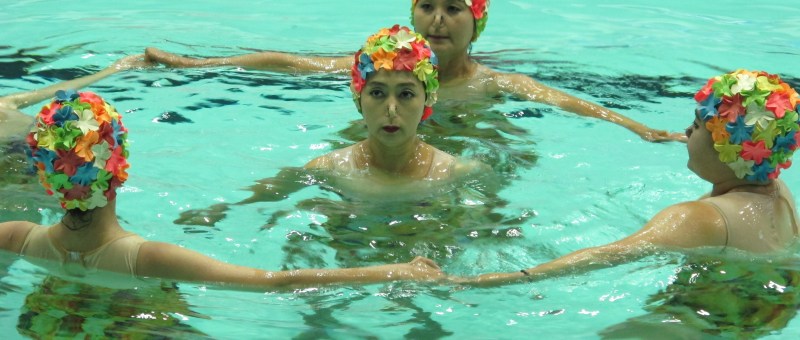
Venal city corporatism meets traditional Jeju culture in O Muel’s quirky comedy Mermaid Unlimited (인어전설, Ineojeonseol). An island movie showcasing the laidback charms of a disappearing way of life through those of the haenyo divers, Mermaid Unlimited is also an early example of cinema’s recent fascination with the art of synchronised swimming in which this most organised of sports helps a troubled young woman get a much needed reset in her life thanks to the down-home wisdom of the island aunties and the healing waters of Jeju.

A well-meaning government body has come up with a plan to promote synchronised swimming by getting a team of traditional haenyo divers as a warm up act before a national competition to be held in Jeju in the hope of making the sport “more accessible”. Former national team member Ga-yeon (Kang Rae-yeon) is under a lot of pressure to get a medal, not least to dispel the doubts of a hostile suit upset at having been passed over for project lead. In any case, she recommends an old colleague, Yeong-ju (Jeon Hye-Bin), who was the leading light of their old squad to coach the island ladies so they can perform a routine as requested by the PR people. However, there are several issues with this plan. The first being that village chief Bongseok (Lee Kyung-joon) has been a little over enthusiastic in agreeing to the idea seeing as there are very few remaining haenyo in the local area and many of them are understandably getting on in years. Meanwhile, Yeong-ju is in the middle of an extended personal crisis and is in fact a functioning alcoholic. 

Nevertheless, her appearance on the island immediately causes a commotion not least with Bongseok who is instantly smitten. She is herself, however, not perhaps convinced, instantly earning the ire of the defacto leader of the haenyo, the feisty and foulmouthed Okja (Moon Hee-kyung), after thoughtlessly describing the women as a load of old grannies, doubtful if they are really worthy of her precious “water ballet”. What ensues is a less than genial face off as the two women try to prove themselves queen of the seas through a petty competition which ends inconclusively and with a degree of drama but does eventually broker a kind of solidarity if only as they slag off their useless menfolk. In any case, the island ladies begin training in earnest while attempting to deal with their own quirky island problems. 

The island is certainly home to a fair few characters from Bongseok, smitten and overexcited while slightly clueless as to what the project entails (selling his empty swimming pool as bound to fill up next time it rains), to Okja’s wayward son Mansoo (Eo Sung-wook) and his bad romance, the pregnant haenyo who wants to give birth the old-fashioned way, a strange shanmaness and her son who has learning difficulties, and the young woman who desperately wants to become a haenyo despite her mother’s objections. Yeong-ju had a point when she suggested there weren’t many younger women around, most of the haenyo are indeed middle aged or older, and it’s fair to say this is a way of life fast disappearing. Okja laments that they haven’t been able to catch much lately, and later we hear of the building of a sea wall which may be having a detrimental affect on sea life so much so that there are reports of an elderly diver from a few villages over going missing at sea while protesting. Even so, the old women remain fiercely proud of their island culture and determined to protect it, seeing in the synchronised swimming exercise a way to show off their existence, something which perhaps mildly backfires bringing an influx of foreign tourists to the island hoping get the haenyo experience much to the confusion of the underprepared though very excited Bongseok. 

Through her friendship with Okja and the gentle support of the other island ladies who’ve seen enough of life to be unjudgemental, Yeong-ju begins to work through her unresolved trauma and alcohol issues while falling in love with island life and the traditional haenyo culture. A gentle ode to the wholesome charms of Jeju with its beautiful ocean vistas and hard spun rural wisdom, Mermaid Unlimited makes the case not only for the power of female solidarity but of bodies in unison as a means of existential healing through shared endeavour. 


Mermaid Unlimited streams in Poland until 6th December as part of the 14th Five Flavours Film Festival.

Original trailer (no subtitles)

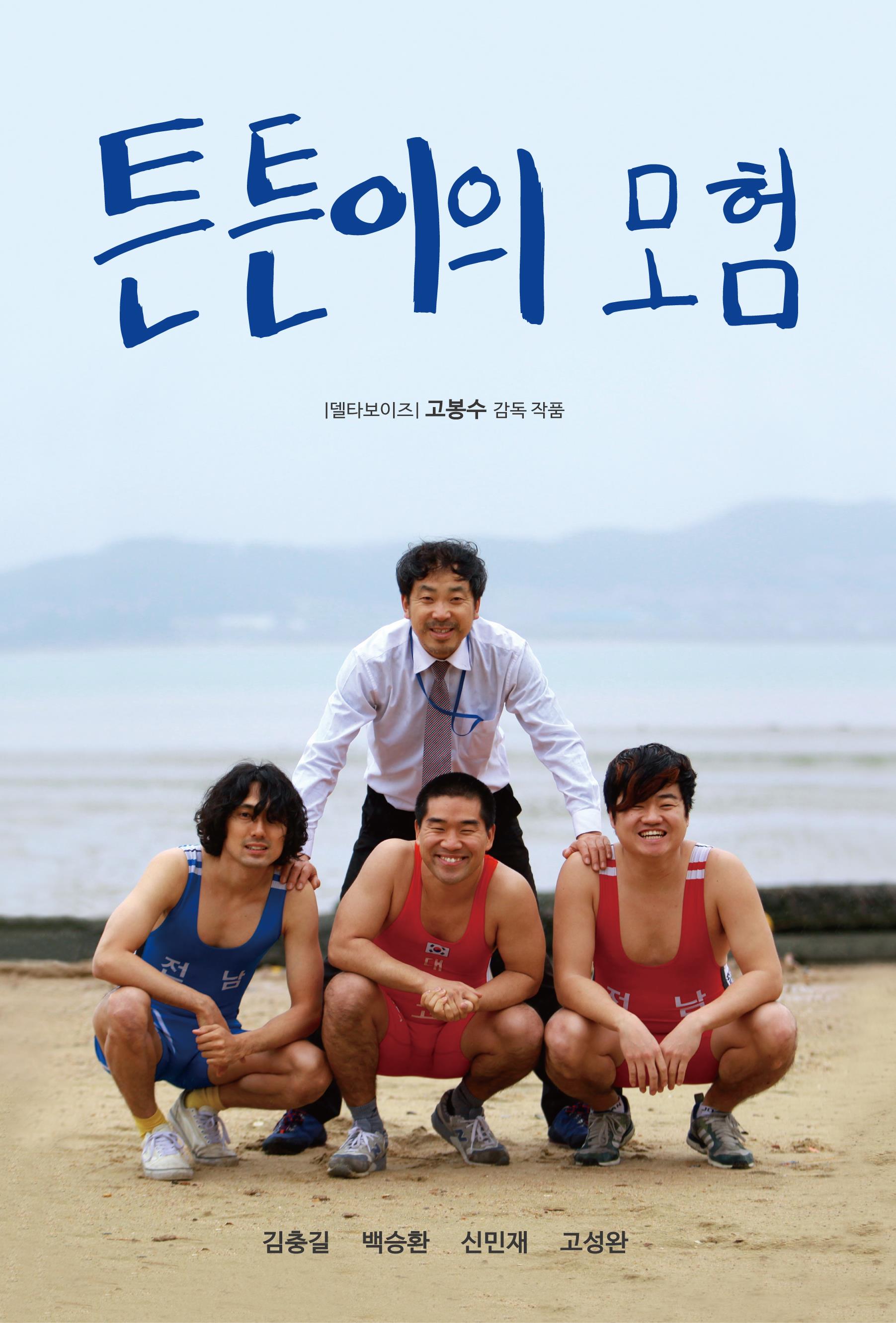
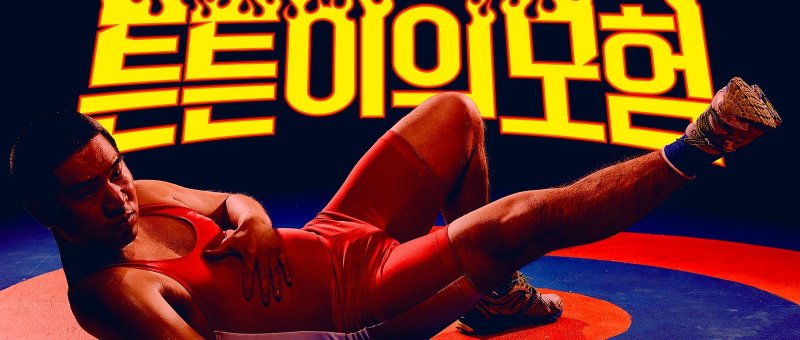
Loser’s Adventure (튼튼이의 모험, Ko Bong-soo, 2018)

Three aimless young men attempt to shake off small-town despair through the medium of high school wrestling in Ko Bong-soo’s underdog indie sports comedy Loser’s Adventure (튼튼이의 모험, Teunteuniui Moheom). Unkind as it may be to say, the young men are or at least feel themselves to be “losers”, each battling a sense of hopelessness dealing with difficult family circumstances and desperate to escape “this pathetic life” as one terms it for the comparatively brighter lights of Seoul. 

In his last year of high school, Choon-gil (Kim Choong-gil) is now the only member of the wrestling club seeing as everyone else has long since drifted away and, in fact, the coach (Ko Sung-hwan) quit ages ago to drive a bus because he enjoys being able to earn a living. Choon-gil, however, refuses to give up and has been writing daily letters to the head of the wrestling federation in the hope that he’ll somehow be able to resurrect his sporting dreams while trying to convince his conflicted friend Jin-kwon (Baek Seung-hwan) to rejoin the team. While Choon-gil lives alone with his authoritarian, alcoholic father, Jin-kwan has a mild complex about his widowed Filipina mother and her relationship with the dance-loving boss at her job in a junk shop. Hyuk-jun (Shin Min-jae), meanwhile, is a tough guy dandy living with an older brother and and sister in the absence of parents. A petty delinquent and a member of the faintly ridiculous “Black Tiger” gang, Hyuk-jun thinks wrestling’s a bit naff and is offended when his brother tries to give him an ultimatum to start studying hairdressing at his sister’s salon or pick a sport to get good at with the hope of getting a scholarship to uni. 

None of our guys is particularly bright, they know they’re unlikely to make it out through their academic prowess and probably they don’t really think wrestling is going to take them anywhere either but it’s at least something. The most sceptical of the boys, Jin-kwan reminds Choon-gil that he isn’t even very good at the sport and the only reason they took it up in the first place was because the coach semi-adopted them as the surrogate father they each needed at the time. Nevertheless, he’s determined to do whatever it takes to make his wrestling dreams come true. He is however, in for a shock as it turns out that the building holding the wrestling gym is due to be demolished in the imminent future. For some reason moved by Choon-gil’s pleas, the coach calls in a few favours and manages to get the guys listed on an upcoming tournament with the hope that if they don’t lose too badly it will show that the moribund club has promise and is worth saving. 

The irony is that as hard as he trains Choon-gil just doesn’t have much of an aptitude for the sport. He adopts the position of a mentor to new recruit Hyuk-jun, but annoyingly enough he turns out to be something of a natural, while Jin-kwon, the skinniest of the boys though also the tallest, resents the coach’s constant pressure to lose more weight. They are each, as it turns out, at the mercy of their essential character flaws, Choon-gil the hardworking dreamer who just doesn’t have it, Jin-kwan timid and struggling against himself, and Hyuk-jun talented but hotheaded and self-sabotaging in allowing his emotions to get the better of him. 

Still, they do not give up. No one really rates their chances, Choon-gil’s violent, drunken father even attempts to disown him for his love of wrestling, insisting that he become a bus driver instead for the steady paycheque, while Jin-kwan is openly mocked by his sister and Hyun-juk’s dream of starting a business in Seoul is derided both by his brother and by the Black Tigers who continue to plague him even after he tells them that wrestling’s cool after all and they’re all just a bunch of small town losers. The jury’s out on whether the guys can wrestle themselves free of their sense of impossibility and despair, not to mention their sometimes unsupportive family members, but they have perhaps at least found an outlet for their frustration not to mention a surrogate fraternity as they continue on their “loser’s journey” together looking for an exit from the disappointing small town future. 


Loser’s Adventure streams in Poland until 6th December as part of the 14th Five Flavours Film Festival.

International trailer (English subtitles)
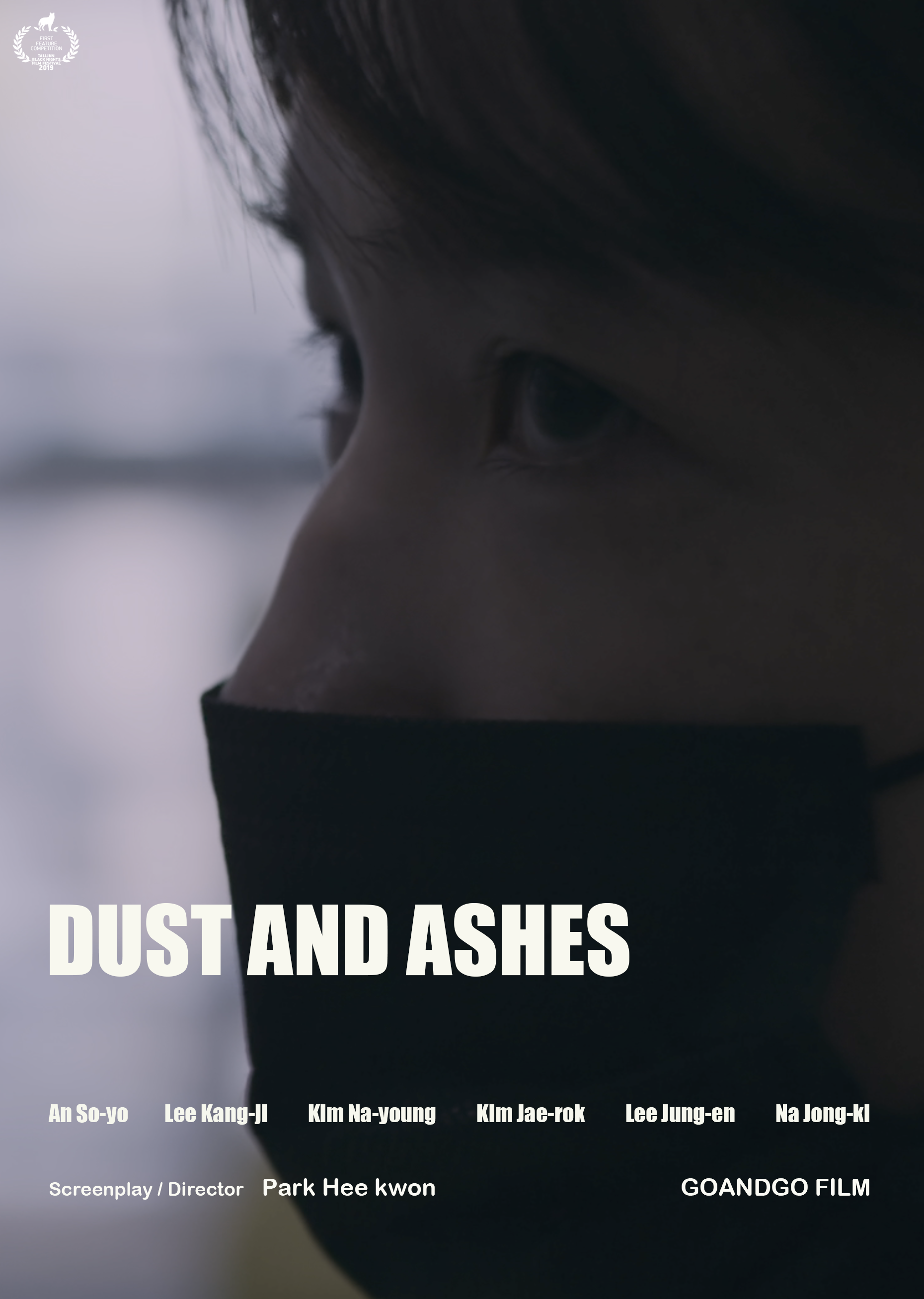
Dust and Ashes (축복의 집, Park Hee-kwon, 2019)

“People are property of the government from the cradle to the grave, since it’s all over they give it back to you” a corrupt policeman ironically explains handing over a dodgy document designed to help a desperate young woman subvert her tragedy. Stark in execution, Park Hee-kwon’s near wordless exploration of urban poverty Dust and Ashes (축복의 집, Chuk-bok-eui Jip) finds its heroine resorting to the unthinkable in a simple quest to survive while trapped in a world collapsing all around her. 

As we first meet Hae-su (Ahn So-yo), she’s leaving her factory job which evidently involves substances so toxic that she washes right away and scrubs her jacket clean ready for the next day before leaving for her other gig, scrubbing barbecue grills at a restaurant. She keeps trying to call someone who doesn’t pick up and walks home through the darkened streets, pausing so long outside the door we wonder if she’s gone to see whoever it is who won’t return her calls but eventually lets herself in with a key and walks quickly to the bathroom without turning on the light as if there’s something in there she doesn’t want to see.

Perhaps we begin to doubt Hae-su, somewhat uncertain of what has actually happened, but we can also see that she is griefstricken and nervous, driven to extremes in the depths of her despair. She must necessarily have known what was waiting for her at home, planned it, knowing exactly what it is she must do next. Her brother, Hae-jun (Lee Kang-ji), meanwhile is evidently not so much in favour, petulant and resentful but aware he has little choice in playing the role which has already been dealt him. Hae-su’s painful quest takes her on a journey through the corruptions of the modern society from a dodgy doctor taking cash for certificates to a corrupt policeman ‘helping” her alter the narrative circumstances to her advantage but only for a fee. 

Meanwhile, she’s about to be evicted, the entire area she lives in earmarked for “redevelopment”, a wasteland of deconstruction strewn with dust and rubble. We see her suffer the ignominy of a funeral with no flowers where she and her brother are the only mourners, a sight which seems to raise eyebrows not least with the insensitive policeman. Opening with darkness and the sounds of machinery, Park situates us in an industrial hellscape as if our entire lives took place on a gurney, trapped inside a wooden box being slowly pushed towards the fire. Showing the entirety of the funeral process in painful detail from the tender yet efficient embalming to the eventual cremation, grieving becomes something impossibly cold and clinical, no fancy curtains here merely an LCD screen reminiscent of that above a baggage claim carousel to let you know your loved one’s ashes (or more accurately bone dust ground in an industrial blender) are now ready for collection neatly packaged inside another, smaller wooden box. 

Yet Hae-su has no choice but to put up with these indignities. There appears to have been some level of male failure involved in the family, an absent or estranged father figure apparently no help, while we can also infer that the shadowy presence bothering her that she takes such care to avoid is an agent of the loan sharks in part responsible for her financial predicament. We can only imagine the desperation that must have forced this small group of people to take such a dreadful decision, and the anxiety of those left behind as they wonder if it will all come to nothing. Yet even if it works out, we get the impression Hae-su is running to stand still. Victory only means the continuance of the status quo, there seems precious little sign Hae-su or her brother will be able to escape their penury especially after everyone, including the loan sharks and dodgy policeman, exacts their cut. 

In the end all there is is dust and ashes. Hae-su evermore encumbered, wearing a mask to stave off the inevitable but still breathing in the corruption of the world around her as it too collapses into dust, a deconstructed wasteland of economic hubris. Necessarily bleak, Park’s spare, numbed photography finds only emptiness in Hae-su’s rain-drenched streets even as she strides off into the distance determined to survive no matter what it takes. 


Dust and Ashes streams in Poland until 6th December as part of the 14th Five Flavours Film Festival.

Festival trailer (English subtitles)

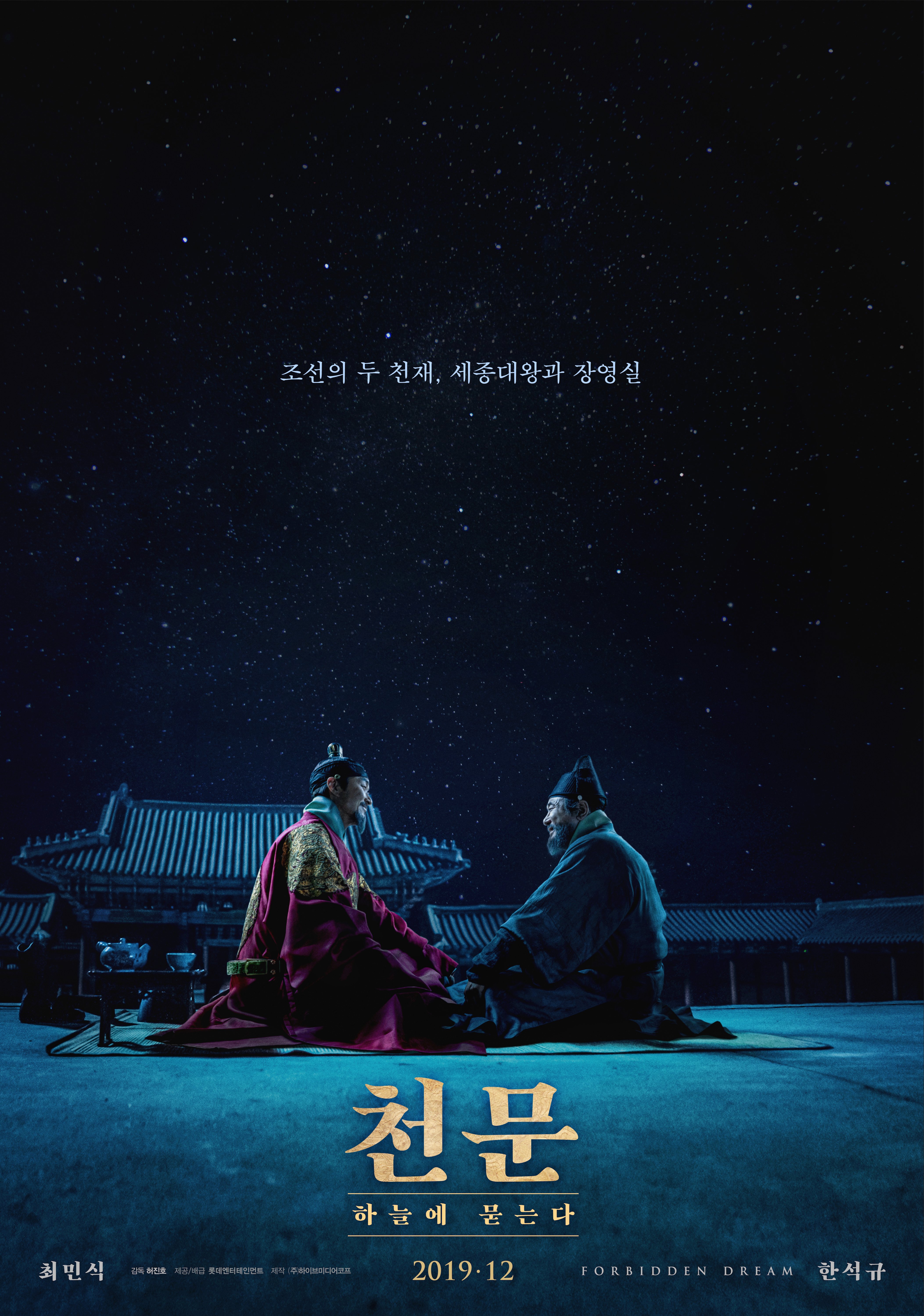
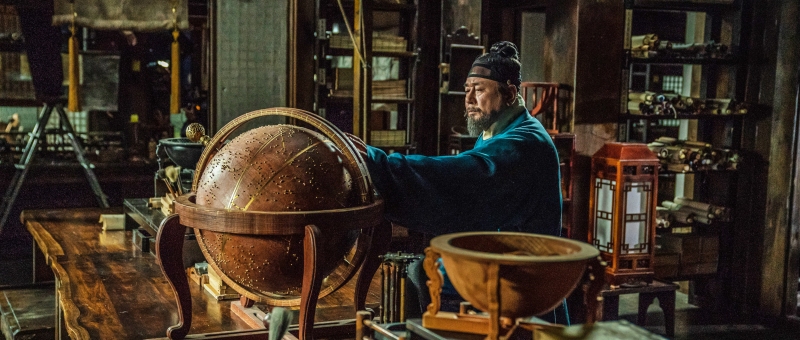
Forbidden Dream (천문: 하늘에 묻는다, Hur Jin-ho, 2019)

Technology is a great motivator for social change, which is one reason why there are those who would prefer to shut it down before it exists, afraid of the threat it poses to their own power and status. Best known for tearjerking romantic melodrama, Hur Jin-ho follows historical epic The Last Princess with a quietly nationalistic journey back to the Joseon era in which calls for greater sovereignty perhaps incongruously go hand in hand with progressive politics which see the good king Sejong (Han Suk-kyu) agitate for greater social equality through the democratisation of knowledge. This is his “Forbidden Dream” (천문: 하늘에 묻는다, Cheonmun: haneul-e mudneunda), the existence of a “fair” society in which anyone can read, write and learn regardless of the social class into which they were born.

Apparently inspired by the mysterious disappearance of legendary court inventor Jang Yeong-sil (Choi Min-sik) from the annals despite his close friendship with the king, Hur sets his tale in the 1440s during which time Korea is a tributary of the Ming. The problem with that is that though Korea remains a sovreign nation and Sejong its king, the Ming have positioned themselves as the culturally superior arbiters of knowledge. Facing persistent famines, Sejong is convinced that the key to agricultural prosperity lies in getting rid of the Ming almanac and using their own time zone which is better suited to the Korean Peninsula and will allow their farmers to make the best use of their land. The Ming, predictably, do not like his idea and are forever sending envoys to tell him to stop trying to “improve” on their technology. Nevertheless, he persists which is how he comes to meet Jang Yeong-sil, a technological genius whose innate talent has brought him to the palace despite the fact that he was born a slave. 

In Yeong-sil, the perhaps lonely king Sejong discovers a kindred spirit, the two men quickly, and transgressively, speaking as equals when it comes to developing their new technology. Giddy as schoolboys, they work on their inventions together for the betterment of the people, beginning with building a water clock to better indicate the time when the sun goes down. Sejong frees Yeong-sil and makes him a “5th rank scientist”, gifting him the clothes of a gentleman, but his open hearted egalitarianism sets him at odds with his ambitious courtiers who resent being forced to share their space with a former slave, puffed up on their feudal privileges that convince them advancement is a matter of name and intrigue. 

Just as Hur suggested in The Last Princess that the courtiers sold their country out because of an internalised sense that Korea was small and backward and could not stand alone, so Sejong’s ministers begin to abandon him and turn their fealty to the Ming. Sejong believes in Korean independence, certain that only by standing free can the country prosper and the people be happy. Others however fear Sejong’s “forbidden dream” of a more equal society knowing that it necessarily means a lessening of their own power and the privilege they feel themselves entitled to. Besides timekeeping, Sejong has also been working on a new alphabet which will further set them apart from the culture of the Ming. The ability to read and write using Chinese characters which Sejong feels are not perhaps well suited to Korean has hitherto been reserved for the elite. Sejong’s alphabet which will eventually become the Hangul still in use today removes the barriers to knowledge which ensure the rule of the few can never be challenged while also reinforcing the idea of a cultural Koreanness which is valid in its own right, equal to that of the Ming, and obviously a better fit for his people who will then be able to create glorious inventions of their own. 

Hangul is the “something eternal that no country can take away” that Sejong dreamed of as his legacy, but it’s also the thing that costs him his transgressive friendship with Yeong-sil as his courtiers reject his internal challenge to the social order, favouring the feudal certainties of the Ming over his revolutionary kingship. Undeniably homoerotic in the depths of its sincerity, the attachment of the two men, a slave and a king, is embodiment of Sejong’s forbidden dream as a symbol of a better world where all are free to innovate. “Class does not matter” he tells Yeong-sil as they stare up at the stars, “what matters is that we look at the same sky and share the same dream”. That better world, however, will be a long time coming, Yeong-sil a martyr punished for his class transgression but making a personal sacrifice on behalf of the king who was also his friend so he can bring about his forbidden dream of an independent Korea powered by cutting edge technology created by men like him with fine minds from all walks of life. Well, perhaps there’s still some work to do, but you get there in the end. Anchored by the magnetic performances of its two veteran leads, Forbidden Dream does not entirely escape the pitfalls of the Joseon-era drama with its palace intrigue and complex interpersonal politics, but is at its best when celebrating the intense friendship of two men united by the desire to innovate even if that innovation is not always convenient for the world in which they live.


Forbidden Dream streamed as part of this year’s New York Asian Film Festival.

International trailer (English subtitles)
Images: © 2020 LOTTE ENTERTAINMENT All Rights Reserved.

Juvenile Offender (범죄소년, Kang Yi-kwan, 2012)

“Can you forgive me just this once?” the protagonist(s) of Kang Yi-kwan’s Juvenile Offender (범죄소년, Beomjoe Sonyeon) sheepishly ask hoping to be pardoned for their transgressions, only to be met with the cynical, disappointed frown of those who’ve heard it all before. An empathetic character study, Kang’s steely drama lays bare the various ways in which patterns of behaviour ironically repeat themselves despite the best intentions of all involved while even those who earnestly do their best to break the cycle find themselves sabotaged by a rigid and unforgiving society. 

At 16, Ji-gu (Seo Young-joo) lives with his elderly grandfather who is bedridden and seemingly in terrible pain. Falling in with a bad crowd, he finds himself breaking into a wealthy home, reassured by one of the other boys that it’s fine because it belongs to a relative. Unfortunately, however, they’re caught when the lady of the house returns home unexpectedly, Ji-gu accidentally pushing her as he tries to escape. This is particularly bad news as, we discover, Ji-gu is already on probation for a previous assault charge after fighting with some other kids who made fun of him because of his poverty. Arrested, he’s the only one of the teens to have no representation in the room and the judge, trying to be sympathetic, eventually decides that in the absence of effective parenting some time in an institution might be the most beneficial option despite the fact that there will be no one left to look after grandpa. 

His grandfather’s eventual death while he is inside is one of many things adding to Ji-gu’s sense of guilty frustration, but it also allows a well-meaning guidance counsellor at the detention centre to realise that Ji-gu’s long absent mother who he’d assumed to be dead is in fact very much alive. Surprisingly, she agrees to see him but alarm bells should perhaps be ringing when she fails to turn up to sign for his release only to arrive a day late just as he’s about to be given into the custody of a social worker. Hyo-seung (Lee Jung-hyun) is evidently excited to take on this new challenge of becoming a mother to a 16-year-old boy, but it’s not long before you realise she hasn’t quite thought this through. 

As she outlines to Ji-gu by way of an explanation, she was only 17 when she gave birth to him. Overwhelmed by the responsibility and shame of being an unwed teenage mother she left him with her parents intending to commit suicide. There is something in her that is permanently arrested at the age she was she when became pregnant, forever relying on the kindness of (virtual) strangers but more often than not pushing her luck and outstaying her welcome. For the moment, she’s working as a trainee hairdresser and rooming with her wealthy boss in a fancy Gangnam apartment. Ji-gu will have to bunk with her, taking the bed while she throws some pillows on the floor. It’s less than ideal, but nevertheless mother and son begin to rebuild their relationship through a continual exchange of roles as Hyo-seung figures out the kinds of things she’s now responsible for such as getting Ji-gu re-enrolled in school, while he perhaps starts to allow himself to be looked after while realising that his mother really needs looking after too. 

The trouble is the past won’t let them go. Hyo-seung’s well-meaning attempt to get Ji-gu into an elite Gangnam school backfires when the snooty teacher refuses to take a boy from juvie, advising him to explore “alternative education” or sit the exams privately. He meanwhile ends up re-encountering an old friend, an act in itself which threatens his probation, but also brings additional complication in the revelation that his former girlfriend Sae-rom (Jun Ye-jin) gave birth to his child while he was inside but was disowned by her family who forced her to give the baby up for adoption and has become a melancholy exile living in a shelter for girls in a similar position. 

The ironic symmetry with his own life is not lost on him, his mother sadly explaining that his conception was no grand romance but a momentary lapse of teenage judgement with a boy who gave her a fake name and was never heard from again. Tracking Sae-rom down she wants nothing to do with him, though he is struck by the self harm scars on her arm neatly mirroring those on Hyo-seung’s wrists, his mother wailing that her life was ruined in an instant by his father whose mistake he has just unwittingly repeated. He vows to take responsibility, cruelly snapping back that he doesn’t want Sae-rom to turn out like Hyo-seung making plain he knows all about her life of petty grifting, but realistically how can he when he’s only 16 and on the run from himself frightened of making a mistake and ending up back inside. 

Each outcasts in their own way, consumed by the social stigma of being an unwed teenage mother (still an unpardonable offence even in 21st century Korea) or of being a juvenile offender, the trio attempt to move on with their lives but find themselves continually blocked either by an unforgiving, often wilfully exploitative society or by their own sense of hopeless inertia. “Can you forgive me just this once?” Ji-gu repeatedly asks, really meaning to do better this time only for his anger and frustration to ruin everything he’s worked so hard to acheive. Still, perhaps it’s not him that needs forgiving so much as the unforgiving society that needs to regain a sense of compassion for those who transgress against its unfair and arbitrary sense of moral righteousness. 


Juvenile Offender streamed as part of this year’s London Korean Film Festival.

International trailer (English subtitles)
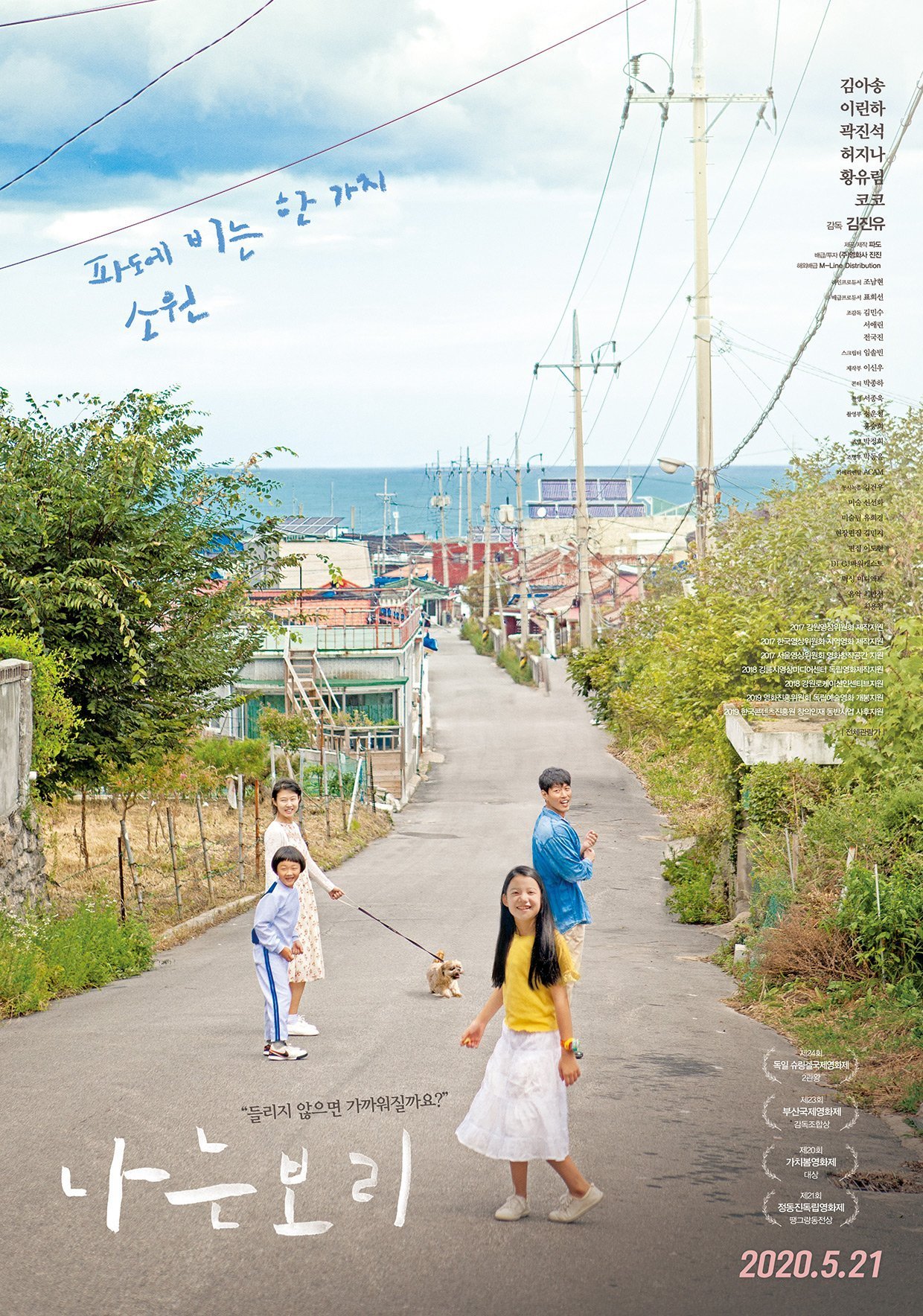
Bori (나는보리, Kim Jin-yu, 2018)

Perhaps it’s not unusual for a soon-to-be teenage girl to feel out of place at home, but for young Bori the sense of alienation is all the greater because she is the only hearing member of her family. Set in a charmingly tranquil seaside town during a serene summer holiday, Bori (나는보리, Na-neun-bo-ri) touches on themes of identity and belonging, disability and discrimination, communication and connection, but is at heart a beautifully drawn coming-of-age tale in which the heroine learns to feel at home in herself and her family while fully accepting that difference need not be a barrier. 

Though her home life appears to be blissfully happy, Bori (Kim Ah-song) can’t help feeling a little pushed out in being necessarily othered as she acts as a speaking interpreter for her family members. She mildly resents her younger brother Jeongwoo (Lee Lyn-ha), who like her parents is deaf, because he’s allowed to mess around just being a kid while she has to take on a more mature responsibility, telephoning for take away food, buying train tickets at the station, talking to bank tellers, giving taxi drivers directions etc. Though she obviously understands sign language, she does not always use it, often falling back on note writing to get across exactly what she wanted to say, and sometimes feels excluded from the happy bubble of her parents and brother as they continue to communicate in ways which still elude her. 

For these reasons, she’s taken to stopping off at the local shrine on her way to school to pray that she somehow loses her hearing. Bori’s best friend, Eun-jeong (Hwang Yoo-rim), is confused why she would actively like to deafen herself but nevertheless supportive, lending her her earphones to listen to white noise at unhealthy decibel levels but it’s not until the first day of summer holiday when she copies an elderly diver on TV and tries to implode her eardrums by jumping in the sea that she almost gets her wish, waking up in hospital and telling everyone that she too is now deaf. To Bori, all she’s done is make herself the same as everyone else in her family so she can’t understand why people seem upset. After all there’s nothing wrong with being deaf, so why is everyone acting as if she’s met with some kind of tragedy?

Then again, being “deaf” doesn’t seem to make the difference she thought it would. Her father (Kwak Jin-seok) cheerfully tells her it makes no difference at all to him whether she’s deaf or not, she’s just his lovely little girl while her mother (Hur Ji-na) who was understandably upset at the hospital quickly adapts. Jeongwoo meanwhile begins to confide in her a little more, temporarily becoming the big brother as he explains to her how difficult it can be for him as a deaf child in a hearing school. “I’m difficult for him too” Jeongwoo generously concludes telling his sister that he mostly doodles or sleeps in class because he finds it difficult to lipread and the teacher doesn’t seem to have made much of an effort to be inclusive. Bori realises that the reason her brother’s so football crazy isn’t just that he enjoys the sport, but that it’s the only time the other kids interact with him. He doesn’t really have any “friends” and even though he’s the best player for his age he’s only a substitute on the team because the coach is wary of his disability even though it can’t be said to make much difference on the pitch.

Eun-jeong, while suspecting Bori might be faking, treats her pretty much the same making an effort to communicate in whatever manner works, though the girls were used to talking through notes in class anyway. Some of the other kids at school, however, are far less understanding, unaware she can of course hear their barbed comments, and while out shopping with her mother she becomes more aware of the direct discrimination she faces as two rude cashiers in a boutique talk openly of their disdain for the “mute” in their store, whacking an extra 5000 won on the price thinking she won’t notice. Bori is outraged, but can’t say anything without blowing her cover. 

The worst occurs however when her aunt takes her and her brother for a checkup at the local hospital where the doctor suggests possible surgery and a cochlear implant for Jeongwoo. Bori hears him say that after the operation Jeongwoo would be unable to play sports or go swimming because of the dizziness meaning he’d have to give up football, his only outlet. Conflicted over whether to warn him, she is also a little offended that everyone seems to consider deafness as a problem to be fixed, not even bothering to enquire if that’s actually something that Jeongwoo might want. She repeatedly asks him, but is conflicted when he tells her that he would or at least he doesn’t necessarily want a “cure” for his deafness but would desperately love to be able to talk to his friends. Nevertheless, she’s annoyed with her aunt for railroading them towards “normality” without properly discussing it with them. 

Talking with her father he tells her of the discrimination he faced as a child, that the reason he can’t write is because he was badly bullied and prevented from attending school. He’s glad things are better for Jeongwoo, though they are obviously not perfect. What Bori realises is that her difference doesn’t matter and neither does anyone else’s, the people who love her would still love her no matter what and the ones that wouldn’t aren’t worth worrying about, while she also resolves to stand up to discrimination and injustice on behalf of those who might not be able to. A charmingly wholesome coming-of-age drama set in a sunny seaside town, Bori is a gentle plea for a more inclusive world fulled by empathy and openness. 


Bori streams in the UK on 12th November as the closing gala of this year’s London Korean Film Festival.

International trailer (English subtitles)
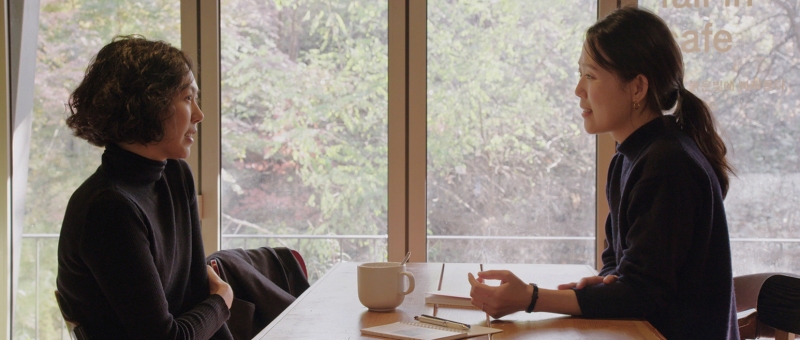
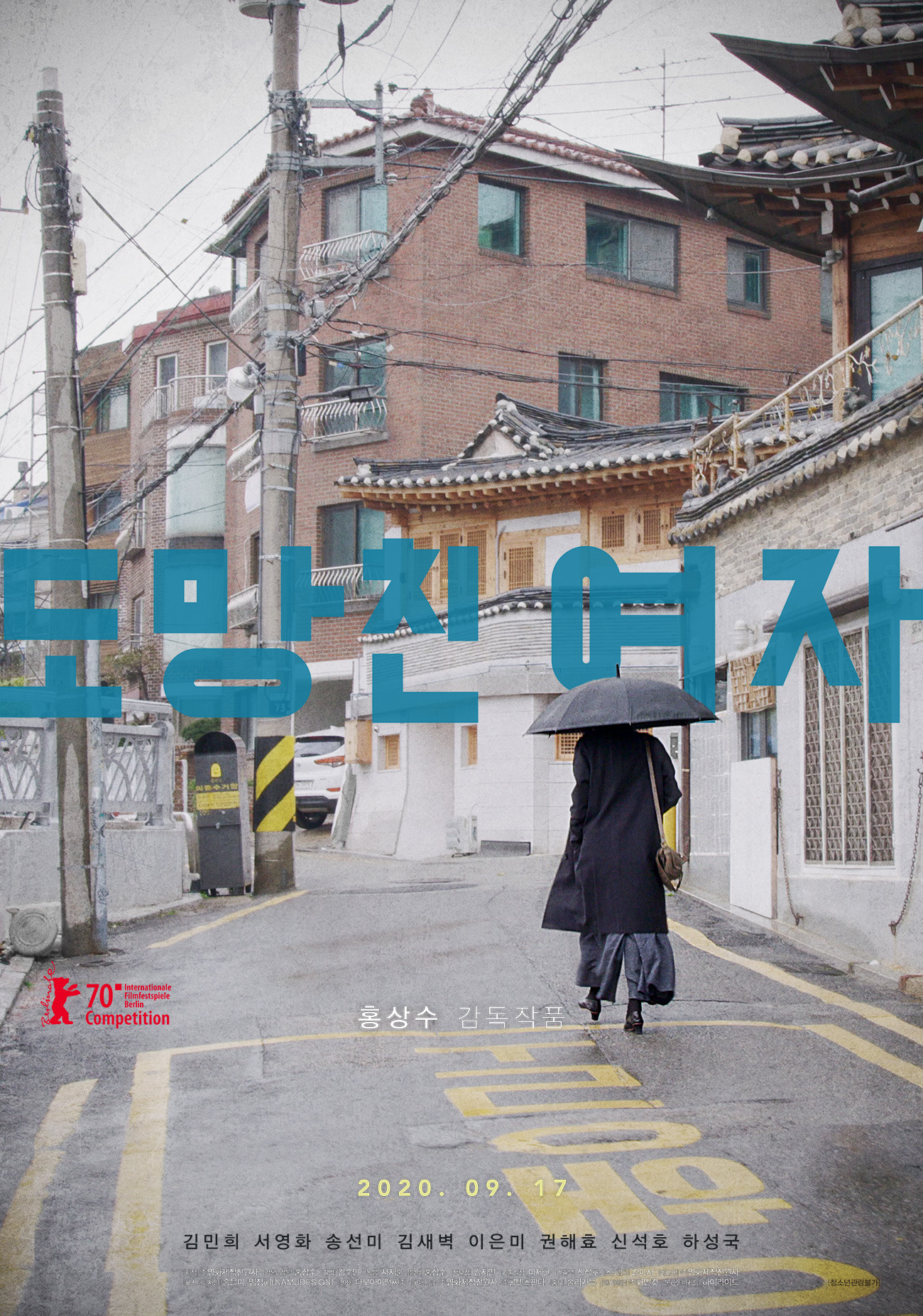
The Woman Who Ran (도망친 여자, Hong Sang-soo, 2020)

“He keeps saying the same thing. It’s absurd how he repeats himself”, an exasperated wife complains. “If he just repeats himself how can he be sincere?”. Perhaps another meta self own from master of the form Hong Sang-soo, but one that has additional bite in indirectly targeting a potentially duplicitous heroine who may or may not be “The Woman Who Ran” (도망친 여자, Domangchin Yeoja). Ran from what, one might ask though there is something clearly fugitive in the brief sojourns of Gam-hee (Kim Min-hee) whose casually profound conversations with a trio of old friends once again probe into the complicated nature of the relationships between men and women as if she were on a quest to find out what else is out there for a woman of a certain age than a, as she intentionally or otherwise characterises it, dull and unfulfilling marriage. 

It’s the first of her hosts, Young-soon (Seo Young-hwa), who perhaps signals Gam-hee’s desire for change in pointing out that her hair is much shorter than it had been the last time she saw her or ever before, Gam-hee apparently having attempted to hack it off herself in the bathroom in a fit of despair before deciding to get a professional to fix it. Young-soon thinks it makes her look like a “flighty high school student”, and in a sense it does in her slightly nervous giddiness even as she cuts the figure of a typically elegant, upper-middle class lady of leisure. As she tells each of her friends, Gam-hee claims that she and her husband have never spent a day apart in their five years of marriage, his idea apparently in a romantic conviction that those who love each other should stick together, but now he’s apparently gone off on a “business trip” so she’s travelling around visiting friends. Repeated ad infinitum in more or less the same words, Gam-hee’s story can’t help but feel overly rehearsed and less “sincere” with each iteration, leading us to wonder what the real reason for her excursion might be along with her true feelings about her marriage. 

As we find out, Young-soon is recently divorced from a self-absorbed playwright/director and has used the settlement money to move out to the semi-rural fringes of the suburbs where she has a small patch of land farming her own produce. She now lives with another woman, Young-jin (Lee Eun-mi), described only as a “roommate” but the atmosphere is domestic and settled, an ostensibly harmonious home. It is nevertheless disrupted by an irritating man (Shin Seok-ho), a new neighbour come to issue a complaint about the couple’s habit of feeding the local strays whom he maligns as “robber cats”, politely suggesting they stop because his wife is apparently so afraid of them that she can no longer leave her new home. Young-jin is polite but firm, describing their relationship to the cats as like their children, dismissing the man’s insistence that his wife’s ability to enjoy her garden is an “important matter” with the affirmation that the cats’ right to life is also an “important matter” and so they’re at an impasse. The comically passive aggressive conversation ends in a stalemate with the man admitting a momentary defeat, annoyed that the two women refused to acknowledge his authority, but pettily vowing to appeal to a higher power by reporting them to a residents’ association no better than the local rooster who likes to peck the feathers off hens to show them who’s boss. 

A man turns up to annoy Gam-hee’s second friend too, a 26-year-old unsuccessful poet (Ha Seong-guk) she apparently slept with on a whim only to see him become overly attached. Like Young-soon, Su-young (Song Seon-mi) has achieved a degree of financial independence and has recently bought a long term lease on her own home. She is apparently happily single, or at least convinced that good men are hard to find and most particularly in Korea. Nevertheless, she has something tentative going with a soon-to-be divorced architect who lives on the floor above, which is one reason why she’s keen to be rid of the annoyingly clingy poet. Su-young tries to ask Gam-hee about her marriage, if she’s really in love, but she can only answer unconvincingly that she feels a little bit of love everyday, accidentally or otherwise positioning herself as the loved and not the lover. She tells the final of her friends, Woo-jin (Kim Sae-byuk), that her husband is a part-time teacher and translator of historical texts and novels prompting the question of what sort of business trip he might have needed to go on, alone, for the first time in five years, but also signalling something of her boredom with her overly conventional life, complaining to Su-young that she’s fed up with her hobbyist sideline running an unsuccessful florists. 

Her meeting with Woo-jin is, if she’s to be beleived, serendipitous, the fact she’s brought no gift as she had for the other two women (meat for Young-soon that as it turns out was really for Young-jin, and a designer coat for fashionable Su-young) supporting her case, but does perhaps lead her towards her endgame as the protagonist in a final encounter with a problematic man, as it turns out an old flame who is the cause of the initial awkwardness between the two women whose former closeness we can infer from small, intimate gestures, Woo-jin placing her hand over Gam-hee’s by means of apology, and Gam-hee later clasping her friend’s knee. Curiously enough, the two women are also dressed more or less the same, and later seem to have patched up their old friendship, conspiratorially slagging off Woo-jin’s husband Seong-gu (Kwon Hae-hyo), now a famous author she fears has become an “insincere” narcissist who’s let fame go to his head. 

Apparently having seen him on TV, Gam-hee too agrees he’s “changed”, wondering if he’s really the same man she once knew, endlessly prattling on self-importantly for the cameras. Woo-jin can’t bear to listen to him anymore, fed up with his well rehearsed quips and affected persona. In seeing him again is Gam-hee confronted by the “reality” of her romantic fantasy of the failed love of her youth, or merely presented with an uncomfortable mirror of artifice that, like her meetings with her three friends prompts her into reconsideration of who she is and what it is she wants out of life? “I’d like to live somewhere this” she says to both Young-soon and Su-young, partly out of politeness but also re-imagining herself as a new age cottager or fancy free bachelorette, hearing the scandalous story of a woman who really did run disappearing in the night from her crushingly disappointing existence. Nevertheless, like many of Hong’s heroes Gam-hee remains a fugitive, retreating to the temporary refuge of the familiar trapped somewhere between past and future without clear direction but perhaps a little more alive. 


The Woman Who Ran streamed as part of this year’s London Korean Film Festival. It will also open at Curzon Bloomsbury & stream via Curzon Home Cinema on 11th December ahead of hitting Mubi 20th December courtesy of CMC Pictures.

Original trailer (English subtitles)
Family Ties (가족의 탄생, Kim Tae-yong, 2006)

What is it that binds a “family”, bonds or blood, and do you really have a choice when it comes to being in one? Those are all questions which might have greater import in societies in which the concept of family is clearly defined and deeply entrenched, but even so the answers may be in a state of flux in the face of rapid social change which perhaps dangles the possibilities of greater personal freedom while in other ways remaining rigidly conservative. 

More literally translated as the birth of a family, Kim Tae-yong’s Family Ties (가족의 탄생, Gajokeui tansaeng) explores these changing connections through three interconnected stories, the first two occurring roughly contemporaneously and the third around a decade later. The heroine of the opening chapter, Mira (Moon So-ri), is a reserved young woman running a small cafe mostly catering to noisy teens. Originally excited to receive a phone call from her younger brother Hyung-chul (Uhm Tae-woong) whom she hasn’t seen for five years letting her know he’ll be coming home for a visit, Mira’s enthusiasm for the reunion dwindles when he turns up with a new wife, Mu-shin (Go Doo-shim), who appears to be much older than him. Mira is understandably put out. Firstly, he obviously didn’t invite her to his wedding, in fact he didn’t even bother to share the news he’d got married, and secondly it’s quite inconsiderate not to have warned her there would be an extra guest in tow especially as they’ve not met before. 

On the other hand, perhaps seeing him again merely reminds her of all the reasons they haven’t stayed in touch. In a quiet moment, Hyung-chul reveals he wants to open a shop selling traditional hanbok nearby, which is a surprise, but Mira instantly realises he’s probably come for money and repeatedly tells him she doesn’t have any. When everyone’s asleep, she makes a point of putting her bank book in a locked box inside the safe just to be sure he won’t abscond with it in the night. With Hyung-chul picking a fight with her fiancé and a random child turning up who turns out to be Mu-shin’s unwanted stepdaughter from several relationships ago, Mira’s patience begins to come to an end. She suggests that perhaps they’ve outstayed their welcome, but then evidently thinks better of it only to be let down once again by her irresponsible brother who claims he can take care of everyone, but predictably does not follow through. 

Family becomes a burden left to women to bear while acting as a safety net for men who view their role as protector yet largely can’t look after themselves. Sun-kyung (Gong Hyo-jin), the slightly younger protagonist of the second story, is frustrated by this same self sacrificing quality in her mother who has been continually deceived by useless lovers all her life including the most recent, a married man who won’t leave his wife and children. She also resents the presence of her much younger brother, still an elementary student doted on by the mother from whom she feels increasingly disconnected. Having run away from home to become a singer, Sun-kyung now has her sights set only on escaping abroad and is currently working as a guide for Japanese tourists only to end up bumping into her ex-boyfriend on a day out with his new partner. For her family is little more than a trap, her boyfriend apparently breaking up with her for being too selfish while she eventually pays a visit to the home of her mother’s lover to confront him and ask if “love” is really worth the price of sneaking around living a lie. Yet bonding with her brother and discovering what was in the mysterious suitcase her mother insisted on leaving at her apartment perhaps reconnects her with her childhood self and a more positive take on family bonds, even if that means in a sense regaining one dream only to abandon another. 

In any case, the anxieties of the first two sequences are visited in the third through the story of a young couple we first meet sitting next to each other on a train. So familiar with each other are they that we assume they are already involved, but they are in fact strangers meeting for the first time. Flashing forward a little, however, we can see their relationship is strained. Kyung-seok (Bong Tae-gyu), the young man, has inherited a sense of male insecurity, flying into jealous rages ostensibly because his girlfriend Chae-hyeon (Jung Yu-mi), is simply too nice or more to the point she’s nice to everyone and not just to him. He is frustrated by her because he feels she allows herself to be taken advantage of, often lending money to people who won’t see the need to pay her back because she’s too “nice” to bring it up. The last straw comes when he feels she’s embarrassed him by not showing up for a family dinner because she got involved in the search for a missing child. 

“When I’m with you I’m dying of loneliness” he somewhat dramatically announces as part of a breakup speech, annoyed that Chae-hyeon does not devote herself entirely to him as perhaps he expects a woman to do, but defiantly carries on being indiscriminately nice to everyone. He describes his mother as “pathetic” for having been overly attached to unreliable men, only to be corrected by his sister who reminds him that she merely had a big heart, something he’s perhaps lacking in his broody neediness. Yet through meeting Chae-hyeon’s family we get a sense of something different and new in which two women have raised a child unrelated to them by blood who came into their lives by chance as the result of a man’s irresponsible behaviour, an unnecessary throwaway reference to separate bedrooms perhaps undermining the boldly progressive introduction of Chae-hyeon’s two mothers to the extremely confused Kyung-seok. Nevertheless what we see in this last family, born as it was through a series of accidental meetings, is the first instance of a warm and loving home built on mutual support and affection rather than simply on blood or obligation. Having reclaimed the nature of family for themselves perhaps gives the women the courage and conviction to firmly close the door on those who might seek to misuse or corrupt it with their own sense of selfish entitlement, blood relation or not. 


Family Ties streamed as part of this year’s London Korean Film Festival.