Diaspora: Arirang Road (디아스포라의 노래: 아리랑 로드, Lee Kyu-chul, 2019)

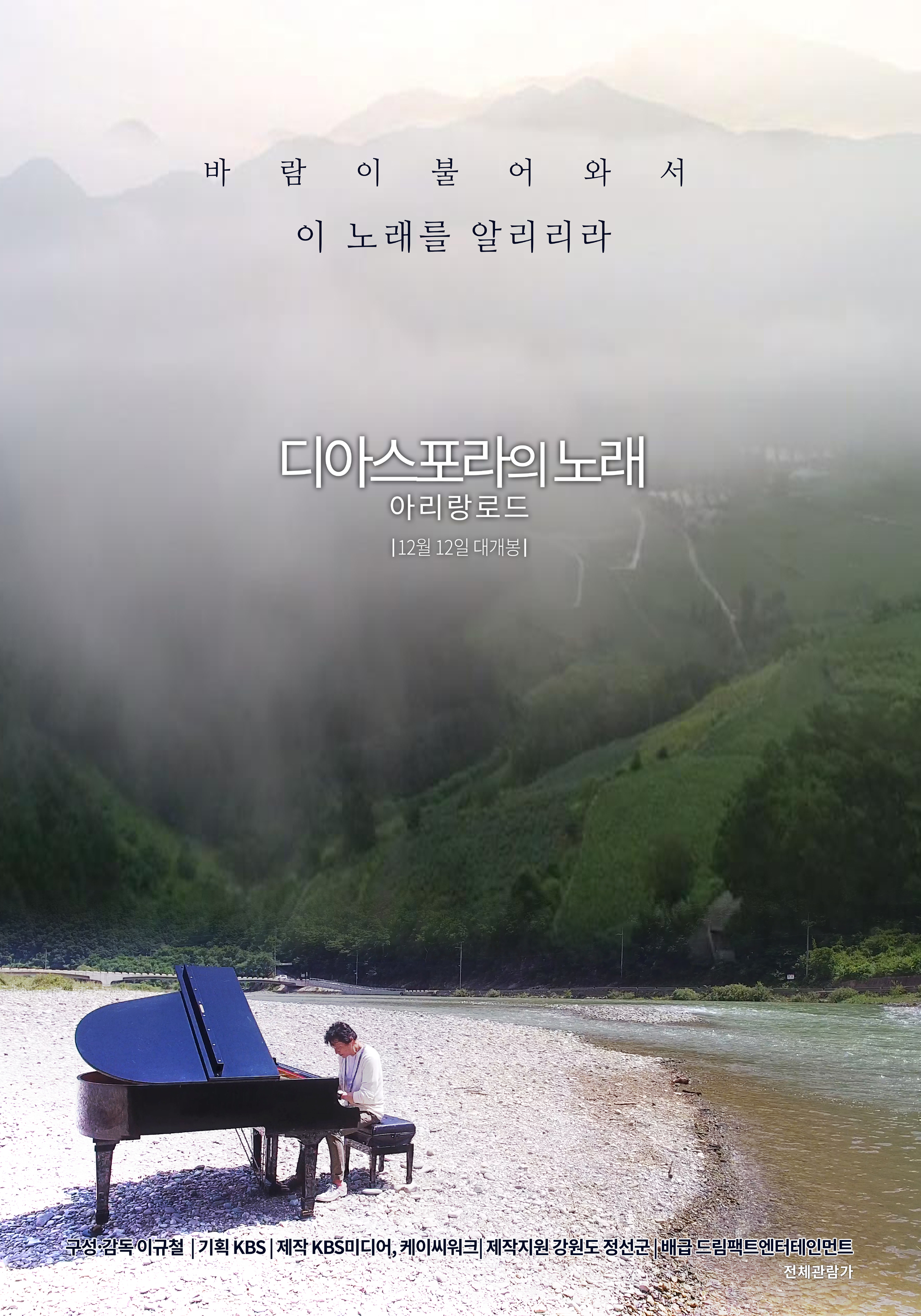
A song from home can be a powerful thing when you’re far away, as the various protagonists of Lee Kyu-chul’s Diaspora: Arirang Road (디아스포라의 노래: 아리랑 로드, Diaspora-eui Nolae: Arirang Road) make plain. Though they perhaps can no longer remember all the words, or are too overcome by emotion to be able to sing, each of Lee’s overseas Koreans has a deep connection to the melancholy folk song which sings, as one farmer puts it, of “the grief of living” but as others affirm is also full of life and hope if only in the solidarity of voices raised together in shared hardship. 

The guide, Korean-Japanese composer Yang Bang-ean, is on a quest to write his own version of Arirang, a new version which sings in the voices of the diaspora. Yang was himself born in Japan to Korean parents and is a member of the zainichi community committed to cross-cultural exchange. Unsurprisingly the first half of the film is dedicated to the Koreans who found themselves in Japan sometimes against their will, trafficked as forced labour during the colonial era and taking solace in Arirang while enduring harsh treatment and discrimination at the hands of the Japanese. In a brief reconstruction, a miner reads a letter to his mother in which he hides how much he is suffering, later likening himself to an octopus tricked into a pot, gradually consuming itself in a desperate attempt to survive.

Unlike many folksongs, little of Arirang is fixed aside from the distinctive chorus leaving melody and lyrics open to interpretation meaning there are thousands of different versions found all over Korea and beyond. The action later shifts to a perhaps forgotten diaspora community, the Koreans of Central Asia who travelled to Russia in search of a better life only to be moved on by Stalin in the 1930s as international tensions escalated. Packed onto a fetid train travelling for days on end with many dying during the journey from cold, stress, or hunger, they had only Arirang to unite them and offer hope that their lives would one day be better. 

As as someone puts it, Arirang is the “tragic history of a scattered people”, but also “a belief of our history and future”. According to another singer, it is “love. life. and living”, running like water with the rhythms of nature and leading those who share the song toward hope. Yang later re-characterises the song as both personal and universal, the singer in a sense becoming Arirang and Arirang the singer in a process of mutual change and evolution, something which is perhaps underway as he continues to write his own Arirang for those Koreans who remain outside of Korea. 

As many of the singers point out, there is much grief and sorrow in Arirang but also hope and a spirit of endurance. Lee Kyu-chul shows us two different burial grounds on different sides of the Earth, the first marked only with stones for Koreans buried anonymously in Japan, and the second a small city of walled headstones for those who died peacefully of old age in Kazakstan. Those who survived the train later prospered and endured, their grandchildren born and raised in Kazakstan but still united by Arirang as a marker of their culture while one young man enthusiastically belts out a K-pop tune to remind us they’ve not forgotten their roots. 

Yang concludes his performance with an intense jam session of various artists each forging a new Arirang together, testimony to the power the song has to bring people together as it has with Yang and the members of the Korean diaspora he has met from all over the world in some ways very like him and in other ways not but united in their Koreanness through the memory and the sentiment of Arirang no matter what lyrics they sang or what hardship they endured. A heartfelt tribute to the solidarity of voices raised in song and the cathartic properties of music, Lee Kyu-chul’s folksong odyssey rediscovers the invisible connections of the diasporic community brought together by the power of Arirang which offers, as Yang puts it, “the opportunity to hope” even in the depths of despair.


Diaspora: Arirang Road streams in the US Sept. 10 to 14 as part of the 11th season of Asian Pop-Up Cinema.

Original trailer (English subtitles)

Paper Flower (종이꽃, Koh Hoon, 2019)

Rich or poor, we’re all the same when we die, according to dejected funeral director Sung-gil (Ahn Sung-ki). A mild rebuke on the heartless corporatism dominating contemporary Korean society, Paper Flower (종이꽃, Jongikkot) looks for beauty even in the depths of despair, but is unafraid to admit that the world has its ugliness too as its twin protagonists practice entirely contrary reactions to the traumatic past. While a single mother on the run fills her life with joy and light, Sung-gil struggles to hold on to his principles while never quite as cynical as the years have conspired to make him seem. 

Sung-gil’s problem is that his funeral business has run into trouble now that a conglomerate has entered the marketplace providing a more convenient, modern service which vastly undercuts his own. He’s been stubbornly holding out, but his rent is long overdue and his landlord’s getting antsy, meanwhile he’s also responsible for the care of his paralysed son Ji-hyuk (Kim Hye-seong) whose carers keep quitting because he keeps attempting suicide and generally makes their job as difficult as possible. All things considered, Sung-gil has no option other than to become a franchisee of the enemy conglomerate, Happy Endings. 

Across town, single mother Eun-sook (Kim Yoo-jin AKA Eugene) is facing a similar problem in that she’s just been unceremoniously let go from her cleaning job despite being promised a year’s contract because the company decided to outsource to a conglomerate who didn’t want to keep her on. Meanwhile, she’s also being pursued by men in suits handing her court orders which say that she has to go into “rehabilitation” as soon as possible or the order will be forcibly enforced. Overdue on her rent, she hopes to evade them by doing a flit, moving into the vacant apartment opposite Sung-gil’s with her small daughter No-eul. The pair are warned about the bad tempered old man next-door and quickly find out for themselves when he grumpily complains about their moving boxes cluttering the hallway but Sung-gil still needs someone to look after his son, and Eun-sook needs a job, so the obvious solution presents itself. 

What Sung-gil couldn’t have expected, however, is the light that Eun-sook brings into his home. We can infer that she’s had a difficult life, the prominent scar along her jaw proving a cause for concern at the job centre, but unlike Sung-gil and his son she remains unrelentingly cheerful, determined to find the tiny moments of joy in the everyday precisely because she’s known what it is to be without them. Her daughter No-eul is much the same, hilariously unfiltered and prone to asking the most inappropriate of questions with childlike innocence, but eventually bonding with the gruff Sung-gil after she pays his bus fare when he comes up short and he teaches her a few lessons about the funeral business. 

Sung-gil’s greatest crisis, however, arrives when a local man who’d been a hero to the homeless in operating a restaurant which became a point of refuge offering free noodles to anyone who needed them no questions asked, suddenly dies. Like Eun-sook and Sung-gil, Jang (Jung Chan-woo) also suffered at the hands of an increasingly capitalistic society, dropping dead while being pressed by a greedy landlord. Because Jang had no family and no named next of kin, no one is permitted to claim his body. The authorities send him to Happy Endings, which is where Sung-gil comes in, but the company resent having to deal with a case of death by poverty, instructing him to dispose of the body as quickly as possible. Even if Jang had no legal “family” he had a community who loved him and wanted to say goodbye even if they didn’t have the money to reclaim the body or give him the proper send off. Sung-gil remains conflicted. He believes Jang should be treated with dignity in death and that his friends should have the right to pay their respects, but he’s already in trouble for working with too much care and needs to make sure his contract is extended so he can pay his rent and look after Eun-sook. 

Jang’s friends want to have a public funeral in the local square where many of them first met him at his noodle stand, but that presents a problem for the local council who are in the middle of a clean streets campaign and trying to win the right to host Miss World in the hope of boosting the local economy. The authorities are very interested in “dealing” with “the homeless” but not at all with the issue of homelessness which is only exacerbated by their increasingly heartless social policies. Of course, they make a good point, somebody somewhere has to pay, but Sung-gil remains conflicted, originally opting for a kind of compromise but finally pushed towards reconsidering the source of his own trauma which turns out to have a curiously symbolic, national quality that encourages him to think that perhaps it is time to take a stand against this worryingly inhuman obsession with margins and conviction that nothing is worth anything if it can’t be monetised. Moved by Eun-sook’s sunniness which eventually gives new hope to the dejected Ji-hyuk, he begins to find the strength to fight back, masking the darkness with paper flowers in defiance of those who would say that some lives aren’t even worth that.


Paper Flower screens at Chicago’s Davis Drive-In on Sept. 10 as the opening night presentation of the 11th season of Asian Pop-Up Cinema.

Original trailer (English subtitles)
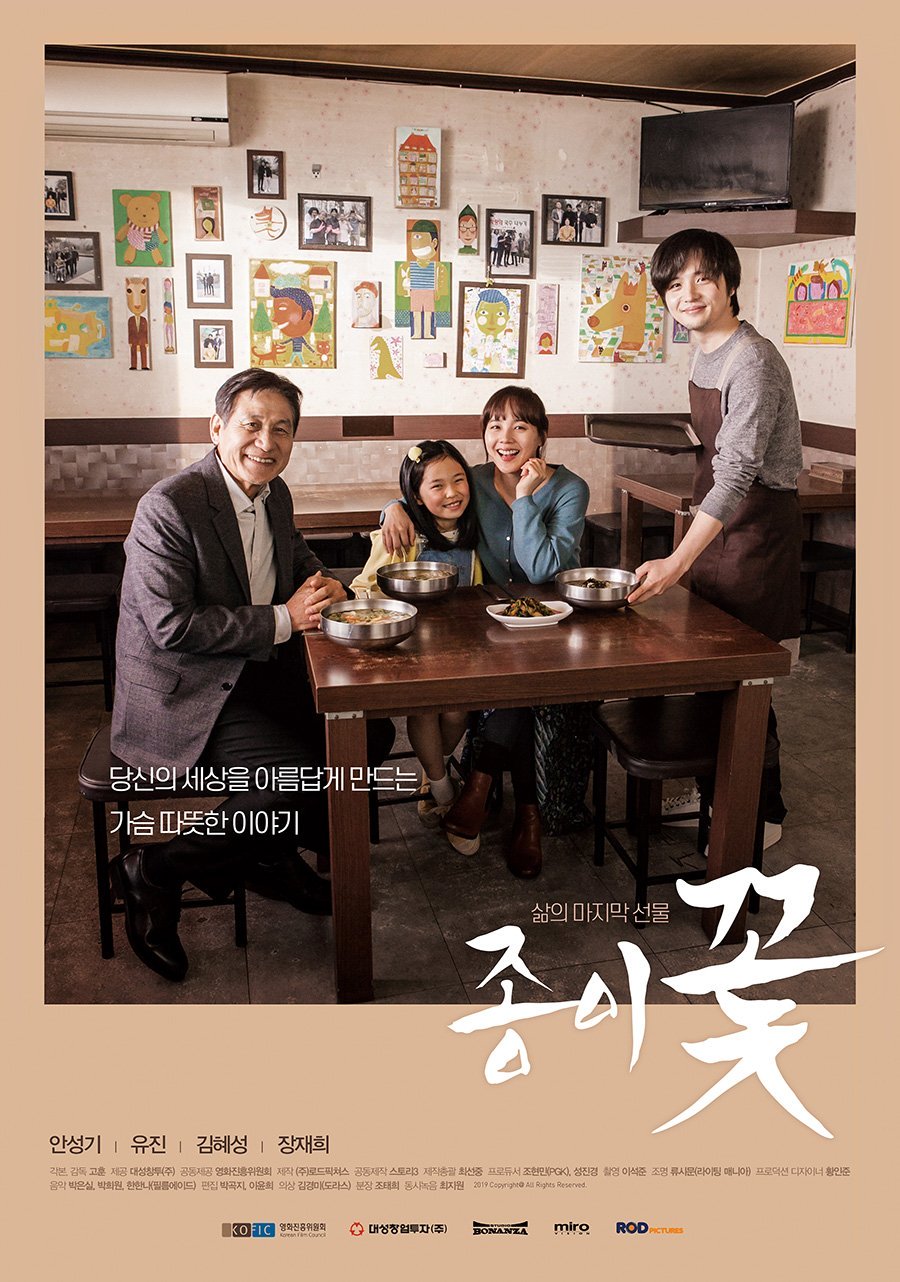
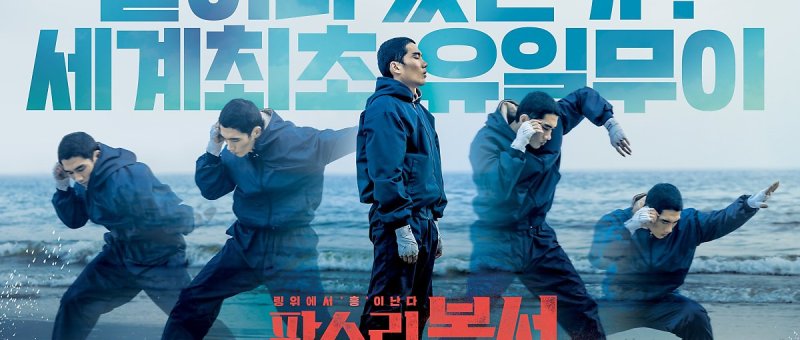
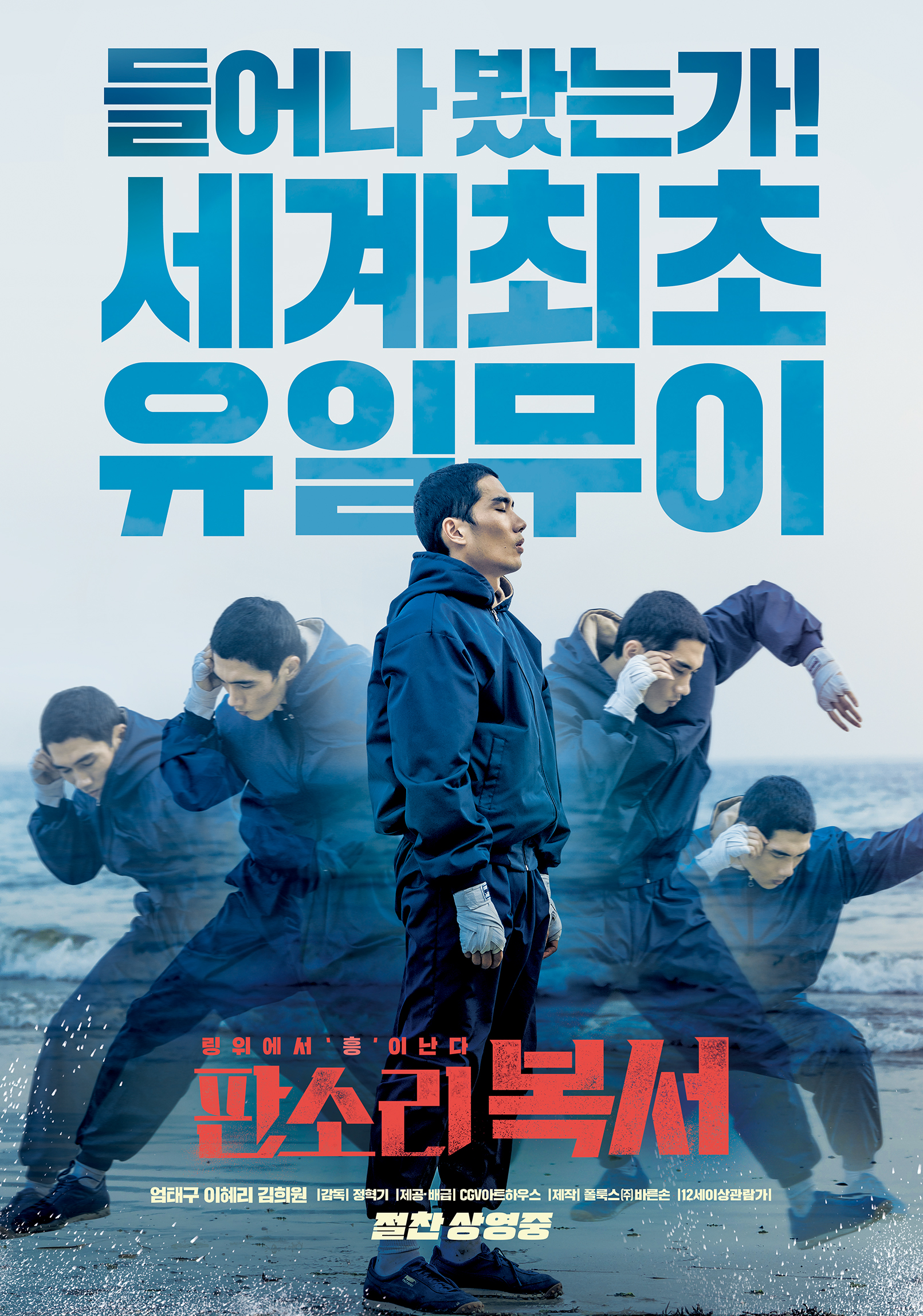
My Punch-Drunk Boxer (판소리 복서, Jung Hyuk-ki, 2019) [Fantasia 2020]

“The most Korean is the most universal” according to the hero of My Punch-Drunk Boxer (판소리 복서, Pansori Boxer) and his childhood best friend as they pursue parallel dreams of Pansori and pugilism which are destined, we come to understand, only for heartbreak and tragedy. Yet, in true Korean sports movie fashion, there’s more than one way to win and the best revenge against cruel fate might indeed be living well because “we only live once we should do what we want or you’ll regret it before you die.”

Byung-gu (Um Tae-goo) was once an aspiring boxer determined to make it to the top, developing his own idiosyncratic style of fighting dubbed “Pansori Boxing” fought in rhythm with the drum beats of traditional folk music as played by his friend Ji-yeon (Lee Seol) who is equally determined to become the world’s best performer of Pansori. These days, however, he works part-time at his old gym doing odd jobs and handing out flyers to try and win more customers. Waking up one day he claims from a “very long and strange dream”, Byung-gu has a sudden urge to take up boxing again, reminding his old coach that George Forman was 45 when he became World Champion so 29 is not to old to give it another go. Director Park (Kim Hee-Won) is unconvinced, partly it seems because Byung-gu has partially forgotten the reasons he was forced to give up his boxing career in the first place which make It unlikely he’ll be able to regain his licence. Meanwhile, in an attempt to increase his chances, he begins coaching a young woman, Min-ji (Hyeri), coaxed into the gym by one of his unconventional ads which promise dramatic weight loss as a result of intensive boxing training. 

Boxing is however outdated. As the two young tykes who hang out in the gym point out, they don’t even show boxing on the TV anymore it’s all about MMA. The gym is dying, hardly anyone wants to train and the only other boxer on the books, Gyo-hwa (Choi Joon-young), is continually put out because they’ve yet to arrange any fights for him. “Times have changed” Park is told, eventually agreeing as he contemplates making a sacrifice to make Byung-gu’s dreams come true. But as Byung-gu tells him, “our prime time may be over, but that doesn’t mean that we are”, determined to regain himself in the ring if aware that his gesture is in one sense “meaningless” and soon to be forgotten. 

As we soon discover, Byung-gu’s words have an additional meaning beyond simple transience in that he is suffering from “punch-drunk syndrome”, a degenerative condition similar to Alzheimer’s brought on by brain damage sustained by all those blows in the ring. His world is literally disappearing, the photographer’s closing down because no one uses film anymore and, unbeknownst to him, the gym targeted for demolition, yet it’s Byung-gu’s sense of reality that is ultimately crumbling as he looks back on past mistakes and regrets the failure of relationships that were important to him because of his stubborn pride. As Min-ji tells him, however, no matter what it was he did that has a him continually remind her that he’s a “bad person”, his other problem is that he’s too nice, a mild-mannered boxer who won’t fight for himself outside of the ring but is always in everyone else’s corner. 

The central irony is that he fights partly for the honour of boxing, an outdated craft, incongruously married to the similarly ‘outdated” art of Pansori which sees him move not only in an unexpected rhythm but incorporating the sweeping moves of traditional dance. As luck would have it, Min-ji is also a Pansori drummer, providing him with a new beat to spur him on to achieve his dreams while Park eventually comes on side in realising that nothing matters so much anymore as making sure Byung-gu gets the opportunity to fulfil himself while he’s still in some way present. Featuring lengthy sequences of Pansori performance singing Byung-gu’s story in traditional recitative as well as off-beat editing to the rhythms of traditional folk music, My Punch-drunk Boxer is a heartfelt ode to giving it everything you’ve got right to the mat but also to forgiveness and redemption as Byung-gu learns to make peace with the past while supporting and being supported by those all around him quietly fighting similar battles of their own. 


My Punch-Drunk Boxer streamed as part of this year’s online edition of Fantasia International Film Festival.

International trailer (English subtitles)

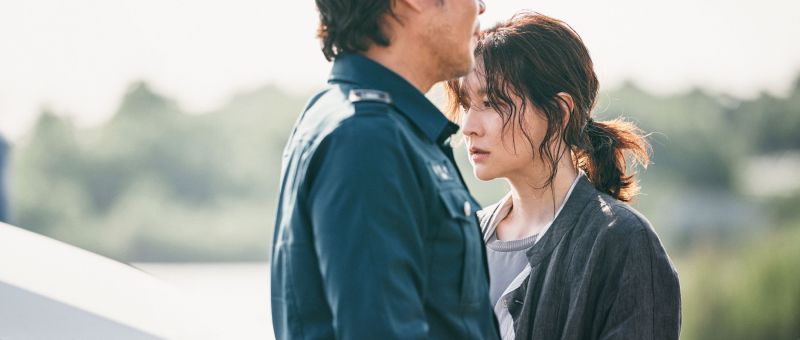
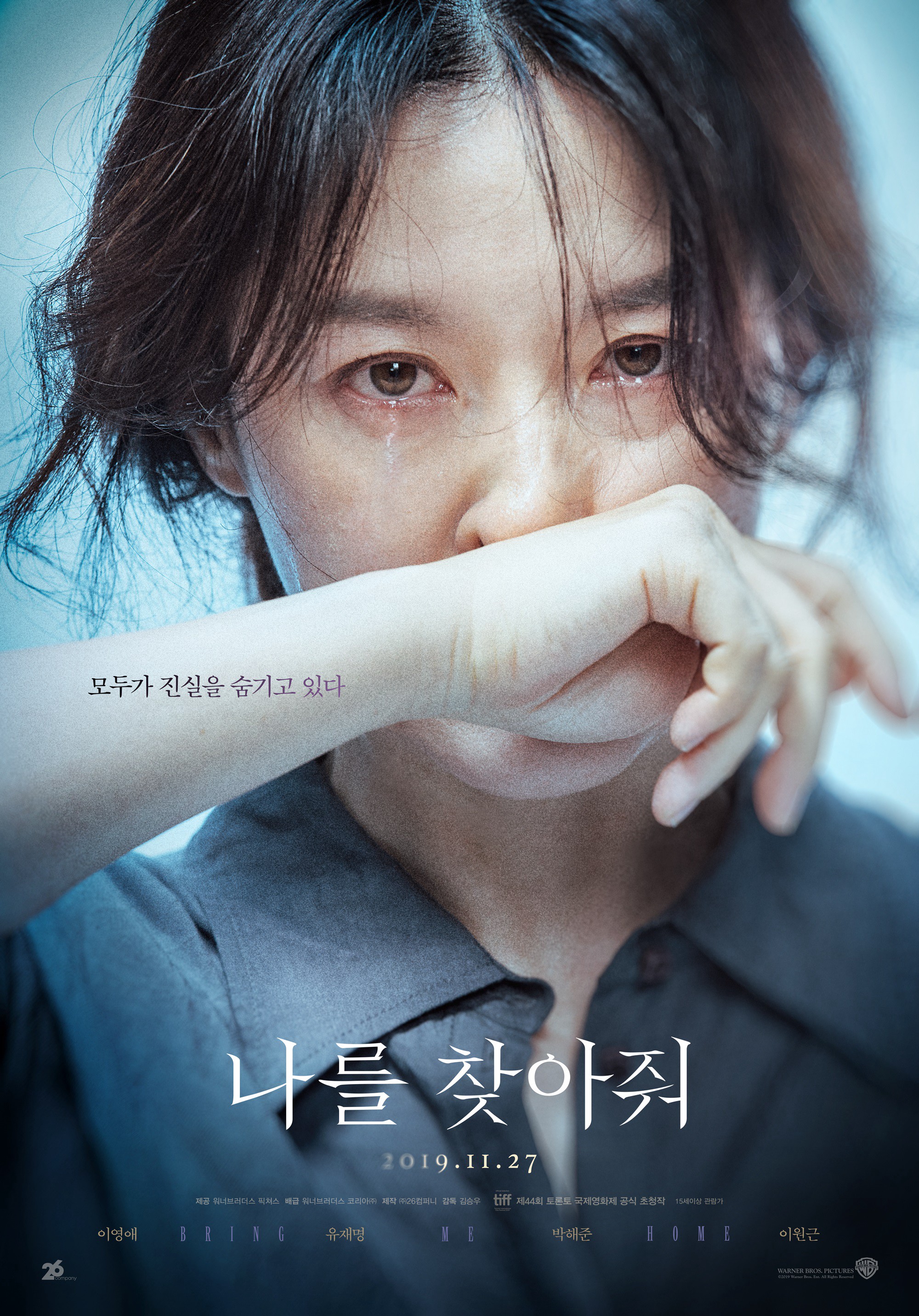
Bring Me Home (나를 찾아줘, Kim Seung-woo, 2019) [Fantasia 2020]

“They were all like me” a drowning man exclaims, trying to justify his inhumanity but gaining only poetic retribution as he finds himself shackled, quite literally, to his crimes. Kim Seung-woo’s debut feature Bring Me Home (나를 찾아줘, Nareul Chajajwo) stars Lady Vengeance herself, Lee Young-ae, in her first big screen leading role since Park Chan-wook’s seminal thriller once again cast as a figure of wounded maternity coming for systemic societal corruption and the savagery born of hopeless desperation in her singleminded determination to retrieve her son and take him with her even if with a dark destination in mind. 

Six years previously, Jung-yeon’s (Lee Young-ae) son Yoon-su vanished from a playground at six years old. Since then, her husband (Park Hae-joon), formerly a teacher, has spent every waking moment looking for him while she works as a hospital nurse where her colleagues describe her as a cool, infinitely professional presence. She continually berates herself for a vague memory of wanting a break from her child, exhausted by the act of caring for him as if she somehow brought this on herself or at any rate gave the universe her permission to take him away. Just when the conditions of her life seemed as if they were about to improve with her husband agreeing to return to work, he is killed in a car accident while pursuing a lead which turned out to be useless anyway, a cruel prank played by insensitive children. Left so totally alone, Jung-yeon begins to consider suicide only to receive another promising lead. A boy who looks like Yoon-su and has a burn on his back and a birthmark behind his ear, is working at a fishing pool in a rural town.

The sad truth is Yoon-su or not, the “family” running the fishing pool have “adopted” two displaced children which they use for slave labour, cruelly abusing them both physically and sexually. It’s this essential act of inhumanity which alerts the corrupted community to the danger presented by Jung-yeon. They could give the boy back, claim the reward, and hope she asks no more questions, but the likelihood is all their dirty dealings would be exposed and then they’d have to replace him. Corrupt policeman Sgt. Hong (Yoo Jae-myung) who for some reason seems to be in charge of the fishing pool is confident he can make all of this go away, pretending to be sympathetic to Jung-yeon’s search but insisting that there is no such boy while introducing her to the landlady’s “son” , keeping “Minsu” chained up in the shed. 

Sgt. Hong is fond of reminding people that he works for the government, a symbol of corrupt and oppressive authority obsessed with maintaining his own status as the man in charge apparently insecure in his sense of control. He claims that he was only able to do the things that he has done because no one really cared. Hundreds of people came through and saw Minsu, none of them said anything until another officer noticed that he looked quite like the boy on the news and was struck by the large reward on offer. The same officer accepted a pay off not to say anything, but apparently took the money and talked anyway. Even Jung-yeon’s brother-in-law tries to get money out of her and then comes up with an elaborate ruse to get his hands on the reward after accidentally being given the tip-off. The only one of the gang to treat Minsu with any sort of compassion eventually turns against Jung-yeon out of fear, citing the economic precariousness of the town. He’s worried that their business will be ruined, more shops will close, and as an ex-con he’ll never find another job which is a problem because he wants money to make sure his son goes to university so he doesn’t end up like him. 

“The living must go on living” another of the gang agrees, indifferent to the costs or the consequences of their actions through it’s difficult to see how their desire to save the town could ever justify their treatment of these displaced children, dehumanising Minsu because of his learning difficulties. Jung-yeon finds one of her fliers pasted on a pillar partially covered by another one for missing dog while the gang’s most deranged member keeps his own wanted poster listing rape and murder on the wall of his shack as if it were some kind of commendation. Hinting at a dark history of missing children as evidenced in one young man’s (Lee Won-geun) recollections of being adopted abroad mistakenly believing that his parents had abandoned him, Bring Me Home eventually descends into archetypal pulp for its misty finale, returning to the mythic vistas of desolation in which it began with the dishevelled Jung-yeon walking the shore of life and death consumed by futility in the depths of her maternal guilt, but does perhaps offer a glimmer of hope in the crushing irony of its final revelations. 


Bring Me Home streamed as part of this year’s online edition of Fantasia International Film Festival.

International trailer (English subtitles)

Me and Me (사라진 시간, Jung Jin-young, 2020) [Fantasia 2020]

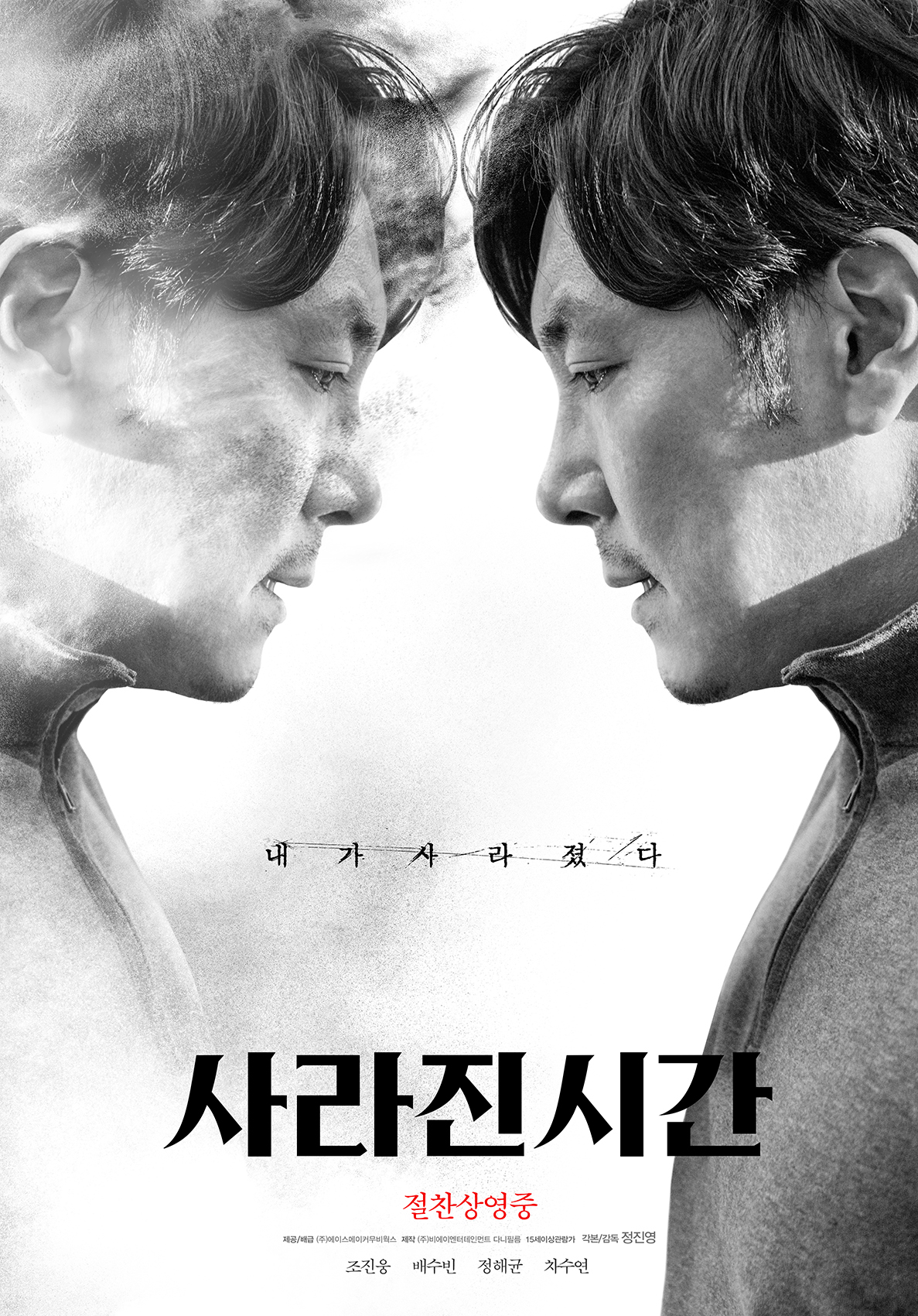
“Don’t invent stories, just go with what you see” the hero of Jung Jin-young’s Me and Me (사라진 시간, Salajin Shigan) is advised, only to find himself investigating his own disappearance. The first directorial feature from the veteran actor, Me and Me throws its existentially displaced hero into another world but then asks him who it is he thinks he is if everyone is telling him he’s someone else. “It’s painful” he finally commiserates unexpectedly encountering a similarly troubled soul, living with another self inside him and consumed by a sense of loss for another life that perhaps never was or will be.

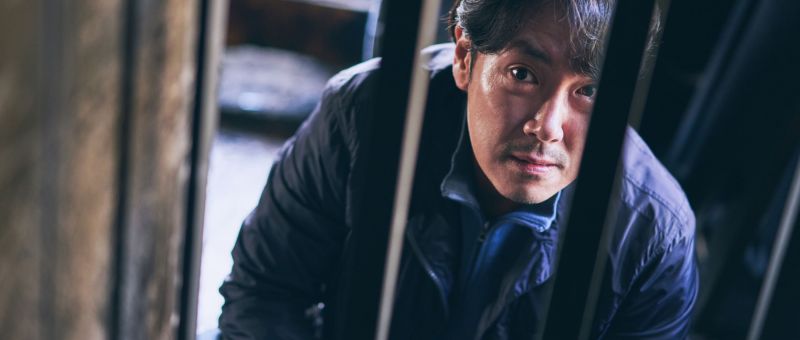
After a brief black and white title sequence featuring policeman Hyung-gu (Cho Jin-woong), Jung opens with a lengthy prologue following primary school teacher Soo-hyuk (Bae Soo-bin) who has just moved to a small, rural town along with his wife Yi-young (Cha Soo-yeon) who has, we discover, a secret. When the locals find out that at night she’s quite literally someone else, repeatedly possessed by departed spirits, they decide that she must be dangerous and install bars and a gate inside her home to cage her inside. Soo-hyuk refuses to leave her, asking to be locked inside too, and the sense of partial acceptance, that the townspeople know of her condition and have decided to meet her halfway, seems to free his wife. Having long been resistant, Yi-young warms to the idea of having a child, that perhaps they could have a happy family life despite her unusual affliction. 

Unfortunately, however, the house is consumed by fire and as they were locked inside, village foreman Hae-gyun (Jung Hae-Kyun) who has the key apparently out of town in a love hotel with the wife of the local police chief, Soo-hyuk and his wife are unable to escape. Hyung-gu finally arrives to investigate the crime, only to be bamboozled by the anxious locals who trick him into drinking some of their homemade pine needle liquor after which he wakes up to discover that he’s not a policeman after all, but the local schoolteacher and he’s very late for work. 

Obviously confused, Hyung-gu tries to figure out what’s going on. He misses his wife and his sons, but is distressed to discover that none of his neighbours recognise him, someone else lives in “his” apartment, and according to the school his kids don’t exist. Half-wondering if the pine needle liquor did something funny to his brain or even perhaps catapulted him into an alternate reality, Hyung-gu is forced to wonder if his previous life was a dream he’s now physically but not mentally woken up from, which means his wife, children, colleagues, and position in society as a policeman were not “real” no matter how real they might seem to him. The dilemma he now faces is in whether he should carry on trying to “wake up” from his new life to return to his “true” reality, or accept his new identity in the knowledge that this too could also be a “dream” from which he may someday wake and will eventually grieve. 

“When it’s time a new season comes” Hae-gyun reminds him, “and when it’s time it goes away”. Freeing himself, having the bars removed from his new home, Hyung-gu begins to accept his new reality, after all what choice does he have? But still he reflects on his own interior life, necessarily a secret from those around him and filled with private sorrow. Even little Jin-kyu, Hae-gyun’s dreamy son, had insisted on his right to privacy over his messy school locker which itself contains a secret pain for another life that he perhaps cannot share with those closest to him. “Everyone’s got a sickness” Hyung-gu sympathises with his new friend as she begins to tell him hers which is, ironically, another echo of his “dream” but also points towards the secret lives that most people have or more to the point never have, carrying something inside them never to be shared. “Don’t worry,” he reassures her, “you’re not the only one”. Each person is a hundred different people, or maybe just one in a hundred different parts. Perhaps in the end it is other people who will tell you who you are and you’ll eventually agree with them because it’s less painful than resisting, leaving that other life as a half-remembered dream. Elliptical and contemplative, Jung’s existential detective story refuses clear interpretation but is in its own way filled with a gentle humanity and a sense of acceptance for all of life’s transitory sorrows as well as its comfort and joy. 


Me and Me streamed as part of this year’s online edition of Fantasia International Film Festival.

Original trailer (no subtitles)

Kim Ji-young, Born 1982 (82년생 김지영, Kim Do-young, 2019)

In authoritarian regimes, dissidence is merely reframed as “mental illness”. Those who speak out are simply dismissed as “mad”, to be pitied for their inability to feel the love the state has for them or to understand that their policies are good, and right, and just. They must be healed, made to see the truth. When Cho Nam-joo’s Kim Ji-young, Born 1982 (82년생 김지영, 82 Nyeonsaeng Kim Ji-young) was published in South Korea it created a cultural schism in a still fiercely patriarchal society, provoking a sustained backlash from conservative commentators while resonating strongly with female readers. The film adaptation directed by Kim Do-young necessarily diverges from the structure of the novel, but once again sees its heroine driven quietly out of her mind by an oppressive society while encouraged to doubt herself for her desire to seek personal fulfilment, as if those who believe in sexual equality are somehow “mad”, treacherous, and ultimately dangerous to the social order. 

When we first meet everywoman Kim Ji-Young (Jung Yu-mi) she’s in her mid-30s, a housewife with a young daughter. She seems harried, a little frantic and tired but perhaps that’s only to be expected caring for a small child. Her husband, Dae-hyeon (Gong Yoo), however is beginning to worry there’s something seriously wrong. Ji-young has been having dissociative episodes in which she speaks about herself in the third person as if possessed by someone else. Matters come to a head when the condition manifests itself at the home of Dae-hyeon’s parents during the New Year celebrations where Ji-young talks back to her mother-in-law, upset that she’s treated like a servant as soon as Dae-hyeon’s sister and her family arrive, snapping that she both is and has a daughter too and that her mother-in-law should have let her leave before her own daughter turned up so she could visit her mother. Dae-hyeon makes his excuses, later calling to apologise and explain that Ji-young is “ill” and so it would be better if they could give her some space, and drives to Ji-young’s parents where she falls deeply asleep and is thereafter unable to remember what happened at her in-laws’ or understand why Dae-hyeon’s mother didn’t pack them off with a boot full of food as she usually would. 

Dae-hyeon’s mother Mrs. Jeong is an embodiment of the various ways women oppress other women in that she is extremely conservative and overbearing, giving Ji-young an unironic floral apron (free from a bank) as a New Year present, and continually resenting her for being her precious son’s wife. When Dae-hyeon tries to help out with the washing up, Mrs. Jeong is scandalised and Ji-young tries to swat him away out of embarrassment while her mother-in-law mutters about modern men, subtly suggesting that Ji-young must be a bad wife if her husband has to pitch in with housework. She does something similar later when she finds out that Dae-hyeon has offered to take paternity leave so that Ji-young can go back to work in the hope that it will help alleviate some of her malaise, destructively yelling at Ji-young over the phone that she’s ruining her son’s precious career, that what she’s doing is selfish and “mad” in rejecting her proper roles as wife and mother. Chastened, even Ji-young then finds herself telling others that Mrs. Jeong has a point, there’s nothing wrong with her housewife life and she wouldn’t earn as much as Dae-hyeon so perhaps it’s not practical for her to go back to work, but also admitting that she sometimes feels trapped. 

Her own mother, Mi-sook (Kim Mi-kyung), points out that Ji-young studied hard too and had a good job before she gave it up to become a mother so it’s not unreasonable to suggest that they look for some kind of balance in the relationship, but is left feeling responsible in that she unwittingly brought her daughter up with the cognitive dissonance of living in a patriarchal society. Mi-sook wanted to be a teacher, but had to give up her education to pay her brothers’ school fees. Ji-young’s sister Eun-young (Gong Min-jung) had to give up her dreams too becoming a teacher for the steady paycheque, while their affable brother Ji-seok (Kim Sung-cheol) was indulged to infinity and allowed to do whatever he pleased. Only Eun-young has been able to some extent to escape the pattern by remaining unmarried, otherwise we can see a long line of thwarted female ambition, women like Mi-sook forced to sacrifice their hopes and dreams but hoping that their daughters wouldn’t have to. 

Meanwhile, Ji-young can’t win. She takes her daughter to the park and is gossiped about by sleazy businessmen who think women like her have it too easy, living off their husband’s salaries failing to appreciate that work done at home is still work. Dae-hyeon does indeed seem to be a “modern” man, good and kind and genuinely concerned for his wife while also guilty that he has contributed to her “madness” through their married life, but he’s also a product of a patriarchal society and largely unaware of his privilege or its effects no matter how much he struggles against his programming. At work, he’s surrounded by sleazy guys who crack sexist jokes and bitch about their wives while attending sexual harassment workshops which are almost offensive in their superficiality. 

Chief Kim (Park Sung-yeon), Ji-young’s boss and mentor, finds herself in a similar position, derided as a coldhearted ballbuster by the male members of staff who criticise her for allowing someone else to raise her child while she works, while her boss openly insults her during a meeting and is pissed off when she tricks him into admitting he’s been inappropriate. She however laments that she’s trapped in the middle, feeling that she’s “failing” at being a mother while knowing that she’s approaching the glass ceiling, and Ji-young’s colleague complains that it’s taken her much longer to get a promotion than the men who joined alongside her. If all that weren’t enough, they also have to contend with the knowledge that the male office workers have been swapping footage from illegal spy cams placed in the ladies’ loos by a rogue security guard. 

Ji-young flashes back to the various instances of sexism and harassment she’s experienced in her life from being saved as a schoolgirl from an attacker on a bus by an older woman (Yeom Hye-ran) coming to her rescue when all her dad could do was blame her, insisting that it’s her responsibility to keep herself safe not men’s responsibility to behave appropriately, to being questioned why her wrist hurt when women have rice cookers now by a male doctor, and her grandmother telling her girls must be quiet and calm. She internalises a sense of misogyny that forces her to question herself, that perhaps she is at fault in feeling trapped because others found an exit she fears she lacked the ability to find. After a lifetime of patriarchal gaslighting, Ji-young is being driven quietly out of her mind by the cognitive dissonance of feeling so unhappy in having achieved so much “success”. Kim Do-young engineers for her a more positive future than Cho Nam-joo had done in her novel, but makes it all too plain that in escaping the madness of the modern patriarchy you might just have to go “crazy”.


Kim Ji-young, Born 1982 streams in the US via the Smart Cinema app until Sept. 12 as part of this year’s New York Asian Film Festival. It will also be screened in London on 10th September at Genesis Cinema as a teaser for the upcoming London Korean Film Festival.

International trailer (English subtitles)

Beasts Clawing at Straws (지푸라기라도 잡고 싶은 짐승들, Kim Yong-hoon, 2020)

If you found a big bag full of money and then waited a while but no one came to claim it, what would you do? Many people would do as Jung-man (Bae Seong-woo) did, but sometimes gifts from the gods are sent to tempt you and are decidedly more trouble than they’re worth. Beasts Clawing at Straws (지푸라기라도 잡고 싶은 짐승들, Jipuragirado Jabgo Sipeun Jibseungdeul) is an apt way to describe our small group of interconnected protagonists, each desperately trying to get their hands on the money not necessarily for itself but for the power and possibility it represents or simply to free themselves from a debt-laden existence. 

Jung-man finds the Louis Vuitton bag stuffed inside a locker at his part-time job in a bathhouse. It seems that he is feeling particularly powerless because he’s somehow lost the family business and either never told his extremely domineering mother (Youn Yuh-jung) or she’s simply forgotten, often going off on crazed rants about how her daughter-in-law is secretly plotting to kill them all. Meanwhile, across town, immigration officer Tae-young (Jung Woo-sung) is desperately trying to find his missing girlfriend, Yeon-hee (Jeon Do-yeon), who has, apparently, run off with all his money leaving him in a difficult position with vicious loan shark Park (Jung Man-sik), and melancholy hostess Mi-ran (Shin Hyun-bin) is miserably trapped in an abusive marriage and plotting escape with the help of Jin-tae (Jung Ga-ram), an undocumented migrant from China she met in the club. 

As expected the streams will eventually cross, it is all connected, though it’ll be a while before we start to figure out how in Kim Yong-hoon’s tightly controlled non-linear narrative, adapted from the novel by Japanese author Keisuke Sone. Other than the money the force which connects them is powerlessness. Some of them, maybe all, are “greedy” but it’s not necessarily riches that they want so much as a way out of their disappointing lives. Jung-man feels particularly oppressed because he’s made to feel as if he’s failed his father by losing the family business, something he’s constantly reminded of by his ultra paranoid, domineering mother who eventually pushes his wife down the stairs provoking a crisis point in the foundation of the family. If working part-time in a bathhouse in his 40s hadn’t left him feeling enough of a failure, he is further emasculated by being unable to pay his daughter’s university tuition after she fails to win a scholarship and informs them she’s planning to take a term or two off to earn the money by herself. 

Tae-young is in much the same position, humiliatingly trapped by having foolishly co-signed his girlfriend’s loan only for her to disappear off the face of the Earth, leaving him wondering if he’s just a complete idiot or something untoward has happened to her. He thinks he can regain control of the situation by slipping further into the net of criminality, helping an old uni friend who’s committed large-scale fraud escape to China in exchange for a cut of the loot (and secretly plotting to nab the lot with the help of his shady friend Carp (Park Ji-hwan) who works at the club). 

A crisis of masculinity is also behind Mi-ran’s life of misery as her husband takes out his resentment towards his reduced circumstances on his wife, beating her mercilessly while forcing her to work at a hostess bar to pay off their debts from unwise stock market investments. For her, the money is both revenge and a pathway to a better life. She wants to be free of her husband, and profit in the process. Unable to do it alone, she manipulates male power in the lovestruck Jin-tae all too eager to play white knight to a damaged woman. But Jin-tae is male failure too. When all’s said and done he’s still an innocent boy, not quite prepared for the ugliness of causing a man’s death even if he is a wife beating tyrant the world may be better off without. As an undocumented migrant, he’s pretty marginalised too. Taking advice on how to solve the Jin-tae problem, a more experienced player reminds Mi-ran that no one’s coming looking for an illegal alien and it’s not as if she actually likes him so he is infinitely expendable. 

In an odd way, getting the money is about not being an expendable person anymore. They want the money because they think it will give them back a degree of control over their lives, a kind freedom to move forward with a sense of possibility they do not currently have because of all their debts both financial and emotional. Yet they find themselves farcically scrabbling in chaos, beasts clawing at straws, as they try to outsmart each other and the universe to get their hands on the bag. The universe looks on and laughs, rejoicing in its darkly humorous punchline as the bag finds itself another owner, tempted by its dubious charms with only the promise of more chaos to ensue.


Beasts Clawing at Straws streams in the US via the Smart Cinema app Aug. 29 to Sept. 12 as part of this year’s New York Asian Film festival. Now available in the UK on digital download courtesy of Blue Finch Films!

International trailer (English subtitles)

The Shaman Sorceress (무녀도, Ahn Jae-hun, 2018)

Inspired by a well known short story first published in 1936, Ahn Jae-hun’s painterly animation The Shaman Sorceress (무녀도, munyeodo) situates itself in a Korea at a moment of acute crisis, presented with images of “modernity” which are inevitably bound with those of Westernisation though the conflicts we are presented with are largely ideological and spiritual rather social or political. Nevertheless, there is an unavoidable lament for a lost Koreanness and infinite sadness for those undone by their own inability to find accommodation with changing times. 

Like many similar tales from Korea, Shaman Sorceress opens with a framing sequence which is never closed in which the narrator reflects on what is technically the film’s present from some point in the future. He reveals that he is from a noble family and that his grandfather was once known as a connoisseur of art and antiques, but the world is changing and the age of the aristocracy is coming to a close. Faced with declining fortunes, the family has sold off most of its collection and so they rarely receive so many visitors as they once did but are keen to receive those they do which is why his grandfather gives temporary lodging to a prodigious young painter, Nang-Yi, the 17-year-old orphaned daughter of a shamaness who lost her hearing in childhood illness. 

The narrator then goes on to relate Nang-Yi’s story which was related to him by his grandfather who heard it from the man with whom Nang-Yi was travelling. This is not actually about Nang-Yi, who becomes something like the protector of traditional Korean culture through her survival and her art, but her mother, an usual woman of the Joseon era who found herself surviving alone on the margins of society. Mohwa (So Nya) never marries but has two children by different men and resolves to raise both of them alone. Aware that her bright son Wook-Yi (Kim Da-hyun) lacks male influence, she decides to send him to the temple at 9 years old to further his education and increase his future prospects. His younger sister Nang-Yi, however, falls into such a depression in his absence that she becomes ill and loses her hearing further adding to Mohwa’s sense of maternal guilt. When she too falls ill and begins having visions, Mohwa awakens as a shamaness ministering to the townspeople who account her a powerful interceder with the supernatural able to cure the most serious of ills. 

The crisis occurs when 15-year-old Wook-Yi leaves the temple for the city where he is “corrupted” by modernity in the form of Western Christianity as preached by American missionaries. Disillusioned with Buddhism, he is converted by the idea of a single loving God and hopes to save the souls of those around him but is insensitive to his mother’s beliefs as a shamaness while she in turn is intolerant of his new faith, believing he has been possessed by “that Jesus ghost”. What transpires between them as perhaps any parent and child is a tussle over the future, but their tragedy is that their ideology is so mutually exclusive that they can find no way to co-exist while Nang-Yi is trapped between them as a representative of the chaotic present neither allied with past or future. 

The film, however, leans heavily towards a defence of Christianity even as it criticises both mother and son for their rigid dogmatism, neither able to accept that their way is not the only way. Mohwa faces existential threat as a shamaness who is no longer feared or respected, her noisy rituals seen as backward while the townspeople increasingly flock towards the subdued power of prayer while edging towards a moral austerity which condemns her for living outside of socially conservative patriarchal social codes as an unmarried mother of two allowed greater freedom in her spiritual authority. “Life’s supposed to be lonely” she explains to a departed soul she’s trying to convince to move on, but might as well be talking to herself as she tries to accommodate her grief and maternal guilt but finds herself prevented from moving on into a new modernity of which Christianity is only a part. 

The overriding sentiment is one of futility in an acceptance that progress will always win in the end, as reflected in the narrator’s wistful lament of his noble family’s gradual decline. Seemingly aimed at a wide audience not exclusively adult, Ahn tackles some difficult themes from alcoholism to incestuous desire not to mention the more complex meditation on the loss of the feudal past and the costs of modernity while continuing to express the conflict musically in his use of traditional singing styles in Mohwa’s rituals and a more conventional broadway register in Wook-Yi’s passionate defences of his faith. While the frequent flights into song may seem incongruous, they are perhaps more common in Korean animation of this kind than they might be in that from other cultures, particularly in films not expressly aimed at younger children who are unlikely to engage with the weighty themes despite the simplistic yet often beautiful aesthetics which present a less complicated view of the feudal past as one of idyllic pastoralism. 


Festival trailer (dialogue free)

Vertigo (버티고, Jeon Gye-soo, 2019)

To many, the word “vertigo” is synonymous with a fear of heights, but in essence it refers more to a sense of unbalance, a giddiness born of having lost sight of the ground, temporarily unable to orient yourself within an environment which no longer seems to make sense. The heroine of Jeon Gye-soo’s artfully composed Vertigo (버티고) fears she is suffering with the medical variety caused by an ongoing problem with her inner ear which leaves her with recurrent tinnitus and a permanent sense of wooziness. She is also, however, suffering with a kind of existential dizziness, trapped in a constant state of anxiety in feeling entirely untethered to the world. 

30-something Seo-young (Chun Woo-hee), is a contract worker at an ad company with an office on the upper floors of a high-rise building. Unbeknownst to her colleagues, she’s been having an affair with her handsome, once divorced boss, Jin-soo (Yoo Teo), but he seems to be holding something back from her, insisting on keeping their relationship secret and reluctant to introduce her to his grown-up son. Meanwhile, she’s subject to most of the minor micro-aggressions plaguing women in the work place which run from being expected to come in early to do menial tasks like refilling the photocopier and tidying the shelves, to casual sexual harassment. Somewhat out of it, Seo-young has managed to avoid most of that and thinks she’s moved past the stage of having to play the office lady game by keeping the men entertained at the not-technically-compulsory-but-you-still-have-to-go afterwork get-togethers. Her friend Yedam (Park Ye-young), however, has her getting worried, at once complaining about their sleazy team leader asking for massages and reminding her that they need to turn on the charm at least until their contracts are renewed. 

Being a “contract worker” and not a salaried employee is certainly a major cause of Seo-young’s anxiety, leaving her feeling unanchored in her professional life in the knowledge that she could soon be unceremoniously cut loose for reasons largely unconnected to her performance. As a woman in her 30s it will be increasingly difficult to find a new job while a still patriarchal society will most likely write her off for daring to reject marriage in favour of work but failing to make a success of it. Her male bosses and colleagues, regular employees all, use her precarious status against her, expecting that she “play nice” to get a recommendation for further employment and threatening to tank her career if she doesn’t toe the line. She muses on going “far away” with Jin-soo, perhaps to Argentina, a land of passion where people dance the tango and drink wine late into the evening, but on some level knows it’s a just a comforting fantasy. 

Regularly visiting an ear doctor, Seo-young tries to overcome her sense of unease through medical means, unwittingly returning to the source of her trauma buried in a painful childhood which regularly resurrects itself in her toxic relationship with her mother who only rings to belittle her success while complaining about her string of relationships with terrible men and unsatisfying life with Seo-young’s step-father. Seo-young can’t find firm ground because she is essentially unanchored, left dangling by a failure of the traditional family and seemingly with no “real” friends. She begins experiencing panic attacks at work, retreating to unoccupied rooms to calm herself by looking out at the horizon. 

Meanwhile, her growing despair has been spotted by window cleaner and bookshop clown Gwan-woo (Jeong Jae-kwang) who is carrying a sadness of his own. He pities and protects her, supporting from the other side of the glass in a way which is not, strictly speaking, OK but is filled with such innocence and unspoken connection that it largely overcomes the otherwise unpalatable quality of his stalkerish devotion. Gwan-woo is, in a sense, a man who’s unafraid to fall, secure in his ties to the world and literally anchored by his position in society. Seo-young yearns to overcome her sense of anxiety, find firm footing and a sense of support, at once reassured by the presence of Gwan-woo and perhaps disturbed by it. She is, however, feeling her way back to solid ground, gaining the desire to climb safe in the knowledge that someone will be there to catch her even when she feels like falling. 


Vertigo streamed as part of this year’s Udine Far East Film Festival. It was also due to screen as part of the 10th Season of Asian Pop-Up Cinema.

International trailer (English subtitles)
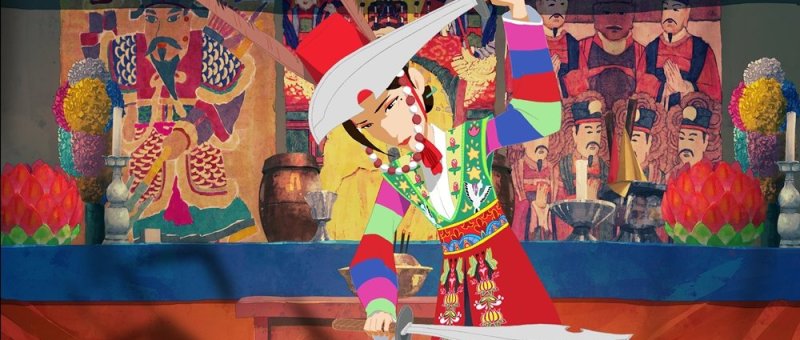
Crazy Romance (가장 보통의 연애, Kim Han-gyeol, 2019)

Can you find love in a crazy world? According to Crazy Romance (가장 보통의 연애, Gajang Botong-ui Yeonae), yes and then again no. The Korean title translates as something like the most ordinary of romances, which, considering what we’re about to see, is in someways quite depressing. Achingly contemporary in its Ephron-esque air of sophistication, Crazy Romance nevertheless lays bare the costs to both men and women of living in a rabidly patriarchal, misogynistic society.

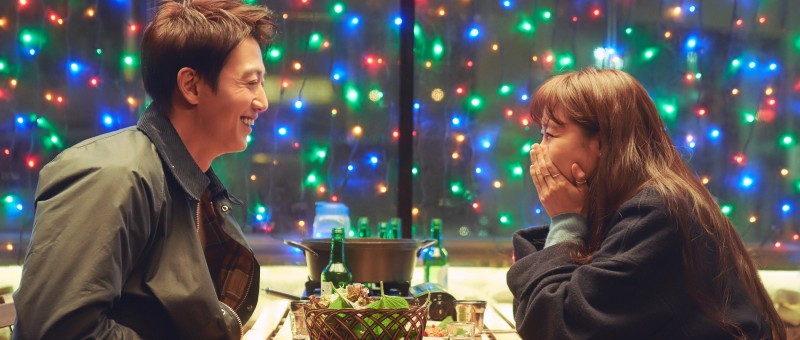
Our heroine, Sun-young (Gong Hyo-jin), has just joined a small advertising company in what many seem to feel is an unexpected step down in her career. At the awkward welcome drinks she’s asked a series of inappropriate, sexist questions, but her claims of not currently having a boyfriend are quickly disproved when a young man barges into the restaurant with flowers and abruptly proposes to her. It seems, Sun-young had attempted to break up with him that very morning, but he refused to listen and has now caused embarrassment at her job (which he expects her to quit anyway because they’ll be getting married). Meanwhile, Jae-hoon (Kim Rae-won) wasn’t really paying attention because he’s had too much to drink and is obsessively texting his ex who hasn’t replied in months. 

Jae-hoon’s alcoholism doesn’t seem to have affected his work, but has become a talking point around the office. The day after the party we see him wake up on the floor of his apartment surrounded by the detritus of drinking including, for some reason, several bags of corn on the cob, not to mention a cat which is apparently not his but might as well be now. Ever since his engagement ended, he’s been unable to move on, getting blackout drunk nearly every night and texting his ex who resolutely ignores him (not that you can blame her).

We can immediately see that there is not much difference in practical terms between Sun-young’s abusive ex Dong-hwa (Ji Il-joo) and Jae-hoon who is being positioned as the unfairly maligned nice guy, derided for his maudlin romanticism in being unable to forget his past love even though, as we alter discover, he broke off the engagement because she cheated on him while he was busy working hard for their future, neglecting their relationship as he fulfilled what he saw as his male responsibility to provide financial stability. Jae-hoon does, however, leave it at drunk texting and while privately resenting the fact she never replies, does not become dangerously obsessive, belligerent, or threatening as Dong-hwa later does in refusing to accept that Sun-young has ended their relationship. Nevertheless, witnessing their intense encounter in the car park and perhaps projecting, Jae-hoon tells Sun-young that he feels she’s been unfair to Dong-hwa who is after all “trying very hard” while implying that it’s romantic disappointment that has led to the apparent downgrade in her career prospects in the wake of derailed marriage plans. 

Jae-hoon’s embittered tone might suggest he’s mildly intimidated by Sun-young’s previously successful track record, but it is in a manner of speaking romantic disappointment which has done for her career in that Sun-young is now incredibly sick of having to deal with misogynistic workplace practices and persistent sexual harassment. Finding out the truth, Jae-hoon is outraged on her behalf but contributes to an ironic kind of victim blaming in berating her for not defending herself, as if she had the same right of recourse as he would have in her situation which of course she does not. As they bond in a shared sense of romantic disillusionment, the other team members start to turn against Sun-young, branding her a workplace hussy, while she in turn points out the hypocrisy of their interoffice gossip where everyone has a secret nickname from an employee everyone assumes is gay but is afraid to come out (he might have good reason, judging by his colleagues’ snide comments), to a female office worker’s decades-long unrequited love for their now married boss who is frequently derided for being thoroughly henpecked which is why he forces them into unnecessary company bonding sessions so he won’t have to go home and spend time with his family. 

The problem is that romance, or at least being vulnerable, is still embarrassing even in your 30s which is why everyone has to at least pretend to be drunk to pursue it. Both Jae-hoon and Sun-young are offered extremely problematic dating advice which effectively normalises abusive behaviour, childishly incapable of any kind of emotional honestly as they awkwardly spar with each other while their exes hover in the background. Sun-young tries to take Jae-hoon to task for his hypocrisy, pointing out that he thinks of himself as “better” than all the other useless men, but ultimately the film more or less agrees with him even if clear that he’s still a product of a misogynistic society and extremely self-centred while also genuinely nice as proved when we realise how he ended up with all that random corn. While he is maudlin and romantic, Sun-young is (understandably) cynical, but her spiky aggressiveness finds far less favour even if she is perhaps the one finally in charge of the direction of their relationship. Nevertheless, Crazy Romance cannot help but reinforce contemporary conservative social codes even as it critiques them, insisting that ordinary love is in itself crazy because the world is mad.


Crazy Romance is available to stream worldwide until July 4 as part of this year’s Udine Far East Film Festival.

Original trailer (English subtitles)