Where Is the Lie? (Marupok AF, Quark Henares, 2023)

What is it that motivates acts of seemingly pointless cruelty, why do people obsessively waste their own lives trying to make those of others miserable? Quark Henares’ inspired by real events (depending on who you ask) catfishing drama Where is the Lie? (Marupok AF) sees a trans woman fall victim to homophobic love fraud amid a climate of intense transphobia and subsequently make the decision to take a stand not as a petty act of revenge but to reclaim her dignity and protect her community while generously wishing her tormentor well. 

The catfisher, Beanie (Maris Racal), is given the right to reply through a series of confessional videos which slowly gain prominence towards the film’s conclusion. She admits that she knows what she did but does not really understand why she did it save justifying herself that she’s been “bullied” by members of the LGBTQ+ community in the past. She deliberately mangles the acronym and makes a point of using male pronouns to refer to the trans woman she’s currently targeting, Janzen (EJ Jallorina), but later starts to slip up instinctively using “she” after spending months talking to her normally over a dating app posing as buff model Theo (Royce Cabrera). Asked what the point of all this is, Beanie doesn’t have much of an answer beyond the cruelty itself explaining that the end goal is simply to ghost the target once they’ve made an emotional connection to cause them to feel hurt or humiliated. Perhaps these seem like low level consequences to Beanie who regards the catfishing as something like a weird hobby though one she expends an immense amount of time on seeing as she doesn’t appear to have anything else going on in her life aside from her actual job as a video director working in the fashion industry. 

The strange thing is though is Beanie describes Janzen as fun to talk to and they even seem to strike up a genuine connection over their shared interest in design. Beanie then finds herself in dilemma, simultaneously accelerating the plan to avoid having to deal with her complicated feelings but then restarting it after its natural end point by inserting herself into the conversation posing as Theo’s cousin and apologising on his behalf for his treatment of her in a moment of panic. The implication is that Beanie’s behaviour is motivated by an internalised homophobia in which she cannot bear to admit her desire for other women keeping her connection with Janzen because she is attracted to her but simultaneously denying it through a deliberate attempt to cause her pain and humiliation in returning her feelings vicariously through the fake Theo persona.

Some may feel that the film to too sympathetic towards outward transphobe Beanie or that once again implying the villain is closeted is unhelpful, but there may be something in her claims to be a kind of victim too in that her internalised homophobia is caused by societal conservatism in a largely Catholic, patriarchal culture. The film is clear on the dangers and discrimination Janzen faces daily both online and off as her friends remark on the case of a trans woman being arrested for using the ladies’ bathroom and later TV news footage shows president Duterte pardoning a US soldier who had been convicted of murdering a transgender sex worker. As the film begins, Janzen’s boyfriend breaks up with her over his discomfort about publicly dating a trans woman, implying that he is ashamed or embarrassed in his inability to explain the relationship to his older conservative parents. An online date then goes south when he realises she is trans. As her friends tell her Theo seems too good to be true especially as his social media only contains professionally taken photos and no personal posts or connections but Janzen is blinded by love and deeply wants to believe that the relationship is “real”.

That might go someway to explaining why she puts up with so much nonsense from Theo and continues to interact with him even after he calls her a series of slur words, leaves her waiting at the airport for a fake meeting, and then dumps her in a Jollibee after convincing her to travel all the way to Manila knowing she has no return ticket or place to stay. Playing out almost like an incredibly perverse Cyrano de Bergerac, the film at times pushes Janzen into the background in favour of exploring Beanie’s motivations for her seemingly senseless, sadistic cruelty, but subsequently allows her to reclaim centrestage in owning her own story by taking a stand against transphobic bullying on behalf of the other victims and her wider community while very much claiming the moral high ground by wishing Beanie nothing but peace though whether she’ll ever find it is anybody’s guess. 


Where Is the Lie? screened as part of this year’s New York Asian Film Festival

Original trailer (English subtitles)

Images: © Anima Studios, Kroma Entertainment, December 2022.© 2022 Kroma Entertainment. All Rights Reserved

12 Weeks (Anna Isabelle Matutina, 2022)

“Not all women want to be mothers” according to the heroine of Anna Isabelle Matutina’s 12 Weeks, yet this is apparently largely what society expects of them. Faced with an unexpected pregnancy at 40, Alice decides on abortion though it is technically illegal in the fiercely Catholic Philippines and she finds herself having to offer justification for her choices while trying to process her complicated relationship with her own mother who often tells her that she too wanted an abortion but obviously did not go through with it and left shortly after Alice was born to become a domestic worker in Hong Kong. 

The irony is that Alice (Max Eigenmann) works for an NGO supporting people displaced by natural disaster or civil unrest but is to an extent displaced herself in her estrangement from her mother, Grace (Bing Pimentel). In a poignant moment after having been made aware of the pregnancy by Alice’s violet ex Ben (Vance Larena), Grace brings out a box of baby clothes that once belonged to Alice only she never got to wear them because her grandmother who was raising her told Grace not to send anything but money because she had no way of knowing what size her daughter was. Grace is excited about the prospect of becoming a grandmother because it gives her a second chance at the motherhood she was denied by economic circumstance especially as the implication is she could play a larger role in their upbringing while Alice continues with her career. 

But even considering the strained relationship between them, Grace is far from supportive more or less taking over booking doctor’s appointments on her daughter’s behalf without really consulting her. Aside from the awkwardness and upset of the situation, Alice cannot discuss the abortion with her mother because of its illegality and the risks it might cause to herself and those otherwise involved in it. To be able to access an abortion safely, she has to undergo a counselling session and is then told that her operation will take place at 11pm hinting at its illicitness that it must take place under cover of darkness. The counsellor is sympathetic and clear that she isn’t trying to change her mind even if some of the questions seem invasive or patriarchal. Asking if Alice has been subject to domestic violence she offers help making sure that she’s not being pressured into an abortion she might not want by violent partner or the necessity of escaping them. 

Ben is indeed violent and it’s a fact that if she changes her mind and keeps the baby it will become much more difficult to keep him out of her life. Slightly younger than she is, he is moody and insecure while financially supported by Alice and living in a home she owns. He is not a responsible person with whom to raise a child though places extreme pressure on her to have the baby and manipulatively leaks the pregnancy news to Grace knowing she’ll do the same. Alice discovers that in reality everyone else is making her decisions for her, including a colleague who suddenly cancels a trip she was supposed to make to a disaster area on the grounds that his own wife has recently had a miscarriage and in his opinion it’s not safe for her to go. 

Set during the imposition of martial law on Mindanao in 2017, the film implies that a kind of martial law already exists for women who are unable to make their own decisions about their reproductive health or exercise their own autonomy. Alice is repeatedly told that she should have the baby because she is already 40 and the chance won’t come again though little thought is given to whether she wanted the chance or not while her own thoughts surrounding motherhood are clouded by the relationship she has with Grace which was largely affected by the economic realities that forced her to become a migrant worker. In part she rejects becoming a mother out of anxiety worrying that she is not suited to it, but is also conflicted in its inextricable ties to Ben and with wider patriarchal violence in general depriving her of the ability to choose from all angles. In the end a choice is made for her in the cruellest of ways leaving her more or less powerless with only the small comfort of female solidarity. 


12 Weeks screened as part of this year’s New York Asian Film Festival

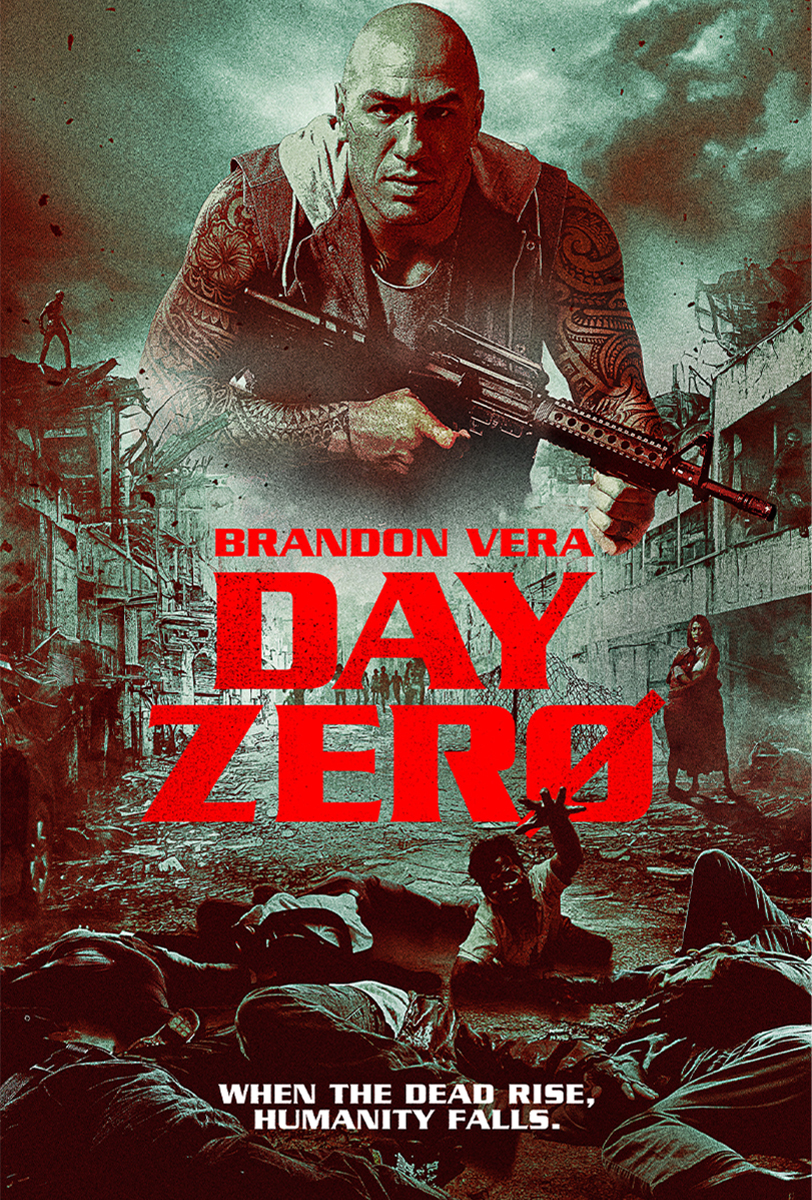
Day Zero (Joey De Guzman, 2022)

“This has been a really catastrophic day” according to a sympathetic, if not very reassuring, voice on the radio at the conclusion of Joey De Guzman’s zombie horror Day Zero. As the title suggests, the film takes place over 24 hours and marks the beginning but not end of the outbreak which will continue long after the end credits roll with ordinary people desperately trying to escape the seemingly endless stream of undead assailants. 

Perfectly placed to face off against them is Emon (Brandon Vera), though he’s spent the last few years in prison for serious assault resulting in permanent disability. Emon is a former US special forces soldier and has apparently been a model prisoner so has won his parole and is hoping to return home to his wife Sheryl (Mary Jean Lastimosa), and daughter Jane (Freya Fury Montierro), who is deaf, but his hopes are dashed when he’s surrounded by other prisoners who attack him when he sticks up for his timid friend Timoy (Pepe Herrera) at which point his release is cancelled. As it turns out, that doesn’t matter very much because of an outbreak of suspected Dengue fever which has mutated causing corpses to come back to life and attack people. The warden apparently had a moment of compassion before becoming a zombie and opened the gates telling the prisoners to escape and allowing Emon and Timoy to try to make their way back to Sheryl and Jane.

Like the similarly themed Train to Busan, the narrative arc is paternal redemption as Emon must reclaim his role as a father by becoming a man who can protect his family even if it’s true that it’s the same self-destructive forces, his capacity for violence, which enable him to do so. Even the warden had remarked on Emon’s intimidating physicality admitting that it’s unsurprising the other inmates largely leave him alone while his attempt to impress Sheryl by telling her how some guys hassling Timoy had walked away when they saw him coming backfires as she sees it as evidence that he really hasn’t changed and is still wedded to a destructive code of masculinity founded on dominance and violence. The implications of the fact he learned these skills as a member of the US military otherwise goes largely uncritiqued as does the presence of heavy weaponry including an assault rifle in the home of a local police officer.

Then again, police chief Oscar (Joey Marquez) later becomes a secondary enemy after turning on some of the other survivors when someone close to him is zombified though it’s Sheryl, not Emon, who must eventually contend with him. The two men present conflicting visions of fatherhood, one protective and the vengeful prepared to kill a child just to get revenge against her father. In any case, Emon must learn to channel his violence in a more positive direction by killing as many of the zombified locals as possible to clear a path for Sheryl and Jane to escape the apartment building where the family have become trapped. Though he may eventually be able to reclaim his paternity, it’s also true the problematic violence that allows him to do so may prevent him from reintegrating into his family in a more “normal” post-outbreak world. 

The film doesn’t have much time to go into its zombie mythology save the allusion to Dengue fever, but does give them the novel quality of falling asleep when not otherwise engaged allowing the survivors to escape through a life or death game of grandmother’s footsteps. This leaves Jane additionally vulnerable because of her disability but also grants her an advantage as the family can communicate through sign language to avoid waking the zombies. Most of the action is however left to Emon who staggers through darkened corridors armed with an assault rifle, pistol, knife, and finally just his fists facing off against the zombie hoards hoping to hold back the tide so his family can escape to look for safety and stability. Mostly serious in tone, the film allows a few moments of dark comedy such as a teenage survivor’s attempt to take care of a zombie using a rechargeable drill frustrated by its battery life, but mostly relies on the claustrophobic atmosphere of the darkened apartment block and heartwarming story of familial reconciliation along with intense zombie action to carry itself through.


Day Zero is available on Digital now in the US and released on DVD & blu-ray July 11 courtesy of Well Go USA.

Insiang (Lino Brocka, 1976)

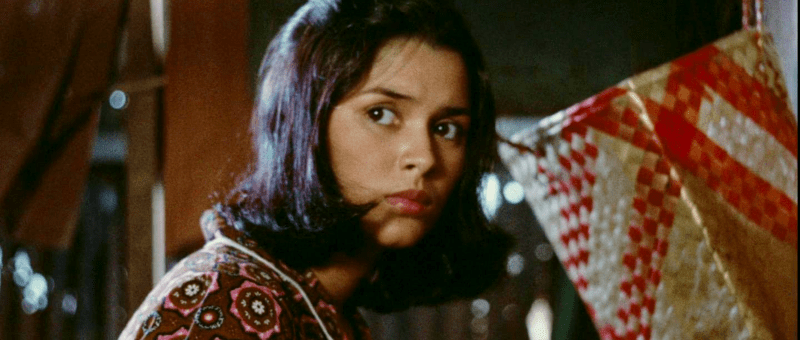
“It’s your father’s fault.” the heroine of Lino Brocka’s 1976 realist melodrama Insiang is told, neatly hinting at the destructive patriarchy of the Philippines under Marcos. Like the heroine of a fairytale, Insiang (Hilda Koronel) is a radiant source of light amid the darkness of a Manila slum where jobless men drown their sorrows and burden their wives while proving their masculinity by often violent sexual conquest. Soon even she is consumed by the corruption of the world all around her against which she eventually plots her revenge. 

The chief source of Insiang’s misery is her harridan of a mother, Tonya (Mona Lisa), who has become cruel and embittered in the humiliation of her husband’s abandonment. Tonya has agreed to allow some of her husband’s relatives to stay with them as the father has lost his job, but often insults them and her harsh words weigh heavily on Insiang’s cousin Edong who is old enough to work but cannot find find a job. When Edong gets drunk and gropes Insiang’s best friend Ludy (Nina Lorenzo) who runs the local store, Tonya loses her temper and throws them all out even insisting on the return of some clothes she’d bought the children sending them away not even in rags but naked. 

Isiang confesses that she has come to hate her mother and feels no maternal connection with her at all, knowing that her coldness towards her is motivated by resentment towards her estranged father who left them for another woman. Tonya’s decision to throw out the relatives was in part motivated by her desire to move in Dado (Ruel Vernal), a thuggish man much younger than herself who guts pigs at a local slaughter house. In the end, he will be stuck himself just like one of the animals he and men in general are so often likened to. Dado has a tattoo of his own name on his chest and struts his stuff like a proud alpha male, quickly questioning the masculinity of Insiang’s sometime boyfriend Bebot (Rez Cortez) who has a giant perm and wears an earring in one ear. Insiang dislikes going to the cinema with Bebot because he has a tendency to become handsy, justifying his disregard of her discomfort by insisting that he’s a man and cannot help it. Dado later says something similar after raping an unconscious Insiang, telling the incensed Tonya that it’s not his fault because no man could fail to be “seduced” with a such a beautiful woman in the house. 

At heart, the film is a painful melodrama about the frustrated love between mother and daughter which is made impossible because of male failure. When she finds Insiang sobbing and realises Dado has raped her, Tonya tries to comfort her daughter but is soon seduced again on Dado’s return. As Ludy says, Tonya too has her needs even if her relationship with a much younger man scandalises the local community, but in the end she chooses to maintain her connection to male power rather than the emotional connection to the daughter she has come to resent as a constant reminder of her failure as a woman. To escape her impossible situation, Insiang agrees to sleep with Bebot on the condition that he will rescue her in marriage. But Bebot is also a coward who has already been warned off by Dado. He takes her to a hotel but doesn’t even have the money to pay, asking Insiang to chip in the difference. When morning comes Bebot is gone. “No one can help me with my problem but myself” Insiang tells Ludy’s sympathetic younger brother Nanding (Marlon Ramirez) who tells her that he loves her anyway even if the rumours about her unusual family situation are true and is willing to help her escape the futility of the slums as he is already preparing to do through pursuing education. 

But Insiang has already been transformed, only her revenge will buy her her release. She manipulates Dado through her sexuality and motivates her mother’s jealously to engineer the tragic outcome that will free her. But having achieved her vengeance she has only regrets in the continued absence of maternal love, while Tonya too feels much the same. Insiang takes back some of her own cruelty, though what she said was not wholly untrue, but Tonya turns away from her only to regret her inability to embrace her daughter. Trapped behind bars, she can only watch silently as Insiang walks away and does not look back. The two women are forever divided by the patriarchal society. Insiang has won a temporary victory but only in self-destruction. In Brocka’s bleak depiction of Marcos’ Manila, not even maternal love is safe from the ravages of the contemporary society.  


Insiang screened as part of this year’s Red Lotus Asian Film Festival.

Original trailer (English subtitles)

About Us But Not About Us (Jun Robles Lana, 2022)

A lunchtime conversation between two men provokes a series of confrontations in Jun Robles Lana’s pressing psychological drama About Us But Not About Us. There is indeed more going on than it seems, prompting a number of questions about who it is that’s really in control along with the subjective quality of memory and personal myth making. After all as the younger of the men later says, nothing compares to our fictional counterparts both those we create for ourselves and those born of the projections of of others. 

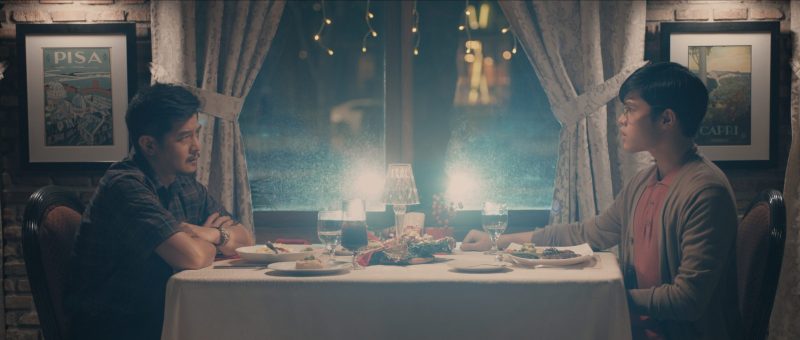
40-year-old professor Eric (Romnick Sarmenta) takes a look at the bags under his eyes in the mirror of his classic Beetle as he arrives at a restaurant for a lunch meeting with a student and gently applies moisturiser to his eyes before heading inside. It’s a small moment that hints at his insecurity about his age and also that he may have more interest in the student, Lance (Elijah Canlas), than he later claims. Lance is already waiting, perky and preppy in his neutral beige outfit and non-threatening haircut. The purpose of the meeting seems to be so that Lance can return the keys to Eric’s spare flat where he had being staying to escape an abusive stepfather. Lance no longer feels comfortable being there, in part because he’s afraid false rumours that there may be something inappropriate going on between them could cause problems for them both at the university, but also because he worries that his presence may have contributed to the suicide of Eric’s late partner Marcus, a leading light of English-language literature in the Philippines. 

Marcus had known about Eric’s interest in Lance but warned him about becoming too involved seeing as he is a teacher and Lance his student not to mention that he is also 20 years older and even if he’s done nothing wrong others may read his well-meaning attempts to help as “inappropriate”. But then we start to wonder, is Lance really as helpless as he claims to be? It seems strange that a 22-year-old man would need this kind of rescuing, perhaps as some have suggested he’s constructed an image of himself as vulnerable so that Eric will feel compelled to help him. Despite his seeming meekness, Lance does appear to be ambitious yet insecure smarting from an offhand comment of Marcus’ that he may in the end lack the necessary talent to be accounted a writer. 

In a theatrical conceit, Lana realises the projected images each has of the other to segue into recreations of previous meetings in which either Eric or Lance plays the role of the absent Marcus whose views are recounted only in the book he had written shortly before he died, his first in Filipino, or filtered through the memories and intentions of the other two men who of course may not be entirely honest in their recollections. Eric insists the problems that may or may not have existed between himself and Marcus were not not really “about” Lance. He claims to have been unhappy and emotionally neglected for years if also still in love, while later conceding that the book is both about and not about them in its retelling of a “trashy” love triangle as an intensely literary potboiler. 

That the book is in Filipino rather than English may hint at a further desire for “authenticity”, as may Lance’s desire to transfer from the English department to that in his native language. Yet neither man is really being “authentic”, not entirely able to reclaim themselves from the image projected onto them by others. The battle for control shifts uneasily between them, Eric assuming he has the upper hand by virtue of his age and position all while Lance may be cynically manipulating him, playing on his latent desire while fluffing his ego in appearing as a lost young man in need of help and guidance. Even so, a possibly imagined conversation with Marcus later suggests that Eric enjoys the subversion and is at heart a masochist who actively seeks to be controlled, perhaps he knows what the game is after all. Lana ends on a note of ambiguity in which it seems there is a choice to be made between sustaining a fiction and rejecting it but then again “sometimes feelings are more important than the truth.”


About Us But Not About Us screened as part of this year’s Queer East .

Original trailer (English subtitles)

I Love You, Beksman (Mahal Kita, Beksman, Percival M. Intalan, 2022)

“What is the essence of being a real man?” The hero of Percival M. Intalan’s reverse coming out drama I Love You, Beksman (Mahal Kita, Beksman) finds himself questioning his own identity when confronted with the weight of social expectation and prejudice yet discovering that the question is meaningless when the key to happiness lies in self-acceptance and authenticity. Scripted by Fatrick Tabada (Chedeng and Apple), the film tears apart conventional notions of gender and sexuality in a hyper-masculine patriarchal culture while allowing its hero to gain the courage to define himself in order to chase his romantic destiny. 

Everyone just assumes flamboyant hairdresser Dali (Christian Bables) is gay. He dyes his hair red, dresses in a less masculine fashion than other men his age, and has an effeminate manner. Yet Dali has a secret he doesn’t even really realise is one in that he is actually straight as he is forced to reveal after falling for beauty queen Angel (Iana Bernardez) at a pageant. The more he tries to explain to people that he isn’t gay and is serious about romantically pursuing Angel, the less they seem to understand him. It simply doesn’t make sense that someone so “obviously” gay could be attracted to women. They ask him if he’s sure or if it might be a phase or if he’s developed some kind of internalised homophobia but never really consider that it’s a possible for a man to be both effeminate and exclusively attracted to women. 

Even Dali begins to subconsciously change himself in order to better conform to their expectations. Having lost her mother at a young age, Angel is surrounded by hyper-masculine men in her father and brothers who all rather hilariously have the same moustache and enjoy manly pursuits such as weightlifting and basketball. Dali, meanwhile, was surrounded by queerness all his life, raised in the salon by a father who now lives openly as a gay man in a platonic marriage with his mother. Despite having seemingly been very happy as a part of a big gay family who all just assumed him to be gay too, Dali begins to reject his father and his own femininity in believing that he must adopt a more stereotypical masculinity in order to convince Angel of his heterosexuality and eventually win her heart (along with those of her conservative father and brothers). 

It might be true to say that Dali’s original presentation as a flamboyant hairstylist and fashion designer is also a kind of performance and an attempt to conform to parental expectation just as his rejection of it is an attempt to conform to the demands of a hyper-masculine society, but only by embracing both extremes can he learn to define himself outside of the images others project onto him. In adopting the traits of traditional masculinity, he becomes boorish and insensitive asking his father to hide his “gayness” to avoid embarrassing him in front of Angel’s dad while later becoming jealous and violent after seeing Angel hanging out with an ex. He can’t see that his adopted persona makes it even harder to form a genuine romantic connection with Angel, not just because he’s actively erasing the sides of himself she first became attracted to in his skill in makeup and fashion but because as she eventually tells him it’s difficult to trust someone who is being dishonest with themselves. 

The realisation he comes to is that he has to be “himself” rather than being what other people expect him to be while those around him come to understand that outdated ideas of stereotypical gender presentation are harmful to everyone. A gentle tale of broadening horizons and mutual acceptance, Intalan’s ironic comedy neatly subverts the coming out trope while situating itself in a world of relative safety in which Dali is free to explore his own identity and means of self-expression encountering opposition only from those who fear he is not being true to himself. The reality may not be so kind as the classic rom-com conclusion may suggest but the film nevertheless neatly takes aim at the ridiculousness of conventional ideas of “masculinity” in a hyper-masculine and patriarchal culture in making a heartfelt advocation for the right to just be oneself.


I Love You, Beksman screens at the BFI Southbank on 18th April as the opening night gala of this year’s Queer East.

Original trailer (English subtitles)

Feast (Apag, Brillante Mendoza, 2022)

A young man fuelled by an internalised class conflict struggles to come to terms with his guilt after running over a man and his daughter in Brilliante Mendoza’s social drama, Feast (Apag). With a strong religious sentiment, each of the four acts is preceded by a title card with a Biblical quotation, Mendoza seems to suggest that we are all one big family and that all divisions are healed when the feast is shared equally, except that equal it is not even when brokered by mutual compassion. 

The opening scenes also have their irony. Wealthy businessman Alfredo (Lito Lapid) and his diffident son Rafael (Coco Martin) shop for expensive fresh crabs at the market, while Matias and his young daughter haggled for much less extravagant fare before making their way home by scooter and sidecar. Distracted by a phone call, Rafael ends up colliding with Matias in his 4×4. Acting quickly, Alfredo jumps in the driving seat and speeds away insisting that he will take the responsibility for the accident, whatever that might mean. After a talk with their lawyer who tells them they’ve not a leg to stand on, Rafael goes to the hospital and pays the family’s bills but Matias dies soon afterwards. Alfredo insists on taking the blame, agreeing to go prison in his stead, but Rafael can’t get over his guilt and enters a depressive spell that prevents him from getting on with the rest of his life.

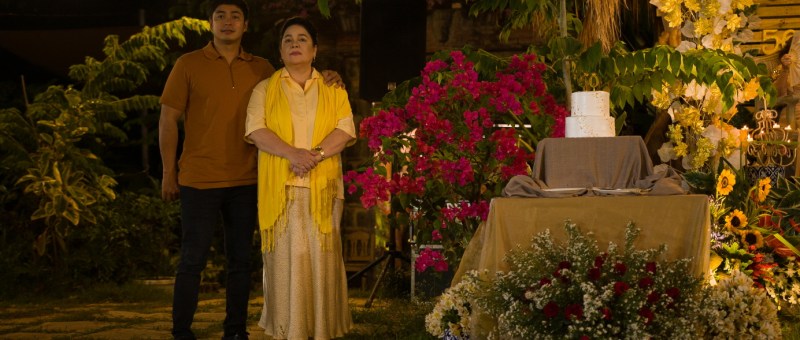
As we later discover, Rafael occupies a difficult position in terms of his social class. His mother Elisa is Alfredo’s second wife, once a waitress in the family home and disliked by the children of his previous spouse. He is separated from his daughter as his wife seems to have left him for unclear reasons and gone abroad where she has met another man. He wants to unburden himself by accepting the punishment for Matias’ death but is prevented by his father’s heroic act of sacrifice and must carry the guilt alone. The family determine to make amends by “supporting” Matias’ widow Nita (Jaclyn Jose) and their children, but are in essence wielding their privilege over her in assuming they can settle all of this with money and need accept no other responsibility. 

Nita is rightly insulted when Elisa turns up to offer her money to compensate for her husband’s death, but it’s also clear that the family is already poor and now presumably without their main breadwinner. In any case what she wants is justice, and both gets it and doesn’t when Alfredo is sent to prison in place of Rafael. In the final acts of the film, the family has taken in Nita and her children but ostensibly as servants even if ones treated like friends while she is forced to feel grateful to the family that killed her husband for gifting her financial security. The feast with which the film ends was cooked by Nita, but she is not invited to partake in it only stand by and watch while the rest of the family eat. Yet the scene is presented to suggest that a divide has been healed, that inviting them to attend the feast was enough in itself even if a class distinction is still clearly felt between those who serve and those who eat. 

Though Nita seems to have some latent resentment, it is largely washed away on learning the truth allowing her to forgive and symbolically releasing Rafael from his torment. While forgiveness maybe worthy, it also lets the privileged off the hook for their oppressive behaviour in suggesting that the wealthy need only show magnanimity while the poor are expected to simply accept it in good faith. Had this not happened, there is no way they would share their feast with a woman like Nita nor will they ever do so again. If they really meant to dissolve class barriers, they could open the doors to all but they do not. In any case, through coming to terms with his responsibility for Matias’ death, Rafael appears to quell his own inner class conflict to occupy his rightful place but perhaps still fails to fully consider that Matias’ death wasn’t really just an “accident” but a natural consequence of the way in which men like himself move through the world.


Feast screened as part of the 2022 Busan International Film Festival.

Original trailer (no subtitles)

Reroute (Lawrence Fajardo, 2022)

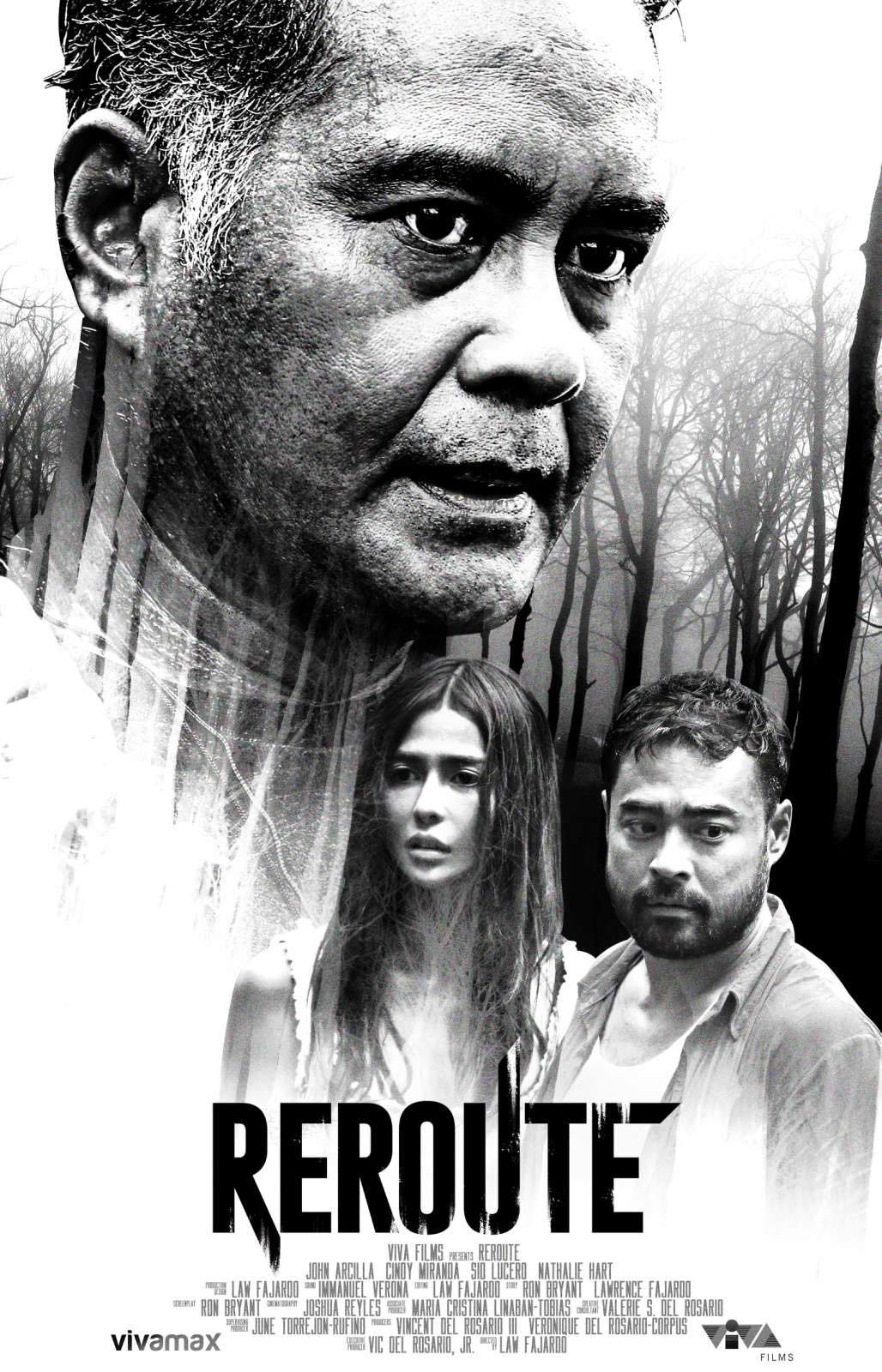
A young couple find themselves straying into a strange and purgatorial landscape after taking an ill-advised shortcut in Lawrence Fajardo’s eerie gothic horror, Reroute. Shot in a crisp black and white, Fajardo’s journey into darkness is one of intensely toxic masculinity born of a macho culture which manifests itself most clearly in the military and authoritarianism while the “private property” onto which the couple stray appears to be a liminal space inhabited by those who cannot live in the modern society. 

As for the couple, when we first meet them they are in the middle of a blazing row on a long distance drive mostly caused by the man, Dan’s (Sid Lucero), jealously and resentment towards the woman, Trina (Cindy Miranda), who supports them both with her down to earth job as a bank manager while he is in a band but technically unemployed. Dan’s volatility is palpable, quickly getting into a physical altercation with a local man at a rest stop much to Trina’s dismay but uncomfortably enough the fight seems to clear the air between them. Cooling off at the beach, they become warm and gentle with each other making love at the shore, but tensions rise once again when they approach their destination and discover that the road is closed because of a military exercise. The soldier on the checkpoint tells them to follow the diversion which involves going round in a huge circle adding hours onto their journey, but Dan doesn’t listen and decides, as he grew up in the area, to take a “shortcut” using the old road. To placate Trina he agrees to check directions with a local man whose house they’re passing but he tells them they’re on private property and should turn back. 

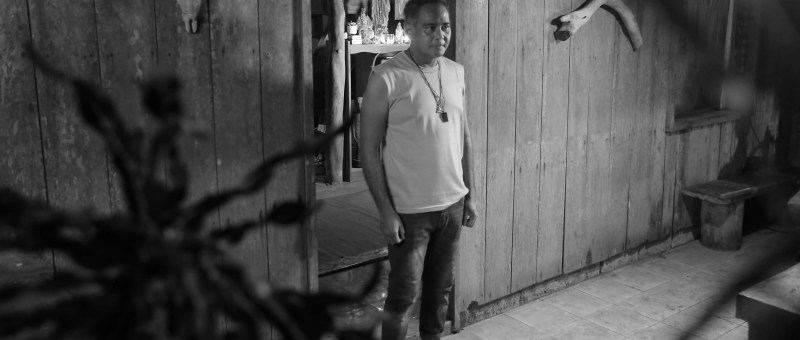
Again, Dan ignores him and the car breaks down stranding them in the middle of nowhere with no phone signal, Trina further blaming Dan for not having checked all of this out beforehand or made sure the car was in good condition. The following morning a man approaches and offers to help, but there’s no kindness in his eyes and something unsettling about the way he keeps staring at Trina. Gemo (John Arcilla) takes them back to his house and offers to radio a mechanic but otherwise spends his time responding to cryptic messages about some kind of military operation. “If I were you I’d leave now” Gemo’s wife, presumably, Lala (Nathalie Hart) advises Trina but it’s already too late. They’re miles from anywhere and this weird village seems to be completely cut off from the outside world.  

One level, the contrast between Gemo and Dan is stark. A former military man Gemo’s old-fashioned masculinity is rigid and austere while Dan is an underachieving slacker with an inferiority complex prone to fits of rage. In an ironic way, they could be father and son yet they fight over a girl, not Trina but the absent daughter of Gemo, Ariana, who passed away after getting an abortion at 16 when the boyfriend who got her pregnant abandoned her. Half-crazed, Gemo is convinced Dan is the man guy ruined his life and takes an extremely ironic form of revenge in proving his masculine dominance over the younger man while forcing Trina into the role of his 16-year-old daughter. 

Then again from what we later see perhaps Gemo is responsible for ruining his own life and those of the people around him as product of the society in which he lived, spouting religious aphorisms and talking of his military past suppressing protests by the Muslim community on Mindanao. This weird village where all the villagers seem to be on Gemo’s side and also involved in some kind of covert operation appears to be a kind of purgatorial space inhabited only by former soldiers who can not move on from the authoritarian past, yet Gemo is haunted by a different kind of ghost and commits a different kind of crime in trying to quell it. Trina is dragged into this bizarre series of events because of Dan’s wounded male pride, insisting he knew a shortcut and ignoring all the warnings, but in the end is the only one capable of ending the curse in forcing Gemo to accept the reality of his daughter’s death “so we can all be free”. Filled with an intense sense of dread and malevolence, Fajardo’s eerie drama ends in the mist-drenched forests of the remote countryside but perhaps suggests that escape is only possible through fully exorcising the past. 


Reroute screened as part of this year’s Udine Far East Film Festival.

Original trailer (English subtitles)

Leonor Will Never Die (Ang Pagbabalik ng Kwago, Martika Ramirez Escobar, 2022)

A grief-stricken screenwriter resolves to write her way out of self-imposed inertia while trapped in a world of her own creation in Martika Ramirez Escobar’s meta dramedy Leonor Will Never Die (Ang Pagbabalik ng Kwago). Drawing inspiration from the action exploitation films of the 1980s, the film asks some big questions about grief and agency and the role stories play in our lives while celebrating a sense of community in cinema along with the accidental immortality it may grant. 

Once a successful screenwriter of action films, Leonor Reyes (Sheila Francisco) is now an elderly lady who has largely shut herself away following the tragic death of her eldest son, Ronwaldo (Anthony Falcon). Her youngest, Rudie (Bong Cabrera), still lives with her but as she later reveals there is distance between them and a sort of repellant dependency in which each resents the other and longs for freedom while simultaneously afraid to chase it. When Leonor “forgets” to pay her electricity bill and is berated by Rudie, she is handed a newspaper by the ghost of Ronwaldo containing an ad for a screenplay competition and decides to dust off the script she broke off when he died. While taking a cigarette break, she is hit on the head by a flying TV thrown out by the man next-door fed up with his wife’s addiction to soap operas and finds herself falling into the world of the film hoping she can save the hero, also named Ronwaldo (Rocky Salumbides), from his tragic fate. 

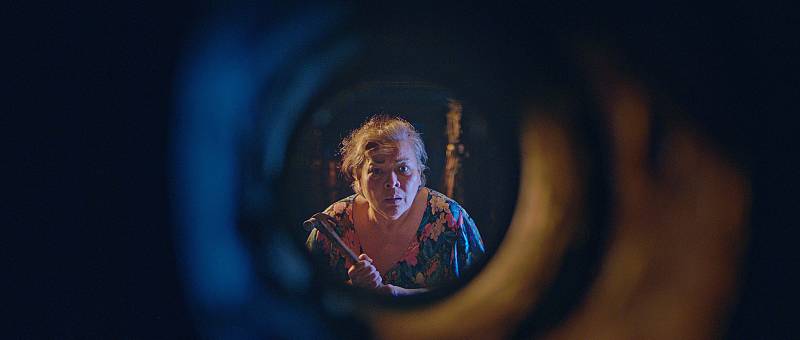
Shifting into a grainy 4:3 with mono aural sound, Escobar perfectly recreates the world of retro action drama but subtly updates it from its Marcos-era backdrop in replacing activists with drug users, her authoritarian thugs carrying out extrajudicial killings for reasons of intimidation. The movie Ronwaldo is set on revenge against a corrupt mayor and his vigilante son who shot his brother and then placed a pistol and a small packet of drugs next to the body, resisting authoritarianism in a way it may not have actually been possible to do so directly in the movies of the past. In any case, Leonor slips into her own screenplay as an awkward omnipotent force writing as she goes but struggling with her own role and agency before picking up a hammer and venturing into danger to rescue the hero and his love interest herself.  

From the other side of the screen, Rudie asks her if she’d be OK with someone else finishing her screenplay which is in a way asking her if she’s alright with her final decisions being made for her. That might be what Leonor is trying to decide for herself by rewriting in real time, searching for the right ending for her life’s story. Rudie had resented his mother, blaming her for keeping him behind when he planned to apply for an overseas work visa to join his boyfriend abroad but she wonders if he isn’t just using her as an excuse while afraid to take the risk. She by turn insists she can manage alone, but is perhaps afraid she can’t which, along with the grief she feels over Ronwaldo’s death, leads her to push him away. 

Leonor’s coma perhaps brings them both clarity that allows them to discover what it is they really want, Rudie finally handing agency back to his mother in telling her do what she has to do in a world of her own creation while she tells both her sons to be sure they write their own lives. The doctor had told Rudie that Leonor was trapped in a world between sleeping and waking and that you can’t wake someone who is not asleep, they will have to find a way to escape by themselves something which in one way or another Leonor perhaps does coming to terms with Ronwaldo’s death and breaking free of her grief through recapturing her creative spirit if writing a poetic end for herself. Then again as an authorial voice breaks through, life is never as simple as narrative and we’re rarely given the opportunity to edit our own stories or decide the way in which they end, perhaps Leonor isn’t either but even so passes into a world of joy and song in which there are no real endings only a great expanse of cinema. Charmingly surreal and filled with good humour, Leonor Will Never Die is at once the story of an old woman rediscovering herself while letting go of her grief and a celebration of escapist pleasures as paths towards self actualisation. 


Leonor Will Never Die screens in Amsterdam on 30th October as part of this year’s Imagine Fantastic Film Festival.

US release trailer (English subtitles)

Rabid (Erik Matti, 2021)

The last few years have obviously been stressful for everyone, but Erik Matti’s four-part pandemic-era horror anthology Rabid roots itself in the anxieties lurking below the simple fear of disease or strain of isolation painting a sometimes uncomfortable picture of the contemporary society. Ranging from class conflict to caring for the sick, brain drain, and economic despair, the four episodes find each of their protagonists trapped in a maddening world which no longer makes sense with little idea how they got there or how to escape. 

The first chapter, “Bad Luck is a Bitch”, for instance takes place entirely within the home of a wealthy family whose lives have not changed drastically under coronavirus restrictions because their jobs can be done from home and their livelihoods do not depend on the kind of business that requires face to face interaction. The trouble starts when mother Mayette (Cheska Diaz) takes pity on an old woman who comes begging at her door with a sign stating she is a deaf mute whose son passed away of COVID-19. Mayette invites her to stay in the family’s home as an act of kindness but also one that’s tinged with snobbery explaining to her husband they can do with more help seeing as their maid is no longer available. The old woman is later exposed as a witch using black magic to possess the family and take over the house. 

Her transformation could be red either as the family’s animosity towards the poor, the husband and daughter against taking the old woman in in case she has COVID-19, or as a manifestation of the poor’s resentment taking revenge on the rich for their lack of compassion. In any case it’s ironic that Mayette’s act of kindness has such devastating consequences for her family, the act itself corrected in the conclusion when she calls her daughter to help another beggar offering only food and sending the woman and her child on their way. Meanwhile the family’s attempt to get help from outside is frustrated by a breakdown of community trust during the pandemic when challenged by local patrols who remain suspicious of them and their health status, while the family’s modernity also undermines their safety their salvation coming only from the daughter’s boyfriend and his interest in the occult. 

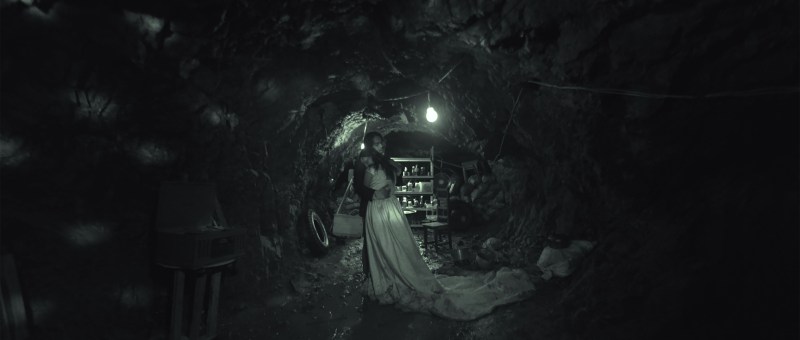
Chapter two’s “Nothing Beats Meat” by contrast is melancholy black and white treatment of love and isolation seemingly set in the midst of a zombie apocalypse in which a loving husband attempts to help his zombified wife beat her meat addiction by going cold turkey underground. Filled with a sense of fatalistic romance, the segment’s ironically upbeat ending asks what point there is in being well in a world of sickness when all the love and care there is will not bring the husband’s wife back to him leading him to decide that it is better to simply join her. 

The husband’s inner conflict feeds into the themes of the third instalment “Shit Happens” which is set in a small hospital and revolves around newly qualified nurse Becky (Ayeesha Cervantes) who is seen to be not entirely committed to her new job merely waiting it out until her visa arrives so she can go abroad. Exasperated nurse Reggie (Ricci Rivero) reveals that her predecessor only lasted three days for the same reason while he himself is working a double shift because of short staffing levels. He also accuses her of neglecting her work, avoiding its least pleasant aspects in conveniently forgetting to look in on a patient who had them soiled themselves and needed cleaning up. Beckoned into an alternate reality by the ghost of an old woman, she is soon confronted by her fears covered in poo and vomit while finally abusing the patient who is it seems taking revenge for the neglect she felt at the hands of her doctors while alive. This chapter both underlines the pressures on frontline health workers who are also dealing with their own fears and anxieties along with those of the patients who have no choice other than to trust them, and perhaps also offers direct criticism of those like Becky who only want to escape their responsibilities through chasing more lucrative work abroad. 

That sort of thinking is also in play in the final story, “HM?”, which is apparently a common abbreviation used in online selling meaning “how much?” and later takes on a different nuance when the heroine stumbles on a secret Russian food additive that must only be used in small quantities, as we discover, because it is extremely addictive turning those who overindulge into rabid zombies who lose all sense of reason trampling over each other to ease their craving. Widowed single mother Princess (Donna Cariaga) was in a difficult position having lost her job when ABS-CBN lost its media broadcast licence because of the political realities of Duterte’s Philippines and struggling to find a new one in the difficult economic conditions of the pandemic. Like many she decided to start an online side hustle as a home cook despite having no previous experience or talent but finds unexpected success thanks to the Russian serum only for the situation to get out of hand leaving her unable to cope with the demand on her business not to mention the zombified hordes who soon descend on her home. 

A fly buzzes through each of the instalments as if signalling the lingering malaise from class-based paranoia to pure desperation and the temptation of a quick fix. Inspired by original stories from Michiko Yamamoto, each of the tales paint a less than flattering picture of the contemporary society not limited to the stresses and strains of life in the middle of a pandemic but only exacerbated by them as pretty much everyone finds themselves trapped in a maddening world that no longer makes sense with no clear sign towards a wholly acceptable way out. 


Rabid streams worldwide until 30th April as part of this year’s Udine Far East Film Festival.

Original trailer (English subtitles)