
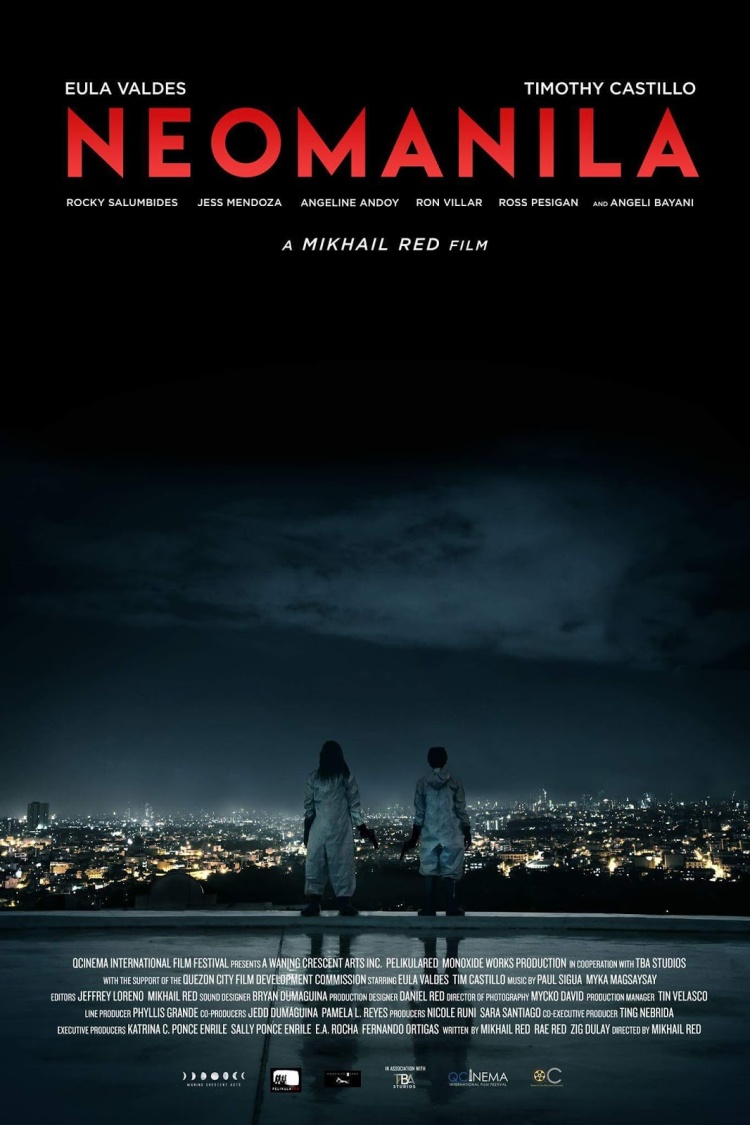
 What kind of future can there be on the streets of Duterte’s Philippines? For one orphaned son of Manila’s slums, the only answer he can see is none at all. “I’m going to die no matter what I do”, he tells a surrogate maternal figure whose conflicted maternity will eventually bring about ruin for them both. Mikhail Red’s Neomanila is the latest in a string of films to examine the social costs of Duterte’s “Extra Judicial Killings” of “Drug Dealers” often conducted by vigilante bounty hunters working with the tacit complicity of legitimate law enforcement. Inheriting a world of corruption where life is cheap and sensitivity breeds despair, boys like Toto (Timothy Castillo) find themselves caught in the crossfire of an increasingly heartless regime.
When we first meet Toto, he’s trying to visit his older brother, Kiko (Ross Pesigan), who has been rounded up by the police in a drug dealer trawl. Kiko is small fry – a petty gangster only peripherally connected with the drug trade, but the police are holding him in the hope of tracking down another suspect, Ringgo (Edwin Nombre). The problem is, unbeknownst to Kiko or to Toto, Ringgo is already dead – he was the dealer we just saw gunned down in the street by a hired assassin. Trying to figure out how to get the bail money together for his brother, Toto pays a visit to a local gang boss and then hangs out with his girlfriend Gina (Angeline Andoy) in between running petty errands for the gang. One particular job brings him into the orbit of Irma (Eula Valdez) – a woman running a “pest control” business who used to know his mother before she was killed in a fire in the slums some years ago. Irma offers him a job in her store, but Toto quickly becomes aware that Irma runs a lucrative sideline as a hitwoman for hire. Together with her partner (both romantic and crime) Raul (Rocky Salumbides), Irma works for mysterious police handler Sarge who gives the pair frequent assignments to take care of “suspects” and bring home the drugs as well as other kinds of “valuable” “evidence” including phones and weaponry.
Orphaned at a young age, Toto is left entirely alone on the streets of Manila. He’s not a really part of the gang and cannot rely them for familial support and with his brother out of the picture he has no one to stand for him. The quasi-maternal connection he builds with Irma is he closest thing to family he has experienced in quite some time. Irma too, apparently mother to an absent son, quickly takes on the role of Toto’s protector – she gives him her own son’s clothes, feeds him, and later takes him out on trips to the karaoke bar or shopping to buy trainers all while “training” him to become a part of her outfit even whilst believing that Toto is somehow “better” and not “like the other” kids from the slums who get mixed up in drugs and crime through having no other options to survive. Wanting to “contribute” as part of the family, Toto goes along with Irma’s morally dubious education but he is also still a child with a deeply felt sense of humanity and justice and is therefore increasingly conflicted about the duo’s heartlessness and refusal to question their various assignments.
Trapped by the world he has inherited, Toto has few options other than to conform to the harshness of its rules or risk becoming a victim of them. The vision Red paints of modern Manila is one lit by gloomy neon half-light in which gangsters go to mass and priests preach about the seventh commandment while the state itself sanctions bloody murder in the streets conducted by those with vested interests in perpetuating a world of inescapable poverty in which death has become an industry. Drenched in despair and unbelievably bleak, Neomanila is a story of a city eating itself alive in which there is no future, no possibility of salvation, and innocence is just another weakness to be burned on an altar to (im)moral austerities so that the world might feel “safer” to those who live in fear of its self-created evils.
Neomanila was screened as part of the New York Asian Film Festival 2018.
Original trailer (English subtitles)


 When you feel you’ve discharged all your social obligations, you might feel as if you’ve a right to live by your own desires. Whether the dreams you abandoned in youth will still be there waiting for you is, however, something of which you can be far less certain. Following the death of her husband, one Filipina grandma decides to find out, taking to the road with her best friend who is, incidentally, wanted for murder and carrying around the severed head of her late spouse in a Louis Vuitton handbag belonging to her vacuous step-daughter, in search of the one that got away.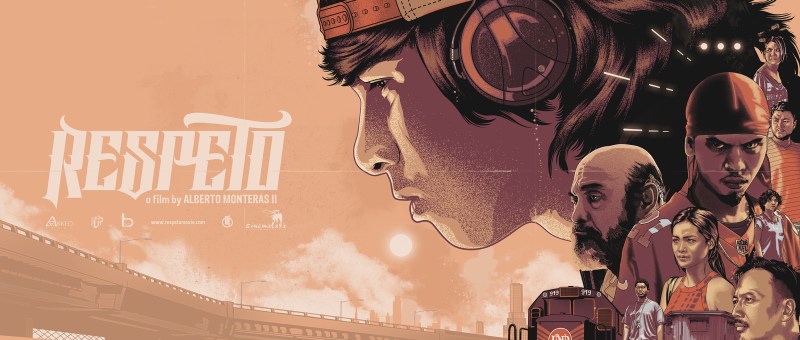


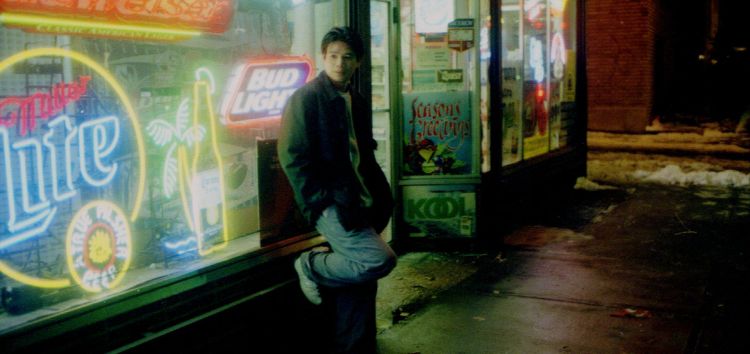 Lav Diaz’s auteurist break through, Batang West Side is among his more accessible efforts despite its daunting (if “concise” by later standards) five hour running time. Ostensibly moving away from the director’s beloved Philippines, this noir inflected tale apes a police procedural as New Jersey based Filipino cop Mijares (Joel Torre) investigates the murder of a young countryman but is forced to face his own darkness in the process. Diaspora, homeland and nationhood fight it out among those who’ve sought brighter futures overseas but for this collection of young Filipinos abroad all they’ve found is more of home, pursued by ghosts which can never be outrun. These young people muse on ways to save the Philippines even as they’ve seemingly abandoned it but for the central pair of lost souls at its centre, a young one and an old one, abandonment is the wound which can never be healed.
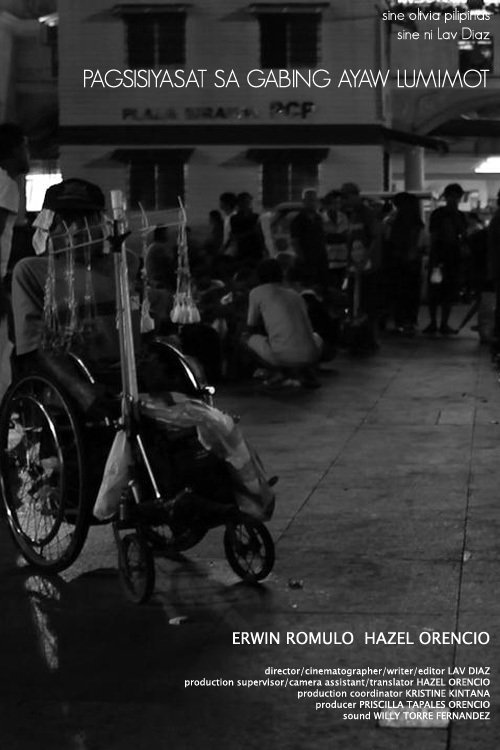 If
If 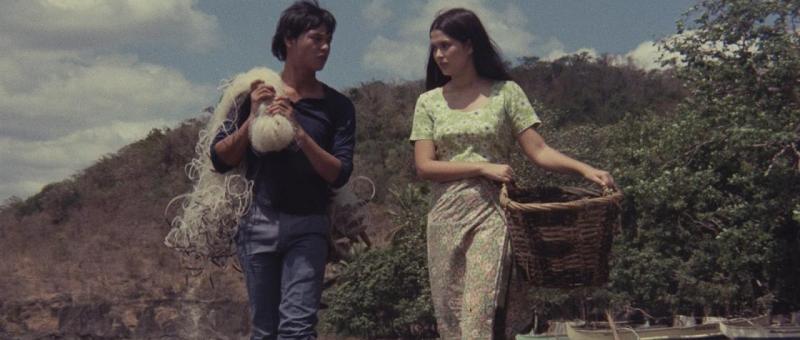
 About half way through Lino Brocka’s masterpiece of Philippine cinema Manila in the Claws of Light (Maynila, sa mga Kuko ng Liwanag), the hero, Julio (Bembol Roco), sits watching the window where he thinks the woman he loves may be being held prisoner as a trio of guitar players strums out The Impossible Dream, unwittingly narrating his entire story. Julio is no Don Quixote but he has his own Dulcinea and, as the song says, without question or pause he is ready to march into hell for the heavenly cause of rescuing her from clutches of this cruel city. Not quite content to love pure and chaste from afar, Julio plays Orpheus descending into the underworld, plunged into a strange odyssey through a harsh and indifferent world driven by mutual exploitation and the expectation of violence.
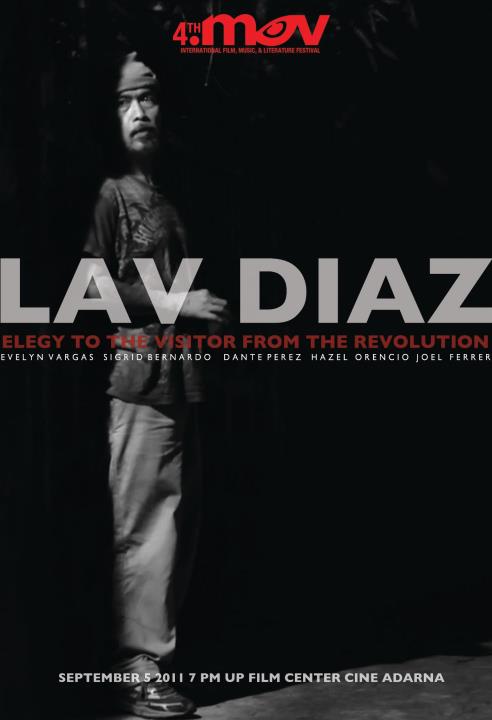 Lav Diaz is many things but he’s not especially known for his brevity. Elegy to the Visitor From the Revolution (Elehiya Sa Dumalaw Mula Sa Himagsikan) is something of a departure in that regard as it runs a scant eighty minutes but is, nevertheless, imbued with the director’s constant themes of loss, melancholy and despair conveyed across a tripartite structure peopled by three very different yet interconnected sets of characters. To say “only” eighty minutes long, yet Elegy to the Visitor From the Revolution first began as a one minute short, intended to form a part of Nikalexis.MOV – an omnibus dedicated to the memory of film critics Alexis Tioseco and Nika Bohinc tragically killed during a home invasion. Diaz’ film, however, outgrew its origins to become a stand alone feature in its own right.
 “Why is there so much madness and too much sorrow in the world? Is happiness just a concept? Is living just a process to measure man’s pain?” asks a key character towards the end of this eight hour film, but he might as well be speaking for the film itself as its director, Lav Diaz, delivers another long form state of the nation address. This is a ruined land peopled by ghosts, unable to come to terms with their grief and robbing themselves of their identities in an effort to circumvent their pain. Raw yet lyrical, Diaz’s lament seems wider than just for his damaged homeland as each of its sorrowful, disillusioned warriors attempts to reacquaint themselves with world devoid of hope.
