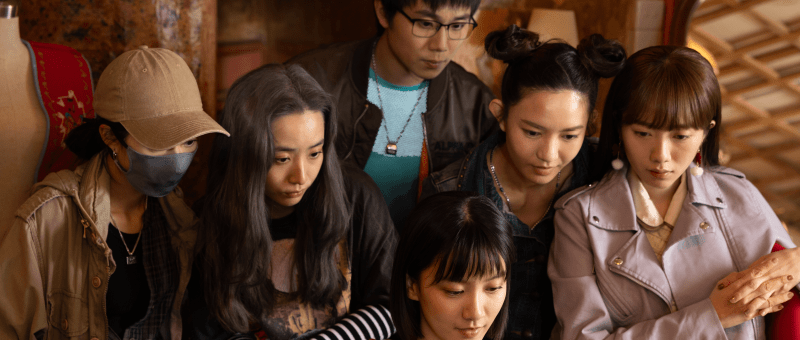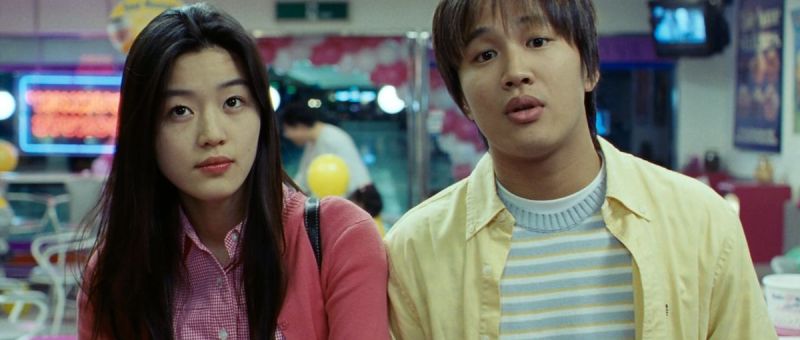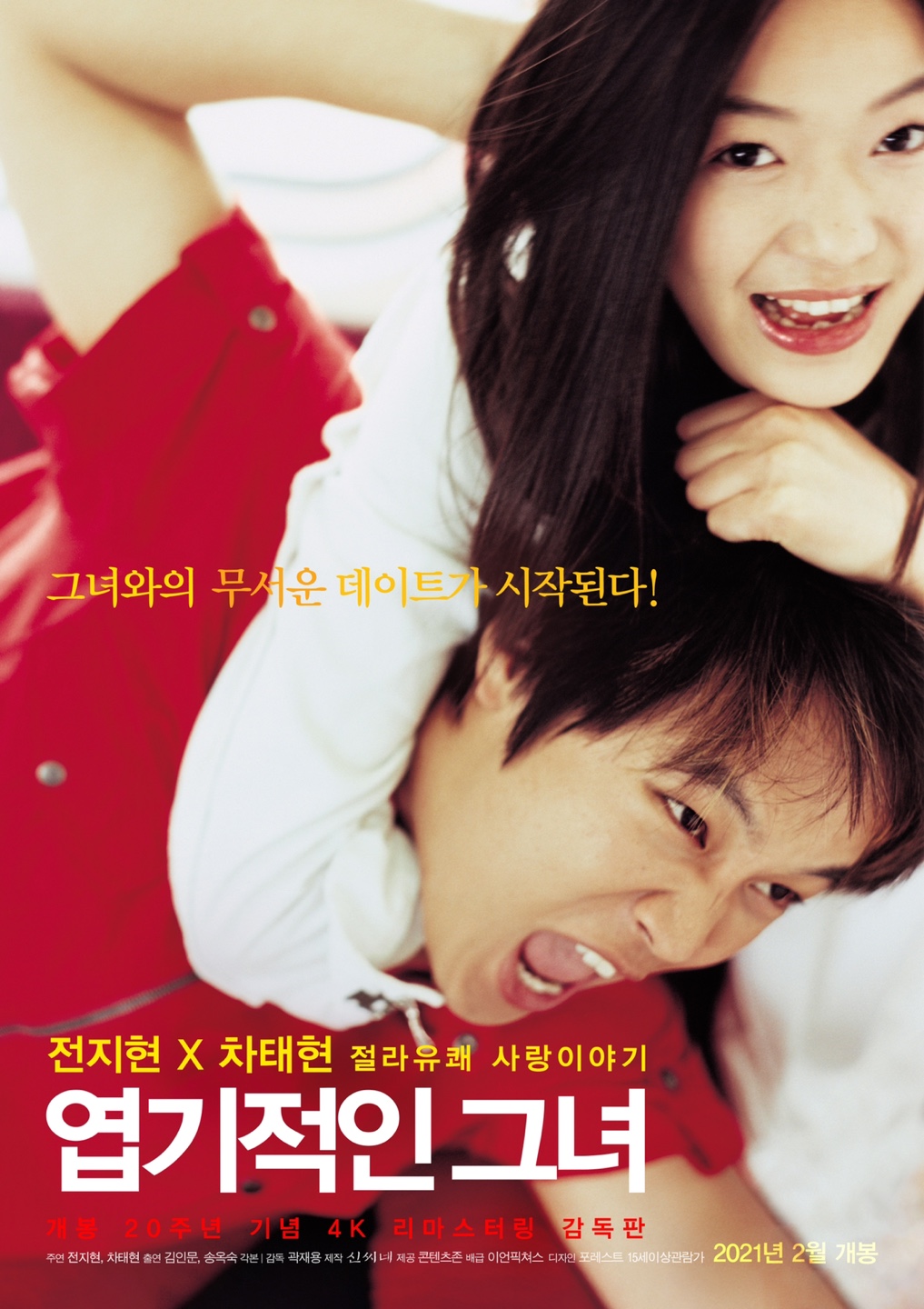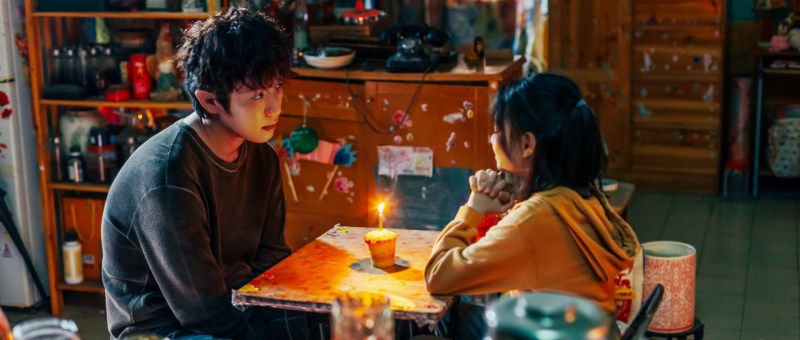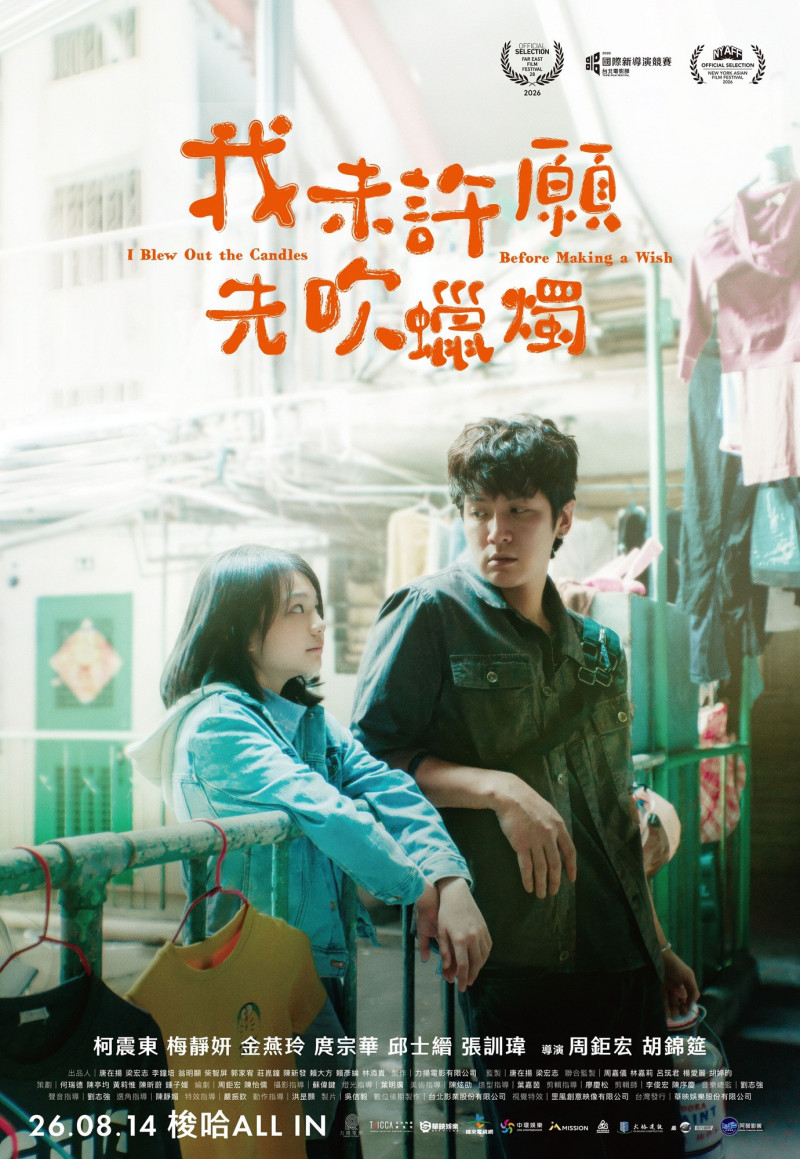
I Blew Out the Candles Before Making a Wish (我未許願先吹蠟燭, Chao Koi Wang & Hu Chin-Yen, 2025)

“Money can’t solve everything,” according to Jojo’s teacher, but life without it is certainly very difficult in Chao Koi-Wang and Hu Chin-Yen’s heartwarming drama I Blew Out the Candles Before Making a Wish. The film’s title perhaps bears out the sense of disappointment and futility among those trapped on the margins of contemporary Macanese society where life is one great crap shoot and the only way out of their straitened circumstances is to win big at one of the area’s famous casinos. 

But as recently released ex-offender Hua points out, there are wins and losses in gambling and more often than not they lost. Jojo is living with her elderly grandmother following her parents’ divorce and father’s disappearance after fleeing to avoid loan sharks who now pester them for their money. Jojo’s father told her he was scammed by his business partner, but her grandmother suggests it was down to a gambling problem. It’s ironic then that Jojo’s proposed solution is to use an insanely large number of “dead chips”, those that can’t be cashed in but can be used to place bets, to get rich quick and pay off her father’s debts so he can come and the family can live in a comfortable environment. The only snag is that, thankfully, they don’t yet let small children enter casinos.

While it’s clear that everyone seems to be feeling a sense of desperation, there are also those who help others such as the landlord that lets Jojo’s grandmother rent a makeshift rooftop apartment cheaply while even the evil loan shark turns out to have a compassionate side. Nevertheless, Jojo’s attempts to lean on adults for help largely fail, beginning with her hypocritical teacher who criticises gambling but agrees to help her then pockets the money for himself telling her he lost it all. He’s later seen looking in an estate agent’s window with his girlfriend, implying he wanted the money to buy a flat because, realistically speaking, there’s no way he could do that on a teacher’s salary and without the means to own property things like marriage and a domestic life also become more difficult. 

Hua, who came to Macau from Taiwan for love, also believes his economic situation caused the breakdown of his marriage and is desperate to win his wife back. Fearful she’d leave him, he committed a scam to buy a flat she moved out of when he went to jail. He’s now renting it out to a collection of migrant workers like himself to cover the mortgage while working as a debt collector. Yet he too is touched by Jojo’s plight and agrees to help her, though even he is tempted by the idea of scamming her out of her all money. Perhaps he sympathises with her because they are both in effect waiting for someone who likely won’t return, he his wife and she her father. As such, they form a kind of familial bond with Hua trying to take care of Jojo and her grandmother while keeping half an eye on the prospect of paying off his mortgage. 

On the other hand, it says something about societal indifference that Jojo goes on living on her own while her grandmother’s in hospital and their electricity has been cut off because she’s not around to pay the bill. They need someone to sign a consent form so her grandmother can have surgery, but there don’t appear to be any other responsible adults in Jojo’s life. An attempt to ask her mother, who has remarried and has a new family, proves more traumatic than anything else. No one except the loan sharks appears to check in her at all. She is resourceful and proactive, but also still a child and largely unable to understand the long-term implications of her plan or that gambling is a dangerous habit that, as Hua says, can ruin lives.

In that way the film is subtly critical of Macau’s economic dependence on the casino industry and the wealthy inequality that comes along with it. Jojo is only a little bit worried about the owner of the chips coming back for them, while Hua suggests they have belonged to someone so rich they probably just forgot about it. Gambling is something rich people do he says, and after all you can only really do it responsibly by playing with money you can afford to lose which neither of them have. Still, they keep rolling the dice anyway, hoping that their numbers will come up. Grandma may try to caution them, revealing a mistake she made in her own youth born of fear and desperation, that greed will always come back to bit you, but there is at least a sense of tempered optimism in their mantra of “lose today, win tomorrow,” that keeps hope alive when all else seems bleak.


I Blew Out the Candles Before Making a Wish screens as part of this year’s New York Asian Film Festival.

Trailer (Tradition Chinese / English subtitles)

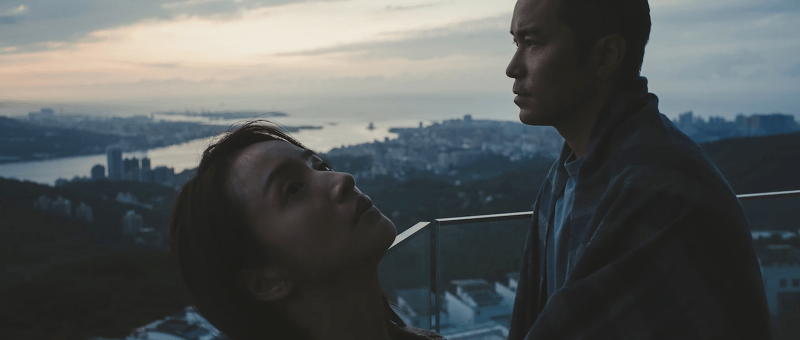
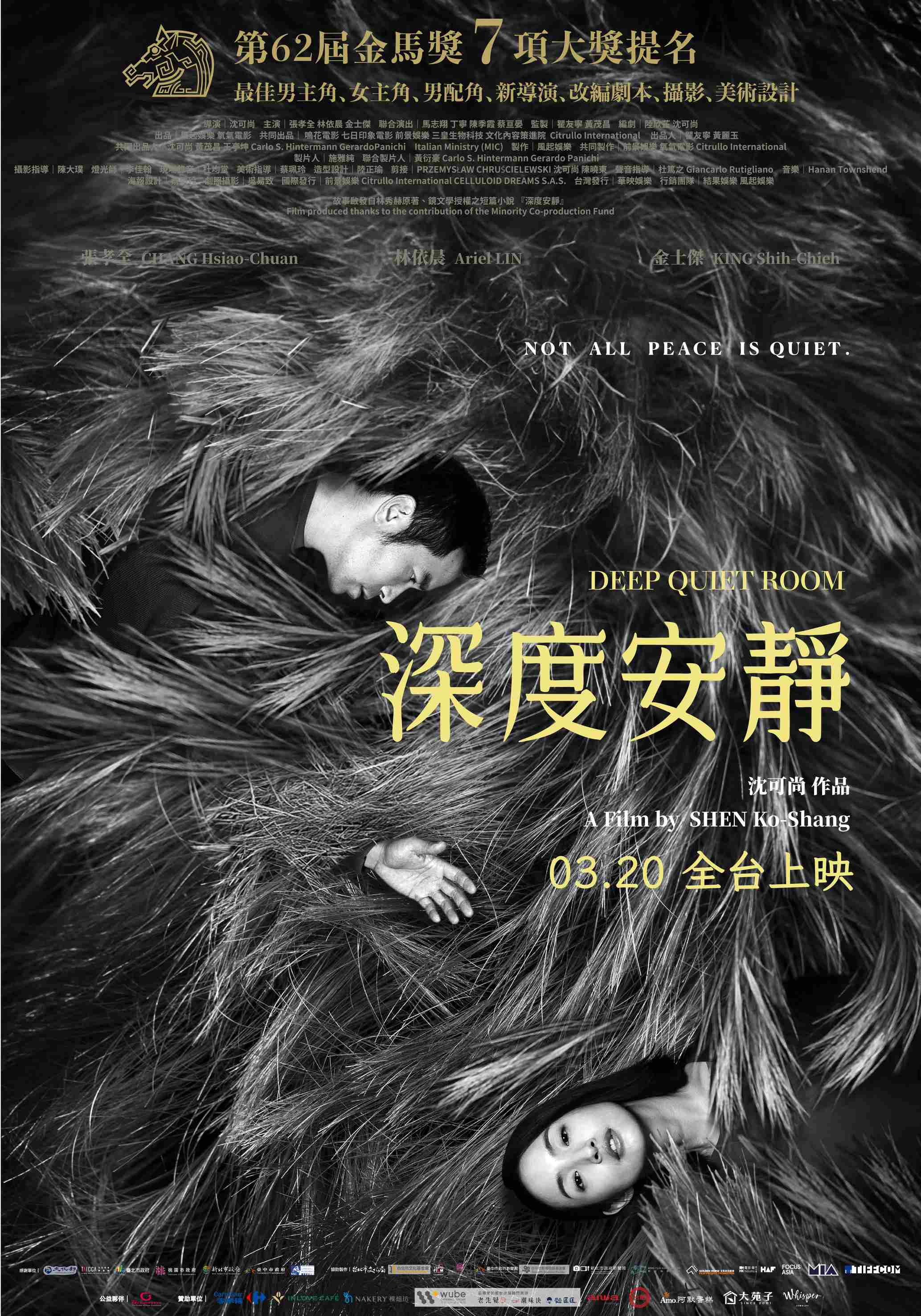
Deep Quiet Room (深度安靜, Shen Ko-shang, 2025)

Reeling after his wife’s unexpected suicide, a bereft husband begins to discover the destructive effects of unresolved trauma amid the oppressive patriarchal social system of Taiwanese society in Shen Ko-shang’s hard-hitting drama, Deep Quiet Room (深度安靜, shēndù ānjìng). The “deep quiet room” of the title is both literal in referring to that at the back of the couple’s flat they had designated as a nursery where pregnant wife Yu-ting cocoons herself, and to the psychological space into which her husband cannot enter.

Told from Yu-Ming’s (Joseph Chang) perspective, the film centres on his sense of confusion and inability to understand the psychological changes that his wife underwent following her pregnancy which led to her taking her own life. Through repeated flashbacks, it becomes clear that Yu-Ting (Ariel Lin) was suffering from depression and uncertain whether she wanted to give birth to this child. Though everything may have seemed normal on the surface, we can see that there is something not quite right in the way that Yu-Ting interacts with her parents while cryptic allusions are made to two other sisters who are for some reason no longer part of the family while Yu-Ting’s mother is otherwise an entirely silent and passive presence.

This silence and passivity may stand in for that of Taiwanese women, or least those of her generation, who find themselves powerless against male authority figures such as husbands and fathers. When Yu-Ting expresses anxiety that their baby may be a girl, Yu-Ming assumes that his overbearing mother has said something to her reflecting a cultural bias that favours sons over daughters. Yu-Ming appears to not to share it while the doctors at the hospital also stress that the sex is irrelevant as long as the child is healthy. But when Yu-Ting’s father (Chin Shih-chieh) states that girls are better, there is something uniquely chilling in his words that further deepens Yu-Ting’s dread and sense of responsibility in bringing a little girl into this kind of world.

The father cannot be questioned and his home is filled with silence. This is the deep quiet room in which the film seems to suggest all Taiwanese women are to one degree or another trapped inside. Yu-Ming necessarily exists on the other side of it and is to some extent unaware of its existence. He is frustrated that his wife shuts him out and desperately wants to her to share with him what it is that makes her so unhappy and prevents her from embracing the kind of domestic happiness that he is seeking to create. When Yu-Ting unexpectedly snaps that she hates herself for being unable to abandon her father, Yu-Ming seems bemused and replies that it’s a daughter’s filial duty to care for him. His own decision, which seems odd to others, to continue caring for Yu-Ting’s father, who has dementia and therefore can no longer answer for whatever he may have done in the past, is another symptom of his desire to maintain this ideal of a traditional family. 

What he discovers therefore implodes Yu-Ming’s conception of the values that he assumed underpinned his society and his own role within them. His eventual decision to abandon Yu-Ting’s father is symbolic of an ultimate desire to reject and escape from this patriarchal superstructure of which he has also been a part. Yu-Ting’s two sisters chose other paths to escaping their trauma, the oldest spending most of her adult life in a psychiatric institution, and the younger fleeing abroad severing all ties with her family. She has married a man who is not Taiwanese and is living a happy family life overseas. Informed of her mother and sister’s deaths, she simply replies “R.I.P” and that it’s no longer any concern of hers. She has sealed her childhood off in its own deep quiet room and now refuses to open the door, suggesting that the only path to survival lies in exiting this system entirely and never looking back.

As such Shen paints a fairly bleak view of the contemporary society as mired in outdated patriarchal social codes while women like Yu-Ting are left with no recourse. She cannot share this part of herself even with those close to her, not even with her sisters who suffered the same way she did but have each withdrawn themselves into different kinds of isolation, and must therefore carry the burden alone. There is however a glimmer of light in the otherwise grim conclusion that suggests a desire at least to exorcise this trauma by abandoning the patriarchal order and building something new in its place.


Deep Quiet Room screened as part of this year’s New York Asian Film Festival.

Trailer (Traditional Chinese / English subtitles)

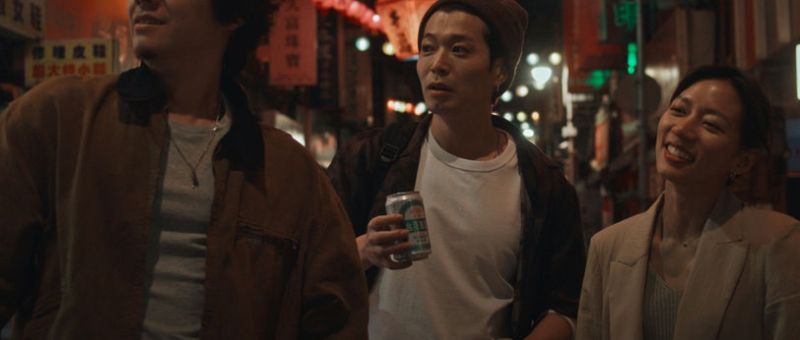
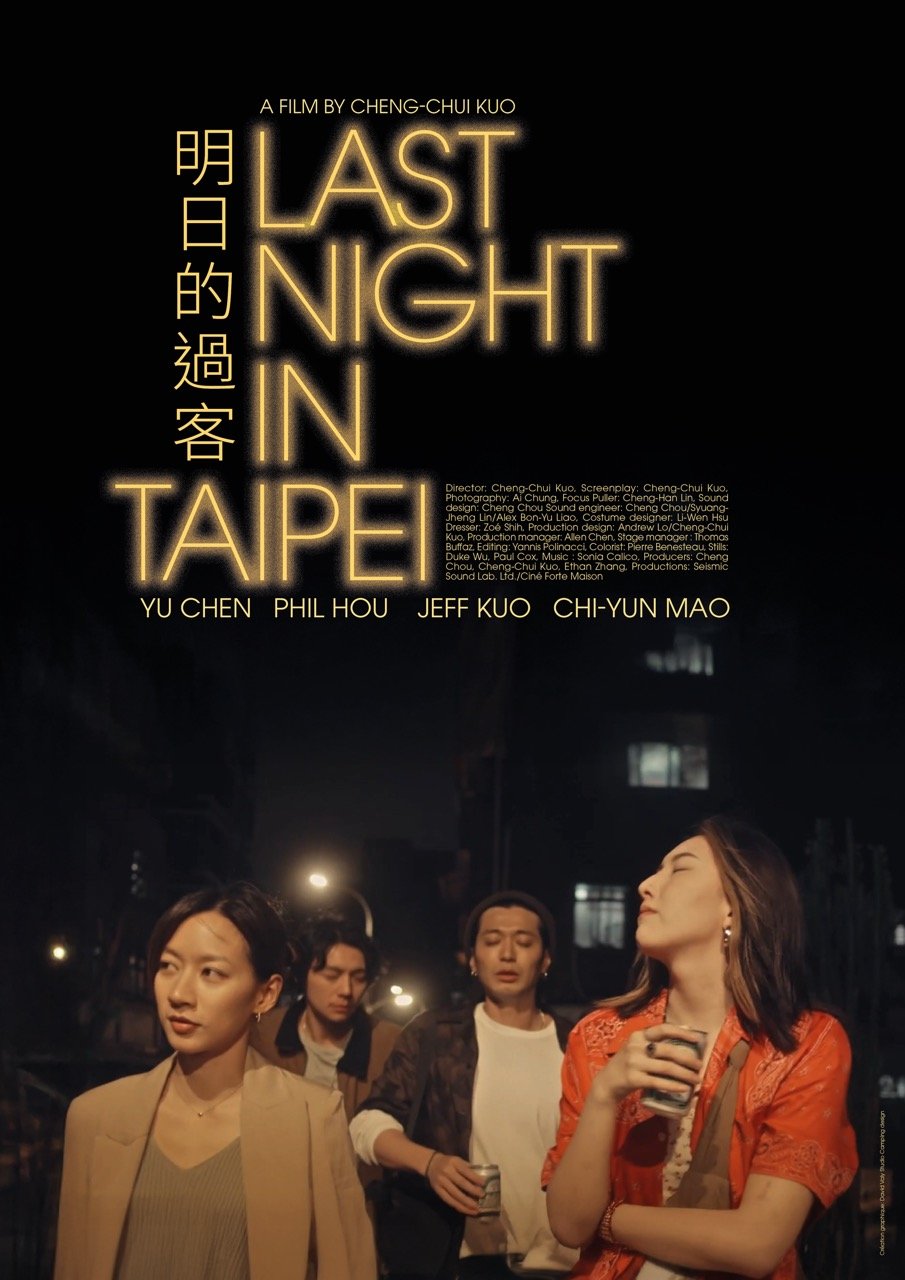
Last Night in Taipei (明日的過客, Kuo Cheng-chui, 2025)

Three old friends who haven’t seen each other in years are forced to confront the reality of their lives after a chance encounter in Kuo Cheng-chui’s Last Night in Taipei (明日的過客, míngrì dì guòkè). Less an odyssey through the midnight city, the film is really more about finding accommodation with a sense of middle-aged regret and letting go of what might have been, though it does not necessarily seem that any of them are really happier after dealing with their unresolved feelings.

Blanche’s marriage has begun to turn cold owing to her husband’s deference to his mother who is upset that they have yet to conceive a child and continually dropping off Chinese medicine to help them along. After arguing with her husband Ben when a date night is abruptly cancelled she decides to stay in the city alone where she immediately runs into an ex, Jake, who is on a trip home from Paris where he as lived for the last few years. To begin with, it isn’t quite clear whether Blanche has actually met him at all or is just fantasising about what her life would be like if she’d stayed with him rather than ending up Ben whose chief advantage seems to be his wealth.

But Jake is similarly feeling lost in that he feels out of place in both Paris and Taipei and is perceived as a foreigner in both places. Meanwhile, he’s harbouring unresolved feelings about the end of his relationship with Blanche. While wandering though the city, the pair walk into a bar where their old friend Axin is currently working. His current girlfriend, Mao Mao, later joins them, but their relationship is not all it seems as Mao Mao essentially hired Axin to play the part of her boyfriend for 99 days to make an ex jealous and is now having difficulty dealing with the end of the arrangement.

The trio met when they were all aspiring actors, and they have to one extent or another each failed to fulfil their dreams. Only Axin is seriously persevering with performing, but he to is coming to the conclusion that he has failed as an actor and it’s time for him to leave Taipei. Blanche, too, regrets not having had the opportunity to play a proper role and is feeling unsatisfied with her married life. She wonders if this is all there really is and her entire life is already decided. Perhaps she only stays with Ben because it’s become convenient while the risks of leaving outweigh the benefits. Jake too always felt as if Taiwan was a liminal space, not somewhere he’d stay indefinitely, so he never put down roots. He reflects how much the city has changed, almost if it did so deliberately to give them memories as these spaces seem to retreat from them back into the past. 

The frequent references to missiles and intrusions into their airspace echo this sense of restless anxiety that this current existence might soon disappear or be taken from them. The sense of impending doom forces the three friends to reassess their bonds and missed connections providing an opportunity for at least partial emotional honesty even if these unresolved feelings are not fully addressed. Mao Mao too must reevaluate what she was looking for in her relationship with Axin in which he too was perhaps merely putting off the act of confronting himself and his life.

Though they may each discover a way of moving forward, no one seems all that happy about it. Blanche considers leaving her marriage, but ultimately stays perhaps because she lacks the courage to actually do it and resigns herself to an unfulfilling future. Jake still feels adrift and blames himself for the failure of his relationship with Blanche, realising that he let her down out of fear and immaturity. Axin too decides to move on, but is left with a sense of regret, while Mao Mao too can only resolve to start over again from day one. In some ways the friendship between them might have been repaired with the air cleared, but on the other hand as Axin says real friends don’t necessarily need to be in contact all the time and each seems to be left a little lonelier even than before in having closed a door to the past with seemingly none to open to the future.


Last Night in Taipei screened as part of this year’s New York Asian Film Festival.

Trailer (dialogue free)

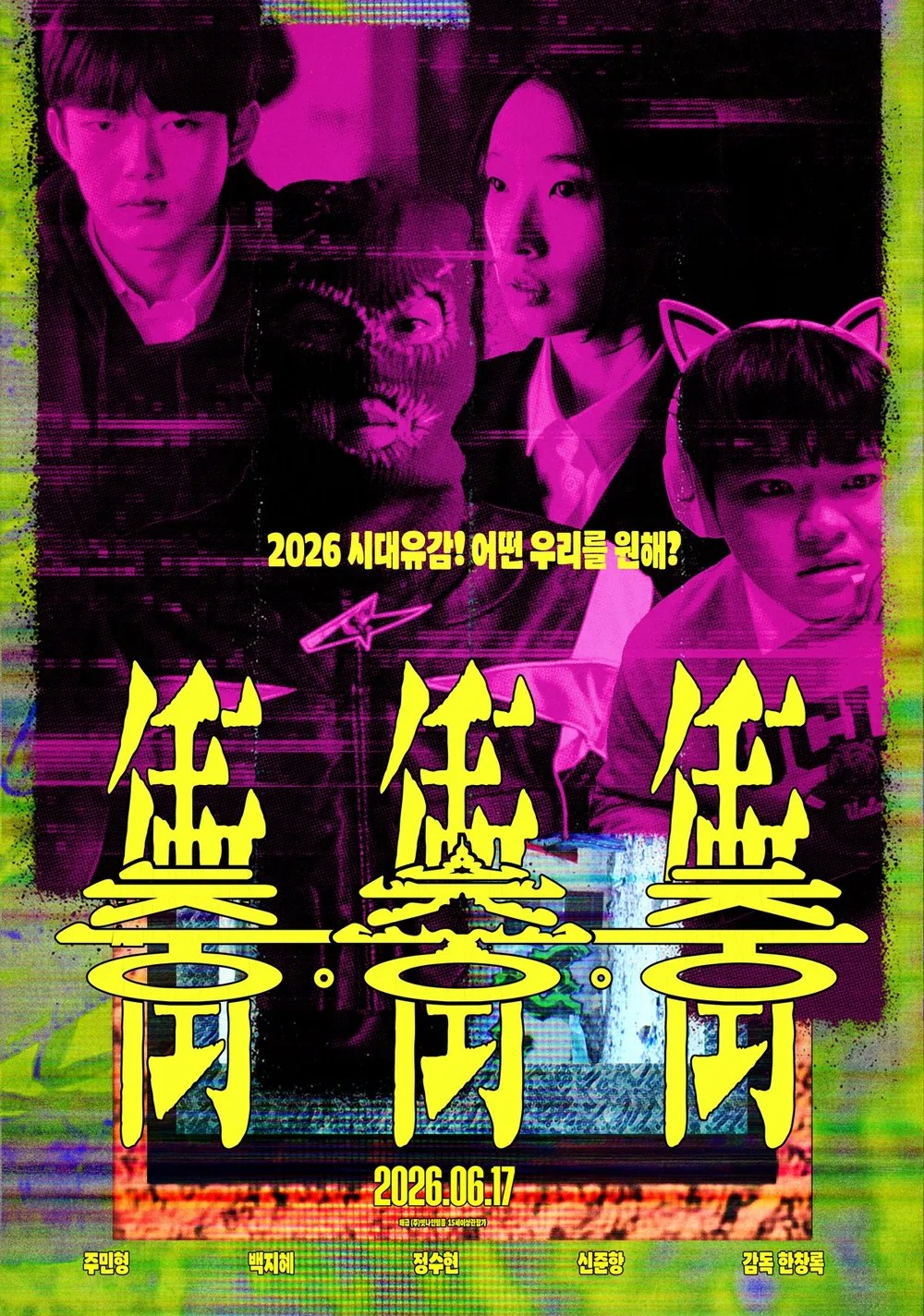
Funky Freaky Freaks (충충충, Han Chang-lok, 2025)

The gentle balance between three outsiders is disrupted by an elite transfer student in Han Chang-lok’s stylish drama Funky Freaky Freaks (충충충, Chungchungchung). Divided into three chapters, Impulse, Collision, and Shock, the film is, in many ways, a slow motion car crash or a path towards an inevitably destructive conclusion as the hero finds himself cast further out and abandoned by those close to him while his dream of becoming a superhero and saving the world by saving the woman he loves drifts further and further away.

Yong-ki (Joo Min-hyeong) doesn’t have many friends at school and is a fairly non-descript presence. He spends most of his time with two friends who, like him, are cast out of the mainstream and battling a sense of powerlessness. Ji-sook (Baek Ji-hye) is a survivor of domestic violence and has developed body dysmorphia that has left her with an eating disorder. She sells used underwear to men with fetishes in order to buy weight-loss drugs and seems to be considered the weird girl at school. Dumbo (Shin Jun-hang), meanwhile, is bullied for two different reasons. The first being that he is simply chubby. The second is however that he is gay and effeminate. He puts on a woman’s voice and chats to men on the internet, often conning them into buying him dinner before, perhaps unwisely, reverting to a more masculine voice to humiliate the person he’s been calling. 

Everything changes for each of them when a new transfer student arrives at the school. Woo-ju (Jeong Soo-hyun) is said to be from a wealthy and prominent family and a candidate for the national Olympic judo team. Of course, it’s a little odd for someone like him to transfer to Yong-ki’s school which is in a fairly rundown backwater and not exactly offering top facilities or teaching staff. Most people don’t think this far, but it’s obvious that Woo-ju has most likely been sent there there because it’s out of the way. His elite father is sick of his antics and is keen to limit the damage. Nevertheless, with his handsome looks and cool demeanour along with a touch of urban sophistication Woo-ju is an instant hit at school all of which inflames Yong-ki’s resentment especially when he seems to become friendly with Ji-sook.

Yong-ki sees Woo-ju as an embodiment of everything he’d like to be but isn’t, and is therefore desperate to knock him off his pedestal. Part of his resentment stems from the fact that Woo-ju has large numbers of online followers which seems to be how the kids measure success and social hierarchy. Yet through his investigations he discovers that Woo-ju may simply have paid for them, while there are rumours that he’s a bit of a playboy with a history of callous behaviour towards sexual partners. Others suggest that he was once a wimp and the shortest guy in class until his wealthy family got him growth hormones. His father clears up his messes by forcing people to sign NDAs, but Woo-ju may be a kind of victim too in that his father can’t accept failure and beats him every time he fails to win a judo match.

This fuels Yong-ki’s belief that they are basically the same in that Woo-ju is a loser too and the only difference between them is money, though rather than provoking empathy it seems to deepen his resentment. He becomes determined to avenge Ji-sook who has been seduced and abandoned by Woo-ju, becoming a figure of fun at school, as a means of convincing her to choose him, though she does not appear to have realised that Yong-ki has feelings for her. Abandoned by his mother who has not returned home in two months and has secretly been living somewhere else with a new man, Yong-ki’s sense of loneliness and desperation begins to push him towards an eventual explosion. Woo-ju too may have been fighting back against a sense of powerlessness, but his existence only bears out the ways in which Yong-ki continues to suffer because of social inequality. Han mixes media using CCTV footage, poetic black and white sequences, video cam, and VHS-style imagery to reflect Yong-ki’s childhood dreams while lending a note of ironic absurdity to the bleakness of his life in which the only possible reaction to his despair is violence.


Funky Freaky Freaks screens as part of this year’s New York Asian Film Festival.

Trailer (English subtitles)

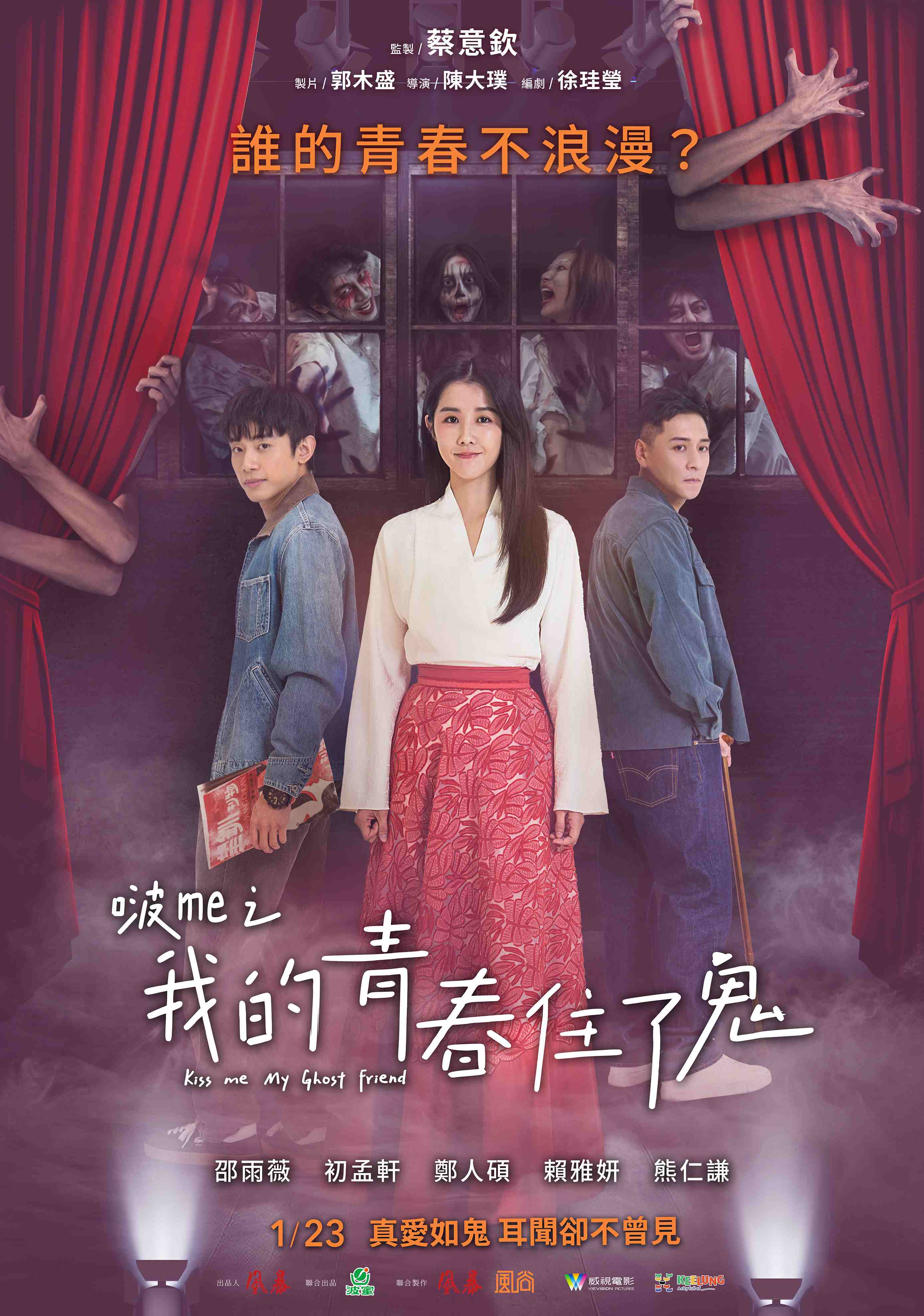
Kiss Me My Ghost Friend (啵me之我的青春住了鬼, Chen Ta-pu, 2026)

A young director finds himself unwittingingly bonding with a ghost after agreeing to stage a performance in a disused theatre in Chen Ta Pu’s romantic dramedy, Kiss Me, My Ghost Friend (啵me之我的青春住了鬼, bō me zhī wǒ de qīngchūn zhù le). The theatre in question turns out to be haunted, not just by its past and legacy but by young woman betrayed in love whose story dovetails neatly with the tale he has been asked to tell.

To that extent, Jim is also haunted though only by the spectre of his father, a once prominent playwright who has become a recluse. His Bo-Chuan was to be a new and revolutionary kind of theatre updating traditional opera for a new age. It was, however, never staged and following the death of his grandfather, Jim’s mother wants to have the ASI theatre torn down. Jim is less than keen on accepting the job, in part because he is embarrassed by his privilege and prefers to keep the fact that he has a financial safety net in coming from a wealthy and prominent family secret, and because he does not really want to reckon with his family legacy.

The irony is that Jim’s previous show was an interactive ghost experience set in a disused building. Unfortunately, it failed to find an audience and the last performance had to be cancelled. After a year with no success, Jim’s theatre troupe is forced to disband and he’s dumped by his girlfriend, formerly the troupe’s lead actress. He wanted to explore the meaning of life through a ghost story, but laments that the audience just wanted entertainment. He has no idea that Shi is a ghost and originally believes her to be the assistant managing the theatre, but it’s true enough that she has a connection to the story of Bo-Chuan, not just in her involvement with the original production but the ways in which it mirrors her own life as a woman left in limbo, haunted by the spectre of lost love.

Bo-Chuan too waited 18 years for the man she loved to return, though while alive Shi had her doubts about the story. She thought this tale of love and sacrifice was too old-fashioned and bound to destructive patriarchal mores. If it were her, she says, she’d spend the 18 years looking for value in her life rather than waiting around for man. She and Jim’s father decide to change the end of the play, but still, Shi became a lonely ghost trapped in the theatre that itself became a relic of the past. Though she can no longer play a leading role, helping Jim stage another Bo-chuan with an ending of his own allows her to restore the theatre to what it once was, purifying it of its evil spirits and overcoming her romantic trauma.

Jim too gets a second chance at his artistic career having previously decided to give up the theatre after his repeated failures. Though a potential romance with Shi never gains traction, she does however lead him towards artistic fulfilment in the acceptance of his legacy as his father’s son as they finish the play together. The other members of Jim’s troupe too all come to accept Shi even after realising that she is a ghost. They too had all be financially inconvenienced by Jim’s failure, though unlike his girlfriend his troupe chose to stand by him and return for this gig in an apparently haunted theatre which nevertheless offers huge financial rewards. Unlike Bo-chuan, Ying Ying wouldn’t wait, but her place is quickly taken by Shi who patiently teaches Jim’s actors how to work with this more classical material. Though Jim’s mother may want to tear the theatre down because it reminds her of a past she’d rather forget and symbolises her guilt, in the end it becomes a place of healing that allows all to move on from the past while giving Jim’s theatre troupe a new place to belong along with a brighter artistic future rooted firmly in the past.


Kiss Me My Ghost Friend screens as part of this year’s New York Asian Film Festival.

Trailer (Traditional Chinese / English subtitles)

Street Kingdom (ストリート・キングダム 自分の音を鳴らせ, Tomorowo Taguchi, 2026)

Tomorowo Taguchi is probably best known to international audiences for his starring role in Tetsuo the Iron Man, but he started his career as an illustrator and theatre actor while also active in Japan’s underground punk music scene as a member of the band Bachikaburi. For the last few decades, he’s been a fairly ubiquitous presence in mainstream Japanese films as a jobbing actor turning up in small supporting roles in all sorts of unexpected places, but Street Kingdom (ストリート・キングダム 自分の音を鳴らせ, Street Kingdom: Jibun no Oto wo Narase) is a look back to the early years of the punk movement and the creation of Telegraph Records.

Scripted by Kankuro Kudo, most of the names in the film have been slightly altered to reflect the fictionalisation of the narrative and so we follow Yuichi Hibiki (based on Yuichi Jibiki and played by Kazunobu Mineta), a struggling photographer who feels lost in an increasingly consumerist Japan. Like many of his generation, he spent his formative years in the student movement and is looking for a way to fill that void following the movement’s collapse in the wake of the Asama-sanso Incident. Japan’s economy had improved quite markedly by then and many former student protesters simply moved on into more mainstream lives as regular salaryman men and women, much as Yuichi’s friend has done by joining a record label and becoming obsessed with Pink Lady, the epitome of the disposable contemporary pop music topping the charts and making them money. Inspired by Yuichi, the friend later also jacks in his corporate career and becomes a punk rocker because he too discovers he wants more than the emptiness of a salaryman existence.

After a trip back to his family pig farm, Yuichi’s epiphany comes after hearing the Sex Pistols on the radio, though he is dismayed to find out that they have already broken up. Nevertheless, he determines to go Tokyo and find the real Japanese punk as opposed to that imported from New York or London. It’s inside this world that finds freedom outside of the Japanese mainstream as an independent artist, vowing to create a Street Kingdom with Momo (Ryuya Wakaba), the lead singer of influential band Tokage, and zine publisher Sachi (Riho Yoshioka). An out-of-touch journalist at one point tries to offer them expensive champagne and shames the band members for still living at home with their parents, and there is something a little bit incongruous about Momo’s lovely mother asking him what he wants for his tea before he goes off to play one of his anarchic gigs. But in another way, this is exactly the essence of punk in the sense of domesticity, friendships and solidarity that existed between the members of this community.

It all only begins to go wrong when the music labels start getting involved and commercial decisions conflict with artistic ones. Yuichi becomes a de facto manger because he’s a “decent” sort, which is to say he’s a bit of a square existing to one side of the movement which is a designation he resents at times, but also allows him a more privileged position of guiding it. He’s the one who advises they quit on a high after their “Tokyo Rockers” multi-band tour threatens to get too big and provoke rivalries and discord in what had been a fairly non-competitive, collegiate scene. He also helps Momo overcome some of his artistic conflicts by starting a parallel indie label so they can release songs the label rejects, such a nonsense tune about fish and pollution that the suits deem “too political”. What he can’t fully help with, however, is Momo’s descent into depression and drug abuse when the label pushes the band into debt, refuses to help financially after their band members are involved in a crash while on tour, and finally suggests they were only really interested in Momo as a potential solo artist doing more mainstream pop. Nevertheless, it’s Yuich’s friendly intervention encouraging Momo to get his act together that finally convinces him that something has to change.

To that extent, the film may be a fairly sanitised and nostalgic exploration of the director’s youth, but it’s also an advocation for dancing to one’s own tune which, it argues, has not necessarily become any easier in an age when anyone has access to the tools to become an artist. The punk spirit lives on in those who are prepared to be fully themselves in a culture that can be oppressively conformist and as the film would have it, the greatest legacy of the punk rock era was the sense of community between young people who wanted to build their own utopia which is something that in itself will never die.


Street Kingdom screens as part of this year’s New York Asian Film Festival.

Trailer (English subtitles)

The Brightest Sun (時には懺悔を, Tetsuya Nakashima, 2025)

Tetsuya Nakashima’s more recent films have often dealt with more controversial subjects. His latest, Brightest Sun 時には懺悔を, Toki ni wa Zange wo), adapted from the novel by Bunzo Uchiumi and delayed from last year due to allegations made by an actress on World of Kanako that nude footage was used without her consent, is not so much a film about disability as the taboo of parental selfishness or a sense of disconnection from one’s biological children.

Nevertheless, the way the film approaches it subject matter may seem insensitive to some in that it often reduces the existence of disabled children to a burden that must be born by someone and preferably by a biological parent. Though rookie detective Satoko (Hikari Mitsushima) raises the issue of the child’s subjectivity and quality of life, others struggle to see him as anything more than an object for which someone must accept responsibility. This is doubly true for her reluctant partner, Satake (Hidetoshi Nishijima), who has taken to drink and is riddled with guilt over his ambivalent feelings regarding his own disabled son who has since passed away. His wife (Ko Shibasaki) has fallen into depression and is living in a psychiatric facility while he is seemingly incapable of caring for their teenage daughter who has become resentful of both parents, feeling as if they were unable to care for her because all their attention went to her brother while she too now feels guilty that she did so little for him and left his care entirely to her mother.

At times, the film is critical of this tendency to force women to accept full responsibility for childcare while men remain otherwise absent from the domestic space, but seems to walk this back in the closing moments. In any case, Satake’s rejection of his son is mirrored in that of Tamie’s (Haru Kuroki) husband who openly declares that it would have been better if Taku had not been born, blaming Tamie for giving birth to a disabled child. His embarrassment makes plain a lingering stigma towards disability or difference in the wider society, as if having a child he sees as imperfect reflects badly on him personally. Tamie, meanwhile, seems as if she may have been suffering from a kind of post-natal depression and is clearly affected by her husband’s resentment along with her own inability to bond with the baby. Though she witnesses her child being kidnapped, she does nothing to stop it with implication being that perhaps she is glad to be relieved of the burden. 

Satoko too has become estranged from her young daughter who struggles with the trauma of witnessing her stab her abusive husband. The implication is that this resentment is born of having seen through her mother and realised that she did not do this out of a desire to protect her, but merely out of selfish rage. The fact is that her desire to protect Shin/Taku is a displacement activity. Everyone’s actions are to one extent or another a vicarious attempt to atone for something they are otherwise unable to address in their own lives. 

This appears to have been true for the man whose murder they are supposed to be investigating, Yonemoto (Jiro Sato), who is said to have been the worst of the worst. Someone who really was “better of dead” as Satoko puts it, though we never really find out why exactly everyone had such a low opinion of him and the detective company itself does not actually seem as sleazy as one might expect. Satake suspects he may have planned to blackmail Tamie, who has since remarried and has two step-children, over the discovery of her son, but in fact he was apparently quite moved by the tender care the kidnapper provided to Shin/Taku all these years and though knowing that he should turn him in, wanted to ensure the child would continue to be well cared for. 

This is apparently where Yonemoto found the redemption centred in the Japanese title and explained in an opening title card. Satake similarly is forced to face his complicated emotions towards his son and family, trying to do the best for Shin/Taku as means of assuaging his guilt much as Satoko shifts her maternal anxiety onto Tamie. The film’s conclusion seems to undercut the idea presented by the policeman that blood ties may not be that important, having witnessed the care and devotion the kidnapper showed to a child that was not his by blood and had complex needs, in its concerted efforts to force Tamie to accept her maternity. Nevertheless, the film does its best to extend sympathy and understanding to all, suggesting that the best thing to do in this situation might have been to leave well alone, but for various reasons that won’t be possible. Opting for a noirish aesthetic, Nakashima abandons his pop aesthetics for something a little more subdued but maintains his fast-paced editing style, drip-feeding us the mystery while pondering the nature of the bonds between parents and their children.


The Brightest Sun screens as part of this year’s New York Asian Film Festival.

Trailer (no subtitles)

Bird of Paradise (媽樣年華, Wu Chui-yi, 2026)

Feeling trapped in her marriage to a dull and patriarchal husband, a middle-aged woman finds a new lease on life after taking up pole dancing in Wu Chui-yi’s lighthearted drama Bird of Paradise (媽樣年華). Having lived only for her husband and son, Yeun begins to crave self-fulfilment, yet knows that her new hobby won’t go down too well with her family and is forced to keep it a secret even as her newfound confidence begins to grow.

After realising she’s actually taking the same class as her teenage son’s crush Shan, Yuen ends up using a different name at the studio further compounding the fracturing of her identity and echoing her assertion that pole dancing allowed to see another version of herself that was beautiful, amazing, and free. Ironically, Shan seems to have a lot of the confidence that Yuen has lost and perhaps bears out the advice she receives from a supportive shop assistant that the projection of beauty is largely a matter of conviction. Believe yourself to be beautiful, and others will too. 

Her husband Ming-lam, however, who happens to be Shan’s high school teacher, constantly tries to suppress the new version of herself that she’s becoming. He complains that she’s getting “further and further out of line” by coming home later in the evenings, dismissively telling her that if she wants to gossip, play mahjong, or talk K-dramas with her friends she can do that in the afternoons. Yuen’s making the “wrong” breakfast and going out of sync with the meal calendar seems to signal the beginning of her rebellion as she begins to look for new sources of fulfilment when Ming-lam rejects unscheduled intimacy and otherwise treats her as little more than a glorified housekeeper. Despite criticising her for neglecting her household duties, he later suggests her life is easy with only the need to put a cloth round every now and then as he otherwise provides her with a materially comfortable life while entirely rejecting her emotional needs.

At the school too, Ming-lam is a strict disciplinarian who runs the morning outfit patrol and tells the children off for minor uniform infractions while making his son pretend they aren’t related. During their careers survey, Shan quips that her plan is to marry a wealthy man, and Ming-lam criticises her for a lack of ambition in wanting such an “empty and meaningless” life despite being exactly the one to which he’s condemned his wife not entirely to her will. Shan later turns this criticism back on him, telling Yuen that his need for control over his students is probably a means of compensating for a dull life that he internally resents. 

Yet Ming-lam is really just a depressing embodiment of an outdated idea of masculinity and an obsession with middle-class properness and respectability. He tells Yuen he just wants her to be a “normal wife”, which is to say subservient to him and confined within the domestic space. He genuinely thinks he’s helping his pupils by keeping on the straight and narrow without considering that he’s stifling their the creativity and individuality. When Shan practices her pole dance at school, he sees it only and lewd and bans it in part for “giving the boys dirty thoughts.” He can’t see that Shan dances for herself and resents Yuen’s growing confidence along with her desire for an identity outside of wife and mother. 

Yuen’s free-spirited mother Feng Mei too decides to look for fulfilment alone rather than relying on a man to accompany her to fulfil her late husband’s wish to take her up in a hot air balloon. Though Ming-lam’s sudden change of heart may seems improbable, Yuen’s transformation also reminds him of the romantic young man he once was and that his wife’s happiness is the most important thing. It is not for him to decide what sort of happiness she might want, but only to support her in chasing it. Yuen’s newfound self-confidence begins to improve the world around her, making her home a brighter, airier space rather than one ruled by oppressive routine and encouraging others to be more of themselves too rather than being confined by social expectation or the desires of others.


Bird of Paradise screens as part of this year’s New York Asian Film Festival.

Trailer (Traditional Chinese / English subtitles)

Unidentified Murder (UFO離奇命案, Kwok Ka-Hei & Jack Lee Chun-Kit, 2025)

The line between a prank and a scam maybe be necessarily thin in Kwok Ka-Hei and Jack Lee Chun-Kit farcical comedy Unidentified Murder (UFO離奇命案) in which nothing is quite as it first seems. Unfolding with an almost Rashomon-like structure, the film slowly peels back the layers of reality to reveal that pretty much everyone is playing a trick on someone, sometimes rooted in a childish sense of fun, but equally a desire for attention and the money that can be generated from it in today’s attention-obsessed society.

Twenty-five years ago, Kit (Ronald Lam Tsz-Kit) and Mark (Ling Man-lung) went up the mountain with their friend Ho but returned alone. Ho’s disappearance has apparently become a legendary local mystery with the boys claiming that Ho was abducted by aliens, though some seem to believe that their story is either a trauma-born fiction or a deliberate attempt to disguise their role in whatever may have happened to their friend. In any case, the film opens with an attempt by online content creator Man (Renci Yeung) of the “Prank My Boyfriend” video channel to play a trick on her boyfriend Mark by getting an actor, Kim (Peter Chan Charm-Man), to be the retuned Ho abruptly released by the aliens after 25 years. To begin with, this doesn’t seem like a very funny prank and could be crushingly insensitive. One might assume the now middle-aged men are carrying a degree of trauma about the failure to protect their friend, or else if they really were responsible for his disappearance in someway, it could turn out of be a dangerous situation for everyone. 

Nevertheless, Mark doesn’t seem to be particularly phased by Man’s prank and, on fact, sets out of prank her back by getting Kim onside to pretend that he and Kit kill him while planning to move Ho’s body due to the increased interest generated by the incident’s 25th birthday. This doesn’t seem like a very funny prank either, and it’s difficult to deny that this ultimately farcical situation began with a series of very bad decisions especially as this particular stunt is intended to work up to a marriage proposal. Unfortunately, however, nothing goes to plan and when it looks like Kim might be dead for real, the gang get a mysterious text trying to blackmail them threatening to release Man’s video of them murdering Kim online.

Or course, there’s a possibility that this is another prank too, or, to be frank, more of a scam. In this world, nothing really is certain and no one is really who they seem to be. A good friend might be playing a trick on you that could unwittingly be hurtful or insensitive though they may not mean it, while likewise they may be trying to con you out of a bit money to fight their own desperate circumstances. There’s a kind of childishness that underplays most of the trickery like a lie told by a child to get out of trouble that they then have to commit to for the rest of their lives. In this way a trick can become a shared secret, like an alternate reality that binds people together in ways few other things can. Others my be wilfully deceived by watching things like the Stardust Memories channel that purports to show evidence of aliens but may not be completely on the level. To that extent, at least Man’s channel is honest about its intentions even if it’s not clear to what extent Mark is already in on the joke.

Even if you regard it as harmless fun, these pranks too could wind up having devastating consequences and escalating to levels of death and violence all based on a series of misunderstandings. So confusing do things become while out in the mountain forest that Man even tries to grab the gun from a policeman and points it at her friends certain that they’re pranking her only to be shocked when the gun later goes off. But what could have unraveled a long-time mystery and exposed things best left buried or resulted in deadly consequences instead becomes another bonding exercise in which a group of people generate an unexpected friendship though all being in on the joke, each letting the incident end with good humour and no harm done. Filled with farcical comedy and an ironic cynicism the film seems to say that in this world where everything is grift being in on joke might be the only thing that makes life worth living.


Unidentified Murder screens as part of this year’s New York Asian Film Festival.

Trailer (English subtitles)

Magical Secret Tour (マジカル・シークレット・ツアー, Chihiro Amano, 2026)

When her husband falls into a coma and she discovers he’s left them in huge amounts of debt due to an undisclosed gambling problem, an ordinary housewife finds herself at the mercy of an already strained society in which it seems everyone is struggling to the extent that they have no capacity to listen to other people’s troubles. Inspired by a real-life case in which a group of women was arrested for smuggling gold into the country in 2017, Chihiro Amano’s lighthearted crime drama Magical Secret Tour (マジカル・シークレット・ツアー) is a condemnation both of a society ruled by money and the various ways that women are still expected to clear up the messes of irresponsible men.

Wakako (Kasumi Arimura) is quickly made to feel guilty for not having noticed anything wrong with her husband or their family finances while also expected to shoulder the burden of the repayment plan to his former employer to cover the money he embezzled on top of his hospital fees which must now be paid in full because he was unemployed and had no insurance. When she tries to turn for her own family for her help, her mother is not happy to see her and seems put out that she’s turned up unexpectedly. It seems their family garage business is in trouble while they are already under strain due to needing to pay for their bedridden grandfather’s medical treatment. Her mother leaves abruptly before Wakako has the chance to explain the situation denying her the possibility of both financial assistance and emotional support. 

Apparently ineligible for any kind of government assistance, Wakako’s attempts at job-hunting fail because she is a mother of two with one only an infant and has also been out of the workforce for too long for any career experience to count. Even when her husband does eventually make a partial recovery, he blasts her for neglecting her responsibilities and overburdening his mother by asking for help with childcare. Despite having let her down so badly, he insists he’ll get a job once he’s better and discourages her from continuing to work even though she tells him that she enjoys it and finds it fulfilling. To that extent, her experiences have shown her that she did not really need to be dependent on a man for money as society somewhat encouraged her to be and could also look for fulfilment outside the home as an independent woman. 

Nevertheless, the only work she can find means turning to criminality, first by agreeing to a loan shark’s dodgy gold-smuggling scheme by taking the kids to Singapore for a few days and then returning laden down by gold bars they smuggle through customs to avoid importation taxes. While there she meets two other women in similar situations. Kiyoe (Haru Kuroki) is a scientific researcher in her early 40s who faces persistent sexism at work where her boss steals credit for her discoveries and faces no consequences for fiddling his expenses. Unable to find a new position thanks to a poor publication history, she wants the money to provide for her future. Mayu (Sara Minami), meanwhile, is trying to escape her toxic mother while pregnant herself and working as a bar hostess. 

The women justify themselves that what they’re doing is basically a victimless crime and just really a bit sneaky rather than morally wrong even if aware it’s illegal. A disclaimer at the end of the film implies the law has been tightened since 2017, but the stakes are also fairly low as it seems they’d mostly likely just be asked to pay the tax if they got caught, so trying to smuggle it seems like a no-brainer to them. Even so, the film skirts around Wakako’s involvement with the criminal gang from whom one would expect some sort of payback after she runs off with some of their gold after her own attempt to run a similar business inevitably runs into trouble. Instead it focuses on her sense of isolation in which the mother can end up being pushed out of both families, disregarded and taken for granted while expected to pick up her husband’s slack even if he hasn’t kept his part of the bargain by providing financial stability while otherwise absent from the domestic space. The only way to make a man play his part in child-rearing might ironically be divorce, though it seems likely it might just be him overburdening his mother this time. In any case, Wakako’s magical secret tour does seem to have led her to a more fulfilling place even it may in other ways be bittersweet. 


Magical Secret Tour screens as part of this year’s New York Asian Film Festival.

Trailer (English subtitles)