Wild Sparrow (野雀之詩, Shih Li, 2019)

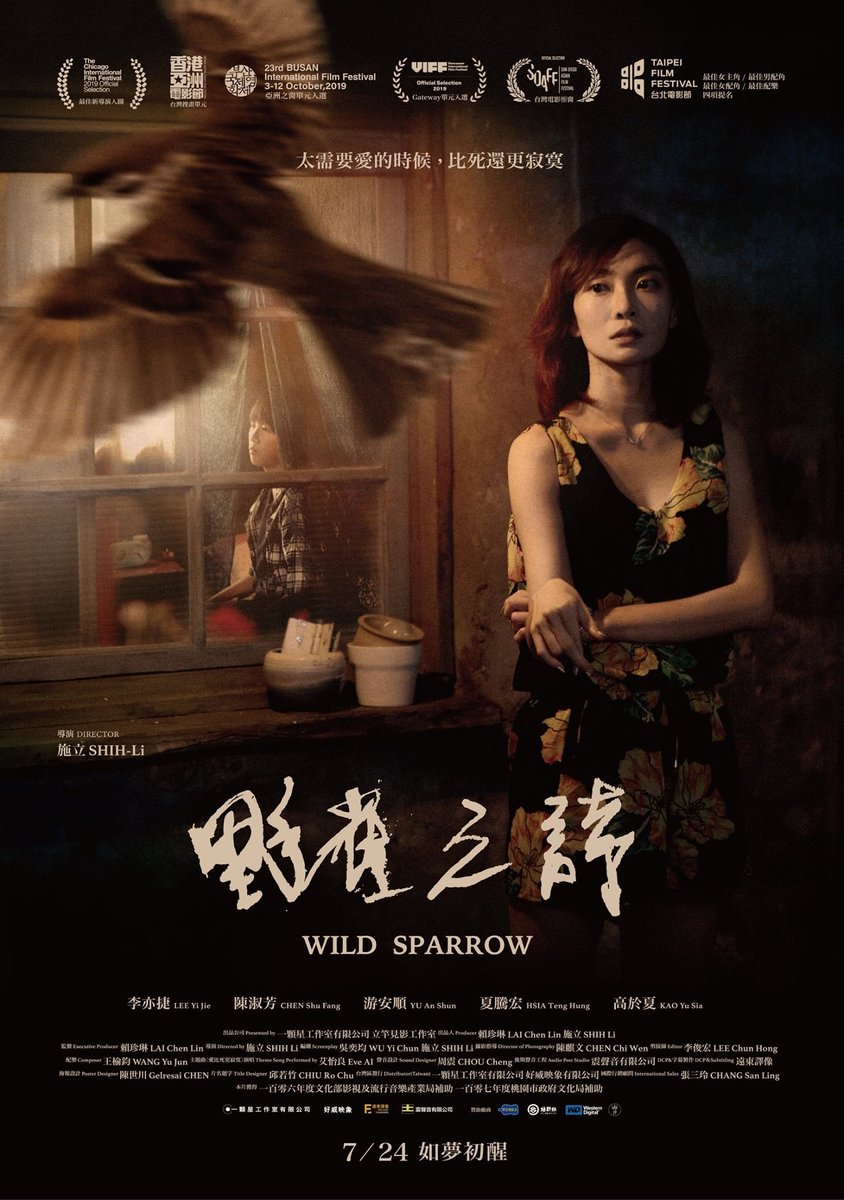
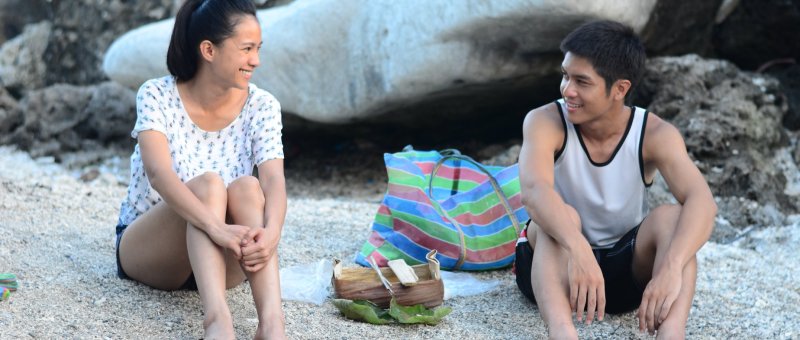
“Sparrows are wild birds so they keep hitting against the cage” the introspective hero of Shih Li’s Wild Sparrow (野雀之詩, Yě Què Zhī Shī) is told while perhaps witnessing the same effect in his own life as his flighty mother tries but repeatedly fails to break free of the various forces which constrain her. Young Han’s mother is, in some ways, an embodiment of a destructive modernity, wandering into his rural paradise and then eventually dragging him away from it towards the dubious promise of the city where birds meant to fly free flutter against the bars but rarely find escape. 

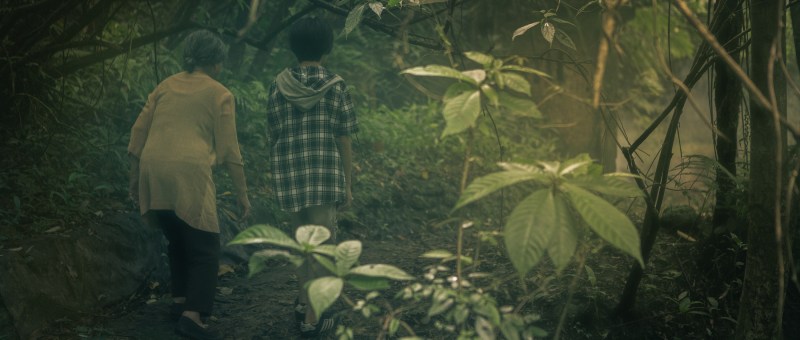
Han (Kao Yu-hsia) has been living with his great-grandmother deep in the Taiwanese mountains, but as much as she loves him she’s getting old and, owing to rural depopulation, the local school is set to close the following term so all things considered it’s best if he goes to live with his mother, Li (Lee Yi-chieh), in the city. Questioned by the neighbourhood ladies, however, Han doesn’t want to go. After all, he doesn’t really know his mother all that well. She rarely visits, and in any case she doesn’t seem terribly keen to have him. While out walking one day he hears the frantic squawking of birds caught in a net, taken away by a mysterious man. Finding a sparrow injured on the ground he takes it home and attempts to nurse it back to health, but shortly after his mother’s visit the bird passes away. He takes it into the forest in a shoebox and builds it a cairn, gazing at the birds flying free above the canopy.  

Han asks his great-grandmother why someone would capture wild birds, but she simply tells him not to. The birds are the guards of the gods of the land, sent out to hunt demons that force people to eat dirt, she explains. At the marketplace where his great-grandmother sells her bamboo, Han comes across a man selling caged birds for the purpose of being set free as part of a Buddhist ritual, Han’s face contorting in confusion as he ponders the irony. In the city all he ever sees are birds in cages, much as he perhaps feels himself to be taken out of his natural environment and imprisoned in the urban landscape where his mother alternates between neediness and resentment, so obviously ill-equipped to care for a soon-to-be teenage son while continually conflicted in the contradictions of her life. 

When Han first arrrives, Li makes a point of introducing him to her current boyfriend, Kun, wealthy and much older than her though kind to Han if slightly patronising in his gift of a remote control car for which he is probably a little old and in any case not much interested. A thoroughly rural boy, Han is also mystified by the upscale restaurant they take him to where he is embarrassed to admit he has no idea how to eat the steak that’s been ordered for him. While Li entertains fantasies of marriage, we realise that Kun seems to already have a family and as much as he makes the effort with Han Li is not much of an escape from his domestic responsibilities if she’s also hoping he’ll be a father to her son. Li returns to her life as a bar hostess, often leaving Han home alone and returning late drunk to resentfully yell at him that perhaps her life would have turned out differently if he were not around. She becomes involved with various dangerous men, eventually pushed into sex work by a violent boyfriend who stalked her while working at the club. Han finds himself witnessing his mother with her lovers as she disregards his presence, seeking temporary escape in the arms men while he can only lock himself inside his room, cowering on his bed framed behind bars like a bird resigned to the cage.  

Yet on his return to his mountain paradise he’s distressed to realise the body of the sparrow he buried is no longer in the cairn, comforted only by his grandmother’s assertion that it has already returned to the sky. Death is nothing to be afraid of she tells him, for the dead will always protect the living. Gaining a lesson in life, death, and transience, Han remains imprisoned, framed within the window of his grandmother’s cottage as he watches a soul free itself and return to its natural home, but retains his wildness in his own compassionate desire for freedom, fluttering against the bars if not yet able to escape.


Wild Sparrow streamed as part of this year’s New York Asian Film Festival.

Original trailer (English/Traditional Chinese subtitles)
Images: © Dot Connect Studio Ltd.

Turning 18 (未來無恙, Ho Chao-ti, 2018)

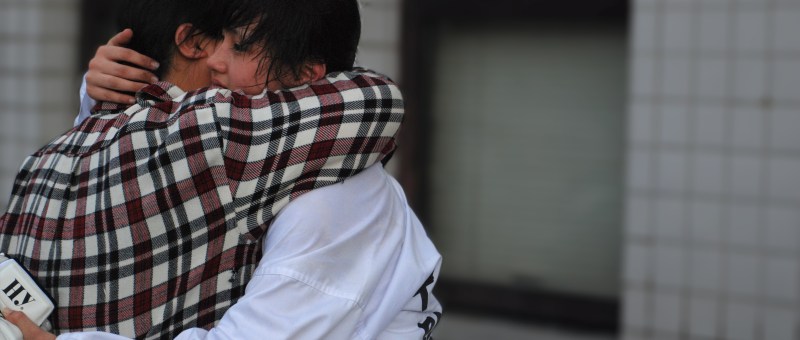
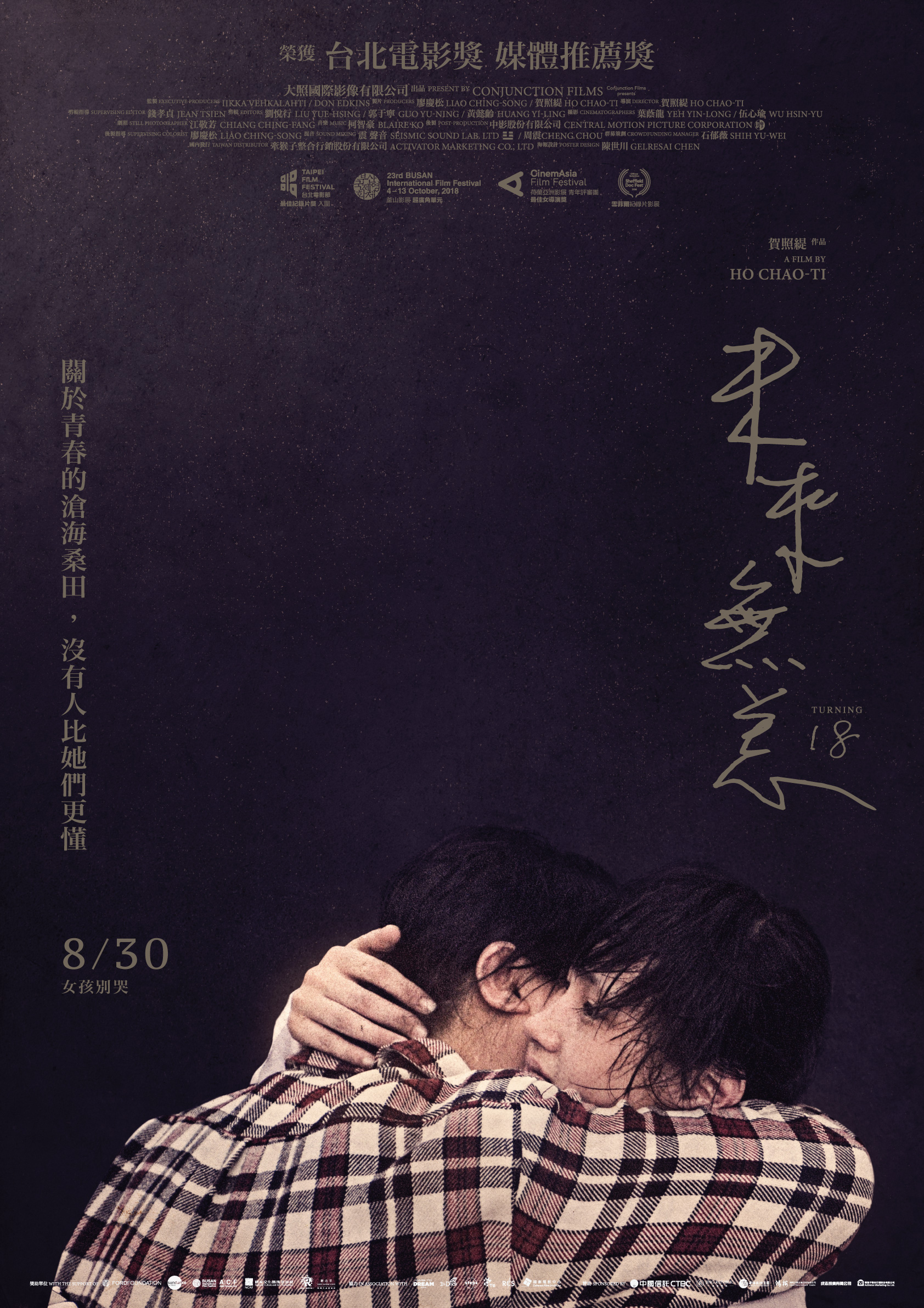
How much do you really owe a family that has failed you? A difficult question at the best of times, it’s one that continues to play on the mind of teenager Chen, one of two young women from indigenous communities at the centre of Ho Chao-ti’s documentary Turning 18 (未來無恙, Wèilái Wúyàng). Following the two girls who each come from challenging family backgrounds from the ages of 15 to 18, Ho perhaps draws a slightly uncomfortable contrast in the differing paths their lives eventually take after they briefly meet during an internship at funeral home but nevertheless presents an all too often ignored perspective on a hidden side of the island nation.  

Forced to grow up far too soon, both young women are children of single parent families in which there has been a history of domestic violence and, as we later discover, in Chen’s case sexual abuse. In response to her difficult family circumstances in which her mother has become an alcoholic and she has become the primary carer for her eight siblings, Chen has grown serious and mature. She intensely resents her mother’s drinking, not least because it plays into a racist stereotype about indigenous people while also trapping them in desperate poverty. Chen has had to take time out of education to look after her siblings and is grateful for the internship opportunity after which she will return to high school. 

Pei, meanwhile, has moved in with her possessive boyfriend, Wei, and his despairing mother. She is slightly less enthused about the internship, but dutifully completes it. Unlike Chen she never returns to school but remains with Wei who later becomes a delinquent and encounters trouble with the law. Pregnant before her 18th birthday, Pei finds herself navigating teenage motherhood and economic instability while the increasingly irresponsible Wei gravitates towards a life on the margins of crime. 

As such, it seems almost as if we’re being pushed towards judgement of the unlucky Pei for, perhaps, making the same mistake as her mother in unwisely depending on an unreliable man though they are both only teenagers, while it is undoubtedly much easier to get behind the earnest Chen who is determined to make something of her life while fiercely defending her family. Nevertheless, their marginalised status as members of an indigenous community is quickly brought home to us. Ho throws in a few snippets from post-war propaganda programs regarding the development of Hualien which describe the local Tayan population alternately as savage and uncivilised and then simple and innocent, apparently grateful for their “civilisation” at the hands of the KMT government which recommends Hualien to industry leaders as a source of cheap labour. 

Both the young women suffer at the hands of a patriarchal social code and fractured economy. Forced to compromise her education, Chen resents her mother for being unable to hold down a job of her own while it seems clear that she has little education herself and that her drinking is in part a response to her despair. Having escaped abusive spouses, the mothers of both girls have been left without effective means to support themselves in the absence of men, Chen’s mother depending on the support of her extended family who, we later learn, were also abusive. When the abuse is brought to light, Chen’s mother encourages her to lie to the court in order to protect her family members afraid perhaps of the shame but equally of the impossibility of surviving without them. 

Yet Chen continues to try to love her mother no matter how much she disappoints her, sorry only that her mother could not learn to love herself enough to save herself and determined never to make the same mistake. Finding an outlet in Taekwondo which she sees as another way to protect her family, Chen discovers another side of herself in dating another girl, at this young stage of her life incongruously insisting on referring to her as a “boyfriend” though the relationship appears to be accepted by her classmates as entirely normal. We never see how Chen’s family feels about her sexual identity save that she later affirms her desire to march in the Pride parade in Taipei precisely because she wants them to understand she loves women and that’s not something that will change, no one has the right to tell her who to love or who to marry. 

In this at least, Chen appears to have broken the cycle in definitively embracing her identities as a queer indigenous woman while also continuing to love and support her problematic family. Pei meanwhile is in a much less advantageous position, having perhaps repeated the same behaviour patterns in being letdown by an unreliable man and left to bring up a baby on her own though little more than a baby herself. Nevertheless, Ho’s camera is never judgemental in capturing this largely hidden side of Taiwanese society in which systemic male failure and entrenched patriarchy contribute to the marginalisation of the indigenous community even in the contemporary era. 


Turning 18 screens at London’s Riverside Studios on 3rd November as part of this year’s Queer East Film Festival.

Original trailer (English subtitles)

The Shepherds (牧者, Elvis Lu, 2018)

Among the most liberal of Asian nations, Taiwan became the first to legalise same-sex marriage in 2019 but that doesn’t mean that it’s always easy to be LGBTQ+ particularly if you come from a religious background and wish to maintain your faith. Elvis Lu’s documentary The Shepherds (牧者, Mùzhě) follows a small group of religious leaders who are or have been involved with a progressive church, Tong-Kwang, which was the first in Taiwan to expressly embrace the LGBTQ+ community on its foundation back in 1996. Unfortunately, however, the pastors have faced significant barriers in their personal and professional lives because of their views on homosexuality which face staunch opposition from mainstream religious organisations. The founder of Tong-Kwang Yang Ya-hui, a heterosexual female pastor, eventually took her own life because of the discrimination she later faced within the religious community which made it impossible for her to continue working and support herself without compromising her beliefs. 

Discrimination is also something which has affected pastor Huang Guo-yao and his wife who now work for Tong-Kwang but began their careers in Hong Kong. Huang was forced to give up his ministry after advocating for LGBTQ+ rights brought him into conflict with the more conservative local Churches, eventually making the decision to migrate to Taiwan while his children remained in Hong Kong. He laments that the situation in which he found himself may have had a negative effect on his now grown-up sons, the younger one he worries having become increasingly withdrawn and unwilling to talk about his feelings. 

Zeng Shu-min, meanwhile, is in a similar position unable to find employment with more conventional churches as an openly gay pastor. While officiating at same sex weddings, he’s had to look for other employment to support himself and generally lives an ascetic existence, dependent on the kindness of friends such as Hsiao-en, a lesbian advocate for LGBTQ+ Christians who was herself ejected from the seminary for her liberal views. Running the Light Up project, she provides a more positive religious presence at rallies where conservative voices loudly protest against the advancement of rights for LGBTQ+ people and the movement for marriage equality. Presenting a united front in their priestly outfits, conservative preachers openly commit to undermining the seats of local politicians sympathetic to LGBTQ+ issues, some advancing that they want to “protect” the LGBTQ+ community who must be living “very painfully”, while they refuse to compromise the “basic values” of their society. 

As part of her outreach, Hsaio-en also liaises with the parents of LGBTQ+ children who often find themselves ostracised from their church community solely because of their children’s sexual orientation. Like Shu-min, she also has to work a regular job to support herself while feeling guilty for not being able to devote herself to activism full time and lamenting that hard as she works it often feels as if she isn’t getting anywhere and her efforts don’t make much difference. Yet Tong-Kwang in itself provides a valuable safe place for LGBTQ+ Christians, running a hotline those in distress can call for relief when experiencing difficulty in their personal or religious lives and affirming that their sexuality need not conflict with their faith nor is it a barrier to God’s love. 

With a mixture of observational footage and talking heads interviews, Lu bookends the film with poetic black and white re-enactment featuring the words of pastor Yang Ya-hui taken directly from her autobiography, positioning her as a kind of martyr for the rights of LGBTQ+ people in Taiwan and particularly for LGBTQ+ Christians. The film ends with the passing of the marriage equality act, but is quick to point out that that does not mean that prejudice and discrimination evaporated overnight, Hsiao-en in particular worried that organisations such as hers will come under greater pressure from conservative religious voices intensifying their opposition. Nevertheless, despite the sometimes great toll on their personal lives and those of their families, each of the shepherds remains committed to defending the rights of LGBTQ+ people not only to occupy an equal place within their society but also within their faith as members of a compassionate and progressive religious community. 


The Shepherds streams in the UK 30th October to 5th November courtesy of Queer East and Taiwan Film Festival Edinburgh.

Original trailer (English subtitles)

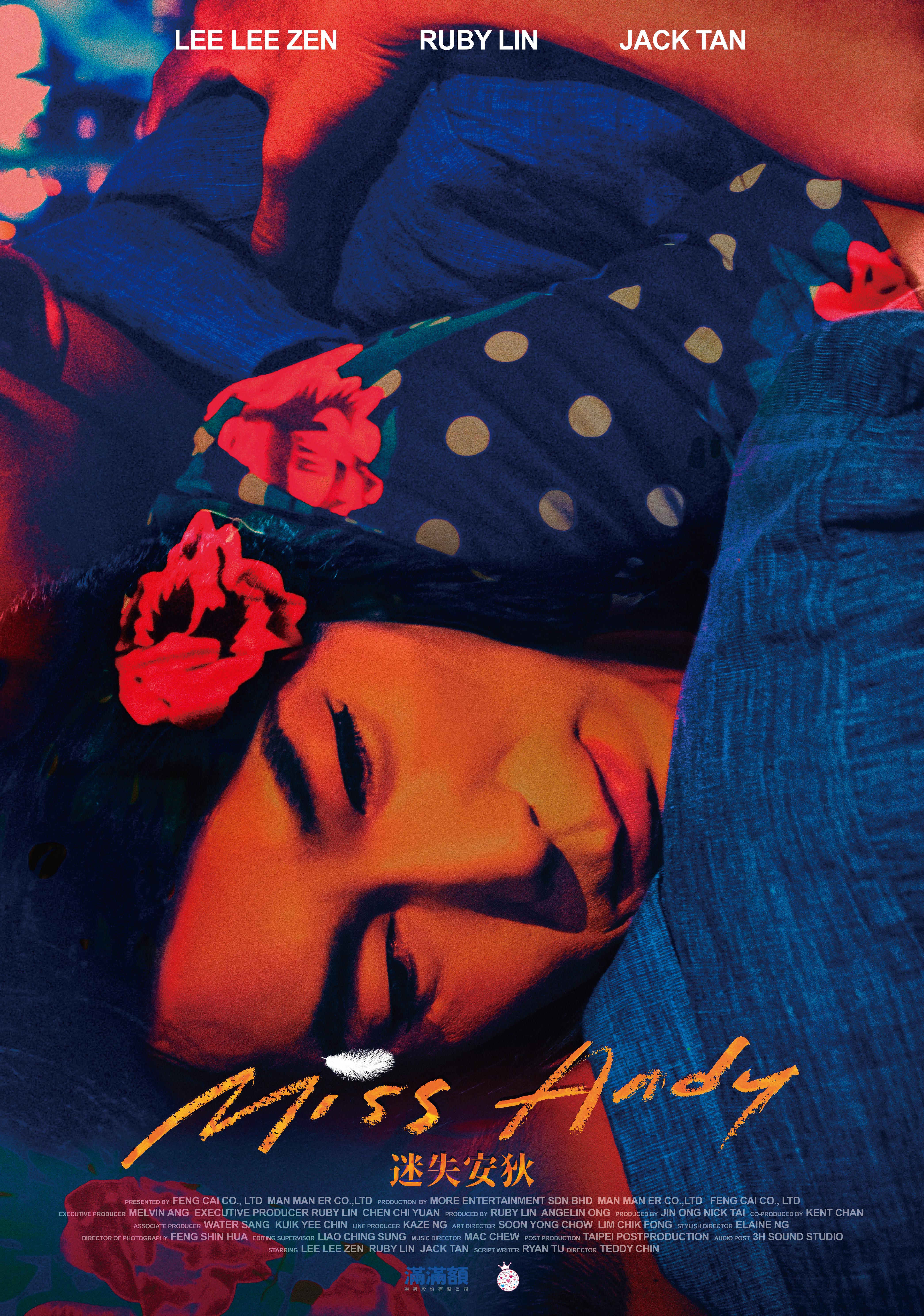
Miss Andy (迷失安狄, Teddy Chin, 2020)

“The things we like we’re still going to lose” according to a drunken young man lamenting youthful impossibility in Teddy Chin’s melancholy tale of marginalisation and frustrated hope, Miss Andy (迷失安狄). A Malaysian-Taiwanese co-production, Chin’s sensitive drama allows its disparate protagonists to find a sense of security in the solidarity of an accidental family, but all too quickly reminds us that despair is the enemy of love and that a lack of faith in human connection can undermine even the most genuine of bonds in those who can no longer believe in future happiness. 

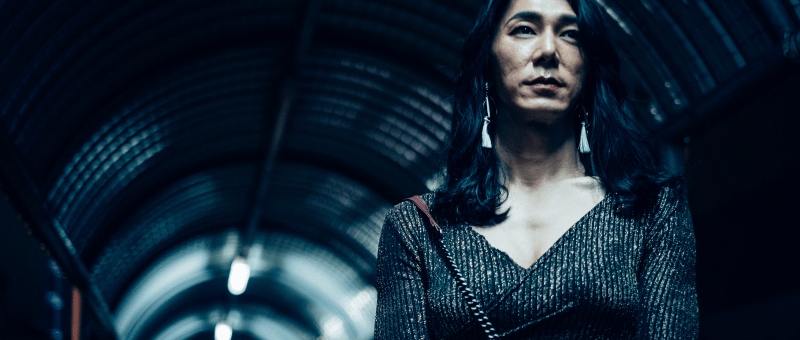
The titular “Miss Andy”, Evon (Lee Lee-zen), has certainly had her share of disappointment. Now 55, she transitioned five years previously following the death of her wife but both of her grown-up children have since disowned her. Having lost her livelihood, she’s had no choice other than to resort to sex work in order to make ends meet, finding herself on the receiving end of male violence from her clients only then to be arrested with the man insisting that he was only defending himself against her advances and attempt to rob him while the unsympathetic police officer dead names and berates her with homophobic slurs. She is eventually forced to strip and expose her genitals while half the station gawp and take photos. Evon decides to give up on sex work and advises her friend Lucy to do the same, but she refuses to see the danger and is later murdered by a man who solicited her for sex. 

Feeling totally alone, Evon tries to claim her position in society, insisting on receiving her pay from her previous employer who tries to short-change her justifying herself with more transphobic slurs. Evon has only one other friend, Teck (Jack Tan), a young man with a hearing impairment who offers her additional work as a delivery driver during which she encounters a little boy looking longingly at some pastries in a small store by a petrol station. She decides to buy one for him, but the boy has gone when she returns. Later that night, however, she gets a surprise discovering the boy and his mother having snuck into her apartment after stowing away on the truck. Hearing that they’ve escaped an abusive relationship and have nowhere else to go she invites them to stay.

Sophia (Ruby Lin), the boy’s mother, is an undocumented migrant from Vietnam. She’s struck by the unlikely miracle of Evon because her name sounds a little like the Vietnamese for hope, something on which she was beginning to give up. We see her telephone her family, but her father only angrily demands more money, eventually passing the phone over to her sister who unsentimentally tells her that her mother has died. All the rest of the family were with her, only Sophia was absent. Feeling just as alone as Evon she is grateful for her kindness, swearing to find a job to repay it while cooking and cleaning as a means of saying thank you. 

Later joined by Teck and anchored by Sophia’s young son Kang who is the same age as the granddaughter Evon is rarely allowed to see, they begin to become a family, united in their sense of marginalisation each in some way rejected by mainstream society. Evon religiously buys lottery tickets using the birthdays of her wife and children as numbers in the hope they’ll eventually come up and she’ll somehow win her family back. Even Sophia who had perhaps not dared to dream of a brighter future eventually joins in as they idly fantasise about the kind of home they’d build if they actually won while sitting in an upscale furniture store before the server at a festive restaurant offers to take a picture of their “family”, but when that sense of possibility finally presents itself the illusion is shattered. Desperation undermines their fragile bond, pushes them towards doubt and betrayal, no longer able to believe in the viability of simple human goodness or mutual support as mechanisms for living but suddenly selfish and self-destructive destroying everything they’d built in mistakenly staking all on the vague possibility of material comfort.

Asked about her dreams, Evon had only stated that she wanted a safe and stable life but what she craved was the sense of togetherness and acceptance she felt with Sophia and Kang while her children continue to reject her and she finds herself marginalised by a conservative society that refuses to affirm her existence as a transgender woman. Bathed alternately in the melancholy neon of the outside world and the golden warmth of Evon’s apartment, Miss Andy leaves its marginalised protagonists wounded, pushed into acts of self harm having lost all faith in the veracity of simple human connection corrupted by the fear and despair of an unforgiving society ruled by inequality and prejudice. 


Miss Andy streamed as part of this year’s New York Asian Film Festival.

Original trailer (English subtitles)

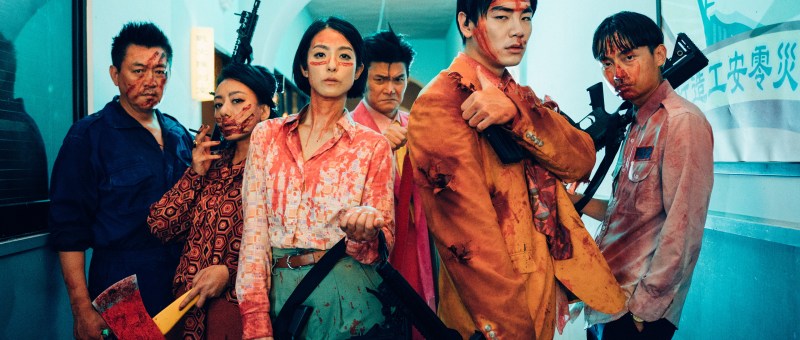
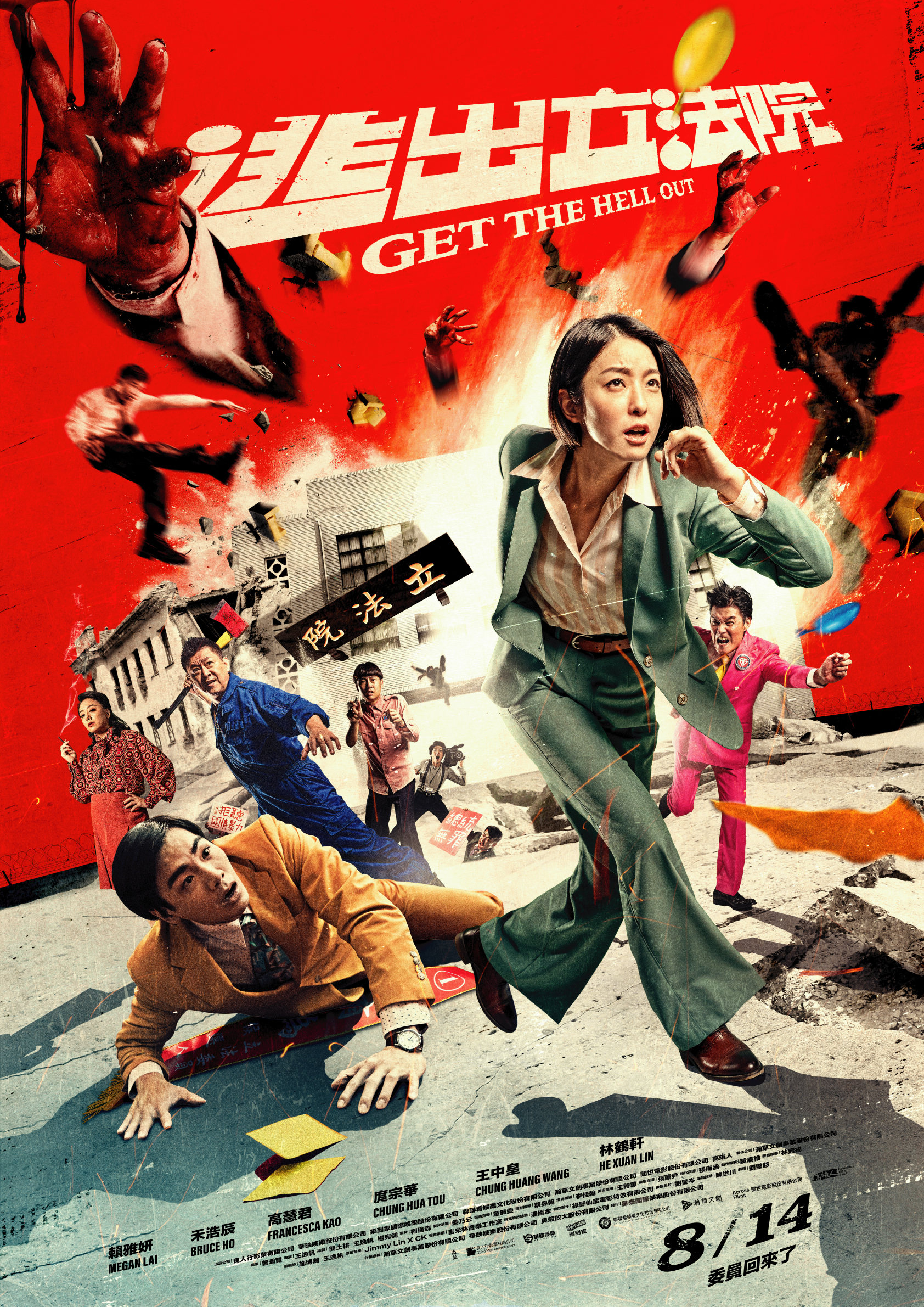
Get the Hell Out (逃出立法院, Wang I-Fan, 2020)

“A wrong movie makes you suffer for 90 minutes. A wrong government makes you suffer for four years” according to the title card at the beginning of Wang I-Fan’s madcap Taiwanese comedy, Get the Hell Out (逃出立法院, Táo Chū Lìfǎyuàn). A deliberately unsubtle political satire, Wang’s debut feature ultimately has its heart in the right place as its hapless hero comes to the conclusion that he just wants to protect his “home” and, ironically starts to believe he can really do that through the democratic process now that the legislative palace has literally been destroyed and rebuilt, freed of “idiot” zombies. 

Bumbling security guard with a nosebleed problem Wang You-Wei (Bruce Ho) has relatively little interest in politics. In fact, he’s only working in the building because his childhood crush Ying-Ying (Megan Lai) has recently become an MP standing on a single issue of getting the building of a foreign chemical plant she holds responsible for a plague of “idiot” rabies in her home town cancelled. Despite the prevalance of actual physical fights in the parliament, Ying-Ying is forced to stand down after her rival colludes with friendly press to provoke her into a violent outburst which results in a barrage of misogynistic criticisms that she obviously has trouble controlling her emotions and is unfit for office. Trying to protect her in the fray, You-Wei becomes an accidental hero in the media for valiantly defending press freedom. What ensues is a battle of influence as both sides try to manipulate the political capital of You-Wei’s unexpected celebrity, Ying-Ying hoping to convince him to take over her seat and oppose the chemical plant, and her rival Kuo-Chung (Wang Chung-huang) hoping he’ll join his cypto-fascist “Better Generation” faction to support it. 

Openly described as a gangster, the garishly dressed Kuo-Chung is a symbol of thuggish, vacuous populist politics, expert at playing the system to his advantage. The irony is that You-Wei starts to use his political brain but is operating under a misapprehension. His goal is impressing Ying-Ying and he incorrectly assumes getting more power by throwing his lot in with Kuo-Chung will help him do that, but all she cares about is getting the chemical plant cancelled to save her hometown with a secondary goal of eliminating the threat from the weird “plague” she assumes is caused by toxic waste and turns the infected into rabid “idiots”. Some might say the political class is already zombified, a bunch of numbskulls drunk on power, or that it’s the populace who are sleepwalking through their lives, but no one was really prepared for the prime minister getting turned into a zombie after a meeting with a foreign head of state to discuss the economics of the chemical plant. 

As Ying-Ying puts it, she spent so much time fighting to get in to parliament, and now she’s desperately trying to fight her way out. Wang’s “infection” allegory takes direct aim at a corrupt political class who might not care about the various risks of the chemical plant because they only affect a small group of relatively poor people living in a remote coastal village while the supposed economic and political benefits are important for the national good. But what Ying-Ying and You-Wei come to realise is that the entire nation is their “home” and so they must protect it by making it better and that starts by curing the “plague” of “politics”. Nevertheless, even if you get rid of Kuo-Chung another like him will rise, identically dressed, in his place because the battle for democratic freedom is never really won. 

Wang throws every post-modern device he can think of at the screen from Streetfighter graphics to onscreen karaoke lyrics and ironic product placement in the greatest tradition of low budget, nonsense Taiwanese comedies with the necessary consequence that the gags come thick and fast and are largely disposable while the spy movie pastiche complete with megalomaniacal, techno-genius villain never quite takes off. Nevertheless, there is gory zombie action aplenty filmed with cartoonish glee and not a little irony as Ying-Ying and You-Wei attempt to fight their way out of the corrupt parliament before it all gets blown to hell only to walk right back in there afterwards with a positive message of altruism and personal responsibility as they commit to rebuilding better with a revitalised idealism and belief in the power of democracy purged of the plague of idiocy.


Get the Hell Out streamed as part of Scene Taiwan 2020.

Original trailer (English subtitles)

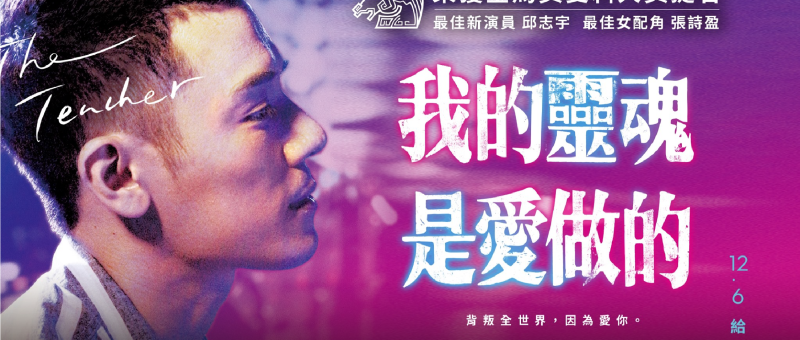
The Teacher (我的靈魂是愛做的, Chen Ming-Lang, 2019)

Taiwan became the first Asian nation to legalise same-sex marriage on 24th May, 2019. That does not however mean that the LGBTQ+ community is universally accepted or that entrenched conservative social attitudes simply evaporated over night. As Chen Ming-Lang’s The Teacher (我的靈魂是愛做的, Wǒ de Línghún Shì Ài Zuo de, AKA My Soul is Made of Love) makes plain, not even those within the community are entirely free of prejudice especially when comes to issues such as HIV and the complicated give and take of what it means to be “out” when personal concerns may conflict with those of an employer or industry. 

Those are perhaps questions that politically engaged civics teacher Kevin (Oscar Chiu) has largely resisted asking. On his off days, he campaigns for marriage equality and for gender equality in education as well as attending pride rallies, but is warned about including LGBTQ+ issues in his teaching programme for fear of offending parents. Director Lin (Lin Chin-Yu), the headmaster, makes offhand comments about Kevin’s perfectly respectable haircut while reminding him that while he works at the school he’s also its representative and he’d prefer it that he keep a low profile to avoid bringing its name into disrepute. Lin is careful to couch his complaints in neutral language, stressing that he personally is fine with Kevin’s sexuality, but is required to be mindful about the reactions of others, deflecting responsibility for at least failing to counter homophobic attitudes in and around the school. Nevertheless, Kevin tries to sidestep him by continuing to include the topics he’d like to talk about by framing them in less problematic terms, for example discussing the upcoming referendum on marriage equality by debating the vote itself, asking if it’s even ethical to give people the option to vote to deny a specific sector of their society the same rights that everyone else has that should be accorded to all without question. 

Kevin’s worldview is challenged, however, when he starts dating a slightly older man, Gao (Chang Chin-hao), whom he met in a gay bathhouse. Kevin tells him that he’s looking for a longterm relationship, wanting to settle down and eventually get married but is currently living with his hairdresser single mother. Moving in with him quite quickly after Gao went temporarily incommunicado following a minor illness, Kevin is later shocked to discover not only that Gao’s relationship with his ex-wife is not quite as over as he implied, but that he is also HIV+. Learning that Gao has HIV exposes Kevin’s rather shallow grasp of his sexual health. Not only does he not know where to go to get tested, but he conflates HIV and AIDS, convinced that he’s been given a death sentence after noticing that his gums are bleeding. 

While beginning to resent Gao for exposing him to the virus, Kevin is also confused by his admittedly complicated family situation. At some point in the past, Gao evidently opted for a heterosexual marriage to please his conservative family who still don’t seem to be aware that the relationship is over or that Gao is gay. At an awkward family gathering, Kevin is invited but introduced as Gao’s friend while his former wife, Wei, sits on the other side of him being quietly needled by her judgemental mother-in-law for failing to provide a grandchild. Gao apparently promised to father a child with Wei through IVF as a condition for dissolving the marriage which is why she’s still overly present in his life and in Kevin’s eyes laying claim to him. Yet Kevin’s major preoccupation isn’t so much with the results of everyone’s choices or how best to support his new partner and his extended family in this unusual situation but with his own reluctance to think of himself as a “home wrecker” the fact that the marriage ended two year’s previously seeming not to occur to him. 

It’s at school, however, where he faces the greatest challenges not only in the homophobic bullying from his immature students with whom he never seems to have much of a rapport, but from his colleagues when he becomes the subject of an internet rumour about a teacher with AIDS. Faced with a dilemma Kevin’s reluctance to confirm his sexuality while insisting that the rumour is false (despite suspecting it might not be) is more personal than political even as his female colleagues attempt to stand up for him by countering a belligerent, older male teacher who wants him sacked that no one should be expected to submit themselves to invasive medical procedures or be denied their right to privacy simply because of a malicious rumour. Lost and afraid, Kevin shuts down, giving in to passivity while succumbing to misplaced rage about his marginalised place in society as he’s denied access to a hospital where he believes Gao has been taken for treatment after an accident assuming they won’t tell him if he’s there because he’s not a legal relative. 

Chen closes with a brief coda explaining that same-sex marriage will be legalised later in the year, Kevin declaring that it will be on his syllabus as if confirming something has changed, yet it’s clear that attitudes may not have shifted as much as hoped while there is still a widespread lack of awareness about HIV issues combined with a social stigma compounded by homophobia. Nevertheless The Teacher presents a complex picture of LGBTQ+ lives at a moment of social transition in which the promise of a coming equality brings with it both anxiety and hope for those who’ve had to accommodate themselves to life on the margins of a now less hostile society. 


The Teacher is available to stream in the UK as part of the Iris Prize Film Festival in collaboration with Queer East.

Original trailer (no subtitles)

Days (日子, Tsai Ming-liang, 2020)

It’s not so much time that makes you feel old as the weight of all the days. Returning with his first narrative feature since 2013’s Stray Dogs, Tsai Ming-liang’s Days (日子, Rìzi) spins a tale of twinned loneliness in which two men, one young one older, one rich the other poor, embody two kinds of sadness as they live out their days of detachment as living ghosts in world which seems to have no place for them. 

Tsai opens with the face of his muse, Lee Kang-sheng billed only in the credits as Kang a wealthy man living in a spacious home surrounded by the beauty of nature. The lengthy, unbroken scene finds him staring impassively out of a window while a storm rages outside, the sound of rain falling while the reflection of trees blown by the wind is eerily reflected behind him. We can see that Kang is a man in great pain, his eyes filled with a melancholy desperation. He stretches and rubs his neck, his physical discomfort perhaps a manifestation of the emotional suffering which he tries to heal by fire, enduring painful moxibustion in search of relief.

Meanwhile, in Bangokok, Laotian migrant Non (Anong Houngheuangsy) is quietly tending fires of his own, firstly those of ritual offering and secondly of sustenance as he stokes the embers to cook the old fashioned way in his tiny, spartan apartment. While Kang is a resolutely passive presence, Non fills his lonely days with industry, constantly at work as we witness him laboriously prepare his dinner with documentary realism. Non is at home with solitude in the private space, but forever alone outside of it. He stands to one side at the market where he works as customers mingle around him, always out of place and unseen like a ghost hovering in the corner of the frame. 

Parallel lines who meet, the two men eventually share a poignant, nominally transactional encounter in a nebulous third space of a neutral hotel room to which Kang has called Non for a sensual massage, presumably how he makes ends meet in Bangkok. Once again the young man does all the work while Kang lies impassive, Non oiling his fingers as he runs his hands over the older man’s body easing his pain through physical contact before he retreats off screen and we hear fabric falling, his Calvin Kleins hitting the floor as the two men briefly connect through an intense act of lovemaking, later proceeding to the shower where Non, still in the role of caregiver, tenderly washes the dejected Kang. Before he leaves, Kang idly hands the younger man the gift of a music box, a spontaneous decision that sparks a moment of melancholy emotional release. They struggle to say goodbye. Non leaves and Kang chases after him, Tsai lingering in the empty space of the hotel room while the two men head for dinner before returning to their respective days in someways changed and others not. 

His pain perhaps temporarily eased, Kang is not quite so passive as before, doing something or other with a fish and going for late night walks, but still finds himself lying awake while the sounds of outside wash over him, his eyes wide with fear and sadness. Non, meanwhile, returns to his routine but even more of a ghost than before, sadly cradling the music box as if in memory of his momentary connection its sound drowned out by the noise of anonymous modernity while the world goes on all around him, an invisible figure ignored by passersby walking alone into the night. 

A opening title card warns us that this is a film intentionally unsubtitled, much like life left to our own shallow grasp of meaning in thought or action, but what little dialogue there is hardly requires interpretation we feel it all the same. Tsai conjures an almost Antonionian sense of emptiness in place, a lengthy still shot of a “haunted” building peeling at the facade suddenly brought to life by the brief shadow of a cat in a window, while abruptly shifting to handheld to follow Kang, somehow alone and clutching his neck in pain in the chaotic streets. Both men exist at angles to the world, as if in some kind of secondary plane, meeting only for an instant and then returning to their solitary existences with only the brief memory of connection perhaps more painful than its absence. Tsai charts competing reactions to existential loneliness, the listless ennui of the wealthy Kang and the ceaseless industry of migrant worker Non, but finds them both equally displaced, searching for connection in an increasingly disconnected world. 


Days streams in the UK until 11th October, 6.30pm as part of this year’s BFI London Film Festival.

Original trailer (dialogue free)

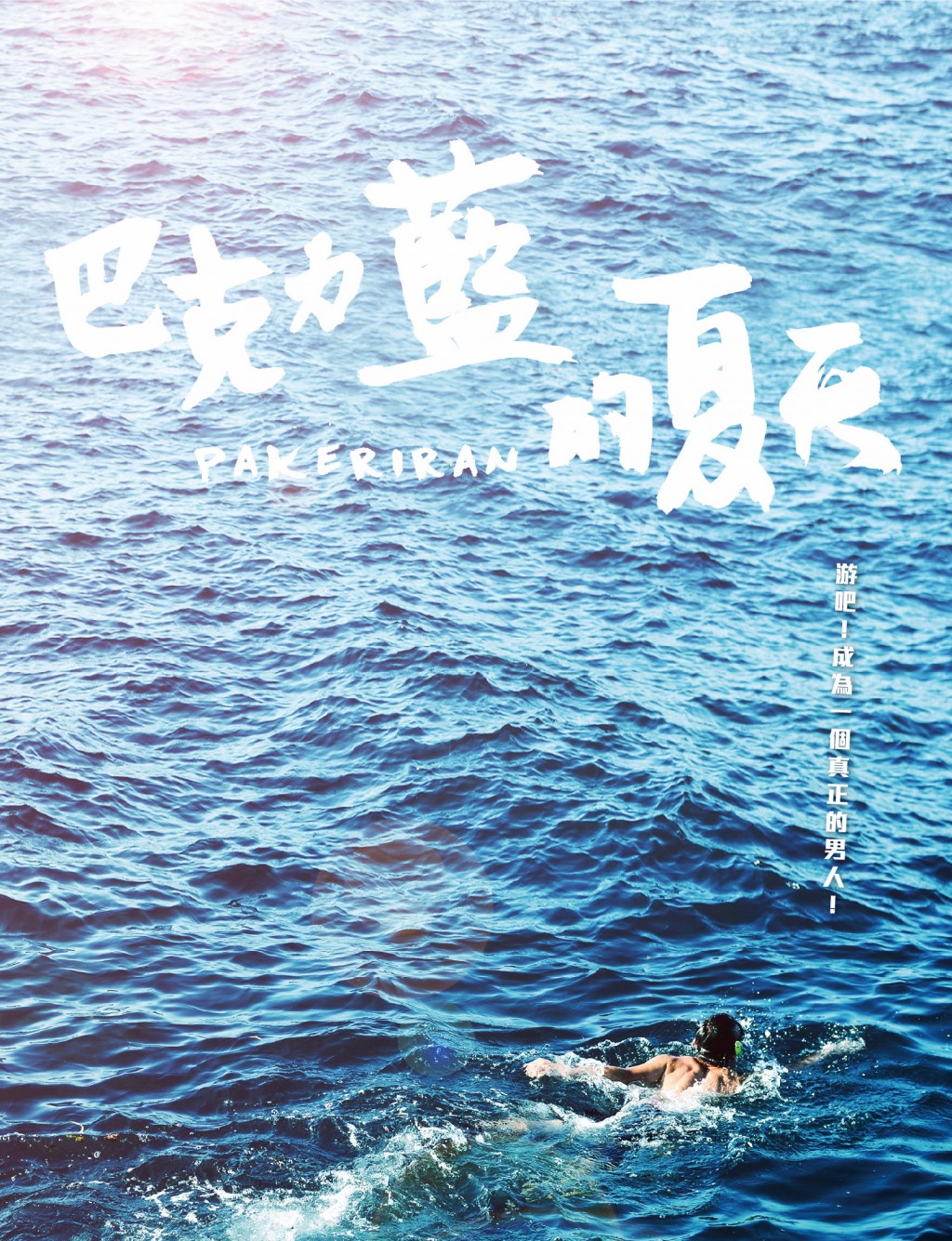
Pakeriran (巴克力藍的夏天, Lekal Sumi Cilangasan, 2017)

Two lost youngsters reconnect with their roots over one idyllic summer in Lekal Sumi Cilangasan’s gentle exploration of culture and identity, Pakeriran (巴克力藍的夏天). Produced by the Indigenous Peoples’ Cultural Foundation, Sumi’s gentle drama finds a city boy quite literally thrown in at the deep end when he returns home to his indigenous community while bonding with an equally lost young woman chasing the legacy of a father who abandoned her. 

As the film opens, university student Futing (Matam Hidaw) is lost in thought, gazing a pretty classmate and hardly listening to his friends as they plan the road trip they’ll be taking over summer vacation. That evening, however, he gets a panicked phone call from his mother telling him that his grandfather has been taken ill and he’s to come home as soon as possible. Futing doesn’t get a chance to explain he’s made other plans, and so finds himself on the first available train, his friend taking off with the girl he likes on the back of his bike as they drop him at the station before setting off on their summer adventure. He’s quite annoyed therefore when he arrives and discovers his grandfather is fine, he just sprained his ankle, but the rest of the family have taken off on holiday and left him to look after grandpa who is quite keen that Futing take part in the upcoming Sacepo festival in his stead. 

Having spent most of his life in the city, Futing no longer understands the local dialect nor does he know very much about traditional customs. Hanging around shyly outside after being instructed to attend a meeting to discuss the festival, Futing is brought in by an older man, Kacaw, who becomes his mentor translating for him as the elders heckle, disappointed that he can’t understand them and exasperated that he has no manners, failing to realise that he as the youngest should be pouring them wine and doing it in ceremonial manner. Tripping up on his way home he’s rescued by Lisin (Ipun Kanasaw), a young woman taking a working holiday at a cafe where they showcase the local cuisine for tourists, but leaves abruptly when he’s recognised by an old friend of his mother’s who asks him to explain the Sacepo festival to the newcomer, too embarrassed to admit he really has no idea what it’s all about. 

Lisin, meanwhile, is also on a quest to reconnect with her history through following in the footsteps of her foodie father who apparently went out one day and never came back. She thinks he might have passed through his village, so she’s patiently absorbing all it has to offer while quietly learning to assume responsibility, eventually forced to take charge when her mentor, Mrs Jiang (Ilid Kaolo), is delayed on her way home. Predictably enough, Futing’s desire to rediscover his ancestral culture is spurred on by his growing attraction to Lisin whose interest in the local customs fuels his own. Suddenly, he becomes invested in the idea of seizing his manhood through completing the ritual, determined to learn how to catch a fish in the traditional way, cooking it in water heated with rocks warmed by the sun. 

The titular Pakeriran refers to a rock island on the far side of an inlet which, it was said, the young could prove themselves men by swimming to and warriors by swimming around. Later, Futing discovers there are other, easier ways to reach Pakeriran but then that isn’t really the point. Through reconnecting with his culture, Futing develops a new respect for the natural world, concerned by all the rubbish he finds floating in the water some of it irresponsibly dropped by non-indigenous fishermen. An attempt to confront one of them brings home to him his marginalised position within Taiwanese society when he’s not quite arrested by local police who accuse him of illegally fishing on his ancestral land without a proper licence after being tipped off by the petty fisherman. Originally resentful, watching the photographs of his friends having fun on their trip roll in over social media, Futing comes to embrace his heritage as a member of the indigenous community as he comes of age, gaining a new appreciation for his place in the world. Beautifully showcasing the traditional culture of the Amis people, Pakeririan offers a rare insight into an all too often hidden side of Taiwanese life through the eyes of the two youngsters as they discover new sides of themselves though reconnecting with their heritage.


Pakeriran streams in the US Oct. 2 – 4 as part of Asian Pop-Up Cinema & TACCGC’s @Home with Taiwan Cinema: Love & Hope

Original trailer (English & Traditional Chinese subtitles)
When Love Comes (當愛來的時候, Chang Tso-Chi, 2010)

“I like the feeling of home” the conflicted heroine of Chang Tso-Chi’s When Love Comes (當愛來的時候, Dāng Ài lái de Shíhou) eventually admits, finally coming to an understanding of her admittedly unusual family even if not, it seems, fully aware of her place within it. A chronicle of displacements, cultural, familial, adolescent, and romantic, When Loves Comes is also in its own way an ode to female solidarity as well as a coming-of-age tale as its feisty young heroine gains the courage to step into herself while preparing for the role of matriarch in accepting her responsibility towards those around her. 

About to turn 16, Laichun (Lee Yi-chieh) is a rebellious teenager who enjoys scandalising her heavily pregnant mother by walking out in skimpy outfits and elaborate makeup. So displaced is she within her own family, that she is not invited to meet her new baby brother at the hospital but is asked to stay home looking after recently arrived uncle Jie (Kao Meng-chieh), her father’s younger brother who has learning difficulties and has come to live with them following the death of his grandmother. Laichun, however, goes out anyway, meeting her as we soon discover no good boyfriend Zongfu (Chris Wu Kang-ren) in a love hotel. Like any teenager, Laichun thinks she’s invincible but she’s also incredibly naive or perhaps merely in denial. By the time she realises she might be pregnant, it’s already too late for an abortion and Zongfu has vanished into thin air. 

“It’s because you’re a girl” a postman with whom Laichun had been engaged in an elaborate flirtation unironically tells her after her impassioned monologue railing against the unfairness of her situation, that Zongfu has vanished while she is blamed for everything, branded a “slut” simply for embracing her sexuality. Her pregnancy places a further strain on her familial relations, though she finds an unexpected ally in her emotionally austere second mother, her father’s first wife Xuefeng (Lu Hsueh-Feng). As we gradually come to understand, Laichun’s father “Dark Face” (Lin Yu-Shun) hailed from rural Kinmen and married into Xuefeng’s family. But Xuefeng was not able to have children of her own so she allowed Dark Face to take a second wife, accepting Laichun’s mother, former gangster Zihua (Ho Tzu-Hua), into their family. 

“I was scared to be responsible for him” Dark Face later admits of his brother, revealing that he left his island home in secret, abandoning Jie to their grandmother who cared for him until the day she died. Dark Face indeed struggles to understand Jie, often frustrated by quirks and frequent meltdowns, cruelly tearing up his drawings somehow incensed as if refusing his brother’s attempt to communicate with the world around him. Jie has been patiently filling a jar with pennies because his grandmother told him to save up for a wife, but like Laichun remains an outsider in the family with only Xuefeng willing to include him. Yet faced with her impending maternity it’s Laichun who eventually becomes his primary carer, patiently taking him to the bank to pay in all his pennies, embracing her responsibility as a member of a family. 

“I like the feeling of being protected”, Laichun had said, “so why is it that I end up looking after everyone else?” only figuring out later that perhaps that’s because they’re sometimes the same thing. Gaining a sense of confidence from her father who reassured her that “you can face whatever comes along” she begins to step into a maternal role, emerging with a new respect for each of her mothers and for the complicated yet functional unit which is her unconventional family. Chang both begins and ends with a birth, taking place on the same spot behind a screen in the family restaurant as the family is first destabilised and then repaired by its new additions. In the opening scene Laichun had been told off for flirting with a man in the family’s restaurant who told her he was unafraid of the “unlucky” table because he worked as a mortician only to get run over on his way out. At the conclusion she meets him again along with his wife who just happened to be the woman who was driving the car that hit him. Not so “unlucky” after all. Life is chaotic and unpredictable, sometimes it presents you with a problem that’s really a solution. “I really very much like the feeling of sunlight” Laichun affirms, no longer so worried about the dark skies, now more assured in herself and her family as she prepares to welcome a new life that anchors her to the old. 


When Love Comes streams in the UK until 27th September as part of the Taiwan Film Festival Edinburgh.

Original trailer (English subtitles)

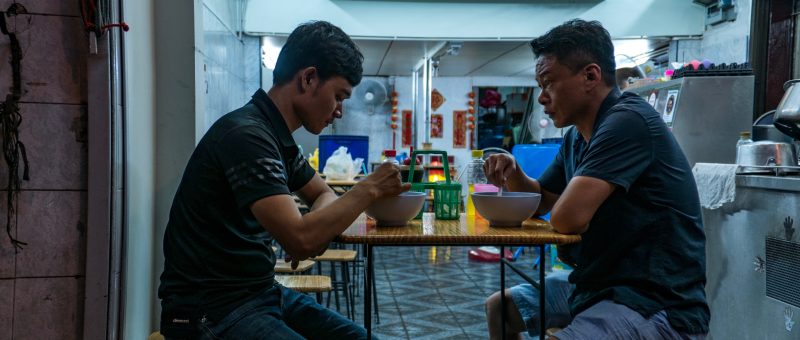
Ice Poison (冰毒, Midi Z, 2014)

“You know only too well that in Burma if we want to make money you either go to work in jade mines, but you can’t afford the trip, or you sell drugs” according to the cynical heroine of Midi Z’s Ice Poison (冰毒, Bīngdú) seducing an equally desperate farmer in an effort free herself from patriarchal oppression and reclaim her son from the family who bought her and refuse to let her go. 

In an ironic touch, the film begins and ends in fire as an unnamed young farmer (Wang Shin-hong) and his father (Zhou Cai Chang) burn their fields and harvest their crop only to lament their slender pickings. This year’s harvest has been poor and, according to the young man “everything is getting more expensive except the vegetables we grow”. Left with few options the old man and his son walk towards the town, calling in at various houses along the way gingerly asking for a loan to help make ends meet but everyone is in a similar position. The men of working age have all gone away to find employment, an older woman explaining that her husband is on a construction site while her son who returned from abroad has only been able to find work on a poppy farm and he won’t be paid until after the harvest is finished. Another woman explains that her son, unlike others, wanted to do things properly by applying for a work visa for Malaysia but was cheated by the broker, who then bribed the police when they reported him. Her son now intends to stay and get married which, perhaps surprisingly, she thinks is irresponsible when there’s no money and his older brother is still a bachelor. The last man relates the sorry tale of his son who was apparently poisoned in Thailand after spurning the advances of two local ladies and has since lost his mind. 

Shifting to his plan B, the old man plans to pawn his cow to borrow a scooter so his son can earn some money with a bike taxi, first asking the scooter’s owner for a loan but once again informed he’s strapped himself because one of his employees ran off and his China deal fell through. Rather than the scooter, he offers the young farmer a job, but they ultimately opt for a bloody bargain, placing the cow as a deposit under the agreement that if they can’t pay back the money for the scooter in a few months’ time the oil merchant may have it slaughtered though it breaks the old man’s heart. 

The young farmer had wanted to go and work in the jade mines, but his father discourages him not just because there’s war in the north but because everyone in the mines takes drugs and if he goes and gets himself hooked on meth where will they be then? The bike taxi business, however, does not exactly take off. The young man finds himself at the back of a crowd of pushier drivers literally blocking the exits of the buses that roll into town mobbing those attempting to disembark, but with such crushing poverty all around him it’s perhaps incongruous to assume many want to spend money on speedy transport. He finally manages to get a passenger, Sanmei (Wu Ke-xi), after realising she is also from the Chinese minority, driving her to a village where, it transpires, her grandfather lies dying, apparently waiting for her arrival and the burying clothes she brings with her from their ancestral home in China. The rites completed, she should go home but Sanmei doesn’t want to. As she tells her mother, she was tricked into a marriage to a much older man whose family are oppressively possessive, unwilling to let her bring her son to meet his grandmother for fear she wouldn’t come back. 

Hinting both at the crushing despair and the patriarchal strictures of their society, Sanmei’s mother tells her that she’s better off in China especially as her husband apparently treats her well enough when there are women who marry for love only to suffer domestic violence. But Sanmei keeps repeating that he’s not the man she loves and so she does not want to stay with him. What she wants is to reclaim her child and live an independent life in Burma where, she feels, there are better opportunities for making money. She’s determined to talk to her shady cousin, ignoring her mother’s advice not to get involved with him because he’s a notorious drug dealer. Her cousin indeed tells her that there’s money to be made for those who are bold in peddling “ice”, apparently the only the remaining marketable commodity. Before long she’s smoking it herself, roping in the young farmer who’s taken to making courier deliveries in the absence of passengers, telling him he’s simply ferrying her around and can claim plausible deniability of what it is she herself is transporting. 

Is Sanmei merely manipulating him, seducing the farmer to claim her new life in exploiting his boredom and despair, or was there perhaps a genuine connection born of mutual hopelessness that their poverty and impotence eventually destroys? Shooting in his own hometown, Midi Z paints a bleak picture of contemporary Burma as a scorched paradise in which the only sense of possibility lies in escape, employment abroad or drug-fuelled oblivion at home. Captured with documentary realism, Ice Poison eventually consumes our two heroes but its ultimate victim is a forgotten and unexpected one, nature dismembered at the hands of cruel and indifferent humanity. 


Ice Poison streams in the UK until 27th September as part of the Taiwan Film Festival Edinburgh.

International trailer (English subtitles)