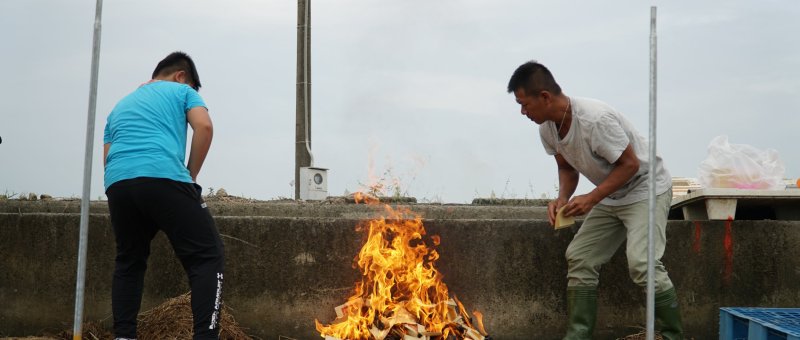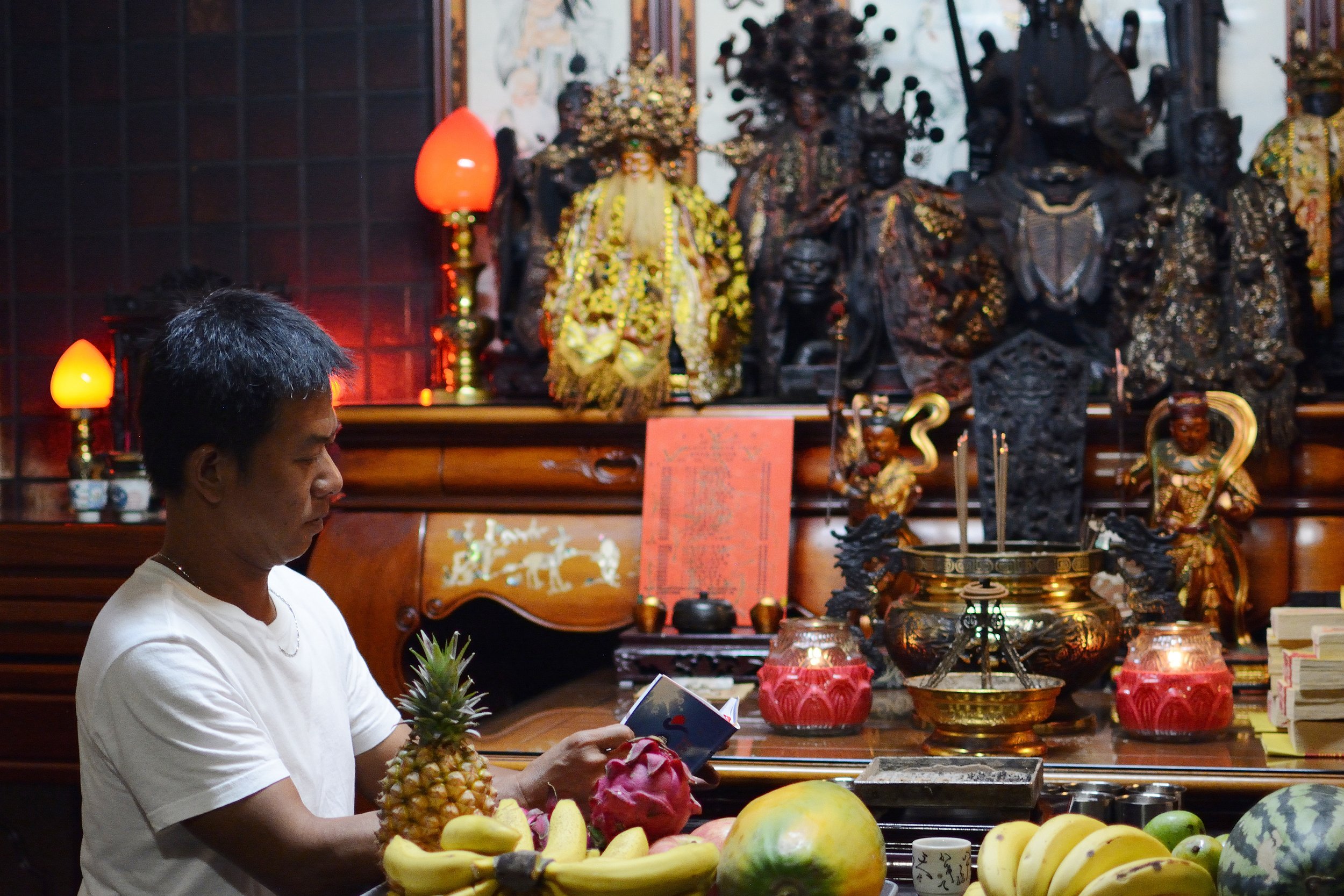
Miss Shampoo (請問,還有哪裡需要加強, Giddens Ko, 2023)

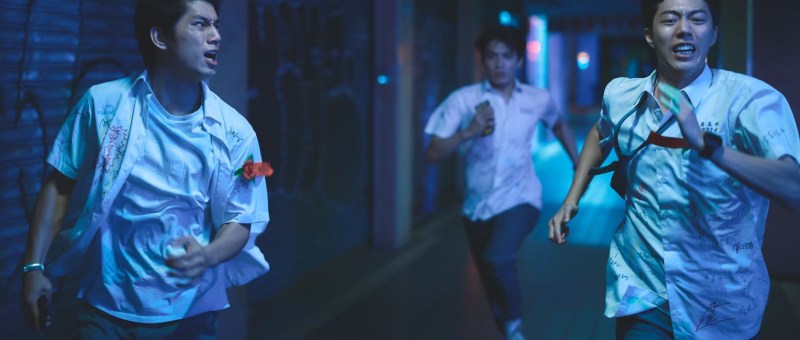
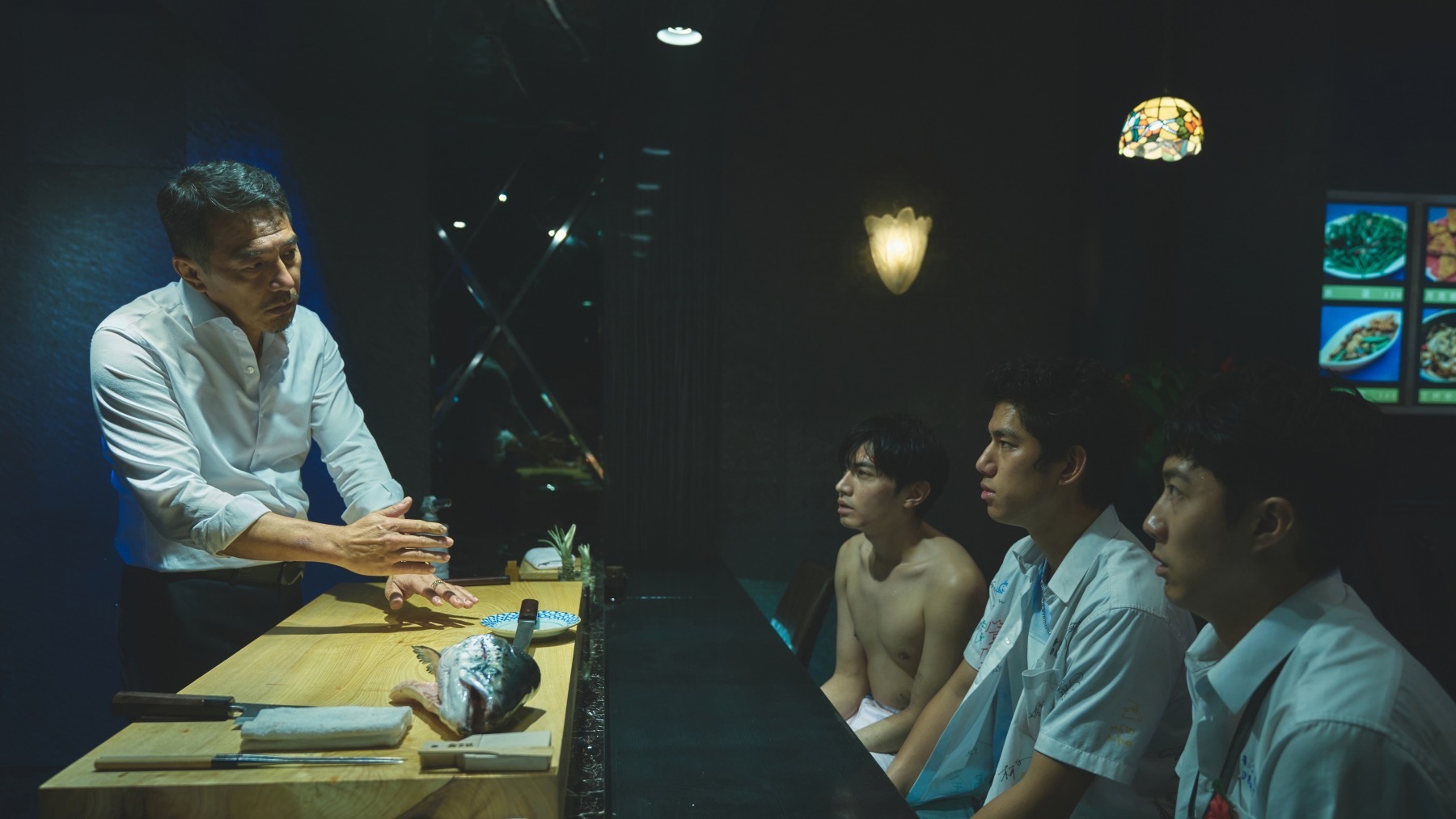
A ruthless gangster’s quest for vengeance is put on hold when he falls for a cutesy hairdresser who hides him from the bad guys who knifed his treacherous boss in Giddens Ko’s adaptation of his own short story Miss Shampoo (請問,還有哪裡需要加強, qǐngwèn, háiyǒu nǎlǐ xūyào jiāqiáng). Part gangland drama part zany Taiwanese rom-com, the film nevertheless hints at institutionalised corruption in local politics while simultaneously mocking the awkward positioning of the “gangster” in the contemporary imagination as both a romanticised outlaw and despised member of society. 

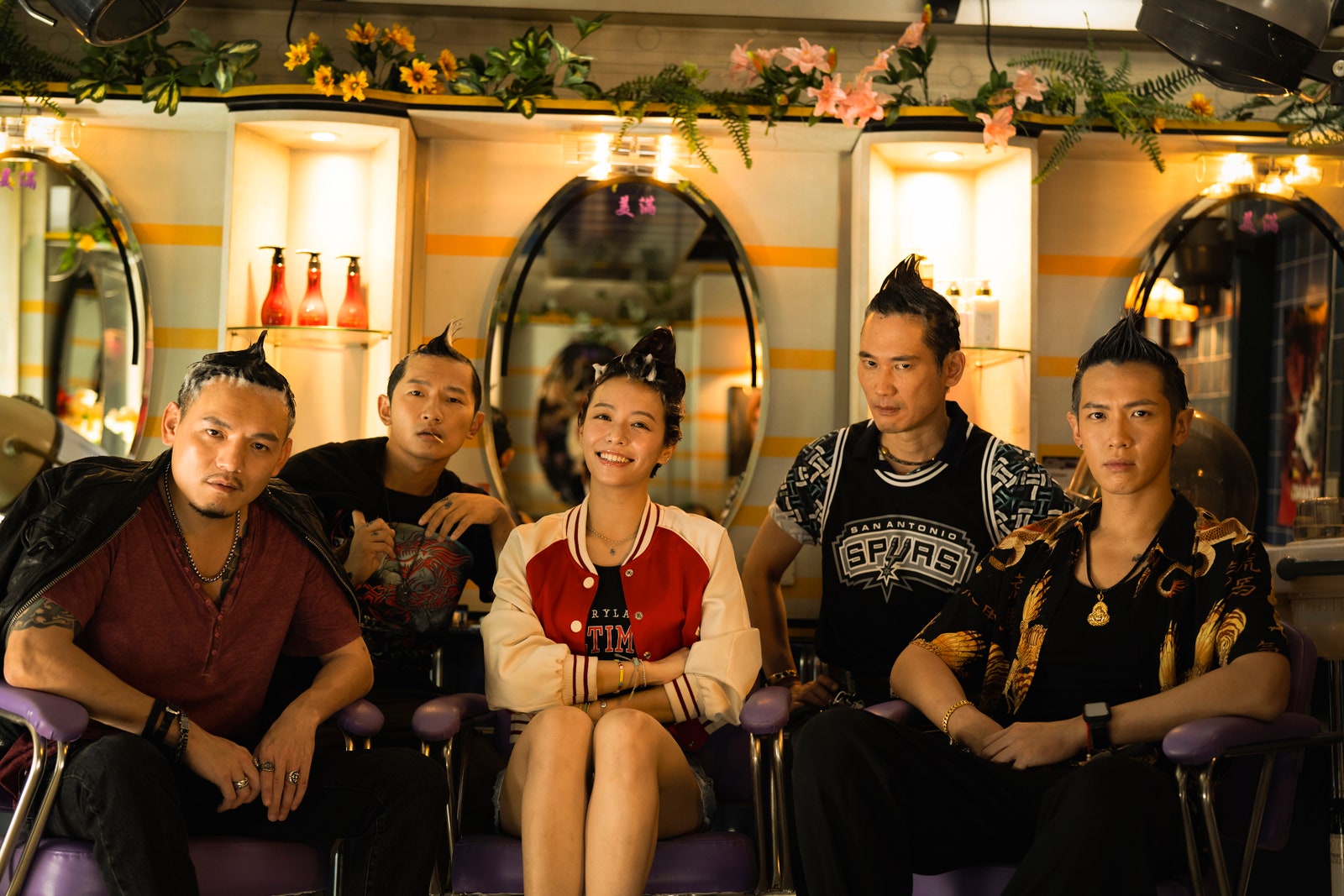
Bruiser Tai becomes the head of his gang when his boss, Hsing, is murdered by Thai assassins presumably hired by one of the other local bosses in a dispute over urban development contracts that may also threaten an upcoming election. Tai doesn’t seem to know a lot about that or how seriously he should take advice from one of the other bosses that he should look inside his own organisation when considering who might have wanted Hsing dead. In any case, at the present time all he can think about is innocent hairdresser, Fen (Vivian Sung), who hid him in the back of the salon when he was trying to escape the assassins. It’s not long before he’s deciding that he needs a haircut, as do several of his men who more or less take the salon over as the gangsters’ coiffeur of choice. 

Fen is not actually a fully trained hairdresser and had been mainly handling the shampoo which might explain some of her more avantgarde efforts even if she later seems to find a groove in giving the gangsters the kind of hairstyles they wanted but didn’t know how to ask for. The effect may be short lived leaving Tai with ridiculous blond dreadlocks for the rest of the film but perhaps nothing says love more than being willing to look like a complete idiot to avoid hurting your crush’s feelings. A baseball obsessive, Fen is herself somewhat on the margins and currently dating a graduate student who looks down on her and doesn’t take the relationship seriously. Even her mother tells her he’s too good for her, suggesting they should continue placating him because he’s “better” than they are while she remains unable to stand up for herself. 

Perhaps surprisingly, the family are later family acceptive of Tai’s attempts at courtship despite knowing that he’s a “gangster” with only the worry that he may turn into a “scary ex” if Fen eventually decides to break up with him. But the relationship does however place a strain on the gang with some members frustrated by Tai’s lovelorn indifference to the gangster code as he continues to neglect avenging the boss’ death in favour of pursuing a romance with Fen. While his friend flirts (almost literally) with betrayal in chasing a new cryptocurrency future with a similarly fed up underling from a rival gang, Tai starts to wonder if he’ll have to make a choice between his life an underworld high roller and his love for the civilian Fen while slowly coming to the conclusion that being the boss might not be all it’s cracked up to be. 

A recurrent baseball subplot hints at another kind of justice built on teamwork and mutual feeling that eventually comes to the rescue both romantically and physically as Tai deals with his gangster drama and Fen with her romantic doubt after realising that Tai is a gangster after all and underworld betting is destroying the game she loves so much, while otherwise playing into the message of new beginnings as Fen continues to support her longtime baseball idol as he prepares to transfer to a Japanese team at the comparatively late age of 30. Ko plays with meta humour in the final assurances that this is a New Year Movie (though it wasn’t) so must have a happy ending while otherwise indulging in zany gags like invisible guns as a repeated gimmick to get names out of people who didn’t want to give them, aside from all the ridiculous hairstyles Fen accidentally gives her customers while trying to capture their true essence. Nevertheless, the sleazy atmosphere and vulgarity often sit uncomfortably with the sweetness of the central love story in what is otherwise an ironic take on the quirky rom-com.


Miss Shampoo screened as part of this year’s New York Asian Film Festival.

Original trailer (Traditional Chinese / English subtitles)
The Abandoned (查無此心, Tseng Ying-ting, 2022)

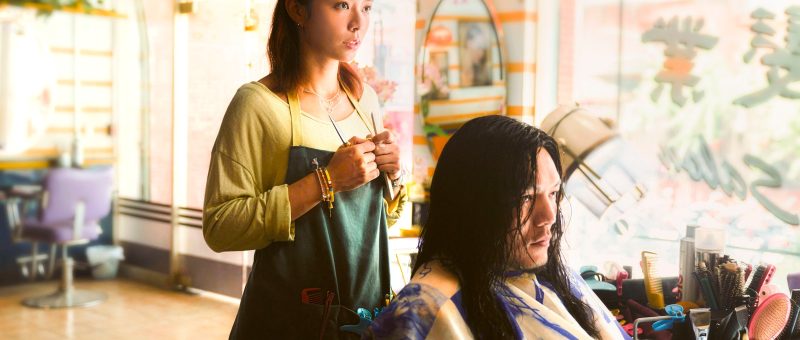
Just about everyone in Tseng Ying-ting’s psychological thriller The Abandoned (查無此心, Chá wú cǐ xīn) has been in some way left behind. The title most obviously refers to the body of a murdered woman unceremoniously dumped in a local river though as we later discover she wasn’t so much abandoned as returned, but the investigating officer is also battling her grief in feeling abandoned by her husband who took his own life and it could as well apply to the liminal status of migrant workers in Taiwan who have been largely abandoned by a society that is increasingly dependent on their labour. 

As policewoman Wu Jie (Janine Chang Chun-ning) points out to rookie Wei-shin, if she found a body she’d obviously call the police but if you can’t call the police because you’re afraid they’ll deport you you might have no other option than to make it go away. But the strange thing is that Waree’s body was left where it would be found and Jie will later claim that it is in a sense Waree who “saved” her by unwittingly frustrating her attempt to take her own life while consumed by grief and guilt over her husband’s death. Later it seems as if the killer of these women, each of whom has their heart and ring finger removed, intended to send the bodies back to their exploitative employers making a grim a point while leaving them with an impossible choice knowing that they can’t very well go to the police and risk undermining their entire business enterprise which relies on the labour of workers of who’ve either left the positions the visas they were granted were originally for or never had any in the first place.

Waree’s former boyfriend You-sheng (Ethan Juan) is left with just such a dilemma when the body of another woman, Yeti, is delivered to their factory calming the worried workers while secretly burying her himself in the mountains little knowing that a similar fate has befallen Waree whom he’s been looking for ever since she dropped out of contact as has her sister Saipin, also an undocumented worker from Thailand. The killer seems to target these women because he knows it’s unlikely anyone will look for them though they also have personal motives in their own sense of abandonment, resentful in feeling as if they’ve been deceived in love while unable to see how the other party may have felt trapped and exploited while their passport was held captive depriving them of the free choice to leave. 

As it turns out, the person who left Waree’s body in the water did it because they were worried she wouldn’t be able to return home, not wanting her to be disappeared in the way their employer might have wished her death hushed up like so many other anonymous workers whose families never hear of them again but at least acknowledged. Wu Jie is also unable to return home, mostly sleeping in the car directly below the bloodstained bullet hole under which her husband shot himself. Her boss ironically tells that if her heart remains in the car she’ll never escape, echoing the missing hearts of the murdered women taken as grim trophies by the heartless killer. 

Ironically enough, to solve the case Wu Jie must regain the desire to live finally facing her abandonment along with her grief and guilt for her inability to save her husband while working with the conflicted You-sheng who similarly feels both abandoned and guilty in the failure of his relationship with Waree whom he was reluctant to marry and might have saved if he had. Tseng aptly demonstrates the precarious position of undocumented migrant workers in Taiwan who are often exploited by their employers and rendered invisible by a society which largely treats them with disdain while left vulnerable to crime and violence in being unable to turn to the authorities for help. He also hints at a degree of misogyny present in the police force as Jie is at one point asked to leave the case as the higher ups don’t like the idea of two women working together while Jie simultaneously feels pressured to stay knowing that the situation is too complicated for an earnest rookie to manage on her own. Exploring the grimy underbelly of an otherwise prosperous nation, the film has only sympathy for those have in one way another been abandoned and can see little prospect of escape from their fear and loneliness. 


The Abandoned screens July 26 as part of this year’s New York Asian Film Festival.

Original trailer (Traditional Chinese / English subtitles)
Images: @Renaissance Films Limited. Love Me Tender Production Company

Rebels of the Neon God (青少年哪吒, Tsai Ming-Liang, 1992)

Towards the end of Tsai Ming-liangs’s Rebels of the Neon God (青少年哪吒, Qīngshàonián Nézhā), a young man exasperatingly stuffs a series of rags into the busted drain in his kitchen which has been relentlessly leaking water all over the apartment. In many ways it’s a kind of metaphor for his life as he attempts to staunch the flow of “bad luck” he’s been experiencing over the last few days, but like so many things for him it does not quite go to plan. 

As to why, it’s not exactly clear except that A-tze (Chen Chao-jung) is a kind of outcast beneath the neon skies of a changing Taipei. He and his friend A-ping (Jen Chang-bin) earn their money breaking into telephone boxes and vending machines for loose change before at one point stealing the motherboards from arcade consoles and unsuccessfully trying to sell them back to the person they stole them from. All they get for their pain is a literal battering while A-tze’s frustrated romance with sometime girlfriend Mei-kuei (Wang Yu-wen) similarly flounders in the wake of his ennui. 

The karmic debt he bears is however mainly down to a random act of pointless violence in knocking the wing mirror off a taxi driver’s car for no real reason save momentary impulse. Even so, the taxi driver’s son Xiao-Kang (Lee Kang-sheng) had already been watching him and soon discovers a fascination with the rebellious young man that is ambiguous in quality. What becomes obvious is that Hsiao-kang is at odds with the world in which he lives. His mother (Lu Yi-ching) reveals that a fortune teller told her he is the reincarnation of “Neon God” Nezha, a chaotic child who later killed the authoritarian father with whom he could not get along. Hsiao-kang’s mother tells this to her husband (Miao Tien) as a kind of warning, advising that his authoritarian parenting style is doing his son no good, but Mr. Lee isn’t minded to listen. Finding out that Hsiao-kang has dropped out of cram school and kept the refunded tuition money for himself, Mr. Lee throws him out which of course leaves him free to follow A-tze all around Taipei day and night before childishly damaging his motorcycle. 

In disabling the bike, Hsiao-kang perhaps hoped to ruin A-tze’s freedom, symbolically taking from him independence and a sense of possibility. Then again, perhaps in another way he hoped to engineer a friendship. Riding around on his own scooter, he draws up behind A-tze pushing his to a garage and offers help but A-tze tells him to buzz off. In fact, A-tze never acknowledges Hsiao-kang. He never recognises him or realises that he’s being followed though he does later remember Mr. Lee and is struck by guilty futility not really knowing why he decided to arbitrarily ruin someone’s day while reflecting that all his days are ruined. The water in his apartment continues to rise all around him as if emphasising his mounting sense of despair. Mei-kuei tries to break up with A-tze before asking him to go away with her. They ask each other where they would go, but neither has any answer. 

A remorseful Mr. Lee later comes home and makes the point of leaving the front door ajar, symbolically open to his son’s return while Hsiao-kang remains lost. He visits a telephone dating service having heard Mei-kuei moonlight by answering one while working at the ice rink, but in the end cannot even pick up the phone. Staring at a picture of James Dean, he longs for the sense of rebellion he is drawn to in A-tze but is still the chaotic boy, dancing wildly like a wheelless Nezha and seemingly with no further sense of direction. In the end, it’s the city of Taipei which is the “neon god” of the title, arbitrarily ruling over each of the boy’s lives even as it ironically emerges from the authoritarian past into hypermodern urbanity. Hsiao-kang is little better off than the cockroach he ironically skewers on the point of his compass, and A-tze little than that which circles his overflowing drain carried inexorably on the current on a circular journey towards nowhere in particular. Many of Tsai’s key themes are already here, urban alienation, loneliness, futility, and the crushing sense of emptiness of life in the contemporary era even as he turns his gaze to the overcast skies of a city lit only by despair.


Rebels of the Neon God screened as part of this year’s Queer East .

Trailer (Traditional Chinese / English subtitles)
Lost in Forest (山中森林, Johnny Chiang, 2022)

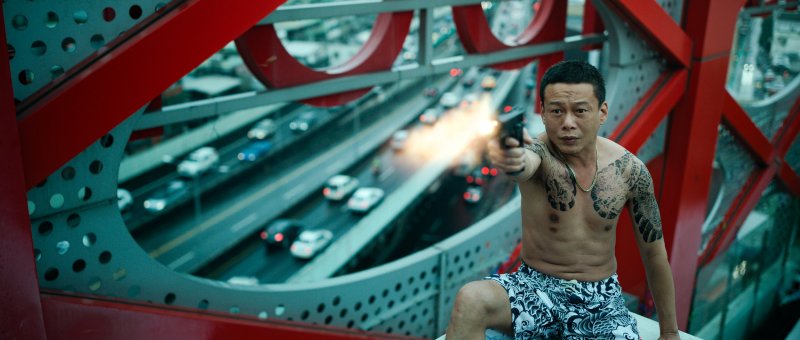
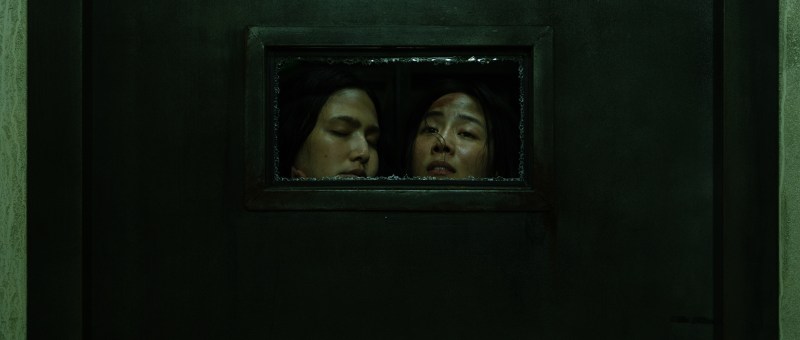
History repeats itself for a former gangster recently released from prison in Johnny Chiang’s melancholy neo-noir, Lost in Forest (山中森林, Shān Zhōng Senlín). Set in a neon-lit Taipei, Chiang’s moody crime drama finds its hero displaced in the modern society unable to look either forward or back while meditating on all he’s lost and another less corrupt vision of his home city as symbolised by his late father’s missing sausage bike and the changing back streets where it was once parked.

This Taipei is however a less wholesome place as suggested by Chiang’s frequent cuts to Christian churches and the giant neon crosses that sit above them as if looming in judgement on the chaos below. 12 years previously, Sheng (Lee Kang-sheng) opened fire on rival gang members who’d kidnapped his best friend and comrade Seagull (Angus Hsieh) who has now taken over the outfit while he’s been inside. Customarily, Seagull should have had someone come to meet him on his release, but Sheng exits the prison alone and is given a lift back into the city by the entourage collecting his prison buddy Ji despite the fact they are headed to an entirely different part of the country. Without a phone and not knowing where the gang even is anymore, all Sheng can do is hole up in a hotel until he finds out what’s going on. All of which suggests that despite his sacrifice, Seagull may not be particularly glad to reunite with him.

The conflict exists on three levels. Sheng must necessarily doubt his old friend Seagull, especially on realising that his new business model involves exploiting vulnerable women by pressing them into debt via high interest loans and then forcing them into sex work, while simultaneously worried about his guys who claim they have not been well treated while Sheng was away. But then it also becomes clear that much like many contemporary Taiwanese crime dramas, the real villain is institutional corruption as Seagull’s alliances with corrupt politicians and shady businessmen continue to destabilise the underground society thanks to the machinations of anarchic street punk Monkey (Sean Huang) who engineers a gang war by giving the businessman’s son a kicking as leverage in a dodgy land deal. 

On the one hand, Sheng watches history repeat itself as a handsome foot soldier, Chenghao (Prince Chiu), vacillates over leaving the gang for his respectable girlfriend Alice (Puff Kuo), while on the other Sheng becomes attached to sex worker Jing (Lee Chien-na), one of Seagull’s exploited women working for him to pay for her father’s medical bills. Sheng’s former lover tells him that if he really cared about her, he shouldn’t have sacrificed himself for Seagull just as Chenghao shouldn’t put himself in harm’s way out of a pointless sense of loyalty for a gang that has no real loyalty to him. Before his release, the prison warden had advised Sheng not to let his sense of loyalty get the best of him, but as he says Sheng no longer has much of anything else. His parents died while he was inside, the woman he loved married someone else, and Seagull can’t even remember what he did with Sheng’s dad’s sausage bike which is his only path back to a more wholesome existence. 

In a certain sense he’s powerless, unable to escape the inexorable pull of gangland karma until finally forced to reckon with the destabilising force that is Monkey to restore some kind of order and undermine the system of corruption that has arisen between underworld thuggery, local politics, and big business. The warden had also pointed at the fish in his tank and asked Sheng if it was happier in there or back in the sea but Sheng had merely said that it’s up to the fish to decide, hinting that in a certain sense it’s all the same and it’s just that one prison is bigger than another. At least the fish gets fed and is kept safe from predators even in its lonely isolation, which might be more than can be said for Sheng who can never truly escape his past even as he tries to free Chenghao and Jing from a similar fate. A melancholy mood piece, Chiang shoots night-time Taipei as a land of neon emptiness set against a classic jazz score that echoes Sheng’s deadpan ennui in a modern world of electronic smoke and rueful nihilism in which there is no escape from karmic retribution. 


Lost in Forest screens in Chicago April 16 as part of the 16th season of Asian Pop-Up Cinema.

Original trailer (Traditional Chinese / English subtitles)
Day Off (本日公休, Fu Tien-Yu, 2023)

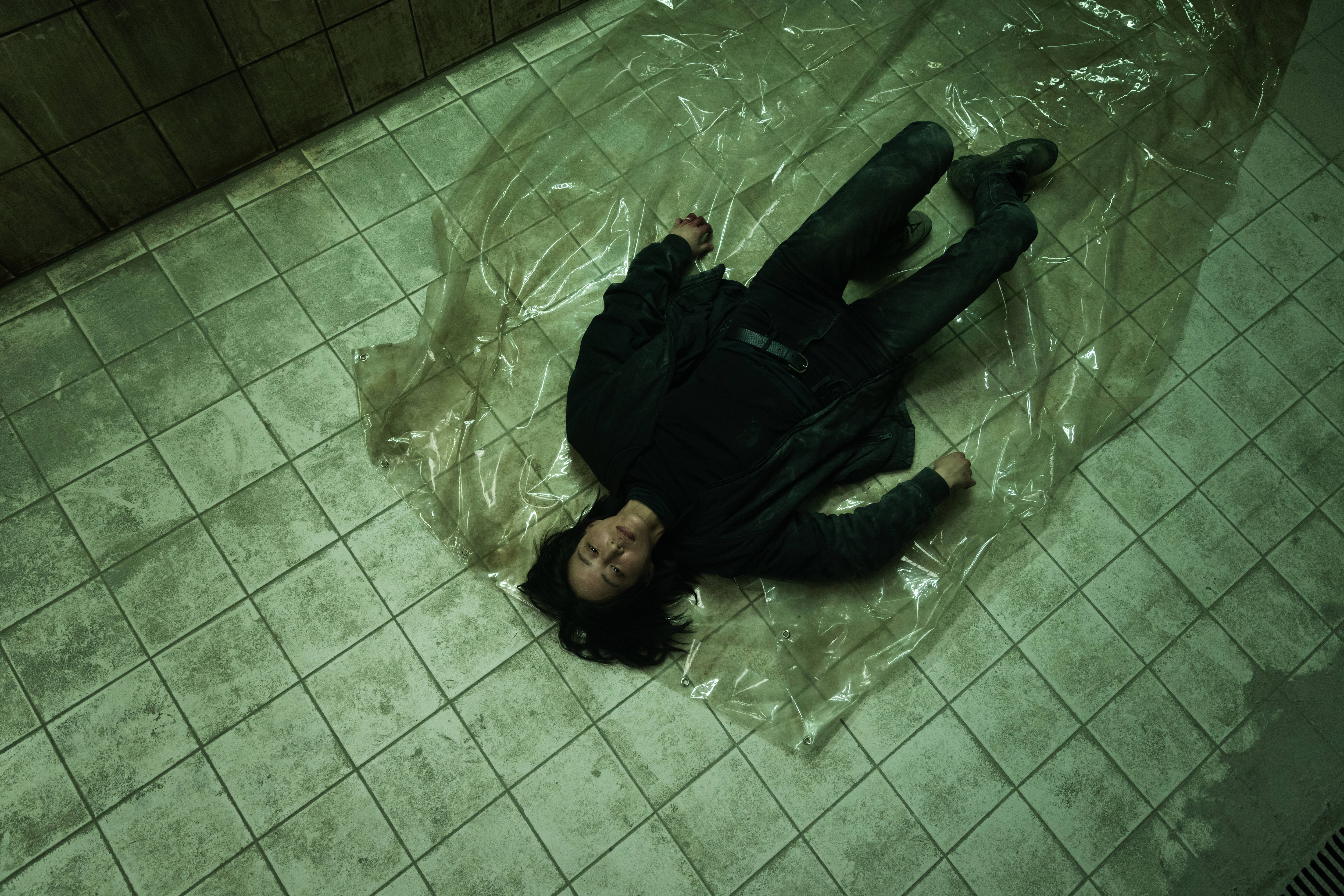
The wholesome small-town values of an ageing hairdresser place her increasingly at odds with her cynical consumerist kids in Fu Tien-Yu’s poignant tale of changing times, yet as she’s fond saying children have their own lives and all that really matters is that you’re satisfied with what you have. Day Off (本日公休, běnrì gōngxiū) is partly a lament for the things we’ve thrown away in the name of convenience but also a celebration of human connection brokered by something as simple and routine as a haircut.

A Rui (Lu Hsiao-fen) has toiled away in her family-run barbershop for most of her adult life and the business has changed little in the time she’s been running it. Old men and their sons have been coming to get a haircut and a shave for the last few decades because as someone else later puts it, men are largely creatures of habit and a hairdresser like a wife is hard to switch. A Rui’s daughter Ling is also a hairdresser but works in a much more modern salon and is planning to open a supercuts-style express service aiming to get people in and out in a short amount of time for a small amount of money. Ling’s philosophy is contrary to everything A Rui was taught, advised by her mentor to take her time and work with precision. He told her that if she provided a good service she’d always have custom and does that does seem to have been the case. 

Then again perhaps times aren’t so different as they seem. Ling is unpopular at her salon because she has poor customer service skills and doesn’t seem to be particularly well suited to the social nature of the job. Her boss always gets all the best clients and that’s largely because he treats them just like A Rui treats hers even if his care and attention is a little more cynical than heartfelt. Ling has also divorced her husband, Chuan, essentially for being too nice after he lent money they were saving for a new flat to a friend in need. A Rui can’t understand why she’d split up with a perfectly good man when they have a small child together, but Ling is an ambitious ultramodernist who values change above all else and looks down on small-town values of community and reciprocity seeing her former husband and mother as merely foolish and living in the past. She can’t understand why her mother bothers to ring up her elderly regulars to remind them they’re due a haircut when she could just set up an automated system to take care of it for her, nor can she get her head round it when A Rui says she’s going to travel to a faraway town to cut the hair of an elderly gentlemen who can’t make it to the shop without even asking for expenses. 

But to A Rui it’s just the right thing to do and an appropriate act of reciprocity for decades of custom. Chuan feels much the same, always willing to put his life on hold to offer roadside assistance and understanding if a client can’t pay him right away knowing that they can’t get the money if they can’t work so it’s better to just fix the car. A Rui worries about her other daughter living with a boyfriend and a dog in a rented flat in Taipei, and about her son who seems to have several failed entrepreneurial projects behind him, but encounters on the road another man who gave up a job as a scientist to become a farmer and seems to be happy with his choice. In the end it might not be that one is better than the other, the only thing that matters being whether or not you’re satisfied with what you have.

There’s a certain poignancy in the disappearing quality of A Rui’s way of life, the hair on one of her customer’s heads slowly turning from black to grey as if she were literally shaving the years off him. “Time flies” she often remarks, realising that she’s known some of her customers all their lives and has become a kind of community hub that they can always return to even if they move away. The knees she once practiced her shaving on are now old and worn from years of standing, but as her customers remind her she can’t retire because no one knows their heads like she does and then where will they get their hair cut? Bittersweet and elegiac, Day Off ends on a note of moving on as A Rui gives the baby of a second generation client their first haircut and prepares to say goodbye to a much a loved friend seeking a more satisfying future while resolving to carry on doing what she does best in providing the best possible service to her regulars and to the world around her.


Day Off screens in Chicago April 15 as part of the 16th season of Asian Pop-Up Cinema.

Original trailer (Traditional Chinese / English subtitles)
Taste of Wild Tomato (野番茄, Lau Kek Huat, 2021)

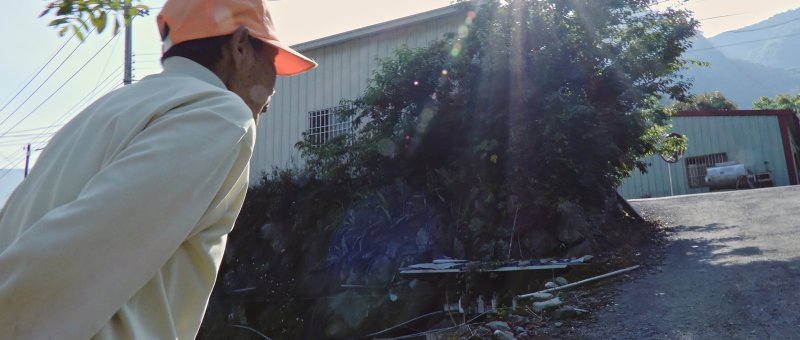
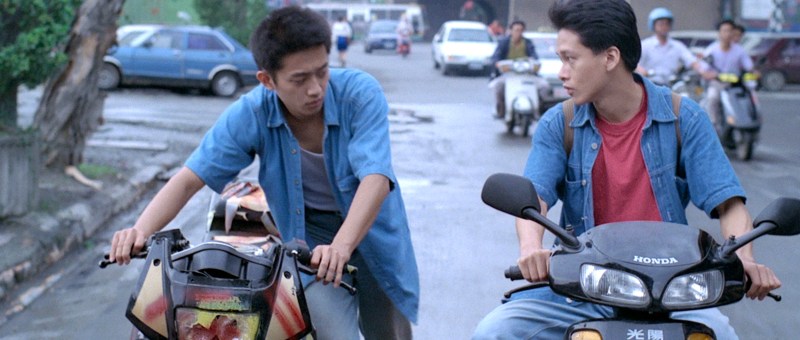
Towards the conclusion of Lau Kek Huat’s documentary Taste of Wild Tomatoes (野番茄, yě fānqié), a man whose father was murdered during the White Terror gets into a heated debate with a supporter of Chiang Kai-shek who asks him if he thinks things would have been better if the Japanese had stayed. It doesn’t seem to occur to her that Taiwan might have been just fine on its own, a free and independent nation no longer subject to any particular coloniser. Her attitude reflects the contradictions of the contemporary society still trying to understand and make peace with its past. The now middle-aged man thinks that Chiang Kai-shek’s presence in “Liberty Square” is inappropriate, “worshipped by tourists who do not know our history”, and that the lingering national trauma of the 228 Incident, in which a popular uprising against the rule of the KMT government in 1947 was brutally put down, has never fully been addressed. 

Another of Lau’s protagonists also lost her father to the White Terror and her mother to suicide shortly after. It’s her recollections that give the film its bittersweet title as she remembers being taken to her father’s grave as a small child but not knowing what was going on. She didn’t understand why her mother was crying and simply carried on eating some wild tomatoes that were growing near the grave. Their taste has stayed with her all these years as an ironic reminder of the fruits of oppression and the frustrated vitality of the Taiwanese society enduring even during its hardship. 

The film opens with a sequence featuring animation and stock footage from the colonial era over which a man gives a speech likening himself to the Japanese folk hero Momotaro and Taiwan to the island of barbarians to which he traveled. Kaohsiung had been an important military base under Japanese colonial rule, integral to imperial expansion to the South. The voice over describes it as an uncivilised land where they do not speak his language, but then emphasises that Taiwan has been transformed by Japanese intervention and is now the pearl of the empire. “As long as you work hard, you can be the true subjects of the Empire of Japan’” he ominously adds. 

Under the Japanese, the Taiwanese people were asked to give up their names and language, but they were also asked to do so under the KMT under whose rule Taiwanese Hokkien was actively suppressed in favour of Mainland Mandarin. A folk singer explains that traditional folk singing is tailored to the rhythms of the local language, Mandarin simply does not scan and if she cannot sing in Taiwanese then she cannot sing at all. She offers a caustic retelling of history in her songs reflecting on the 228 incident and the “unreasonable and cruel” rule of the KMT governor Chen Yi. Another man who took part in the uprising explains that the widow and son of a man who died next to him only came to ask how he died decades later because it was not only taboo but dangerous to make any mention of what happened on that day. 

Lau’s camera makes an eerie journey into a tunnel built by the Japanese military that was used as an interrogation room during the White Terror. A guide explains that the soundproofing wasn’t present in the colonial era but was added by the KMT so that people couldn’t hear what was going on inside. The woman who had tried to defend Chiang Kai-shek, irritated by the man continuing to speak in Taiwanese and answering him in Mandarin, had not tried to deny that such things had happened only that sometimes it is necessary to do “bad things” to survive much as an elderly conscript had recounted murdering an abusive Japanese officer and eating his flesh while hiding in the Philippine jungle during the war. “Justice always defeats authoritarian regimes” Chiang is heard to say in an incredibly ironic speech in which he also talks of the importance of rehabilitating “those who learned the wrong ideas in the fascist regimes” and making them accept Sun Yat-Sen’s Three Principles of the People (nationalism, democracy, and the peoples’s welfare). 

The woman who lost her parents now cares for her older sister who suffers with dementia, she thinks brought on by the hardship she endured because of her orphanhood. Closing with scenes of an air raid shelter repurposed as a children’s park, the film presents an ambivalent message as to how the past has been incorporated into contemporary life. Something good has been made of these relics of the traumatic memories, but in doing so it might also seem that the past itself has been forgotten or overwritten. The man who lost his father and himself went into exile defiantly holds up banners stating that Taiwan is not “Chinese Taipei” while insisting that the statue of Chiang Kai-shek must be removed from Liberty Square if it is to have any meaning, all while the folk singer continues to sing her song in her own language refusing to be silenced even if society does not always want to hear about its painful past.


Taste of Wild Tomato screened as part of this year’s Hong Kong Film Festival UK.

Original trailer (Traditional Chinese / English subtitles)

A Holy Family (神人之家, Elvis Lu, 2022)

“Do you think the gods ever helped our family? Or, should I say, do the gods exist?” asks documentary filmmaker Elvis Lu of his brother, a spiritual medium who stayed behind with their devoutly Taoist parents while Lu left for the city 20 years previously and never returned. Lu admits that he likely never would have come back had his mother not contacted him with an ominous message about sorting out her funeral plans, but while filming seems to come to a new accommodation with his familial relationships guilty that he stayed away so long no longer a resentful young man but one beginning to consider the encroachment of mortality.

Lu’s mother confesses that she had pretended to herself that he didn’t exist, hurt that he rarely answered her calls and never visited home even as he points out that she never came to visit him him Taipei either. She feels she “achieved nothing as a parent” and is most regretful that she could not nurture Lu’s talent because she was forced to work long hours to support the family while also taking care of the household. In the opening conversation Lu had coldly answered the phone assuming his mother had called to ask for money, and the hollowness at the centre of the family is largely caused by Lu’s father’s longterm gambling problem which saw him fritter away most of the family’s property and savings leaving the couple financially dependent on their sons for support. Lu’s brother also feels a degree of resentment towards their near silent father, revealing that he does not want to do to his son what his father’s done to them in leaving them nothing but debt and disappointment. That’s one reason he’s always looking for new ways to support the family and has recently begun farming.

The obvious question when his tomato crop is destroyed by floods is why didn’t he ask the gods for guidance first, only it turns out that he did. As Lu points out, the family has endured long years of suffering despite their piety, if his brother is really so close to them why didn’t they help? It’s a question he obviously doesn’t have an answer for, nor does he have one when his son pleads with him to ask the gods for advice as to what to next with the ruined tomato field. His brother’s pained expression hints that he might have doubts despite being able to talk to the gods in his job as a spirit medium handing out advice on investments and other more Earthly worries for a small donation. The family’s upper floor is home to a large altar with several statues of the gods his mother describes as her only friends during the time that both her sons and husband were absent from the family home. Lu’s mother is tiny and now somewhat advanced in age. The stairs appear difficult for her, yet she climbs them every day to pay obsevance to the gods. 

After 20 years in the city all of this religiosity seems even more bizarre to the now adult Lu, but he also also captures ceremonies in the community in which people pray to the gods for health and prosperity suggesting that it’s not so odd after all and that the sense of community may be more important that the rituals themselves. Even so, it’s also true that this almost transactional view of spirituality feeds directly back in to his father’s gambling addiction in which he constantly looks for signs of lucky numbers to place bets or buy lottery tickets. After being diagnosed with glandular cancer and too ill to do much else, Lu’s father still picks up the phone to lay a sizeable bet even while his exasperated wife tries to control her resentment that if only he hadn’t lost his job he’d have had a pension, they’d have kept more of their property, and would all have happier, more comfortable lives. 

In any case, through adopting a more neutral position as a filmmaker Lu is able to better interrogate the realities of his family and his own relationship with it. As the documentary progresses, he sometimes appears on screen holding a large camera on a tripod while someone else films him from another angle. What began with frosty resentment slowly gives way to warmth and reconciliation even while underpinned by a melancholy practicality as Lu helps his parents choose pictures to use at their funeral underlining a sense of oncoming loss as Lu finally takes his mother to see the sea and gently tracks her as she walks along the shore, slowly moving away from him.


A Holy Family screens in London 24th March and in Edinburgh 25th March as part of this year’s Hong Kong Film Festival UK.

Original trailer (English subtitles)

Millennium Mambo (千禧曼波, Hou Hsiao-hsien, 2001)

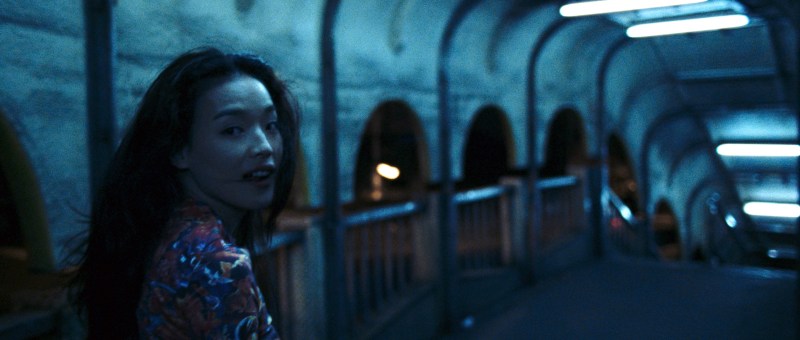
In the iconic opening sequence of Hou Hsiao-Hsien’s Millennium Mambo (千禧曼波, Qiānxī Mànbō), a young woman bounces enigmatically along a walkway, filled with joy and abandon and seemingly exultant in her freedom. Occasionally she glances back as if someone were actually filming her but then we start to wonder if this isn’t just her looking back at herself as she narrates her story in the third person, as if it happened to someone else because in a sense it did. “This happened 10 years ago,” she explains from the vantage point of 2011 looking back on the coming millennium and her own slow dance towards a new world. 

Then again, as she admits Vicky (Shu Qi) always seems to be drawn back into the orbit of Hao (Tuan Chun-hao), her no good, abusive boyfriend who is so controlling that he deliberately prevented her from taking her high school exams out of fear that she’d “move on”. Circling around Vicky’s memories, Hou often cuts to Hao in exactly the same position as he was before while Vicky has indeed moved on if not always in the direction she might have chosen such as the abrupt transition to her naked behind as a dancer at a nightclub where she is forced to work because Hao refuses to earn a living. When we first see her arrive at their apartment, Hao is sitting in the dark and we don’t even notice him until he gets up after Vicky enters the bathroom. Where her bedroom is colourful and cosy, bathed in soft light and demonstrating her ability to find small comforts in an otherwise harsh existence, Hao’s space is gloomy and ominous in its austerity. 

While Vicky tries to move into a more responsible adulthood, Hao extends Taipei clubland into their home frequently hanging out with friends while djing on the rig in his room. He takes drugs to keep his weight down to evade military service and gets into trouble with the law after pinching and pawning an expensive watch from his dad rather than trying to get job. He is the force which seems to keep Vicky trapped in a disappointing existence. By her own admission she finds herself returning to him as if she were in a kind a kind of trance, unable to escape though at times clearly despising him and perhaps herself too. Even Hao is fond of saying that they’re from different worlds, stuck on parallel orbits and otherwise incompatible. Even their apartment seems to be divided into night and day. 

Yet it’s also Taipei clubland that offers Vicky an escape route through the community she finds surrounding her amid the pulsing beats of millennial techno. A kindhearted gangster, Jack (Jack Kao), comes to her aid though he is later brought low by the recklessness of youth as his naive underlings bring their world crashing down around them. Jack takes her in and protects her with paternal affection, eventually inviting her to go on the run with him in Japan but immediately disappearing, just like the snowman she later describes Hao to have been in a moment imprinted on her memory. She carries Jack’s phone around with her unable to let go of him while recalling the scent of his abandoned jacket as she tries to make a decision in a snowy Tokyo just as she’d sworn to herself she’d leave Hao when she ran through her savings. 

Hou and cinematographer Mark Lee Ping-bing shoot all of this through the breeziness memory, following emotional logic rather than the literal as Vicki narrates to us events which are at odds with those occurring on screen and zig zags through the story of her youth before arriving at what seems to be a genuine moment of warmth amid heavy snow, perhaps finally “moving on” from the dissatisfying past to a future of her own choosing. Then again, her fleeting recollections amount to a constructed narrative, the story of the girl on the walkway who finally reaches the other side and disappears into the night either progressing into the new millennium or remaining trapped in a thousand year mambo of memory reliving the key moments of her life in a gentle oscillation, “as if under a spell or hypnotised” , unable to escape from the dangerous allure of nostalgia. 


Millennium Mambo is screening now at New York’s Metrograph and available to stream in the US via Metrograph at Home courtesy of Metrograph Pictures.

Trailer (English subtitles)

Terrorizers (青春弒戀, Ho Wi Ding, 2021)

A collection of youngsters is drawn into a dangerous web of simmering violence in Ho Wi Ding’s Taipei-set drama, Terrorizers (青春弒戀, qīngchūn shì liàn). The film may share its name with an Edward Yang classic, but it is very clearly society that is the terroriser in this instance from toxic masculinity and social conservatism to youthful isolation, video games, and pornography. The film seems to ask if it’s ever really possible to move on from the past and discovers that it may not be though some may be prepared to help carry your baggage as they travel towards the future so long as they know what’s in it. 

The youngsters are brought together by the ominous presence of Ming Liang (Austin Lin Bo-Hong), an isolated young man who barely speaks and spends all his time playing video games. It’s him we see dressed in full ninja garb attacking a young woman, Yu Fang (Moon Lee), with a katana at the train station only for her boyfriend Xiao Zhang (J.C. Lin Cheng-Hsi) to heroically throw himself in front of her to fight Ming Liang off. 

Later a dejected middle-aged woman Ming Liang befriends ironically tells him that guy who protects his girlfriend is a real man, working the wound of Ming Liang’s bruised masculinity and causing him to double down on his frequent insistence that he can protect women, though later he indeed does on separating precocious teen Kiki (Yao Ai-Ning) from the previously diffident best friend who tried to assault her. Having given up on Yu Fang he begins stalking a woman from her acting class, Monica (Annie Chen Ting-Ni), whose admittedly no good ex boyfriend he later beats up assuming it will buy him white knight credits as a protector in the shadows when in reality he’s a total creep who cloned the key to her apartment and has been hiding in her wardrobe later driven into a frenzy by the irony of watching Yu Fang and Monica, the two women he wanted, deciding they’d rather be with each other. 

Part of Ming Liang’s problem is a sense of parental abandonment, something he shares with Yu Fang whose mother abandoned her when young while her relationship with her father, who has recently remarried, has always been strained. After his parents’ divorce, Ming Liang moved in with Yu Fang’s politician father after being palmed off off by his own, the implication being that he has never really been shown parental love or given any guidance about how to live in the world save that he gleaned from the violent video games he constantly plays along with voyeuristic pornography. 

Yu Fang and Ming Liang are attempting to escape the legacy of parental failure, but Monica is left with a much more recent dilemma in her history as an early cam girl named Missy, a character created by her ex, David, who has since moved on. The more Monica tries to chase her dreams, the more her past comes out to haunt her with creepy men for some reason making a point of telling her they saw her sex tape while on some occasions actually playing it for her on their phone. Hoping to crush her spirit, David tells her that she’ll always be Missy, unable to escape the social stigma of having participated in a pornographic video, while she and Yu Fang are subject to a public shaming when a tape of them goes viral allowing the authorities to all but justify Ming Liang’s attack on Yu Fang on the grounds that she stole his girlfriend and therefore was in the wrong as if such feudalistic behaviour could ever be permissible. 

Yu Fang finds herself terrorised by the media storm of the 24hr news cycle, her new life with Xiao Zhang in jeopardy while she feels ever more isolated realising that her father cares less for her wellbeing than the optics in the light of his ongoing political campaign. Ming Liang meanwhile is forever reminding people that his father is rich and influential as if his misuse of his status is a direct rebellion against it and the parents he feels abandoned him. The fact that the news essentially reframes the slashing incident as a defence of heterosexual love, demonising same sex relationships, only emphasises the tyranny of outdated social prejudice and misogyny as Yu Fang becomes the villain and Ming Liang the victim entirely ignoring his predatory stalking of Monica and otherwise disturbing behaviour. It may not be possible to effectively move on from the past, overcome the legacy of parental abandonment and develop the ability to trust in others, but there may be less destructive ways to take the past with you if only in finding someone willing to share your burden. 


Terrorizers screened as part of this year’s New York Asian Film Festival.

Festival trailer (English subtitles)

Images: © changheFilms 2021

Remember Me (金門留念, Hung Chun-hsiu, 2022)

Some way into Hung Chun-hsiu’s documentary Remember Me (金門留念) a woman takes part in a military reenactment firing large scale artillery from a now disused military base. What’s ironic is both that what was once a frightening reality of ongoing warfare has now been commercialised as an attraction for tourists, and the fact that the woman firing the gun pointed at China on this technically Taiwanese island is herself Chinese. As the opening graphics point out, the island of Quemoy (also known as Kinmen) is geographically closer to Mainland China though governed by Taiwan and for much of its mid-20th century history at the front line of an ongoing ideological battle between communists and nationalists. 

In the stock footage often employed by Hung, newsreaders can be heard uttering phrases about “vile communists” and eliminating communist “scum” along with impassioned sloganeering about taking back the “motherland” and freeing its people from the yoke of communism. The island was under near constant shelling until as recently as 1979 and consequently largely populated by the military many of whom were ordinary young men conscripted for national service. The island has obviously changed a great deal since then, though one unexpected casualty has been the gradual decline of the island’s photo studios. Less due to technological than demographic change, the first of Huang’s subjects explains that given the precarity of life in Quemoy soldiers would have their pictures taken as often as once a week, often full body portraits they would send home to their families as evidence that they had not been severely injured. Kuo-ming has been operating his photo studio for 46 years now one of only two still operating on the island. Like the gun show, the military portraits have also become a kind of costume play, Kuo-ming handing out army uniforms and prop weapons for people to pose with often against a painted matte backdrop of a local lake or else Japan’s Mount Fuji. 

Meanwhile, the photographs taken at the time hint at the loneliness felt by the men who were dispatched to the island, many of them opting to have pictures of their wives or girlfriends inset alongside them. Those who had no girlfriends sometimes used a picture of a famous model or actress as a personal keepsake though one photo which goes unexplained is inset with the photo of another man in uniform. It has to be said that many of these photos have a homoerotic quality, especially the ones featuring shirtless well-built men striking muscle poses, while others are unexpectedly feminine in nature featuring the soldier in soft focus and surrounded by flowers. The ones from later years are also sometimes playful, featuring soldiers sitting in a model speedboat in or in more relaxed, artistic poses. A man who had his photos taken there while on his military service reads a letter he wrote to a woman he loved promising a photo, one in which he later inset her portrait, little knowing that she did not return his feelings and only kept the correspondence up in fear he might harm himself if she turned him down. Though he discovered on his return she had married someone else, the couple found each other decades later and decided to have a “real” photo taken together at Kuo-ming’s shop dressed in faux army uniforms. 

Having married a local woman and decided to stay on Quemoy, former solder Shan-yung also used to have his picture taken at Kuo-ming’s to send back to his mother. He joined the army voluntarily as his family was poor and was shocked to be sent effectively to the front line. After leaving the service, he and his wife opened a karaoke bar largely catering to military personnel and though his business still seems to be doing well, bears out Kuo-ming’s description of the economic changes brought about by decreasing militarisation. Even so he feels a sense of guilt that his life has taken him so far away from his family that he is no longer able to care for his parents in their old age while taking care of his in-laws on Quemoy.

Chen-mei, the woman staging the live reenactment of firing the artillery gun, expresses something similar while explaining that she came to the island from the Mainland for an arranged marriage and now works as a civil servant. She concedes that it’s a little awkward for some of the Chinese visitors realising that their nation had been firing shells at the island for three decades, but suggests that it’s all in the past while espousing a well-meaning but possibility reductive One China philosophy that they are all one Chinese family who no longer need to care about labels like “communist” or “nationalist” because they live in an era of peace. The gun, and the remaining military garrison, may be a reminder it might be dangerous to take that for granted given the rising rhetoric on the Mainland in response to the desire for a recognition of Taiwanese independence. A father explains to his son that the artillery gun was a loan from the Americans to help resist communism, but when the boy asks him how long is left on the lease the man can only look confused and reply that he doesn’t really know. In any case, Remember Me seems to be keener on remembering the rosier side of life on Quemoy under fire as old soldiers look back on their youth if grateful that goats now roam their barracks and the only shells to be found are the ones commemorating a war that for now at least has ended. 


Remember Me screened as part of this year’s San Diego Asian Film Festival.

Original trailer (English subtitles)