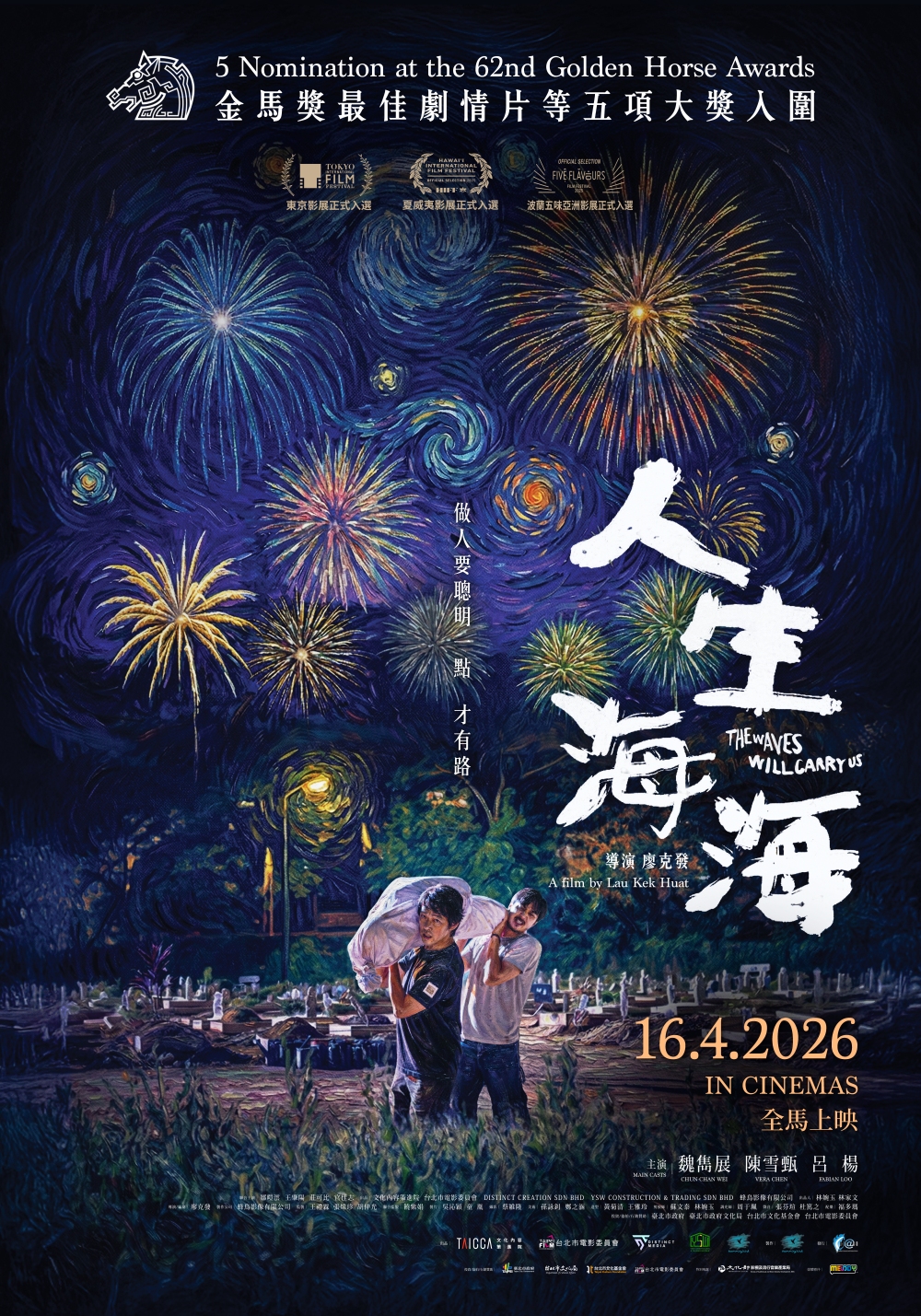
The Waves Will Carry Us (人生海海, Lau Kek-huat, 2025)

Yao explains to a wealthy couple in Taiwan how they can change their nationality to preserve their wealth, “investing” in another country in order to buy citizenship to a place that has a taxation system that is more advantageous to their circumstances. But the people he’s talking to remark on his accent and after learning he came from Malaysia jokingly tell him that he passes himself off as Taiwanese quite well with the implication being he’s deceived them in some way, while it’s ironic that someone who’s immigrated to Taiwan is helping them “emigrate” from it.

This seems to upset Yao a little bit. Just as it does when he goes to donate blood with some Taiwanese friends, but is refused because he comes from a “high-risk area”. He points out that they might not reject someone from Europe or America in the same way as someone from South East Asia, while this very denial of his blood seems to suggest that it’s not possible for him to ever be “Taiwanese” no matter no long he might have lived there. Any children he might have would not really be either. Lau Kek-huat’s The Waves Will Carry Us (人生海海, rénshēnghǎihǎi) jumps back over a hundred years to ask what really is a “homeland” and what meaning there is in this world of borders and documentation that take questions of identity and belonging out of the individual’s hands.

Yao came from Malaysia, but as a member of the ethnic Chinese community, he isn’t completely accepted there either. His grandfather came as a child from China, but when independence was granted, he was excluded from citizenship applications because he did not speak Malay and risked losing his land and farm as an undocumented person. He had come there with his uncle who dreamed of untold riches in South East Asia, but found only hard work and dire conditions. Before they left, their relatives had performed a ritual which taught them never to become “barbarians” or risk losing their way home. Quan and his uncle keep their hair in pigtails despite the mocking of those around them and are discouraged from eating the local durian fruit which becomes a favourite of Yao’s father. 

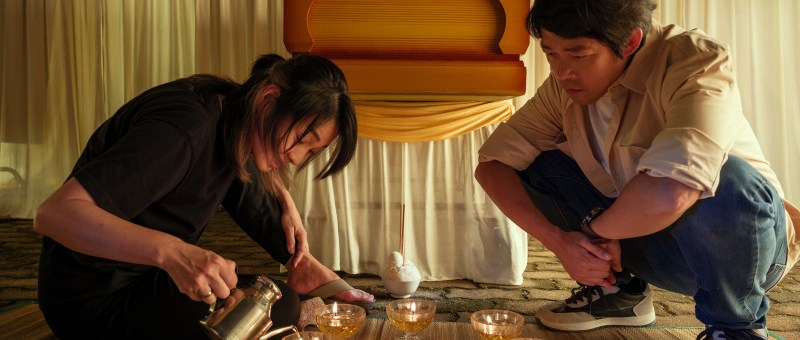
Yet when government officers march into his father’s funeral for which his sister has splashed out on a traditional Taoist burial suit, he learns his father secretly converted to Islam and must be laid to rest in the Muslim burial ground having undergone an Islamic funeral. As he says to his brother Cai who is an activist protesting the corrupt government, it is easier to be a Muslim in this society. You can get cars and loans more easily, not to mention have multiple wives. The government officer looks at him with similar suspicion to the Taiwanese couple, claiming that he understands the “Chinese mindset,” and is sick of people who convert to Islam for purely cynical reasons and never practise the religion. This is what you get, he seems to say as he rejects Yao’s attempts to bribe him and confiscates his father’s body.

It turns out that the reason may not have been so cynical after all, but nevertheless the family is forced through the farce of burying a doll in order to complete the Taoist funeral rites without which they cannot really lay their father to rest. Yao’s and Cai’s mad decision to exhume him from the Muslim burial ground is then an attempt to bring him “home,” though the concept is one that’s in other ways constantly shifting. Yao’s niece asks her mother where Yao’s “home” is now, though the answer they come up with is only that home is wherever he is. That the body ends up getting lost is an indication of its statelessness but also a restoration of freedom in being uncoupled from the notion of national identity. 

Still, young Quan wondered if the stars here were the same as they were back home or if they’d travelled so far the ancestors could no longer protect them. Everyone must find a way to survive, Yao’s father had told him, though his brother Cai may think he’s coward for going to Taiwan rather than staying in Malaysia and trying to make things better like he is with the protest movement. The irony is that their father died on Independence Day draped in a Malaysian flag, while they later use it as a bandana to cover their faces when confronting the police as they try to rescue their father’s body only to enter another kind of in between space, if one in which they are freer to claim their own identity.


The Waves Will Carry Us screened as part of this year’s CinemAsia Film Festival.

Trailer (English subtitles)
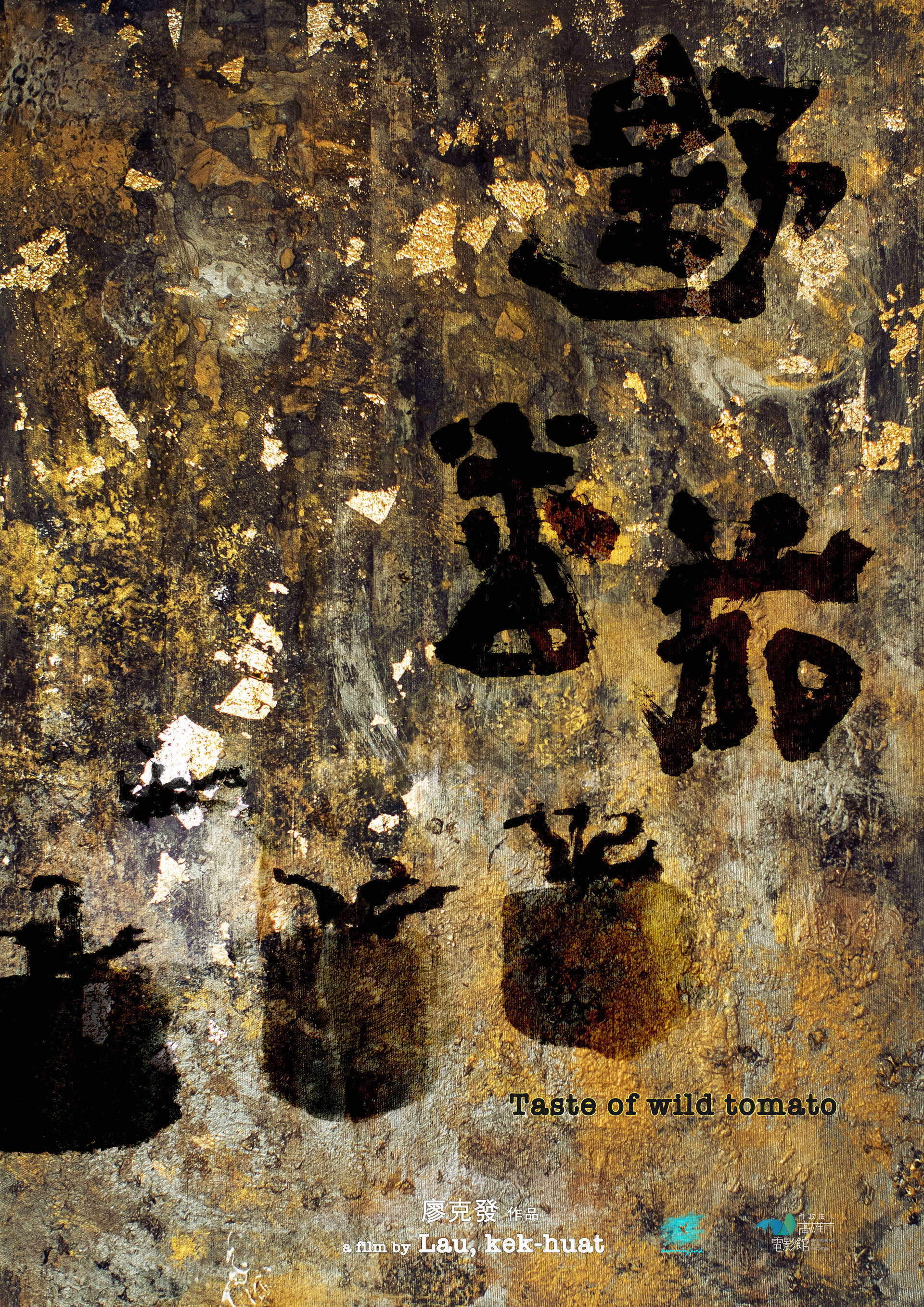
Taste of Wild Tomato (野番茄, Lau Kek Huat, 2021)

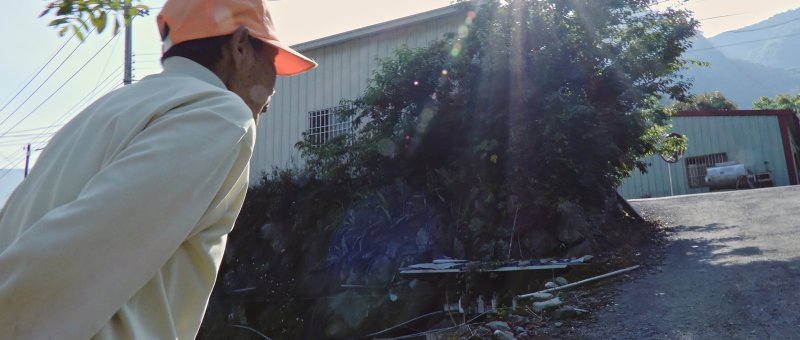
Towards the conclusion of Lau Kek Huat’s documentary Taste of Wild Tomatoes (野番茄, yě fānqié), a man whose father was murdered during the White Terror gets into a heated debate with a supporter of Chiang Kai-shek who asks him if he thinks things would have been better if the Japanese had stayed. It doesn’t seem to occur to her that Taiwan might have been just fine on its own, a free and independent nation no longer subject to any particular coloniser. Her attitude reflects the contradictions of the contemporary society still trying to understand and make peace with its past. The now middle-aged man thinks that Chiang Kai-shek’s presence in “Liberty Square” is inappropriate, “worshipped by tourists who do not know our history”, and that the lingering national trauma of the 228 Incident, in which a popular uprising against the rule of the KMT government in 1947 was brutally put down, has never fully been addressed. 

Another of Lau’s protagonists also lost her father to the White Terror and her mother to suicide shortly after. It’s her recollections that give the film its bittersweet title as she remembers being taken to her father’s grave as a small child but not knowing what was going on. She didn’t understand why her mother was crying and simply carried on eating some wild tomatoes that were growing near the grave. Their taste has stayed with her all these years as an ironic reminder of the fruits of oppression and the frustrated vitality of the Taiwanese society enduring even during its hardship. 

The film opens with a sequence featuring animation and stock footage from the colonial era over which a man gives a speech likening himself to the Japanese folk hero Momotaro and Taiwan to the island of barbarians to which he traveled. Kaohsiung had been an important military base under Japanese colonial rule, integral to imperial expansion to the South. The voice over describes it as an uncivilised land where they do not speak his language, but then emphasises that Taiwan has been transformed by Japanese intervention and is now the pearl of the empire. “As long as you work hard, you can be the true subjects of the Empire of Japan’” he ominously adds. 

Under the Japanese, the Taiwanese people were asked to give up their names and language, but they were also asked to do so under the KMT under whose rule Taiwanese Hokkien was actively suppressed in favour of Mainland Mandarin. A folk singer explains that traditional folk singing is tailored to the rhythms of the local language, Mandarin simply does not scan and if she cannot sing in Taiwanese then she cannot sing at all. She offers a caustic retelling of history in her songs reflecting on the 228 incident and the “unreasonable and cruel” rule of the KMT governor Chen Yi. Another man who took part in the uprising explains that the widow and son of a man who died next to him only came to ask how he died decades later because it was not only taboo but dangerous to make any mention of what happened on that day. 

Lau’s camera makes an eerie journey into a tunnel built by the Japanese military that was used as an interrogation room during the White Terror. A guide explains that the soundproofing wasn’t present in the colonial era but was added by the KMT so that people couldn’t hear what was going on inside. The woman who had tried to defend Chiang Kai-shek, irritated by the man continuing to speak in Taiwanese and answering him in Mandarin, had not tried to deny that such things had happened only that sometimes it is necessary to do “bad things” to survive much as an elderly conscript had recounted murdering an abusive Japanese officer and eating his flesh while hiding in the Philippine jungle during the war. “Justice always defeats authoritarian regimes” Chiang is heard to say in an incredibly ironic speech in which he also talks of the importance of rehabilitating “those who learned the wrong ideas in the fascist regimes” and making them accept Sun Yat-Sen’s Three Principles of the People (nationalism, democracy, and the peoples’s welfare). 

The woman who lost her parents now cares for her older sister who suffers with dementia, she thinks brought on by the hardship she endured because of her orphanhood. Closing with scenes of an air raid shelter repurposed as a children’s park, the film presents an ambivalent message as to how the past has been incorporated into contemporary life. Something good has been made of these relics of the traumatic memories, but in doing so it might also seem that the past itself has been forgotten or overwritten. The man who lost his father and himself went into exile defiantly holds up banners stating that Taiwan is not “Chinese Taipei” while insisting that the statue of Chiang Kai-shek must be removed from Liberty Square if it is to have any meaning, all while the folk singer continues to sing her song in her own language refusing to be silenced even if society does not always want to hear about its painful past.


Taste of Wild Tomato screened as part of this year’s Hong Kong Film Festival UK.

Original trailer (Traditional Chinese / English subtitles)