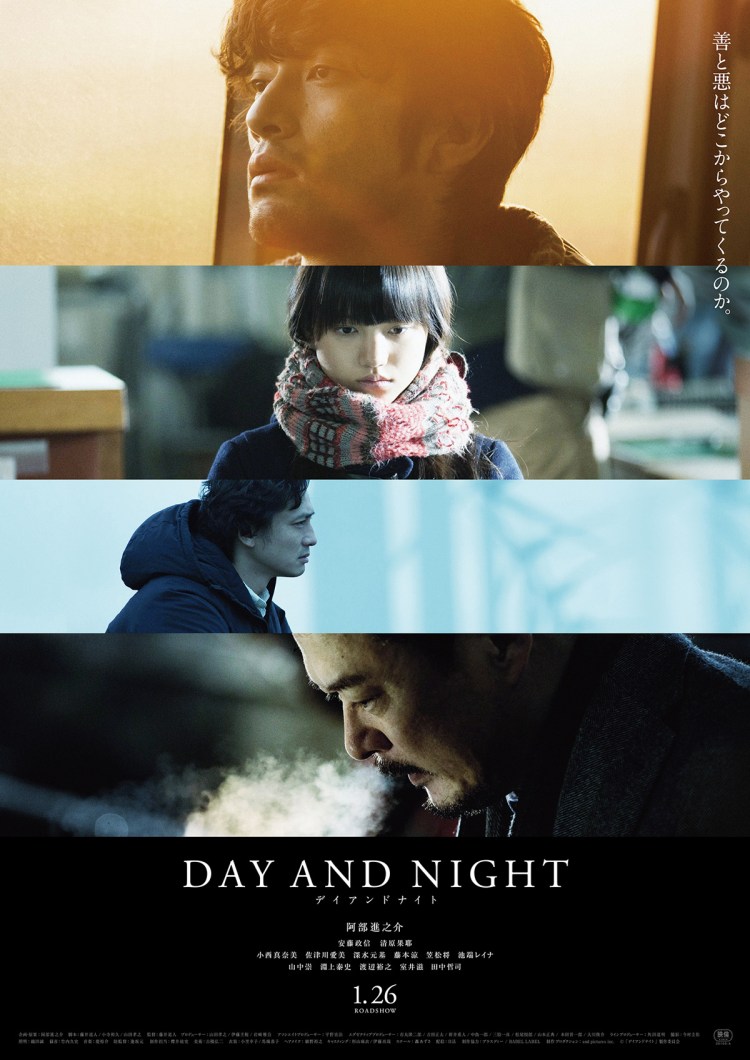
Day and Night (デイアンドナイト, Michihito Fujii, 2019) [Fantasia 2019]

day and night poster 1Can two wrongs ever really make a right? Michihito Fujii’s Day and Night (デイアンドナイト) wants to ask if the difference between good and evil is really as stark as that between dawn and dusk, or if life is really more like twilight in which morality is a relative concept and acts cannot by judged individually but only as a part of the whole. What the hero discovers, however, is that the world is an inherently unfair place and it may not be possible to “win” against the forces of self-interest solely through being pure of heart.

The drama begins with a stunned Koji (Shinnosuke Abe) returning to his small-town home to graffiti scrawled across his fences and his father lying in repose inside after having apparently taken his own life. No one will quite explain to Koji what exactly has happened, but it seems there has been some unpleasantness surrounding his father’s auto business. Though most of the other townspeople including his old friends are civil, they are also frosty and obviously unwilling to address the subject of Mr. Akashi save to press Koji for money they might still be owed as employees.

Meanwhile, poking around the garage in search of answers, he runs into the mysterious figure of Kitamura (Masanobu Ando) who claims to have known his father well though Koji’s mother claims never to have heard of him. Seeing as Kitamura is the only person willing to speak to him, Koji ends up taking a job at the orphanage where he works which turns out to be a little different than he thought seeing as Kitamura is actually the head of a local crime ring which exists with the sole purpose of keeping the orphanage running.

Though Koij, like his father, is an upstanding, law-abiding young man, he is quickly pulled into Kitamura’s world of moral justifications when presented with his personal philosophy in which the greater good remains paramount. Kitamura steals cars by night, stripping the unsellable ones for parts, which is where Mr. Akashi came in having succumbed to a life of “crime” in order to support himself while his business was suffering. He also does some possibly less justifiable work in the red light district while making a point of beating up drug dealers because 80% of the kids in his care have a parent in jail for crimes related to substance abuse. In Kitamura’s view at least, these are all “justifiable”, morally defensible “crimes” given that they are necessary to ensure the protection of the orphans. Though the money is good and Koji does need it, they are not in this for personal gain but to protect something they feel is important.

As Kitamura puts it, Mr. Akashi put his faith in laws that are meant to protect people but in the end it killed him. Having discovered a serious flaw in the auto parts he received from a local company he did the “right thing” and blew the whistle but Nakamichi Autos is the major player in the local economy and many people did not take kindly to having their reputation called into question. Nakamichi rallied its supporters and had Akashi hounded into submission. As one of the former employees tells Koji, the truth “hardly matters anymore”. Nakamichi doesn’t care there is a minor flaw in their products because they feel the chance of a fatal accident is slim enough not to need to worry about and happy to let the risk continue as long as they maximise their profits.

Miyake (Tetsushi Tanaka), Nakamichi’s CEO, also has his justifications, insisting that there’s no such thing as right and wrong only the cold logic of numbers and that the death of one man will not change anything. Increasingly pulled into Kitamura’s world of crime, Koji opts for underhanded methods to expose the truth about Nakamichi and clear his father’s name but finds in the end that no one is interested in facts. Listening in to some of his father’s old employees enjoying their belated severance pay he is dismayed to hear them too justifying their actions as they each insist that they did what they thought was “best” for everyone, for a peaceful life, for their families.

In truth, Koji claims he hated his father. That he resented him for always working all the time. Now however he begins to see that Akashi was only trying to protect his family by providing for it. His father was a “good” man, and he did the “right” thing, but he also became involved with Kitamura’s morally questionable crime syndicate. Kitamura wants to protect the orphans and takes care of them well, but can he really justify his actions solely on the grounds that there is no honest way to care for children who are often victims of an unfair society the pressures of which have pushed their parents from the “moral” path? What Koji’s left with, broadly, is that “good” people do “bad” things for “good” reasons, but bad people do bad things because they’re selfish and so they hardly care about the consequences of their actions. He starts to believe that the only way to resist is to fight fire with fire, but discovers that the little guy is always at a disadvantage when there is too much vested interest in not “making trouble”. It turns out everyone is OK with the status quo, so long as it’s not their car that might suddenly lose its wheels. As Miyake says, “that’s just how society works”.

A bleak meditation on the wider nature of justice and moral greyness of the world, Fujii’s noirish drama suggests good and bad are less like day and night than a shady evening in which the only shining light is the greater good. The world, however, continues on in self interest and the “good” will always lose to the “bad” as long it compromises itself trying to play by the other guy’s rules. Koji finds himself torn between a desire to avenge his father and a new sense of fatherhood fostered by bonding with a teenage girl at the orphanage as he contemplates the existence of a line between good and evil and his own place along it, but his old fashioned “nobility” finds no answer in the infinitely corrupt moral dubiousness of the modern society.


Day and Night was screened as part of the 2019 Fantasia International Film Festival.

Original trailer (no subtitles)
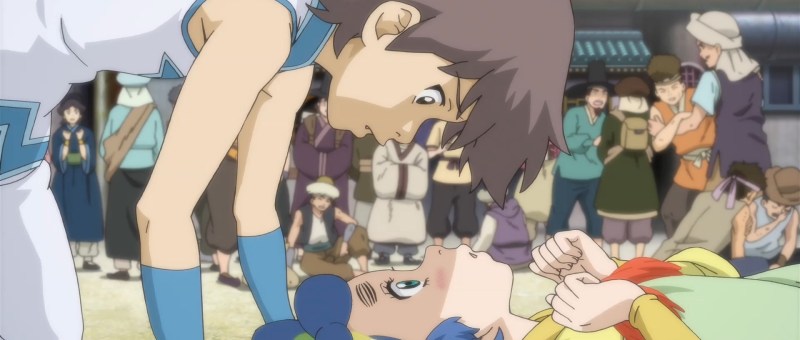
The Moon in the Hidden Woods (숲에 숨은 달, Takahiro Umehara, 2018) [Fantasia 2019]

The Moon in the Hidden Woods posterNight is dark, but when you have the moon to light the way there is always the hope of a better tomorrow. When all hope is gone, how are you supposed go on? For a small group of villagers, the answer is to do the best they can, staving off the darkness with determination and guile. Directed by Japan’s Takahiro Umehara making his directorial debut, The Moon in the Hidden Woods (숲에 숨은 달, sup-e sum-eun dal) is a story about learning how to survive the darkness but also an oblique allegory about authoritarian corruption and the power that comes with embracing your essential identity. 

As the wise old granny tells us at the beginning, long ago the Moon watched over the villagers, protecting them from the terror of night, but then it suddenly disappeared. A terrifying monster, Muju, wrapped the night sky in red, devouring misfortunes and sending fearsome minions to plague mankind. Warriors set out to look for the Moon, but none returned. Meanwhile others learned how to profit from the new world and saw no need for a return to the past until gradually people forgot there had ever been a Moon to begin with.

One such profiteer was the evil Count Tar, who is determined to marry the Princess Navillera very much against her will. Escaping to the city, Navillera finds herself coming to the rescue of a musical trio caught up in an unfair competition to win some mystic water to use in their harvest festival, and making use of her telepathic super powers and natural musical ability at the same time. The Nova Folk Band are a small group of illegal meteor hunters from the village who are more interested in survival than they are in intrigue, but are nevertheless some of the only people still looking for the Moon. In any case, they end up taking Navillera with them as they flee, not quite believing that she is a princess and the intended bride of their tyrannical ruler.

While in the village, Navillera gets a crash course in class conflict, never having left the palace before and spent her entire life in a lavish comfort she assumed was available to all. This quickly puts her into conflict with musician Janggu who deeply resents the “spoiled” entitlement that sees her asking for extravagant luxuries like meat, fruit, and honey, while being entirely unused to farm work. She does, however, try her best even mucking in with the other villagers where she can but is obviously unable to contribute to the same degree given that she has never had to do a day’s work in all her life. Meanwhile, as Janggu points out, the gang have gone out hunting meteors full in the knowledge that it’s illegal because they need them to survive. The princess objects to their reckless lawbreaking, affirming that the kingdom will protect them with ore only for Janggu to point out an ore is worth half the year’s harvest and the only reason you’re not allowed to hunt meteors is so that the unscrupulous powers that be can sell you an alternative and thereby keep a grip on their power by keeping the poor in their place. Suddenly, Muju isn’t looking so much like a scary red monster but an eerie metaphor for late stage capitalism.

Meanwhile, the Navillera is also busy trying to escape an oppression she wasn’t even quite aware of in her attempt to reject the intentions of Tar. Through her time in the village, Navillera begins to lose heart, fearing that her cosseted life has left her powerless without skills or talents. What she discovers, however, is that she has a natural ability for dance that finds a perfect home in the cheerful village where such things are praised and becomes the key both to restoring her essential identity and defeating Muju to rediscover the Moon.

In opposition to the “nothingness” that Muju represents, Navillera draws strength from the camaraderie of the villagers as they adopt her as one of their own, urging her not to give in and marry the evil Tar but to join them in their rebellion, choosing the “path of life” as the joyous music of the villagers finally breaks the stronghold of Muju’s austerity. Finally seeing the light of a better tomorrow, the villagers look back on the past with stoical eyes, recognising that mankind’s greed gave rise to Muju and resolving to forgive those who were merely weak rather than actively evil in order to live on in the light of a new world. A perfect blend of Korean fantasy and Nausicaa-esque steampunk, The Moon in the Hidden Woods is a cheerful ode to the importance of hope and the pure joy of musical expression in a sometimes harsh existence.


The Moon in the Hidden Woods was screened as part of the 2019 Fantasia International Film Festival.

International trailer (English/korean/Japanese captions)

Jeux de plage (浜辺のゲーム, Aimi Natsuto, 2019)

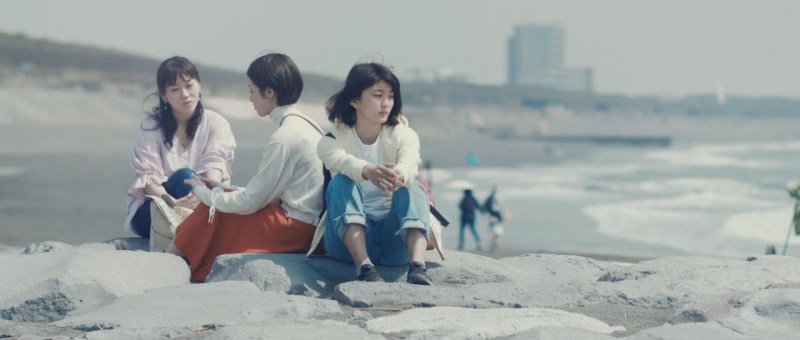
105104a28dul1sw021sqjl“Listen, men are nice to all women, because sex is the only thing they think of” a young woman warns her friend as she recounts a casual encounter on the beach with a man they seem to have collectively decided to declare a bad idea. It’s not all fun and games by the sea for the romantically confused heroes of Jeux a plage (浜辺のゲーム, Hamabe no Game) which owes a fair bit to the French New Wave in its easy, breezy exploration of young love and an intensely sexist society. Produced by Kiki Sugino’s Wa Entertainment, Aimi Natsuto’s Rohmer-esque debut continues the internationalist vibe the studio is fast becoming known for in bringing together a disparate group of travellers each “invited” to a small seaside guest house by the mysterious Miwako.

The central psychodrama plays out between three young women, not quite friends, who are apparently engaged in some sort of revolving love triangle. Yui (Juri Fukushima) has brought her uni friend Sayaka (Haruna Hori) on a trip to her hometown where they’ve hooked up with her high school friend Momoko (Nanaho Otsuka), but the atmosphere is beginning to sour. Sayaka increasingly feels like a third wheel while secretly pining for Yui who seems to have regressed into a more vacuous version of her teenage self while obsessing over Momoko who only talks about guys despite later claiming to be pansexual.

Meanwhile, the three women find themselves constantly bombarded by (largely) unwanted male attention – firstly from another guest at the hotel, Akihiro (Shinsuke Kato), who seems to have completely messed up his personal and professional lives with an ill-advised love affair. Akihiro’s eyes are out on stalks when he spots the three pretty women though they, while admitting that he’s “cool”, declare him a little sleazy, maybe even creepy seeing as he’s probably “as old as 35” and giving the eye to a bunch of college girls. Even so, Akihiro is not the only lothario on the prowl. Korean student Min-jun (Koo Hyunmin) has brought a Korean girl, Yona (Li Taun), who’s come to visit him, to stay in the hotel after getting a recommendation from Miwako. It seems Yona is just a friend who came to find out about studying film, but Min-jun keeps making awkward passes and intermittently reminding her about an introduction to his professor which occasionally seems like a creepy sort of pleading.

All that’s aside from the randy professor (Kentaro Kanbara) who might as well be a escapee from a Hong Sang-soo film, having started the picture without his trousers in the empty hotel swimming pool after apparently being seduced by the ever absent Miwako the night before. Despite being profoundly sorry, he turns up the next day to return the clothes he had to borrow and makes a worryingly aggressive play for the previously sympathetic manageress all while his suspicious wife (Kiki Sugino) watches from behind a nearby hedge, presumably following him after doubting whatever story he told her to explain not having arrived home the previous evening. Meanwhile, Sayaka, sick of feeling like a spare part, takes off for the beach where she’s quickly hit on by two different creepy guys, one of whom turns out to be a film director (A cameo from Edmund Yeo) who wanted to hire her for a movie though she wasn’t particularly interested.

Matters come to a head right there on the beach where the women collectively take out their frustrations with the male sex on the cocksure Akihiro, who is not really at fault in this instance save insensitively mocking other people’s romantic distress. Unfortunately, however, the incident does not seem to have relieved the pressure on the central trio who continue to dance around their romantic confusion without talking about anything “real”. While Sayaka looks for advice in asking random strangers if they’ve ever had a same sex crush, Yui becomes increasingly stressed and as irritated by Momoko’s gravitating towards the guys as Sayaka is by her intimacy with Momoko. Meanwhile, the only “nice guy” – a sympathetic Thai filmmaker (Donsaron Kovitvanitcha) observing from the sidelines, fails to add to the drama when attempting to make his own romantic confession (a sweet and innocent one with flowers and poetry) at an extremely inopportune moment. Bookended by time cards with chapter headings taken from classics of the French New Wave, Natsuto’s approach is one of detached playfulness tinged with farce as she observes this collection of flawed but very human protagonists fail to plainly express their desires, becoming ever more frustrated and confused as they struggle to orientate themselves around each other in a repressive and infinitely sexist environment. 


Jeux de plage was screened as part of Japan Cuts 2019.

Original trailer (English subtitles)

Asian Pop-Up Cinema Returns for Season Nine

The Attorney still 2Chicago’s Asian Pop-Up Cinema returns for its ninth season from Sept. 10 to October 10 with another handpicked selection of the best recent East Asian cinema. Running for five weeks, the season highlights one region each week and also has a special mini focus on movie musicals!

Sept. 10,  7pm: The Odd Family: Zombie on Sale

Introduction and Q&A with Director Lee Min-Jae 

Odd family still 1A weird family take in the “zombie” victim of nefarious pharmaceutical plant experimentation and decide to keep him as a pet, especially once they realise that his bite has healing qualities with intense marketability. Hilarious off the wall zombie comedy. Review.
Sept. 12, 7pm: Juror 8

Introduction and Q&A with Director Hong Seung-Wan 

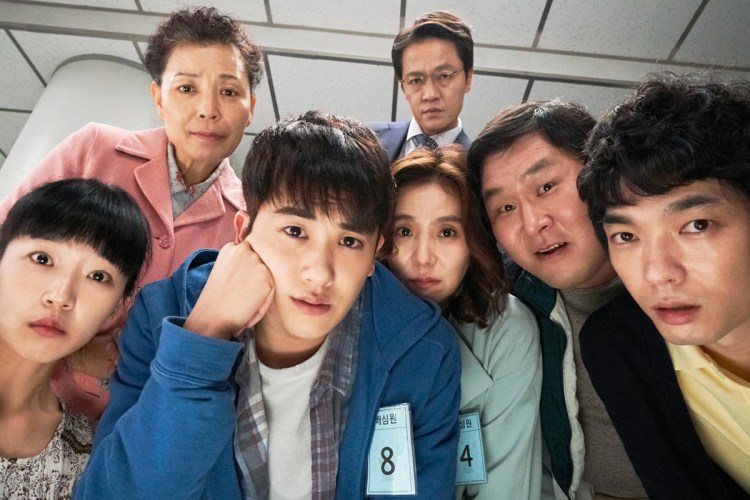
Juror No 8 still 1Courtroom comedy from Hong Seung-Wan inspired by Korea’s first jury trial in 2008. A young man is accused of murdering his mother. All the evidence points to his guilt and he has also confessed to the crime but one juror isn’t quite convinced.
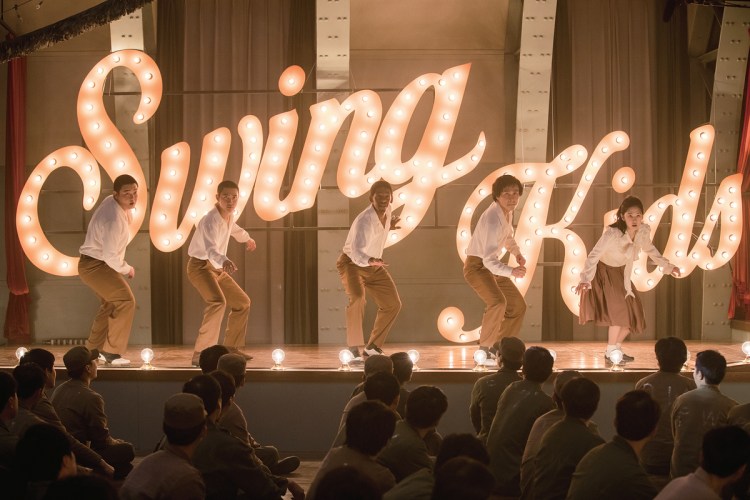
Sept. 14, 2pm: Swing Kids

Swing Kids still 1A North Korean prisoner of war falls in love with tap dancing after being co-opted into a group by a former broadway dancer turned US Army captain in Kang Hyung-chul’s musical drama.
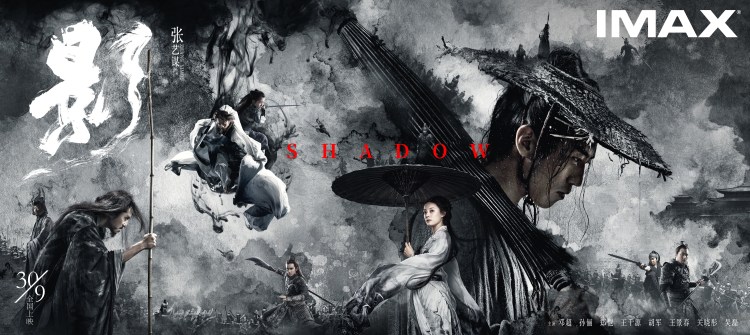
Sept. 15, 10.30am: Shadow

Shadow bannerDrawing inspiration from classic ink paintings, Zhang Yimou returns to the world of wuxia with a tale of balance and duality as a general’s double processes his conflicted loyalties in a world in which the king is weak and his enemies strong. Review.

Sept. 18, 7pm: Crossing the Border

Introduction and Q&A with Director Huo Meng

Crossing the Border still 1A little boy gets sent to stay with grandpa over the summer, but grandpa unexpectedly gets a message about an old friend he hasn’t seen in a long time and decides to drag his grandson halfway across the country on a makeshift vehicle to go visit him.

Sept. 19, 7pm: The Enigma of the Arrival 

Introduction and Q&A with Director Song Wen and Actress Gu Xuan

Enigma of the Arrival still 1A group of former uni friends reunite years after the disappearance of a friend broke them apart in an experimental drama from the founder of the “Chinese Sundance” Xining FIRST International Film Festival, Song Wen.
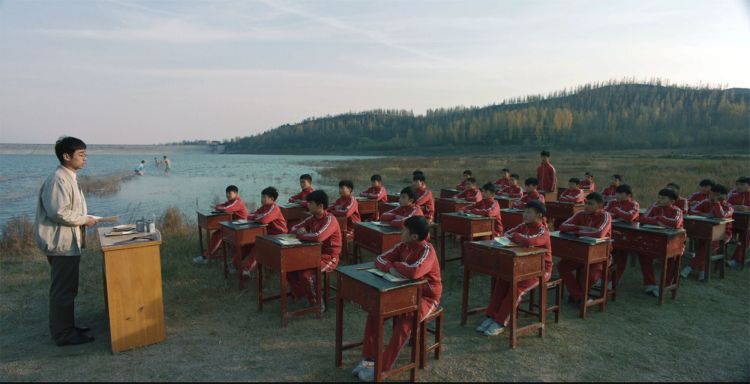
Sept. 20, 6pm: Wushu Orphan

Wushu Orphan still 1The new teacher at a martial arts school is disheartened to discover his pupils’ lack of interest in education but bonds with a lonely young boy ironically disinterested in martial arts but talented in his studies. Review.
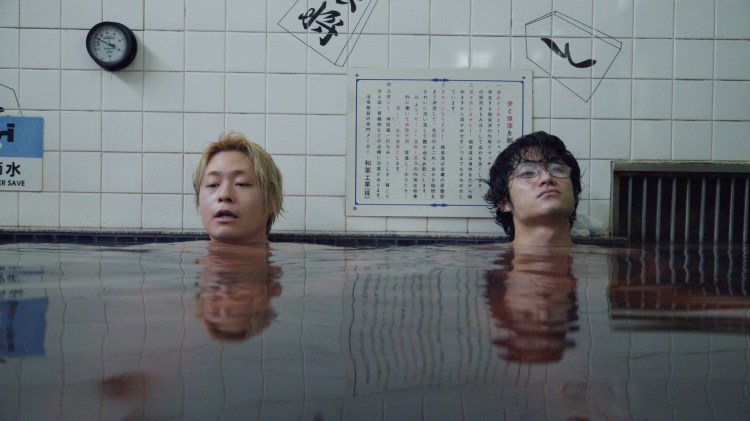
Sept. 25, 8pm: Melancholic 

Conversation with Director Seiji Tanaka and Producer/Lead Actor Yoji Minagawa 

Melancholic still 1An alienated young man who graduated from Todai but remains totally opposed to the rat race ends up taking a job in a bathhouse after a conversation with a pretty girl he went to high school with, only to find out that the bathhouse doubles as a yakuza killing ground after hours. Review.

Sept. 26, 7pm: Can’t Stop the Dancing (Dance with Me)

dance with me syill 1An ambitious executive’s dreams of promotion are dealt a serious blow when she ends up getting hypnotised by a shady theme park entertainer and finds herself breaking into song and dance like the heroine of an old fashioned Hollywood musical every time she hears music in the latest madcap comedy from Shinobu Yaguchi (Swing Girls, Waterboys, Wood Job!). Review.
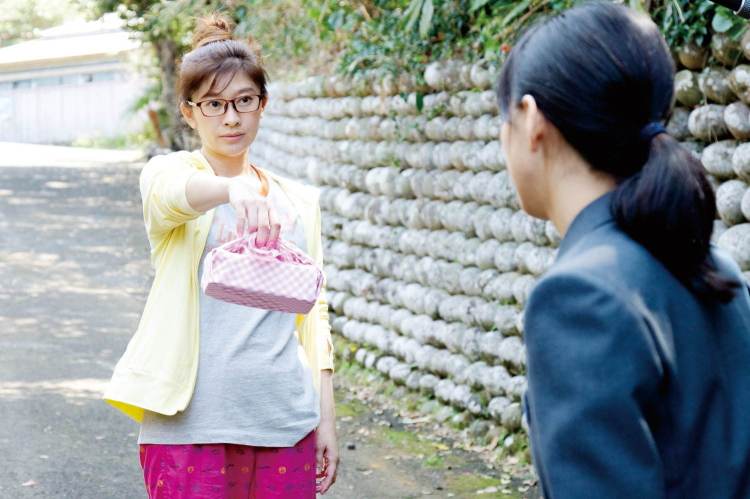
Sept. 27, 7pm: Bento Harassment

Bento Harrassment still 1A single mother fed up with her teenage daughter’s nonsense starts sending passive aggressive messages through bento in a tale inspired by a real life blog.

Oct. 2, 7pm: The Pool

The Pool still 1A man ends up having to clean a disused pool after a film shoot but falls asleep on an inflatable raft. When he wakes up, he finds that the water level has fallen so low he can no longer climb out. He screams for help, but the only creature to hear him is a crocodile…

Oct. 3, 7pm: Signal Rock

Introduction and Q&A with Actor Christian Bables, Bright Star Award Recipient 

signal rockA young man from a small island where the only cell phone signal is found on a rocky outcrop desperately tries to help his sister and her child escape an abusive marriage in Finland.

Oct. 5, 2pm: Office

Office (TO) bannerJohnnie To’s beautifully choreographed musical set in the high stakes world of corporate finance.

Oct. 6, 2pm: Long Time no Sea

Long time no Sea bannerA poor boy missing his dad and a resentful teacher dispatched to a remote island against his will eventually bond through the unlikely medium of traditional dance in Heather Tsui’s charming coming of age drama. Review.

Oct. 8, 6pm: Miss Granny

Miss Granny PhilippinesA Philippine take on the Korean musical comedy in which a grumpy, disillusioned old woman visits a mysterious photo gallery and gets a second shot at youth.

Oct. 9, 7pm: Deception of the Novelist

Introduction and Q&A with Director Christopher Sun and Producer/Lead Actor Justin Cheung 

Deception of the novelist still 1A popular novelist’s marriage to his childhood sweetheart is on the rocks thanks to his womanising ways. When an attractive woman moves into the flat above him, he quickly begins having yet another affair but when she threatens blackmail his thoughts turn murderous…
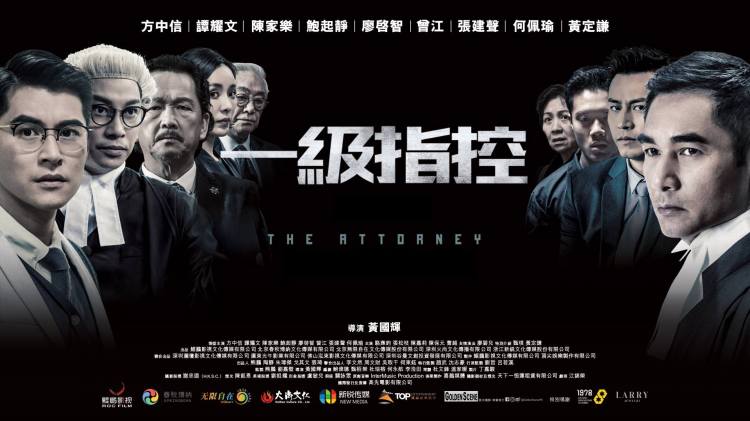
Oct. 10, 7pm:  The Attorney

Introduction and Q&A with Actor Kenneth Tsang Kong, Scriptwriter Frances To, and Executive Producer Cherrie Lau

The Attorney bannerA jaded lawyer agrees to take on a seemingly open and shut case of a young man who wakes up next to the dead body of a billionaire’s daughter with no idea what happened only to find himself caught up in a wider conspiracy.
Asian Pop-up Cinema Season 9 runs in Chicago from Sept. 10 to Oct. 10. Full details for all the films are available via the festival’s official website where tickets are already on sale. You can also keep up with all the latest news by following Asian Pop-up Cinema on FacebookTwitterInstagram, and Vimeo.

Money (돈, Park Noo-ri, 2019) [Fantasia 2019]

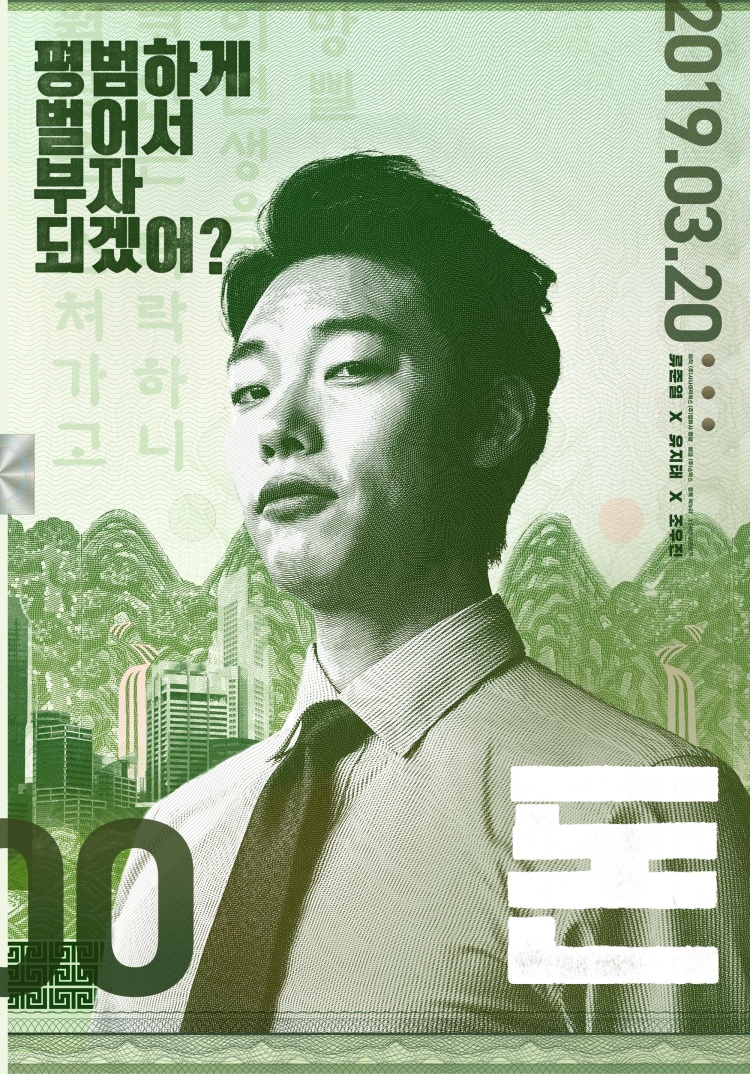
money poster 1“Could you ask him something for me,” the beleaguered yet victorious protagonist of Park Noo-ri’s Money (돈, Don) eventually asks, “what was he going to use the money for?”. Wealth is, quite literally it seems, a numbers game for the villainous Ticket (Yoo Ji-tae) whose favourite hobby is destabilising the global stock market just for kicks. As for Cho Il-hyun (Ryu Jun-yeol), well, he just wanted to get rich, but where does getting rich get you in the end? There’s only so much money you can spend and being rich can make you lonely in ways you might not expect.

Unlike most of his fellow brokers, Cho Il-hyun is an ordinary lad from the country. His parents own a small raspberry farm and he didn’t graduate from an elite university or benefit from good connections, yet somehow he’s here and determined to make a success of himself. In fact, his only selling point is that he’s committed the registration numbers of all the firms on the company books to memory, and his ongoing nervousness and inferiority complex is making it hard for him to pick up the job. A semi-serious rookie mistake lands the team in a hole and costs everyone their bonuses, which is when veteran broker Yoon (Kim Min-Jae) steps in to offer Il-hyun a way out through connecting him with a shady middle-man named “The Ticket” who can set him up with some killer deals to get him back on the board.

Il-hyun isn’t stupid and he knows this isn’t quite on the level, but he’s desperate to get into the elite financial world and willing to cheat to make it happen. As might be expected his new found “success” quickly goes to his head as he “invests” in swanky apartments and luxury accessories, while his sweet and humble teacher girlfriend eventually dumps him after he starts showering her with expensive gifts and acting like an entitled elitist. It’s not until some of his fellow brokers who also seem to have ties to Ticket start dying in mysterious circumstances that Il-hyun begins to wonder if he might be in over his head.

Unlike other similarly themed financial thrillers, it’s not the effects of stock market manipulation on ordinary people which eventually wake Il-hyun up from his ultra capitalist dream (those are are never even referenced save a brief reflective shot at the end), but cold hard self-interest as he finally realises he is just a patsy Ticket can easily stub out when he’s done with him. Yoon only hooked him up in the first place because he knew he’d be desperate to take the bait in order to avoid repeated workplace humiliation and probably being let go at the end of his probationary period. What he’s chasing isn’t just “money” but esteem and access to the elite high life that a poor boy from a raspberry farm might have assumed entirely out of his reach.

It’s difficult to escape the note of class-based resentment in Il-hyun’s sneering instruction to his mother that she should “stop living in poverty” when she has the audacity to try and offer him some homemade chicken soup from ancient Tupperware, and it’s largely a sense of inferiority which drives him when he eventually decides to take his revenge on the omnipotent Ticket. Yet there’s a strangely co-dependent bond between the two men which becomes increasingly difficult pin down as they wilfully dance around each other.

The world of high finance is, unfortunately, a very male and homosocial one in which business is often conducted in night-clubs and massage parlours surrounded by pretty women. There is only one female broker on Il-hyun’s team. The guys refer to her as “Barbie” and gossip about how exactly she might have got to her position while she also becomes a kind of trophy conquest for Il-hyun as he climbs the corporate ladder. Meanwhile, there is also an inescapably homoerotic component to Il-hyun’s business dealings which sees him flirt and then enjoy a holiday (b)romance with a Korean-American hedge fund manager (Daniel Henney) he meets at a bar in the Bahamas, and wilfully strip off in front of Ticket ostensibly to prove he isn’t wearing a wire while dogged financial crimes investigator Ji-cheol (Jo Woo-jin) stalks him with the fury of a jilted lover.

Obsessed with “winning” in one sense or another, Il-hyun does not so much redeem himself as simply emerge victorious (though possibly at great cost). Even his late in the game make up with Chaebol best friend Woo-sung (Kim Jae-young), who actually turns out to be thoroughly decent and principled (perhaps because unlike Il-hyun he was born with wealth, status, and a good name and so does not need to care about acquiring them), is mostly self-interest rather than born of genuine feeling. In answer to some of Il-hyun’s early qualms, Ticket tells him that in finance the border between legal and illegal is murky at best and it may in fact be “immoral” not to exploit it. What Il-hyun wanted wasn’t so much “money” but what it represents – freedom, the freedom from “labour” and from from the anxiety of poverty. Life is long and there are plenty of things to enjoy, he exclaims at the height of his superficial success, but the party can only last so long. What was the money for? Who knows. Really, it’s beside the point.


Money was screened as part of the 2019 Fantasia International Film Festival.

International trailer (English subtitles)

Randen: The Comings and Goings on a Kyoto Tram (嵐電, Takuji Suzuki, 2019)

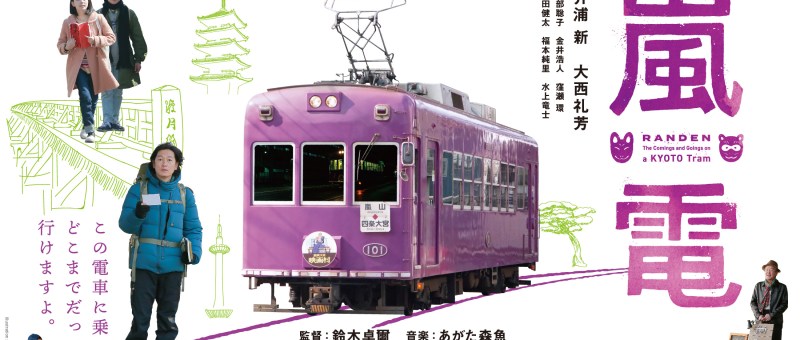
Randen posterStill running over a century later, the Randen tram line is the only one in Kyoto and connects a series of Japan’s most popular tourist destinations in the famously “historical” city. It is also, of course, a key method of public transportation much loved by locals. Randen: The Comings and Goings on a Kyoto Tram (嵐電, Randen) fits neatly into that subgenere of Japanese films which might as well have been funded by the tourist board, but even so has real affection for its anachronistic street cars as they traffic a series of romantically troubled souls towards the places they need to be with a little help from the supernatural.

Chief among them, Eisuke (Arata Iura) is a blocked writer specialising in real life strange tales. He’s come to Kyoto, rich with culture and history, in search of local mystery but finds himself preoccupied with thoughts of home and the Kyoto-born wife from whom he fears he may have grown apart. Meanwhile, Kako (Ayaka Onishi), a painfully shy woman working in a bento shop finds herself unexpectedly sucked into the world of showbiz when she is persuaded to help a Tokyo actor, Fu (Hiroto Kanai), run lines in a Kyoto accent. Back on the platform, high school girl Nanten (Tamaki Kobuse), on a school trip from Aomori, falls for aloof high school boy Shigosen (much to the consternation of her friends) but unfortunately for her trains are “everything” for him.

Mimicking the linearity of the tramline, Randen takes us through three ages of love with three variously troubled lovers each trying to find the right stop. Teenagers Nanten and Shigosen struggle with their feelings in the normal way. She is certain, he (more romantic than he seems) is not – denying his feelings in the anxiety that requited love evaporates where the suffering of unreciprocated attraction does not. Kako, meanwhile, is struggling with quite different issues in that she lacks self confidence and has decided she’s no good with people. She rebuffs Fu’s straightforward attempts at romance out of shyness and confusion, unable to parse his non-committal replies and wondering if he finds her line of questioning irritating, in which case why is hanging around with her. Eisuke, meanwhile, does something much the same as he recalls a “failed” trip he took with his wife to Kyoto sometime ago and ponders the various ways each of them will change in the time they are apart.

Through it all, the rail station cafe owner (Ryushi Mizugami) is there to dispense his wisdom and knowledge of the city. Picturesque as it is, the tramline is also pregnant with local superstition – the teenagers believe catching sight of the “Yuko” train and its distinctive retro livery means a couple will stay together, while accidentally catching sight of a train staffed by kitsune and tanuki will lead a couple to part. Superstition is as superstition does, but there may indeed be some truth in it if only as a self-fulfilling prophecy. The presence of the contrary trains does, however, prompt true emotions to the surface if only to avoid a negative outcome born of getting on the wrong train at the wrong time and ending up in an unwelcome romantic destination.

Sometimes the train takes you where you want to go, and other times you need to get off and rethink. Shigesen bought his camera to film the things he likes, but worries now it’s more that he likes the stuff he films. There might be room in his heart for something other than trains, but he’ll have to put the camera down for a minute to find out. Nanten’s friends busy themselves the touristy stuff – the Jidaigeki movie theme park and putative trips to feed monkeys, but for her Kyoto is the city of love and she doesn’t want to leave it without fulfilling her romantic destiny. A loving tribute to the iconic, appropriately historical, method of mass transit and to the charmingly, picturesque town itself, Randen: The Comings and Goings on a Kyoto Tram exists at the intersection of past and present as its conflicted lovers make ghosts of themselves riding the tram into eternity and fading into the city as just another part of local history, running the lines forevermore.


Randen: The Comings and Goings on a Kyoto Tram was screened as part of Japan Cuts 2019.

Original trailer (English subtitles)

Mystery of the Night (Misterio de la Noche, Adolfo Borinaga Alix Jr, 2019) [Fantasia 2019]

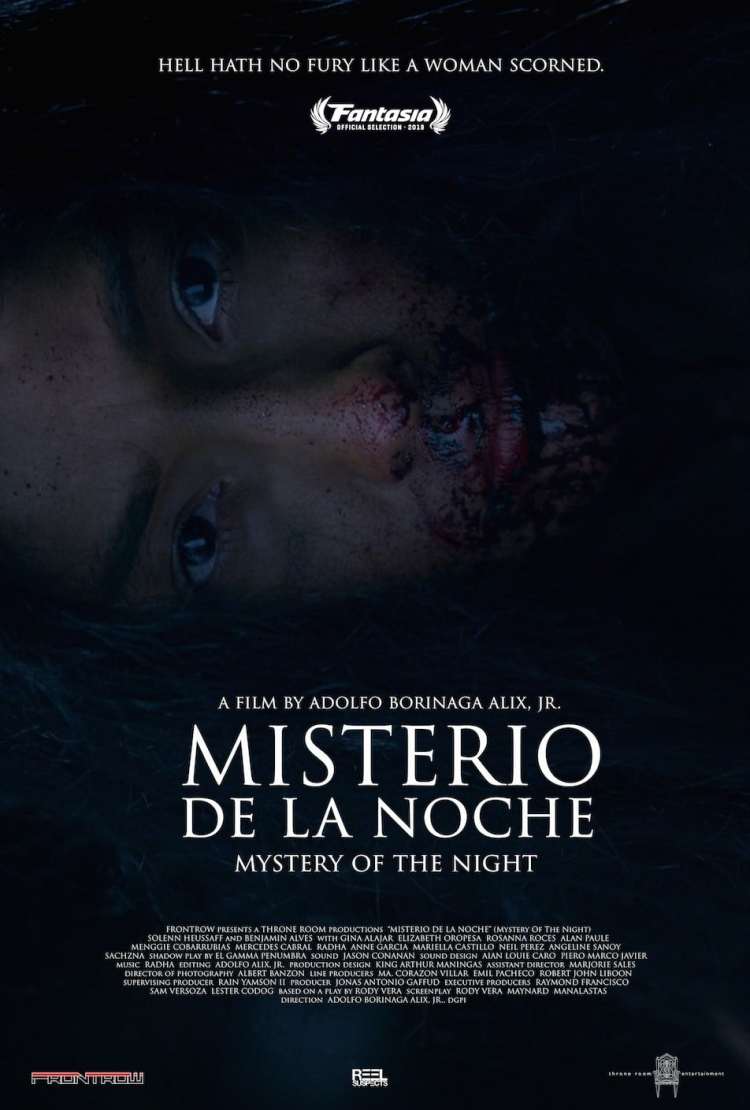
Mystery of the Night poster“There is nothing mysterious about the forest”, a traumatised traveller tries to tell himself, “only darkness”. Darkness is indeed a major theme of Adolfo Borinaga Alix Jr’s adaptation of the Aswang origin stage play Ang Unang Aswang, only this is darkness born of “civilisation” rather than its absence. The forest is mysterious, but largely because it is home to essential truths few now wish to see and are perhaps afraid to face. The evils of colonialism retold as folktale, Mystery of the Night (Misterio de la Noche) spins a less than ancient genesis for the iconic Philippine monster but hints at its origins in the darkness of the human heart.

In the early 1900s the Philippines was still firmly in the grip of Spanish colonial rule in which the Catholic Church and entrenched aristocracy remained all powerful. The tale begins when a young woman raped by a priest is condemned to the forest as the barer of a “Devil’s Child”. Though she rails and curses all around her, Mayor Alselmo (Allan Paule) consents to drag her into the wilderness as part of his own rite of passage, during which one of his men is killed. The woman, abandoned to her fate, gives birth alone but the effort costs her her life. The baby, meanwhile, is adopted by the forest dwellers of whom the civilised city folk are all so afraid. She grows up and meets a handsome young man, Domingo (Benjamin Alves) – Alselmo’s son, himself intent on exploring the forest’s mysteries. Nature takes its course, but Domingo is a young aristocrat with a wife and future in the city. Like many men, he takes his pleasures lightly and coldly rebuffs his forest bride when she comes calling on him in the austerity of civilisation.

Alix begins with a cold open flashing forward to the film’s conclusion before pulling back to introduce us to the world of the forest spirits, now pushed to the margins by the encroachment of the Spanish. To the Spanish, the spirits of the forest are frightening, demonic apparitions which threaten the primacy of their religion, dangerously undermining their hopes for peaceful, integrated governance. The forest spirits, however, may see themselves as “protecting” something, less the forest than a kind of ancestral essence slowly being eroded by outside influence.

“Nothing hidden remains unrevealed, no secrets are kept forever” Anselmo mutters to himself as he contemplates what the forest has taught him. He has been complicit in his own downfall, covering up the clergy’s crimes by abandoning a “crazy” woman to the forest in an effort to avoid dealing with her accusations or their evidence. The forest will give up its secrets, or at least take its revenge, on those who thoughtlessly pollute its darkness with the light of civilisation. The spirits maybe may be primitive, but they are not cruel – the baby’s life is saved only through their kindness and grows to maturity thought their careful nurturing.

Then again, according to the conflicted Domingo, the forest has its own logic and a belief different from the civilised. He wants to keep the forest’s secrets and protect the essence of existence in the belief that the mystery will complete us. When confronted by that mystery on his own terrain, however, he coldly rejects it in service of his civility. He brings back only atavistic violence and internalised shame along with his longing for something more innocent than the sophistication of his aristocratic position.

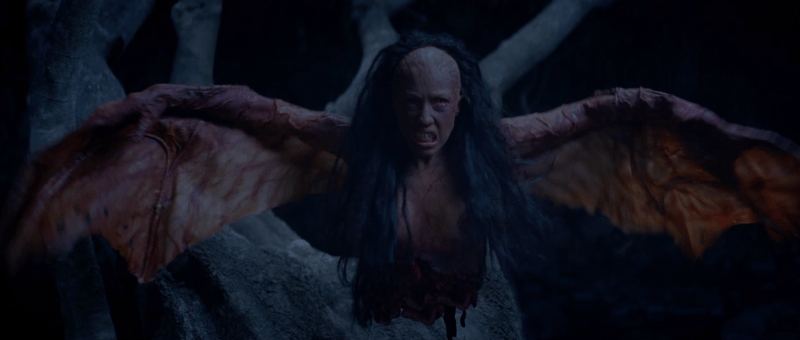
Scorned, “Maria” (Solenn Heussaff) as Domingo has named her, transforms into something else. A creature of rage and fear she screams into the night in grief for all she’s suffered at the hands of a fiercely patriarchal society which so cruelly killed her mother, broke her heart, and destroyed the safety of her world. The easy freedom of the forest has been corrupted by perverse civilisation which wields “morality” like a weapon and insists on authority that gives it the right to oppress. A grim parable of the destructive effects of entrenched colonialism, Mystery of the Night finds true horror in the most primitive of places – human weakness, greed, and hurt turned in on itself as a self-defeating act of protest against systemic cruelty. Beautifully dark, Alix’s shadow play spins a sad story of nature red in tooth and claw vs muted humanity, hauntingly ethereal and infinitely strange.


Mystery of the Night was screened as part of the 2019 Fantasia International Film Festival.

Teaser trailer (English captions)

Demolition Girl (JKエレジー , Genta Matsugami, 2019)

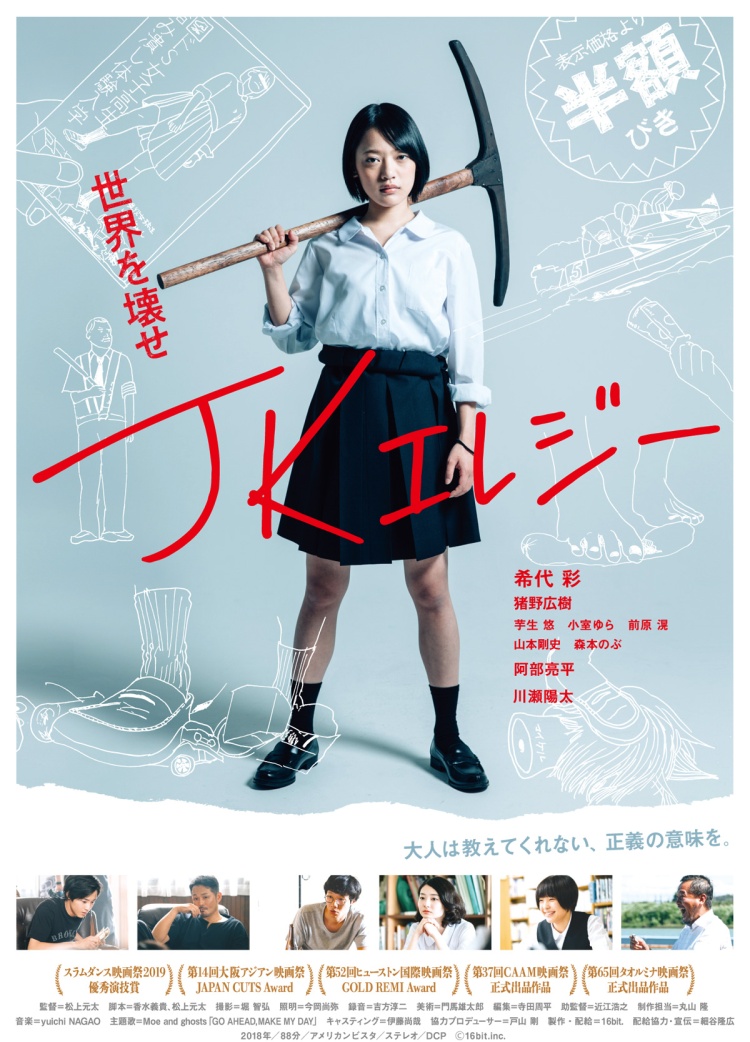
Demolition Girl poster 1High school is tough for everyone, but some have it harder than most. Cocoa (Aya Kitai), the heroine of Genta Matsugami’s Demolition Girl (JKエレジー, JK Elegy), struggles to envisage a way out of her dead end existence in small town, rural Japan but begins to find a new sense of purpose when presented with unexpected opportunity. Circumstances, however, continue to conspire against her as she fights bravely for her right to define her own destiny while those around her all too often try to drag her down.

17 and in the last year of high school, Cocoa isn’t planning on going to uni like her friends because her family is poor. Cocoa’s mother died several years ago and her father (Yota Kawase) has been a feckless mess ever since. A gambling addict, he spends his days at the races frittering away the meagre stipend he gets through fraudulently claiming disability benefit. Meanwhile, Cocoa’s equally feckless 26-year-old brother Tokio (Ko Maehara) has come home from Tokyo after failing to make it as a comedian and spends his days lounging around at home. Cocoa is the only one working, providing for the entire family with her part-time job at a sausage stand at the amusement park. Just recently she’s started supplementing her income through starring in some “videos” her brother’s friend and former comedy double act partner Kazuo (Hiroki Ino) has been making with the hope of flogging them to the select group of people who might find footage of a girl in high school uniform stomping on things “satisfying”.

Symptomatic of the perils of small-town life, Kazuo offers the videos to an old friend who owns the local rental store, not quite realising that his old buddy Naoki (Ryohei Abe) is now what passes for a gang leader in these parts. Still, Kazuo is not a bad guy, just a naive one who realises he’s hit his wall and this small-town existence is all there is waiting for him. Knowing he’s in way over his head, he eventually tries to do the right thing and genuinely wants to see Cocoa succeed even when he knows that means his cash cow will be leaving town.

Cocoa, meanwhile, has become re-energised after a well-meaning teacher tells her she is probably bright enough to get into a national university (rather than just a private one) where the fees are much more manageable. Still unconvinced, she becomes determined when her aunt tells her that her late mother had been putting money away for her especially for university. Sadly, it turns out her wastrel father may have already burned through that, but her resolve is undampened. She’s seen a way out, and she’s going to take it no matter what it takes. As her aunt tells her, she needs to get out of that apartment otherwise she’ll be stuck there forever “caring” for her feckless family members while they sit idly by frittering her money away on easy pleasures.

Still, it won’t easy. Circumstances conspire against her from a stern school board suspicious about her extracurricular activities to the ominous presence of the petty thugs who’ve become quite interested in the potential of the videos. Cocoa’s 18th birthday (which her family didn’t even seem to really remember) turns out to be one of the saddest ever as she parties with her two friends in a karaoke box and is then forced into the realisation that they’re each standing a crossroads and likely taking different paths. Supportive as they are, her friends can’t seem to understand why she got involved with the videos in the first place. From much more comfortable backgrounds, they struggle to comprehend her desire for ready cash as a means of escape or her yearning for independence and to be free from her burdensome family who over rely on her for support but offer very little in return.

A subtle condemnation of systemic inequality and the innate unfairness of a world in which circumstances of birth determine almost everything, Demolition Girl revels in its heroine’s resilience as she decides not to be beaten down by those who tell her she cannot make it out. A beautifully lensed evocation of small-town life, Matsugami’s debut is a wonderfully observed coming of age tale in which its determined heroine learns that she can choose to do things “her own way” without compromising her sense of integrity or having to leave her friends behind.


Demolition Girl was screened as part of Japan Cuts 2019.

International trailer (English subtitles)

Kingdom (キングダム, Shinsuke Sato, 2019) [Fantasia 2019]

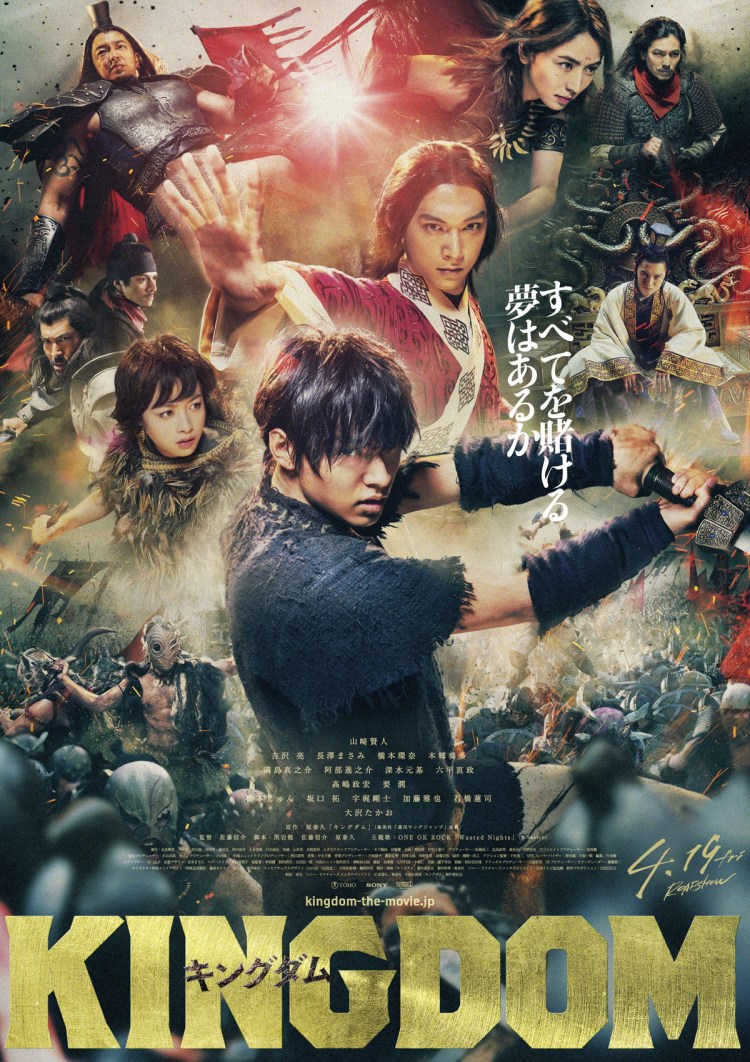
Kingdom poster 1The class war arrives in feudal China via modern Japan in Shinsuke Sato’s big budget adaptation of the wuxia-inspired manga by Yasuhisa Hara, Kingdom (キングダム). Set in China’s Warring States period, Kingdom offers a surprisingly progressive message, if mildly tempered by a failure to tackle the system in its entirety, in which the oppressed (which in this case includes the king) rise up against sneering aristocracy fuelled mostly by righteousness and fierce defence of the right to dream.

The tale begins with a fateful meeting between enslaved war orphans Piao (Ryo Yoshizawa) and Xin (Kento Yamazaki) on a small farm somewhere in rural China. The boys, realising there is no way out of their enslavement save the sword, commit themselves to perfecting their martial arts with the ultimate goal of becoming the world’s greatest generals. Their intense bond is broken when a mysterious man, Lord Chang . Wen Jun (Masahiro Takashima), appears and offers Piao a job at the palace. Though he agonises over leaving his brother behind, Piao seizes his destiny little knowing he has been hired not quite so much for his sword skills as for his resemblance to weakened king Ying Zheng (also played by Ryo Yoshizawa). Sometime later, Piao returns close to death, entrusting Xin with an important mission – go to Ying Zheng and seek his own destiny by restoring rightful rule.

The two boys are about as oppressed as it’s possible to be – orphaned slaves with no prospect of improving their condition save the one they’ve already decided on, fighting in a war. This doesn’t quite explain how they can release themselves from the farm, but Xin’s eventual flight, in which his master does not attempt to stop him, might suggest the first hurdle is not as big as it seems. In any case, Xin finds an unlikely ally in Ying Zheng who has been deposed from the throne by his younger brother for not being royal enough because his birth was illegitimate and his mother was a dancer.

Of course, Ying Zheng’s intention to regain his “rightful” throne is in defence of a necessarily unequal social order, but it’s also a blow against the kind of elitism which mark’s his brother Cheng Jiao’s (Kanata Hongo) philosophy. Cheng Jiao believes that he is the most rightful king because his blood is the most royal. He looks down on Ying Zheng as low born, and has no respect for his subjects or the lower orders. “A peasant in fine clothes is still a peasant” one of his minions intones to intimidate an opponent, but someone with a sword is still someone with a sword no matter their circumstances of birth and provided you have access to acquire one, perhaps swordsmanship is a truly egalitarian art given that it largely depends on how well you wield a blade. Eventually, Ying Zheng makes an ally of another oppressed people – the mountain dwellers subjugated, and previously betrayed, by the powers that be who lend their strength to toppling a corrupt power structure in order to restore something like peace and balance to the land.

Indeed, asked to give a brief manifesto speech, Ying Zheng cooly declares that he aims to create a unified China by eliminating borders and therefore the need for war. Insisting that when a king picks up a sword it ought to be in service of his people, he makes the case for a borderless world, little caring that, as his general points out, history may brand him a tyrant. Nevertheless, he remains a “puppet king” whose status is dependent on the loyalty of key general Wang Yi (Takao Ohsawa) with whom true power lies. Wang Yi, as we later find out seems to be a “good” person who used his troops to protect the innocent and ensure no civilians were harmed during the chaos of the insurrection but he does indeed wield dangerously vast power for just one man. Meanwhile, Ying Zheng may reject the primacy of blood, but does dare to claim his birthright as an oldest son and is of course acting in service of an inherently oppressive system even if he means to make minor improvements towards the kind of meritocracy that allows men like Xin to embrace the power of their dreams.

The power of dreams is indeed the key. Though Cheng Jiao’s hardline mercenary may sneer that “dreams are bullshit” and deny a slave like Xin’s right to have one at all, to men like Xin dreams are all they have. As he says, they get you back on your feet when everything else seems hopeless. Learning that Piao achieved his dream even if it was only for a few moments gives him the strength to pursue his own in service not just of himself but his brother, friends, and kingdom.

Appropriating the aesthetics of wuxia may prove problematic for some, but like many Japanese manga with international settings, Kingdom’s mechanics are essentially home grown which is perhaps why Sato heavily leans on Kurosawa’s legacy, possibly overusing the distinctive side wipe and giving his heroine a look echoing that from Hidden Fortress while other influences seem to feed back from Star Wars in the strangely cute masked mountain elders and gleaming golden armour of bad ass warrior queen Yang Duan He (Masami Nagasawa). A surprisingly positive, perhaps ironically bold plea for a borderless world and if not actual equality at least a friendly kind of egalitarian nobility, Kingdom hands victory to those who fight hardest for their right to dream while subtly advocating for their right to rebel against an inherently unjust social order in order to claim it. 


Kingdom was screened as part of the 2019 Fantasia International Film Festival. It will also be screened in US cinemas from Aug. 16 courtesy of Funimation.

International trailer (English subtitles)

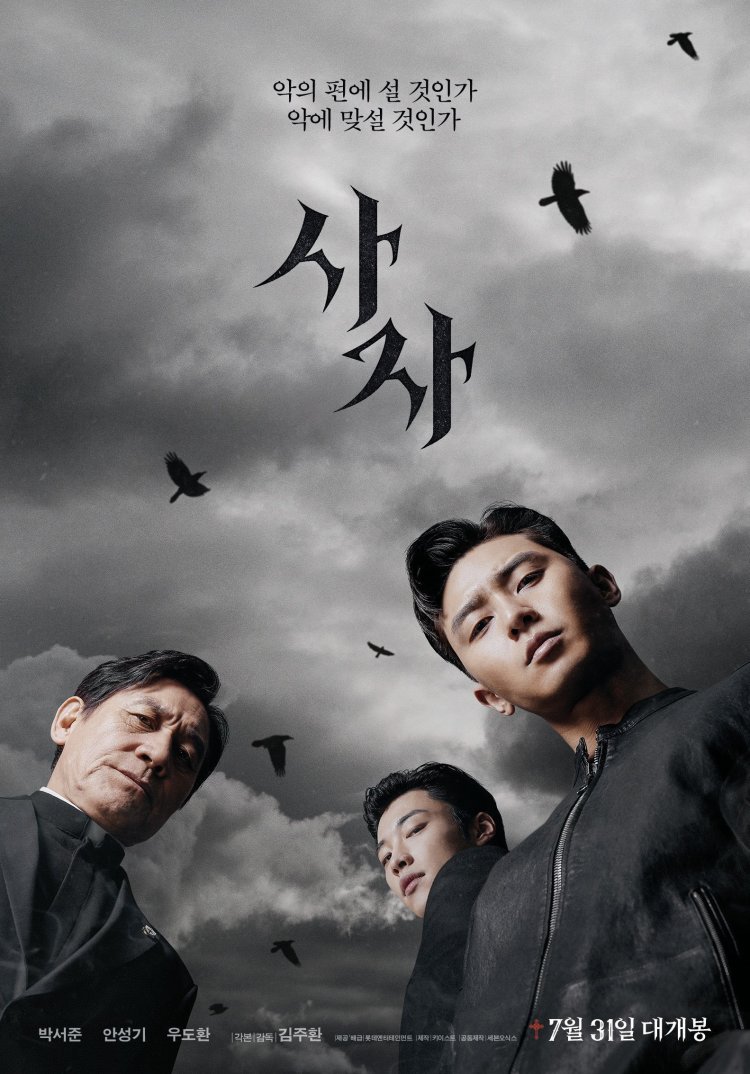
The Divine Fury (사자, Kim Joo-hwan, 2019) [Fantasia 2019]

Divine fury poster 1“If you have faith you have nothing to fear” the veteran priest explains to his protege in Kim Joo-hwan’s The Divine Fury (사자 Saja). The hero is not quite so sure. A tale of grief and resentment, The Divine Fury revels in supernatural dread, but makes plain that the origins of evil lie in the human heart and that it’s a failure to forgive that invites the darkness in.

A brief prologue introduces us to the young Yong-hu whose mother passed away shortly after he was born. His doting dad leaves him at home alone at nights while he works as a regular beat cop. Unfortunately Yong-hu’s earnest father is killed one evening by a rogue driver, leaving the boy orphaned and alone. Though his dad had been careful to take him to church and explain to him about the power of prayer, Yong-hu feels distraught and betrayed by a god who refused to listen and took his dad anyway even though he prayed as hard as he could. Vowing never to set foot in a church again, Yong-hu refuses to believe in anything at all.

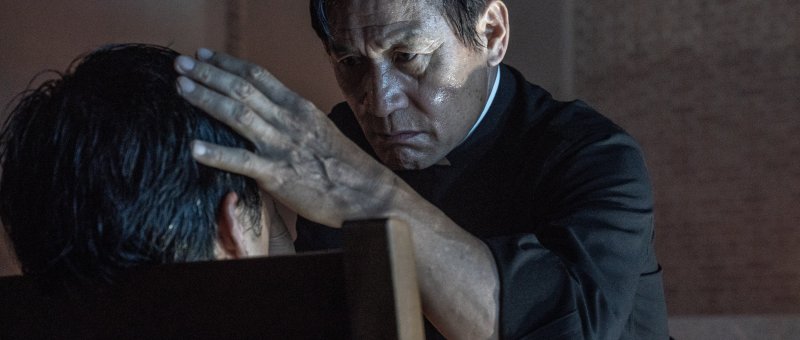
20 years later, he’s a world famous MMA star with vengeance on his mind. Plagued by voices telling him to go back and take revenge on the priest who told him everything would be OK, Yong-hu (Park Seo-joon) buries himself in violence and superficial pleasures. Everything changes on the flight back from an international bout when Yong-hu has a dream of his father in which he grabs a cross and wakes up with stigmata on his right hand. When doctors can’t explain his strange injury which refuses to heal, he turns to a shaman who tells him that he is rife with demonic energy and is only protected by the shining goodness of his father’s wedding ring which he still wears on a cord around his neck. Perhaps surprisingly, the shaman advises him to follow the cross and go to a church at a certain time where a man will help him. The man turns out to be father Ahn (Ahn Sung-ki) – a Vatican-based exorcist currently in the middle of a case so difficult it’s sent his assistant running for the hills in terror.

Anyone who knows anything about exorcism in the movies knows you need an old priest and a young priest. Ahn is more or less resigned to working alone, exorcism is no longer cool with the youngsters it seems, but nevertheless remains keen to court the enigmatic Yong-hu and his all powerful demon banishing hand. Yong-hu, however, remains reluctant. He doesn’t believe in God and resents the old priest as a symbol of all that’s betrayed him. Gradually he begins to warm to Ahn, seeing in him a kind of goodness as he selflessly battles the forces of evil and releases the tormented from their supernatural oppressors even if it might take longer to help them escape their darkness. Meanwhile he continues to hunt the “Dark Bishop” who feeds on fear and negativity in order to secure his own immortality.

Ahn is fond of saying that there’s a reason for every torment and that it’s all part of God’s grand plan. As far as the film goes, he may very well be correct at least in providing the mechanism for Yong-hu’s eventual path towards re-embracing his faith. Still missing his father and nurturing intense hurt and resentment, Yong-hu invited the darkness in, beginning to hate where he should have learned to forgive. As Ahn tells him, you can’t hate something you never loved which might explain why the darkness has never been able to fully consume him. Still battling his father’s absence, Yong-hu remains doubly conflicted, falling into an easy paternal rhythm with the older man yet also resenting him both as a potential father figure primed to betray and as a symbol of the Church in whom no he longer trusts.

Kim shifts away from the comedic banter which made Midnight Runners such an unexpected treat for something more melancholy as his heroes ponder the wages of grief and the demands of responsibility. Cynical, Yong-hu forgot his father’s ghostly instructions to him to grow up to be a good person who helps others and stands up to those who harm the weak (like demons) but eventually comes to reconnect with his dad’s essential goodness when realising that he’s been guided onto a unique path as an MMA star with a magic demon vanquishing fist. Having conquered the evil inside him and accepted his father’s legacy, Yong-hu is ready to take on the forces of darkness with a divine fury of his own while saving the souls of those in peril from threats both earthly and supernatural.


The Divine Fury was screened as part of the 2019 Fantasia International Film Festival. It will also be released in cinemas across the US and Canada courtesy of Well Go USA from Aug. 16.

International trailer (English subtitles)